Looking back at the past year of 2025, one of the few narratives in the Web3 world that remained "strong throughout the year" was stablecoins.
Traditional finance and CEX giants, DeFi giants, and emerging yield protocols have all entered the fray—some leveraging resources to focus on payments and connecting Web2 with offline traffic, while others concentrate on innovation to provide native crypto users with more flexible and reliable means and spaces for capital operations.
The era of a hundred schools of thought contending in stablecoins is reminiscent of the group-buying wars of the internet age: capital provides the effort, users reap the benefits.
On December 12, USDD launched on Binance Wallet Yield+, introducing a 30-day incentive plan with 300,000 USDD in rewards. The sUSDD TVL surpassed $150 million within a day, showing a strong push to "meet year-end KPIs."
Odaily Planet Daily seized this opportunity to discuss with Yvonne Chia, Head of Communications at USDD, covering topics such as the stablecoin industry's capacity and current saturation, user-side selection considerations, and USDD's advantages and long-term potential. The following are the highlights of the Q&A:
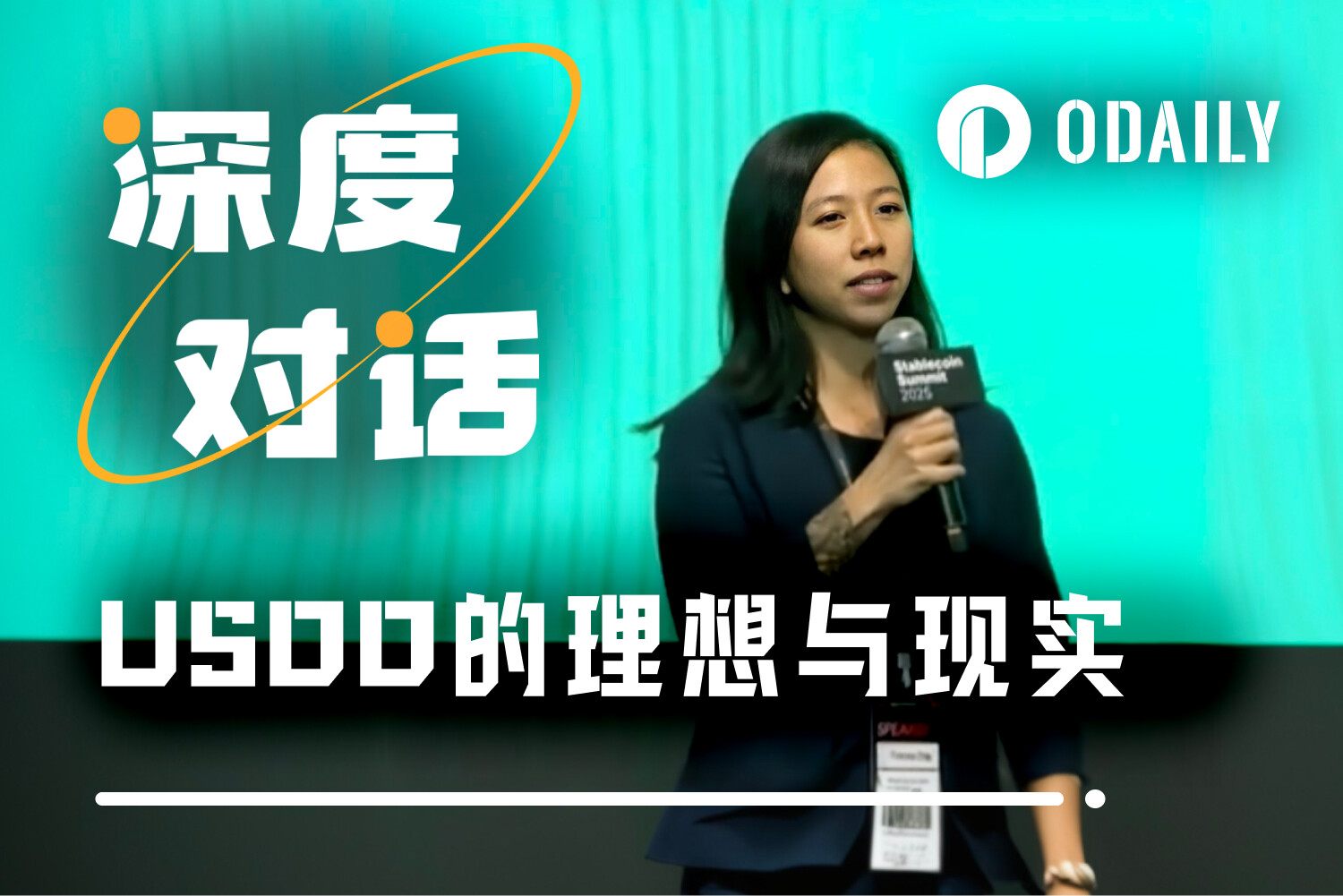
Q1 Please briefly introduce yourself, including your work experience since entering the industry and your main responsibilities at USDD? What is the approximate size of the entire department, and what are the internal divisions of labor?
I am Yvonne Chia, currently serving as the Head of Communications at USDD, dedicated to connecting the project's vision closely with the global community. I have been closely following the latest developments in the crypto industry and firmly believe that stablecoins are key to building a stronger, more inclusive financial system.
Q2 From the internal perspective of a stablecoin "practitioner," what is the expected industry size (capacity) of stablecoins by the end of 2026?
Growth predictions for stablecoins have always been very optimistic. For example, not long ago, U.S. Treasury official Scott Bessent predicted that the market size could reach $3 trillion by 2030, while Citi estimated $4 trillion. These predictions highlight the vast untapped potential in this field. We see a growing demand for reliable digital dollars and believe that stablecoins like USDD will play a key role as the ecosystem continues to develop and mature.
Q3 In the long term, what is the demand ceiling for stablecoins? What key factors determine the growth rate?
Rapid growth often comes with higher risks. Some stablecoin projects, in their pursuit of scale and yield, may neglect risk management and capital adequacy, leading to liquidity issues or decreased stability, which in turn affects user confidence. Stablecoins need to find a balance between price stability and reasonable yield. Only projects with sound risk management, sufficient collateral, and transparent operations can maintain this balance, win long-term trust, and sustain development in a fiercely competitive and volatile market.
Q4 Currently, has the stablecoin market become a red ocean? Are we facing a situation with too many issuer brands competing for existing users and funds?
In recent years, the stablecoin market has indeed experienced rapid growth, with a plethora of new products emerging. Some projects were launched to compete for existing users with short-term high yields, but unfortunately, not all projects have a solid foundation to support long-term stability and trust. Recent de-pegging incidents highlight the risks faced when a stablecoin's underlying mechanisms and risk management are inadequate. This also reminds us that sustainable growth must be built on solid fundamentals like USDD, which has robust mechanisms and sound risk management, rather than relying on short-term high APY.
Q5 From a user's perspective, what are the considerations when choosing which stablecoin to use?
From a user's perspective, choosing a stablecoin essentially answers one question: Can it "hold steady" at critical moments?
This is precisely why USDD始终坚持 (USDD consistently adheres to) the philosophy of 「稳见信赖」 (Stability Breeds Trust), placing stability and security first, and on this basis, building a sustainable yield mechanism, striving to be a trustworthy stablecoin choice for users in different market environments.
Q6 In terms of security (strong backing, sufficient policy resources, long-term stable operation), yield (emerging high-yield new stablecoins), and convenience (integrated ecosystem, yield scenarios, circulation scenarios), what is USDD's weapon to challenge the "established leaders"?
Choosing a stablecoin hinges on whether it can deliver stability, security, and transparency, truly meeting user needs, rather than just looking at size.
First, on the yield aspect, while leveraging advantages like USDD PSM's 1:1 USDT/USDC lossless conversion and no lock-up period, we also launched a Yield Bearing product—sUSDD—in Q4 2025. Users can convert USDD to sUSDD with one click for passive interest earning and automatic compounding. At launch, the annualized yield reached up to 12%, attracting nearly $100 million in TVL. Additionally, sUSDD can be used in various on-chain scenarios, such as providing liquidity on Uniswap and Pancakeswap, and lending functionality will be launched in the future. This means users holding sUSDD not only enjoy the investment returns from the product itself but can also engage in other applications based on their preferences.
When comparing stablecoins, one shouldn't just look at market share but also whether the stablecoin truly meets user needs. For example, USDT is the market leader in terms of liquidity, depth, and use cases, but it is centrally controlled by Tether, posing significant risks of centralized operation and freezing. More importantly, Tether was exposed this year for investing part of its collateral in assets like gold and BTC to generate yield, exposing users to risk without distributing any interest, creating an extreme asymmetry between risk and reward.
In contrast, both in terms of its decentralized nature and the product itself, USDD offers a great solution for beleaguered users: anti-freezing, automatic interest generation, and the ability to withdraw at any time. The entire process of entering and exiting is lossless, requiring only a small gas fee. From this perspective, USDD can be seen as an "interest-bearing version of USDT."
Q7 Specifically regarding security, how does USDD ensure users can exchange and deposit with confidence?
USDD has a robust security system. First, USDD employs an over-collateralized debt position (CDP) model. Users mint USDD using TRX / sTRX / USDT at different minimum collateralization ratios, ensuring each USDD is backed by sufficient assets (details on the Vaults page). Additionally, through the Peg Stability Module (PSM), users can exchange USDD for other stablecoins at a 1:1 ratio with no slippage. During market fluctuations, arbitrage opportunities help automatically correct the price. Simultaneously, if the collateralization ratio falls below the requirement, the system automatically initiates a public auction to liquidate the collateral assets, maintaining price stability without manual intervention. The entire process is transparent and secure, ensuring peace of mind for users.
Q8 What is the update frequency for the collateral, Proof of Reserves (PoR), and other metrics displayed in the official website's data section? Is this data audited? Which regulatory bodies oversee it?
Transparency is core to USDD's operations. We firmly believe in "user-verifiable trust"—trust is not an empty promise but a security guarantee that users can personally verify. For example, the investments of the Smart Allocator are managed by an internal team, with all transaction hashes, positions, and yields publicly available on-chain. Users can check them on the official website (using the SA001-A details page as an example). USDD's collateral assets are stored in publicly verifiable contract addresses, ensuring complete transparency. The financial data dashboard updates key metrics in real-time, allowing users to monitor collateral and PoR data at any time.
Furthermore, USDD regularly undergoes independent third-party audits. It has passed five rounds of security audits by ChainSecurity and CertiK with no critical vulnerabilities and has received a CertiK Skynet AA rating and an 87.5 security score.
Q9 Specifically regarding yield, many stablecoins have subsidy campaigns in their early stages, but those involved in Crypto wealth management long-term have found that "sustainability is an issue," and the risks associated with moving funds around increase. What long-term promises or strategies does USDD have to retain existing users? What is the source of yield? Will it be expanded in the future?
The primary source of USDD's yield is our Smart Allocator investment program. Smart Allocator is a profit-sharing mechanism that generates returns like interest and platform rewards by reasonably investing a portion of USDD's reserve funds into quality projects. The standout feature of Smart Allocator is its focus on sustainable growth rather than short-term high-interest hype. The overall investment strategy is conservative, actively managed by the USDD and JUST DAO teams. Investment platforms are selected through strict risk control, prioritizing high liquidity and reliability. All investment operations are transparent and on-chain verifiable; users can track each investment in real-time on the Smart Allocator page.
Currently, Smart Allocator's profits have exceeded $8.34 million and are still increasing. In the early stages of the protocol's development, TRON DAO also provided phased yield subsidies to support ecosystem cold start and user growth. These subsidies are not a long-term reliance and have gradually transitioned back to a sustainable yield structure centered around the Smart Allocator.
Additionally, USDD has two auxiliary sources of yield: the stability fees charged when minting USDD through the Vaults mechanism and the liquidation fees from collateral vault liquidations.
Overall, this robust yield structure ensures long-term stable growth.

USDD Official Website Data as of January 7, 11:00
Q10 Specifically regarding convenience, strongly binding to a specific ecosystem (Tron) and exchange (HTX) in the early stages was a good strategy for cold start. But does expanding to competitor platforms and multiple ecosystems (e.g., already launched on Ethereum and BNB Chain) in the mid-term encounter resistance? Whose KPI is the horizontal expansion of the stablecoin? What is the actual cooperation process?
USDD's expansion from its initial launch on the TRON chain to its native deployment on Ethereum and BNB Chain has proceeded very smoothly. Taking the recent Yield+ activity on a leading wallet as an example, it attracted over 3,000 users in the first week, with sUSDD TVL growing over 867%, and sUSDD TVL also breaking $295 million, making it the fastest-growing stablecoin during that period. This fully demonstrates strong demand from users, not resistance.
USDD will continue to promote multi-chain, multi-platform expansion to meet the growing needs of users.
In addition to product development, marketing, and risk control, we also have a strategy department responsible for developing strategies. Besides researching competitors, they also monitor all the latest and hottest trends and platforms in the market, such as PTYT, points systems, '嘴撸' (likely refers to a specific trend or platform, translation kept phonetic), and then provide executable plans based on specific situations. After internal confirmation, the business department finalizes the cooperation.
The actual cooperation process is: for example, our recent cooperation with a leading wallet took over a month from initial contact to mutual confirmation of intent, finalizing details, and actual launch, which is a relatively long cycle. The most challenging part in the middle is the Due Diligence (DD) process, as our partners are very reputation-conscious and strictly vet project quality. However, this process is also worthwhile because passing the DD of a leading platform serves as an endorsement for us. I believe this will reduce resistance in our future collaborations with other partners/communities.
Q11 What are the phased goals for USDD?
USDD's current goal is to reach $1 billion in liquidity.
How have we achieved this wave of growth explosion over the past year? On the path to this goal, we have experienced a clear period of accelerated growth: the early launch of a 20% high yield on the TRON chain quickly boosted the ecosystem; subsequently, the launch of sUSDD extended yield opportunities to Ethereum and BNB Chain, pushing USDD into a multi-chain development phase; simultaneously, cooperation with leading exchanges and channels allowed USDD to reach a broader user base.
Under the combined effect of these multiple factors, USDD TVL has now exceeded $900 million. Looking ahead to the next phase, USDD will continue to cooperate with on-chain exchanges and DeFi protocols, coordinating both on-chain and off-chain to expand into a dual-drive model, continuously expanding real-use cases and capital沉淀 (capital沉淀 - sedimentation/deposit, meaning building up funds or user base), laying the foundation for further ecosystem expansion.
As the interest-bearing version of USDT, USDD will always provide users with diverse ways to earn yield. Based on this, we have prepared a series of major activities: following the highly successful first season of the Binance Wallet Yield+ activity, the project is about to launch its second season; additionally, we will also launch a new Bitget wallet activity with subsidy rewards of up to $100,000 and maximum yields reaching 12%. Please stay tuned to official announcements for participation opportunities.



















