Intelligent Computing Convergence: The Deep Integration Architecture, Paradigm Evolution, and Application Landscape of AI and Cryptocurrency Industries

marsbit2026-03-17 tarihinde yayınlandı2026-03-17 tarihinde güncellendi

Özet

The deep integration of AI and cryptocurrency represents a fundamental paradigm shift, moving beyond mere technological convergence to reshape economic and computational infrastructures. By 2025, the crypto market cap surpassed $4 trillion, signaling its maturation, while AI evolved from centralized models toward decentralized, transparent “open intelligence.” Key architectural innovations include decentralized physical infrastructure networks (DePINs) like Render and Akash, which aggregate global idle GPU resources, and platforms like Ritual that embed AI models into blockchain execution environments. Verification mechanisms such as ZKML and TEE ensure computational integrity and privacy. Bittensor introduces a token-incentivized marketplace for machine intelligence, using its Yuma consensus to reward high-performing models dynamically. AI agents have transitioned from tools to autonomous on-chain entities, capable of managing finances and executing DeFi strategies via protocols like x402 and Olas. Privacy advancements through FHE (e.g., Zama), ZKML, and TEE enable confidential on-chain computations, critical for high-stakes applications. AI also enhances security via automated smart contract auditing and real-time threat prevention systems. This fusion drives enterprise efficiency through cost reduction and secure data processing, while empowering individuals via intent-based agents and data monetization. The future points to “intelligent ledgers” where AI and block...

Authored by: GO2MARS WEB3 Research

Symbiosis of Algorithm and Ledger: A Major Shift in Global Technological Paradigm

In the third decade of the 21st century, the convergence of artificial intelligence (AI) and cryptocurrency (Crypto) is no longer merely the combination of two buzzwords, but a profound revolution in technological paradigms. As the global cryptocurrency market capitalization officially surpassed the $4 trillion mark in 2025, the industry has completed its transition from an experimental niche market to an essential component of the modern economy.

One of the core drivers of this transformation is the deep convergence between AI as an extremely powerful decision-making and processing layer, and blockchain as a transparent, immutable execution and settlement layer. This combination is addressing the respective pain points of both: AI is at a critical juncture of transitioning from monopolization by centralized giants to a decentralized, transparent era of "Open Intelligence"; meanwhile, the crypto industry, after the gradual maturation of its infrastructure, urgently needs AI to solve problems such as complex on-chain interactions, fragile security, and insufficient application utility.
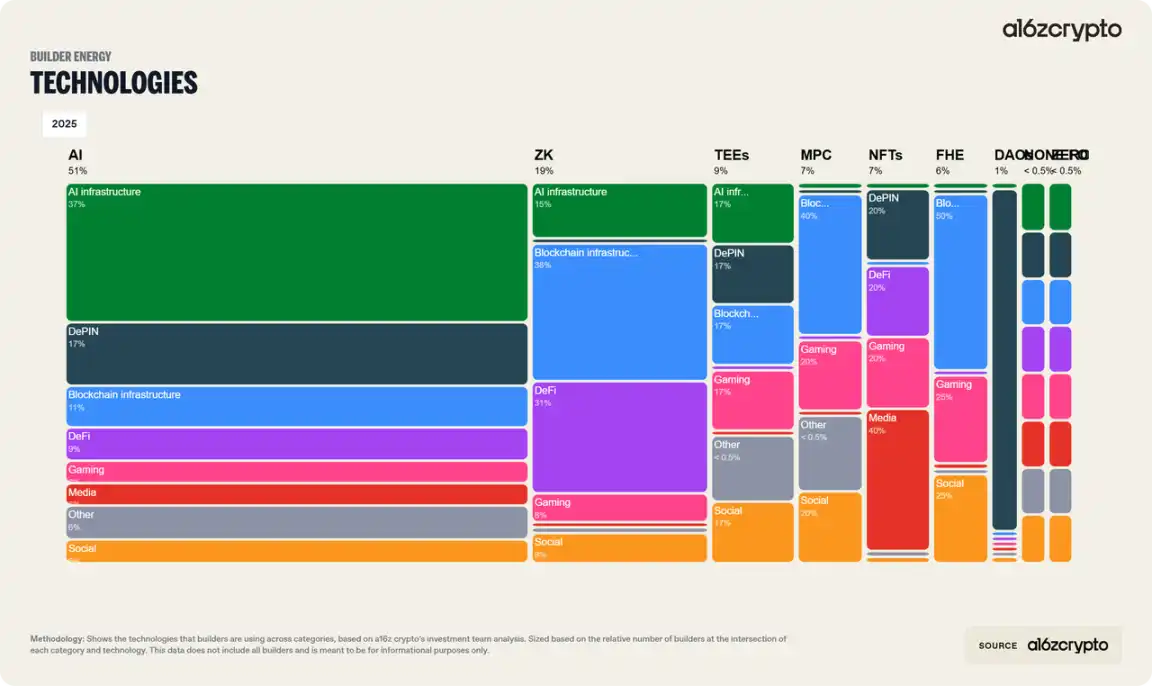
From the perspective of capital flow, the strategic divergence among top-tier venture capital firms also confirms this trend. a16z Crypto completed its fifth fundraising round of $2 billion in 2025, firmly positioning the intersection of AI and Crypto as its long-term strategic core, believing blockchain is the necessary infrastructure to prevent AI censorship and control.

Meanwhile, institutions like Paradigm are attempting to capture cross-industry dividends from technological convergence by expanding their investment boundaries to robotics and generalized AI. According to OECD data, by 2025, venture capital in the global AI sector accounted for 51% of total global investments, while within the Web3 space, the proportion of funding for AI-related projects is also steadily rising, reflecting the market's high recognition of the "decentralized intelligence" narrative.

1. Infrastructure Restructuring: Decentralized Computing Power and Computational Integrity

There is a natural contradiction between AI's insatiable appetite for Graphics Processing Units (GPUs) and the fragility of the current global supply chain. Between 2024 and 2025, GPU shortages became the norm, providing fertile ground for the explosion of Decentralized Physical Infrastructure Networks (DePIN).

1.1 Dual Evolution of Decentralized Computing Markets

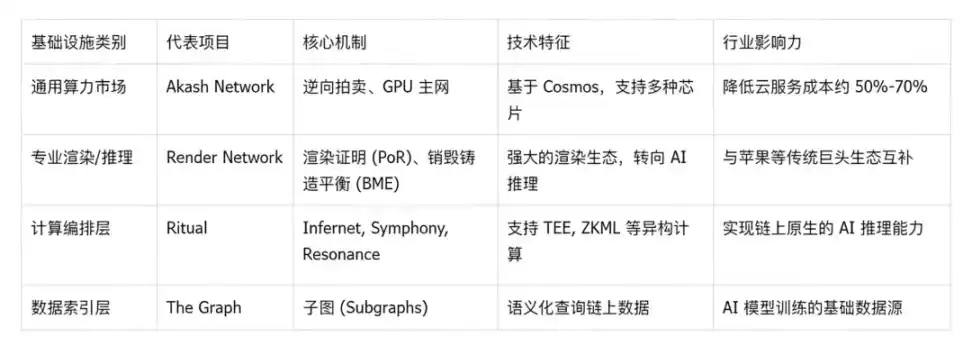
Current decentralized computing platforms are mainly divided into two camps. The first is represented by Render Network (RNDR) and Akash Network (AKT), which aggregate idle GPU computing power from around the world by building decentralized two-sided markets. Render Network has become a benchmark for distributed GPU rendering, not only reducing the cost of 3D creation but also supporting AI inference tasks through blockchain coordination functions, enabling creators to access high-performance computing power at lower prices. Akash, after 2023, achieved a leap forward with its GPU mainnet (Akash ML), allowing developers to rent high-spec chips for large-scale model training and inference.

The second category is represented by new computational orchestration layers like Ritual. Ritual's uniqueness lies in not trying to directly replace existing cloud services, but rather acting as an open, modular sovereign execution layer that embeds AI models directly into the blockchain's execution environment. Its Infernet product allows smart contracts to seamlessly call AI inference results, solving the long-standing technical bottleneck that "on-chain applications cannot natively run AI".
1.2 Computational Integrity and Breakthroughs in Verification Technology

In decentralized networks, verifying "whether computation has been executed correctly" is a core challenge. The technological progress in 2025 has mainly focused on the integrated application of Zero-Knowledge Machine Learning (ZKML) and Trusted Execution Environments (TEE).

The Ritual architecture, through its proof-system agnostic design, allows nodes to choose between TEE code execution or ZK proofs based on task requirements. This flexibility ensures that every inference result generated by an AI model is traceable, auditable, and guaranteed integrity, even in highly decentralized environments.

2. Democratization of Intelligence: The Rise of Bittensor and Commoditized Markets

The emergence of Bittensor (TAO) marks the entry of the AI and Crypto combination into a new stage of "marketization of machine intelligence." Unlike traditional single computing power platforms, Bittensor aims to create an incentive mechanism that allows various machine learning models worldwide to connect, learn from each other, and compete for rewards.

2.1 Yuma Consensus: From Linguistics to Consensus Algorithm

The core of Bittensor is the Yuma Consensus (YC), a subjective utility consensus mechanism inspired by Gricean pragmatics.

YC's operational logic assumes: an efficient cooperator tends to output true, relevant, and information-rich answers, as this is the optimal strategy for obtaining the highest reward in the incentive landscape. Technically, YC calculates token emissions through validators' weighted evaluation of miners' performance. Its core logic for allocating emission shares can be represented by the following LaTeX formula:
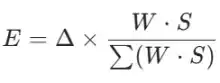
Where E is the emission reward, Δ is the daily total supply increment, W is the matrix of validator evaluation weights, and S is the corresponding staking weight. To prevent malicious collusion or bias, YC introduces a Clipping mechanism, which cuts weight settings that exceed the consensus baseline, ensuring the system's robustness.

2.2 Subnet Economy and the Dynamic TAO Paradigm

By 2025, Bittensor has evolved into a multi-layered architecture. The underlying layer is the Subtensor ledger managed by the Opentensor Foundation, while the upper layer consists of dozens of vertically specialized subnets (Subnets), focusing on specific tasks such as text generation, audio prediction, image recognition, etc.
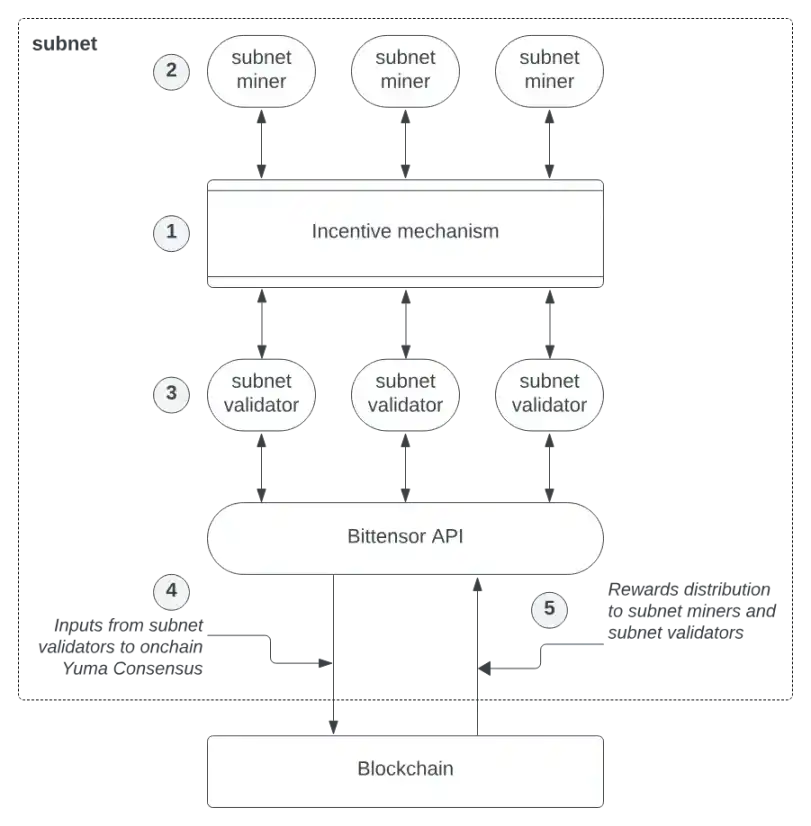
The introduced "Dynamic TAO" mechanism creates independent value reserve pools for each subnet through an Automated Market Maker (AMM), with its price determined by the ratio of TAO to Alpha tokens:
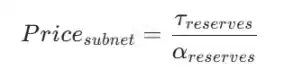
This mechanism enables automatic resource allocation: subnets with high demand and high-quality output will attract more staking, thereby receiving a higher proportion of daily TAO emissions. This competitive market structure is aptly compared to an "Olympic Games of Intelligence," naturally selecting out inefficient models.

3. The Rise of the Agent Economy: AI Agents as First-Class Citizens in Web3

In the 2024-2025 cycle, AI Agents are undergoing a fundamental transformation from "auxiliary tools" to "native on-chain entities." This evolution is reflected not only in the increasing complexity of the technical architecture but also in the fundamental expansion of their roles and permissions within the decentralized finance (DeFi) ecosystem.

Below is an in-depth analysis of this trend:

3.1 Agent Architecture: Closed Loop from Data to Execution

Current on-chain AI agents are no longer simple scripts but mature systems built on three complex logical layers:

Data Input Layer: Agents fetch real-time on-chain data such as liquidity pools, trading volume through blockchain nodes or APIs (like Ethers.js), and incorporate off-chain information like social media sentiment and centralized exchange prices through oracles (like Chainlink).

AI/ML Decision Layer (AI/ML Layer): Agents utilize Long Short-Term Memory networks (LSTM) to analyze price trends, or use Reinforcement Learning to continuously iterate optimal strategies in complex market games. The integration of Large Language Models (LLMs) also empowers agents to understand vague human intentions.

Blockchain Interaction Layer: This is the key to achieving "financial autonomy." Agents can now manage non-custodial wallets, automatically calculate optimal Gas fees, handle nonces, and even integrate MEV protection tools (e.g., Jito Labs) to prevent front-running in transactions.

3.2 Financial Rails and Agent-to-Agent Transactions

a16z's 2025 report particularly emphasized the financial backbone of AI agents—protocols like x402 and similar micro-payment standards. These standards allow agents to pay API fees or purchase services from other agents without human intervention. For example, the Olas (formerly Autonolas) ecosystem already processes over 2 million automated transactions between agents monthly, covering tasks from DeFi swaps to content creation.
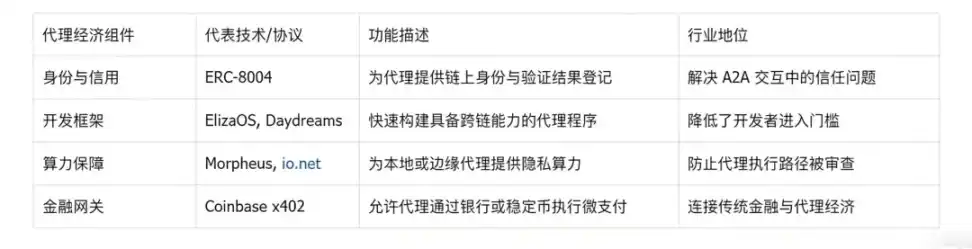
This trend is tangibly reflected in market data. In terms of growth rate, the AI agent market is on the verge of an explosion. According to research data from MarketsandMarkets, the global AI agent market is expected to grow from $7.84 billion in 2025 to $52.62 billion in 2030, with a compound annual growth rate (CAGR) of 46.3%. Furthermore, Grand View Research provides a similar long-term forecast, estimating the market size to reach $50.31 billion by 2030.

Meanwhile, standard tools at the development layer are also taking shape. The ElizaOS framework, strongly promoted by a16z, has become the infrastructure for the AI agent space, comparable to "Next.js" in front-end development. It allows developers to easily deploy AI agents with full financial capabilities on mainstream social platforms like X, Discord, and Telegram. As of early 2025, the total market capitalization of Web3 projects built on this framework has exceeded $20 billion.

4. Privacy Computing and Confidentiality: The Game of FHE, TEE, and ZKML

Privacy is one of the most challenging issues in the convergence of AI and Crypto. When enterprises run AI strategies on public chains, they neither want to leak private data nor disclose their core model parameters. Currently, the industry has formed three main technical paths: Fully Homomorphic Encryption (FHE), Trusted Execution Environment (TEE), and Zero-Knowledge Machine Learning (ZKML).

4.1 Zama and the Industrialization Journey of FHE

Zama, as a leading unicorn in this field, has made its fhEVM the standard for achieving "full-process encrypted computation." FHE allows computers to perform mathematical operations on data without decrypting it, and the results after decryption are identical to those from plaintext operations.

By 2025, Zama's technology stack has achieved significant performance leaps: for a 20-layer Convolutional Neural Network (CNN), computation speed increased by 21 times, and for a 50-layer CNN, it increased by 14 times. This progress makes "privacy stablecoins" (where transaction amounts are encrypted externally but the protocol can still verify legitimacy) and "sealed-bid auctions" possible on mainstream chains like Ethereum.

4.2 Verification Efficiency of ZKML and Integration with LLM

Zero-Knowledge Machine Learning (ZKML) focuses on "verification" rather than "computation." It allows one party to prove that it correctly ran a complex neural network model without exposing the input data or model weights. The latest zkLLM protocol can already perform end-to-end inference verification for a 13 billion parameter model, reducing proof generation time to within 15 minutes, with a proof size of only 200 KB. This technology is crucial for high-value financial audits and medical diagnostics.

4.3 Synergy between TEE and GPU: The Power of Hopper H100

Compared to FHE and ZKML, TEE (Trusted Execution Environment) offers execution speeds close to native performance. NVIDIA's H100 GPU introduces confidential computing capabilities, isolating memory through hardware-level firewalls, with inference overhead typically below 7%. Protocols like Ritual are heavily adopting GPU-based TEE to support AI agent applications requiring low latency and high throughput.

Privacy computing technology has officially moved from the idealistic conception of the laboratory into a new era of "production-level industrialization." Fully Homomorphic Encryption (FHE), Zero-Knowledge Machine Learning (ZKML), and Trusted Execution Environment (TEE) are no longer isolated technical tracks but together constitute a "modular confidentiality stack" for decentralized artificial intelligence.

This fusion is completely rewriting the underlying logic of Web3 and leads to the following three core conclusions:

FHE is the "HTTPS" underlying standard for Web3: As unicorns like Zama improve computational performance dozens of times, FHE is achieving a qualitative change from "everything public" to "encrypted by default." It solves the privacy challenge of on-chain state processing, enabling privacy stablecoins and fully MEV-resistant trading systems to move from theory to large-scale compliant applications.

ZKML is the mathematical endpoint for algorithmic accountability: The "ZKML singularity" arriving in the second half of 2025 marks a dramatic decrease in verification costs. By compressing the inference proof of a 13 billion parameter (13B) model to within 15 minutes, ZKML provides "mathematical-level consistency" guarantees for high-value financial audits and credit ratings, ensuring AI is no longer an untrustworthy black box.

TEE is the performance foundation of the agent economy: Compared to software solutions, TEE based on hardware like NVIDIA H100 offers near-native execution speeds with overhead below 7%. It is currently the only economically viable solution to support hundreds of millions of AI Agents making 24/7 real-time decisions, ensuring that agents securely hold private keys and execute complex strategies within hardware-level firewalls.
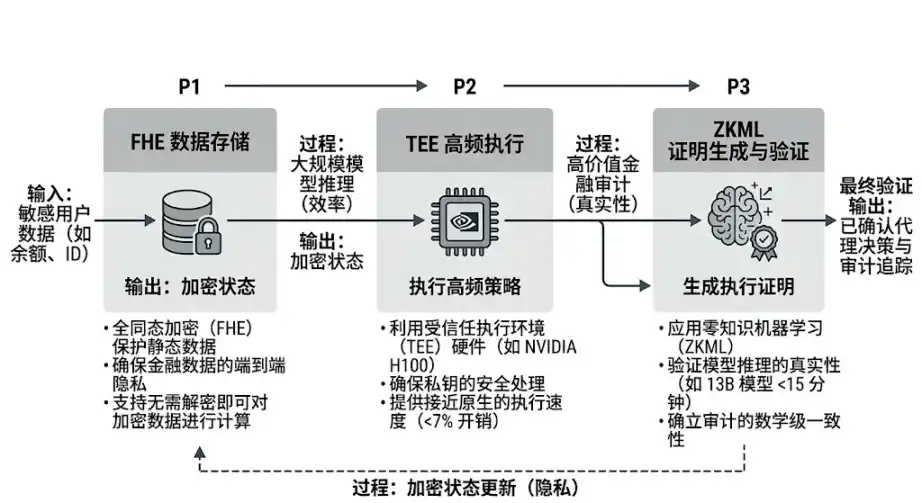
The future technological trend is not the victory of a single path, but the comprehensive popularization of "Hybrid Confidential Computing." In a complete AI business flow: use TEE for large-scale, high-frequency model inference to ensure efficiency; use ZKML at key nodes to generate execution proofs to ensure authenticity; and let FHE handle the encryption of sensitive financial states (such as account balances and private IDs).

This "trinity" fusion is reshaping the crypto industry from a "public transparent ledger" to a "sovereign privacy-enabled intelligent system," truly ushering in the era of an automated agent economy worth trillions of dollars.

5. Industry Security and Automated Auditing: AI as Web3's "Immune System"

The cryptocurrency industry has long been plagued by huge losses caused by smart contract vulnerabilities. The introduction of AI is changing this passive defense situation, shifting it from expensive manual audits to real-time AI monitoring.

5.1 Innovation in Static and Dynamic Audit Tools

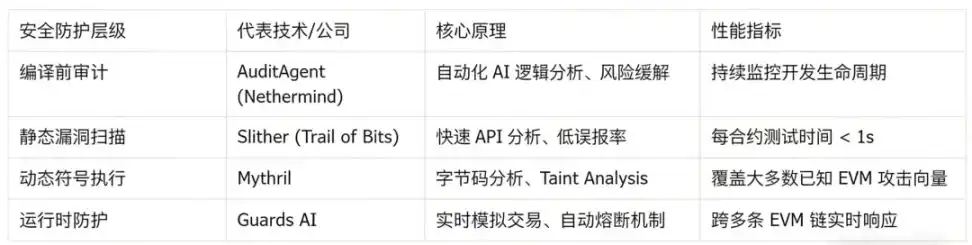
Tools like Slither and Mythril have deeply integrated machine learning models by 2025, capable of scanning Solidity contracts for reentrancy attacks, suicidal functions, or Gas consumption abnormalities in sub-second speeds. Furthermore, fuzzing tools like Foundry and Echidna use AI to generate extreme input data to probe deeply hidden logical vulnerabilities.

5.2 Real-time Threat Prevention Systems

In addition to pre-deployment audits, real-time defense has also made significant progress. Systems like Guardrail's Guards AI and CUBE3.AI can monitor all pending transactions (Mempool) across chains. Upon detecting malicious attack signals (such as governance attacks or oracle manipulation), they can automatically trigger contract pauses or intercept malicious transactions. This "active immunity" significantly reduces the risk of DeFi protocol hacks.
Practical Roadmap for Leveraging AI to Develop Crypto

In the future digital landscape, the convergence of AI and Crypto is no longer a technological experiment but a deep revolution concerning "productivity efficiency" and "wealth distribution rights." This combination not only gives AI an independently controlled "wallet" but also gives Crypto an autonomously thinking "brain," jointly opening the era of an autonomous agent economy worth trillions of dollars.

The following is the core benefits and practical map of this convergence at the enterprise and individual levels:

1. Enterprise Level: From "Cost Reduction and Efficiency Increase" to "Business Boundary Expansion"

For enterprises, the combination of AI and Crypto primarily solves the structural contradiction between high computing power costs, fragile system security, and data privacy protection.

Drastic reduction in infrastructure costs (DePIN effect): Leveraging distributed computing power networks (like Akash or Render), enterprises are no longer trapped by expensive NVIDIA H100 cluster procurement. Actual measurement data shows that renting global idle GPUs can reduce costs by 39% to 86% compared to traditional cloud service providers. This "computing freedom" allows startups to afford fine-tuning and training of ultra-large-scale models.

Automation and cost reduction of security barriers: Traditional contract audit cycles are long and expensive. Now, by deploying AI security agents like AuditAgent, driven by neural networks, enterprises can achieve "sentry monitoring" throughout the entire development lifecycle. They can identify logical vulnerabilities like reentrancy attacks the moment code is submitted and can automatically trigger contract circuit breakers at the mempool level the instant a hacker's command is issued, protecting protocol assets from loss.

"Encrypted Computing" for core business secrets: With Fully Homomorphic Encryption (FHE) and networks like Nillion's "Blind Compute," enterprises can run AI strategies on public chains without disclosing core model parameters and private customer data. This not only establishes data sovereignty but also allows financial and medical data, previously restricted by compliance risks, to enter the decentralized collaboration network.

2. Individual Level: From "Financial Blind Spots" to "Intelligent Sovereign Economy"

For individual users, the fusion of AI and Crypto means the complete disappearance of technical barriers and the opening of new income channels.

Intent-oriented "Private Banker": Future users will no longer need to understand what Gas fees or cross-chain bridges are. AI agents built on frameworks like ElizaOS will achieve "radical abstraction"—you just need to say: "Help me deposit this $1000 in the place with the highest interest and safest," and the AI will autonomously monitor APY across the network and automatically close positions during risk fluctuations. Ordinary people can thus enjoy asset management at the level of top hedge funds.

Assetization of personal data (Data Yield Farming): Your digital footprint is no longer taken for free by giants. Through platforms like Synesis One, users can participate in "Train2Earn," providing labeled data for AI training and directly obtaining token rewards. You can even earn passive dividends every time an AI calls a specific knowledge entry by holding a Kanon NFT, truly realizing "data as an asset."

Ultimate protection of privacy and identity: Using Worldcoin or cryptographic identity protocols, you can prove you are human and not an AI, while using privacy computing networks to protect sensitive information like your personal schedule and home address from being leaked to AI service providers. This "blind interaction" mode ensures that while you benefit from AI convenience, you still hold the highest right of interpretation over your digital sovereignty.

This two-way architectural evolution is handing "trust" to the blockchain and "efficiency" to AI. It is not only reconstructing the moats of enterprises but also building a ladder for every ordinary person to access the intelligent sovereign economy.

Evolution Prediction: Towards a New Era of "Intelligent Ledger"

In summary, how can AI and Crypto combine better? The answer lies in shifting from "simple tool stacking" to "deep architectural coupling."

First, blockchain must evolve into a platform capable of supporting large-scale computation. Efforts by protocols like Ritual and Starknet are making ZKML as simple as calling a standard library. Second, AI agents must become legitimate entities in economic life. With the proliferation of identity standards like ERC-8004, we will see an "intelligent network" composed of hundreds of millions of agents, engaging in 24/7 resource gaming and value exchange on-chain.

Finally, this fusion will reshape human financial sovereignty. Privacy payments realized through FHE, fair creator distribution achieved through provenance protocols, and algorithmic democratization realized through markets like Bittensor, together constitute a blueprint for a fairer, more efficient, and decentralized future digital economy.

In this technological marathon, the crypto industry provides not just capital, but a philosophical framework about "transparency" and "trust"; while AI provides the "brain" that makes these frameworks operate. As 2026 approaches, this convergence will not be limited to technical circles but will reach billions of ordinary users globally through more intuitive AI interaction interfaces.

İlgili Sorular

QWhat are the two main types of decentralized computing platforms mentioned in the article, and what are their key characteristics?

AThe two main types are: 1) Decentralized bilateral markets like Render Network (RNDR) and Akash Network (AKT), which aggregate idle global GPU power to provide cost-effective computing for tasks like rendering and AI inference. 2) New computational orchestration layers like Ritual, which act as an open, modular sovereign execution layer that embeds AI models directly into a blockchain's execution environment, allowing smart contracts to natively call AI inference results.

QHow does Bittensor's Yuma consensus mechanism work to incentivize and validate machine learning models?

ABittensor's Yuma consensus (YC) is a subjective utility consensus mechanism inspired by Gricean pragmatics. It operates on the logic that an efficient collaborator is incentivized to output truthful, relevant, and informative answers to gain the highest rewards. Validators evaluate the performance of miners (ML models), and token emissions are calculated based on a matrix of these validator-assigned weights and corresponding staking weights. A clipping mechanism is used to cut weights that exceed a consensus benchmark, ensuring system robustness against collusion or bias.

QWhat are the three primary technical paths for ensuring privacy in AI and Crypto applications, as discussed in the article?

AThe three primary technical paths for privacy are: 1) Fully Homomorphic Encryption (FHE), exemplified by Zama's fhEVM, which allows computation on encrypted data. 2) Zero-Knowledge Machine Learning (ZKML), which focuses on verifying that a complex neural network model was run correctly without revealing input data or model weights. 3) Trusted Execution Environments (TEE), such as those utilizing NVIDIA's H100 GPU, which provide hardware-level memory isolation for high-speed, confidential computation with low overhead.

QAccording to the article, how is AI transforming security and auditing in the Web3 space?

AAI is transforming Web3 security by moving from expensive manual audits to real-time AI monitoring. Tools like Slither and Mythril now integrate machine learning models to scan smart contracts for vulnerabilities at sub-second speeds. Furthermore, real-time threat prevention systems like Guardrail's Guards AI and CUBE3.AI monitor the mempool across chains, automatically intercepting malicious transactions or triggering contract pauses upon detecting attack signals, such as governance attacks or oracle manipulation, thus providing a proactive 'immune system' for DeFi protocols.

QWhat is the predicted future trend for the architecture of decentralized AI, particularly concerning privacy technologies?

AThe predicted future trend is not the victory of a single path but the comprehensive adoption of 'Hybrid Confidential Computing.' In a complete AI workflow, TEE would be used for large-scale, high-frequency model inference to ensure efficiency; critical nodes would use ZKML to generate execution proofs for verifiability; and sensitive financial states (like account balances) would be handled by FHE for encrypted storage. This 'trinity' fusion is reshaping the crypto industry from a 'transparent ledger' into a 'sovereign privacy intelligent system' capable of powering a multi-trillion-dollar automated agent economy.

İlgili Okumalar

North Korean Hackers Loot $500 Million in a Single Month, Becoming the Top Threat to Crypto Security

North Korean hackers, particularly the notorious Lazarus Group and its subgroup TraderTraitor, have stolen over $500 million from cryptocurrency DeFi platforms in less than three weeks, bringing their total theft for the year to over $700 million. Recent major attacks on Drift Protocol and KelpDAO, resulting in losses of approximately $286 million and $290 million respectively, highlight a strategic shift: instead of targeting core smart contracts, attackers are now exploiting vulnerabilities in peripheral infrastructure. For instance, the KelpDAO attack involved compromising downstream RPC infrastructure used by LayerZero's decentralized validation network (DVN), allowing manipulation without breaching core cryptography. This sophisticated approach mirrors advanced corporate cyber-espionage. Additionally, North Korea has systematically infiltrated the global crypto workforce, with an estimated 100 operatives using fake identities to gain employment at blockchain companies, enabling long-term access to sensitive systems and facilitating large-scale thefts. According to Chainalysis, North Korean-linked hackers stole a record $2 billion in 2025, accounting for 60% of all global crypto theft that year. Their total historical crypto theft has reached $6.75 billion. Post-theft, they employ specialized money laundering methods, heavily relying on Chinese OTC brokers and cross-chain mixing services rather than standard decentralized exchanges. Security experts, while acknowledging the increased sophistication, emphasize that many attacks still exploit fundamental weaknesses like poor access controls and centralized operational risks. Strengthening private key management, limiting privileged access, and enhancing coordination among exchanges, analysts, and law enforcement immediately after an attack are critical to improving defense and fund recovery chances. The industry's challenge now extends beyond secure smart contracts to safeguarding operational security at the infrastructure level.

marsbit56 dk önce

North Korean Hackers Loot $500 Million in a Single Month, Becoming the Top Threat to Crypto Security

marsbit56 dk önce

Circle CEO's Seoul Visit: No Korean Won Stablecoin Issuance, But Met All Major Korean Banks

Circle CEO Jeremy Allaire's recent activities in Seoul indicate a strategic shift for the company, moving away from issuing a Korean won-backed stablecoin and instead focusing on embedding itself as a key infrastructure provider within Korea’s financial and crypto ecosystem. Despite Korea accounting for nearly 30% of global crypto trading volume—with a market characterized by high retail participation and altcoin dominance—Circle has chosen not to compete for the role of stablecoin issuer. Instead, Allaire met with major Korean banks (including Shinhan, KB, and Woori), financial groups, leading exchanges (Upbit, Bithumb, Coinone), and tech firms like Kakao. This approach reflects a broader industry transition: the core of stablecoin competition is shifting from issuance rights to systemic positioning. With Korean regulators still debating whether banks or tech companies should issue stablecoins, Circle is avoiding regulatory uncertainty by strengthening its role as a service and technology partner. The company is deepening integration with trading platforms, building connections, and promoting stablecoin infrastructure. This positions Circle to benefit regardless of which entity eventually issues a won stablecoin. Allaire also noted the potential for a Chinese yuan stablecoin in the next 3–5 years, underscoring a regional trend of stablecoins becoming more regulated and integrated with traditional finance. Ultimately, Circle’s strategy highlights that future influence in the stablecoin market will belong not necessarily to the issuers, but to the foundational infrastructure layers that enable cross-system transactions.

marsbit1 saat önce

Circle CEO's Seoul Visit: No Korean Won Stablecoin Issuance, But Met All Major Korean Banks

marsbit1 saat önce

SpaceX Ties Up with Cursor: A High-Stakes AI Gambit of 'Lock First, Acquire Later'

SpaceX has secured an option to acquire AI programming company Cursor for $60 billion, with an alternative clause requiring a $10 billion collaboration fee if the acquisition does not proceed. This structure is not merely a potential acquisition but a strategic move to control core access points in the AI era. The deal is designed as a flexible, dual-path arrangement, allowing SpaceX to either fully acquire Cursor or maintain a binding partnership through high-cost collaboration. This "option-style" approach minimizes immediate regulatory and integration risks while ensuring long-term alignment between the two companies. At its core, the transaction exchanges critical AI-era resources: SpaceX provides its Colossus supercomputing cluster—one of the world’s most powerful AI training infrastructures—while Cursor contributes its AI-native developer environment and strong product adoption. This synergy connects compute power, models, and application layers, forming a closed-loop AI capability stack. Cursor, founded in 2022, has achieved rapid growth with over $1 billion in annual revenue and widespread enterprise adoption. Its value lies in transforming software development through AI agents capable of coding, debugging, and system design—positioning it as a gateway to future software production. For SpaceX, this move is part of a broader strategy to evolve from a aerospace company into an AI infrastructure empire, integrating xAI, supercomputing, and chip manufacturing. Controlling Cursor fills a gap in its developer tooling layer, strengthening its AI narrative ahead of a potential IPO. The deal reflects a shift in AI competition from model superiority to ecosystem and entry-point control. With programming tools as a key battleground, securing developer loyalty becomes crucial for dominating the software production landscape. Risks include questions around Cursor’s valuation, technical integration challenges, and potential regulatory scrutiny. Nevertheless, the deal underscores a strategic bet: controlling both compute and software development access may redefine power dynamics in the AI-driven future.

marsbit2 saat önce

SpaceX Ties Up with Cursor: A High-Stakes AI Gambit of 'Lock First, Acquire Later'

marsbit2 saat önce

İşlemler

Spot
Futures

Popüler Makaleler

GROK AI Nedir

Grok AI: Web3 Döneminde Konuşma Teknolojisini Devrim Niteliğinde Yenilik Giriş Hızla gelişen yapay zeka alanında, Grok AI, ileri teknoloji ve kullanıcı etkileşimi alanlarını birleştiren dikkate değer bir proje olarak öne çıkıyor. Ünlü girişimci Elon Musk'ın liderliğindeki xAI tarafından geliştirilen Grok AI, yapay zeka ile etkileşim şeklimizi yeniden tanımlamayı hedefliyor. Web3 hareketi devam ederken, Grok AI, karmaşık sorgulara yanıt vermek için konuşma yapay zekasının gücünden yararlanmayı amaçlıyor ve kullanıcılara sadece bilgilendirici değil, aynı zamanda eğlenceli bir deneyim sunuyor. Grok AI Nedir? Grok AI, kullanıcılarla dinamik bir şekilde etkileşimde bulunmak üzere tasarlanmış sofistike bir konuşma yapay zeka sohbet botudur. Birçok geleneksel yapay zeka sisteminin aksine, Grok AI, genellikle uygunsuz veya standart yanıtların dışında kabul edilen daha geniş bir sorgu yelpazesini benimsemektedir. Projenin temel hedefleri şunlardır: Güvenilir Akıl Yürütme: Grok AI, bağlamsal anlayışa dayalı mantıklı yanıtlar sağlamak için sağduyu akıl yürütmeyi vurgular. Ölçeklenebilir Denetim: Araç yardımı entegrasyonu, kullanıcı etkileşimlerinin hem izlenmesini hem de kalite için optimize edilmesini sağlar. Resmi Doğrulama: Güvenlik en önemli önceliktir; Grok AI, çıktılarının güvenilirliğini artırmak için resmi doğrulama yöntemlerini entegre eder. Uzun Bağlam Anlayışı: AI modeli, kapsamlı konuşma geçmişini saklama ve hatırlama konusunda mükemmel bir performans sergileyerek anlamlı ve bağlamsal olarak farkında tartışmaların yapılmasını kolaylaştırır. Saldırgan Dayanıklılık: Manipüle edilmiş veya kötü niyetli girdilere karşı savunmalarını geliştirmeye odaklanarak, Grok AI kullanıcı etkileşimlerinin bütünlüğünü korumayı hedefler. Özünde, Grok AI sadece bir bilgi alma cihazı değil; dinamik diyalogu teşvik eden, etkileyici bir konuşma partneridir. Grok AI'nın Yaratıcısı Grok AI'nın arkasındaki beyin, otomotiv, uzay yolculuğu ve teknoloji gibi çeşitli alanlarda yenilikle özdeşleşen Elon Musk'tır. Yapay zeka teknolojisini faydalı yollarla geliştirmeye odaklanan xAI çatısı altında, Musk'ın vizyonu, yapay zeka etkileşimlerinin anlaşılmasını yeniden şekillendirmeyi amaçlıyor. Liderlik ve temel etik, Musk'ın teknolojik sınırları zorlamaya olan bağlılığı tarafından derinden etkilenmektedir. Grok AI'nın Yatırımcıları Grok AI'yi destekleyen yatırımcılarla ilgili spesifik detaylar sınırlı kalmakla birlikte, projenin kuluçka merkezi olan xAI'nin, esasen Elon Musk tarafından kurulduğu ve desteklendiği kamuya açık bir şekilde kabul edilmektedir. Musk'ın önceki girişimleri ve mülkleri, Grok AI'nın güvenilirliğini ve büyüme potansiyelini daha da artıran sağlam bir destek sağlar. Ancak, şu anda Grok AI'yı destekleyen ek yatırım fonları veya kuruluşlarıyla ilgili bilgiye kolayca erişim sağlanamamaktadır; bu da potansiyel gelecekteki keşif alanını işaret etmektedir. Grok AI Nasıl Çalışır? Grok AI'nın operasyonel mekanikleri, kavramsal çerçevesi kadar yenilikçidir. Proje, benzersiz işlevselliklerini kolaylaştıran birkaç son teknoloji ürünü teknolojiyi entegre eder: Sağlam Altyapı: Grok AI, konteyner orkestrasyonu için Kubernetes, performans ve güvenlik için Rust ve yüksek performanslı sayısal hesaplama için JAX kullanılarak inşa edilmiştir. Bu üçlü, sohbet botunun verimli çalışmasını, etkili bir şekilde ölçeklenmesini ve kullanıcılara zamanında hizmet vermesini sağlar. Gerçek Zamanlı Bilgi Erişimi: Grok AI'nın ayırt edici özelliklerinden biri, X platformu (önceden Twitter olarak biliniyordu) aracılığıyla gerçek zamanlı verilere erişim yeteneğidir. Bu yetenek, yapay zekaya en son bilgilere erişim sağlar ve diğer yapay zeka modellerinin gözden kaçırabileceği zamanında yanıtlar ve öneriler sunmasına olanak tanır. İki Etkileşim Modu: Grok AI, kullanıcılara “Eğlenceli Mod” ve “Normal Mod” arasında seçim yapma imkanı sunar. Eğlenceli Mod, daha eğlenceli ve mizahi bir etkileşim tarzı sağlarken, Normal Mod, kesin ve doğru yanıtlar vermeye odaklanır. Bu çok yönlülük, çeşitli kullanıcı tercihlerine hitap eden özelleştirilmiş bir deneyim sağlar. Özünde, Grok AI performansı etkileşimle birleştirerek, hem zenginleştirici hem de eğlenceli bir deneyim yaratmaktadır. Grok AI'nın Zaman Çizelgesi Grok AI'nın yolculuğu, gelişim ve dağıtım aşamalarını yansıtan önemli dönüm noktalarıyla işaretlenmiştir: İlk Geliştirme: Grok AI'nın temel aşaması, modelin ilk eğitim ve ince ayarının yapıldığı yaklaşık iki ay boyunca gerçekleşmiştir. Grok-2 Beta Yayını: Önemli bir ilerleme olarak, Grok-2 beta duyurulmuştur. Bu sürüm, sohbet etme, kodlama ve akıl yürütme yetenekleriyle donatılmış iki versiyon—Grok-2 ve Grok-2 mini—sunmuştur. Halka Açık Erişim: Beta geliştirmesinin ardından, Grok AI X platformu kullanıcılarına sunulmuştur. Telefon numarasıyla doğrulanan ve en az yedi gün aktif olan hesap sahipleri, sınırlı bir versiyona erişim sağlayarak teknolojiyi daha geniş bir kitleye ulaştırmaktadır. Bu zaman çizelgesi, Grok AI'nın kuruluşundan kamu etkileşimine kadar sistematik büyümesini kapsar ve sürekli iyileştirme ve kullanıcı etkileşimine olan bağlılığını vurgular. Grok AI'nın Ana Özellikleri Grok AI, yenilikçi kimliğine katkıda bulunan birkaç ana özelliği kapsamaktadır: Gerçek Zamanlı Bilgi Entegrasyonu: Güncel ve ilgili bilgilere erişim, Grok AI'yı birçok statik modelden ayırarak, etkileyici ve doğru bir kullanıcı deneyimi sağlar. Çeşitli Etkileşim Tarzları: Farklı etkileşim modları sunarak, Grok AI çeşitli kullanıcı tercihlerine hitap eder ve yapay zeka ile konuşurken yaratıcılığı ve kişiselleştirmeyi teşvik eder. Gelişmiş Teknolojik Altyapı: Kubernetes, Rust ve JAX kullanımı, projeye güvenilirlik ve optimal performans sağlamak için sağlam bir çerçeve sunar. Etik Tartışma Dikkati: Görüntü üreten bir işlevin dahil edilmesi, projenin yenilikçi ruhunu sergiler. Ancak, aynı zamanda tanınabilir figürlerin saygılı bir şekilde tasvir edilmesi ve telif hakkı ile ilgili etik konuları da gündeme getirir—bu, yapay zeka topluluğunda süregelen bir tartışmadır. Sonuç Konuşma yapay zekası alanında öncü bir varlık olarak Grok AI, dijital çağda dönüştürücü kullanıcı deneyimlerinin potansiyelini kapsar. xAI tarafından geliştirilen ve Elon Musk'ın vizyoner yaklaşımıyla yönlendirilen Grok AI, gerçek zamanlı bilgiyi gelişmiş etkileşim yetenekleriyle birleştirir. Yapay zekanın neler başarabileceği konusunda sınırları zorlamayı hedeflerken, etik konulara ve kullanıcı güvenliğine odaklanmayı sürdürmektedir. Grok AI, sadece teknolojik ilerlemeyi değil, aynı zamanda Web3 manzarasında yeni bir konuşma paradigmasını da temsil eder ve kullanıcılara hem yetkin bilgi hem de eğlenceli etkileşim sunma vaadinde bulunur. Proje gelişmeye devam ederken, teknolojinin, yaratıcılığın ve insan benzeri etkileşimin kesişim noktasında nelerin başarılabileceğinin bir kanıtı olarak durmaktadır.

254 Toplam GörüntülenmeYayınlanma 2024.12.26Güncellenme 2024.12.26

GROK AI Nedir

ERC AI Nedir

Euruka Tech: $erc ai ve Web3'teki Hedefleri Üzerine Bir Genel Bakış Giriş Blockchain teknolojisi ve merkeziyetsiz uygulamaların hızla gelişen manzarasında, her biri benzersiz hedefler ve metodolojilerle yeni projeler sıkça ortaya çıkmaktadır. Bu projelerden biri, kripto para ve Web3 alanında faaliyet gösteren Euruka Tech'tir. Euruka Tech'in, özellikle $erc ai token'ının ana odak noktası, merkeziyetsiz teknolojinin büyüyen yeteneklerinden yararlanmak için tasarlanmış yenilikçi çözümler sunmaktır. Bu makale, Euruka Tech'in kapsamlı bir genel görünümünü, hedeflerini, işlevselliğini, yaratıcısının kimliğini, potansiyel yatırımcılarını ve Web3'teki daha geniş bağlam içindeki önemini keşfetmeyi amaçlamaktadır. Euruka Tech, $erc ai Nedir? Euruka Tech, Web3 ortamının sunduğu araçlar ve işlevsellikleri kullanan bir proje olarak tanımlanmaktadır ve operasyonlarında yapay zekayı entegre etmeye odaklanmaktadır. Projenin çerçevesine dair spesifik detaylar biraz belirsiz olsa da, kullanıcı etkileşimini artırmayı ve kripto alanındaki süreçleri otomatikleştirmeyi amaçlamaktadır. Proje, yalnızca işlemleri kolaylaştırmakla kalmayıp, aynı zamanda yapay zeka aracılığıyla öngörücü işlevsellikleri de entegre eden merkeziyetsiz bir ekosistem yaratmayı hedeflemektedir; bu nedenle token'ının adı $erc ai'dir. Amaç, büyüyen Web3 alanında daha akıllı etkileşimleri ve verimli işlem işleme süreçlerini kolaylaştıran sezgisel bir platform sunmaktır. Euruka Tech'in Yaratıcısı Kimdir, $erc ai? Şu anda, Euruka Tech'in arkasındaki yaratıcı veya kurucu ekip hakkında bilgi verilmemiştir ve bu durum biraz belirsizdir. Bu veri eksikliği, ekibin geçmişi hakkında bilgi sahibi olmanın genellikle blockchain sektöründe güvenilirlik oluşturmak için gerekli olduğu endişelerini doğurmaktadır. Bu nedenle, somut detaylar kamuya sunulana kadar bu bilgiyi bilinmeyen olarak sınıflandırdık. Euruka Tech'in Yatırımcıları Kimlerdir, $erc ai? Benzer şekilde, Euruka Tech projesinin yatırımcıları veya destekleyen organizasyonları hakkında mevcut araştırmalarla kolayca sağlanan bir bilgi yoktur. Euruka Tech ile etkileşimde bulunmayı düşünen potansiyel paydaşlar veya kullanıcılar için kritik bir unsur, kurumsal finansal ortaklıklar veya saygın yatırım firmalarından gelen destekle sağlanan güvencedir. Yatırım ilişkileri hakkında açıklamalar olmadan, projenin finansal güvenliği veya sürdürülebilirliği hakkında kapsamlı sonuçlar çıkarmak zordur. Bulunan bilgilere paralel olarak, bu bölüm de bilinmeyen durumundadır. Euruka Tech, $erc ai Nasıl Çalışır? Euruka Tech için detaylı teknik spesifikasyonların eksik olmasına rağmen, yenilikçi hedeflerini göz önünde bulundurmak önemlidir. Proje, yapay zekanın hesaplama gücünden yararlanarak kripto para ortamında kullanıcı deneyimini otomatikleştirmeyi ve geliştirmeyi hedeflemektedir. AI'yi blockchain teknolojisiyle entegre ederek, Euruka Tech otomatik ticaret, risk değerlendirmeleri ve kişiselleştirilmiş kullanıcı arayüzleri gibi özellikler sunmayı amaçlamaktadır. Euruka Tech'in yenilikçi özü, kullanıcılar ile merkeziyetsiz ağların sunduğu geniş olanaklar arasında kesintisiz bir bağlantı yaratma hedefinde yatmaktadır. Makine öğrenimi algoritmaları ve AI kullanarak, ilk kez kullanıcı zorluklarını en aza indirmeyi ve Web3 çerçevesindeki işlem deneyimlerini düzene sokmayı amaçlamaktadır. AI ve blockchain arasındaki bu simbiyoz, $erc ai token'ının önemini vurgulamakta ve geleneksel kullanıcı arayüzleri ile merkeziyetsiz teknolojilerin gelişmiş yetenekleri arasında bir köprü işlevi görmektedir. Euruka Tech, $erc ai Zaman Çizelgesi Maalesef, Euruka Tech hakkında mevcut olan sınırlı bilgiler nedeniyle, projenin yolculuğundaki önemli gelişmeler veya kilometre taşları hakkında detaylı bir zaman çizelgesi sunamıyoruz. Genellikle bir projenin evrimini haritalamak ve büyüme eğrisini anlamak için değerli olan bu zaman çizelgesi şu anda mevcut değildir. Önemli olaylar, ortaklıklar veya işlevsel eklemeler hakkında bilgiler belirgin hale geldikçe, güncellemeler kesinlikle Euruka Tech'in kripto alanındaki görünürlüğünü artıracaktır. Diğer “Eureka” Projeleri Üzerine Açıklama Birden fazla projenin ve şirketin “Eureka” benzeri bir isimlendirmeye sahip olduğunu belirtmek önemlidir. Araştırmalar, robotlara karmaşık görevler öğretmeye odaklanan NVIDIA Research'ten bir AI ajanı gibi girişimleri, ayrıca eğitim ve müşteri hizmetleri analitiğinde kullanıcı deneyimini geliştiren Eureka Labs ve Eureka AI'yi tanımlamıştır. Ancak, bu projeler Euruka Tech'ten farklıdır ve hedefleri veya işlevleri ile karıştırılmamalıdır. Sonuç Euruka Tech, $erc ai token'ı ile birlikte, Web3 manzarasında umut verici ancak şu anda belirsiz bir oyuncuyu temsil etmektedir. Yaratıcısı ve yatırımcıları hakkında detaylar açıklanmamış olsa da, yapay zekayı blockchain teknolojisiyle birleştirme konusundaki temel hedefi ilgi odağı olmaktadır. Projenin, gelişmiş otomasyon aracılığıyla kullanıcı etkileşimini teşvik etme konusundaki benzersiz yaklaşımları, Web3 ekosistemi ilerledikçe onu farklı kılabilir. Kripto piyasası gelişmeye devam ederken, paydaşların Euruka Tech etrafındaki gelişmelere dikkat etmeleri önemlidir; belgelenmiş yeniliklerin, ortaklıkların veya tanımlanmış bir yol haritasının gelişimi, önümüzdeki dönemde önemli fırsatlar sunabilir. Şu an itibarıyla, Euruka Tech'in potansiyelini ve rekabetçi kripto manzarasındaki konumunu açığa çıkarabilecek daha somut içgörüler beklemekteyiz.

232 Toplam GörüntülenmeYayınlanma 2025.01.02Güncellenme 2025.01.02

ERC AI Nedir

DUOLINGO AI Nedir

DUOLINGO AI: Dil Öğrenimini Web3 ve AI İnovasyonu ile Entegre Etmek Teknolojinin eğitimi yeniden şekillendirdiği bir çağda, yapay zeka (AI) ve blok zinciri ağlarının entegrasyonu dil öğrenimi için yeni bir ufuk açmaktadır. DUOLINGO AI ve ona bağlı kripto para birimi $DUOLINGO AI ile tanışın. Bu proje, önde gelen dil öğrenme platformlarının eğitimsel yeteneklerini merkeziyetsiz Web3 teknolojisinin faydalarıyla birleştirmeyi hedefliyor. Bu makale, DUOLINGO AI'nın temel yönlerini, hedeflerini, teknolojik çerçevesini, tarihsel gelişimini ve gelecekteki potansiyelini incelerken, orijinal eğitim kaynağı ile bu bağımsız kripto para girişimi arasındaki netliği korumaktadır. DUOLINGO AI Genel Görünümü DUOLINGO AI'nın temelinde, öğrenicilerin dil yeterliliğinde eğitimsel kilometre taşlarına ulaşmaları için kriptografik ödüller kazanabilecekleri merkeziyetsiz bir ortam oluşturma hedefi yatmaktadır. Akıllı sözleşmeler uygulayarak, proje beceri doğrulama süreçlerini ve token tahsislerini otomatikleştirmeyi amaçlamakta, şeffaflık ve kullanıcı sahipliğini vurgulayan Web3 ilkelerine uymaktadır. Model, dil edinimindeki geleneksel yaklaşımlardan ayrılarak, token sahiplerinin kurs içeriği ve ödül dağıtımları üzerinde iyileştirmeler önermesine olanak tanıyan topluluk odaklı bir yönetişim yapısına dayanmaktadır. DUOLINGO AI'nın bazı dikkat çekici hedefleri şunlardır: Oyunlaştırılmış Öğrenme: Proje, dil yeterlilik seviyelerini temsil etmek için blok zinciri başarıları ve değiştirilemez tokenleri (NFT'ler) entegre ederek, katılımcıları motive eden dijital ödüller sunmaktadır. Merkeziyetsiz İçerik Üretimi: Eğitmenler ve dil meraklılarının kendi kurslarını katkıda bulunmalarına olanak tanıyarak, tüm katkıda bulunanların fayda sağladığı bir gelir paylaşım modeli oluşturmaktadır. AI Destekli Kişiselleştirme: Gelişmiş makine öğrenimi modellerini kullanarak, DUOLINGO AI dersleri bireysel öğrenme ilerlemesine uyacak şekilde kişiselleştirmekte, köklü platformlarda bulunan uyarlamalı özelliklere benzer bir deneyim sunmaktadır. Proje Yaratıcıları ve Yönetişim Nisan 2025 itibarıyla, $DUOLINGO AI'nın arkasındaki ekip takma isimler kullanmaktadır; bu, merkeziyetsiz kripto para alanında sıkça görülen bir uygulamadır. Bu anonimlik, bireysel geliştiricilere odaklanmak yerine kolektif büyümeyi ve paydaş katılımını teşvik etmek amacıyla tasarlanmıştır. Solana blok zincirinde dağıtılan akıllı sözleşme, geliştiricinin cüzdan adresini not etmekte, bu da yaratıcıların kimliğinin bilinmemesine rağmen işlemlerle ilgili şeffaflık taahhüdünü simgelemektedir. Yol haritasına göre, DUOLINGO AI, Merkeziyetsiz Otonom Organizasyon (DAO) haline gelmeyi hedeflemektedir. Bu yönetişim yapısı, token sahiplerinin özellik uygulamaları ve hazine tahsisleri gibi kritik konularda oy kullanmalarına olanak tanımaktadır. Bu model, çeşitli merkeziyetsiz uygulamalarda bulunan topluluk güçlendirme ethosu ile uyumlu olup, kolektif karar verme sürecinin önemini vurgulamaktadır. Yatırımcılar ve Stratejik Ortaklıklar Şu anda, $DUOLINGO AI ile bağlantılı olarak kamuya açık tanımlanabilir kurumsal yatırımcılar veya risk sermayedarları bulunmamaktadır. Bunun yerine, projenin likiditesi esas olarak merkeziyetsiz borsa (DEX) kaynaklıdır ve bu, geleneksel eğitim teknolojisi şirketlerinin finansman stratejileriyle keskin bir zıtlık oluşturmaktadır. Bu tabandan gelen model, merkeziyetsizliğe olan bağlılığını yansıtan topluluk odaklı bir yaklaşımı işaret etmektedir. DUOLINGO AI, beyaz kitabında, kurs tekliflerini zenginleştirmeyi amaçlayan belirsiz “blok zinciri eğitim platformları” ile işbirlikleri kurmayı planladığını belirtmektedir. Belirli ortaklıklar henüz açıklanmamış olsa da, bu işbirlikçi çabalar, blok zinciri yeniliğini eğitim girişimleri ile birleştirmeyi amaçlayan bir stratejiyi ima etmektedir ve çeşitli öğrenme yollarında erişimi ve kullanıcı katılımını genişletmektedir. Teknolojik Mimari AI Entegrasyonu DUOLINGO AI, eğitimsel tekliflerini geliştirmek için iki ana AI destekli bileşen içermektedir: Uyarlanabilir Öğrenme Motoru: Bu sofistike motor, kullanıcı etkileşimlerinden öğrenmekte olup, büyük eğitim platformlarından gelen özel modellere benzer. Belirli öğrenici zorluklarını ele almak için ders zorluğunu dinamik olarak ayarlamakta ve zayıf alanları hedeflenmiş alıştırmalarla pekiştirmektedir. Konuşma Ajanları: GPT-4 destekli sohbet botlarını kullanarak, DUOLINGO AI kullanıcıların simüle edilmiş konuşmalara katılmalarına olanak tanıyarak, daha etkileşimli ve pratik bir dil öğrenme deneyimi sunmaktadır. Blok Zinciri Altyapısı $DUOLINGO AI, Solana blok zincirinde inşa edilmiş kapsamlı bir teknolojik çerçeve kullanmaktadır: Beceri Doğrulama Akıllı Sözleşmeleri: Bu özellik, yeterlilik testlerini başarıyla geçen kullanıcılara otomatik olarak token ödülleri vermekte, gerçek öğrenim sonuçları için teşvik yapısını güçlendirmektedir. NFT Rozetleri: Bu dijital tokenler, öğrenicilerin kurslarının bir bölümünü tamamlamak veya belirli becerileri ustalaşmak gibi ulaştıkları çeşitli kilometre taşlarını simgelemekte ve bunları dijital olarak takas etmelerine veya sergilemelerine olanak tanımaktadır. DAO Yönetişimi: Token sahibi topluluk üyeleri, anahtar öneriler üzerinde oy kullanarak yönetişime katılabilir, bu da kurs teklifleri ve platform özelliklerinde yeniliği teşvik eden katılımcı bir kültürü kolaylaştırmaktadır. Tarihsel Zaman Çizelgesi 2022–2023: Kavramsallaştırma DUOLINGO AI için temel, dil öğrenimindeki AI ilerlemeleri ile blok zinciri teknolojisinin merkeziyetsiz potansiyeli arasındaki sinerjiyi vurgulayan bir beyaz kağıdın oluşturulmasıyla başlar. 2024: Beta Lansmanı Sınırlı bir beta sürümü, popüler dillerdeki teklifleri tanıtarak, erken kullanıcıları token teşvikleri ile ödüllendirir ve projenin topluluk katılım stratejisinin bir parçası olarak sunulmaktadır. 2025: DAO Geçişi Nisan ayında, tokenlerin dolaşıma girmesiyle tam bir ana ağ lansmanı gerçekleşir ve topluluk, Asya dillerine ve diğer kurs gelişmelerine olası genişlemeler hakkında tartışmalara başlar. Zorluklar ve Gelecek Yönelimleri Teknik Engeller Hırslı hedeflerine rağmen, DUOLINGO AI önemli zorluklarla karşı karşıyadır. Ölçeklenebilirlik, AI işleme ile merkeziyetsiz bir ağı sürdürme maliyetleri arasında denge kurma konusunda sürekli bir endişe kaynağıdır. Ayrıca, merkeziyetsiz bir teklif arasında kaliteli içerik üretimi ve moderasyonu sağlamak, eğitim standartlarını koruma konusunda karmaşıklıklar yaratmaktadır. Stratejik Fırsatlar İleriye dönük olarak, DUOLINGO AI, akademik kurumlarla mikro yeterlilik ortaklıkları kurma potansiyeline sahiptir ve dil becerilerinin blok zinciri ile doğrulanmış onaylarını sağlamaktadır. Ayrıca, çapraz zincir genişlemesi, projenin daha geniş kullanıcı tabanlarına ve ek blok zinciri ekosistemlerine erişim sağlamasına olanak tanıyabilir, böylece birlikte çalışabilirliğini ve erişimini artırabilir. Sonuç DUOLINGO AI, yapay zeka ve blok zinciri teknolojisinin yenilikçi bir birleşimini temsil etmekte olup, geleneksel dil öğrenim sistemlerine topluluk odaklı bir alternatif sunmaktadır. Takma isimli geliştirme süreci ve ortaya çıkan ekonomik modeli bazı riskler taşısa da, projenin oyunlaştırılmış öğrenme, kişiselleştirilmiş eğitim ve merkeziyetsiz yönetişim konusundaki taahhüdü, Web3 alanında eğitim teknolojisi için bir yol haritası aydınlatmaktadır. AI gelişmeye devam ederken ve blok zinciri ekosistemi evrim geçirirken, DUOLINGO AI gibi girişimler, kullanıcıların dil eğitimi ile etkileşim biçimlerini yeniden tanımlayabilir, toplulukları güçlendirebilir ve yenilikçi öğrenme mekanizmaları aracılığıyla katılımı ödüllendirebilir.

236 Toplam GörüntülenmeYayınlanma 2025.04.11Güncellenme 2025.04.11

DUOLINGO AI Nedir

Tartışmalar

HTX Topluluğuna hoş geldiniz. Burada, en son platform gelişmeleri hakkında bilgi sahibi olabilir ve profesyonel piyasa görüşlerine erişebilirsiniz. Kullanıcıların AI (AI) fiyatı hakkındaki görüşleri aşağıda sunulmaktadır.

活动图片