Institutional Dawn and the End of Cycles: Deciphering the Core Narratives and Divergences of Eight Top Crypto Institutions for 2026

深潮2025-12-27 tarihinde yayınlandı2025-12-27 tarihinde güncellendi

Özet

The 2026 crypto market is shifting from a retail-driven, halving-based cycle to an institutional era, according to eight major crypto institutions. The traditional four-year cycle is breaking as Bitcoin ETFs shift demand from miners to institutional allocation. Bitcoin's volatility is predicted to drop below Nvidia's, signaling its maturation as a hedge against inflation. Key consensus narratives include: - Stablecoins surpassing $1T in market cap, potentially overtaking traditional payment networks like ACH. - AI agents driving micro-payments via protocols like Google’s AP2 and Coinbase’s x402, with "KYA" (Know Your Agent) replacing KYC. - Prediction markets growing to $100B+ in volume, fueled by regulatory advantages. Major divergences exist: - Digital Asset Treasuries (DATs) face a potential "great cleansing" with many failing, though some dismiss their impact. - Quantum computing is seen as an urgent threat by some but a non-issue by others. - Most Layer 2 chains may become "zombie chains" as liquidity consolidates to leaders. Non-consensus predictions include a privacy token resurgence, regulated ICOs returning, and crypto stocks outperforming tech giants. Investors must focus on blue-chip assets, real yields, and discerning long-term trends from short-term noise.

Author:Bruce

Introduction: From "Wild West" to "Wall Street Branch"

2026 may be recorded as a watershed moment in cryptocurrency history. If previous bull-bear cycles were "Wild West" stories dominated by retail sentiment and the Bitcoin Halving mechanism, then the latest research reports from eight top crypto institutions collectively point to a new narrative—the formal establishment of the institutional era.

Fidelity stated bluntly in its report that the market is entering a "New Paradigm." With the entry of sovereign national reserves (such as legislative attempts in Brazil and Kyrgyzstan) and traditional wealth management institutions, the "four-year cycle theory" based solely on historical data is becoming obsolete. This article will cut through the market noise and deeply analyze the certain opportunities and potential risks as seen by these top institutions.

I. Macro Outlook: The Demise of the Four-Year Cycle and New Asset Attributes

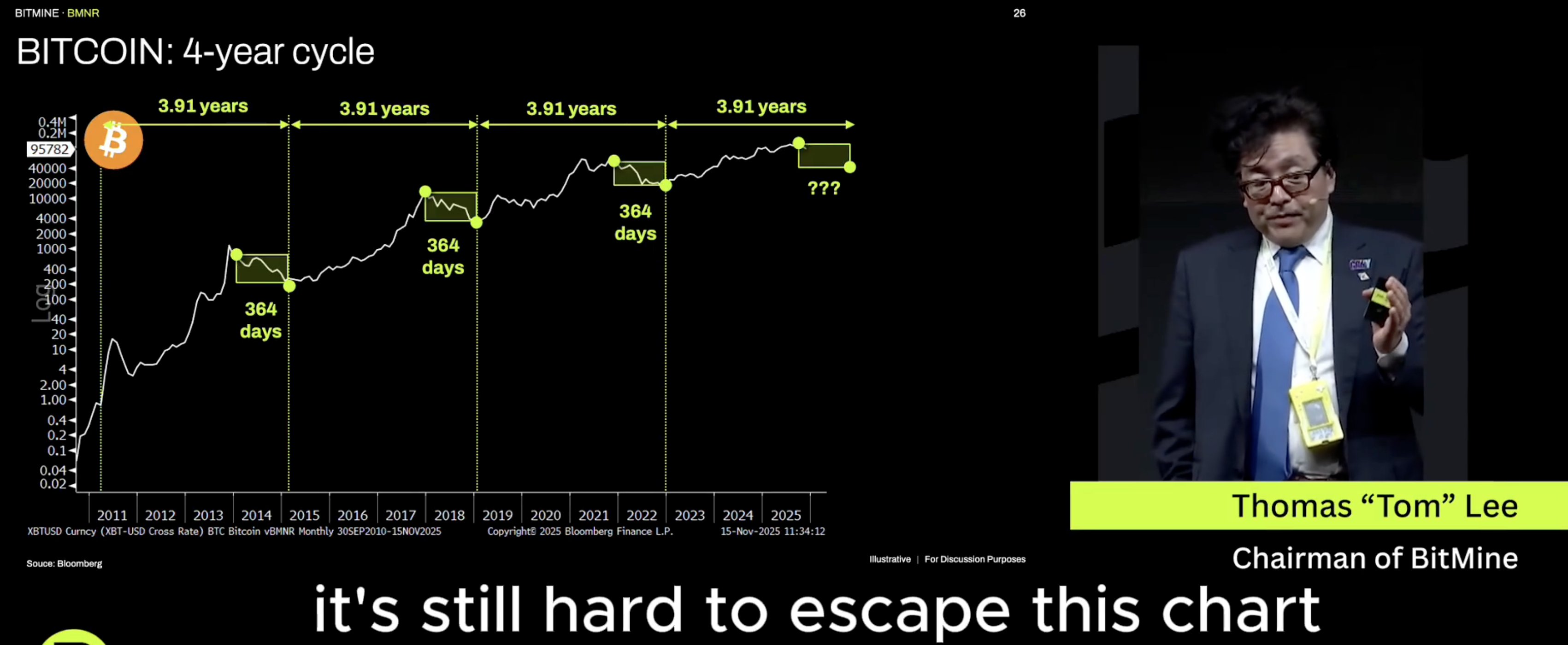
For a long time, the crypto market has been accustomed to making linear extrapolations based on Bitcoin's four-year halving cycle. However, this logic was collectively "dimensionally reduced" in the 2026 outlook.

1. Broken Cycle

Bitwise, Fidelity, and Grayscale reached a consensus: the halving effect is diminishing at the margin.

21Shares used explicit wording—"Bitcoin's four-year cycle is broken." Their data model shows that the introduction of ETFs has fundamentally altered the demand structure, shifting the market's driving force from the supply side (miner halvings) to the demand side (institutional allocation). When BlackRock and Fidelity's clients begin allocating BTC quarterly, the story of a halving every four years is no longer compelling.
2. Asset Maturation: "Desensitization" of Volatility

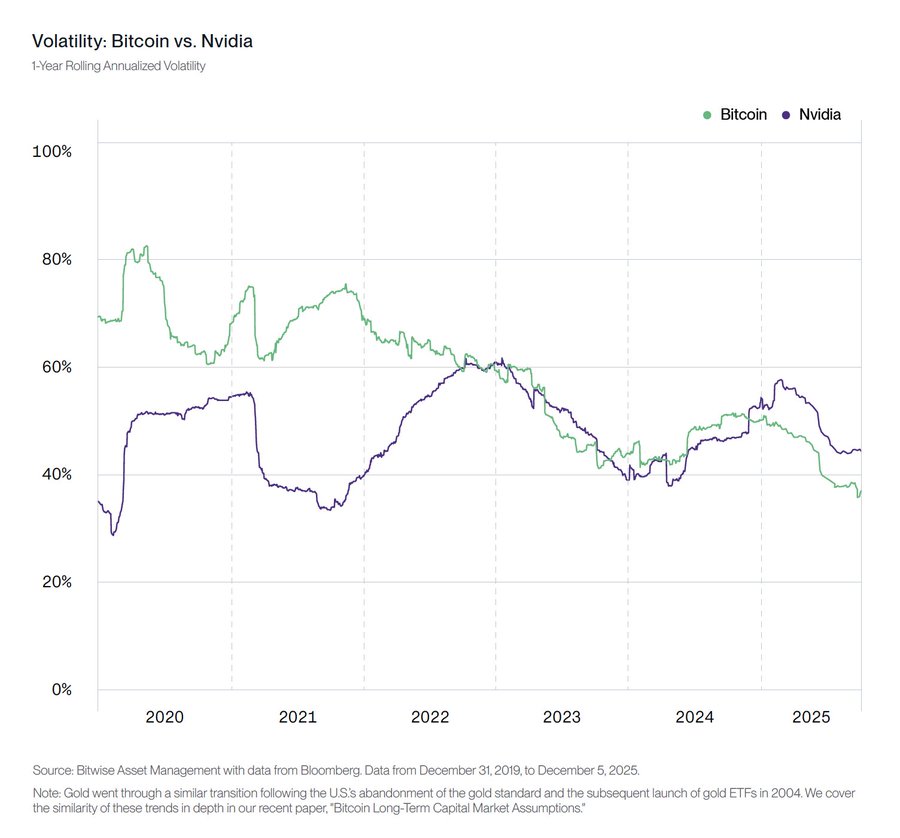
  • Bitwise's Bold Quantification: Bitwise made a highly impactful prediction—by 2026, Bitcoin's volatility will, for the first time, be lower than Nvidia's. This is not just a numbers game but marks Bitcoin's transformation from a "high-beta tech stock" to a "mature safe-haven asset."

  • Fidelity's Qualitative View: Although not providing specific numbers, Fidelity emphasized that against the backdrop of high global debt and fiat currency depreciation, Bitcoin will decouple its correlation with tech stocks and become an independent hedging tool against monetary inflation globally.
II. High-Confidence Narratives: Where Is the Money Flowing?

After excluding cycle interference, the institutions, while differing in details, highly align on the logic of capital flow.

1. Stablecoins: Challenging Traditional Financial Infrastructure (ACH)

If Bitcoin is digital gold, stablecoins are digital dollars. Multiple institutions believe stablecoins will no longer be limited to the crypto circle but will directly challenge traditional financial pipelines.

  • 21Shares Prediction: The total market capitalization of stablecoins will exceed $1 trillion by 2026.

  • Galaxy Digital Prediction: On-chain transaction volume of stablecoins will officially surpass that of the U.S. ACH (Automated Clearing House) network. This means stablecoins will replace traditional interbank clearing systems as a more efficient financial highway.

  • Coinbase Outlook: Predicts stablecoin market cap will reach $1.2 trillion by 2028.

  • a16z Perspective: Stablecoins are evolving into the "basic settlement layer" of the internet, fueling the prosperity of PayFi (Payment Finance), making cross-border payments as cheap and instant as sending an email.

2. AI Payments and KYA: A New Commercial Civilization

This is the biggest technological factor看好 by a16z and Coinbase, both描绘 the same picture from different angles.

  • Google AP2 & Coinbase x402: Coinbase's report highlighted Google's Agentic Payments Protocol (AP2) standard and noted that its developed x402 protocol will serve as a payment extension for AP2. This enables AI agents to conduct instant micro-payments directly via the HTTP protocol (HTTP Payment Required), closing the business loop between AIs.

  • From KYC to KYA: a16z creatively proposed the "KYA" (Know Your Agent) concept. They pointed out that among current on-chain transaction entities, the ratio of "non-human" to "human" has reached 96:1. Traditional KYC (Know Your Customer) will evolve into KYA. AI agents don't have bank accounts but can have crypto wallets; they will tirelessly make micro-payments 7x24 for data, computing power, and storage.

3. Prediction Markets: New Vessels for Information Freedom

This is a true "institutional consensus track," with multiple institutions simultaneously listing it as a breakout point for 2026.

  • Bitwise: Predicts that decentralized prediction markets (e.g., Polymarket) open interest will hit a record high, becoming a "source of truth" parallel to traditional media.

  • 21Shares: Provided a specific figure, predicting annual trading volume in prediction markets will exceed $100 billion.

  • Coinbase's "Tax-Driven Theory": Offered a unique perspective—the new U.S. tax law (limiting gambling loss deductions) will unexpectedly push users toward prediction markets. Because prediction markets may be classified as "derivatives" rather than "gambling" for tax purposes, offering a tax advantage.

III. Key Divergences: Alpha Often Lies in Disagreement

Consensus often means the price is already priced in, while divergence意味着超额收益 (Alpha) or potential risks.

1. Digital Asset Treasury (DAT): "Great Purge" vs "Red Herring"

Institutions are polarized on the "public companies hoarding coins" model initiated by MicroStrategy.

  • The Purge Camp (Galaxy Digital & 21Shares):

    • 21Shares, while predicting DAT total scale will grow to $250 billion, emphasized "only a few will survive." Small DAT companies trading long-term below net asset value (NAV) will be forced to liquidate.

    • Galaxy Digital specifically predicted: "At least 5 DAT companies will be forced to sell assets, be acquired, or directly go bankrupt." They believe the blind following in 2025 led many companies lacking capital strategy to enter, and 2026 will be the market's "clearing moment."

  • The Dismissive Camp (Grayscale):

    • Maintained its "Red Herring" view, believing that despite high media attention, DAT, constrained by accounting standards and disappearing premiums, will not be a core pricing driver in the 2026 market.

2. Quantum Computing: Requiring Attention vs Unfounded Worry

  • The Alert Camp (Coinbase): Dedicated a chapter to "The Quantum Threat" in its report, warning that migration to post-quantum cryptography standards needs to start now, and underlying signature algorithms must begin upgrading to quantum-resistant schemes—a necessity for infrastructure security.

  • The Calm Camp (Grayscale): Listed "quantum threat" as a "red herring." They believe the probability of quantum computers cracking elliptic curve encryption within the 2026 investment cycle is zero, and investors should not pay a "panic premium" for it.

3. L2's "Great Purge" (The Zombie Chain Apocalypse)

This is one of 21Shares' most犀利 predictions. They believe the vast majority of Ethereum Layer 2s will not survive 2026, becoming "Zombie Chains."

  • Reason: Liquidity and developer resources exhibit strong Matthew effects, ultimately concentrating towards leaders (e.g., Base, Arbitrum, Optimism) and high-performance chains (e.g., Solana).

  • Data Support: Galaxy Digital predicted "the ratio of application layer revenue to L1/L2 network layer revenue will double in 2026," validating the "Fat App Thesis"—value is shifting from the infrastructure layer to super apps with real users.

IV. Non-Consensus Predictions: Overlooked Corners

Beyond the mainstream views, some institutions proposed unique "under-the-radar" predictions worth noting:

  • Return of the Privacy Track (Galaxy Digital & Grayscale): Both看好 the privacy sector. Galaxy Digital predicted the total market cap of privacy coins will exceed $100 billion. They also specifically mentioned a rebound for Zcash ($ZEC), believing privacy will be repriced from a "crime tool" to an "institutional necessity" (Privacy as a Service).

  • Revival of Compliant ICOs (21Shares): 21Shares believes that with the落地 of regulatory frameworks (e.g., the U.S. Digital Asset Market Clarity Act), "Regulated Initial Coin Offerings" will return as a legitimate capital market financing tool.

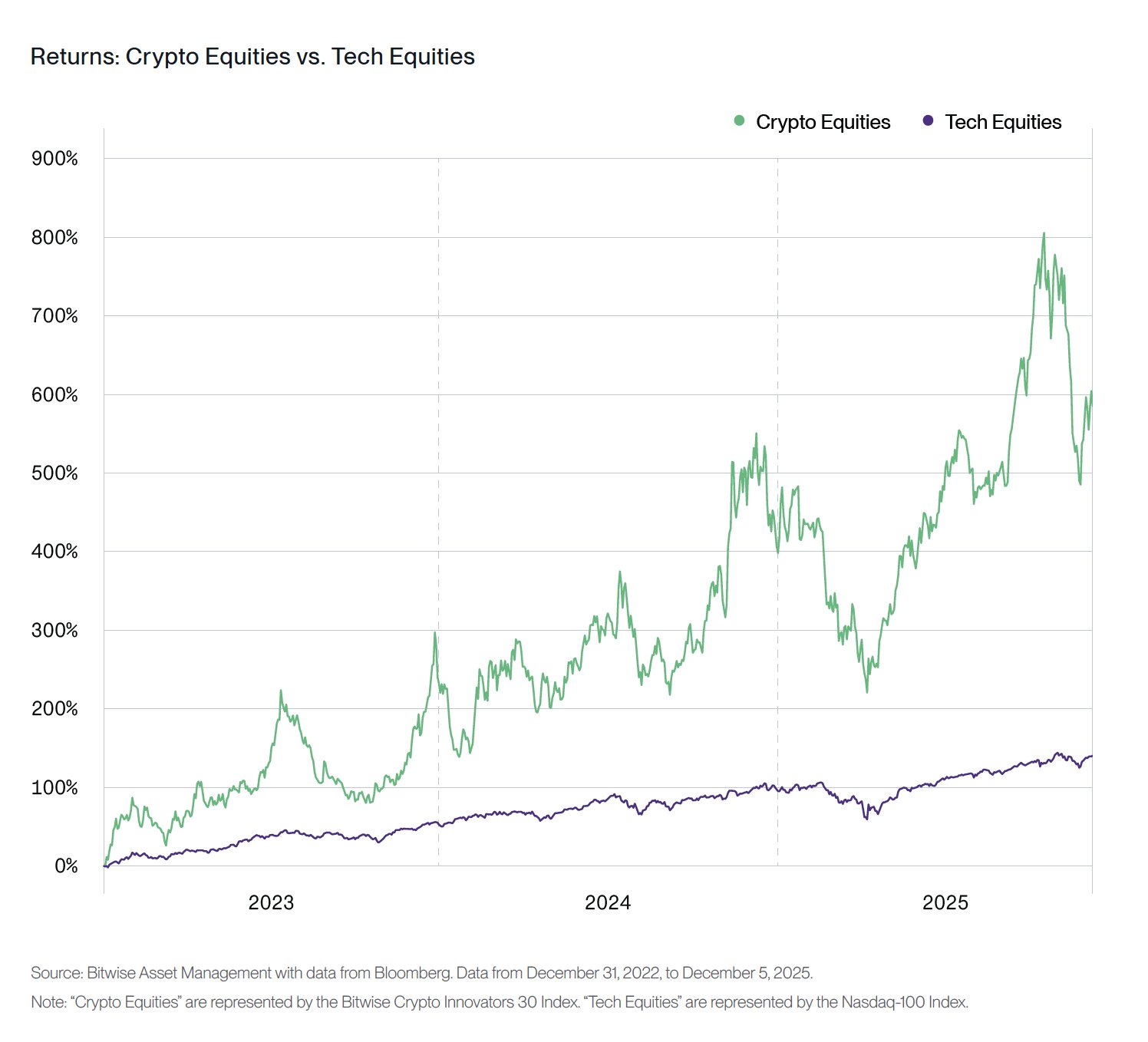
  • Outperformance of Crypto Stocks (Bitwise): Predicted that crypto-related stocks (e.g., miners, Coinbase, Galaxy) will outperform the traditional tech Magnificent 7.
Conclusion: The 2026 Investor's Survival Guide

Synthesizing the outlooks of the eight institutions, the market logic for 2026 has fundamentally changed. The simple model of "buying blindly and waiting for the halving" is a thing of the past.

For investors, the new survival guide can be summarized in three dimensions:

  1. Embrace Leaders and Real Yield: In the brutal清洗 of L2s and DATs, liquidity and capital structure are survival metrics; focus on protocols that generate positive cash flow.

  2. Understand "Tech Content": From the Google AP2 standard to KYA, upgrades in technical infrastructure will bring new Alpha; closely monitor the落地 of new protocols like x402.

  3. Beware of False Narratives: In the eyes of institutions, there are not only golden opportunities but also "red herrings." Distinguishing between long-term trends (e.g., stablecoins replacing ACH) and short-term hype will be key to outperforming in 2026.


Trend Kriptolar

İlgili Sorular

QAccording to the article, why is the traditional 4-year Bitcoin cycle considered 'broken' by 2026?

AThe traditional 4-year Bitcoin cycle is considered 'broken' because the introduction of ETFs has fundamentally altered the market's demand structure. The driving force has shifted from the supply side (miner halvings) to the demand side (institutional allocation), making the halving narrative less significant as institutions like BlackRock and Fidelity make quarterly BTC purchases.

QWhat major prediction do Galaxy Digital and Coinbase make about the future of stablecoins?

AGalaxy Digital predicts that on-chain stablecoin transaction volume will officially surpass the U.S. ACH (Automated Clearing House) network, while Coinbase predicts the total stablecoin market capitalization will reach $1.2 trillion by 2028, indicating they will challenge traditional financial infrastructure.

QWhat is the new concept 'KYA' proposed by a16z, and what does it signify?

AKYA stands for 'Know Your Agent'. It signifies a shift from the traditional KYC (Know Your Customer) as the proportion of 'non-human' to 'human' entities conducting on-chain transactions reaches 96:1. AI agents, which can own crypto wallets but not bank accounts, will use micropayments to autonomously purchase data, computing power, and storage, requiring a new framework for identification.

QWhat is the key disagreement among institutions regarding Digital Asset Treasuries (DAT)?

AThe key disagreement is between the 'Great Cleansing' view (Galaxy Digital & 21Shares) and the 'Red Herring' view (Grayscale). The former predicts a market shakeout where many DAT companies will fail or be forced to sell assets, while the latter believes DATs will not be a core pricing driver for the market in 2026 due to accounting constraints and disappearing premiums.

QWhich institution issued a stark warning about the 'Quantum Threat', and what was the opposing view?

ACoinbase issued a stark warning in a dedicated 'Quantum Threat' chapter, urging the migration to post-quantum cryptography standards. The opposing view came from Grayscale, which labeled the quantum threat a 'red herring', asserting the probability of quantum computers breaking elliptic curve encryption within the 2026 investment cycle is zero.

İlgili Okumalar

After Aave's Exit and TVL's Sharp Fluctuation, Where Does MegaETH's Valuation Anchor Lie?

Following the withdrawal of Aave and a sharp drop in its Total Value Locked (TVL), the valuation of the high-performance DeFi blockchain MegaETH faces scrutiny. Once a highly anticipated project with a fully diluted valuation (FDV) reaching around $2 billion, MegaETH saw its TVL plummet from a May peak of $245 million to just over $30 million in July, a roughly 70% decline. Its native token, MEGA, currently trades around $0.048 with a market cap of approximately $54 million and an FDV of about $480 million. The report identifies a core vulnerability: MegaETH's TVL was heavily dependent on a single protocol, Aave V3, which at its peak contributed around 90% of the chain's TVL. A significant portion of this capital is attributed to leveraged yield-farming strategies involving stablecoins like USDe. When the profitability of these strategies diminished, capital rapidly exited, exposing the lack of diversified, sustainable activity. Three key mismatches between MegaETH's valuation and its fundamentals are highlighted: 1. **Valuation vs. Real Usage:** With an FDV of ~$4.8B but only ~$1M in annualized protocol revenue and ~2,600 daily active addresses, the valuation appears disconnected from current economic activity. 2. **Token Narrative vs. Ecosystem Reality:** Despite its DeFi narrative, nearly 80% of the chain's recent protocol revenue comes from a trading card game, Monster, not from core DeFi applications like Aave. The chain's native stablecoin, USDM, also shows low trading volume and a declining market cap. 3. **Short-Term Hype vs. Long-Term Delivery:** Initial hype from token generation, blue-chip integrations, and influencer support has faded. Major protocols like Uniswap now hold minimal TVL on the chain, indicating that early capital was largely transient and driven by incentives rather than organic demand. The situation reflects a broader market trend where investors are becoming less tolerant of valuations based on inflated TVL and narrative, demanding clearer evidence of sustainable transactions, revenue, and ecosystem development. While MEGA's price may experience short-term rebounds from market sentiment, a fundamental re-rating likely depends on the team's ability to convert its remaining resources into tangible, user-retaining applications and genuine ecosystem growth.

链捕手4 saat önce

After Aave's Exit and TVL's Sharp Fluctuation, Where Does MegaETH's Valuation Anchor Lie?

链捕手4 saat önce

Goldman Sachs In-Depth Report: Who Will Be the Long-Term Winners in China's AI Large Model Industry?

Goldman Sachs Report: China's AI Models at an Inflection Point China's open-source/open-weight large language models (LLMs) have reached performance parity with top global proprietary models, according to a Goldman Sachs report. This is driven by architectural innovations and higher parameter efficiency, allowing Chinese models to achieve comparable capabilities at 2%-10% the parameter size and significantly lower cost. The market is evolving into a two-tiered structure: a high-end segment (e.g., GLM5.2, Qwen3.7 Max) with premium pricing and a low-end, price-sensitive segment for global SMEs and individual users. Key points: * **Cost & Performance:** Innovations like Mixture of Experts (MoE) enable high performance with smaller models. Projects like Meituan's LongCat 2.0, trained on domestic hardware, highlight progress in tech self-sufficiency. * **Open-Source Strategy:** Most Chinese players use open-source/open-weight models for flexibility and ecosystem growth. However, Goldman notes this may underreport actual deployment and revenue. A shift toward "open-weight + community license" models with revenue sharing (e.g., MiniMax) could improve monetization. * **Market Shift & Global Expansion:** Enterprise AI adoption is shifting from "token maximization" to "ROI-first." International expansion, especially in non-US markets, is a major growth driver. Chinese models are increasingly available on global platforms like AWS Bedrock and Microsoft Copilot. * **Competitive Landscape:** Using a framework based on pricing power, cost advantage, and financial strength, Goldman identifies **Zhipu AI and DeepSeek** as the strongest in foundational text models, and **ByteDance** as the leader in multimodal/video generation. The report maintains Buy ratings on MiniMax and Kuaishou. * **Market Growth:** China's AI model API and subscription revenue is projected to grow from an estimated ¥35 billion in 2026 to ¥879 billion by 2030.

marsbit4 saat önce

Goldman Sachs In-Depth Report: Who Will Be the Long-Term Winners in China's AI Large Model Industry?

marsbit4 saat önce

Goldman Sachs Deep Dive Report: Who Will Become the Long-Term Winners in China's AI Large Model Industry?

Goldman Sachs Report: Who Will Be the Long-Term Winners in China's AI Large Model Industry? China's AI large model sector is at a historic inflection point. Goldman Sachs argues that the intelligence of Chinese open-source/open-weight models is approaching top global proprietary models. Rapid adoption by domestic enterprises and global SMEs is creating a data flywheel effect that will further drive model iteration. The evolution is summarized as moving from "DeepSeek's cost-efficiency moment last year to GLM's model-intelligence moment this year." Chinese models achieve near-state-of-the-art performance at significantly lower cost, primarily due to architectural innovations like Mixture of Experts (MoE) and higher parameter efficiency. Models like DeepSeek V4 Pro (1.6T params), GLM5.2 (0.7T), and MiniMax M3 (0.4T) are much smaller than global leaders. Recent advancements in coding capability are attributed to better data curation and RLHF. Landmarks like Meituan's LongCat 2.0, trained fully on domestic AI chips, demonstrate progress in hardware stack independence. The market is forming a "two-tiered structure." The high-end tier (e.g., GLM5.2, Alibaba's Qwen3.7 Max) prices around $1 per million tokens, about 10-25% of US top models, with estimated inference gross margins of 10-20%. The low-end tier (priced as low as $0.06-$0.2 per million tokens) targets price-sensitive global SMEs and individuals. MiniMax derives 60-70% of revenue overseas. Goldman forecasts China's AI model API/subscription revenue to grow from an estimated RMB 35bn in 2026 to RMB 879bn by 2030. Most Chinese players adopt open-source/open-weight strategies for deployment flexibility and community feedback, though this limits monetization as deployments on third-party platforms (e.g., Alibaba Cloud) may not generate direct revenue. A shift towards "open-weight + community license" models with revenue-sharing agreements (like MiniMax's approach) could improve unit economics. International expansion, particularly in non-US markets, is the key growth driver. The global enterprise AI paradigm is shifting from "token maximization" to "ROI prioritization." Chinese models are already hosted on major global platforms like AWS Bedrock and are under consideration for integration into Microsoft Copilot. Using a competitive framework based on pricing power, cost advantage, and financial strength, Goldman identifies the strongest players: In foundational text models, Zhipu AI (initiated coverage) and DeepSeek lead. In multimodal/video generation, ByteDance's Seed is the frontrunner, with Kuaishou's Kling and MiniMax's Hailuo also well-positioned. Goldman maintains a Buy rating on MiniMax, citing its attractive valuation.

链捕手5 saat önce

Goldman Sachs Deep Dive Report: Who Will Become the Long-Term Winners in China's AI Large Model Industry?

链捕手5 saat önce

İşlemler

Spot

Popüler Makaleler

TOP Nasıl Satın Alınır

HTX.com’a hoş geldiniz! TOP AI Network (TOP) satın alma işlemlerini basit ve kullanışlı bir hâle getirdik. Adım adım açıkladığımız rehberimizi takip ederek kripto yolculuğunuza başlayın. 1. Adım: HTX Hesabınızı OluşturunHTX'te ücretsiz bir hesap açmak için e-posta adresinizi veya telefon numaranızı kullanın. Sorunsuzca kaydolun ve tüm özelliklerin kilidini açın. Hesabımı Aç2. Adım: Kripto Satın Al Bölümüne Gidin ve Ödeme Yönteminizi SeçinKredi/Banka Kartı: Visa veya Mastercard'ınızı kullanarak anında TOP AI Network (TOP) satın alın.Bakiye: Sorunsuz bir şekilde işlem yapmak için HTX hesap bakiyenizdeki fonları kullanın.Üçüncü Taraflar: Kullanımı kolaylaştırmak için Google Pay ve Apple Pay gibi popüler ödeme yöntemlerini ekledik.P2P: HTX'teki diğer kullanıcılarla doğrudan işlem yapın.Borsa Dışı (OTC): Yatırımcılar için kişiye özel hizmetler ve rekabetçi döviz kurları sunuyoruz.3. Adım: TOP AI Network (TOP) Varlıklarınızı SaklayınTOP AI Network (TOP) satın aldıktan sonra HTX hesabınızda saklayın. Alternatif olarak, blok zinciri transferi yoluyla başka bir yere gönderebilir veya diğer kripto para birimlerini takas etmek için kullanabilirsiniz.4. Adım: TOP AI Network (TOP) Varlıklarınızla İşlem YapınHTX'in spot piyasasında TOP AI Network (TOP) ile kolayca işlemler yapın.Hesabınıza erişin, işlem çiftinizi seçin, işlemlerinizi gerçekleştirin ve gerçek zamanlı olarak izleyin. Hem yeni başlayanlar hem de deneyimli yatırımcılar için kullanıcı dostu bir deneyim sunuyoruz.

176 Toplam GörüntülenmeYayınlanma 2024.12.10Güncellenme 2026.06.02

TOP Nasıl Satın Alınır

Tartışmalar

HTX Topluluğuna hoş geldiniz. Burada, en son platform gelişmeleri hakkında bilgi sahibi olabilir ve profesyonel piyasa görüşlerine erişebilirsiniz. Kullanıcıların TOP (TOP) fiyatı hakkındaki görüşleri aşağıda sunulmaktadır.

活动图片