Insiders Betting on Musk Are Reaping 'Historic Returns'

链捕手2026-05-26 tarihinde yayınlandı2026-05-26 tarihinde güncellendi

Özet

The largest IPO in history is imminent as SpaceX, led by Elon Musk, is set to price its offering on June 12. At a targeted valuation near $2 trillion, this event will mint new billionaires from Musk's inner circle of long-time allies, rewarding their loyalty with unprecedented returns. Key beneficiaries include Antonio Gracias, Musk's close friend and confidant, who holds a 7.3% stake potentially worth over $140 billion, making him the second-largest individual shareholder. Gwynne Shotwell, President and COO since 2002, holds shares valued at roughly $2 billion. Bret Johnsen, the CFO, holds stock worth approximately $1.4 billion. Luke Nosek, a PayPal co-founder and early investor, stands to gain about $5.3 billion. The IPO filing also reveals complex and controversial financial arrangements. SpaceX has guaranteed nearly $20 billion in payments from xAI's subsidiary to Gracias's Valor Equity Partners for AI hardware leases—deals auditors flagged as "failed sale-leaseback" transactions, forcing SpaceX to record them as debt. Despite rapid revenue growth, SpaceX is not profitable, posting a $49 billion loss in 2025 and a $4.3 billion loss in Q1 2026. Capital expenditures are soaring, with over 60% directed toward AI. Public investors will inherit these losses, significant debts, and a governance structure heavily controlled by insiders, including a provision granting Musk up to a billion additional shares if one million people live on Mars.

Original text by Li Hailun

The largest Initial Public Offering (IPO) in global history is entering its final countdown phase. Elon Musk's (Elon Musk) SpaceX is expected to price its IPO on June 12 and begin trading the next day.

Investors are targeting a valuation of around $2 trillion. At this level, Musk himself would directly ascend to become the world's first trillionaire. But the real drama of this deal is that the wealth won't just flow to Musk alone. With the disclosure of the prospectus, the value of holdings of a group of long-standing loyal lieutenants and early allies who have remained largely hidden behind Musk is coming to light for the first time.

Their "loyalty" and patience are being rewarded with the most generous returns in history.

01 Musk's "Shadow Partner"
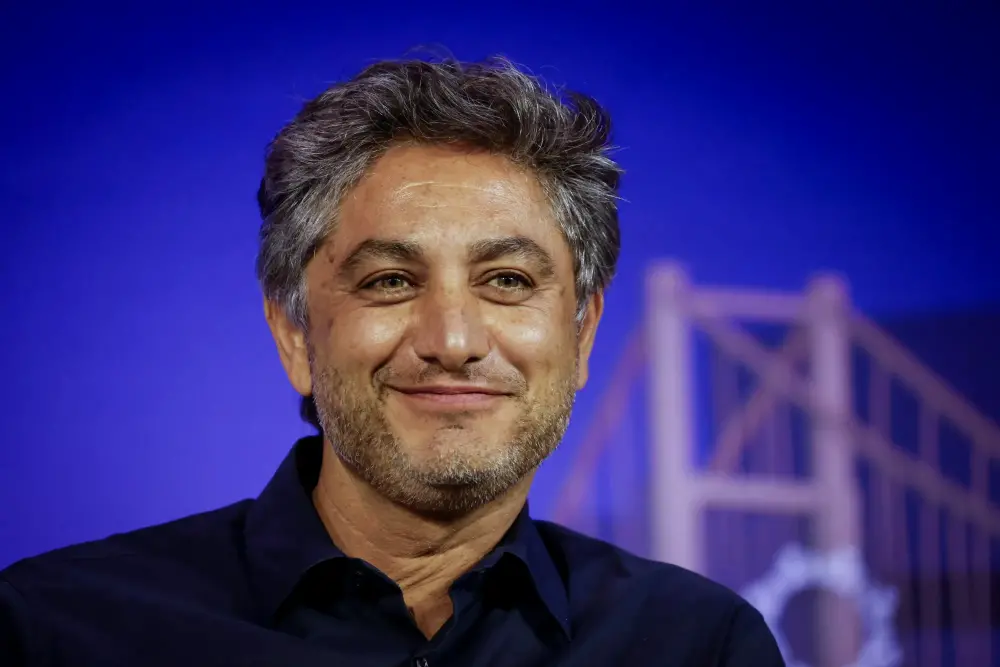
Among all those set to reap immense wealth from the SpaceX IPO, Antonio Gracias's (Antonio Gracias) role is the most unique. He is not a company employee, yet he is more deeply embedded in Musk's business empire than the vast majority of executives.

The 55-year-old Gracias is the founder of Chicago investment firm Valor Equity Partners. The two met in the early 2000s through the Silicon Valley network formed after the PayPal sale. At that time, Musk had just sold the company to eBay, while Gracias was running his own investment firm Valor Equity Partners.

During Tesla's near-bankruptcy period from late 2008 to early 2009, Gracias personally lent Musk $1 million. Since then, he has become one of Musk's closest personal friends. He was the best man at Kimbal Musk's (Kimbal Musk, Musk's brother) wedding, and the two families even vacation and celebrate holidays together.

This two-decade-long friendship is now translating into a staggering fortune. Gracias holds over 500 million SpaceX Class A shares through Valor-related investment entities, accounting for about 7.3% of the company's Class A shares, making him the second-largest individual shareholder after Musk.

Based on a conservative valuation of $1.5 trillion, these shares are worth about $91.6 billion. If calculated at $2 trillion, it would exceed $140 billion. Regardless of where the final pricing lands, he will rank among the world's 50 wealthiest individuals.

Gracias appears on the boards of nearly all Musk's companies. He served as Tesla's lead independent director for eight years and held board seats at SolarCity, Neuralink, and The Boring Company. He even agreed in early 2025 to provide financing for Musk's failed plan to acquire OpenAI in a $97 billion hostile takeover.

Gracias's financial relationship with SpaceX extends beyond equity. The prospectus discloses an extraordinary arrangement. In October 2025, a subsidiary named CTC under xAI signed an AI infrastructure hardware equipment lease agreement with Valor. In January and April 2026, a second and third lease were signed respectively. The three agreements require CTC to pay nearly $20 billion to Valor over the lease terms, with SpaceX itself providing full guarantees for these payments.

This means if xAI's subsidiary is unable to pay, SpaceX has a legal obligation to pay on its behalf. This type of guarantee itself signals that xAI likely cannot secure financing of this magnitude on its own credit, requiring parental intervention. Indeed, filings show xAI is heavily indebted, including secured senior notes with an interest rate as high as 12.5%. This is typically pricing for financially distressed borrowers, indicating the company struggles to obtain typical financing.

The structure of these transactions has raised auditors' concerns. SpaceX's auditor, PwC, refused to treat these agreements as ordinary leases, instead characterizing them as "failed sale-leasebacks."

In a typical sale-leaseback, one party sells an asset to another and leases it back for use, with the buyer needing to actually obtain control of the asset. But PwC believes the contract terms mean CTC retains actual control over the GPUs, implying Valor's role is closer to that of a lender using GPUs as collateral. The auditors forced SpaceX to retain this $9 billion debt on its balance sheet, listed as related-party debt payable to an entity where a company director serves.

02 SpaceX President & COO
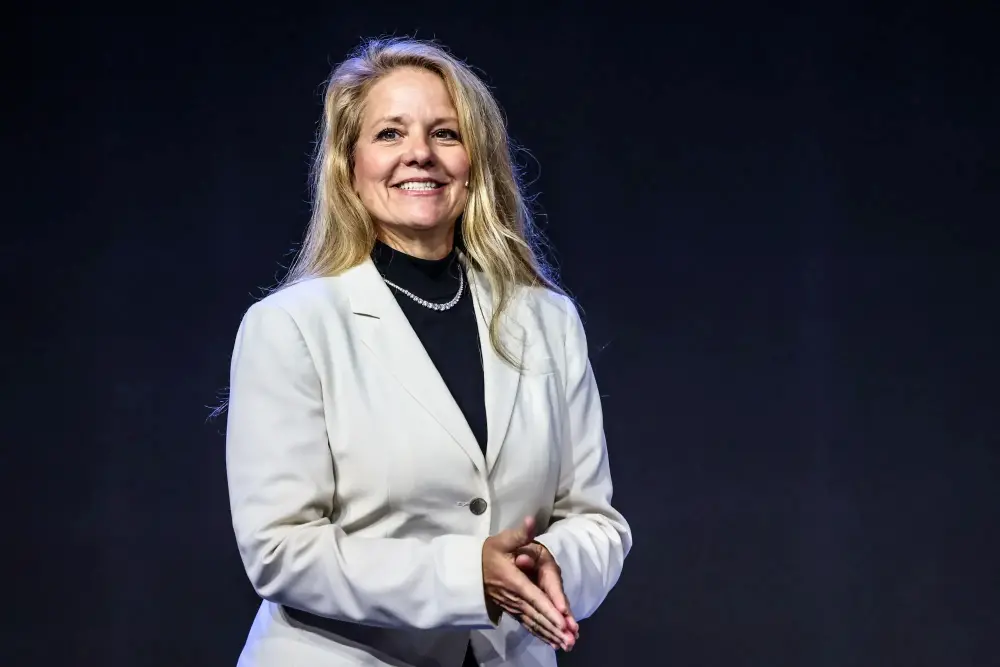
Among all the newly minted billionaires-to-be, Gwynne Shotwell's (Gwynne Shotwell) story is the most representative. The 62-year-old joined the company in 2002 as employee number 11.

Shotwell's initial task was to secure sales orders for the then-obscure Falcon 1 rocket. More than two decades later, she is the company's President and Chief Operating Officer. While Musk's attention is divided among his other companies, she frequently attends various industry events, becoming SpaceX's de facto public face.

According to the prospectus, Shotwell directly or through a trust holds 12.4 million SpaceX shares and holds 4.7 million stock options. If the company prices at a $2 trillion valuation, just her shareholdings will be worth about $2 billion. Shotwell's total compensation in 2025 was $85.8 million, primarily from large restricted stock awards.

Born in Illinois, Shotwell studied mechanical engineering and applied mathematics at Northwestern University. She began her career at an aerospace firm, working on thermal analysis and small spacecraft design.

After meeting Musk in 2002, she quickly joined SpaceX and was promoted to President in 2008. For this engineer who bet her entire career on a company once ridiculed as a "crazy dream," this fortune represents a kind of belated acknowledgment.

03 SpaceX CFO
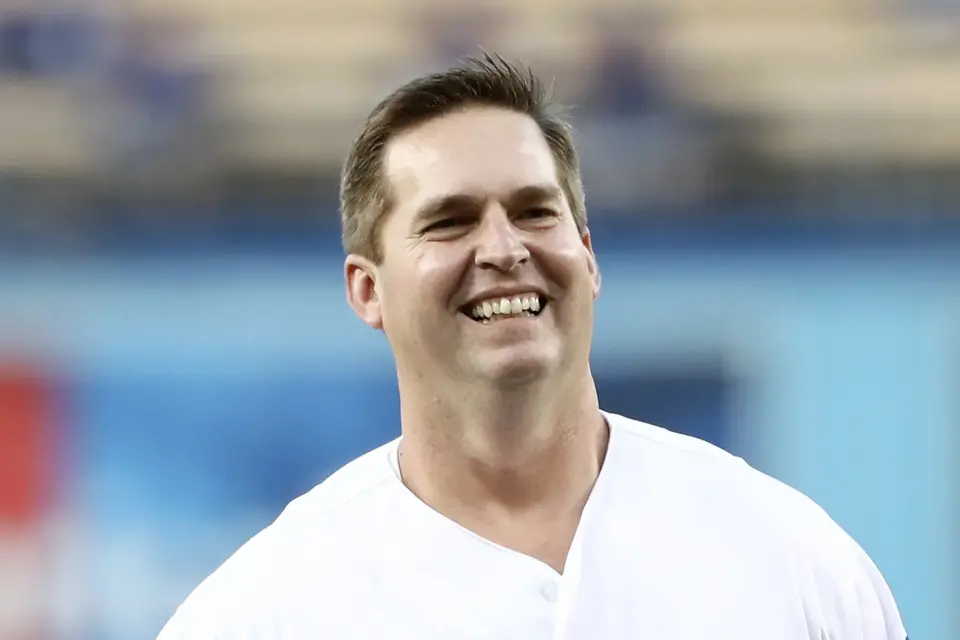
Compared to Shotwell's frequent public appearances, Johnsen is more like SpaceX's internal financial steward, responsible for sustaining the capital lifeline of this cash-burning company.

He joined SpaceX in 2011, after nearly a decade-long financial career at Broadcom and semiconductor company Mindspeed. During the long years when SpaceX kept its operations and financial performance largely secret, Johnsen was the primary contact for answering all tough questions and coordinating stock transactions.

In December 2025, it was Johnsen who sent employees a memo outlining the rationale for the company's public listing. In it, he wrote: "The thinking is that, if we execute extremely well and the markets cooperate, a public offering can raise a huge amount of capital."

Johnsen holds about 9.6 million SpaceX shares. At a $2 trillion valuation, these shares are worth about $1.4 billion. His total compensation in 2025 was $9.8 million.

04 "PayPal Mafia"
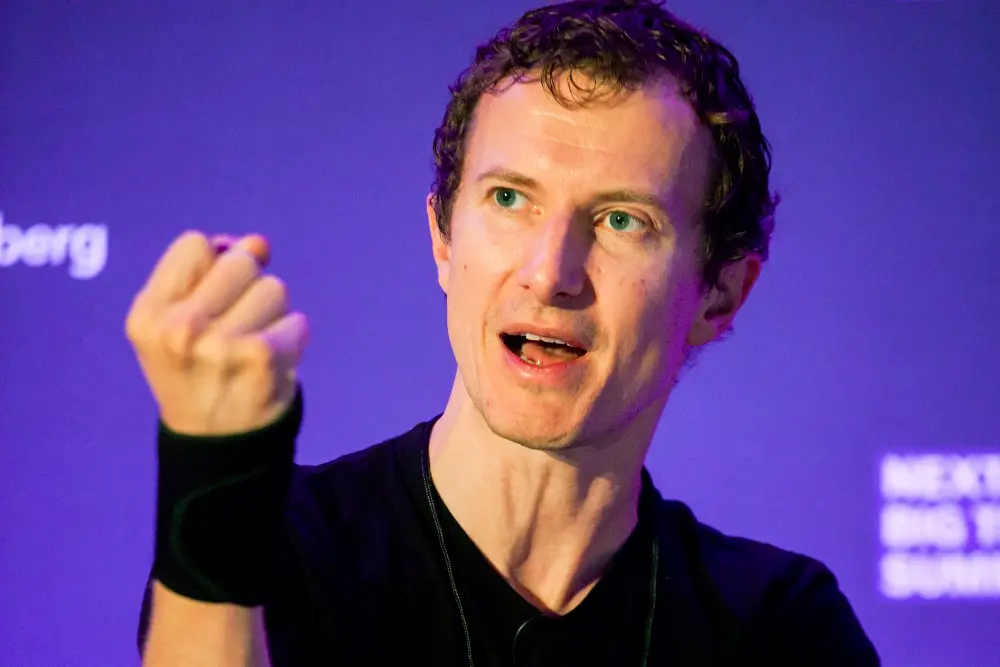
Luke Nosek's (Luke Nosek) connection to Musk dates back to the PayPal era. He was a co-founder and Vice President of Marketing & Strategy at PayPal, and a core member of the so-called "PayPal Mafia."

In 2002, when eBay announced and completed its acquisition of PayPal, Nosek co-founded Founders Fund with Peter Thiel (Peter Thiel) and others, and in 2008, he led Founders Fund's first investment in SpaceX. He subsequently gained a board seat, which he has held ever since.

Later, Nosek left Founders Fund, founded his own venture capital firm Gigafund, and poured over $1 billion into SpaceX, while also supporting Neuralink and The Boring Company.

Nosek directly holds nearly 25 million SpaceX Class A shares and holds another approximately 8 million through Nosek Capital. At a $2 trillion valuation, his total holdings would be worth about $5.3 billion. Similar to Musk, Nosek has pledged nearly 2.4 million SpaceX shares as loan collateral.

05 Institutional Players & University Endowments

Beyond the wealth stories of individual shareholders, the roster of SpaceX also prominently features some institutional players.

Donald Harrison (Donald Harrison), as a Google executive, joined the SpaceX board representing the early institutional investor. Founders Fund co-founder Steve Jurvetson (Steve Jurvetson) is a long-time ally of Musk, serving as a director since 2009.

Venture capitalist Ira Ehrenpreis (Ira Ehrenpreis) joined the board in February 2026 and is expected to chair the Compensation and Nomination Committee. DFJ Growth co-founder Randy Glein (Randy Glein) became a director in 2026 after a long tenure as a board observer and will chair the Audit Committee. Ehrenpreis holds about 1.37 million SpaceX shares, worth about $250 million at a conservative valuation; Glein holds about 278,000 shares, worth about $50 million.

A more dramatic story involves higher education institutions. Scott Wilson (Scott Wilson), Chief Investment Officer of the University of Washington, invested about $50 million of the school's money into SpaceX roughly a decade ago. That bet has now soared to represent over 10% of its $17 billion endowment assets, obtained primarily through co-investments and later-stage rounds via external private equity and venture capital managers.

Anders Hall (Anders Hall), investment chief at Vanderbilt University, said the school's position in SpaceX is estimated at $171 million, with some investments made over a decade ago through relationships with general partners. The school's endowment totaled $10.9 billion as of June 2025.

However, the massive IPO payout is a double-edged sword for endowments. They receive significant cash inflows, but the wealthiest few private schools will face a higher tax on net investment income. Congress has increased the rate from 1.4% to 4% or 8%, depending on the school's size.

06 AI Burning Through Cash

What this SpaceX IPO reveals is not just the opportunity for a few to amass great wealth, but also the company's own awkward financial reality.

The rocket and artificial intelligence company is not yet profitable, and it is spending money far faster than it earns it. For the full year 2025, the company lost $4.9 billion. And in just the first three months of 2026, it lost $4.3 billion on $4.7 billion in revenue.

Annual revenue grows at about 33%, but capital expenditures double each year. In 2025, SpaceX spent $20.7 billion, with about 60% invested in artificial intelligence. In the first three months of 2026, the company had already spent $10.1 billion, with $7.7 billion flowing to AI.

Once public, all these debt and spending pressures will be transferred to public shareholders. They will also inherit the billions of dollars in debt obligations generated by a series of transactions SpaceX entered into during its private period, including the leases with Valor.

One clause in the prospectus is particularly jaw-dropping: once 1 million people are living on Mars, Musk will receive up to one billion additional shares, and these shares are already added to his massive voting pool, which is sufficient to control the company.

For a company losing money year after year, investors will have to make their own judgment between aggressive spending, massive losses, and a governance structure wholly controlled by insiders.


İlgili Sorular

QWho is the largest individual shareholder in SpaceX after Elon Musk, and what is the value of their stake at a potential $2 trillion valuation?

AAntonio Gracias is the largest individual shareholder in SpaceX after Elon Musk. His stake is valued at over $140 billion at a potential $2 trillion valuation.

QWhat is the role of Gwynne Shotwell at SpaceX, and what is the approximate value of her holdings at a $2 trillion valuation?

AGwynne Shotwell is the President and Chief Operating Officer of SpaceX. The approximate value of her holdings at a $2 trillion valuation is about $2 billion.

QWhat is the controversial agreement between Valor Equity Partners and a subsidiary of xAI, and how much liability does SpaceX have from it?

AThe controversial agreement is a set of AI infrastructure hardware equipment lease contracts. SpaceX has provided a full guarantee for the payments, amounting to nearly $20 billion, meaning SpaceX is liable to pay if the xAI subsidiary defaults.

QWhat is SpaceX's financial performance for 2025 and the first three months of 2026, particularly regarding losses?

AIn 2025, SpaceX lost $4.9 billion. In the first three months of 2026, on $4.7 billion in revenue, the company lost $4.3 billion.

QWhat extraordinary incentive is outlined in the prospectus for Elon Musk, and what must happen for him to receive it?

AThe prospectus outlines an incentive for Elon Musk to receive up to one billion additional shares. This award is contingent on one million people living on Mars.

İlgili Okumalar

Metrics Ventures Market Watch: The Brewing Storm

In the past month, the market has been actively trading contrasting expectations, balancing global supply chain disruptions fueling re-inflation against both actual and anticipated (Walsh) interest rate hikes. This volatility has impacted commodities and most equities, though tech has temporarily benefited from concentrated short-term liquidity. Fundamentally, as previously analyzed regarding the Strait of Hormuz situation, the US faces deep-seated balance sheet issues beyond what any single Fed chair can resolve. Hypotheses around a figure like Walsh could only materialize if AI fundamentally reshapes production relations. Until then, most non-AI-leading nations (effectively all except the US and China) risk fiscal and monetary policy collapse, rendering the identity of the Fed chair ultimately irrelevant. For crypto assets, there is currently no clear role in these dominant narratives. The market remains strongly capped by the 200-day moving average. While trends may shift from "anything but AI" to "anything but mines," this phase is dominated by the silicon vs. carbon (AI vs. traditional) dichotomy, leaving little room for crypto—though its time will come. **Market Overview & Commentary** The crypto market lacks significant catalysts beyond hype, plagued by low volume and scarce innovation, with clear technical resistance. Currently, crypto struggles for attention as global focus lies elsewhere. Assets like gold, oil, and grains are more direct hedges against supply-chain-driven inflation/stagflation. Bitcoin needs more time for capitulation and consolidation; this reset is expected to last until at least Q4 2026. Looking ahead, three factors will likely drive future market volatility: 1. Whether Walsh repeats the patterns of predecessors like Bassant or Musk, shifting stance into a new policy cycle. 2. The market underestimates the severity of global supply chain damage and the prolonged time needed for repair, which will eventually lead to recognition of acute resource shortages and price swings. 3. AI non-beneficiary, high-inflation nations (e.g., UK, Japan) will face severe fiscal and monetary crises. Rapid AI-driven displacement could trigger a collapse of existing credit and welfare systems. Ultimately, the market may realize that an AI bubble burst could spark contagious sovereign credit crises. The monetary and fiscal responses to such a scenario could serve as the ultimate catalyst for Bitcoin's next major bull run.

marsbit56 dk önce

Metrics Ventures Market Watch: The Brewing Storm

marsbit56 dk önce

Ethereum Reduced to a Chinese Concept Stock

The article titled "Ethereum Becomes a Chinese Concept Stock" presents a critical analysis of Ethereum's perceived decline in market confidence and its structural parallels to Chinese companies listed on US stock exchanges. It begins by noting significant sell-offs by early investors like Wanxiang and key figures like Bankless's Hoffman in 2026, despite Ethereum's strong fundamental activity. The piece questions the erosion of trust in Vitalik Buterin and the Ethereum Foundation (EF), arguing that while other ecosystems have faced founder controversies, Ethereum's issues stem from its internal governance model. The author draws a direct comparison to "China concept stocks," which are Chinese businesses operating globally but reliant on foreign capital and listings. Similarly, Ethereum, funded early by Chinese capital like Wanxiang, developed a strong institutional framework from its IXO to its PoS transition. The core problem, according to the article, is a leadership vacuum regarding price and direction. Vitalik's move to make the EF smaller and less active is framed as a mistake. While he advocates for ETH as a "commodity," the ecosystem lacks a clear entity to steward its price stability, creating tension within the PoS system, as seen with Lido's challenges. The narrative suggests that excessive abstraction and a hands-off approach from the EF have left the community adrift, contrasting with more proactive foundations like Solana's. The article then examines emerging technical narratives for Ethereum: privacy (ZK-proofs), AI integration, and a refocus on Layer-1. However, it observes a shift from Ethereum leading as a "world computer" to merely adapting to trends like AI, where crypto-native projects are finding success independently of Ethereum. The piece posits that Ethereum's unique value in an increasingly fragmented world may be as a permissionless, global financial testing ground—a neutral platform amid geopolitical tensions. In conclusion, it asserts that Ethereum's fate mirrors that of China concept stocks: an asset born from one region (conceptually "A"), funded by another ("B"), and dependent on "B" for exit liquidity. While Ethereum's "golden age" may be over, and selling pressure from early backers will continue, it remains positioned as a critical linkage point in a divided global landscape, standing at a new, albeit uncertain, starting point.

marsbit1 saat önce

Ethereum Reduced to a Chinese Concept Stock

marsbit1 saat önce

AI Agents Fundamentally Transform Web3 Gaming: From the Rugpull Bakery Bot Controversy to the New Agent Paradigm in 2026

AI Agents Are Redefining Web3 Gaming: From the Rugpull Bakery Bot Controversy to the 2026 Agentic Paradigm The recent controversy in Rugpull Bakery, a competitive baking game on Abstract chain, highlighted a pivotal shift. Player complaints about unfair bot automation in Season 2 led developers to not ban them, but instead formally integrate AI agents as core gameplay in Season 3, providing official guides (skill.md, agent.json). This move signals Web3 gaming's transition into the "Agentic Gaming" era, where AI agents are sovereign entities with independent strategy and economic rights, moving beyond simple automation. By 2026, AI agent integration has evolved into three core models reshaping the ecosystem: 1. **Autonomous Competitors & Economic Entities:** Agents act as independent players. Examples include TEN Protocol's poker-playing agents, AI Arena's trainable NFT fighters, Satoshi Strike Force's "Digital Athletes" trained on player data, and Somnia's "Agentic L1" blockchain providing native infrastructure for millions of autonomous agents. 2. **Modular Infrastructure & Programmable Environments:** Games like EVE Frontier enable "server-side modding," allowing AI agents to program game world logic directly into structures like smart storage, turrets, and stargates via Smart Assemblies. Coupled with standards like ERC-8183, which enables autonomous job creation and payment between agents, in-game infrastructure gains a "commercial soul." 3. **Hybrid Companions & Dynamic Adaptive Worlds:** This model focuses on human-AI collaboration. In Parallel Colony, players guide highly autonomous AI Avatars with unique personalities and goals. Illuvium plans to use AI to transform NPCs into dynamic, context-aware entities that create personalized, emergent narratives. The conclusion is clear: blocking automation is futile. The future lies in leveraging blockchain's transparency and programmability to empower AI agents as first-class citizens. Web3 gaming is shifting from inefficient human labor to efficient algorithmic interplay and emergent intelligence, creating a "post-human" digital frontier where players become commanders and symbiotic partners in a new socioeconomic experiment.

marsbit1 saat önce

AI Agents Fundamentally Transform Web3 Gaming: From the Rugpull Bakery Bot Controversy to the New Agent Paradigm in 2026

marsbit1 saat önce

Where Did China's Q1 AI Funding Exceeding 100 Billion RMB Go?

In Q1 2026, China's AI sector raised over 110 billion yuan (approximately $152 billion) across nearly 600 financing deals, a 185.4% year-on-year increase. Major recipients included large model companies and embodied AI firms. Approximately 30-50% of funding was allocated to computing power (GPU procurement and cloud services), highlighting its critical role as a barrier to entry. Significant portions also went to R&D and global talent acquisition. In the large model sector, three key players emerged with distinct strategies: Moonshot AI (valued at $20 billion) pursued an open-source route, achieving rapid commercialization with its Kimi K2.5 model. StepFun (raising billions) focused on a trillion-parameter foundation model and terminal device integration, backed by smartphone supply chain capital. DeepSeek, launching its first funding round at a $45 billion valuation, maintained its open-source, cost-effective approach, now attracting state fund interest. The embodied AI sector saw over 50 deals totaling around 20 billion yuan, creating over 10 unicorns with valuations exceeding 10 billion yuan each. Leading companies like Galaxy General, Qianxun AI, Independent Variable Robotics, and Zhi Jian Power secured major funding, with some beginning initial product deliveries. However, a gap between high valuations and actual revenue poses bubble risks. Key trends identified include: a shift from VC-dominated funding to mixed industrial and state capital; rapidly rising valuations intensifying the "Matthew Effect"; accelerating IPO pipelines; the competitive advantage of open-source strategies; and embodied AI transitioning from proof-of-concept to small-batch delivery. Ultimately, the massive capital influx is pushing China's AI competition into a high-stakes phase where sustaining cash flow and operational endurance may be as decisive as technological breakthroughs.

marsbit1 saat önce

Where Did China's Q1 AI Funding Exceeding 100 Billion RMB Go?

marsbit1 saat önce

İşlemler

Spot
Futures
活动图片




