Infinex Token Sale New Rules: Two Options - $0.0099 Locked for One Year or $0.03 Unlocked Immediately

Odaily星球日报2025-12-26 tarihinde yayınlandı2025-12-26 tarihinde güncellendi

Özet

Infinex, a DeFi platform founded by Synthetix's Kain Warwick, has revised its token sale terms for its INX token. The fully diluted valuation (FDV) has been reduced from $300 million to $99.99 million following community feedback, though the one-year lockup period remains unchanged. The sale, scheduled for January 3-6, 2026, will offer 5% of the total token supply. Participants are given two pricing options: purchase tokens at $0.0099 each with a mandatory one-year lock, or opt for immediate unlocking at TGE (end of January 2026) at a higher valuation of $300 million FDV, equating to $0.03 per token. The latter option features a linear valuation decrease over the year, settling at the $99.99 million FDV. The changes have sparked significant community backlash, particularly from Patron NFT holders. They argue the new immediate unlock option at a lower FDV devalues their earlier investments, which were made under the expectation that early liquidity required a much higher valuation threshold. The Patron NFT floor price fell nearly 10% following the announcement. Despite the FDV reduction, the core complaint about the lengthy one-year lockup persists, with many in the community viewing it as a major disadvantage in the current market.

Original | Odaily Planet Daily (@OdailyChina)

Author | Asher (@Asher_ 0210)
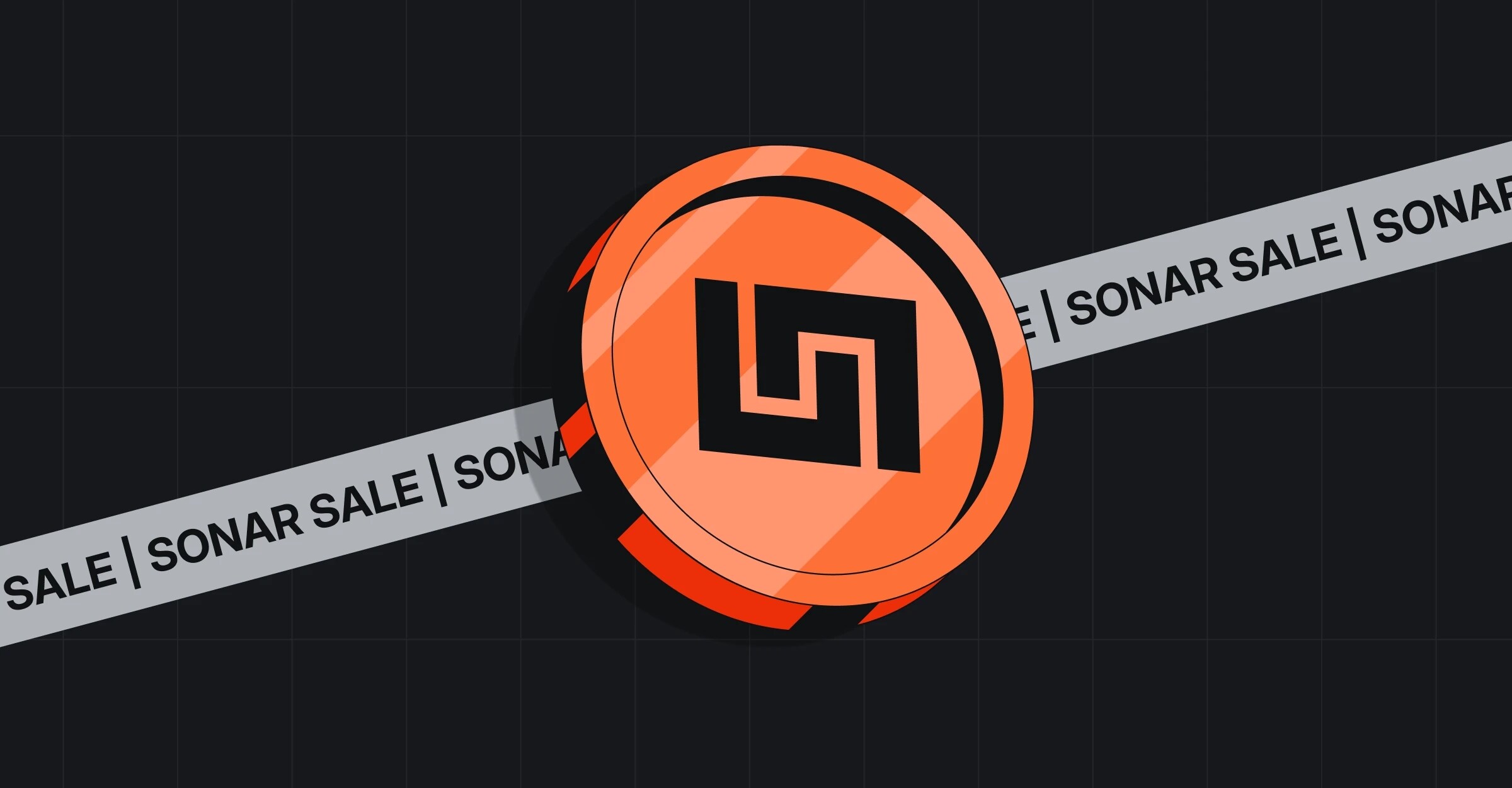
Yesterday, Infinex founder Kain Warwick posted on X platform that due to feedback indicating the pricing was too high, the valuation of the Sonar token sale conducted by Infinex on Echo has been reduced from the initial $300 million to $99.99 million, while the lock-up period remains unchanged at one year, to better adapt to the current market environment.

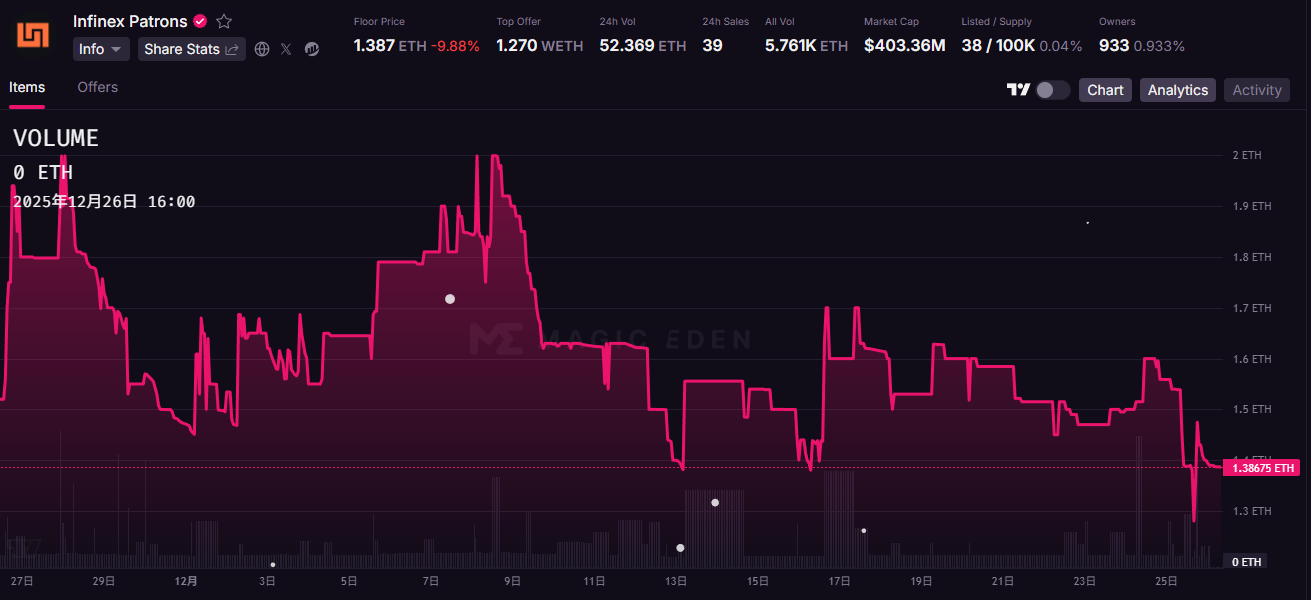
Affected by the FDV reduction, the overall allocation quota for the Sonar sale has decreased, making it impossible to guarantee the priority allocation arrangement for the original Patron NFT holders. The floor price of Infinex Patrons NFT has dropped nearly 10% in 24 hours, temporarily at 1.387 ETH.
Below, Odaily Planet Daily takes you through the Infinex project, the new token sale rules, and community sentiment.

Infinex: Full-Stack DeFi Services

Infinex is a decentralized finance platform launched by Synthetix founder Kain Warwick in April 2024. Its goal is to provide a product form close to the experience of a centralized exchange under a decentralized premise, thereby narrowing the usability gap between CeFi and DeFi. While maintaining non-custodial assets and on-chain security, the platform focuses on optimizing the interaction process and user experience.
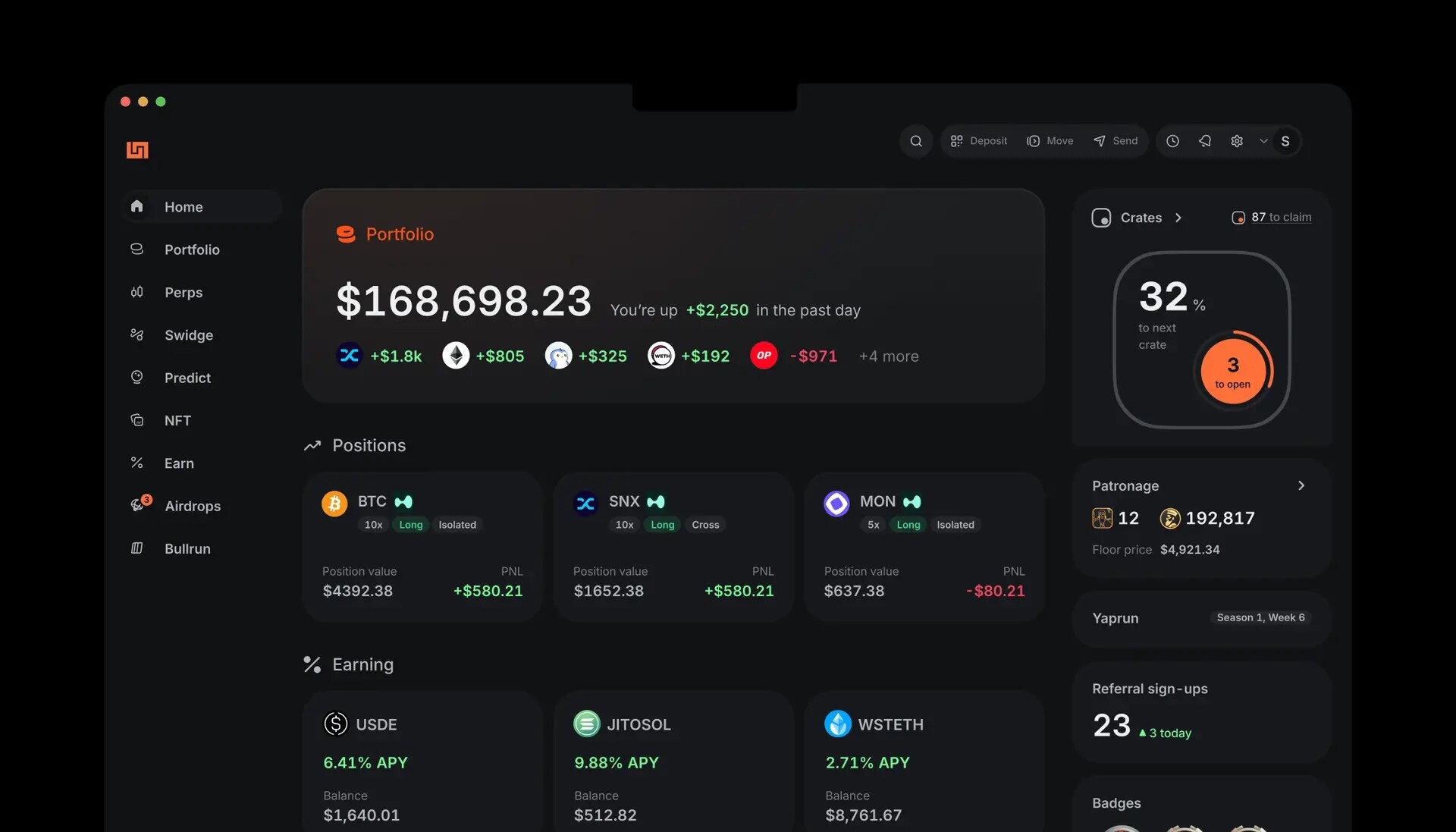
From a product positioning perspective, Infinex is not a single-function application but rather a full-stack DeFi service entry point. Its core capabilities include: acting as a non-custodial wallet covering multiple chains to host user assets; serving as a unified interface to aggregate and integrate various on-chain DeFi protocols and services; and through highly abstract interaction design, hiding complex concepts like address management, cross-chain bridging, seed phrases, and Gas fees in the background, allowing users to interact with DeFi applications without needing to understand the underlying mechanisms, resulting in an overall user experience closer to CeFi products.

To date, Infinex has supported 15 blockchain networks including Ethereum, Solana, and Base. The integrated DeFi functions cover cross-chain swaps (Swidge), perpetual contracts (Perp), liquid staking, and other yield-generating services (Earn), among others.

Infinex Token Sale New Regulations

According to the official Infinex documentation, the updated details of the Infinex token sale are as follows:

  • INX Token Sale Account Registration Date: Starting December 27th;
  • INX Token Official Sale Date: January 3rd to January 6th, 2026;
  • Infinex TGE Date: Planned for late January 2026;
  • Sale Quantity: 5% of the total token supply;
  • FDV: Valuation reduced from the initial $300 million to $99.99 million;
  • Lock-up Situation: Locked for one year;
  • Purchase Quantity: Minimum amount is $200, maximum amount is $2500. If the token sale is oversubscribed, the chance of obtaining an allocation can be increased by sharing participation details on X. Regular users can get a 3x multiplier by sharing on X, while Patreon NFT holders can get a 10x multiplier.

Additionally, the INX tokens in this sale offer an early unlock option. If the early unlock option is chosen, the corresponding valuation at TGE is a $300 million FDV, with a single token price of $0.03. Thereafter, this valuation will be linearly reduced over the following year, finally settling at a $99.99 million FDV, corresponding to a single token price of $0.0099.

Community Sentiment: Negative Voices Dominate, Patron NFT Holders Particularly Dissatisfied

"A $300 million valuation allows for full unlocking at TGE, so what was the point of me buying the Patron NFT at a $500 million valuation?" This is the most direct question raised by many Patron NFT holders after the new rules were announced. According to the previous sale expectations, participants could participate in the token sale at a $300 million FDV. If they wished to unlock at TGE, they would need to correspond to a higher valuation threshold, approximately a $1 billion FDV. It was under this expectation that some users chose to purchase Patron NFTs at a higher implied valuation to secure more certain allocation rights and earlier liquidity.

However, after the adjustment of the new plan, the valuation threshold for early unlocking was significantly reduced to a $300 million FDV, significantly weakening the Patron mechanism which originally used a high valuation to exchange for unlocking rights and priority. This means that the premium paid by Patron NFT holders previously for "certainty" and "early unlocking" is no longer valid, and some holders have turned to a state of negative returns both on paper and in expectation.

In response to this controversy, Kain Warwick stated that the purpose of the new plan is to promote broader distribution of the token and increase overall participation and market heat before TGE. However, in the view of some Patron holders, this explanation does not cover their core losses and fails to fully address the expectation gap suffered by early supporters due to the mechanism change, therefore not completely quelling the controversy.

Furthermore, the unchanged 1-year lock-up period remains the biggest pain point in community discussions. Although the significant reduction in FDV has somewhat alleviated market criticism of the high valuation, it has not changed the strong dissatisfaction of most community members towards the "1-year lock-up period," which they believe is almost equivalent to a "death sentence" in the current market environment.

İlgili Sorular

QWhat are the two options for purchasing INX tokens in the updated Infinex token sale?

AThe two options are: purchasing at $0.0099 per token with a one-year lockup period, or purchasing at $0.03 per token for immediate unlocking at TGE.

QWhy was the Fully Diluted Valuation (FDV) for the Sonar token sale reduced from $300 million to $99.99 million?

AThe FDV was reduced in response to community feedback that the initial pricing was too high, in order to better adapt to the current market conditions.

QWhat negative impact did the new token sale rules have on Infinex Patrons NFT holders?

AThe new rules, which lowered the early unlock valuation threshold, significantly devalued the benefits of the Patron NFTs. This caused their floor price to drop nearly 10% as the premium paid for guaranteed allocation and early liquidity was undermined.

QWhat is the core product goal of the Infinex platform as described in the article?

AInfinex's core goal is to provide a full-stack DeFi service that offers a user experience close to that of a centralized exchange (CeFi) while maintaining the non-custodial and on-chain security of DeFi.

QWhat was the community's primary criticism that remained even after the FDV was lowered?

AThe community's biggest criticism, which was not resolved by the FDV reduction, was the mandatory one-year lockup period for tokens purchased at the lower price, which many considered excessively long and unfavorable in the current market.

İlgili Okumalar

Silicon Valley 'Startup Guru' Steve Hoffman: Web3 + AI Could Be a Trap

Silicon Valley investor and "Godfather of Startups" Steve Hoffman warns that combining Web3 with AI is likely a trap, not a promising venture. In an interview, Hoffman argues that while AI is a foundational technology touching all industries, Web3 adds complexity, friction, and regulatory risk without solving mainstream consumer or business needs. He advises founders to focus on deep, specialized applications where startups can out-iterate giants, rather than on generic features easily replicated by large tech companies. Hoffman observes that Silicon Valley will lead foundational AI research, while China excels at rapid, large-scale application and commercialization, particularly in robotics. He stresses that AI-driven autonomous agents capable of collaborative, multi-step tasks are 2-4 years away, which will cause significant job displacement. The solution is not to slow AI but to redesign business models around human-AI collaboration and reform social systems like education and retraining. For startups, Hoffman recommends focusing on vertical, expertise-heavy domains to build defensibility. He sees major opportunities in AI fraud detection and cybersecurity. Key founder mindsets include systemic thinking over feature-focus, relentless customer centricity, building adaptive teams, and deeply understanding AI's capabilities and limits. Hoffman is also leading a non-profit initiative to establish university centers aimed at training future leaders in responsible, human-value-aligned AI innovation.

marsbit1 saat önce

Silicon Valley 'Startup Guru' Steve Hoffman: Web3 + AI Could Be a Trap

marsbit1 saat önce

Token Inefficient, Economy Tokenless

The article "Tokens Aren't Economical, Economics Aren't Tokenized" analyzes a pivotal shift in the AI industry from a technology-driven narrative to one dominated by capital efficiency. It highlights two concurrent trends: a severe capital shortage due to the exorbitant and recurring costs of compute (e.g., OpenAI's high burn rate) and a wave of corporate spin-offs where major tech companies are separating their AI units (like Kuaishou's Kling and Baidu's Kunlunxin). The core argument is that AI's "anti-internet" business model, where user growth increases costs rather than profits, has created a disconnect between high valuations and actual cash flow. Spin-offs address this by allowing AI assets to be valued independently. Within a parent company, they are seen as cost centers, but as standalone entities, they are priced based on their growth potential and scarcity in the primary market, leading to massive valuation premiums (e.g., Kling's estimated value tripling post-spin-off). The industry is at an inflection point, moving from "model worship" to "value realization." The competition is evolving from a pure compute (GPU) race to a broader focus on systemic efficiency and full-stack engineering (involving CPUs and orchestration) to achieve viable commercialization. The year 2026 is framed as a critical moment where the industry must definitively answer how to economically translate AI capability into tangible business value, reshaping the sector's future power structure.

marsbit1 saat önce

Token Inefficient, Economy Tokenless

marsbit1 saat önce

Crossing the 'Memory Wall': The Wafer-Level Revolution and Computing Power Routes in the AI Inference Era

In 2026, a historic shift occurred in AI as major cloud providers' inference spending surpassed training spending for the first time, signaling a move from "building large models" to "using large models." This shifts the core challenge from computing power to the "memory wall"—the bottleneck of data movement (model weights, activations, KV Cache) between external DRAM and processors, where energy and latency from data transfer far exceed computation itself. Companies like Nvidia face GPU idle time due to bandwidth limits. In contrast, Cerebras Systems adopts a radical "wafer-scale" approach with its Wafer-Scale Engine (WSE). Instead of cutting a silicon wafer into many chips, Cerebras uses almost the entire wafer as one massive chip (WSE-3). This design provides 44GB of on-chip SRAM, delivering memory bandwidth thousands of times higher than traditional HBM (e.g., 21 PB/s vs. Nvidia B200). For LLM inference, weights are streamed layer-by-layer from external MemoryX storage to the chip, avoiding HBM bottlenecks. This results in token generation speeds 1.5–5 times faster than Nvidia's B200 in some models and significant advantages in first-token latency and long-context tasks. Additionally, Cerebras's architecture offers much lower interconnect power consumption (0.15 pJ/bit vs. GPU's ~10 pJ/bit). However, Cerebras faces challenges: SRAM scaling has slowed with advanced nodes, limiting future capacity gains; the chip requires specialized liquid cooling and custom software stacks; and its external I/O bandwidth (150 GB/s) is low compared to NVLink, hindering multi-system scaling for very large models. Competition is intensifying. Major players are pursuing three paths: 1) Developing proprietary inference ASICs (e.g., Google TPU, Microsoft Maia), 2) Leveraging advanced packaging (e.g., TSMC's SoW) to democratize wafer-scale-like integration, potentially eroding Cerebras's process advantage within a few years, and 3) Exploring optical interconnects for ultimate bandwidth. Commercially, Cerebras is transitioning from a hardware vendor to a service provider, facing the immense challenge of building high-power, specialized data centers to meet large contracts (e.g., 250MW/year from 2026–2028). In conclusion, the AI inference era presents a fundamental architectural trade-off. Cerebras opts for extreme physical optimization for low-latency, single-task performance, while Nvidia prioritizes versatility and massive cluster throughput. The path forward remains uncertain, with technology and business models still evolving in the race toward advanced AI.

marsbit1 saat önce

Crossing the 'Memory Wall': The Wafer-Level Revolution and Computing Power Routes in the AI Inference Era

marsbit1 saat önce

Has Bitcoin's 'Rebound Ended', Officially Entering the Late Bear Market Phase?

**Title: Has Bitcoin's Rebound Ended, Entering the Late Bear Market Phase?** **Summary:** Bitcoin's price has declined by 13% this week, signaling a potential return to late-stage bear market conditions. The price fell to around $67k, positioned between the Realized Price and Realized Cap Weighted Average. For the first time since early 2022, the Short-Term Holder cost basis has dropped below this key average, confirming a hallmark of late-cycle bear markets. Profitability metrics have collapsed sharply. The 7-day average of the Realized Profit/Loss ratio plummeted from a local high of 3.16 to 0.29, mirroring the February panic sell-off. Critically, the 90-day average never breached the threshold of 2, indicating the recent rally to $82k was a bear market bounce, not a structural shift. Realized losses surged to $1.35 billion daily, with $770 million coming from Long-Term Holders selling at a loss. This accelerating redistribution of supply from weak to strong hands is a necessary but ongoing process for a market bottom. The rally stalled almost precisely at the aggregate cost basis (~$83k) of US spot Bitcoin ETF investors, turning that level into strong resistance and leaving the average ETF holder underwater again. Spot market flows have turned decisively negative, showing sellers are dominating order books despite the price drop. While a significant futures long liquidation event cleared over $400 million in leverage, providing a potential reset, sustained spot demand is yet to materialize. Options markets continue to price in higher future volatility (Implied Volatility) than recent price action (Realized Volatility) has shown, with a persistent skew towards put options, indicating ongoing demand for downside protection. In conclusion, multiple metrics point to a fragile market structure. Resistance at the ETF cost basis, accelerating realized losses, dominant spot selling, and cautious options pricing all suggest the bear market trend persists. A sustainable recovery likely requires a resurgence of spot demand, ETF holders returning to profit, and a clear reduction in selling pressure.

marsbit1 saat önce

Has Bitcoin's 'Rebound Ended', Officially Entering the Late Bear Market Phase?

marsbit1 saat önce

İşlemler

Spot
Futures

Popüler Makaleler

ONE Nasıl Satın Alınır

HTX.com’a hoş geldiniz! Harmony (ONE) satın alma işlemlerini basit ve kullanışlı bir hâle getirdik. Adım adım açıkladığımız rehberimizi takip ederek kripto yolculuğunuza başlayın. 1. Adım: HTX Hesabınızı OluşturunHTX'te ücretsiz bir hesap açmak için e-posta adresinizi veya telefon numaranızı kullanın. Sorunsuzca kaydolun ve tüm özelliklerin kilidini açın. Hesabımı Aç2. Adım: Kripto Satın Al Bölümüne Gidin ve Ödeme Yönteminizi SeçinKredi/Banka Kartı: Visa veya Mastercard'ınızı kullanarak anında Harmony (ONE) satın alın.Bakiye: Sorunsuz bir şekilde işlem yapmak için HTX hesap bakiyenizdeki fonları kullanın.Üçüncü Taraflar: Kullanımı kolaylaştırmak için Google Pay ve Apple Pay gibi popüler ödeme yöntemlerini ekledik.P2P: HTX'teki diğer kullanıcılarla doğrudan işlem yapın.Borsa Dışı (OTC): Yatırımcılar için kişiye özel hizmetler ve rekabetçi döviz kurları sunuyoruz.3. Adım: Harmony (ONE) Varlıklarınızı SaklayınHarmony (ONE) satın aldıktan sonra HTX hesabınızda saklayın. Alternatif olarak, blok zinciri transferi yoluyla başka bir yere gönderebilir veya diğer kripto para birimlerini takas etmek için kullanabilirsiniz.4. Adım: Harmony (ONE) Varlıklarınızla İşlem YapınHTX'in spot piyasasında Harmony (ONE) ile kolayca işlemler yapın.Hesabınıza erişin, işlem çiftinizi seçin, işlemlerinizi gerçekleştirin ve gerçek zamanlı olarak izleyin. Hem yeni başlayanlar hem de deneyimli yatırımcılar için kullanıcı dostu bir deneyim sunuyoruz.

365 Toplam GörüntülenmeYayınlanma 2024.12.12Güncellenme 2026.06.02

ONE Nasıl Satın Alınır

Tartışmalar

HTX Topluluğuna hoş geldiniz. Burada, en son platform gelişmeleri hakkında bilgi sahibi olabilir ve profesyonel piyasa görüşlerine erişebilirsiniz. Kullanıcıların ONE (ONE) fiyatı hakkındaki görüşleri aşağıda sunulmaktadır.

活动图片