India Pushes BRICS CBDC Link to Boost Cross-Border Payments

TheNewsCrypto2026-01-19 tarihinde yayınlandı2026-01-19 tarihinde güncellendi

Özet

The Reserve Bank of India (RBI) is proposing a plan for BRICS nations to link their central bank digital currencies (CBDCs) to improve cross-border payments for trade and tourism. The proposal, which may be on the agenda for the 2026 BRICS summit hosted by India, aims to increase payment speed, reduce costs, and lessen reliance on the U.S. dollar. India’s digital rupee pilot already has around 7 million retail users, but broader implementation faces challenges such as technical standards and trade imbalance mechanisms. The move is not intended to drive de-dollarization, and all BRICS members are still in the CBDC pilot stage.

The central bank of India has plans for BRICS members to associate their official digital currencies, targeting to make cross-border trade and tourism payments swifter as geopolitics toughens and more countries seek rails that depend less on the US dollar.

On January 19, Reuters reported that the Reserve Bank of India (RBI) has suggested that the government position a CBDC connectivity proposal on the agenda for the 2026 BRICS summit, which India will be hosting.

Talking about crypto markets, the pitch comes in a familiar spot. Payments infrastructure is not a strategic battleground, and tokenised money, whether state-issued CBDCs or privately issued stablecoins, now stands at the core of the debate on the topic of speed, cost and control.

The plan could still make the scenario chill, as US President Donald Trump has mentioned the bloc as anti-American and has frightened tariffs on BRICS members. The plan of RBI was created on language from the 2025 BRICS Rio de Janeiro declaration, which supported wider interoperability between the payment systems of members to initiate cross-border transactions more easily.

India and its Plans

The central bank of India has also indicated interest in associating the digital rupee with other CBDCs, showing it as a way to accelerate cross-border payments and widen the usage of the rupee, as per the report.

It has pressed that its shift to widen the global use of the rupee is not planned to influence de-dollarisation. None of the core members of BRICS, which includes Brazil, Russia, India, China and South Africa, has completely rolled out a CBDC, and every one is still running pilots.

The e-rupee pilot of India has attained around 7 million retail users since December 2022. Implementation also clings to hard choices that crypto makers will identify, shared technical standards, governance rules and a mechanism to settle trade imbalances that can make up when one side exports more than it imports.

Highlighted Crypto News Today:

Crypto Analyst Points to the Bloody Monday Factor After Crypto Market Slips

TagsBRICSCBDCIndia

Trend Kriptolar

İlgili Sorular

QWhat is the main goal of India's proposal for BRICS members to link their CBDCs?

AThe main goal is to make cross-border trade and tourism payments swifter and to create payment rails that depend less on the US dollar.

QWhen and where is the BRICS summit where India plans to propose the CBDC connectivity agenda?

AIndia plans to propose the agenda at the 2026 BRICS summit, which it will be hosting.

QAccording to the article, what is a significant challenge in implementing the CBDC connectivity plan?

AA significant challenge involves making hard choices on shared technical standards, governance rules, and creating a mechanism to settle trade imbalances.

QHow many retail users has India's e-rupee pilot attracted since its launch?

AIndia's e-rupee pilot has attained around 7 million retail users since its launch in December 2022.

QDoes the RBI's push to widen the global use of the rupee aim to influence de-dollarization?

ANo, the RBI has pressed that its shift to widen the global use of the rupee is not planned to influence de-dollarisation.

İlgili Okumalar

WeChat AI Card Hands-On Guide: Has the AI Shopping Era Arrived?

**"WeChat AI Card" Practical Test Guide: Has the Era of AI Shopping Arrived?** WeChat has officially launched the "AI Exclusive Card," a feature integrated into its Workbuddy AI assistant. This card is designed to handle payments for AI-initiated purchases. Our hands-on test reveals it's not yet a tool for fully autonomous AI shopping, but rather a controlled payment layer for AI agents. The AI Card functions as an isolated sub-wallet within WeChat Pay. Users must bind the card and transfer funds into it from their main wallet. Crucially, every transaction requires explicit user confirmation via smartphone scan; AI cannot spend autonomously. Currently accessible through the Workbuddy agent, the card targets specific digital consumption scenarios: purchasing paid content (reports, data), calling paid APIs/tools, and subscribing to services. Its design prioritizes security and control by separating funds and mandating approval for each payment. We tested a real-world scenario: ordering bubble tea via Workbuddy using a "Meituan Life Assistant" skill. The process encountered multiple hurdles: high "skill" usage costs (exceeding daily free credits), and most importantly, while a payment was successfully initiated, the AI purchased an incorrect product (a mismatched group-buy coupon instead of the desired drink). This highlights the current limitation: the **AI Card only solves the payment step**. The broader challenge lies in the **AI agent's execution chain**—accurately understanding intent, navigating third-party platforms, selecting the right product, and ensuring proper fulfillment. The payment succeeded, but the purchase failed to meet the user's need. In conclusion, the WeChat AI Exclusive Card is a cautious, early-step experiment in AI commerce. It provides a secure, user-controlled payment method for agent interactions but is not yet capable of reliable, end-to-end complex purchases. For now, it's best used for low-value, low-risk digital services with careful user verification at each step. The vision of AI handling complete shopping tasks remains a work in progress.

marsbit2 saat önce

WeChat AI Card Hands-On Guide: Has the AI Shopping Era Arrived?

marsbit2 saat önce

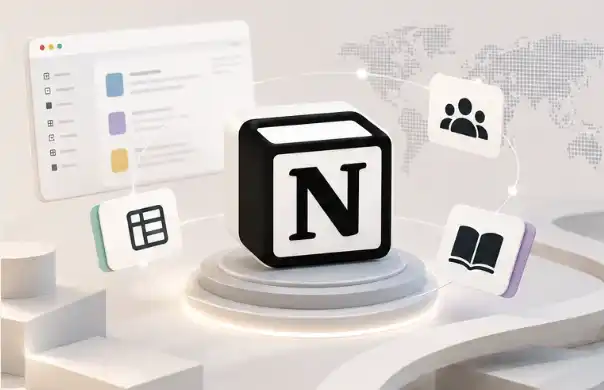
Deconstructing Notion's Growth: From a Note-taking Tool to 100 Million Users—How Notion Built a Triple Growth Flywheel Through Product, Templates, and Community

Notion's growth from a niche note-taking tool to a platform with 100 million users is powered by three interconnected flywheels: Product-Led Growth (PLG), a Template Economy, and Community-Driven Growth. First, Notion's PLG strategy relies on a highly flexible, "plastic" product that users can adapt to countless personal and team workflows. Its freemium model lowers the barrier to entry, while features like page sharing and collaboration drive organic, usage-based viral growth as users naturally invite others. Second, the Template Economy solves the "blank page" problem. Templates, created by both Notion and its community, transform abstract product capabilities into concrete, copyable solutions for specific scenarios (e.g., project management, content calendars). This dramatically lowers activation costs for new users and fuels SEO-driven discovery. Third, a vibrant Community acts as a distributed growth engine. Users and official Ambassadors create tutorials, share use cases, and host local events. This community not only educates users but also fosters a sense of identity around pursuing "better ways of working," strengthening loyalty and enabling global, low-cost expansion. Together, these flywheels create a self-reinforcing ecosystem: a great product attracts users who create templates and community content, which in turn attracts more users and deepens engagement. This system allowed Notion to scale from individuals to teams and enterprises through a bottom-up adoption path. Looking ahead, AI integration promises to accelerate these flywheels further by making templates smarter and the platform a potential AI-native work operating system. Ultimately, Notion's defensible advantage is not just its features, but this deeply entrenched network of user assets, creators, and community trust.

marsbit2 saat önce

Deconstructing Notion's Growth: From a Note-taking Tool to 100 Million Users—How Notion Built a Triple Growth Flywheel Through Product, Templates, and Community

marsbit2 saat önce

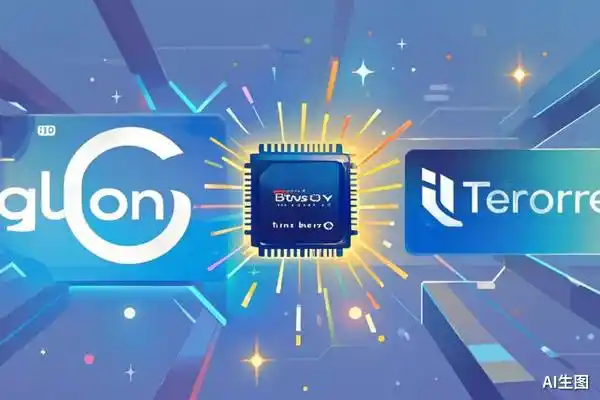
$10 Billion, Qualcomm to Acquire Chip Legend Jim Keller's Company

Global mobile chip giant Qualcomm is in advanced talks to acquire AI chip startup Tenstorrent in a deal valued between $8-10 billion, according to media reports. This potential acquisition would be one of the largest in the AI chip sector in recent years. Tenstorrent, led by legendary chip architect Jim Keller, has gained prominence for its RISC-V architecture and AI accelerator designs. The move highlights Qualcomm's strategic push to diversify beyond its core smartphone chip business. As the smartphone market matures, Qualcomm is aggressively targeting growth in automotive, data center, and cloud AI. Acquiring Tenstorrent would allow Qualcomm to rapidly enter the high-end AI computing market, bypassing lengthy in-house development cycles. Tenstorrent's cost-effective system architecture, which avoids expensive HBM memory and relies on standard Ethernet for clustering, offers a potential alternative to Nvidia's costly solutions. Furthermore, Tenstorrent's high-performance RISC-V CPU technology and its focus on the automotive and edge computing segments align with Qualcomm's strategic goals, including its "Snapdragon Digital Chassis" platform. Despite the strategic rationale, the high valuation has sparked some investor caution. The successful integration of Tenstorrent's open-source culture and independent team into Qualcomm's organization, along with the commercialization of its technology, remains a key challenge.

marsbit2 saat önce

$10 Billion, Qualcomm to Acquire Chip Legend Jim Keller's Company

marsbit2 saat önce

CARDS' Brutal Truth of $535M FDV: Only $43M Net Revenue, Profit Margin Halved

The article deconstructs Collector Crypt (CC), a blockchain-based platform for trading tokenized collectible cards, revealing a significant disparity between its high volume and actual business fundamentals. Key findings include: * CC's cumulative revenue of $635M is misleading; 90.6% is instantly returned to users via card buybacks, leaving only $43M in net revenue (6.7% retention). * Trading activity is minimal, with real secondary market trading below $5M. eBay sales as a percentage of volume have declined for six consecutive quarters. * The platform's user base is highly concentrated, with a few dozen high-frequency wallets driving most of the volume, resembling a "casino" with ~420 daily active players. * As volume shifts to higher-priced card packs, the net profit margin has halved from 11.2% to 5.8%. * Token value capture (via burns and buybacks) totals only $1.4M, just 3.4% of net revenue. Meanwhile, operational wallets have off-ramped $45.7M in USDC. * With a Fully Diluted Valuation (FDV) of ~$535M, the token trades at 7.3x net revenue. The float is only 20.5%, with 72% of the supply allocated to insiders and locked until November 2027. The analysis concludes that while CC has found product-market fit as a high-speed gacha machine, it shows little evidence of evolving into a sustainable collector's marketplace, with minimal value accruing to its CARDS token.

marsbit2 saat önce

CARDS' Brutal Truth of $535M FDV: Only $43M Net Revenue, Profit Margin Halved

marsbit2 saat önce

İşlemler

Spot
Futures

Popüler Makaleler

LINK Nasıl Satın Alınır

HTX.com’a hoş geldiniz! ChainLink (LINK) satın alma işlemlerini basit ve kullanışlı bir hâle getirdik. Adım adım açıkladığımız rehberimizi takip ederek kripto yolculuğunuza başlayın. 1. Adım: HTX Hesabınızı OluşturunHTX'te ücretsiz bir hesap açmak için e-posta adresinizi veya telefon numaranızı kullanın. Sorunsuzca kaydolun ve tüm özelliklerin kilidini açın. Hesabımı Aç2. Adım: Kripto Satın Al Bölümüne Gidin ve Ödeme Yönteminizi SeçinKredi/Banka Kartı: Visa veya Mastercard'ınızı kullanarak anında ChainLink (LINK) satın alın.Bakiye: Sorunsuz bir şekilde işlem yapmak için HTX hesap bakiyenizdeki fonları kullanın.Üçüncü Taraflar: Kullanımı kolaylaştırmak için Google Pay ve Apple Pay gibi popüler ödeme yöntemlerini ekledik.P2P: HTX'teki diğer kullanıcılarla doğrudan işlem yapın.Borsa Dışı (OTC): Yatırımcılar için kişiye özel hizmetler ve rekabetçi döviz kurları sunuyoruz.3. Adım: ChainLink (LINK) Varlıklarınızı SaklayınChainLink (LINK) satın aldıktan sonra HTX hesabınızda saklayın. Alternatif olarak, blok zinciri transferi yoluyla başka bir yere gönderebilir veya diğer kripto para birimlerini takas etmek için kullanabilirsiniz.4. Adım: ChainLink (LINK) Varlıklarınızla İşlem YapınHTX'in spot piyasasında ChainLink (LINK) ile kolayca işlemler yapın.Hesabınıza erişin, işlem çiftinizi seçin, işlemlerinizi gerçekleştirin ve gerçek zamanlı olarak izleyin. Hem yeni başlayanlar hem de deneyimli yatırımcılar için kullanıcı dostu bir deneyim sunuyoruz.

898 Toplam GörüntülenmeYayınlanma 2024.12.13Güncellenme 2026.06.02

LINK Nasıl Satın Alınır

Tartışmalar

HTX Topluluğuna hoş geldiniz. Burada, en son platform gelişmeleri hakkında bilgi sahibi olabilir ve profesyonel piyasa görüşlerine erişebilirsiniz. Kullanıcıların LINK (LINK) fiyatı hakkındaki görüşleri aşağıda sunulmaktadır.

活动图片