How to Uncover New Wealth Opportunities? Renowned Independent Crypto Analyst Releases Top 10 Predictions for 2026

marsbit2026-01-13 tarihinde yayınlandı2026-01-13 tarihinde güncellendi

Özet

In this article, independent crypto analyst Miles Deutscher shares his top 10 predictions for the cryptocurrency market in 2026. Key forecasts include Bitcoin ending the year higher than it started, potentially above $90,000, though a parabolic surge beyond $150,000 is uncertain. He anticipates that institutional investors will continue to drive the market more than retail, emphasizing the importance of tokens with strong revenue models and real utility. Major growth is expected in several sectors: prediction markets could see a 5x volume increase, perpetual futures trading will expand beyond crypto into stocks and metals, and ICO participation will hit new highs due to favorable regulations. Real-World Assets (RWA) are predicted to have their second-biggest year, while neobanks leveraging crypto and stablecoins are poised for exponential growth as infrastructure improves. The intersection of AI and crypto is highlighted as a major narrative, with advancing technology enabling practical applications in agents, data, and automation. Additionally, stablecoin supply is projected to grow by over 50%, fueled by regulatory developments like the U.S. Clarity Act. Deutscher encourages readers to focus on fundamental value and emerging narratives to capture upside opportunities.

Author:Miles Deutscher

Compiled by: Jiahuan, ChainCatcher

In this article, I will break down my top 10 cryptocurrency predictions for 2026 in detail. These include my price prediction for $BTC, top altcoin narratives, the prospects of crypto and AI integration, and more. This is an exercise I do every year, and it really helps me calibrate my direction for the new year. Even if you don't agree with all the predictions here, I hope this will inspire your thinking and prompt you to create your own list to prepare for this year and capture the greatest upside potential.

10. Prediction Market Trading Volume to Grow 5x

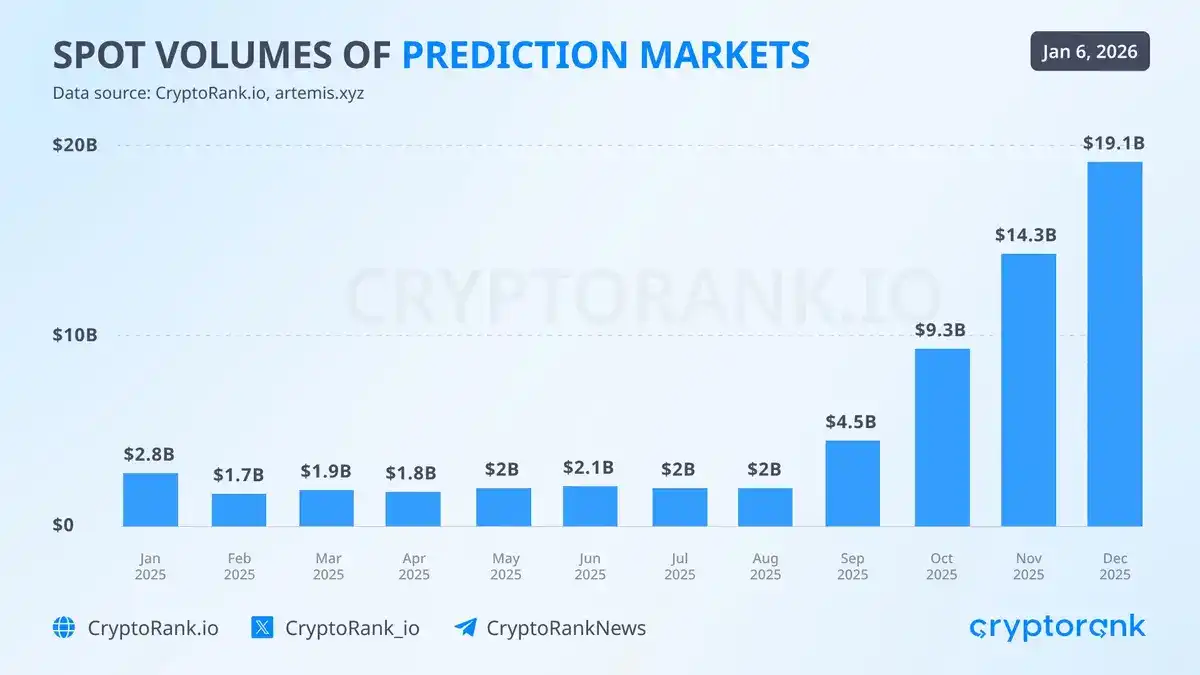
From January 2025 to today, the trading volume of prediction markets has grown by about 10 times. I believe this trend will continue, and in 2026, we will see at least one month where the volume reaches 5 times the current level. A 5x increase from the current trading volume would equate to approximately $95 billion per month. Another factor to consider is the rise of "adjacent protocols" built on top of prediction markets. For example, @intodotspace is building the first leveraged prediction market. This trend will further amplify trading volume.
9. Explosive Growth in Stock/Metal Perpetual Contracts

The argument here is simple: we will continue to see the proliferation of perpetual contracts in the mainstream—not just limited to crypto token trading. 2025 was the year perpetual futures technology exploded in the crypto space—instant settlement, excellent UI/UX, decentralization, etc. Secondly, gold/metals/stocks are in a fierce bull market. Typically, as the cycle nears its peak, people move further down the risk curve in pursuit of returns (perpetual contracts are well-suited to benefit from small-cap/emerging markets).

In many cases, accessing through crypto channels is easier and faster than buying stocks/gold through traditional finance (TradFi) channels. Due to this combined effect, I believe we will see explosive growth in the trading volume of stocks/metals on perpetual DEXs, and perpetual contract trading will extend far beyond crypto tokens.

8. The "Renaissance" of ICOs Continues

Due to a major shift in the regulatory environment, the public now has unprecedented access to participate in token sales. ICO participation is at an all-time high, and I expect this overall upward trend to continue. If you're interested in profiting from ICOs, I recently published a complete tweet thread and a free Notion template to help you stay organized in this space—you can check it out below.

7. Altcoins with Strong Revenue Models Will Win

The market sentiment has clearly shifted, favoring real businesses over pure speculation and hype. Of course, the latter will always have a place in the market, but more and more investors (both large and small) are looking for real "flywheels" to support token prices (amid a sea of token dilution).

I believe protocols that genuinely generate revenue will continue to dominate. Simply put, protocols with real revenue mechanisms will perform better than those without. Keep an eye on companies/projects/teams that are actually generating revenue.

6. RWA Will Have Its Second-Biggest Breakout Ever

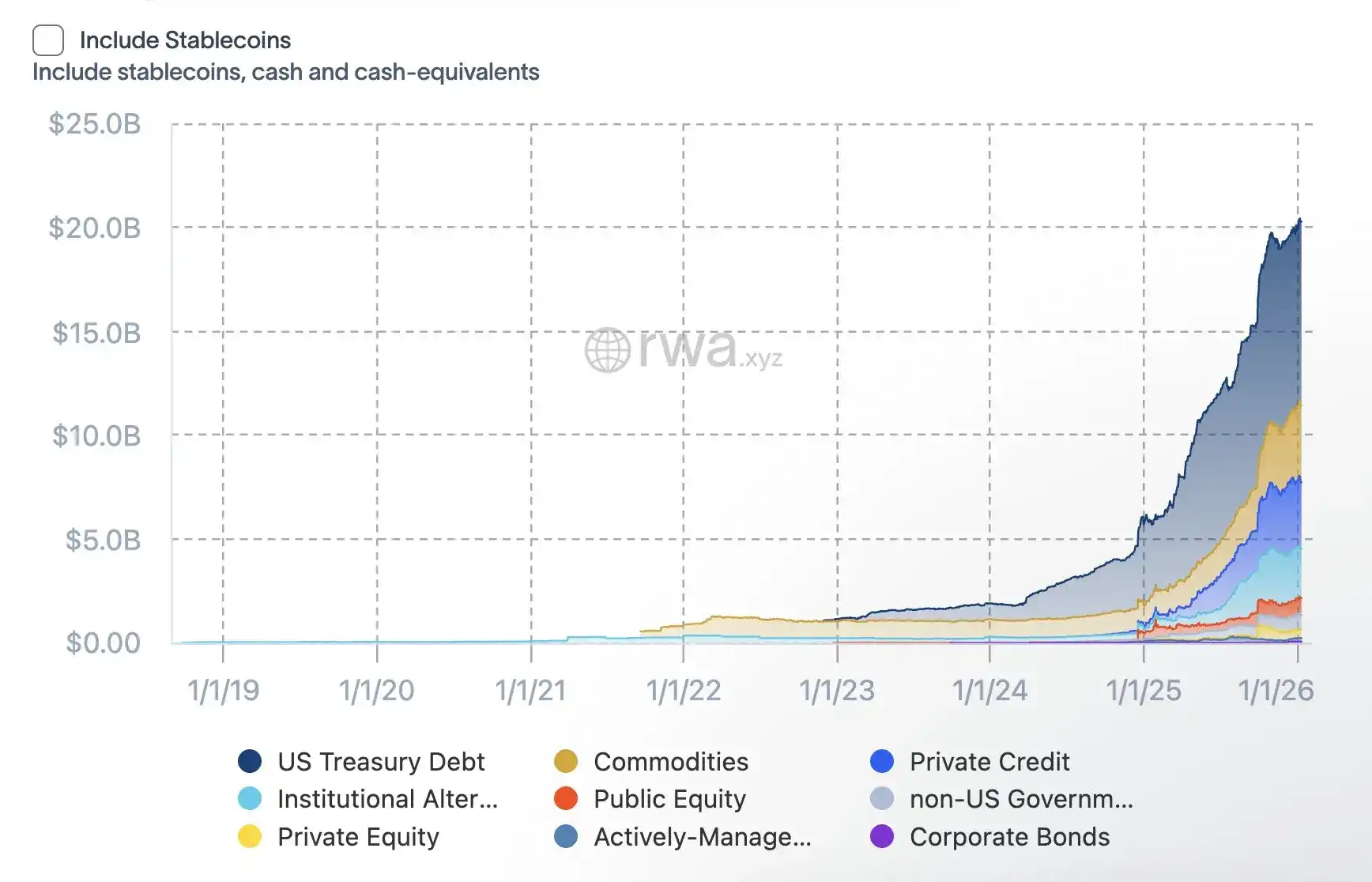
I’d love to say RWA will have its biggest year ever. However, technically, it’s hard to beat the $14 billion growth in 2025. I think liquidity will continue to flow into this space, and it will be another fruitful year, but the percentage increase might be smaller than in 2025. 2026 may bring many yield/tokenization opportunities and numerous altcoin trading setups in this field.
5. Neobanks Become the Most Exponentially Growing Sector in Crypto

It feels like we’ve finally reached a tipping point for crypto/stablecoin banking. The infrastructure has finally caught up with demand, and we’re seeing explosive growth in the adoption of many products. Being able to easily convert between cryptocurrency and fiat is a much-needed solution. This sector has the largest total addressable market (basically the entire financial world) and is actively solving problems in developing countries and regions where traditional financial systems are less accessible. This is a huge market, and I expect we will finally (truly) crack it this year.

4. AI / AI Agents Make a Real Comeback

Last January, we either experienced a crazy AI hype season that drove up the prices of Crypto x AI protocols—the only problem was that the technology hadn’t caught up yet. Entering 2026, things are different; the technology can actually deliver on the hype. For me, 2026 is undoubtedly the most critical year for AI so far (just like every year), and as people speculate on AI’s upside, retail interest can easily spill over into the crypto space. Crypto x AI is the perfect synergy. Crypto brings the freedom of financial rails, and AI brings automation, which I believe is the future of finance. I think this will create opportunities in many AI sub-sectors, including x402, robotics, agentic workflows, AI data/infrastructure, etc.

3. Stablecoin Supply to Grow by Over 50%

Last year, the total stablecoin supply grew by 50% (from $200 billion to $300 billion). I believe this year we will see similar growth in stablecoin supply, further catalyzed by the U.S. Clarity Act for stablecoins.

2. Institutional Driving Force in Crypto Market to Surpass Retail

This entire cycle has been institutionally driven (DATs, ETF pushes, etc.). I expect this shift toward institutionally driven markets to continue—which is why I focus on tokens/protocols that can attract institutional interest (back to my point about focusing on real revenue projects).

1. BTC Year-End Price Will Be Higher Than Year-Start

Whether $BTC will experience a crazy "blow-off top" above $150,000 this year depends on many factors: fund flows/buyer demand, DATs, macro background, etc.

Frankly, I’m not sure if the market can gather all the right conditions to trigger that most extreme疯牛见顶 mode. However, I think Bitcoin will close with a bullish price candle at the end of 2026. This means $BTC must close above the $90,000 range.

To summarize my long logic on this (I may go into more detail in a later post): we are likely in the final year of the business cycle, and we’re seeing price bottoming behavior similar to previous years, which makes me believe we will at least close green this year—I’ll dive deeper into my exact thesis on this in the coming weeks, stay tuned.


İlgili Sorular

QWhat is the author's price target for Bitcoin by the end of 2026?

AThe author believes Bitcoin will close the year with a bullish candle, meaning it must close above the $90,000 range.

QWhich sector does the analyst predict will be the most exponentially growing in crypto space for 2026?

AThe analyst predicts that Digital Banks (Neobanks) will be the most exponentially growing sector in the crypto space for 2026.

QWhat is the predicted growth for the total stablecoin supply in 2026?

AThe analyst predicts the stablecoin supply will increase by more than 50% in 2026, similar to its growth the previous year.

QAccording to the predictions, what will be the main driving force of the crypto market in 2026, institutions or retail?

AThe main driving force of the crypto market in 2026 is predicted to be institutions, surpassing retail investors.

QWhich narrative does the analyst believe will make a 'real comeback' in 2026 with the technology now able to deliver on its promises?

AThe analyst believes that AI / AI Agents will make a real comeback in 2026, as the technology can now deliver on its promises.

İlgili Okumalar

As Consensus Accelerates, What Are Young Investors Betting On?

Title: As Consensus Forms Faster, What Are Young Investors Betting On? In the rapid evolution of tech investment, a new generation of young investors is navigating a landscape where AI, robotics, commercial aerospace, and quantum computing are advancing simultaneously. Traditional investment logic based on financial models is giving way to a need for deep technical understanding and the ability to act before industry consensus forms. An analysis of trends from the "WAIC FUTURE TECH" list of young investment leaders reveals key shifts in focus. The first major trend is the movement of AI from the digital screen into the physical world. Investment is shifting from large language models and chatbots towards embodied AI, robotics, AI hardware, and edge computing. While demonstrations generate excitement, the real challenge lies in achieving scalable, reliable, and cost-effective delivery in complex real-world environments like factories and logistics. Success depends not just on algorithms but on the integration of sensors, actuators, and control systems. Second, the competitive focus for large models is moving beyond raw capability toward building an "intelligence flywheel." The goal is to create self-reinforcing systems where user interaction generates data, improving the model, which in turn enhances the user experience and attracts more engagement. Companies that successfully embed AI into workflows to create these closed-loop systems can build lasting value that isn't easily erased by the next model upgrade. Third, facing a potential bottleneck in high-quality human-generated data, investors are looking at new underlying technologies. Reinforcement learning and self-play, as demonstrated by AlphaGo Zero, offer paths for AI to generate its own experience. Scientific foundation models, which aim to build general AI capabilities for fields like life sciences and materials discovery, represent a non-consensus direction that could unlock new frontiers of knowledge and data. Finally, in deep-tech areas like quantum computing, commercial aerospace, and space-based infrastructure, patient capital is essential. These fields have long, uncertain development and validation cycles involving complex engineering, supply chains, and regulations. Investment here requires a long-term view, focusing on foundational team capabilities and the eventual emergence of market demand, even if commercial returns are distant. Collectively, these trends illustrate how young investors are adapting to a new era. They are learning to make earlier, technically-informed judgments, balance hype with real-world viability, and provide the patient capital needed to build the deep-tech foundations of the future.

marsbit5 dk önce

As Consensus Accelerates, What Are Young Investors Betting On?

marsbit5 dk önce

Can Japan Buy Growth with AI? Will the Bond Market Believe It?

Japan's cabinet has introduced the 2026 Basic Policy on Economic and Fiscal Management and Reform, shifting its primary fiscal target. The new framework moves away from the traditional annual primary balance goal and instead prioritizes a stable reduction of the debt-to-GDP ratio. This change is tied to a strategy of increased "responsible proactive fiscal" spending, aiming to boost long-term growth through investments in strategic sectors like AI, semiconductors, energy, and robotics. The government estimates total public and private investment in 62 key technologies could exceed 370 trillion yen by 2040. The market reaction has been mixed and cautious. While equity markets may respond to policy signals, bond markets are focused on fiscal credibility. Concerns center on whether the weakening of the clear primary balance anchor could lead to looser fiscal discipline. If investors doubt that these strategic investments will generate sufficient productivity gains, tax revenue, and nominal growth to outpace rising interest costs, they may demand higher yields on Japanese Government Bonds (JGBs). Recent volatility in the yen and JGB yields, with the 10-year yield briefly reaching 2.9%, reflects this skepticism. The success of this new framework hinges on two factors: whether Japan can achieve a nominal growth rate consistently higher than its long-term interest rates, and whether future budgets demonstrate disciplined control over bond issuance. The government's narrative is that strategic investment is essential to break Japan's cycle of low growth, aging, and labor shortages. However, the bond market will continuously assess the credibility of this plan, pricing the risk that it may represent fiscal expansion rather than a viable growth strategy.

marsbit42 dk önce

Can Japan Buy Growth with AI? Will the Bond Market Believe It?

marsbit42 dk önce

Misjudged A-Shares: Resilience, Expectations, and Confidence

China's A-share market recently faced selling pressure, especially in tech sectors, initially triggered by a global tech sell-off that began in South Korea. However, the article argues this is a case of "mistaken injury" and highlights the market's underlying resilience. This resilience stems from three main pillars: **1) Tech Sector Fundamentals:** Unlike Korea's market dominated by a few memory chip stocks, China's tech sector is diversified across computing, communications, electronics, and semiconductors, supported by dual narratives of global AI supply chains and domestic substitution. Core areas like optical modules and fiber optics continue to show strong earnings growth. **2) "National Team" Support:** State-backed institutions and large corporations have made significant market purchases and announced buybacks, providing liquidity and signaling confidence. This is seen as a stabilizing policy signal, often associated with market bottoms. **3) Broader Market Pillars:** Other major sectors are showing endogenous recovery momentum. Consumer stocks benefit from stabilizing CPI and signs of sector recovery (e.g., liquor price hikes). Cyclical sectors like aluminum have high earnings, potential price increases due to tight supply, and low valuations. The financial sector offers stable dividends and low valuations. The conclusion is that the sell-off was driven by external contagion, not a collapse in fundamentals. With strong policy support and recovering momentum across key sectors, the A-share market possesses the toughness to regain stability.

marsbit1 saat önce

Misjudged A-Shares: Resilience, Expectations, and Confidence

marsbit1 saat önce

İşlemler

Spot
活动图片




