How to Do Research Well: Deliberately Practice the Real Skills That Matter

marsbit2026-06-15 tarihinde yayınlandı2026-06-15 tarihinde güncellendi

Özet

No one truly teaches you how to do research. You're often given a desk, a pre-selected problem, and vague instructions to "create something new." Consequently, many people reverse-engineer the job based on visible outputs—papers, posts, announcements—learning only how to *appear* like a researcher rather than how to *become* one. True research capability is built from stacking small, trainable skills, nearly all of which can be developed through deliberate practice. **Pick Your Own Problem:** Most researchers absorb problems from advisors or trends, lacking the underlying reasoning. Choosing a problem you genuinely care about, as John Schulman advises, leads to original work. Develop "taste" like a muscle: predict experiment outcomes, guess paper results from methods, and track which findings remain important over time. **Upgrade Your Inputs:** Relying on shared reading lists (arXiv hot lists, filtered group chats) leads to unoriginal conclusions. Undervalued old literature often holds crucial insights (e.g., MoE, LSTM, backpropagation). Richard Sutton's "The Bitter Lesson" or Claude Shannon's 1952 talk on creative thinking are more predictive than lengthy modern surveys. Breadth matters as much as depth: draw from neuroscience, mechanism design, hardware knowledge, and honest statistics. Read papers directly, especially appendices and limitations sections. **Write Everything Down:** As Paul Graham noted, writing exposes flaws in seemingly mature ideas. Writing is the chea...

No one ever really taught you how to do research. You get a desk, a problem someone else picked out, and a vague instruction to "make something new."

So most people reverse-engineer the job from what they can see—papers, posts, and announcements—and end up learning how to look like a researcher rather than how to be one. Real research ability is a stack of small skills, and almost every one of them can be cultivated through deliberate practice.

Choose Your Own Problems

Richard Hamming had a habit at Bell Labs that made him unwelcome at lunch. He would ask the person next to him what the important problems in their field were, and then ask them why they weren't working on those. People would switch tables.

The question stings because most of us don't have a good answer. We aren't choosing problems; we're absorbing them—from advisors, from last quarter's announcements by a big lab, from papers everyone is citing and sharing this week.

The trouble with absorbed problems is that you hold the conclusion but not the reasoning behind it. You know some famous lab cares about a direction, but you don't know why, what they expect to find, or what would make them abandon it.

You'll notice their pivot a year later. And on a problem that's already trending, you're racing against 1,000 people who started earlier and have more compute than you.

John Schulman's guide to ML research splits the work into two modes. In the first, you read the literature and look for things to improve. In the second, you choose an outcome you genuinely want to achieve and work backwards to design experiments.

He argues for the latter, the subtle reason being that it manufactures originality. A goal you actually care about will drag you into territory no review paper has ever covered.

As for "taste," people often discuss it as a talent. But it behaves more like a muscle.

Before running each experiment, predict its outcome; cover up a paper's results section and guess the data from its methods; note which results announced this month will still matter in two years, and later check your hit rate. One prediction plus one correction, repeated hundreds of times—every good model is trained that way, including the one in your head.

Upgrade Your Inputs

Shared reading lists produce shared ideas. If your information diet is just the arXiv trending list plus whatever filters through group chats, you'll inevitably reach the same conclusions as everyone else at the same time, making those conclusions nearly worthless.

Old material is severely undervalued. The field keeps replaying its own past with a delay: Mixture of Experts (MoE) traces back to 1991, LSTMs to 1997, backpropagation went mainstream in 1986.

Richard Sutton wrote The Bitter Lesson in 2019 in just over a thousand words, and it predicted the field's trajectory more accurately than reviews ten times its length. Claude Shannon gave a talk on creative thinking in 1952; his first move was to shrink the problem until it was almost trivial, solve the small version, then add the difficulty back bit by bit.

That single move will help you break through more walls than any modern productivity advice.

Breadth is as important as depth. Interpretability research unapologetically borrows from neuroscience; evaluation design is mechanism design in a lab coat; a practical awareness of how GPUs actually move memory lets you judge which architecture papers will fail before benchmarks are even run; and honest statistics is arguably the rarest skill in machine learning, where much published "rigor" is just "vibes with error bars."

One more thing. Read the papers themselves, not the posts that summarize them. The appendix is where secrets are buried, and the "Limitations" section is often the most honest part of the entire document.

Write Everything Down

Paul Graham observed that an idea always feels fully formed until you try to write it down. But words on a page expose the varnished-over holes in your brain: the untested assumptions, the steps that don't actually connect, the two claims that quietly contradict each other.

Feynman's rule was that the first person you must avoid fooling is yourself, because you're the easiest person to fool. Writing is the cheapest defense mechanism ever invented.

Darwin took it further and systematized it: any fact contrary to his theory was written down immediately, because he found his memory deleted inconvenient evidence far faster than favorable evidence. Your memory does the same with your failed runs.

Keep a log: hypotheses, setup, expectations, results, updated understanding. Rereading last month's entries will humble you like no reviewer ever could.


Trend Kriptolar

İlgili Sorular

QWhat is the key difference between learning to 'look like' a researcher and learning to 'be' a researcher, according to the article?

ALearning to 'look like' a researcher involves reverse-engineering the work through visible outputs like papers and announcements, mimicking the surface actions. Learning to 'be' a researcher involves cultivating a stack of small, foundational skills through deliberate practice, focusing on genuine problem-solving and critical thinking rather than appearances.

QWhy does John Schulman advocate for choosing a result you truly want and working backwards, as opposed to finding gaps in the literature?

AJohn Schulman advocates for this approach because it fosters originality. A goal you genuinely care about will pull you into territory not covered by any review paper, leading to unique exploration and preventing you from merely running a crowded race against others on popular, pre-defined problems.

QAccording to the article, how can one practically develop 'taste' in research?

ATaste is developed like a muscle through deliberate, iterative practice. This includes predicting an experiment's outcome before running it, guessing a paper's results based only on its methods, noting which recent results will still be important in two years, and then verifying the accuracy of these predictions to continuously train and correct one's internal mental model.

QWhat are two specific strategies the article recommends for 'upgrading your input' as a researcher?

ATwo strategies are: 1) Valuing old literature, as the field often re-runs its past, and foundational ideas from papers, speeches, or lessons from decades ago can provide timeless insights and predictions. 2) Reading primary sources (the papers themselves, especially appendices and limitations sections) instead of relying solely on summaries or posts, and cultivating breadth in knowledge across adjacent fields.

QWhat defensive function does writing serve in the research process, as illustrated by the examples of Paul Graham and Darwin?

AWriting serves as a crucial, low-cost defense mechanism against self-deception. Paul Graham notes that writing exposes logical flaws and untested assumptions that feel complete in one's mind. Darwin programmatically wrote down facts contradicting his theory to prevent his memory from conveniently forgetting unfavorable evidence, a practice that applies equally to documenting experimental failures and flawed hypotheses.

İlgili Okumalar

Conversation with Co-founder of Hyperdash: Why is Hyperliquid Still Severely Undervalued?

Interview Summary with Hanson Birringer, Co-founder of Hyperdash: Why Hyperliquid Remains Undervalued In an interview on *The Rollup*, Hanson Birringer, Co-founder and Chief Revenue Officer of Hyperdash—a trading data analytics platform for Hyperliquid—shared his investment thesis on the Hyperliquid ecosystem. He described Hyperliquid as a pure play on three key crypto super-trends: perpetual contracts, real-world assets (RWAs), and stablecoins. The platform is an open-source, decentralized, and high-performance financial system uniquely positioned to bridge traditional institutional capital with decentralized finance. Birringer highlighted Hyperliquid's leadership in perpetual DEX trading and its recent innovation of RWA perpetual contracts. He emphasized the significance of USDC becoming a core quoting asset, which, by allocating 90% of its backend yield from assets like US treasuries to a protocol buyback fund, creates substantial, programmatic buy pressure for the Hype token. He addressed regulatory challenges, noting that Hyperliquid's policy team is actively engaging with US regulators like the CFTC to establish clear rules for decentralized venues. Once achieved, regulated brokers could route orders directly to Hyperliquid's backend, tapping into its low-cost liquidity layer. Regarding revenue, Birringer was optimistic, citing the immense size of traditional financial markets. Even capturing a small fraction of global trading volume in products like RWA perpetuals could lead to exponential growth for the protocol. The recently launched Grayscale Hyperliquid ETF, seeded by their SPV (Hyper Holdings Global), provides a compliant on-ramp for institutional investors drawn to the clear "cash flow + token buyback" model. Finally, he discussed Hyperdash's acquisition of Imperator, enhancing its data and node infrastructure to serve both retail traders and traditional asset managers. His bullish case rests on Hyperliquid's potential to provide unprecedented global access to dollar-based capital markets. He struggled to articulate a bear case, seeing the long-term trends of internet adoption and financial inclusion as powerful tailwinds.

marsbit49 dk önce

Conversation with Co-founder of Hyperdash: Why is Hyperliquid Still Severely Undervalued?

marsbit49 dk önce

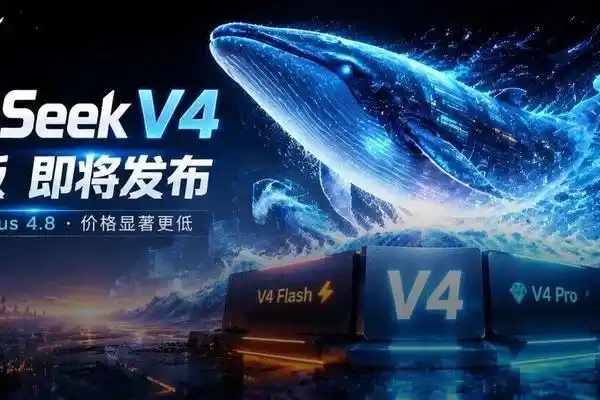
DeepSeek V4 'Full-Blooded Edition' Leaked, Could Be Released As Early As Tomorrow

The highly anticipated full release of DeepSeek V4 is imminent, expected to launch as early as tomorrow after nearly three months of waiting. A select group has already received access to the GA (General Availability) beta, which includes two versions: DeepSeek V4 Flash and DeepSeek V4 Pro. Early testers report that V4's overall performance is close to the level of Opus 4.8, with coding capabilities rivaling GPT-5.6 Sol. Its agent abilities are significantly enhanced, and 3D/SVG generation has improved notably. While it may not surpass the recently released Kimi K3 in performance, its expected price point is significantly lower. The official release will introduce a new "peak/off-peak" pricing model for its API. For example, deepseek-v4-pro will cost $0.87 per million output tokens during standard times and $1.74 during peak hours. The flash version is even more aggressive at $0.28/$0.56 per million tokens, with cached input tokens priced extremely low at $0.0028. This makes V4 a strong contender in terms of cost-effectiveness, potentially offering Opus-level capabilities at a fraction of the cost, continuing DeepSeek's reputation as a "price disruptor" in the AI market. Initial demos showcasing V4's capabilities have begun circulating, including generated 3D simulation games, HTML games blending elements of Minecraft and No Man's Sky, and classic games like a "Cut the Rope" clone. The final GA version is set to replace the older deepseek-chat and deepseek-reasoner models, which will be retired on July 24th.

marsbit58 dk önce

DeepSeek V4 'Full-Blooded Edition' Leaked, Could Be Released As Early As Tomorrow

marsbit58 dk önce

WEEX Labs Weekly Observation: The 'Power Restructuring' of AI Infrastructure and the 'Deep Dive Movement' into the Real Economy

WEEX Labs Weekly Review: AI Infrastructure's "Power Restructuring" and the "Deep Dive" into the Real Economy Mid-July 2026 marks a pivotal shift in the global AI industry. The allocation of computing power is transferring from cloud giants to compute resource owners, while the core value of AI is solidifying around its penetration into physical industry, moving beyond the race for model parameters. The era of fragmented model development is over, replaced by a capital-intensive, integrated chain driven by hard tech. Key developments this week include Meta's planned entry into the cloud computing market with "MetaCompute." This move by social media giants with massive GPU clusters challenges traditional cloud providers like AWS, integrating compute, models, and data into one-stop services, which will squeeze smaller rental providers and shift enterprise focus towards underlying model ecosystems. Chinese foundational models like DeepSeek-V4 and Tencent's Hy-3 are pushing towards "utility" status through open-source releases and extreme cost reductions via MoE architectures. This lowers entry barriers for enterprises, allowing them to focus resources on private deployment and deep business integration. Embodied intelligence, particularly humanoid robots, is transitioning from lab demos to real-world factory applications, driven by policies promoting large-scale, practical deployment in logistics and manufacturing. The value focus is shifting from spectacle to stable industrial data and real operational efficiency. Global governance, through forums like WAIC, is evolving from theoretical ethics to practical operational frameworks for "Sovereign AI," raising geopolitical compliance barriers and making auditability and data sovereignty core design requirements from the outset. WEEX Labs Insights: The current transformation shows AI's prosperity is deeply embedding into the fabric of global manufacturing. Strategic recommendations include: 1) leveraging open-source models for private, proprietary knowledge bases; 2) maintaining cloud provider diversity to avoid vendor lock-in from integrated model ecosystems; and 3) seeking opportunities in the "embodied infrastructure" supporting robots, such as data collection, industrial simulation, and factory AI adaptation services.

marsbit1 saat önce

WEEX Labs Weekly Observation: The 'Power Restructuring' of AI Infrastructure and the 'Deep Dive Movement' into the Real Economy

marsbit1 saat önce

Is WEEX TradFi Reliable? What You Should Know Before Your First Trade of U.S. Stock Tokens

In recent years, cryptocurrency users have expanded their focus beyond Bitcoin and Ethereum to include popular traditional financial (TradFi) assets like Nvidia, Apple, and Tesla stocks. This shift raises key questions: What do these TradFi assets represent on crypto trading platforms? How do they differ from traditional stock ownership? And how can users assess the reliability of platforms offering such products? TradFi products, such as those offered by WEEX TradFi (including NVDA, MSFT, AAPL, TSLA, and QQQ tokens), are blurring the lines between crypto and traditional markets. They allow users to trade based on the price movements of traditional assets within a familiar digital asset trading environment. However, it's crucial to understand that trading a "stock token" is not equivalent to owning the actual stock. Users are participating in price speculation, not gaining shareholder rights like dividends or voting. A key feature of these products is 7x24 trading, offering flexibility beyond traditional market hours. While convenient, this also introduces unique risks, such as potential liquidity gaps and volatility when underlying markets are closed. For users evaluating TradFi products, reliability hinges on transparency and risk management. Critical factors include understanding the product mechanism, how prices track the underlying assets, and the associated risks—especially when using leverage. Popular stocks and indices are still subject to company performance, macroeconomic shifts, and sector trends. Ultimately, TradFi represents a new gateway connecting crypto users to global markets. The future points toward integrated trading environments where the distinction between "crypto investor" and "traditional investor" fades. For newcomers, a platform's reliability stems not from promises, but from a clear understanding of the product, a comprehensive view of risks, and informed judgment of the platform's capabilities.

marsbit1 saat önce

Is WEEX TradFi Reliable? What You Should Know Before Your First Trade of U.S. Stock Tokens

marsbit1 saat önce

İşlemler

Spot

Popüler Makaleler

$WELL Nedir

WELL3, $$WELL: DePIN ve AI ile Sağlık ve Refahı Devrim Niteliğinde Yenilemek Giriş Hızla gelişen dijital teknoloji alanında, sağlık ve wellness sektörü yeniliğin ön saflarında yer almakta, hasta bakımını geliştirmeye ve daha sağlıklı yaşam tarzlarını teşvik etmeye çalışmaktadır. Bu alandaki çığır açan bir oyuncu WELL3'tür; bireylerin sağlıklarıyla etkileşim biçimlerini devrim niteliğinde değiştirmeyi hedefleyen öncü bir Web3 projesidir. Dağıtık Fiziksel Altyapı Ağı (DePIN), Dağıtık Kimlik (DID) ve Yapay Zeka (AI) gibi teknolojileri kullanarak, WELL3 güvenli, veri destekli sağlık yolculuklarını teşvik etmeyi amaçlamaktadır. Bu kapsamlı makale, WELL3'ün, $$WELL'in temel bileşenlerine derinlemesine dalarak işlevsellikleri, yaratıcıları, yatırımcıları ve benzersiz özelliklerini keşfetmektedir. WELL3, $$WELL Nedir? WELL3, sağlık ve refah yaklaşımını yeniden tanımlamayı hedefleyen yenilikçi bir platformdur. DePIN ve DID'yi AI sistemleriyle entegre etmeye odaklanan proje, bireylerin sağlık verilerinin güvenliğini ve gizliliğini sağlarken kişiselleştirilmiş kullanıcı deneyimleri oluşturmak için tasarlanmıştır. Bir milyondan fazla ön kayıtlı kullanıcı ile WELL3'ün ana misyonu, güvenli, veri odaklı sağlık yolculukları aracılığıyla refahı artırmaktır. WELL3'ün temelinde, kullanıcıların kişisel bilgileri üzerinde tam kontrol sahibi olmasını sağlamak için gelişmiş blockchain teknolojileri kullanılmaktadır. Bu proje sadece veri güvenliği ve erişilebilirlik sorunlarını ele almakla kalmaz, aynı zamanda daha iyi sağlık için ortak bir taahhütte bulunan canlı bir topluluk yaratmayı hedefler. WELL3'ün Ana Özellikleri: DePIN ve DID: Bu teknolojiler, verilerin güvenli sahipliğini ve kimlik doğrulamasını sağlamakta, kullanıcılara bilgileri üzerinde tam kontrol vermektedir. AI Entegrasyonu: AI analitiği kullanarak, WELL3 bireysel sağlık ihtiyaçlarına uygun kişiselleştirilmiş içgörüler ve çözümler sunmaktadır. Topluluk Katılımı: Kullanıcıların bağ kurabileceği, deneyimlerini paylaşabileceği ve daha sağlıklı yaşam için birbirlerini motive edebileceği destekleyici bir ortam sağlar. WELL3'ün, $$WELL'in Yaratıcısı WELL3'ün yaratıcılarının kimliği mevcut bilgilerde belirtilmemiştir. Proje ilerledikçe, bu dönüştürücü girişimin arkasındaki yenilikçi zihinlere ışık tutacak daha fazla detay ortaya çıkabilir. WELL3'ün, $$WELL'in Yatırımcıları WELL3, sağlık ve wellness alanındaki güvenilirliğini ve potansiyelini vurgulayan birçok etkili yatırım kurumunun desteğini kazanmıştır. Öne çıkan yatırımcılar arasında şunlar yer almaktadır: Animoca Brands AWS Samsung The Spartan Group Blocore Fenbushi Capital Newman Group Soul Capital XY Finance Lumoz Bu köklü kuruluşların desteği, WELL3'ün misyonuna güçlü bir inanç sergileyerek, yenilik yapması ve sunumlarını genişletmesi için gerekli kaynakları sağlamaktadır. WELL3, $$WELL Nasıl Çalışır? WELL3, kesintisiz ve yenilikçi bir kullanıcı deneyimi sağlamak için son teknoloji çözümleri çok zincirli bir çerçevede birleştirir. WELL3'ü wellness pazarında benzersiz kılan bazı faktörler aşağıda sıralanmıştır: 1. Güvenli Veri Sahipliği DePIN ve DID entegrasyonu ile kullanıcılar, kişisel sağlık bilgileri üzerinde tam kontrol sahibi olabilmektedir. Bu güvenlik katmanı, veri ihlalleri ve yetkisiz erişimlerin yaygın olduğu günümüz dijital çağında son derece önemlidir. WELL3 aracılığıyla veri sahipliği merkeziyetsizleşir, bu da kullanıcıların bilgilerini proaktif bir şekilde yönetmesini sağlar. 2. AI ile Kişiselleştirme WELL3, kullanıcılarına özel sağlık içgörüleri sunmak için AI destekli analizler gerçekleştirmektedir. AI'nin gücünden yararlanarak, platform bireysel öneriler ve çözümler sunmakta, kullanıcıların sağlık hedeflerine daha etkili bir biçimde ulaşmalarını teşvik etmektedir. 3. Çok Zincirli Çerçeve WELL3 projesi, Bitcoin, Ethereum, Polygon, Solana, Blast ve TON gibi birden fazla blockchain platformu üzerinde çalışacak şekilde tasarlanmıştır. Bu çok zincirli kapasite, kullanıcıların platformla farklı ağlar arasında sorunsuz bir şekilde etkileşimde bulunmalarını sağlamakta, erişilebilirliği ve kullanılabilirliği artırmaktadır. 4. WELL Token WELL3 ekosisteminin merkezinde, çeşitli amaçlar için kullanılan WELL Token bulunmaktadır; bunlar arasında fayda, yönetişim ve ödüller yer almaktadır. Token, ekosisteme katılımı sağlar, sağlık verisi paylaşımını destekler ve kullanıcıları platformla olan etkileşimlerine dayalı olarak ödüllendirir. WELL3'ün, $$WELL'in Zaman Çizelgesi WELL3'ün gelişim süreci, her biri projenin genel başarısına katkıda bulunan önemli aşamaları sergilemektedir. WELL3'ün tarihindeki kritik olaylara dair kısa bir zaman çizelgesi aşağıda sunulmuştur: 10 Şubat 2024: WELL3, NFT projesini başlattı ve 324,000'den fazla sahibi ile opBNB ağında en büyük NFT koleksiyonu olarak ön plana çıkmaya başladı. 27 Nisan 2024'e kadar 8 milyon NFT üretildi. Kamu Satışı: Proje, sadece yedi gün içinde yaklaşık 15,237.2 ETH'lik etkileyici bir toplam değer kilidi (TVL) başarısı gösterdi, bu da piyasanın güçlü ilgisini ve desteğini gösterir. WELL ID Lansmanı: Platform, WELL ID ve ilgili NFT Ring beyaz listesinin 900,000'den fazla kullanıcı tarafından kaydedildiğini görerek ekosistem içinde önemli bir benimseme aşamasını işaret etti. Ortaklık Geliştirme: WELL3, ekosistemini geliştirmek ve erişimini genişletmek için Animoca Brands, AWS, Samsung ve diğer önde gelen kuruluşlarla ortaklıklar kurdu. İşlem Hacmi: WELL3, sağlık ve wellness topluluğunda büyüyen faydasını ve katılımını yansıtan 17 milyon dolardan fazla işlem gerçekleştirdi. WELL3'ün, $$WELL'in Ana Noktaları Refah pazarına doğru kaydırılan ilerici bir girişim olarak WELL3, sürekli başarısına katkıda bulunacak birkaç kritik unsur belirlemiştir. İşte dikkate alınması gereken bazı temel noktalar: Tokenomik $$WELL tokeninin maksimum arzı 42 milyar olup, bunun önemli bir kısmı %71 topluluk girişimleri için ayrılmıştır. Bu dağıtım stratejisi, projenin kullanıcı tabanına ve uzun vadeli sürdürülebilirliğine olan bağlılığını vurgulamaktadır. Kilitlenme Süresi Ekosistemde istikrar sağlamak amacıyla tokenler, 24 aylık bir kilitlenme süresi boyunca partiler halinde serbest bırakılır; bu da kullanıcılar arasında güven ve güvenilirlik sunar. Ekosistem Gelişimi WELL3'ün vizyonu, güçlü topluluk katılımını teşvik eden, sağlık artırıcı davranışlar ve wellness alanındaki acil ihtiyaçlara yanıt veren dijital çözümler içeren kapsamlı ve sürdürülebilir bir ekosistem yaratmayı kapsamaktadır. Pazar Uyumlu 5.6 trilyon dolarlık bir değere sahip wellness endüstrisi, WELL3'ün hedeflemesini amaçladığı kârlı bir fırsat sunmaktadır. %5-10'luk bir yıllık büyüme oranı beklenmekte olup, proje sağlıklı ve bilinçli yaşam trendinin yükseldiği bir ortamda mükemmel bir şekilde konumlanmaktadır. Giyilebilirler WELL3 Yüzüğü, kişiselleştirilmiş sağlık verileri için artan talebe yanıt veren kripto teşvikli bir giyilebilir tekniktir. Bu cihaz, yalnızca kullanıcı deneyimini artırmakla kalmaz, ayrıca Web3 bağlamında bireylerin sağlıklarıyla etkileşimde bulunma biçimlerini yeniden tanımlamaktadır. Sonuç WELL3, sağlık ve wellness sektöründe blockchain teknolojisinin entegrasyonu açısından önemli bir ilerlemeyi temsil etmektedir. Veri sahipliği, kişiselleştirme ve topluluk katılımı etrafındaki önemli sorunları ele alarak, bu yenilikçi platform bireysel refahı artırmak için ileri görüşlü bir çözüm sunmaktadır. Kayda değer yatırımcılardan güçlü bir destekle ve yenilikçi teknolojilere olan bağlılığı ile WELL3, wellness alanında kalıcı bir etki yaratmaya hazırlanıyor. Dijital çağda sağlığın karmaşıklıklarını aşmak isteyenler için, WELL3'ün evrim geçirmeye ve büyümeye devam ezümü kesinlikle izlenmesi gereken bir platformdur.

69 Toplam GörüntülenmeYayınlanma 2024.07.14Güncellenme 2024.12.03

$WELL Nedir

WELL Nasıl Satın Alınır

HTX.com’a hoş geldiniz! Moonwell Artemis (WELL) satın alma işlemlerini basit ve kullanışlı bir hâle getirdik. Adım adım açıkladığımız rehberimizi takip ederek kripto yolculuğunuza başlayın. 1. Adım: HTX Hesabınızı OluşturunHTX'te ücretsiz bir hesap açmak için e-posta adresinizi veya telefon numaranızı kullanın. Sorunsuzca kaydolun ve tüm özelliklerin kilidini açın. Hesabımı Aç2. Adım: Kripto Satın Al Bölümüne Gidin ve Ödeme Yönteminizi SeçinKredi/Banka Kartı: Visa veya Mastercard'ınızı kullanarak anında Moonwell Artemis (WELL) satın alın.Bakiye: Sorunsuz bir şekilde işlem yapmak için HTX hesap bakiyenizdeki fonları kullanın.Üçüncü Taraflar: Kullanımı kolaylaştırmak için Google Pay ve Apple Pay gibi popüler ödeme yöntemlerini ekledik.P2P: HTX'teki diğer kullanıcılarla doğrudan işlem yapın.Borsa Dışı (OTC): Yatırımcılar için kişiye özel hizmetler ve rekabetçi döviz kurları sunuyoruz.3. Adım: Moonwell Artemis (WELL) Varlıklarınızı SaklayınMoonwell Artemis (WELL) satın aldıktan sonra HTX hesabınızda saklayın. Alternatif olarak, blok zinciri transferi yoluyla başka bir yere gönderebilir veya diğer kripto para birimlerini takas etmek için kullanabilirsiniz.4. Adım: Moonwell Artemis (WELL) Varlıklarınızla İşlem YapınHTX'in spot piyasasında Moonwell Artemis (WELL) ile kolayca işlemler yapın.Hesabınıza erişin, işlem çiftinizi seçin, işlemlerinizi gerçekleştirin ve gerçek zamanlı olarak izleyin. Hem yeni başlayanlar hem de deneyimli yatırımcılar için kullanıcı dostu bir deneyim sunuyoruz.

141 Toplam GörüntülenmeYayınlanma 2024.12.10Güncellenme 2026.06.02

WELL Nasıl Satın Alınır

Tartışmalar

HTX Topluluğuna hoş geldiniz. Burada, en son platform gelişmeleri hakkında bilgi sahibi olabilir ve profesyonel piyasa görüşlerine erişebilirsiniz. Kullanıcıların WELL (WELL) fiyatı hakkındaki görüşleri aşağıda sunulmaktadır.

活动图片