How Japan’s 2.30% bond yield could spark a global crypto opportunity

ambcrypto2026-03-24 tarihinde yayınlandı2026-03-24 tarihinde güncellendi

Özet

Japan's 10-year government bond yield rising to 2.30% could create a long-term bullish opportunity for crypto, according to analysis. As a major energy importer, Japan faces inflation from rising oil prices, pressuring its bond market. With USD/JPY nearing 160, Japanese authorities may intervene by selling U.S. Treasuries to support the yen. As the largest foreign holder of U.S. debt, such a move could weaken the dollar. Historically, a weaker dollar drives liquidity into crypto. Although recent FOMC decisions strengthened the dollar and caused a short-term crypto drop, this is viewed as a temporary shock. Broader macro pressures, including recession risks, may ultimately reduce dollar strength and benefit crypto markets over time.

No country has been spared from the economic stress triggered by ongoing geopolitical crises.

According to The Kobeissi Letter, Asian markets are now entering a structurally driven energy shock. For crypto investors, the implications extend beyond short-term volatility. Instead, what matters is how these macro shifts play out “over time,” determining whether the current dip evolves into a broader opportunity.

Notably, Japan serves as a key case study. With roughly 90% of its energy imported, rising oil prices are directly feeding into inflation. Consequently, this pressure is now showing up in bond markets, with Japan’s 10-year government bond yield climbing to 2.30%, nearing levels last seen in 1999.
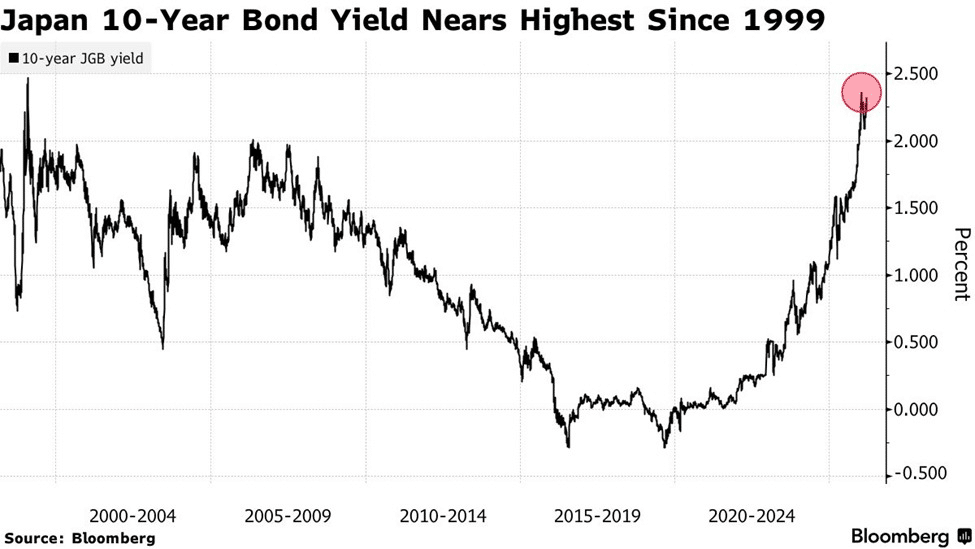
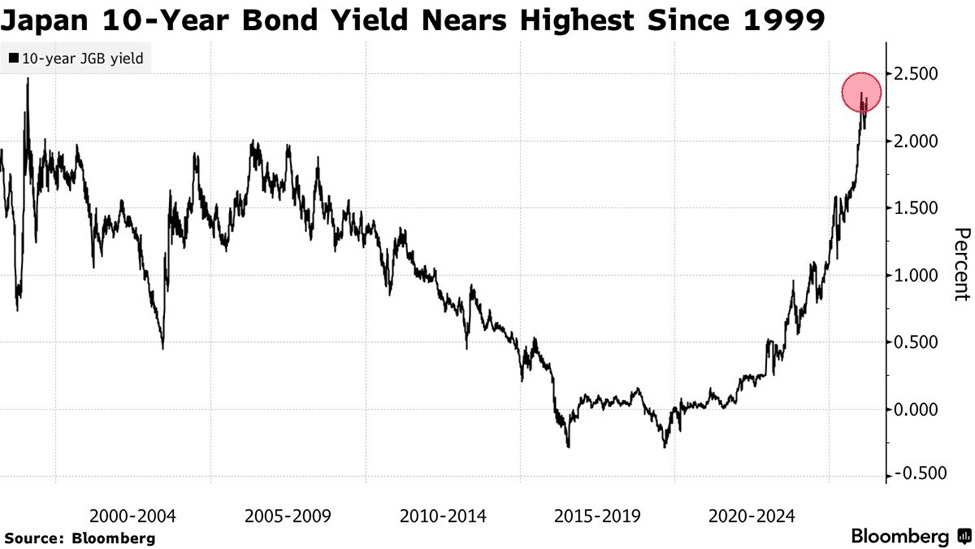
Source: Bloomberg

So naturally, the question becomes, how do crypto investors position themselves around this?

From a technical lens, USD/JPY is approaching the 160 level, reflecting sustained yen weakness against the U.S. dollar. Historically, this level has acted as a trigger point for intervention. The mechanism is critical: to support the yen, Japanese authorities intervene by selling U.S. Treasuries to buy their domestic currency.

Why does this matter? Japan is the largest foreign holder of U.S. Treasuries, with roughly $1.1 trillion in holdings. If Japan starts selling, it signals money moving out of U.S. assets and back into yen. That shift reduces demand for the dollar, putting downward pressure on it.

Historically, a weaker dollar has supported liquidity and driven capital into crypto. So the question is, with the crypto market still capped amid ongoing geopolitical uncertainty, could this weakening dollar setup be creating a longer-term bullish opportunity?

Recession fears push investors to rethink crypto exposure

The focus isn’t on oil. Instead, it’s on the U.S. bond market, where the real action is unfolding.

For context, the latest FOMC meeting kept interest rates steady, signaling that rate cuts are unlikely anytime soon. That move pushed the U.S. Dollar Index (DXY) above 100 and sent the 10-year Treasury yield up nearly 4%, back to levels last seen in July 2025.

Crypto markets reacted immediately, dropping 5.5% for the week, underscoring the familiar inverse relationship with the dollar. Yet, smart money appears unconcerned about a sustained trend, treating this as a short-term shock rather than a structural shift.
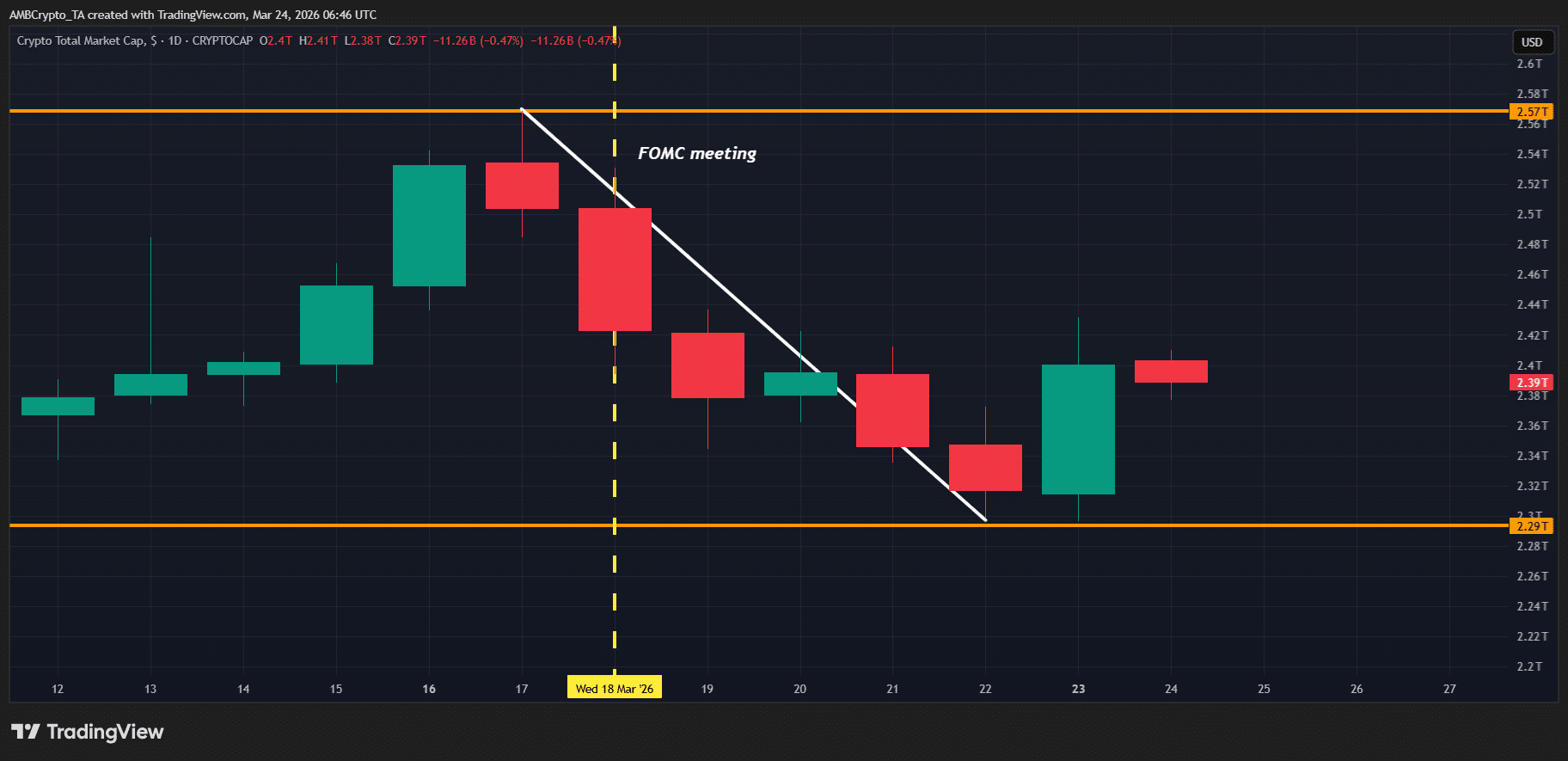
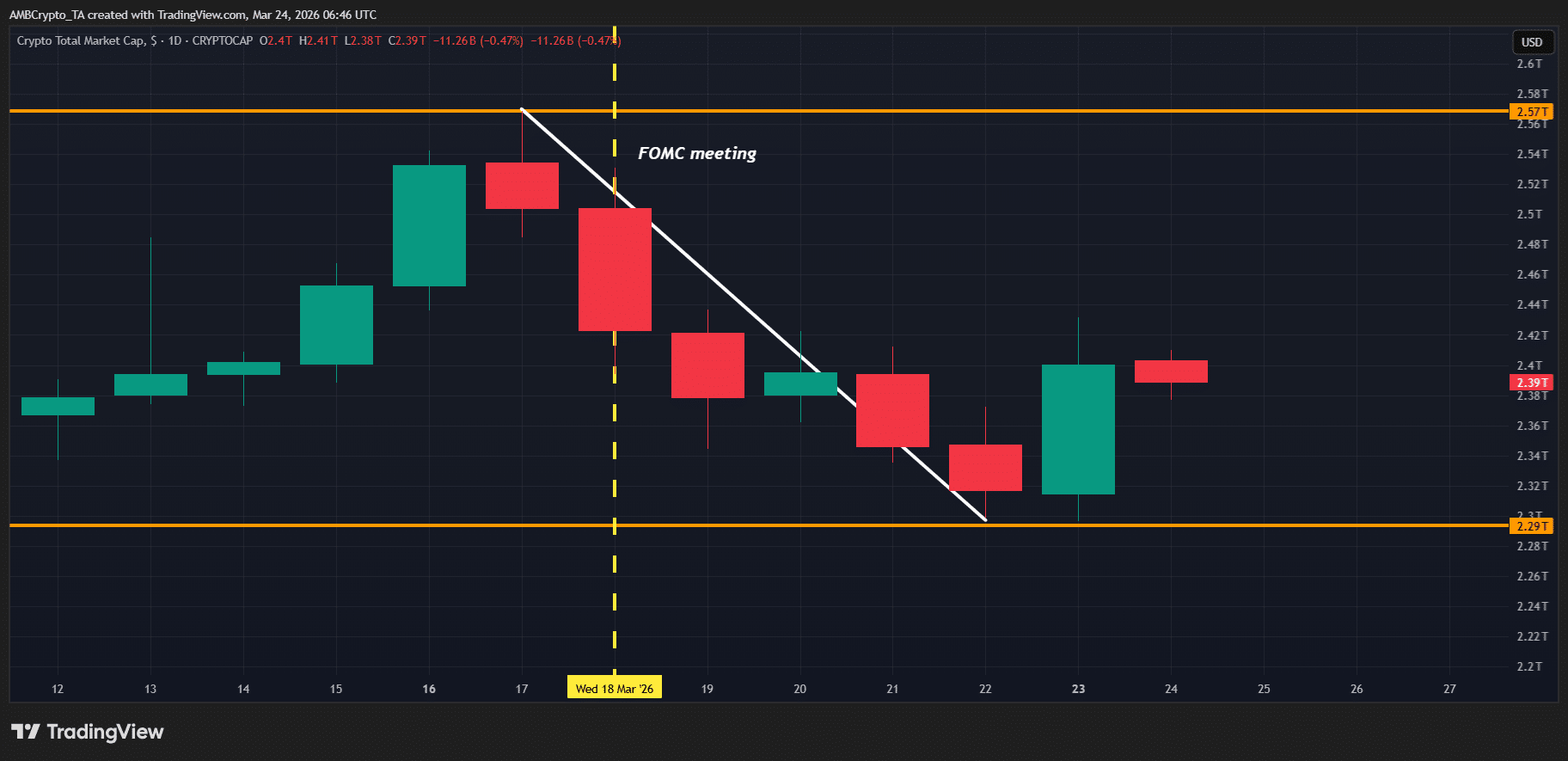
Source: TradingView (TOTAL/USD)

Goldman Sachs, for instance, has raised the U.S. recession probability to 30%, a 5 percentage point increase from prior estimates. The drivers include rising oil prices, tighter financial conditions, and ongoing Middle East tensions.

The implications are clear: slower GDP growth (1.25%-1.75% in H2) and rising unemployment (4.6%) put pressure on the economy, while the door remains open for rate cuts later this year. Notably, Japan is already showing similar stress, reflecting how these pressures are playing out across Asian markets.

Taken together, these shifts could reroute global capital flows, weigh on the U.S. dollar over time, and create potential opportunities for crypto. This suggests that much of the current volatility in risk assets is likely a short-term reaction rather than a long-term trend.


Final Summary

  • Rising yields, yen interventions, and weaker U.S. dollar conditions could create long-term opportunities for crypto.
  • The recent FOMC triggered a crypto drawdown, but smart money views it as a temporary shock rather than a lasting trend.


İlgili Sorular

QHow could Japan's rising 10-year government bond yield (2.30%) potentially create a global crypto opportunity?

AJapan's rising bond yield reflects inflationary pressures from high energy imports. To support the weakening yen, Japanese authorities may sell U.S. Treasuries (as the largest foreign holder), reducing dollar demand. Historically, a weaker dollar drives liquidity into crypto, creating a potential long-term bullish opportunity.

QWhat is the significance of USD/JPY approaching the 160 level mentioned in the article?

AThe 160 level for USD/JPY historically acts as a trigger point for intervention by Japanese authorities. To support the yen, they would sell U.S. Treasuries and buy yen, which could weaken the U.S. dollar and potentially drive capital into crypto assets.

QHow did the recent FOMC meeting impact crypto markets according to the article?

AThe FOMC kept rates steady, signaling no imminent cuts, which pushed the U.S. Dollar Index (DXY) above 100 and raised the 10-year Treasury yield. Crypto markets dropped 5.5% for the week, showing an inverse relationship with the dollar, but smart money views this as a short-term shock rather than a structural shift.

QWhy does Goldman Sachs' increased U.S. recession probability (to 30%) matter for crypto investors?

AGoldman Sachs raised the recession probability due to rising oil prices, tighter financial conditions, and Middle East tensions. This suggests potential slower GDP growth and rising unemployment, which could lead to future rate cuts, a weaker dollar, and rerouted global capital flows that may benefit crypto as an alternative asset.

QWhat key factors does the article suggest could drive long-term crypto opportunities despite short-term volatility?

AThe article highlights rising bond yields (especially in Japan), potential yen intervention leading to U.S. Treasury sales, a subsequently weaker U.S. dollar, and macroeconomic shifts like recession fears and possible future rate cuts as factors that could create long-term crypto opportunities, with current volatility seen as temporary.

İlgili Okumalar

iQiyi Is Too Impatient

The article "iQiyi Is Too Impatient" discusses the controversy surrounding the Chinese streaming platform IQiyi's recent announcement of an "AI Actor Library" during its 2026 World Conference. IQiyi claimed over 100 actors, including well-known names like Zhang Ruoyun and Yu Hewei, had joined the initiative. CEO Gong Yu suggested AI could enable actors to "star in 14 dramas a year instead of 4" and that "live-action filming might become a world cultural heritage." The announcement quickly sparked backlash. Multiple actors named in the list issued urgent statements denying they had signed any AI-related authorization agreements. This forced IQiyi to clarify that inclusion in the library only indicated a willingness to *consider* AI projects, with separate negotiations required for any specific role. The incident, which trended on social media with hashtags like "IQiyi is crazy," is presented as a sign of the company's growing desperation. Facing intense competition from short-video platforms like Douyin and Kuaishou, as well as Bilibili and Xiaohongshu, IQiyi's financial performance has weakened, with revenues declining for two consecutive years. The author argues that IQiyi is "too impatient" to tell a compelling AI story to reassure the market, especially as it pursues a listing on the Hong Kong stock exchange. The piece concludes by outlining three key "AI questions" IQiyi must answer: defining its role as a tool provider versus a content creator, balancing the "coldness" of AI with the human element audiences desire, and properly managing the interests of platforms, actors, and viewers. The core dilemma is that while AI can reduce costs and increase efficiency, it risks creating homogenized, formulaic content and devaluing human performers.

marsbit16 dk önce

iQiyi Is Too Impatient

marsbit16 dk önce

İşlemler

Spot
Futures
活动图片




