How AI-Forged Group Photos Became a New Gray Market Tool Targeting Changpeng Zhao?

比推2026-02-05 tarihinde yayınlandı2026-02-05 tarihinde güncellendi

Özet

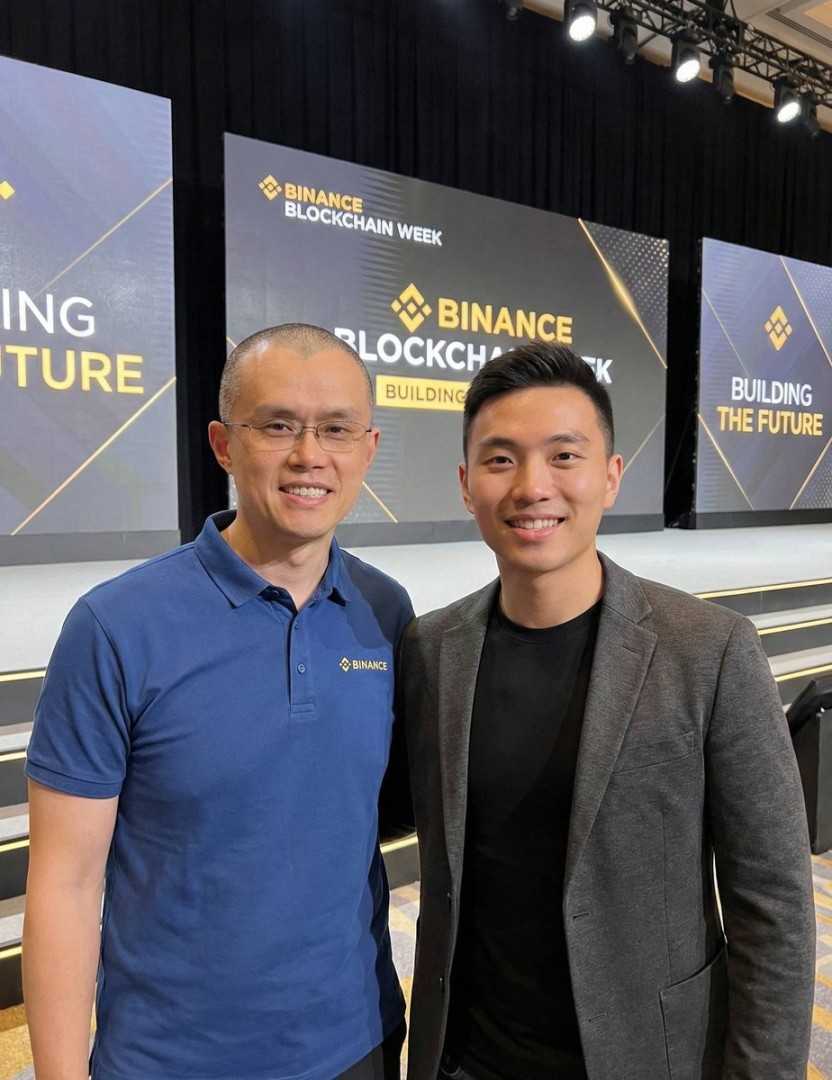
The founder of Binance, Changpeng Zhao (CZ), recently exposed a fake photo circulating on X platform that depicted him alongside a user claiming to be a "long-term supporter of BNB." CZ identified multiple inconsistencies in the image, including an unfamiliar blue-purple shirt, a non-existent event backdrop, and mismatched resolution between the figures, indicating digital manipulation. The original image was in fact a photoshopped version of a legitimate photo of CZ with Aster CEO Leonard. Notably, the account sharing the fake photo, which has over 863,000 followers, had already blocked CZ. On February 4, CZ publicly dissected the image’s flaws and pointed out that the account had an inconsistent history—initially posting non-crypto content before abruptly shifting to focus on BNB-related activities. He suggested this was not a simple prank but potentially a targeted influence operation. CZ confirmed he did not know the account holder and had previously blocked the user, a decision he now considers justified. He also addressed a fabricated "legal letter" that had been circulated and expressed concern that some media outlets had reported on obviously manipulated or AI-generated content without verification. He warned that failure to identify such forgeries could lead to significant consequences.

Author: Nicky, Foresight News

Original Title: Changpeng Zhao Targeted by Gray Market Operations


Binance founder Changpeng Zhao (CZ) recently encountered "trouble" again.

In a photo on the X platform, CZ stands in front of an event backdrop alongside a user who claims to be a "long-term supporter of BNB." However, CZ quickly noticed something unusual—he never owned that blue-purple shirt, the backdrop does not exist, and the resolution of the characters is inconsistent, clearly indicating splicing and editing. Additionally, another photoshopped image was originally a group photo of CZ and Aster CEO Leonard.

What’s even more intriguing is that this account, with 863,000 followers, had already blocked CZ.

On February 4, CZ publicly dissected the details of the image and pointed out that the account's historical trajectory shows obvious discontinuities: early content had almost nothing to do with cryptocurrency, but later shifted to focus on BNB activities, with an unnatural transition in identity. In his view, such long-standing accounts built on forged materials are not just pranks but more like premeditated image manipulation.

CZ stated that he does not know the account holder and does not remember when he blocked them, but it now seems like the right move. Regarding the previously circulated so-called "lawyer's letter," he initially thought the forgery was too obvious to require clarification, but he noticed some media outlets still reposted and reported on the images. He warned that if even obvious PS or AI-generated content cannot be discerned, one may ultimately pay the price for it.
Meanwhile, some bloggers in the Chinese community have also discovered that a large number of accounts in the English-speaking region, with names or nicknames containing Chinese characters and "

Original link:https://www.bitpush.news/articles/7609077

İlgili Sorular

QWhat was the main issue that Binance founder Changpeng Zhao (CZ) recently encountered on social media?

ACZ encountered a fake AI-generated photo of himself posing with a user claiming to be a long-term BNB supporter, which he identified as fraudulent due to inconsistencies like an unfamiliar shirt and non-existent background.

QHow did CZ identify the image as fake?

ACZ noted that he never owned the blue-purple shirt in the image, the background board did not exist, there were resolution inconsistencies between the subjects, and the image was clearly spliced from an original photo with Aster CEO Leonard.

QWhat suspicious behavior did CZ observe about the account that posted the fake image?

AThe account, which had 863,000 followers, had previously blocked CZ, and its content history showed a sudden shift from non-crypto-related posts to focusing on BNB activities without a logical transition.

QWhat did CZ warn about regarding such fake content?

ACZ warned that if people cannot distinguish obvious PS or AI-generated content, they may end up paying a price for it, emphasizing the risks of falling for manipulated imagery.

QWhat was the original title of the article discussing this incident?

AThe original title of the article was '被灰产盯上的赵长鹏', which translates to 'Changpeng Zhao Targeted by Gray Industry'.

İlgili Okumalar

Wall Street Morning News: V-shaped Rebound at Month-end, but Nasdaq Suffers Worst July in 12 Years; Funds Accelerate Concentration Towards Cloud Giants

Despite a V-shaped rebound at the end of July, the Nasdaq posted its worst July since 2004, while the S&P 500 had its worst July since 2014. Markets were jolted by geopolitical shifts, as President Trump canceled a planned strike on Iran, leading WTI crude to plunge over 8%. This, alongside OPEC+ announcing a supply increase, reversed crude's sharp July gains. Treasury yields surged, with the 10-year yield rising over 30 basis points in July—its largest July increase since 2005. In a rare move, the US and Japan jointly intervened to weaken the USD/JPY, aiming to prevent potential Japanese sales of US Treasuries. While the tech sector faced deleveraging pressure throughout July, cloud giants staged a massive rally on strong earnings. Microsoft, Amazon, and Google collectively added nearly $1.5 trillion in market value last week. Amazon soared over 15% on accelerating AWS growth, Microsoft extended historic gains, Google fully recovered post-earnings losses, and Meta ended an 11-day losing streak. In contrast, Apple tumbled over 7% on supply chain and guidance concerns, ceding its "world's most valuable company" title to Nvidia. The memory and storage sector corrected sharply. Gold edged up 0.91% in July, with analysts viewing the ~30% pullback from January highs as a potential basing period, supported by long-term central bank demand. Key events to watch this week include earnings from Palantir, AMD, SpaceX (its first post-IPO report), and memory giants like Western Digital. The US July non-farm payrolls report on Friday will be critical for gauging the Fed's policy path. SpaceX also faces a significant lock-up expiration, testing market liquidity.

marsbit49 dk önce

Wall Street Morning News: V-shaped Rebound at Month-end, but Nasdaq Suffers Worst July in 12 Years; Funds Accelerate Concentration Towards Cloud Giants

marsbit49 dk önce

Rubin Ultra Makes Major Cuts, Even Nvidia Can't Handle Memory Price Hikes?

NVIDIA's Rubin Ultra, the top-tier variant of the newly announced Rubin AI accelerators, has reportedly seen significant specification downgrades, according to an industry report from SemiAnalysis. Initially designed with four compute dies (4-die), the Rubin Ultra is now said to be reduced to a 2-die design. Key changes highlighted in the report include: * **No increase in peak theoretical compute performance**, remaining at 35 PFLOPs like the standard Rubin. * **Severe reduction in memory capacity** to 192GB using 8-Hi HBM stacks, which is less than the standard Rubin's 288GB using 12-Hi stacks. * **Negligible memory bandwidth improvement** of only 1 TB/s. * **Slightly higher chip-level power consumption**. * The **primary upgrade is a massive increase in scale-up interconnect capacity**, supporting connections for up to 576 GPUs via NVLink, compared to 72 for the standard Rubin. The report suggests the redesign is primarily a cost-optimization move driven by the sharp rise in HBM (High-Bandwidth Memory) prices. By reducing the expensive HBM content and shifting investment towards enhanced system-scale networking, NVIDIA aims to maintain the platform's value for large-scale AI training clusters while managing soaring material costs. The news reportedly triggered a sell-off in South Korean memory stocks, with SK Hynix and Samsung shares falling around 8%, as markets grew concerned that NVIDIA—a major HBM buyer—might be reducing its reliance on high-capacity memory, potentially capping future pricing power for memory makers.

Odaily星球日报1 saat önce

Rubin Ultra Makes Major Cuts, Even Nvidia Can't Handle Memory Price Hikes?

Odaily星球日报1 saat önce

İşlemler

Spot
活动图片