Hot Perp DEX Recent Updates: Find the Best Way to Participate

Odaily星球日报2025-12-18 tarihinde yayınlandı2025-12-18 tarihinde güncellendi

Özet

Despite a generally cool market, Perp DEX platforms remain highly active due to airdrop incentives and stable trading volumes. Here are key updates from three popular Perp DEXs: **StandX** launched its mainnet trading points program, with daily volume exceeding $100 million. Users earn points by depositing DUSD, providing liquidity, trading, or inviting friends. A trading competition is planned, along with more trading pairs. **Aster**, currently leading in daily trading volume among Perp DEXs, continues its monthly airdrop campaigns. Phase 4 is ongoing until Dec 22, and Phase 5 will run from Dec 22 to Feb 1, 2026, distributing 1.2% of total supply. Aster has also increased its daily buyback and burn rate to ~$4 million and launched a human vs. AI trading competition. **Lighter** has been added to Coinbase's listing roadmap, but its TGE may be delayed until late December or early January. Its points system for traders remains opaque ("a blind box"), considering factors like volume and PnL. The team emphasizes a long-term approach to token value rather than a pump at launch.

Original | Odaily Planet Daily (@OdailyChina)

Author | Asher (@Asher_ 0210)
Although the overall market has been relatively cold recently, driven by incentives such as token airdrops, the community discussion around the Perp DEX sector remains highly active, and daily trading volume has remained stable without significant decline. Next, Odaily Planet Daily will summarize the recent key updates from 3 highly discussed Perp DEX platforms to see what offers the best value at this stage.

StandX: Trading Points Activity Now Live on Mainnet, Trading Competition Coming Soon

On December 10, StandX announced on platform X that the trading points activity is now live on the mainnet, with the first day's trading volume exceeding $81 million, and reaching over $100 million on December 16. Users can earn points by depositing DUSD into the Perps Wallet, Vaults, or actively participating in trading (Interaction link: https://standx.com/).

This event is in cooperation with Binance Wallet. Users using Binance Wallet's keyless extension wallet will receive a 10% points bonus, which lasts for 4 weeks until January 7, 2026. Points will be retroactively awarded for all past transactions since the mainnet launch.

Furthermore, core team member Justin participated in a Chinese AMA in early December. Odaily Planet Daily summarizes the key points below:

Q1: Is there a depegging risk for the built-in stablecoin (DUSD)? How secure is it?

A1: The DUSD mechanism is secure and fully collateralized, with underlying assets like BTC and ETH; it uses a "spot long + perpetual short" basis trading strategy to maintain "market neutrality." This means the total asset value remains stable in U terms regardless of price fluctuations, only earning funding rates without bearing the risk of price volatility.

Q2: What's the difference between the Mainnet and the previous Alpha testnet?

A2: The Alpha phase used test coins, primarily for testing product features and distributing "testnet points"; the Mainnet phase uses real funds, requiring users to deposit actual USDT for trading. The current points are "mainnet points," whose value and weight differ from the testnet.

Q3: What are the project's future plans?

A3: StandX is about to launch a trading competition and plans to list more altcoin perpetual pairs. Simultaneously, the team will continue optimizing the product experience, aiming for a CEX-like (centralized Exchange) experience on the DEX.

Q4: What is the proportion of trading points vs. deposit points for the airdrop?

A4: This hasn't been finalized yet because we are currently separating points from each phase and each type, meaning rewards are earned separately. We will comprehensively evaluate the contribution of each user type and point type to the overall StandX product and ecosystem before the airdrop to decide the reward proportions.

Complete Guide to Earning StandX Points

Method 1: Deposit DUSD to get tDUSD (1.2x points), specific steps:

  • Mint DUSD with USDT/USDC;
  • Deposit DUSD into the Perps wallet to convert it to tDUSD;
  • Every 1000 tDUSD / day = 1200 points;
  • Lossless participation, suitable for newcomers and users who don't trade.

Method 2: Provide LP, points rules:

  • DUSD: Each DUSD earns 1 point per day;
  • USDT/USDC: Each USDT/USDC earns 1.2 points per day.

For example, 1000 DUSD + 1000 USDT → 2200 points/day.

Method 3: SWAP trading to earn points (specified trading pairs), every 100 DUSD trading volume = 5 points.

This method has significant slippage; "point farmers" should participate cautiously.

Method 4: Invite friends, both parties get an additional 5% points bonus.

Method 5: Trade on the StandX mainnet to earn points.

  • If profitable: More profit means more tDUSD, leading to higher points;
  • If loss: If the loss exceeds 50% of the initial capital, points are still given based on 50% of the initial capital.

Additionally, the daily trading check-in event is worth participating in. Complete two trades over $100 daily to earn 10 points.

The StandX trade-to-earn points for token airdrop is still in its early stages. Judging by the daily trading volume, it's not "very competitive" currently, making it relatively easy to earn points. It's worth participating in; even if you don't farm trading volume for points, you can deposit stablecoins to "freeload" points daily.

Aster: Monthly Airdrops + Regular Buyback & Burn; Launches Human vs. AI Trading Duel

According to the latest data from DeFiLlama, Aster's daily trading volume has recently surpassed that of Lighter (which has the highest token launch expectations), ranking first among Perp DEX projects.

Perp DEX Data

Although Aster has completed its TGE, its airdrop activities continue to progress, operating on a monthly cycle with short interaction periods and clear rewards.

Phase 4 Token Airdrop Ongoing

Currently, Phase 4 Aster Harvest officially started at 8:00 AM UTC on November 10 and will last until 7:59 AM UTC on December 22, 2025. This phase will distribute 1.5% of the total ASTER token supply, allocated equally across six epoch cycles, with 0.25% allocated per epoch.

Phase 5 Token Airdrop Starts December 22, Lasts 6 Weeks

Phase 5 Aster Crystal will begin after Phase 4 Aster Harvest concludes. Specific details are as follows:

  • Duration: 6 weeks (December 22, 2025, to February 1, 2026);
  • Allocation: 1.2% of the total supply (approx. 96 million ASTER) for Phase 5, with 0.6% claimable immediately after the event ends and the other 0.6% subject to a 3-month lock-up.

Additionally, Aster will launch the Aster chain testnet by the end of this year, the mainnet in Q1 next year, and token staking and governance functions in Q2.

Accelerates Phase 4 Buyback Execution, Daily Buyback Scale Increased to ~$4 Million

According to the latest announcement from the ASTER team, the buyback speed for Phase 4 will be increased under the existing mechanism. The accelerated buyback scale increased from approximately $3 million/day to about $4 million/day starting December 8.

The official statement said this move allows faster on-chain deployment of the fees accumulated since November 10 for Phase 4 buybacks and strengthens support during market volatility. Based on current fee levels, it's estimated that stable execution of the buyback will be reached within 8 to 10 days, after which the daily buyback scale will continue to be maintained between 60% and 90% of the previous day's revenue as per Phase 4 rules.

The team emphasized that all operations remain transparently executed on-chain, with no changes to the relevant execution wallet address (Address link: https://bscscan.com/address/0x573ca9ff6b7f164dff513077850d5cd796006ff4).

Additionally, Aster burned 77.86 million ASTER repurchased in Season 3 on December 5, worth nearly $80 million.
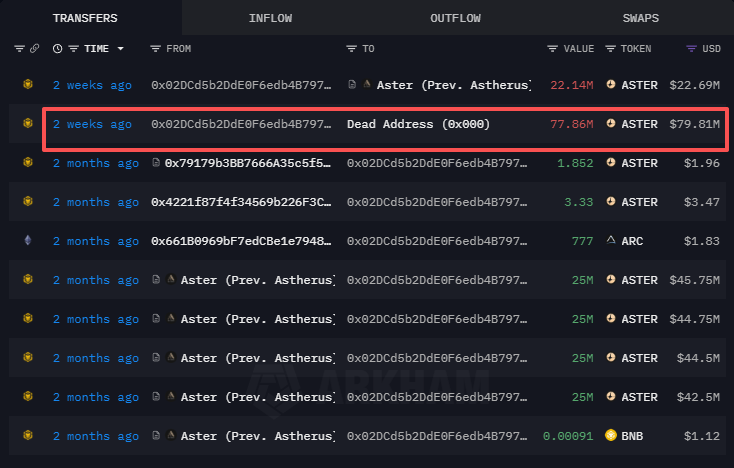
Aster Buyback Address

Launches Human vs. AI Trading Duel

On December 9, Aster announced on platform X that the Human vs. AI trading duel is live. 70 funded human traders are competing against 30 AI agents run by @nofA_ai (initial capital $10,000 each). The trading duel runs from December 9 to December 23.

As of now, only 29 out of the 100 traders (human and AI) are profitable. Among them, only 9 have profits exceeding $5,000—8 are human traders, and 1 is AI. The top performer is human trader Tippy, with profits as high as $47,000, far ahead.
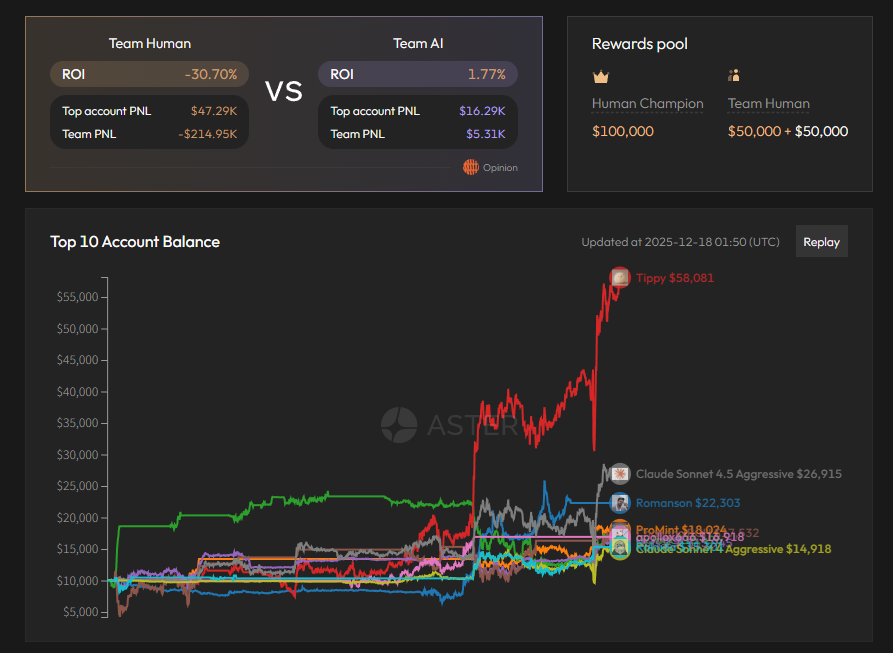
Human vs. AI Trading Profit Chart

Lighter: To List on Coinbase, but TGE Might Be Delayed

Since Lighter announced the completion of a $68 million funding round on November 11, valuing the company at $1.5 billion post-funding, its daily trading volume has consistently remained at the forefront of Perp DEXs, often ranking first. Regarding Q2 points, the official distribution is scheduled for every Friday. Market makers are allocated 50,000 points weekly (only advanced accounts are eligible to earn points through market making). Regular trading users are allocated 200,000 points weekly. Factors influencing points include: trading volume, open interest, account equity, leverage, profit/loss amount, and trading categories, but the specific weights have not been disclosed, making it a "blind box."

On December 13, Coinbase Markets announced on platform X that Lighter had been added to its listing roadmap, leading community members to believe Lighter's TGE is imminent.
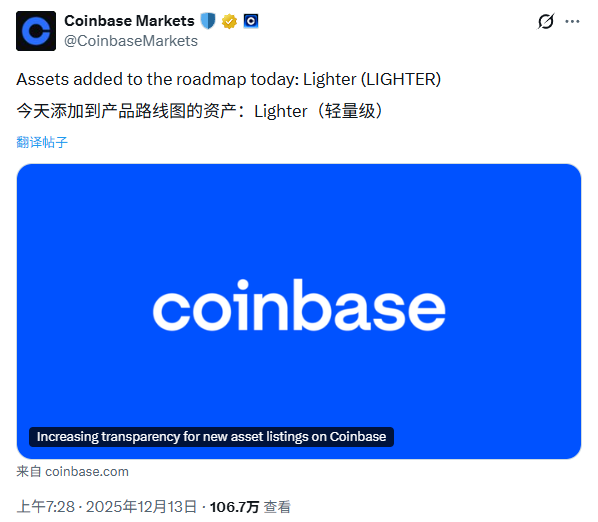
Coinbase Adds Lighter to Listing Roadmap

However, based on feedback from participants in Lighter's Japanese AMA, the TGE might be delayed to between December 24 and January 1 next year. Influenced by this news, the probability of "No" in the Polymarket event "Will Lighter airdrop tokens this year?" increased from just 8% on December 16 to 33%.
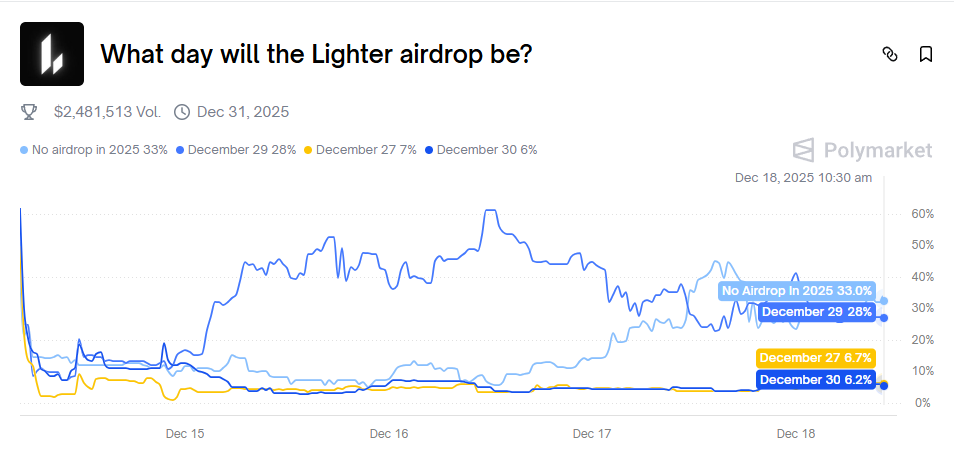
Polymarket Event: "Will Lighter Airdrop Tokens This Year?"

Furthermore, in a recent podcast interview on The Chopping Block, Lighter founder and CEO Vladimir Novakovski, when asked about the token, stated: "From an expectation management perspective, this is a marathon, not a sprint. The team and early community don't really anticipate a 'day one moonshot.' A more realistic expectation is starting from a relatively healthy position, with the overall trend gradually improving as we continue building the product. Our goal is clearly not to maximize value on day one, but to have it in a healthy state in the current market environment, and then iterate from there. We've seen too many tokens pump hard on day one and then trend downwards."

Related Content

2025 Airdrop Farming Survival Rules: Past Gold Rushes, Now Relying on These Two Trump Cards

Trend Kriptolar

İlgili Sorular

QWhat are the main ways to earn points on StandX and which method is recommended for new users?

AThe main ways to earn points on StandX are: 1) Depositing DUSD to get tDUSD (1.2x points), 2) Providing liquidity (LP), 3) SWAP trading on specified pairs, 4) Inviting friends for a 5% bonus, and 5) Trading on the mainnet. The method recommended for new users or those who don't want to trade is depositing stablecoins to 'farm' points with minimal risk.

QWhat is the current status of Aster's token airdrop and what are the key details of its upcoming Phase 5?

AAster's Phase 4 airdrop (Aster Harvest) is currently ongoing until December 22, 2025, distributing 1.5% of the total ASTER supply. Phase 5 (Aster Crystal) will begin on December 22, 2025, and last for 6 weeks until February 1, 2026. It will distribute 1.2% of the total supply (approx. 96 million ASTER), with half (0.6%) claimable immediately and the other half (0.6%) subject to a 3-month lockup.

QHow has Aster modified its token buyback mechanism in Stage 4 and what was the recent major burn event?

AAster has accelerated its Stage 4 buyback, increasing the daily buyback volume from approximately $3 million to about $4 million starting December 8th. This is executed transparently on-chain. Additionally, Aster recently burned 77.86 million ASTER tokens from the S3 season回购, valued at nearly $80 million.

QWhat was the outcome of the 'Human vs. AI Trading Duel' event hosted on Aster, and who was the top performer?

AIn the Human vs. AI Trading Duel on Aster, 70 human traders competed against 30 AI agents. As of the report, only 29 of the 100 participants were profitable. The top performer was a human trader named 'Tippy', who achieved a profit of $47,000. Only 9 traders had profits exceeding $5,000, 8 of whom were human and 1 was an AI.

QWhat is the current expectation for Lighter's TGE (Token Generation Event) according to community speculation, and what evidence suggests a potential delay?

ACommunity speculation, based on a Japanese AMA, suggests Lighter's TGE might be delayed to between December 24th and January 1st. This is further supported by the probability of 'No' on the Polymarket prediction market for 'Will Lighter airdrop its token this year?' rising from 8% to 33%.

İlgili Okumalar

Dialogue with Jia Hang | Looking Back at Two Decades of Chinese Payment Going Global

**Summary: A Conversation with Jia Hang on Two Decades of China's Payment Globalization** Jia Hang, a veteran with over twenty years in payments, reflects on China's attempts to build a global payment network through three key phases: UnionPay (card networks), Alipay+ (digital wallets), and now, stablecoins. His journey began at UnionPay International, aiming to establish China's card network abroad. While successful in following Chinese tourists ("where Chinese go, UnionPay goes"), it struggled to achieve true global scale. The core lesson: card networks like Visa/Mastercard's unassailable advantage isn't just technical standards, but their deeply entrenched **governance and profit-sharing models** that create powerful network effects. Competing as the "same species" is nearly impossible. At Ant Group, he led Alipay+, a strategy to bypass card networks by interconnecting local e-wallets worldwide. While innovative, it faced a similar ceiling. Mobile QR payments and card swipes were essentially **the same species competing for the same pie**, lacking a disruptive value proposition for users or a sustainable new incentive model to replace the card networks' established flywheel. Today, at Singapore's DCS, Jia focuses on stablecoin-based payments. He argues stablecoins represent a fundamental shift. They are not competing with Visa for consumer payments but challenging the **traditional banking and account system for value movement**. Products like "U Cards" (stablecoin-linked payment cards) are transitional, leveraging existing card networks for acceptance while building new rails. The real potential lies in stablecoins enabling seamless, low-cost global value transfer, potentially reorganizing the financial infrastructure around **accounts rather than cards**. Jia believes stablecoin adoption for local retail payments, cross-border transactions, and as high-yield savings vehicles is becoming irreversible. This could gradually reduce reliance on traditional fiat channels, especially in regions with weak currencies or capital controls. The quest for the "next global payment network" continues, now centered on whether stablecoins can successfully bridge Web2 and Web3, establish new governance, and create compelling user value beyond mere cost reduction.

marsbit3 dk önce

Dialogue with Jia Hang | Looking Back at Two Decades of Chinese Payment Going Global

marsbit3 dk önce

Circle's Stock Price Plunges 76%, Hong Kong Dollar Stablecoin Set to Launch Within Two Weeks

Circle's stock price has plunged approximately 76% from its 2023 peak, reflecting a major market revaluation. Despite this, Circle President Heath Tarbert emphasized the company's focus on long-term execution and its dominant position with USDC's $73 billion circulation across 34 blockchains. The competitive landscape is intensifying. A new consortium-backed stablecoin, Open USD, is attempting to challenge incumbents by sharing reserve yields with partners. More significantly, Visa's new stablecoin platform, initially supporting Open USD while also being compatible with USDC, could erode Circle's network effects. In response, Circle is expanding into real-world payments through partnerships like the one with Japan's JCB. Separately, Tether (USDT) faces a two-year compliance window under new U.S. regulations, requiring it to adjust its reserve composition away from assets like Bitcoin and loans towards cash and U.S. Treasuries. Meanwhile, in Hong Kong, Standard Chartered-backed fintech firm Dian Dian is poised to launch a licensed HKD-pegged stablecoin (HKDAP), moving the industry into a phase where the real test is integrating licensed stablecoins into actual payment flows and corporate treasury systems. The sharp decline in Circle's stock underscores a broader shift: the stablecoin market is moving from a winner-takes-all dynamic to a multi-player competitive arena where execution, compliance, and real-world utility are becoming paramount.

marsbit3 dk önce

Circle's Stock Price Plunges 76%, Hong Kong Dollar Stablecoin Set to Launch Within Two Weeks

marsbit3 dk önce

Amidst Capital's Encirclement, Decentralization is the Sole Defense for Public Blockchains

In a landscape dominated by power and profit motives, the author argues that decentralization is not merely one desirable feature among many in blockchain design—it is the singular, non-negotiable defense against corporate and capital capture. The article adopts a Machiavellian, realist perspective on human institutions, positing that businesses will inevitably attempt to co-opt any valuable network to protect their profits and dominance. While external attacks like 51% forks are often discussed, the greater existential risk is internal capture—the gradual erosion of a protocol’s neutrality by vested interests, as seen historically with platforms like Visa and Google. The piece critiques permissioned chains, highly centralized “permissionless” layer-1s, and layer-2s without sufficient decentralization (e.g., single sequencers) as inherently vulnerable. These compromised systems, promoted by established financial players, are framed as delaying tactics to stifle truly open networks that threaten existing high-fee, inefficient business models. Real-world examples, such as closed enterprise consortiums that exclude competitors, illustrate how such systems cement oligopolies rather than foster innovation. The author concludes that while decentralized protocols like Ethereum are imperfect and costly to operate, they represent the only viable long-term equilibrium. In a market where value naturally flows to the most secure and neutral settlement layer, only maximally decentralized public blockchains can resist being subsumed by capital and powerful incumbents.

Foresight News13 dk önce

Amidst Capital's Encirclement, Decentralization is the Sole Defense for Public Blockchains

Foresight News13 dk önce

Who Decides the Rules of Bitcoin? BIP-110 Ignites Governance Debate

Bitcoin's governance is once again at the center of a heated debate, this time ignited by BIP-110, the "Reduced Data Temporary Softfork." This proposal aims to curb non-monetary data (like inscriptions and Runes) by introducing seven new consensus-layer restrictions over a year, such as limiting new output scripts to 34 bytes and restoring the OP_RETURN cap to 83 bytes. The controversy stems from BIP-110's fundamental shift: it moves the battle against "spam" from node relay and miner policies to the consensus layer, rendering currently valid transactions invalid. Supporters, arguing that default policy governance has failed (highlighted by Bitcoin Core v30's relaxation of OP_RETURN limits), see this as necessary to protect node resources and Bitcoin's monetary focus. Opponents, led by figures like Michael Saylor and Adam Back, warn it dangerously centralizes governance. Saylor listed 110 reasons against it, criticizing its low 55% miner activation threshold and potential for chain splits. Back emphasized Bitcoin's "permissionless" ethos, arguing no single group should impose value judgments via consensus rules. Further complicating matters, technical critiques suggest BIP-110 may be technically circumventable, and a "BlockSlop" vulnerability in its upgrade path poses a consensus risk. The debate has drawn in diverse stakeholders: miners (with pools like Ocean signaling support and Foundry polling clients), node operators (like Bitcoin Knots), and new players like corporate treasury holder MicroStrategy (Saylor), whose market influence adds a novel dimension. Ultimately, BIP-110 acts as a governance stress test, exposing the unresolved question: who decides Bitcoin's rules? It pits the authority of miners, node operators, developers, and capital holders against each other, with each side claiming to defend Bitcoin's core principles of neutrality and security.

marsbit30 dk önce

Who Decides the Rules of Bitcoin? BIP-110 Ignites Governance Debate

marsbit30 dk önce

Who Decides Bitcoin's Rules? BIP-110 Ignites Governance Debate

Title: Who Decides Bitcoin's Rules? BIP-110 Ignites Governance Debate A new technical proposal, BIP-110 (Reduced Data Temporary Softfork), has sparked a fundamental governance debate within the Bitcoin community. It aims to impose new consensus rules for one year to limit non-financial data (like inscriptions and Runes) on-chain, moving beyond simple node and miner policy filters to invalidate currently valid transactions. Supporters argue that default policies have failed due to workarounds, necessitating consensus-layer changes to protect Bitcoin's core monetary function from data spam. Critics, including Michael Saylor and Adam Back, contend this dangerously centralizes judgment, undermines permissionlessness, and sets a risky governance precedent. They advocate for market-based solutions like fees or Layer 2s instead. The debate exposes deeper tensions: miners are divided on activation; node operators assert their sovereignty; Bitcoin Core developers influence defaults without direct accountability; and large corporate holders like MicroStrategy now wield narrative influence. Technically, BIP-110 may not fully block data and carries a disclosed consensus bug risk. Ultimately, BIP-110 acts as a stress test, forcing the community to confront the unresolved question: who legitimately decides what Bitcoin is and how it evolves, amidst competing claims from miners, nodes, developers, and capital holders.

链捕手42 dk önce

Who Decides Bitcoin's Rules? BIP-110 Ignites Governance Debate

链捕手42 dk önce

İşlemler

Spot

Popüler Makaleler

HOT Nasıl Satın Alınır

HTX.com’a hoş geldiniz! Holo (HOT) satın alma işlemlerini basit ve kullanışlı bir hâle getirdik. Adım adım açıkladığımız rehberimizi takip ederek kripto yolculuğunuza başlayın. 1. Adım: HTX Hesabınızı OluşturunHTX'te ücretsiz bir hesap açmak için e-posta adresinizi veya telefon numaranızı kullanın. Sorunsuzca kaydolun ve tüm özelliklerin kilidini açın. Hesabımı Aç2. Adım: Kripto Satın Al Bölümüne Gidin ve Ödeme Yönteminizi SeçinKredi/Banka Kartı: Visa veya Mastercard'ınızı kullanarak anında Holo (HOT) satın alın.Bakiye: Sorunsuz bir şekilde işlem yapmak için HTX hesap bakiyenizdeki fonları kullanın.Üçüncü Taraflar: Kullanımı kolaylaştırmak için Google Pay ve Apple Pay gibi popüler ödeme yöntemlerini ekledik.P2P: HTX'teki diğer kullanıcılarla doğrudan işlem yapın.Borsa Dışı (OTC): Yatırımcılar için kişiye özel hizmetler ve rekabetçi döviz kurları sunuyoruz.3. Adım: Holo (HOT) Varlıklarınızı SaklayınHolo (HOT) satın aldıktan sonra HTX hesabınızda saklayın. Alternatif olarak, blok zinciri transferi yoluyla başka bir yere gönderebilir veya diğer kripto para birimlerini takas etmek için kullanabilirsiniz.4. Adım: Holo (HOT) Varlıklarınızla İşlem YapınHTX'in spot piyasasında Holo (HOT) ile kolayca işlemler yapın.Hesabınıza erişin, işlem çiftinizi seçin, işlemlerinizi gerçekleştirin ve gerçek zamanlı olarak izleyin. Hem yeni başlayanlar hem de deneyimli yatırımcılar için kullanıcı dostu bir deneyim sunuyoruz.

108 Toplam GörüntülenmeYayınlanma 2024.12.11Güncellenme 2026.06.02

HOT Nasıl Satın Alınır

HOLO Nedir

HOLO'yu Anlamak: Merkeziyetsiz Uygulamaların Geleceği HOLO'ya Giriş, $holo Kripto para ve merkeziyetsiz teknolojilerin hızla gelişen dünyasında, HOLO, diğer adıyla Holo, dikkat çekici bir oyuncu olarak ortaya çıkmıştır. Bu yenilikçi proje, Holochain olarak bilinen temel mimarisi aracılığıyla merkeziyetsiz uygulamaların (DApp'ler) geliştirilmesini kolaylaştırmaktadır. Bugün bildiğimiz merkezi internet ile geleceğin merkeziyetsiz ekosistemi arasında bir köprü kurma vizyonu ile HOLO, DApp'leri günlük kullanıcılar için karmaşık kurulumlar ve teknik beceriler gerektirmeden erişilebilir hale getirmeyi hedeflemektedir. HOLO Nedir, $holo? HOLO'nun özünde, Holochain üzerinde inşa edilmiş DApp'leri barındırmak için tasarlanmış dağıtık bir platform bulunmaktadır. Geleneksel blok zinciri platformlarının aksine, Holochain her uygulamanın kendi kurallarına göre çalışmasına olanak tanıyarak benzersiz bir yaklaşım benimsemektedir. HOLO'nun misyonu, bu Holochain uygulamalarını (hApp'ler) kullanıcılarla tanıdık web teknolojileri aracılığıyla bağlamaktır. HOLO'nun temel amacı, kullanıcıların bu uygulamalara standart web tarayıcıları aracılığıyla doğrudan erişimini sağlayarak DApp'lere erişimi ve kullanımını demokratikleştirmektir. Bu erişilebilirlik, ortalama internet kullanıcıları için sürtünmeyi azaltmada anahtar bir rol oynamaktadır; böylece kullanıcılar, kripto paralar ve DApp kullanımı ile sıklıkla ilişkilendirilen karmaşıklıkları aşmadan yeni nesil uygulamaları kullanabilirler. HOLO'nun Yaratıcıları, $holo HOLO, yaratıcıları Arthur Brock ve Eric Harris-Braun'ın vizyonundan doğmuştur. Her ikisi de deneyimli geliştiriciler ve sözleşme kodlayıcıları olan bu kişiler, Aralık 2016'da MetaCurrency Projesi'nin bir parçası olarak projeye başlamışlardır. Bu girişim, başlangıçta bir eşler arası ekonomiyi teşvik etmeye yönelik araçlar ve teknolojiler geliştirmeye odaklanmıştır. Kodlama ve girişimcilik geçmişleri, merkeziyetsiz uygulama geliştirme ve barındırma zorluklarını ele almak için onları benzersiz bir şekilde konumlandırmıştır. HOLO'nun Yatırımcıları, $holo HOLO'daki bireysel yatırımcılarla ilgili spesifik detaylar kolayca bulunamasa da, projenin daha geniş kripto para topluluğundan önemli destek ve ilgi aldığı açıktır. Merkeziyetsiz uygulamaları barındırmadaki yenilikçi yaklaşımı ve destekleyici topluluğu, projeye olan ilgi ve yatırımı artırmıştır. HOLO, $holo Nasıl Çalışır? HOLO, Holochain tabanlı DApp'ler için depolama ve işlem gücü sağlayan geniş bir ekosistem oluşturarak çalışmaktadır. Bireyler, cihazlarını veya HoloPort gibi özel donanımları barındırma düğümleri haline getirerek, bilgisayarlarının kullanılmayan kaynaklarını etkili bir şekilde paraya dönüştürebilirler. HOLO'nun ana işlevsel bileşenleri şunlardır: Uygulama Sağlayıcı: Bu varlıklar, HOLO'dan barındırma kredileri satın alır ve bunlar bir rezerv hesabında tutulur. Bu mekanizma, DApp geliştiricilerinin uygulamalarını çalıştırmak için gerekli kaynakları güvence altına almasını sağlar. Barındırıcı: DApp'leri barındırmayı seçen bireyler veya organizasyonlar, kullanıcılardan gelen taleplere yanıt verirken imzalı hizmet kayıtları oluştururlar. Bu süreç, ağ üzerindeki tüm etkileşimlerin izlenmesini ve doğrulanmasını sağlar. Hizmet Kanıtı: HOLO'nun operasyonel bütünlüğünün kritik bir unsuru olan barındırıcılar, uygulama sağlayıcılara fatura sunar ve bunlar sağlanan hizmeti doğrular. Doğrulama sonrasında, barındırıcılar barındırma kredileri şeklinde tazminat alırlar. HoloFuel: Holo ağının yerel token'ı olarak hizmet veren HoloFuel, mikro işlemler için tasarlanmıştır. Bu token, platformun milyarlarca eşzamanlı işlemi sorunsuz bir şekilde desteklemesi için gerekli olan geniş işlem hacmini kolaylaştırır. Bu bileşenlerin birleşik sinerjisi, Holochain uygulamalarının faydasını ve erişimini artırarak sağlam ve merkeziyetsiz bir barındırma ortamı sağlar. HOLO'nun Zaman Çizelgesi, $holo HOLO'nun yolculuğu, kuruluşundan bu yana birkaç önemli dönüm noktası ile belirlenmiştir: Aralık 2016: Arthur Brock ve Eric Harris-Braun tarafından MetaCurrency Projesi'nin bir parçası olarak HOLO'nun kuruluşu. 2018: HoloToken (HOT) olarak bilinen bir ERC20 token'ının çıkarılması, projenin lansmanı sırasında HoloFuel ile değiştirilebilen bir “IOU” olarak hizmet etmiştir. Sürekli Gelişim: Holo ağı ve HoloFuel'in sürekli ilerlemeleri, testleri ve optimizasyonları, projenin merkeziyetsiz uygulama barındırma teknolojisinin ön saflarında kalmasını sağlamaktadır. HOLO'nun Benzersiz Özellikleri, $holo HOLO, kripto para ve merkeziyetsiz platformlar alanında, kendine özgü özellikleri ve üzerinde çalıştığı yenilikçi çerçeve sayesinde öne çıkmaktadır: Eşler Arası Barındırma: HOLO, herkesin bilgisayarlarını kullanarak DApp'ler için bir barındırıcı olma kapısını açar. Bu barındırmanın demokratikleşmesi, Airbnb gibi platformların geleneksel otel endüstrisini bozmasına benzer; bireylerin ekonomiye katılmalarını güçlendirir. Holochain Çerçevesi: HOLO'nun yeniliklerinin merkezinde Holochain çerçevesi bulunmaktadır. Gelecek nesil bir teknoloji olarak konumlanan Holochain, olağanüstü ölçeklenebilirlik, hızlı işlem hızları, mükemmel enerji verimliliği ve geleneksel blok zinciri teknolojilerine kıyasla maliyet etkinliği sunmaktadır. Mikro İşlemler için HoloFuel: HoloFuel, mikro işlemleri karşılamak üzere titizlikle tasarlanmıştır ve Holo ağının milyarlarca işlemi eşzamanlı olarak verimli bir şekilde yönetmesine olanak tanır. Bu yetenek, geliştiricilerin büyük ölçekte ekonomik olarak uygulanabilir uygulamalar yaratmalarını sağlayarak ana akım benimseme için hayati öneme sahiptir. Sonuç HOLO, merkeziyetsiz uygulamalar ve blok zinciri teknolojisi alanında önemli bir ilerlemeyi temsil etmektedir. Sağlam altyapısı, kullanıcı dostu yaklaşımı ve yenilikçi Holochain çerçevesi ile HOLO, webin geleceğinde kritik bir rol oynamaya hazırdır. Günlük internet deneyimlerini geliştirecek mi yoksa geliştiriciler ve kullanıcılar arasındaki dijital uygulamalarla etkileşimi yeniden tanımlayacak mı, bunu zaman gösterecek; ancak şu ana kadar kaydettiği ilerleme, merkeziyetsiz dijital ekonomiye doğru dünya ilerledikçe izlemeye değer bir durumdur. Proje geliştikçe, devam eden gelişmeleri ve topluluk katılımı, başarısının kritik bileşenleri olacak ve potansiyel olarak HOLO'yu merkeziyetsiz uygulamalar için ana akım bir platform haline getirecektir. Merkeziyetsiz teknolojilere olan ilginin artmasıyla birlikte, HOLO gibi projelerin önemi ve etkisi önümüzdeki yıllarda yalnızca artacaktır.

123 Toplam GörüntülenmeYayınlanma 2024.12.26Güncellenme 2024.12.26

HOLO Nedir

Tartışmalar

HTX Topluluğuna hoş geldiniz. Burada, en son platform gelişmeleri hakkında bilgi sahibi olabilir ve profesyonel piyasa görüşlerine erişebilirsiniz. Kullanıcıların HOT (HOT) fiyatı hakkındaki görüşleri aşağıda sunulmaktadır.

活动图片