Hot Interactions Collection | Abstract's New Badge Mission; Noise Beta Version Now Live (April 2nd)

Odaily星球日报2026-04-02 tarihinde yayınlandı2026-04-02 tarihinde güncellendi

Özet

Popular Interaction Roundup: Abstract's New Badge Quest; Noise Beta Now Live (April 2nd) This article highlights three key Web3 projects currently offering interactive opportunities: 1. **Abstract**: A consumer-focused Ethereum L2 developed by Pudgy Penguins' parent company, Igloo Inc. It utilizes ZK technology (like ZKsync) for low-cost, high-speed transactions. Users can participate in "The Flash Trader" event by visiting the rewards portal and completing a swap. The event ends in approximately 6.5 days. 2. **Noise**: An attention market platform where users can trade "long" or "short" contracts on internet trends, brands, or ideas based on social data (e.g., X platform热度). Its Beta version launched on April 1st. Access requires connecting a wallet and a $5 payment to start trading trends. 3. **Miden**: A privacy-focused Ethereum L2 scaling solution using a zero-knowledge rollup. It emphasizes privacy and high throughput by executing transactions locally and submitting only proofs to the chain. Users can interact by installing its specific wallet and completing 11 detailed testnet tasks on its playground. All projects represent significant sectors: consumer L2s, prediction/attention markets, and privacy-centric scaling solutions.

Original | Odaily Planet Daily (@OdailyChina)

Author | Asher (@Asher_ 0210)
Abstract: Consumer-Centric Ethereum L2

Project Introduction

Abstract is a consumer-centric Ethereum L2 developed by Igloo Inc., the parent company of Pudgy Penguins (the chubby penguin NFT project). It utilizes a ZK (Zero-Knowledge) technology stack (such as ZKsync and EigenDA), focusing on low-cost, high-speed transactions, aiming to promote consumer crypto applications, on-chain culture, community, and creativity.

Interaction Tutorial

STEP 1. Go to the official website (link: https://portal.abs.xyz/rewards), click on "Rewards".
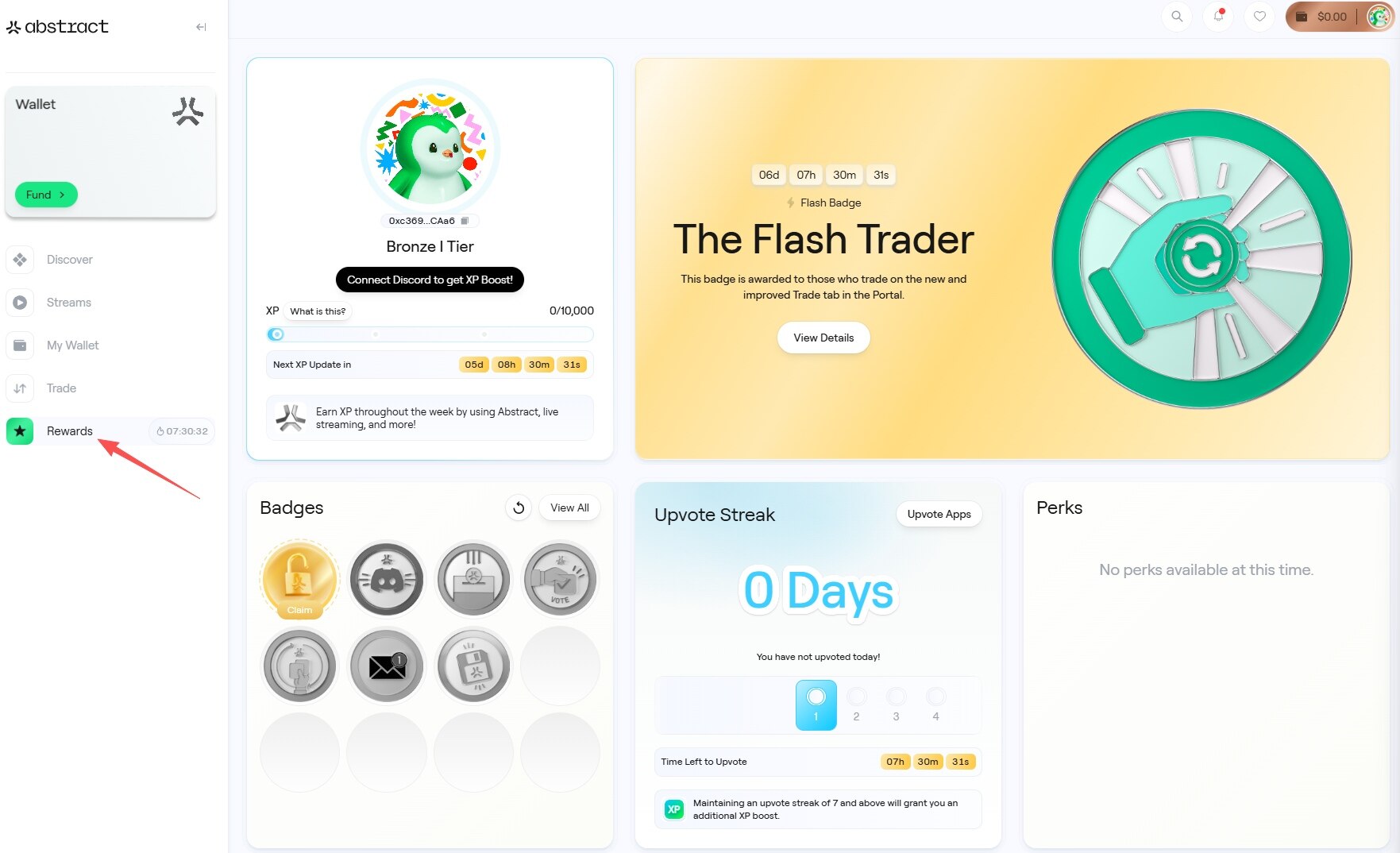
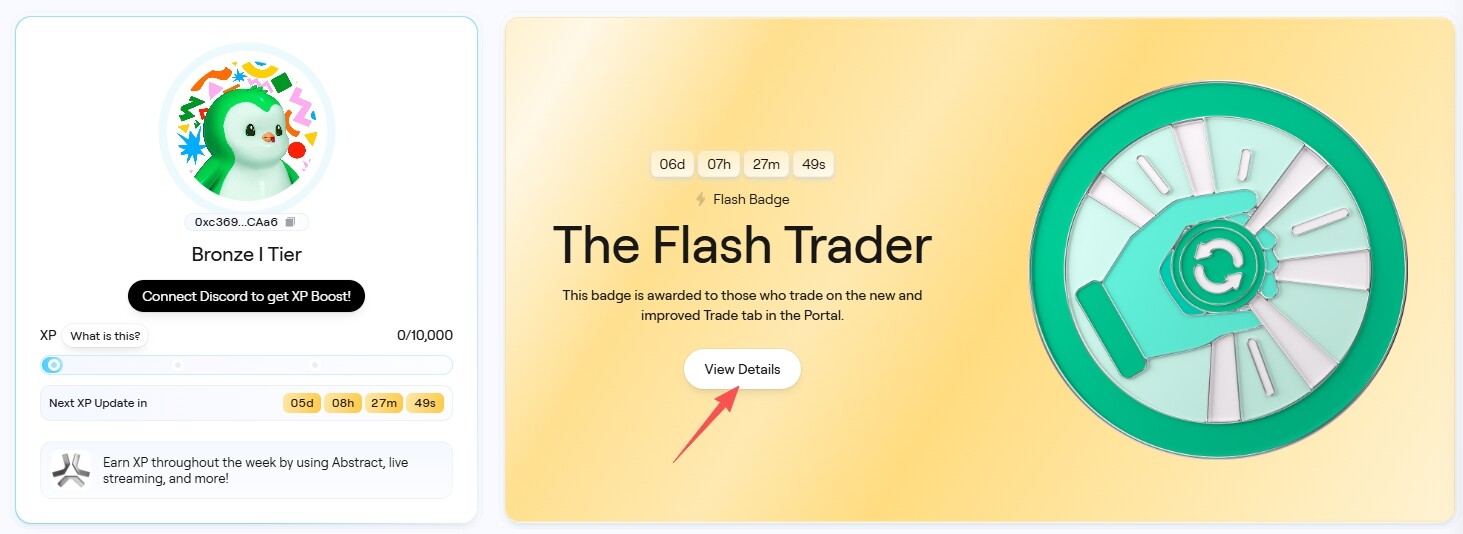
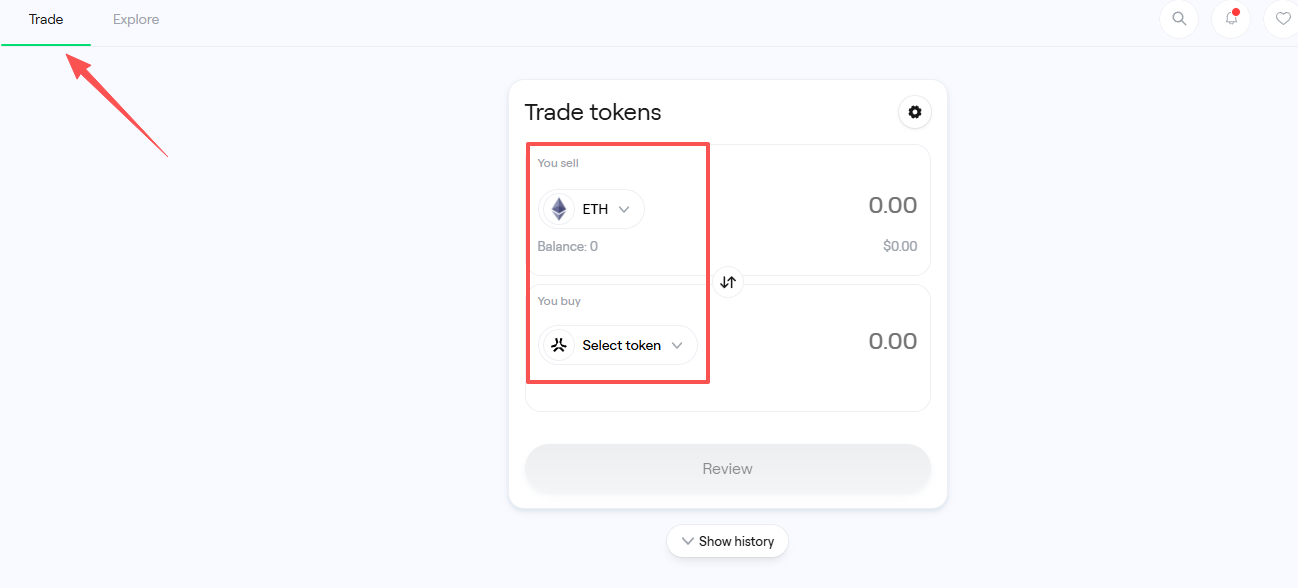
STEP 2. Click on The Flash Trader activity, after the link redirects, complete a swap of any amount. The mission ends in 6 and a half days.
Noise: An Attention Market Tool for Building Prediction Market-Related Information Platforms

Project Introduction

Noise is an attention-based trend trading platform (attention market) where users can trade long and short contracts on internet trends, brands, people, or ideas, similar to stock trading. Real-time "cultural relevance" price indicators are formed through social data (such as X platform popularity) and market behavior. On January 14th, Noise announced the completion of a $7.1 million seed funding round, led by Paradigm. The company had previously received investment support from Figment Capital and Anagram, as well as GSR, JPEG Trading, and KaitoAI.

On April 1st, Noise announced on the X platform that the Beta version is now live.

Interaction Tutorial

STEP 1. Go to the official website (link: https://noise.xyz/), click "View Trends" and then log into your personal account to enter the Noise platform Beta version.
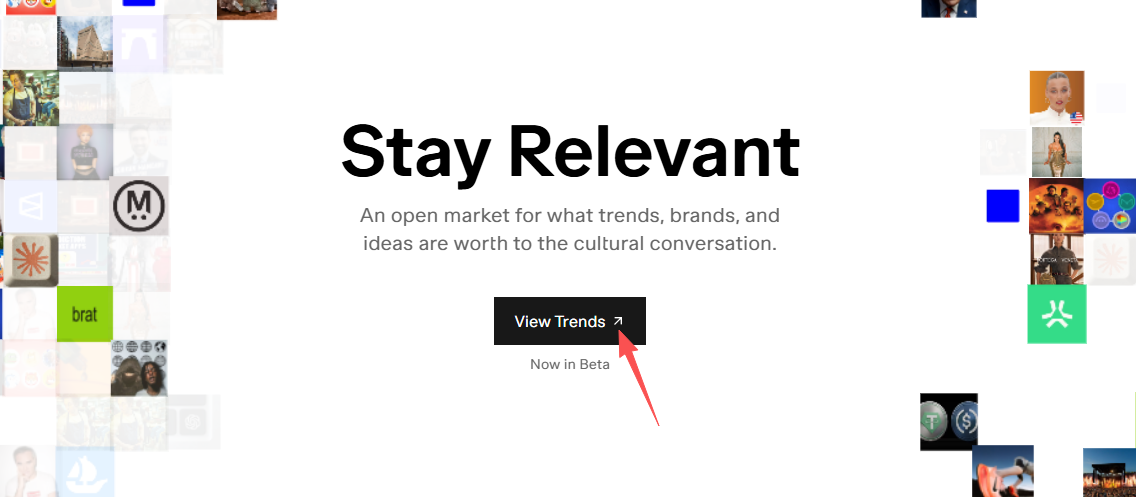
STEP 2. Experience the Noise platform (trading on the Noise Beta version requires a payment of $5 first).
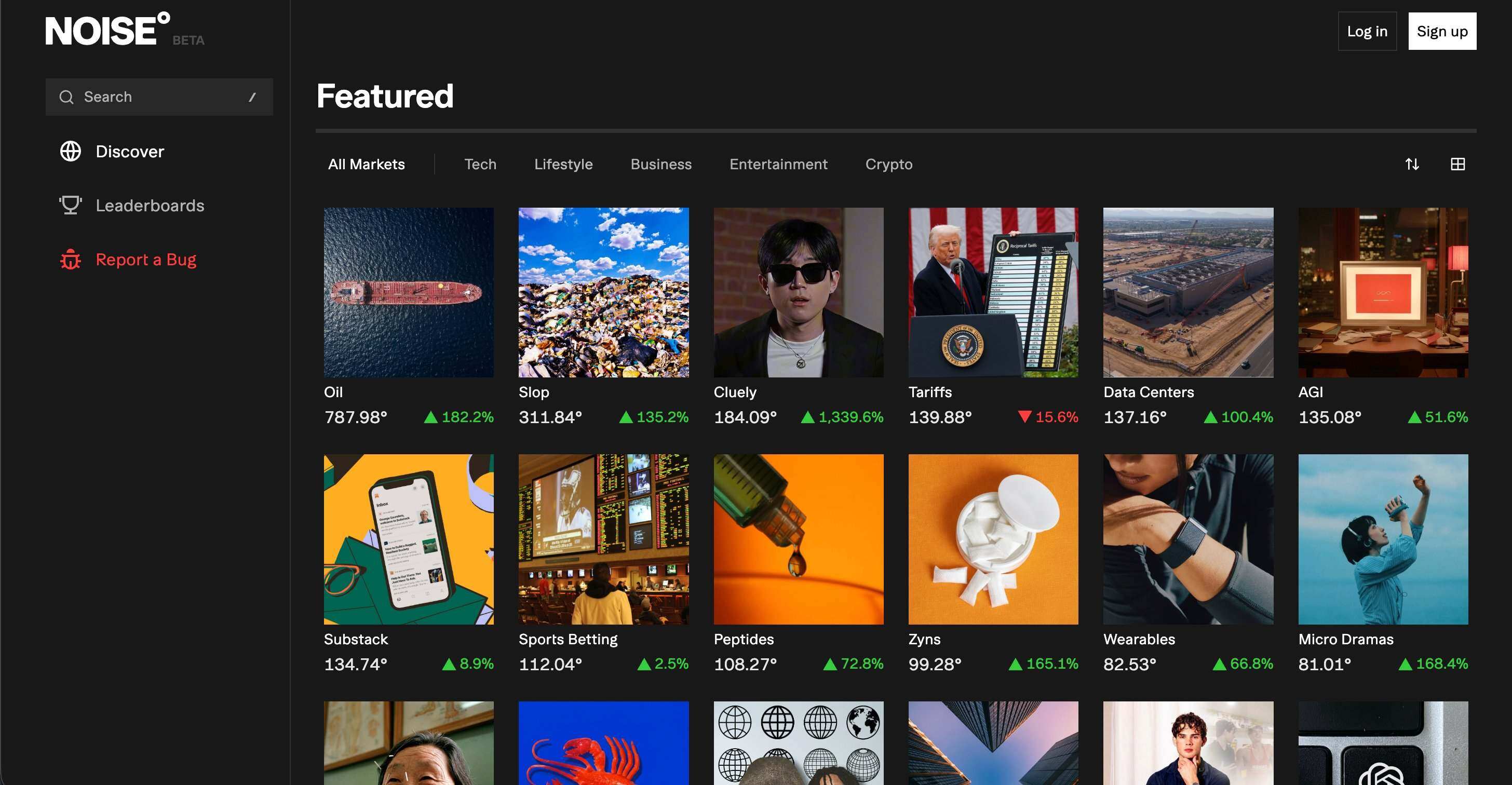
Miden: Ethereum L2 Scaling Solution Focused on Privacy Computing

Project Introduction
Miden is an Ethereum L2 scaling solution focused on privacy computing. Miden's core technology is zero-knowledge rollup, built on Ethereum, using Miden VM to execute transactions. It supports parallel transaction execution and client-side proof generation, emphasizing privacy and high throughput. Unlike traditional blockchains, Miden moves computation to the user side; users execute and prove transactions locally, submitting only the proof to the chain.

In late April this year, Miden announced the completion of a $25 million seed funding round, co-led by a16z crypto, Hack VC, and 1kx. Other investors include Finality Capital Partners, Symbolic Capital, and notable angel investors like Aptos co-founder Avery Ching.

Interaction Tutorial

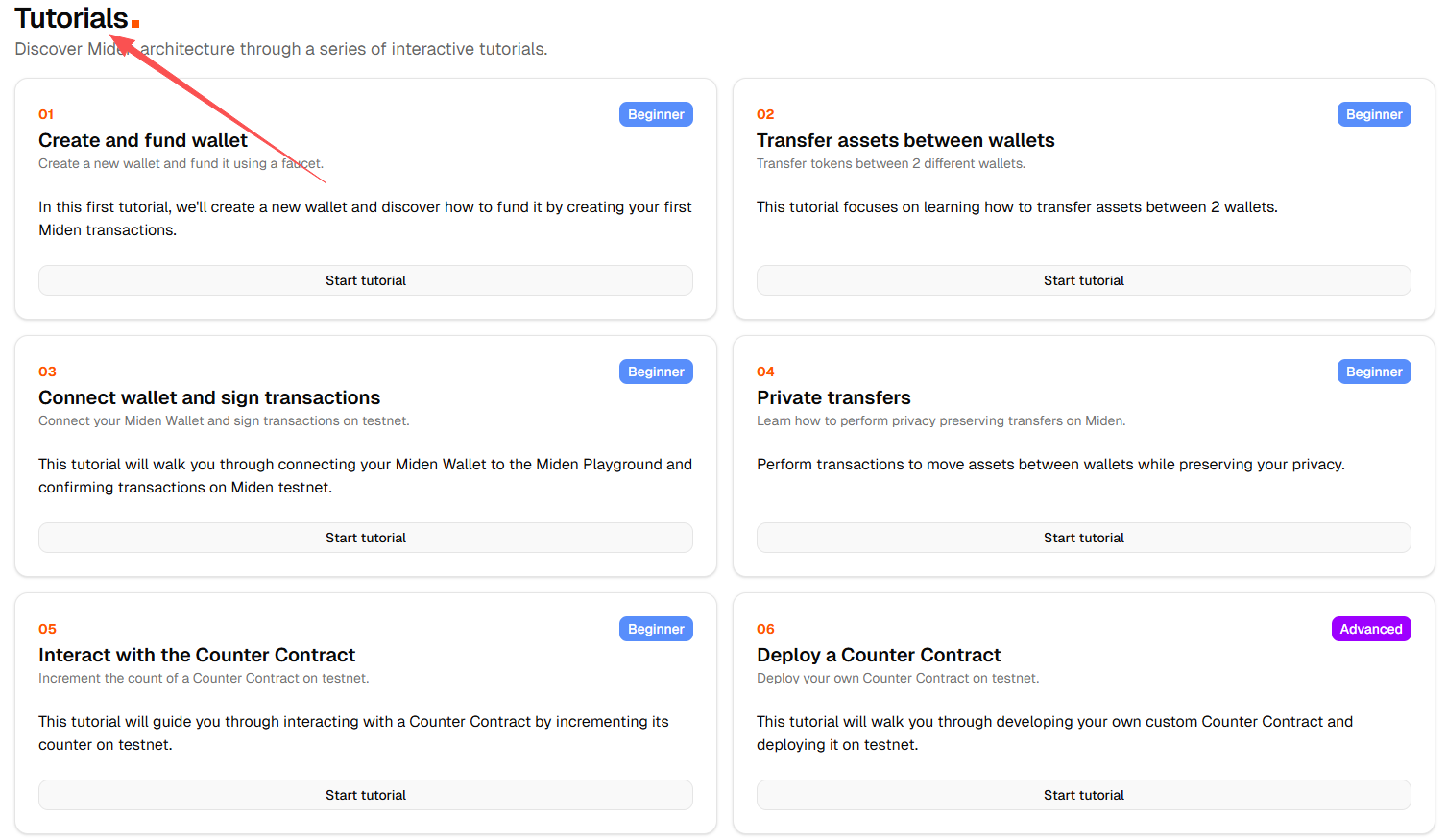
STEP 1. Go to the official website (link: https://playground.miden.xyz/), click "Select Wallet" and follow the instructions to install the wallet.
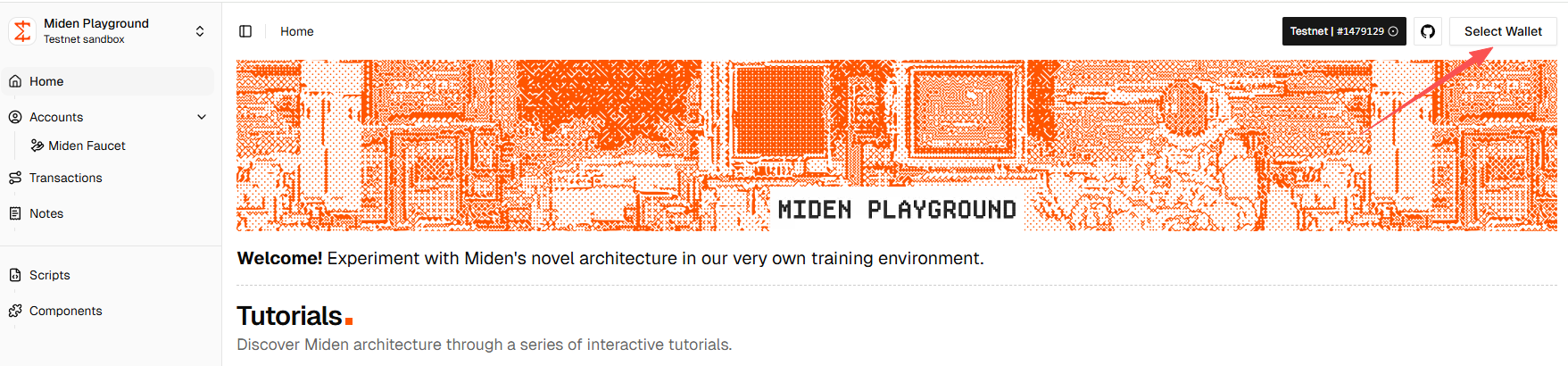
STEP 2. Complete the 11 testnet tasks according to the requirements (each task has detailed operation guidelines).
İlgili Sorular

QWhat is Abstract and what technology does it use?

AAbstract is a consumer-centric Ethereum L2 developed by Igloo Inc., the parent company of Pudgy Penguins. It uses a ZK (zero-knowledge) technology stack, such as ZKsync and EigenDA, focusing on low-cost, high-speed transactions to drive consumer crypto applications, on-chain culture, community, and creativity.

QHow can users participate in Abstract's 'The Flash Trader' event?

AUsers can participate by visiting the Abstract rewards portal, clicking on 'The Flash Trader' event, and completing a swap of any amount. The event has about 6.5 days remaining.

QWhat is Noise and what recent milestone did it achieve?

ANoise is an attention market platform where users can trade on internet trends, brands, people, or ideas. It announced the launch of its Beta version on April 1st.

QWhat is the funding status of Miden and who were the lead investors?

AMiden completed a $25 million seed funding round in late April, co-led by a16z crypto, Hack VC, and 1kx.

QWhat is the first step to interact with the Miden testnet?

AThe first step is to visit the Miden playground website, click 'Select Wallet', and install the required wallet as per the instructions.

İlgili Okumalar

Understanding Hash in One Article: The "Browser Miner" on Ethereum

Hash is an Ethereum-based ERC-20 token described as a "browser-minable post-quantum token." Its key features include enabling browser-based GPU mining without specialized hardware, a fixed supply cap of 21 million tokens, immutable and permissionless smart contracts with no team allocation or pre-mining, and an emphasis on post-quantum security using Keccak256 hashing. The mining mechanism is a simplified on-chain proof-of-work where miners solve unique challenges tied to their wallet address. Key design elements prevent answer theft, with epochs resetting every 100 blocks (~20 minutes) and a per-block minting limit. Emission follows a Bitcoin-like halving schedule every 100,000 mints, starting at 100 tokens per mint. Projections suggest all tokens could be mined within approximately 294 days if a target rate of one mint per minute is sustained. Hash emphasizes "post-quantum" security by leveraging hash-based primitives like Keccak256, which are considered more resistant to quantum attacks compared to elliptic-curve cryptography. While not a fully post-quantum asset, it aligns with Ethereum's broader post-quantum research narrative. The project completed its Genesis sale at $0.03 and began trading on Uniswap, with its price reaching around $0.19. The initial circulating supply is small, with 5% sold in Genesis and 5% allocated to liquidity. The majority (47.6% of total supply) is allocated to early-stage mining, leading to a front-loaded emission schedule. This structure, combined with low initial liquidity, makes Hash a high-volatility, high-risk project dependent on sustained miner participation and market demand to absorb new supply.

marsbit1 dk önce

Understanding Hash in One Article: The "Browser Miner" on Ethereum

marsbit1 dk önce

OpenAI's Largest Internal Wealth Creation: 600 People Cash Out a Total of $6.6 Billion, 75 Take Home the Maximum $30 Million Each

A Wall Street Journal report reveals OpenAI's unprecedented pre-IPO wealth creation. In a single employee stock sale last October, over 600 current and former employees sold shares, collectively cashing out approximately $6.6 billion. Due to high investor demand, the company tripled the individual sale cap to $30 million, with about 75 employees selling the maximum amount. This event represents the largest such transaction in tech industry history for a private company. OpenAI's valuation was $500 billion for this tender offer. Employees with over two years of tenure were eligible, allowing many post-ChatGPT hires their first liquidity event. The company's stock has reportedly grown over 100-fold in seven years. Following a restructuring, employees collectively hold about 26% of OpenAI. The scale of executive wealth is also staggering. In court testimony related to Elon Musk's lawsuit, President and co-founder Greg Brockman confirmed his OpenAI stake is worth around $30 billion. Analysis indicates about 165 current and former employees hold a combined ~$164.9 billion in equity, averaging nearly $1 billion per person in paper wealth. OpenAI's per-employee stock-based compensation is estimated to be 34 times the average of major tech firms before their IPOs. OpenAI continues its rapid ascent, closing a $122 billion funding round at an $852 billion valuation in March. With monthly revenue hitting $2 billion, over 900 million weekly ChatGPT users, and plans for a potential trillion-dollar IPO in late 2026, this wealth-creation engine shows no signs of stopping.

链捕手24 dk önce

OpenAI's Largest Internal Wealth Creation: 600 People Cash Out a Total of $6.6 Billion, 75 Take Home the Maximum $30 Million Each

链捕手24 dk önce

Understanding CPO (Co-Packaged Optics) in One Article: Why Nvidia Is Willing to Spend $3.2 Billion on a Fiber?

NVIDIA and Corning announced a multi-year strategic partnership on May 6, 2026, with NVIDIA committing up to $3.2 billion to support Corning's U.S. expansion. This investment will triple Corning's manufacturing plants and significantly boost its optical fiber and communications production capacity. The core driver behind this massive investment is the fundamental shift from copper to optical interconnect technology within AI data centers. As GPU clusters scale, copper wires face critical limitations: severe signal attenuation over distance, high energy consumption for signal integrity, and excessive heat generation. Optical fiber, transmitting light instead of electrical signals, solves these issues with minimal loss, near-light speed, and lower power needs. The article outlines a three-stage evolution of data center interconnect: 1. **Traditional Copper Interconnects:** The mainstream solution of the 2010s, now being phased out due to scaling bottlenecks. 2. **Pluggable Optical Modules:** The current mainstream, where modules convert electrical signals to light externally. This process still introduces energy loss and latency. 3. **CPO (Co-Packaged Optics):** The next-generation technology where the optical engine is integrated directly with the GPU chip package. This drastically reduces the electrical signal travel distance to mere millimeters, slashing power consumption and latency while boosting data density. NVIDIA CEO Jensen Huang has identified CPO as an essential core technology for AI infrastructure. NVIDIA's investment signifies a strategic shift from being a buyer to actively controlling its supply chain for critical components. With demand for specialized optical fiber far outstripping supply—evidenced by soaring prices—securing long-term manufacturing capacity has become a competitive necessity. While Corning's expansion may pressure some suppliers, a projected global fiber supply gap of 5-15% over the next few years creates a significant opportunity window, particularly for Chinese manufacturers competitive in optical preforms, chips, and modules. Ultimately, NVIDIA's move is not about chasing a trend but an engineering imperative. The transition to light-based interconnects like CPO is driven by the physical limits of copper, marking a definitive step in the ongoing AI computing revolution.

marsbit49 dk önce

Understanding CPO (Co-Packaged Optics) in One Article: Why Nvidia Is Willing to Spend $3.2 Billion on a Fiber?

marsbit49 dk önce

İşlemler

Spot
Futures
活动图片





