Hot Interaction Collection | Robinhood Testnet Interaction; Earn Early Points on Canopy (February 27)

Odaily星球日报2026-02-27 tarihinde yayınlandı2026-02-27 tarihinde güncellendi

Özet

Hot Interaction Compilation: Robinhood Testnet Interaction; Canopy Early Points (February 27) Original by Odaily Planet Daily (@OdailyChina) Author: Asher (@Asher_0210) Robinhood Chain: An L2 focused on full-chain tokenization of real-world assets (RWA) On February 11, Robinhood announced the launch of the Robinhood Chain public testnet on Arbitrum. It will support tokenized real-world assets, including stocks, ETFs, private assets, and other financial instruments. The testnet allows developers to explore potential applications and prepare for the mainnet launch, promoting RWA tokenization and DeFi liquidity access. The chain will enable 24/7 trading, cross-chain bridging, and self-custody, supporting use cases like tokenized asset platforms, lending protocols, and perpetual exchanges. Interaction Tutorial: 1. Add the test network and claim test tokens. 2. Complete the testnet badge quest. 3. Mint NFTs on platforms like NFTs2Me to enrich interaction data (requires a small amount of ETH for gas fees). Canopy: An AI-powered L1 blockchain Canopy is currently in its testnet phase and has launched a points incentive program. In late January 2025, it announced a $1.2 million seed round led by Mechanism Capital and CitizenX, with participation from Primitive, GSR, and Side Door Ventures. Interaction Tutorial: 1. Visit the rewards page and connect your wallet and X account. 2. Complete four initial tasks and three daily tasks to earn points. 3. Fulfill addition...

Original | Odaily Planet Daily (@OdailyChina)

Author | Asher (@Asher_ 0210)

Robinhood Chain: L2 Focused on Full On-Chain RWA Assets

Project Introduction

On February 11, Robinhood announced the launch of the Robinhood Chain public testnet based on Arbitrum, which will support tokenized real-world assets, including stocks, ETFs, private assets, and other financial instruments (Read more: Robinhood boldly enters L2, focusing on RWA tokenization).

Robinhood stated that the public testnet lays the foundation for developers to explore potential and validate applications in advance, preparing for the mainnet launch, and promoting the tokenization of real-world assets and DeFi liquidity access. It is reported that Robinhood Chain will support 24/7 trading, cross-chain bridging, and self-custody, covering application scenarios such as tokenized asset platforms, lending protocols, and perpetual contract exchanges.

Interaction Tutorial

STEP 1. Add the test network and claim test coins (Link: https://faucet.testnet.chain.robinhood.com/).
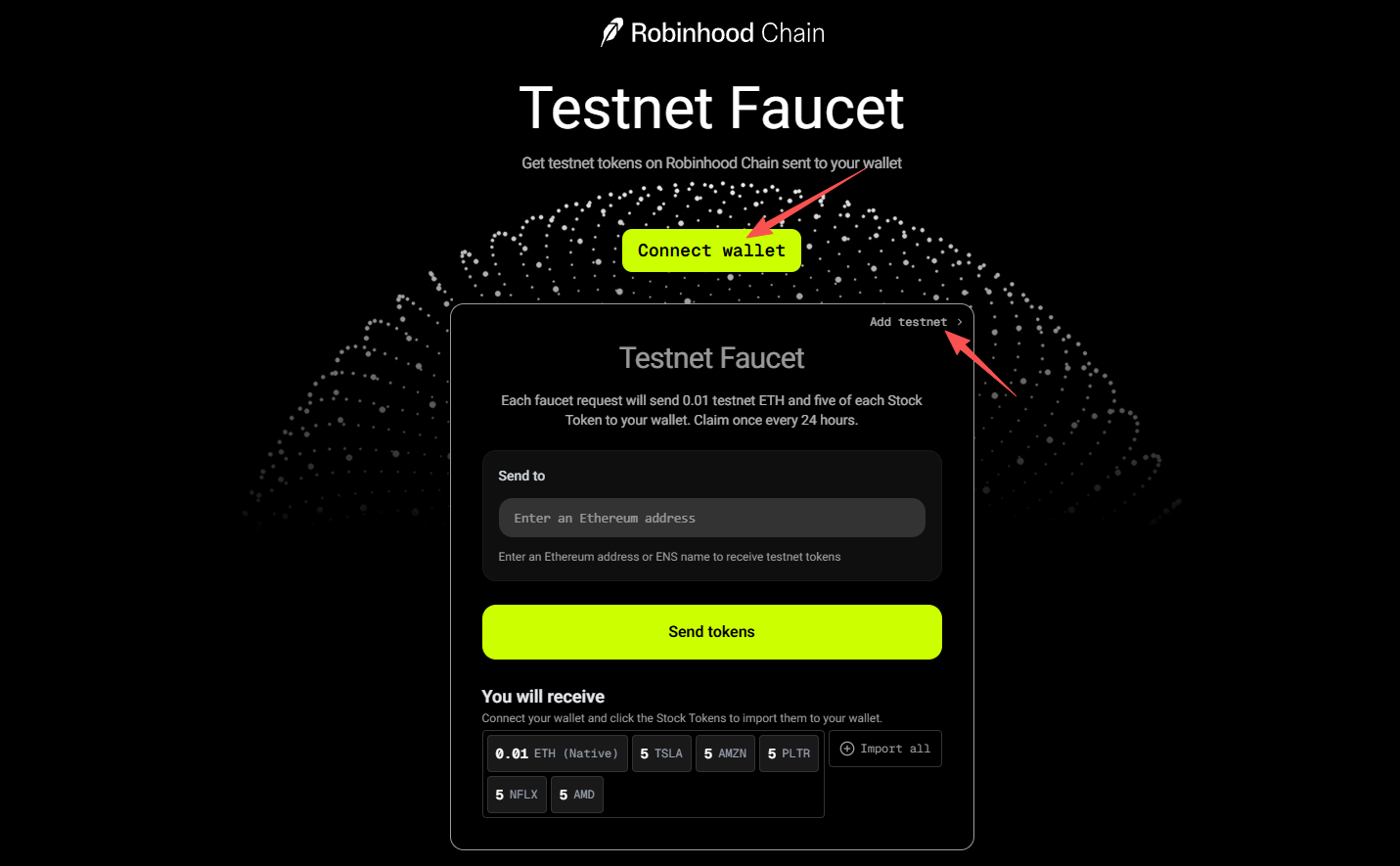
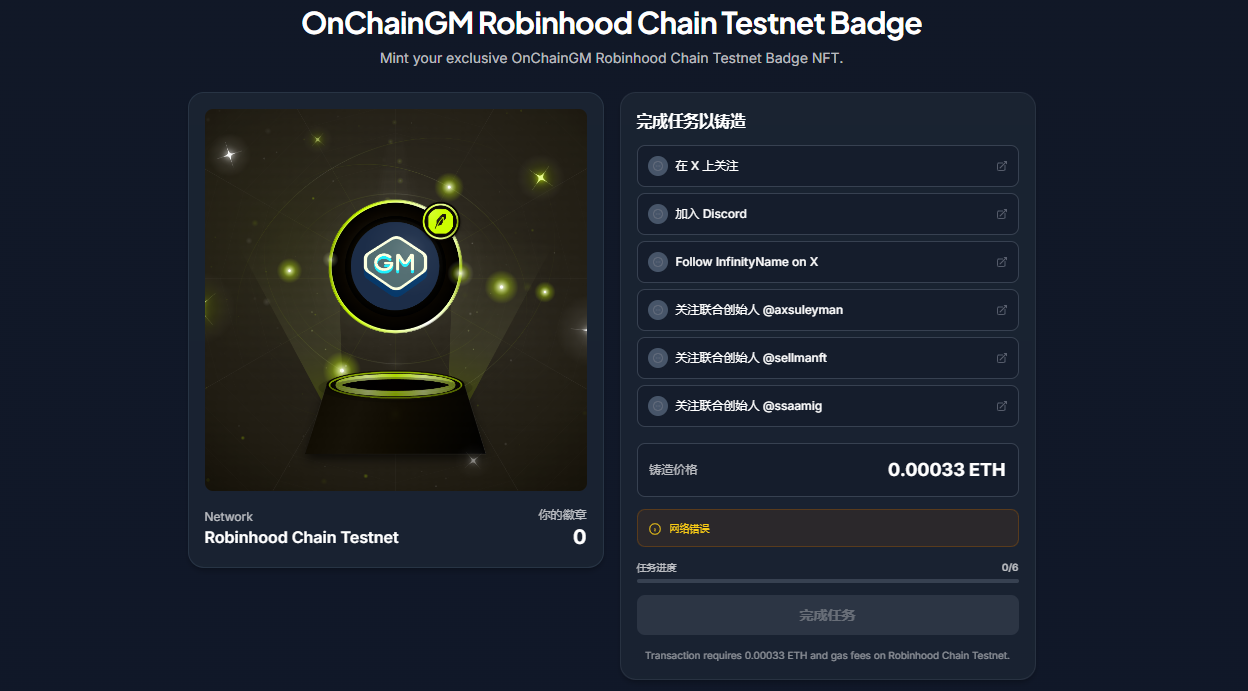
STEP 2. Participate in the testnet badge (Link: https://onchaingm.com/badge-robinhood).
STEP 3. Some platforms, such as NFTs2Me, have launched Robinhood testnet NFTs, which can enrich Robinhood testnet interaction data. However, minting NFTs requires a small amount of ETH, so consider the cost (Links: https://bold-robinhood-gold.testnet.nfts2.me/ and https://robinhood-penta.testnet.nfts2.me/).

Canopy: AI-Powered L1 Public Chain

Project Introduction
Canopy is an AI-powered L1 public chain. The project is currently in the testnet phase and has launched a points incentive activity. At the end of January 2025, Canopy announced the completion of a $1.2 million seed round led by Mechanism Capital and CitizenX, with participation from Primitive, GSR, and Side Door Ventures.

Interaction Tutorial

STEP 1. Enter the activity interface (Link: https://rewards.canopynetwork.org/), and connect your wallet and personal X account.
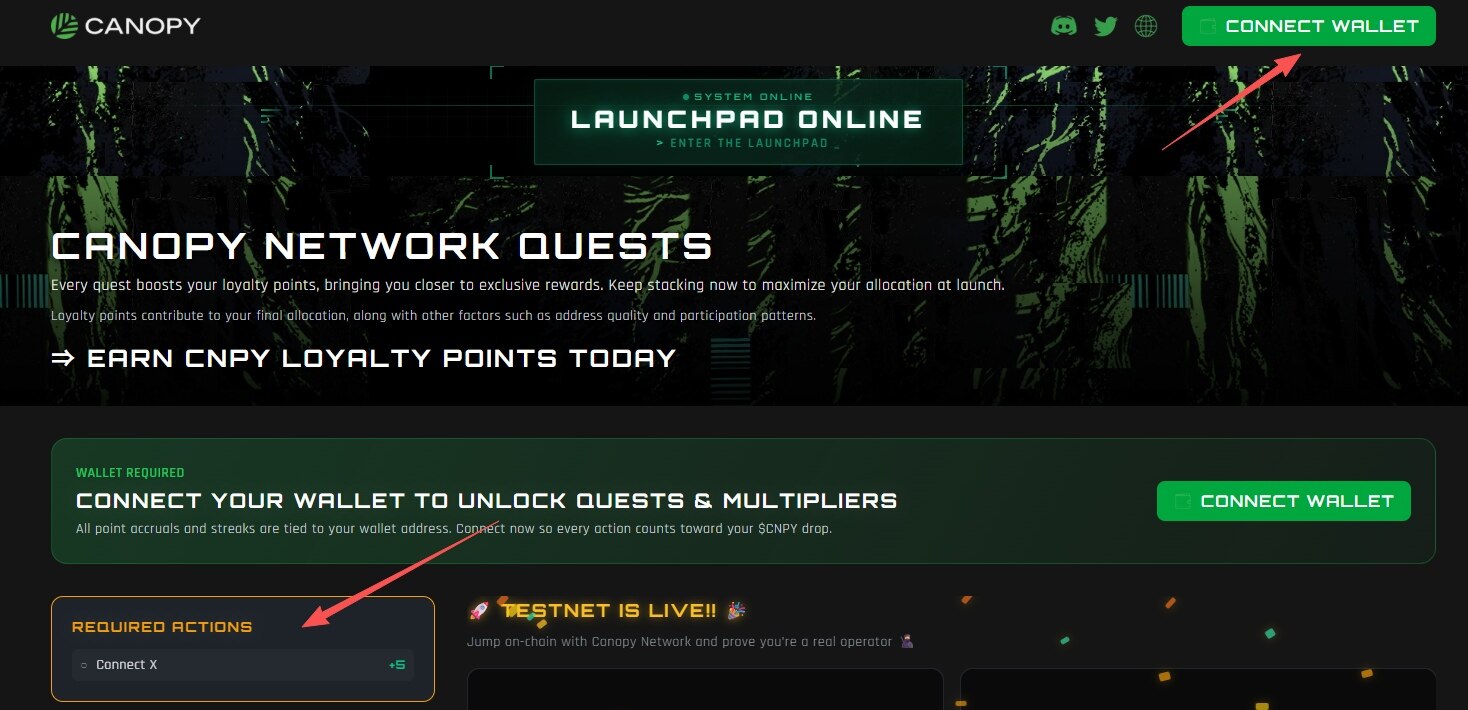
STEP 2. After linking your X account, you can unlock 4 tasks to earn points. The other 3 tasks are daily tasks.
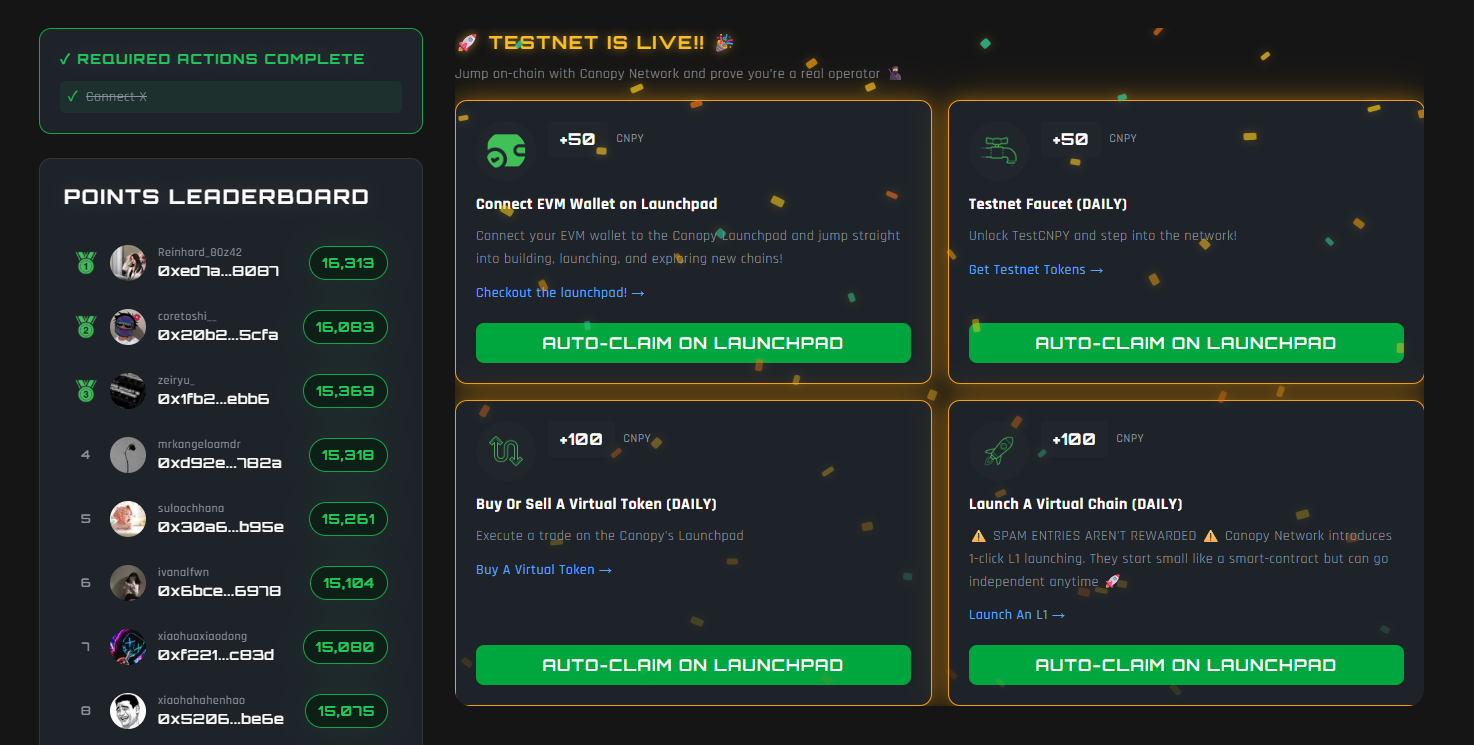
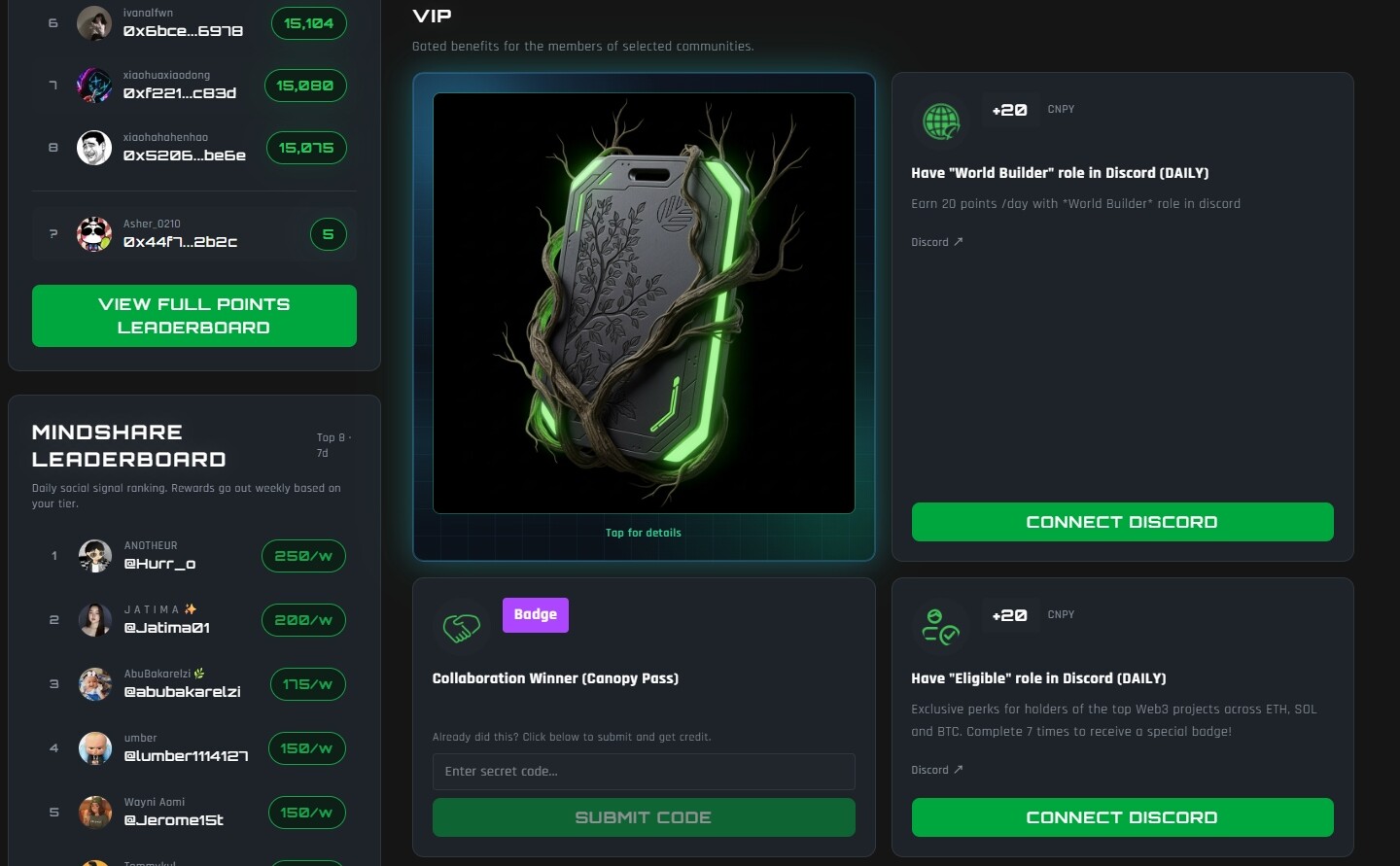
STEP 3. There are more point tasks below. Reach the corresponding requirements to claim them.
TBD: Prediction Market Platform Based on Solana

Project Introduction
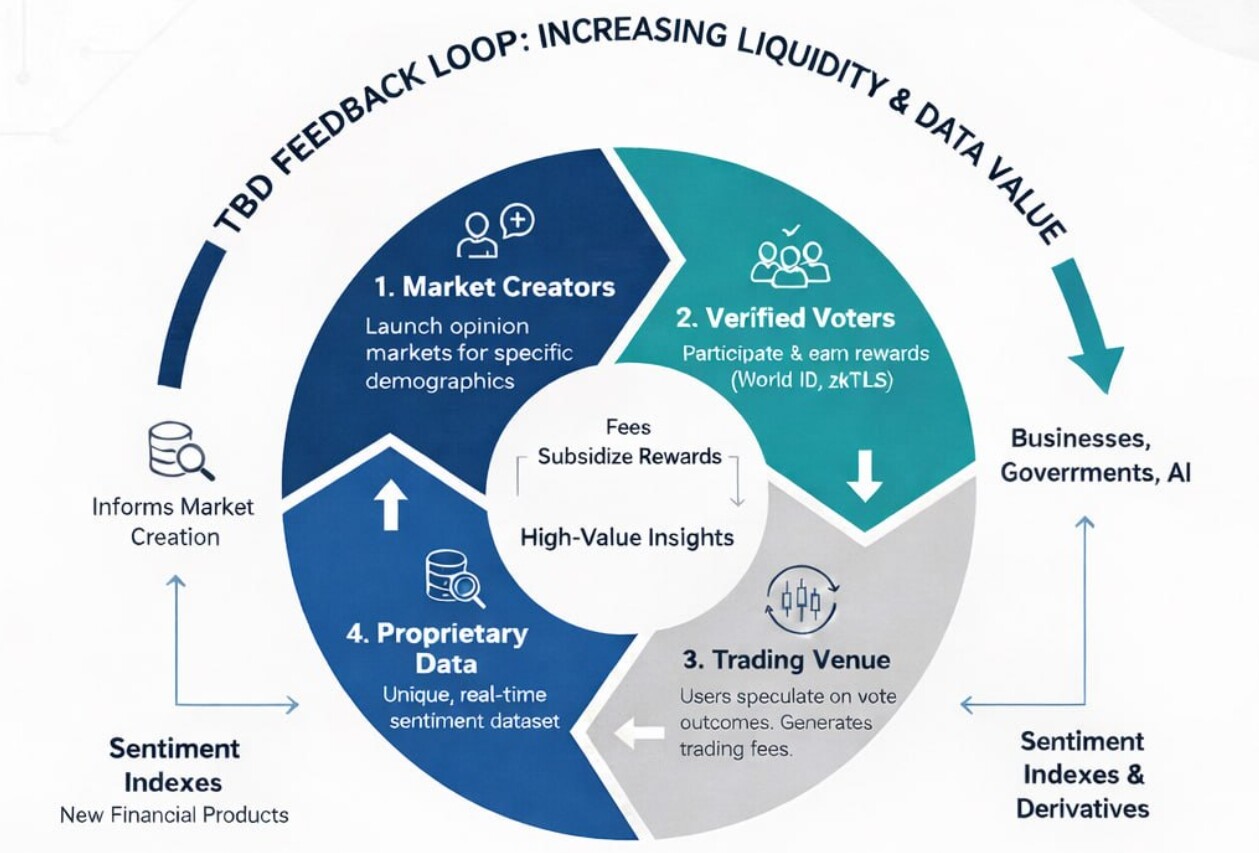
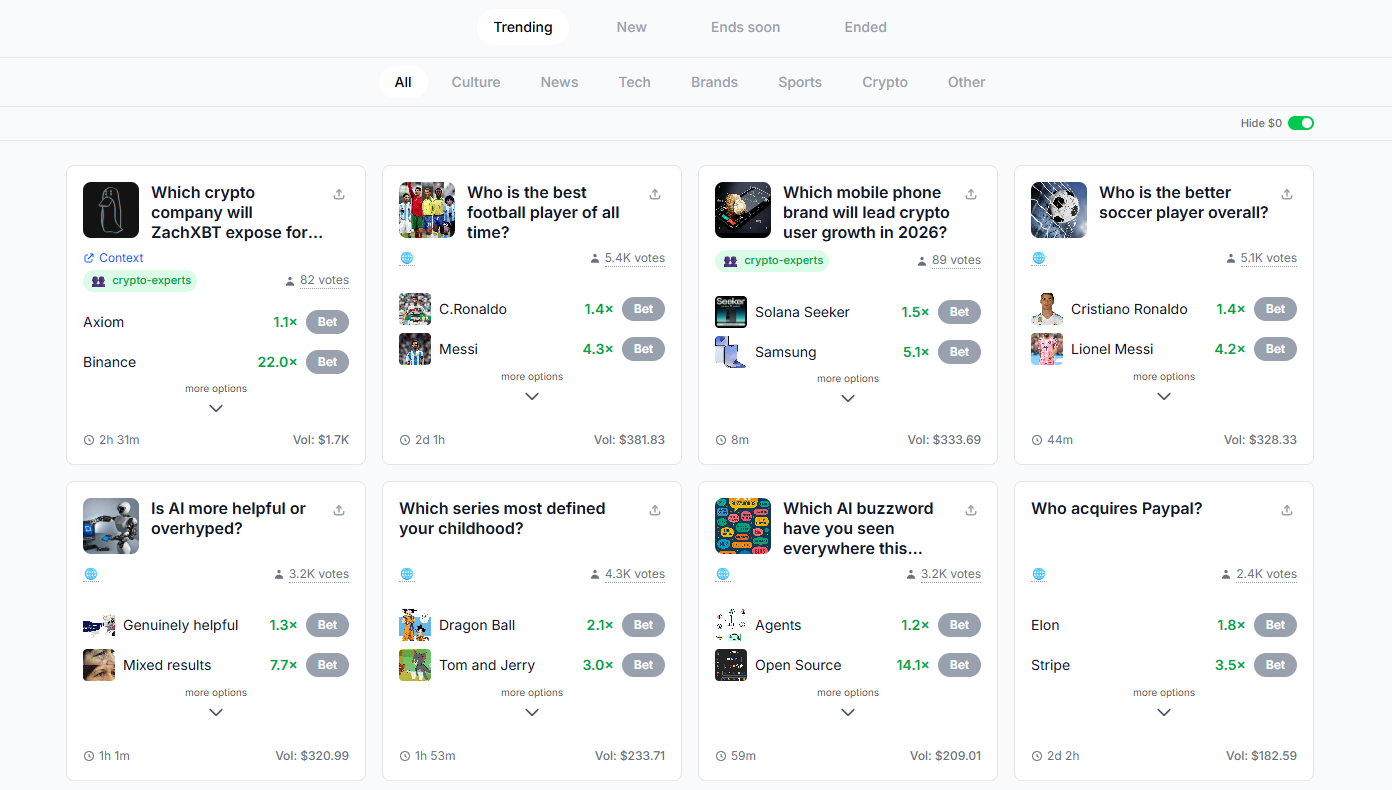
TBD is a prediction market platform based on Solana, focusing on public opinion poll events. The platform opened for use on February 25. On the same day, it announced the completion of a $3 million seed round co-led by CMT Digital and ParaFi.

Interaction Tutorial

Currently, register with X or use TBD on Solana Seeker to receive up to $100 in risk-free betting credits.
İlgili Sorular

QWhat is the main focus of Robinhood Chain as described in the article?

ARobinhood Chain is an L2 solution built on Arbitrum that focuses on supporting tokenized real-world assets (RWA), including stocks, ETFs, private assets, and other financial instruments, enabling 24/7 trading, cross-chain bridging, and self-custody.

QWhat are the key steps to interact with Robinhood Chain's testnet?

AThe key steps are: 1. Add the test network and claim test tokens from the faucet. 2. Complete the testnet badge task on the OnChainGM platform. 3. Optionally, mint NFTs on platforms like NFTs2Me to enrich interaction data (requires paying a small amount of ETH).

QWhat is Canopy and what recent achievement did it announce?

ACanopy is an AI-driven Layer 1 blockchain. It recently announced the completion of a $1.2 million seed round funding led by Mechanism Capital and CitizenX, with participation from Primitive, GSR, and Side Door Ventures.

QHow can users earn points in the Canopy rewards program?

AUsers can earn points by connecting their wallet and X account to unlock 4 initial tasks, completing 3 daily tasks, and fulfilling additional tasks listed in the rewards section for meeting specific requirements.

QWhat is TBD and what incentive does it offer to new users?

ATBD is a prediction market platform built on Solana that focuses on poll-based events. It offers new users up to $100 in risk-free betting credits for registering with X or using TBD on Solana Seeker.

İlgili Okumalar

Has the 'Digital Gold' Narrative for BTC Failed?

**Title: Has the "Digital Gold" Narrative for Bitcoin Failed?** The article argues that Bitcoin's "digital gold" narrative remains valid despite a recent sharp price decline (from a peak near $126k in Oct 2025 to briefly under $61k in Feb 2026). It presents a long-term investment framework based on three core points: **1. Viewing Bitcoin as an Asset:** Bitcoin is presented as a superior potential store of value compared to gold. Key arguments are its absolute scarcity (21 million cap), superior portability, and transparent auditability via its public ledger. While acknowledging its current use in early, volatile stages (~3-4% global adoption), the author draws parallels to the early, disruptive phases of the internet and e-commerce. **2. Understanding the Recent Downturn:** The current ~50% correction is framed as a predictable, consensus-driven cycle following its post-halving peak (the 2024 halving preceded the Oct 2025 high). A crucial factor is a historic "changing of hands": the influx of new institutional buyers via ETFs allowed early, low-cost holders (miners, OG believers) to take profits. The author notes that while severe, Bitcoin's historical drawdowns (e.g., 93% in 2011, 77% in 2021-22) have been progressively smaller, suggesting maturing holder structure and decreasing volatility over time. **3. The Long-Term Perspective:** The long-term thesis hinges on Bitcoin capturing a portion of gold's market value. With Bitcoin's market cap at ~$1.4 trillion (at $70k) versus gold's ~$20 trillion, significant upside potential exists if the "digital gold" narrative is partially realized. However, the author strongly cautions that short-term risks remain, the bottom is unpredictable, and high volatility is inherent. The real risk is not Bitcoin failing but poor personal position management (over-leverage, wrong capital) and a lack of deep understanding, which can force investors out during severe downturns. The conclusion uses Amazon's 95% crash post-2000 dot-com bubble and subsequent 42x recovery as an analogy. The ultimate question is not if Bitcoin's price will rise, but if an investor's strategy and conviction can withstand the volatility to see the long-term play out. The recent divergence (gold up, Bitcoin down) is posed not as a narrative failure, but as potential evidence of this ongoing, painful transition from a speculative asset to a mainstream allocation.

marsbit2 saat önce

Has the 'Digital Gold' Narrative for BTC Failed?

marsbit2 saat önce

Has BTC's 'Digital Gold' Narrative Failed?

The article discusses Bitcoin's "digital gold" narrative, its recent price drop, and long-term outlook through the perspective of "Jason". It argues the narrative is not a failure but that Bitcoin represents a superior, new asset class due to its fixed supply (21 million), portability, and auditability. The piece compares its current ~3-4% global adoption rate to early internet/e-commerce, suggesting significant growth potential. Regarding the 2025-2026 price decline (from ~$126k to briefly under $61k), the author views it as a predictable, consensus-driven sell-off within Bitcoin's ~4-year cycle post-halving, exacerbated by a major "handover" from early, low-cost holders to new institutional buyers via ETFs. A key observation is that historical peak-to-trough drawdowns have lessened over time (e.g., 93% in 2011 to ~50% in 2026), indicating maturing volatility as holder structure changes. For the long term, the author uses a simple framework: Bitcoin's total market cap (~$1.4T at $70k) is only about 7% of gold's (~$20T). Even capturing 30-50% of gold's value would imply substantial upside. However, the article strongly cautions against viewing this as investment advice, emphasizing extreme volatility and the critical importance of risk management, position sizing, and deep fundamental understanding to survive severe drawdowns. It concludes by drawing a parallel to Amazon's 95% crash in 2000 and subsequent 42x recovery, stressing that the key is surviving market cycles to realize long-term potential.

链捕手3 saat önce

Has BTC's 'Digital Gold' Narrative Failed?

链捕手3 saat önce

From Code to Cognition: A Ten-Thousand-Word Guide to the Evolution of the Robot Brain

"From Code to Cognition: The Evolution of Robot Brains" The journey of robotic intelligence has shifted dramatically from manually coded systems to AI-driven brains. For decades, robots relied on layered software stacks—perception, state estimation, planning, control—each handcrafted. While predictable, they lacked adaptability. The 2010s saw deep learning revolutionize perception (e.g., object detection) and control (via reinforcement learning), but learned skills remained narrow. The arrival of Large Language Models (LLMs) marked a turning point. LLMs acted as high-level planners, interpreting natural language instructions and generating sequences of actions for traditional robotic systems to execute. However, true integration came with Visual-Language-Action (VLA) models, which fused vision, language, and motion prediction into a single network. Pioneered by models like RT-2 and open-source projects like OpenVLA, VLAs enable robots to reason and act directly from visual input and commands. The most advanced humanoid robots now employ a "dual-brain" architecture: a slow-thinking, large VLA (System 2) for reasoning and planning, and a fast-reacting, small network (System 1) for high-frequency motion control, sometimes with an even lower-level System 0 for balance. This split balances cognition with the physics of real-time movement. Computation is split between onboard hardware (e.g., NVIDIA Jetson) for safety-critical control loops and cloud/edge servers for non-critical tasks like learning and interfaces. A crucial driver is the open-source ecosystem—models like GR00T and OpenVLA allow startups to build upon pre-trained brains and fine-tune them with their own data, accelerating development. Despite progress, current systems struggle with recovery from errors, sample inefficiency, and long-horizon tasks. This has spurred the rise of **World Models**—neural networks that predict the consequences of actions. By simulating possible futures before acting (like NVIDIA Cosmos or Meta V-JEPA), robots can plan, recover, and generalize better. This represents the next frontier: shifting intelligence from learned reactions to an internal model of physics and cause-and-effect. The field is rapidly evolving. While not yet at its "ChatGPT moment," the convergence of cheaper hardware, scalable simulation, and world models points toward robots that are increasingly capable, adaptive, and useful. The question is shifting from "what can robots do?" to "what *should* they do?"

marsbit3 saat önce

From Code to Cognition: A Ten-Thousand-Word Guide to the Evolution of the Robot Brain

marsbit3 saat önce

AI Bubble Is Bursting

The AI Bubble is Bursting: A Necessary Purge on the Path to Ubiquitous Intelligence Market volatility has reignited debates about an AI bubble, with figures like Ray Dalio pointing to high valuations. However, this parallels the dot-com bubble, which, despite its crash, laid the physical infrastructure for today's internet era. The current AI investment frenzy, with tech giants planning trillions in infrastructure spending far outstripping current AI application revenues, appears similarly imbalanced. This 'bubble' is seen as an inevitable phase for a disruptive technology, paying the "innovation tax." Critically, AI inference costs have plummeted over 99.7% since 2023, making intelligence nearly free at the margin. This hasn't reduced spending but has instead unlocked massive new demand, as seen in enterprise AI cloud expenditure tripling. This follows the Jevons Paradox: efficiency gains lead to greater total consumption. The market is now entering a cleansing phase, weeding out speculative ventures lacking real moats. The deeper shift is a move from capital expenditure (CapEx) on hardware to value creation in operational expenditure (OpEx) through AI applications that solve real industry problems. While infrastructure valuations are high, rapid earnings growth from widespread AI adoption across sectors—from manufacturing and finance to law and healthcare—may digest these valuations over time. Ultimately, this creative destruction will leave behind robust infrastructure and optimized models, cheaply powering an AI-augmented future for all industries, much as the internet became indispensable after its own bubble burst. The core productive potential remains undiminished.

链捕手3 saat önce

AI Bubble Is Bursting

链捕手3 saat önce

İşlemler

Spot
Futures
活动图片





