Hong Kong Prepares To Grant Limited Batch Of Stablecoin Licenses In March – Report

bitcoinist2026-02-03 tarihinde yayınlandı2026-02-03 tarihinde güncellendi

Özet

Hong Kong's financial authorities, led by the Hong Kong Monetary Authority (HKMA), are preparing to issue the first limited batch of stablecoin issuer licenses in March. Chief Executive Eddie Yue confirmed that a "very small number" of licenses will be granted after the review process for applications nears completion. Over 30 companies, including Ant Group's overseas arm, have applied since the Stablecoins Ordinance was enacted in August, requiring any issuer of fiat-referenced stablecoins in Hong Kong to be licensed. The HKMA is focusing on use cases, risk management, AML measures, and asset backing. This move is part of Hong Kong's broader strategy to become a regulated global crypto hub, despite potential challenges from mainland China's strict stance against stablecoins.

Hong Kong financial authorities have announced that they will soon grant the first, limited batch of stablecoin provider licenses as the review process for applications is almost completed.

HKMA To Grant Limited Stablecoin Licenses Soon

On Monday, the Hong Kong Monetary Authority (HKMA)’s Chief Executive, Eddie Yue, announced that the regulatory agency is preparing to grant the first batch of the highly anticipated stablecoin licenses next month.

At a Legislative Council meeting, Yue affirmed that the financial authority expects to issue a “very small number” of stablecoin issuer licenses in March, according to a Reuters report.

In August, the HKMA enacted the Stablecoins Ordinance, which directs any individual or entity seeking to issue any fiat-referenced stablecoin (FRS) in Hong Kong, or any Hong Kong Dollar (HKD)-denominated token, to obtain a license from the regulator.

Local news outlets have reported that more than 30 companies have applied for the license, including the overseas arm of Chinese mainland financial technology giant Ant Group and logistics technology firm Reitar Logtech.

In December, legal experts suggested that Hong Kong’s ambitions to become a key regulated hub for stablecoins could be clouded by the People’s Bank of China’s explicit crackdown on the sector.

As reported by Bitcoinist, top financial regulators affirmed that stablecoins don’t qualify as legal tender in the mainland, which could delay the original early 2026 schedule and affect the HKMA’s approval of projects involving the yuan or mainland Chinese institutions.

Nonetheless, Hong Kong’s Financial Secretary, Paul Chan Mo-po, recently confirmed the regulators’ plan to grant stablecoin issuers licenses in the first quarter of the year at the World Economic Forum in Davos.

During a Monday media briefing, HKMA’s Chief Executive reportedly noted that their application review process is near its completion. Yue also highlighted that the regulator is focusing on use cases, risk management, anti-money laundering (AML) measures, and asset backing.

Moreover, he asserted that licensed issuers must comply with local regulations for cross-border activities, but added that “mutual recognition arrangements with other jurisdictions could be explored in the future.”

Hong Kong Continues Crypto Regulation Efforts

Hong Kong has been actively developing a comprehensive framework to support the expansion of the digital assets industry as part of its long-term strategy to become a global crypto hub.

Notably, financial authorities have been exploring rules to enable insurance companies to invest in cryptocurrencies and the infrastructure sector. In addition, the jurisdiction is among the 76 markets committed to implementing the Organisation for Economic Co-operation and Development’s (OECD) new global standard for exchanging tax information related to crypto assets.

The upcoming crypto reporting framework, the Crypto Asset Reporting Framework (CARF), is intended to bring crypto users across borders under global tax transparency rules, thereby preventing tax evasion. Hong Kong is set to begin its first cross-border exchanges of crypto reporting data in 2028.

However, the Hong Kong Securities & Futures Professionals Association (HKSFPA) has expressed its concerns about the implementation of the OECD’s CARF and the related amendments made to Hong Kong’s Common Reporting Standard (CRS).

The group noted that it mostly supports the proposals, but urged regulators to ease the record-keeping requirements for dissolved entities and the uncapped per-account penalties for minor technical errors. The Professionals Association warned that these elements of the CARF and CRS amendments could create operational and liability risks for market participants.
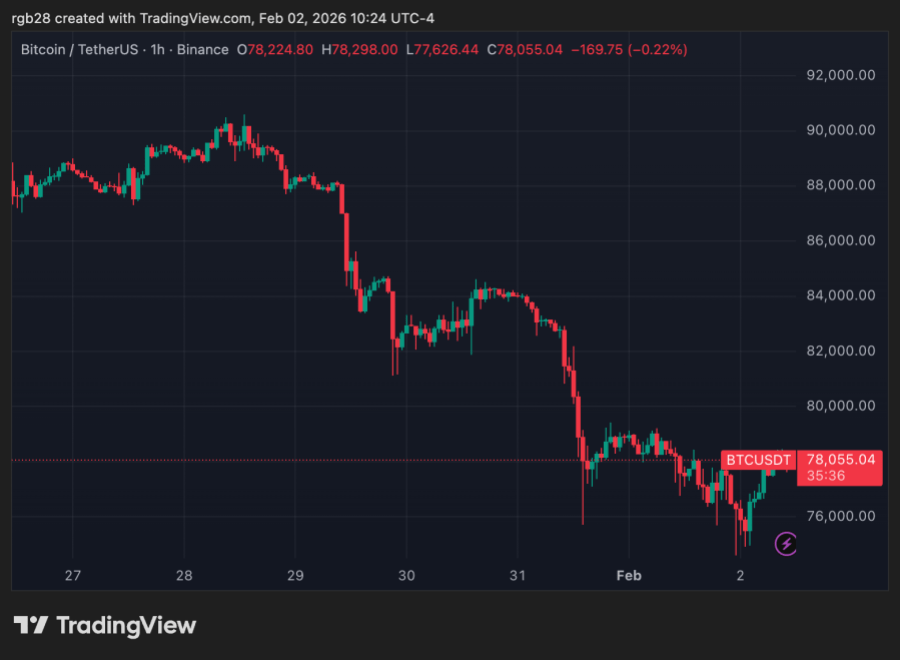
Bitcoin (BTC) trades at $78,055 in the one-week chart. Source: BTCUSDT on TradingView


İlgili Sorular

QWhen is the Hong Kong Monetary Authority (HKMA) preparing to grant the first batch of stablecoin licenses?

AThe HKMA is preparing to grant the first batch of stablecoin licenses in March.

QWhat is the name of the ordinance that requires a license to issue fiat-referenced stablecoins in Hong Kong?

AThe ordinance is called the Stablecoins Ordinance.

QWhich two companies were mentioned as having applied for a stablecoin license in Hong Kong?

AThe overseas arm of Ant Group and the logistics technology firm Reitar Logtech were mentioned as applicants.

QWhat potential challenge to Hong Kong's stablecoin hub ambitions was raised by legal experts in December?

ALegal experts suggested that the People's Bank of China's explicit crackdown on the stablecoin sector could cloud Hong Kong's ambitions.

QWhat new global standard for crypto tax information is Hong Kong committed to implementing?

AHong Kong is committed to implementing the Organisation for Economic Co-operation and Development’s (OECD) Crypto Asset Reporting Framework (CARF).

İlgili Okumalar

In Conversation with Ray Dalio: We Are Currently in an AI Bubble, with 1% of My Portfolio in Bitcoin

Ray Dalio, founder of Bridgewater Associates, warns in an interview that the current AI boom shows classic bubble characteristics, which could lead to significant economic downturns as seen in past cycles like 1929 or 2000. He explains that speculative enthusiasm, fueled by debt and overvaluation, often precedes a crash when rising rates or taxation force asset sales, causing widespread losses and recession. Dalio also outlines his "Big Cycle" theory, describing an approximate 80-year pattern where widening wealth gaps, massive government deficits, and shifting geopolitical power (like China's rise) create internal conflict and global instability. He emphasizes that we are in a late-cycle, transitional phase where traditional powers like the US and UK face decline. For personal wealth protection, Dalio advises diversification beyond cash into assets like stocks, bonds, real estate, and particularly gold, which he prefers over Bitcoin. While he holds about 1% of his portfolio in Bitcoin as a non-printable hard asset, he views gold as more secure from technological or governmental threats. Regarding AI's impact, Dalio believes it will disproportionately benefit capital owners, worsening inequality by replacing both physical and cognitive labor. He suggests that human intuition and emotional intelligence, combined with AI, will be key for future workers. On taxation, Dalio argues that wealth taxes are impractical and risk triggering asset sell-offs, reducing productive investment. He points to the UK as a cautionary example of debt, low productivity, and political strife. Geopolitically, Dalio foresees a more regionalized world, with the US showing weakness in prolonged conflicts like with Iran, akin to past imperial declines. The ideal outcome, he suggests, is coexisting powerful blocs (e.g., Americas, China-Asia Pacific) without major war.

marsbit22 dk önce

In Conversation with Ray Dalio: We Are Currently in an AI Bubble, with 1% of My Portfolio in Bitcoin

marsbit22 dk önce

Daily 7.2 Trillion KRW: Foreign Capital's Record Net Buying on Friday! Wall Street Says Headwinds for Korean Stock Fund Flows Have Subsided

South Korean stock market sees a dramatic shift in fund flows. On July 31, foreign investors made a record net purchase of approximately KRW 7.2 trillion in KOSPI stocks, marking a fundamental reversal from the persistent large-scale net outflows seen in previous months. This contributed to a significant narrowing of foreign net selling in July to KRW 9.8 trillion, down sharply from KRW 48.4 trillion in June and KRW 44.5 trillion in May. Simultaneously, domestic institutional pressure eased. South Korean pension funds and asset managers turned to a net buying position in July, purchasing KRW 1.0 trillion worth of KOSPI shares, contrasting with net sales in May and June. Market volatility is expected to be dampened by new financial regulations. Effective July 31, the Financial Services Commission tightened access for retail investors to single-stock leveraged ETFs by raising the minimum cash deposit requirement. Trading volumes for these products subsequently dropped to about 50% of their monthly average. Citigroup Research maintains its year-end KOSPI target of 10,000 points. The firm cites several supportive factors: the substantial easing of headwinds from capital outflows, a robust fundamental outlook for the semiconductor sector, historically low market valuations, strong economic fundamentals, and the potential for policy support from financial authorities if needed.

marsbit22 dk önce

Daily 7.2 Trillion KRW: Foreign Capital's Record Net Buying on Friday! Wall Street Says Headwinds for Korean Stock Fund Flows Have Subsided

marsbit22 dk önce

Thanks to Dice Rolls, Bitcoin Keys Are Stored Offline, But Not Everyone Will Do It

The article discusses using dice rolls to generate secure Bitcoin wallet seeds, providing entropy independent of potentially flawed hardware random number generators. It explains that each fair dice roll offers about 2.585 bits of entropy, with around 50 rolls needed for a standard 12-word seed phrase and 99+ recommended for higher security. This method gained attention after a vulnerability was revealed in some Coldcard hardware wallets, where a faulty firmware RNG (dating back to 2021) compromised generated keys. The analysis notes that while a dice-generated main seed was safe from this specific flaw, other Coldcard functions (like creating paper wallets, backup keys, or passwords) could still be vulnerable if they used the defective RNG. The piece argues that while dice-based entropy is technically robust, the manual process is error-prone, tedious, and unrealistic for most new users, who might make mistakes in recording or inputting rolls. It concludes that while manual entropy generation should remain an option for advanced users, the long-term goal is to develop reliable, user-friendly hardware and software that securely generates randomness without requiring specialized knowledge. Coldcard users are advised to check their firmware version and replace any secondary secrets (like paper wallet keys) created with vulnerable devices, while also considering multi-signature setups with devices from different manufacturers for added security.

cryptonews.ru5 saat önce

Thanks to Dice Rolls, Bitcoin Keys Are Stored Offline, But Not Everyone Will Do It

cryptonews.ru5 saat önce

İşlemler

Spot
活动图片




