Hong Kong Crypto Scam Shock: Woman Loses Nearly $1 Million As AI Fraud Surges

bitcoinist2026-04-19 tarihinde yayınlandı2026-04-19 tarihinde güncellendi

Özet

Hong Kong Crypto Scam Shock: Woman Loses Nearly $1 Million As AI Fraud Surges A Hong Kong woman lost HK$7.7 million (approximately $982,000) after being lured into a fraudulent cryptocurrency investment platform. The scam began on Telegram, where a person posing as an investment expert promoted an AI-powered trading strategy with guaranteed returns. After making 17 transfers of USDT and Ethereum, the victim was unable to withdraw her funds. Hong Kong Police have reported a significant surge in such online investment fraud, with over 80 cases recorded in a single week, totaling losses of nearly HK$80 million. Authorities warn that scammers are increasingly using sophisticated tactics, including promises of "AI trading" and "guaranteed profits," to appear credible. This follows a similar incident last month where a retiree lost HK$6.6 million in a multi-stage scam. Police urge the public to be cautious of unsolicited investment advice and to verify platforms through the official CyberDefender service before transferring any money. They emphasize that no legitimate investment can guarantee returns. Investigations are ongoing.

Her withdrawal requests kept getting denied. That was the moment a Hong Kong woman realized the crypto investment platform she had been using for weeks was fake — and that her money was gone.

Scam Built On Fake Promises

The woman had made 17 separate transfers of USDT and Ethereum to the fraudulent platform, losing nearly HK$7.7 million, roughly $982,000.

It started on Telegram, where someone posing as an investment expert approached her and pitched a trading strategy powered by artificial intelligence.

The promised returns were guaranteed. The platform looked convincing. She transferred the funds. When she tried to take her money out, nothing came through.

Hong Kong Police have since confirmed the case as part of a wider surge in online investment fraud hitting the city.

Based on reports from authorities, over 80 such cases were recorded in a single week, with combined losses topping HK$80 million — close to $10 million.

Different Types Of Scam

According to Vectra, AI scams now fall into seven distinct categories, with deepfake video, voice cloning, and AI-driven BEC among the biggest threats to enterprises. This framework spans both consumer- and enterprise-focused attacks.
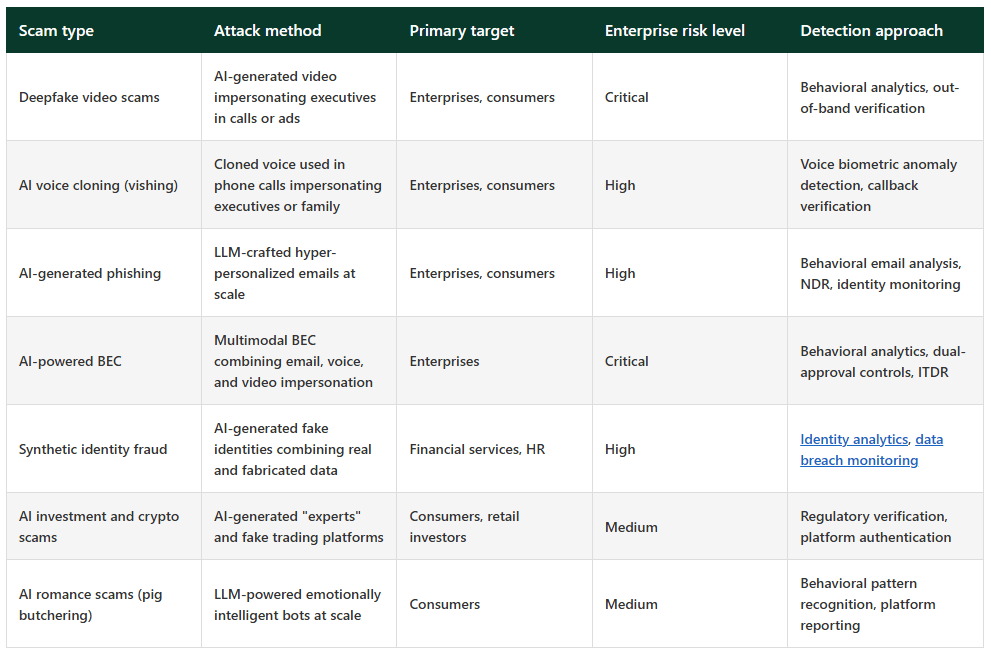
Types of AI scams. Source: Vectra

A Pattern Repeating Itself

This is not the first case of its kind, and it is not the last. Just last month, a 66-year-old retiree lost HK$6.6 million to a multi-stage scheme that played out over six months.

In that case, scammers first posed as investment advisors to win the victim’s trust, then came back later with a fake “recovery” offer — squeezing even more money out of someone who had already been burned.

Officials say the playbook is getting more sophisticated. Fraudsters are now borrowing the language of technology to add credibility to their pitches.

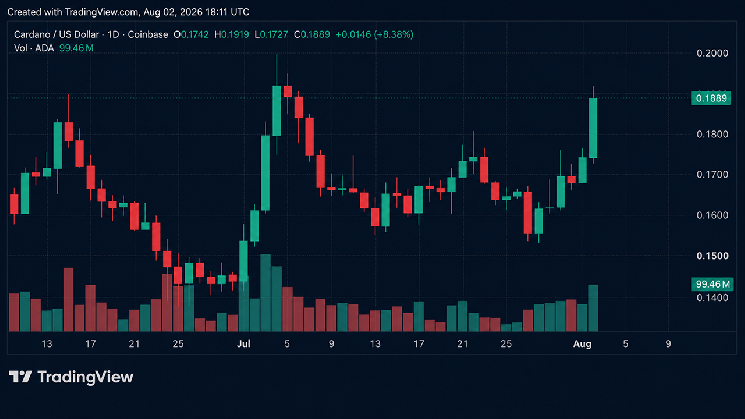
BTCUSD now trading at $76,179. Chart: TradingView

Terms like “AI trading” and “guaranteed profits” are being used to draw people in, according to the Hong Kong Police Force.

The artificial intelligence angle makes the pitch harder to dismiss, especially for victims who may not be familiar with how such systems actually work.

Authorities Push Public To Verify Before Transferring

Police are urging residents to be cautious with unsolicited investment advice, whether it arrives through social media, messaging apps, or anywhere else.

They are also encouraging people to use the official CyberDefender platform to check whether an investment site or service carries signs of fraud before sending any funds.

One warning is worth repeating: no legitimate investment guarantees returns. Reports indicate that every recent case in this wave involved that exact promise.

The woman who lost nearly $1 million, the retiree who lost HK$6.6 million — both were told their money was safe and the profits were certain. Neither turned out to be true.

Investigations into the cases are ongoing.

Featured image from The Verge, chart from TradingView

İlgili Sorular

QHow much money did the Hong Kong woman lose in the crypto scam?

AShe lost nearly HK$7.7 million, which is roughly $982,000.

QWhat was the initial point of contact where the victim was approached by the scammer?

AThe scammer first approached her on the messaging app Telegram, posing as an investment expert.

QAccording to Vectra, what are some of the biggest AI scam threats to enterprises?

AThe biggest threats include deepfake video, voice cloning, and AI-driven Business Email Compromise (BEC).

QWhat tool are Hong Kong authorities encouraging the public to use to verify investment sites?

AThey are encouraging people to use the official CyberDefender platform to check for signs of fraud.

QWhat common promise was made in every recent case of this fraud wave, according to reports?

AEvery recent case involved the promise of guaranteed returns, which is a sign of a scam as no legitimate investment can guarantee profits.

İlgili Okumalar

Splashing Out 27 Billion Yuan, OpenAI Establishes New Company to Accelerate AI Deployment

On May 11th, OpenAI announced the formation of a new company, "OpenAI Deployment Company," with an initial investment of over $4 billion (approximately 27.2 billion RMB). This venture aims to help businesses build and deploy AI solutions. OpenAI is also acquiring the AI consulting firm Toromo to rapidly scale the deployment company's capabilities. This new entity, majority-owned by OpenAI, brings together 19 investment, consulting, and system integration partners, led by TPG with co-lead founding partners including Advent International, Bain Capital, and Brookfield. OpenAI's Chief Revenue Officer, Denise Dresser, stated that while AI is becoming increasingly capable, the current challenge lies in integrating these systems into core business infrastructure and workflows. The deployment company is designed to bridge this gap and translate AI capabilities into operational impact. This move comes as OpenAI emphasizes the next competitive phase will depend on the efficiency of deploying AI in real business scenarios. The company reports over 1 million businesses already use its products and APIs. OpenAI is significantly increasing its investments in computing power, with co-founder Greg Brockman stating the company expects to spend $50 billion on compute this year, a dramatic increase from $3 million in 2017. The announcement follows OpenAI's recent completion of a record $122 billion funding round in late March, led by Amazon, Nvidia, and SoftBank, valuing the company at $852 billion post-money. Major strategic investors committed $110 billion as a base for this round. Concurrently, OpenAI is advancing its core model development. It has shifted focus from its Sora video generator to developing advanced robotics and AI models that interact with the physical world. It has also begun allowing select users access to a new model specialized in identifying software vulnerabilities and is reportedly preparing to launch an enhanced image generation model in the coming weeks. According to reports citing founder Sam Altman, OpenAI is considering an IPO as early as 2027, with a potential valuation around $1 trillion.

marsbit7 dk önce

Splashing Out 27 Billion Yuan, OpenAI Establishes New Company to Accelerate AI Deployment

marsbit7 dk önce

The Essence of AI Layoffs: Why More AI Adoption Leads to More Corporate Anxiety?

The author, awaiting potential inclusion on an 8000-person layoff list, analyzes the true nature of recent "AI-driven" layoffs. They argue that while AI use, particularly tools like Claude for code generation, has skyrocketed and boosted developer output (e.g., 2-5x more code commits), this has not translated into proportional business growth or revenue. The core issue is a misalignment between increased "Input" (code) and tangible "Outcomes" (user value, revenue). AI acts as a costly B2B SaaS, inflating operational expenses without guaranteed returns. Two key problems emerge: 1) The friction that once filtered out bad ideas is gone, as AI allows cheap pursuit of even weak concepts. 2) Organizational "alignment tax"—the difficulty of coordinating across teams—becomes crippling when development velocity outpaces consensus-building. Thus, layoffs serve two immediate purposes: 1) To offset ballooning AI costs (Token consumption) and maintain cash flow, as rising input costs without outcome growth destroys unit economics. 2) To reduce organizational bloat and alignment friction by simply removing teams, thereby speeding up execution in the short term. Therefore, these layoffs are fundamentally caused by AI, even if AI doesn't directly replace roles. They represent a painful correction until companies learn to convert AI-driven productivity into real business outcomes and streamline organizational coordination to match the new pace of work. The cycle will continue until this learning curve is mastered.

marsbit1 saat önce

The Essence of AI Layoffs: Why More AI Adoption Leads to More Corporate Anxiety?

marsbit1 saat önce

İşlemler

Spot
Futures
活动图片