Heat Rises for TermMax and Renaiss: How to Engage with These Two Projects Incubated by YZi Labs?

Odaily星球日报2026-05-28 tarihinde yayınlandı2026-05-28 tarihinde güncellendi

Özet

The article introduces TermMax and Renaiss, two projects recently gaining attention from the YZi Labs EASY Residency program incubator. It explains how users can potentially participate in them. TermMax is a DeFi protocol offering fixed-rate, fixed-term lending, functioning as a "lending AMM" to provide predictable interest rates. It has launched its V2 version, which improves capital efficiency and liquidity. Users can engage through its "Season 0" event on its V2 platform by connecting a wallet, daily check-ins, and completing tasks (deposit, trading, social) to earn points. Renaiss is a RWA infrastructure project focused on "collectible finance," specifically tokenizing real-world collectible trading cards (like Pokémon) onto the blockchain to enhance their liquidity and enable financial applications. Users can participate by visiting its official website, funding their account, and purchasing card packs (e.g., the OMEGA pack) with varying rarity tiers for a chance to obtain different card grades. Both projects represent specialized approaches within DeFi and RWA, aiming to offer users new avenues for fixed-income lending and investing in tokenized physical collectibles.

Original | Odaily Planet Daily (@OdailyChina)

Author | Asher (@Asher_ 0210)

Earlier this month, YZi Labs announced the 25 graduating projects from the third season of its flagship incubation program EASY Residency (For more details, read: EASY Residency Season 3 Graduation List Released, Which Sectors Has YZi Lab Focused On?). This round focused on directions such as restructuring on-chain financial markets, AI agents, tokenizing real-world assets, prediction markets, and privacy compliance.

Most projects are still in very early stages, with limited public information and relatively sparse community discussion. However, Odaily Planet Daily has observed that two projects in particular have seen a noticeable increase in heat recently: TermMax, which focuses on fixed-rate lending, and Renaiss, which revolves around the financialization of real-world collectible card assets.

Below, Odaily Planet Daily will examine TermMax and Renaiss from the perspectives of project positioning, product mechanisms, and potential engagement opportunities.

TermMax: A New DeFi Solution for Fixed-Rate Lending

Project Introduction
TermMax is a DeFi protocol focused on fixed-rate, fixed-term lending, which can be understood as a "Lending AMM." Compared to floating-rate lending protocols like Aave and Compound, TermMax emphasizes interest rate predictability—borrowers can lock in financing costs before opening a position, and lenders can also determine their yield at maturity in advance.

In terms of product mechanism, TermMax draws inspiration from the AMM concept of Uniswap V3 and tokenizes leverage and fixed-income exposure through Gearing Token and Fixed-rate Token. Users can complete fixed-rate lending, one-click Looping, Range Orders, and custom pricing curves within the platform. Operations such as lending, leveraging, and interest rate trading, which previously required repeated actions across multiple protocols, are now integrated into a single market.

Key Developments

Since its mainnet launch in April 2025, TermMax's TVL recently surpassed $71 million. The project currently supports multiple networks including Ethereum, Arbitrum, BNB Chain, and is expanding to ecosystems like X Layer and Base. Previously, on March 25, 2026, TermMax ranked second on Token Terminal's daily active address leaderboard for DeFi lending protocols, second only to Aave.
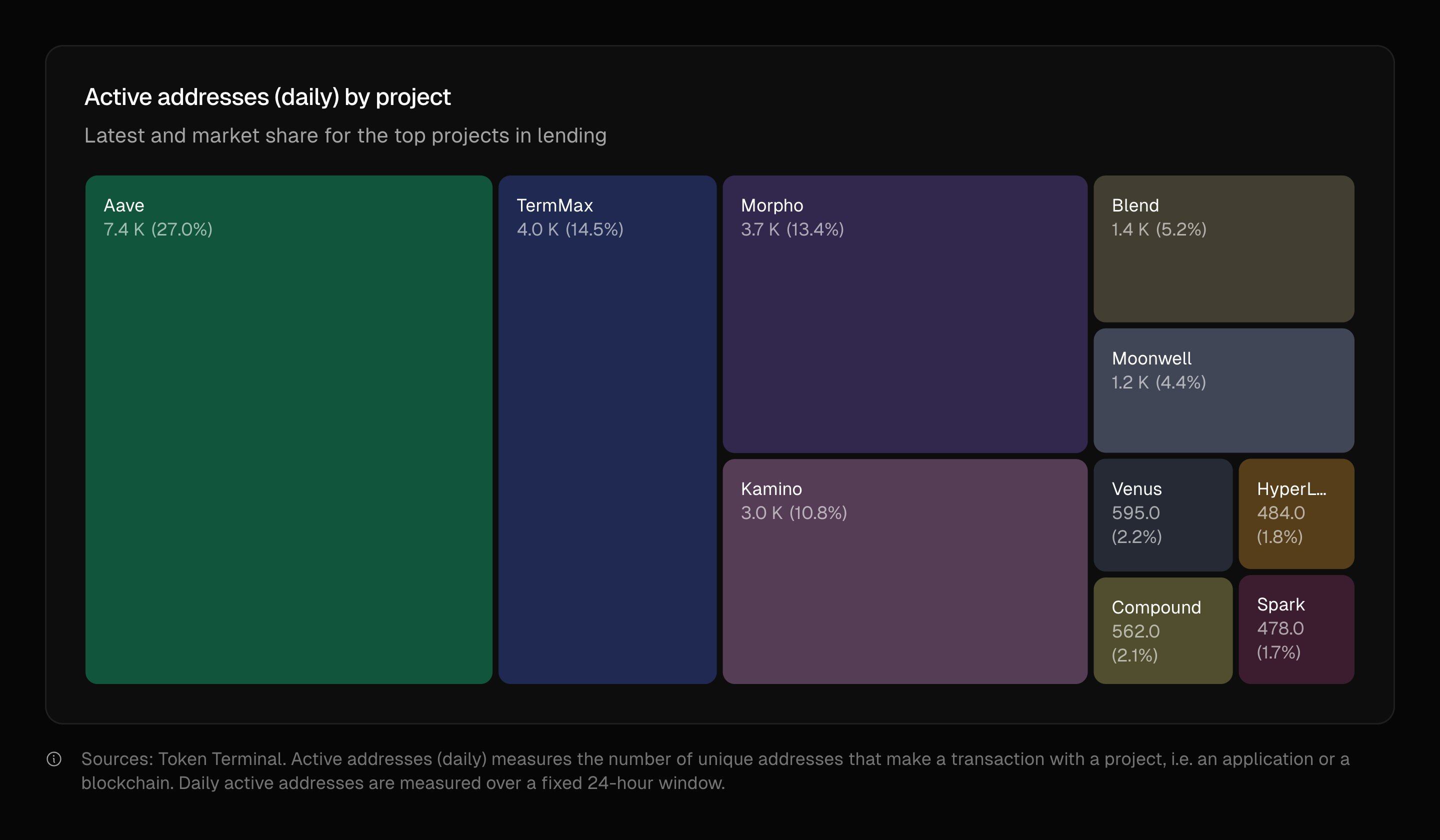
Daily Active Address Leaderboard for DeFi Lending Protocols (March 25, 2026)

Furthermore, TermMax is integrating fixed-rate lending with RWA scenarios. In January 2026, TermMax launched a fixed-rate market on BNB Chain supporting Ondo tokenized stocks as collateral, allowing users to access funds without selling their tokenized stock assets. Additionally, TermMax launched a single-asset USD₮0 lending product on X Layer with a fixed APY of up to about 5.07%, and collaborated with Morpho to introduce one-click Rollover, enhancing the flexibility of fixed-term debt.

Last night, TermMax announced on platform X the launch of its V2 version. Compared to V1, the V2 version primarily restructures to address issues like liquidity fragmentation, low idle fund utilization, and insufficient order matching efficiency.
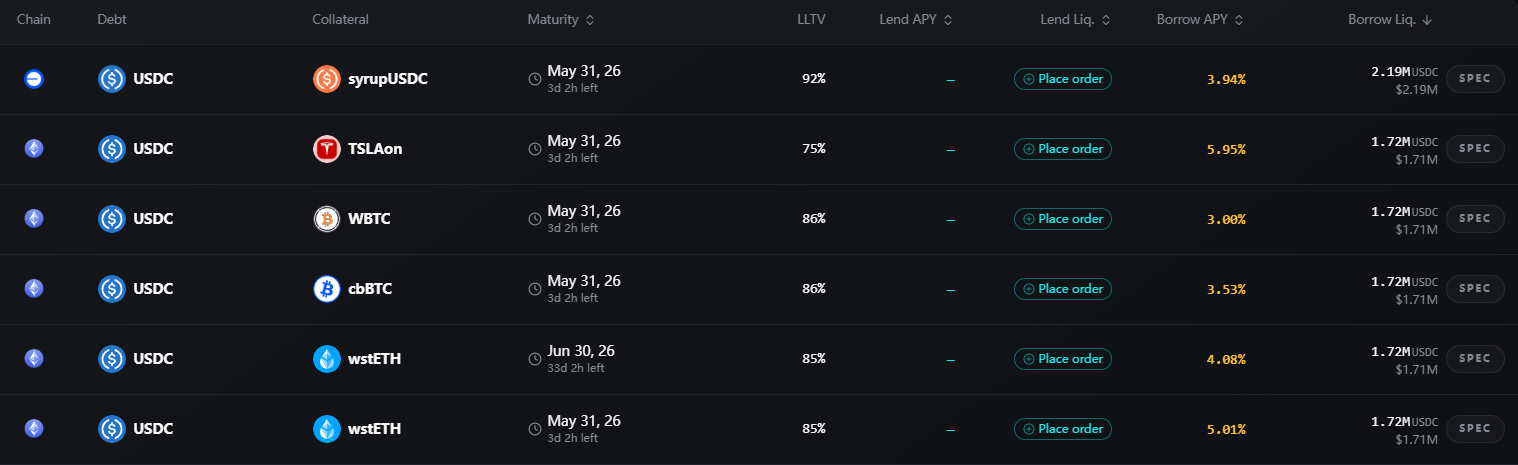
TermMax V2 Version Now Live

Specifically, V2 introduces Composable Base Yield, allowing Vaults to connect to ERC-4626 yield sources like Aave and Morpho, enabling idle funds that are not yet matched to generate base yield; Atomic Order allows the same liquidity to be listed in multiple markets simultaneously but can only be consumed once, thereby improving liquidity utilization; Order Aggregator automatically scans different order types to match users with better interest rate paths.

Additionally, V2 incorporates Smart Unwind and Alpha Zone. The former enhances the exit and fund recycling efficiency of debt positions, while the latter supports the more flexible creation of new markets. Overall, the focus of TermMax V2 is not on adding more complex features, but on making the fixed-rate lending market deeper in liquidity, more efficient in capital use, and simpler for users to operate.

Engagement Opportunities

STEP 1. After entering the V2 version, click "Leaderboard" at the top to jump to the TermMax Season 0 event interface.

STEP 2. Click "Sign In" and connect your Web3 wallet to complete personal account login.
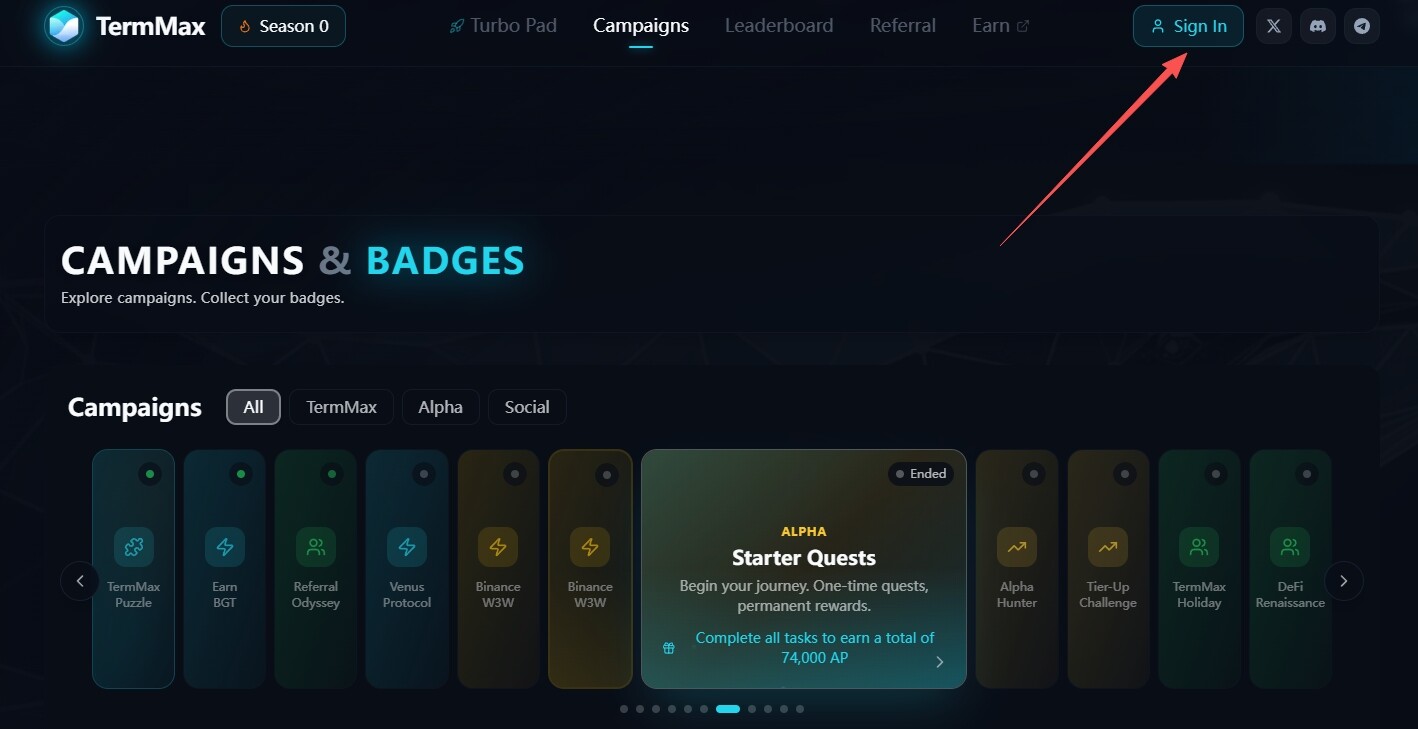
STEP 3. Complete daily check-ins (resets daily at 8 AM) to earn points.
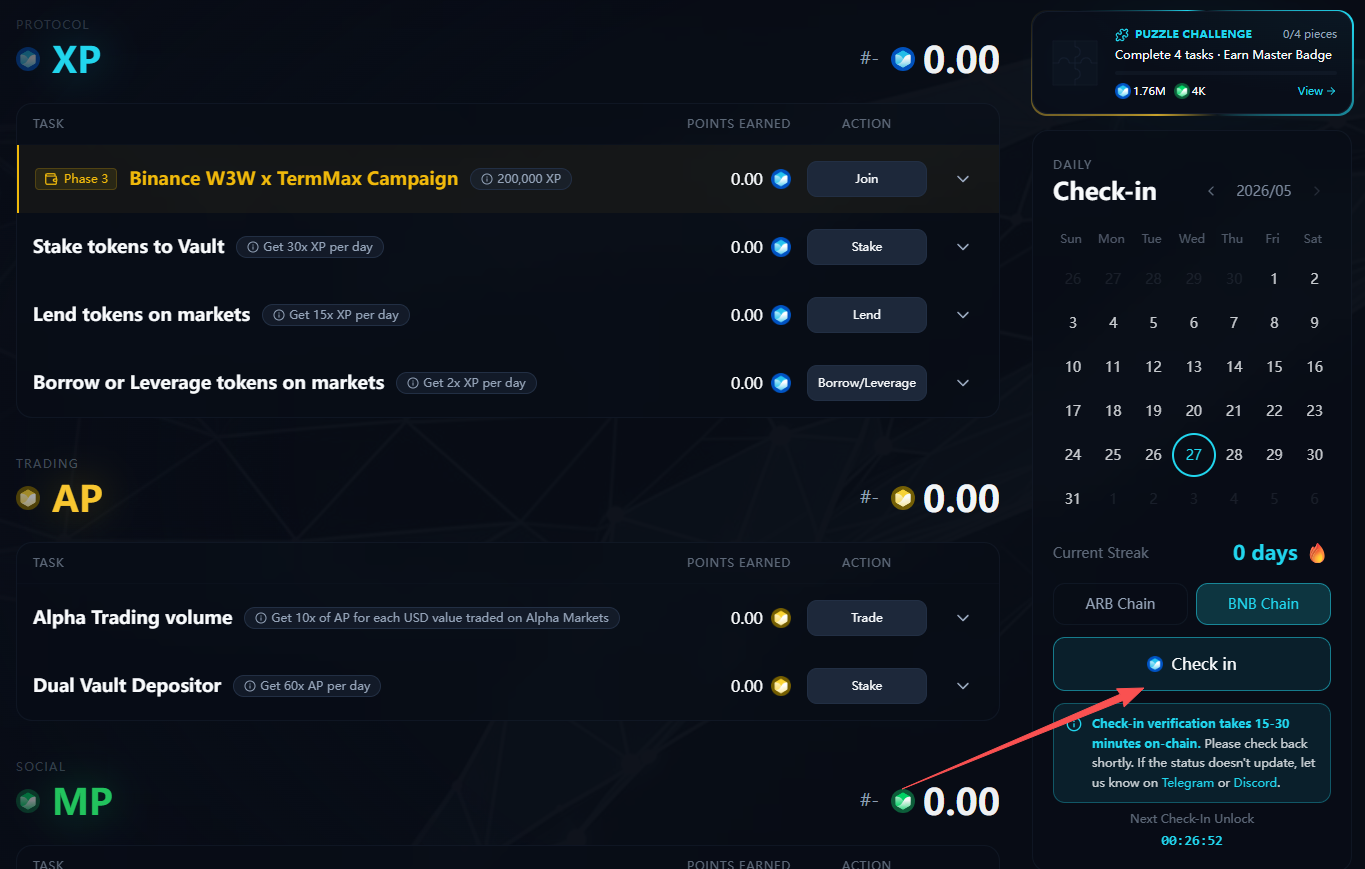
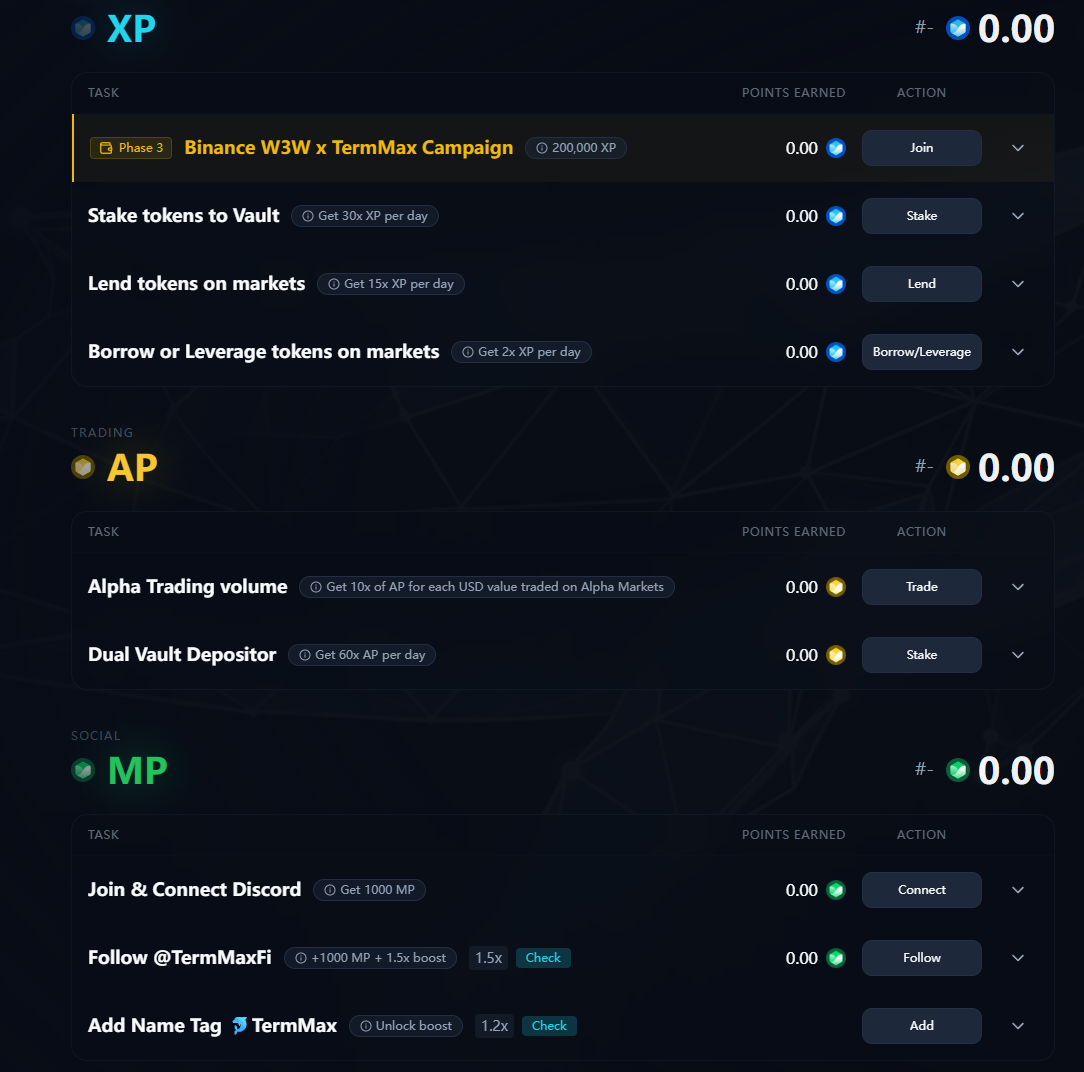
STEP 4. Points are divided into XP tasks (deposit-related), AP tasks (trade-related), and MP tasks (social-related). Complete the corresponding tasks according to the specified requirements to earn the respective point rewards.
Renaiss: Providing On-Chain Liquidity for Real-World Collectible Cards

Project Introduction
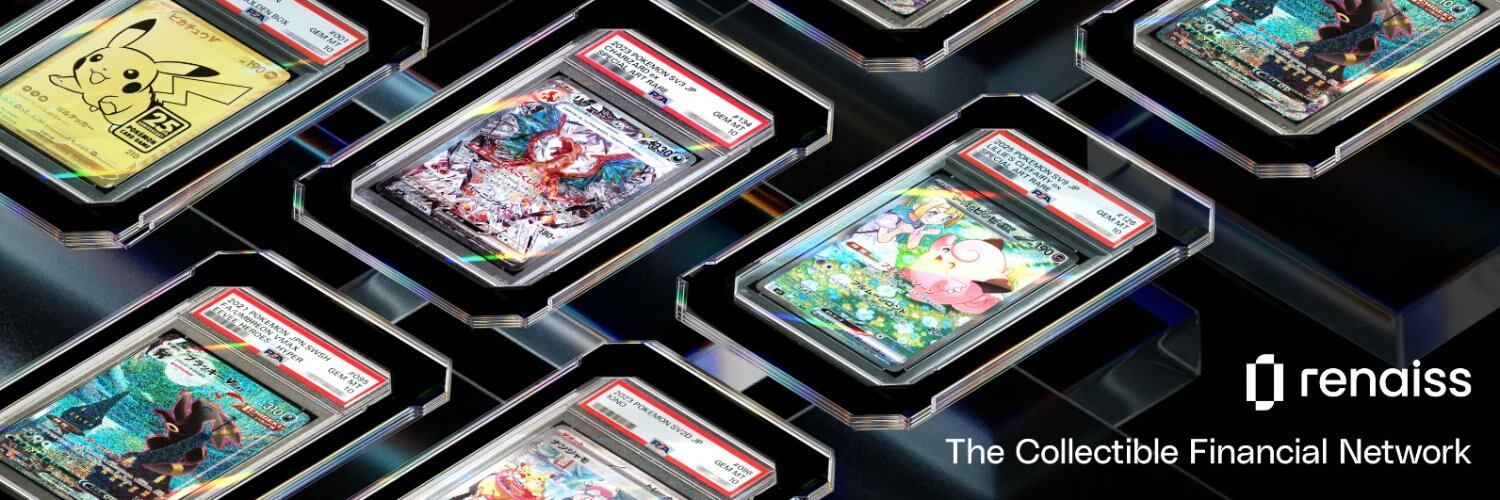
Renaiss is an RWA liquidity infrastructure project centered around real-world collectibles, focusing on collectible finance. Compared to common RWA categories like government bonds, stocks, and funds, Renaiss targets the more niche collectibles market, particularly real-world collectible assets such as trading cards and Pokémon cards. To date, Renaiss platform trading volume has exceeded $15 million.

Renaiss aims to address long-standing pain points in the real-world collectibles market, including high costs for physical custody and authenticity verification, opaque price data, fragmented trading liquidity, and difficulty in further financializing assets. The project uses on-chain ownership certificates, third-party custody, and data pricing systems to turn real-world cards and other collectibles into verifiable, tradable, and composable on-chain assets.

Renaiss enables more real-world collectibles to become verifiable, tradable, and usable in DeFi as on-chain assets. For example, once a high-value collectible card undergoes custody and on-chain mapping, it can not only be bought and sold but also has the potential to enter on-chain financial scenarios like staking and lending, ultimately becoming a protocol-layer project for real-world collectibles. This also distinguishes Renaiss from typical NFT projects. It does not reissue a batch of purely on-chain image assets but connects physically existing cards with established offline value and collector demand to the blockchain, allowing collectors to retain ownership of the physical asset while gaining higher liquidity on-chain.

Key Developments

On May 22, announced the launch of the Magma Pack series card packs, with a total of 1,000 packs. The top cards have a maximum value of up to $2,900, and they sold out on the same day.
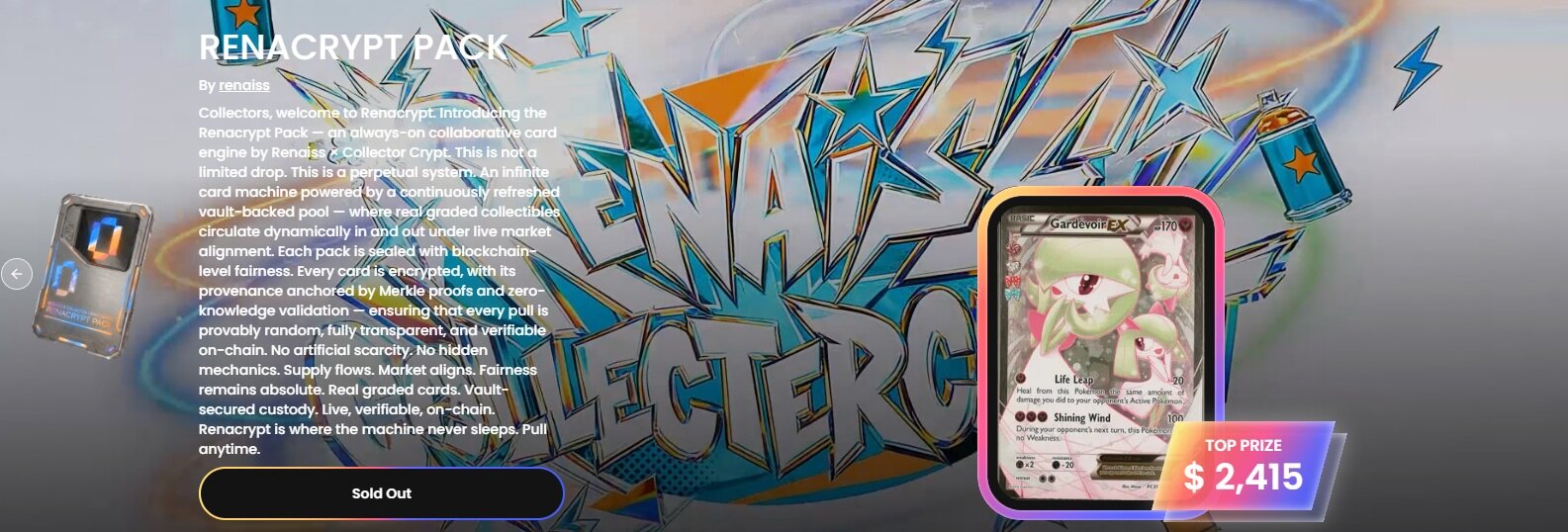
On May 26, announced the upcoming launch of the Eden Pack series card packs, themed around One Piece. The total number was not disclosed, but it includes over 100 top-grade cards.

Engagement Opportunities

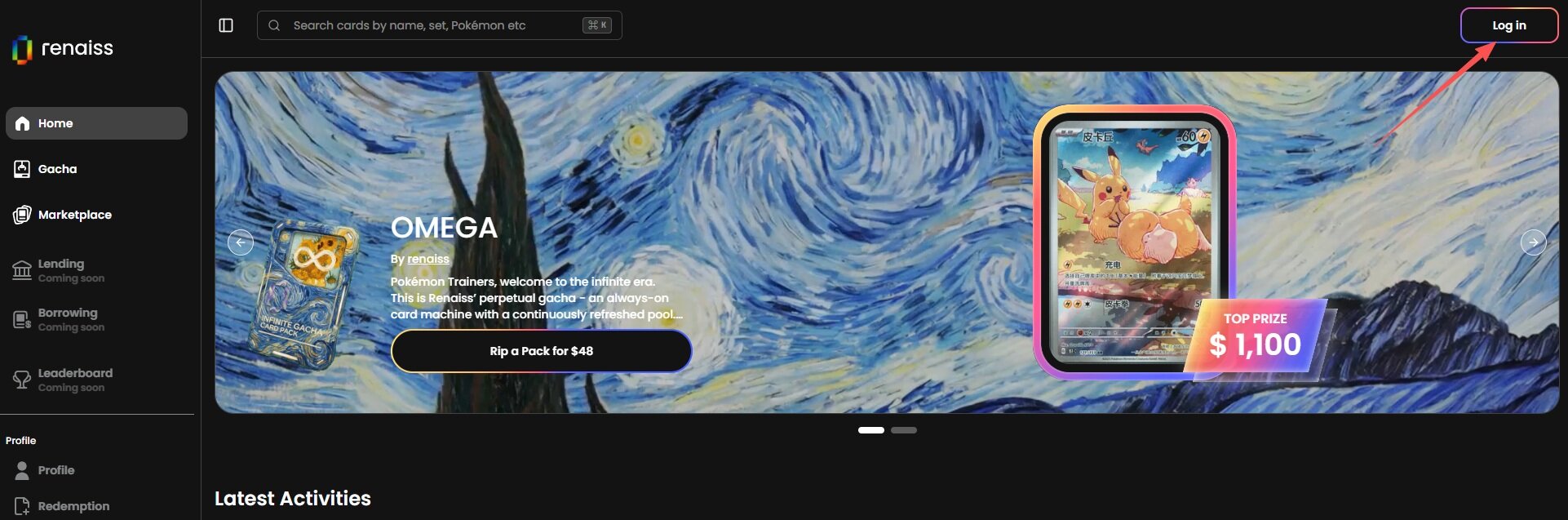
STEP 1. Go to the official website (link: https://www.renaiss.xyz/) and click "Log in" for personal account login.
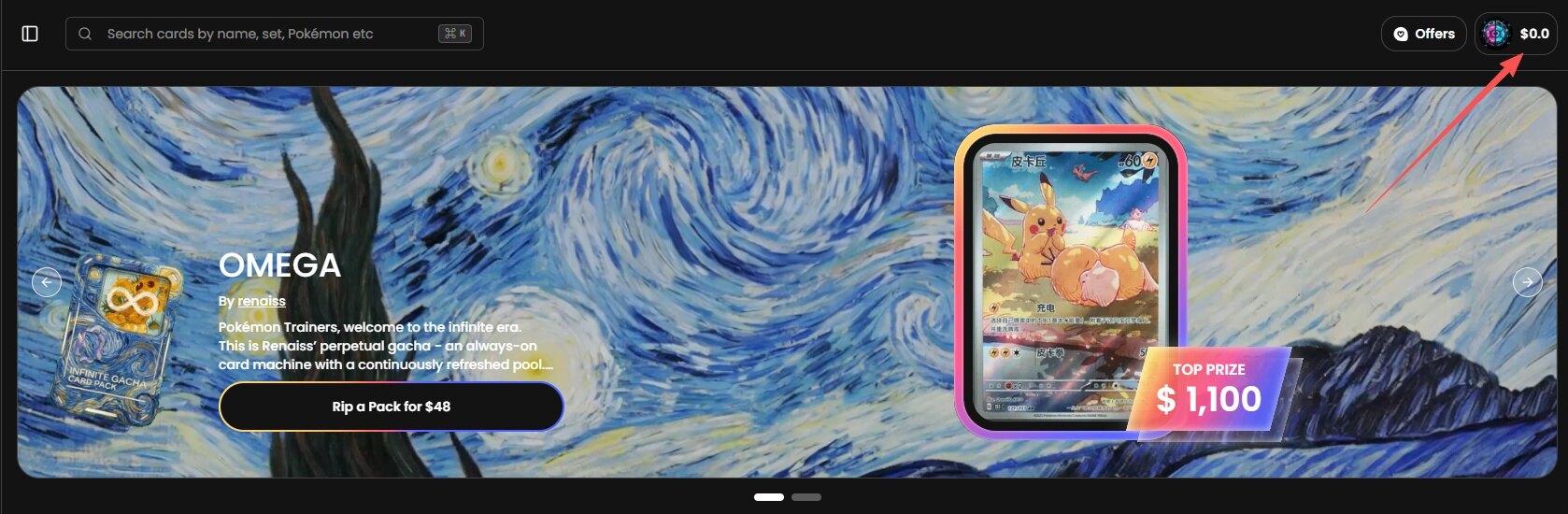
STEP 2. Click the avatar in the top right corner to deposit funds.
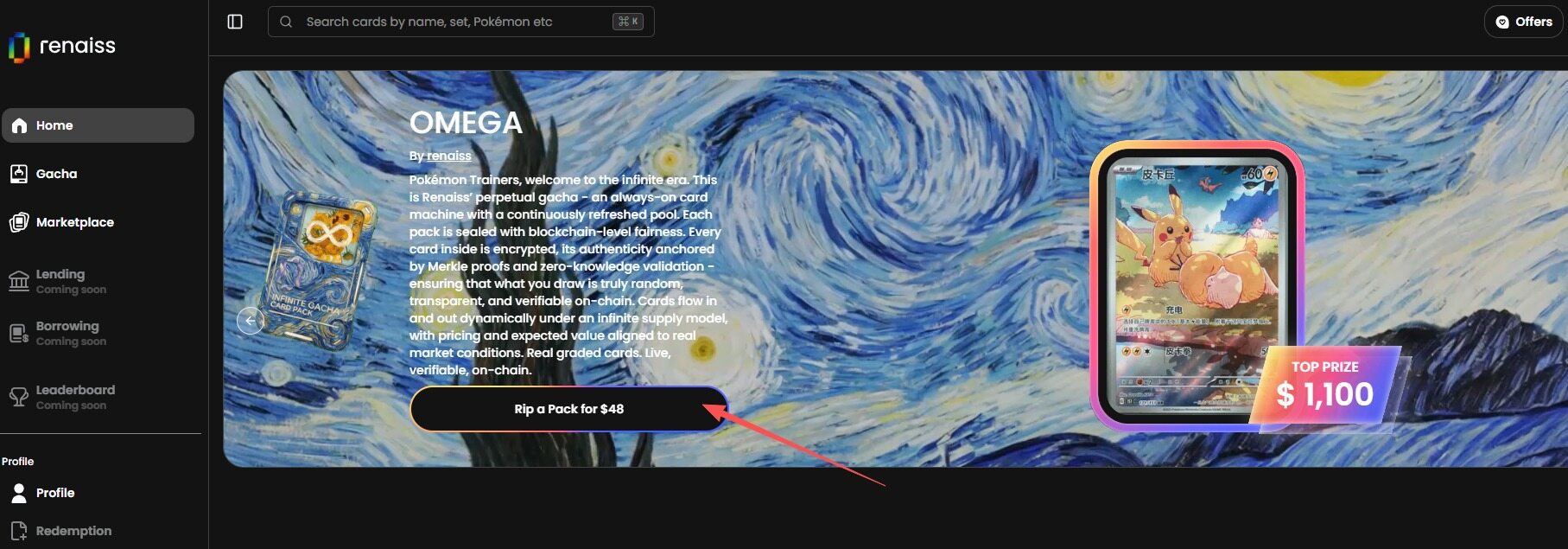
STEP 3. Click on the OMEGA card opening event on the homepage. Each card pack costs $48. There is a 90% chance of opening a C-grade card; a 7% chance for a B-grade card; a 2% chance for an A-grade card; and less than a 1% chance for an S-grade card.
İlgili Sorular

QAccording to the article, what are the two projects incubated by YZi Labs that have seen a significant rise in popularity recently?

AAccording to the article, the two projects are TermMax, a fixed-rate lending protocol, and Renaiss, a platform for the financialization of real-world collectible card assets.

QWhat is the core problem TermMax V2 aims to solve, and what are the key new features introduced?

ATermMax V2 aims to address issues like fragmented liquidity, low utilization of idle funds, and inefficient order matching. Key new features include Composable Base Yield (integrating ERC-4626 yield sources like Aave), Atomic Order (allowing single liquidity to be listed across multiple markets), Order Aggregator (for better rate matching), Smart Unwind (for efficient position exit), and Alpha Zone (for flexible market creation).

QHow does Renaiss differentiate itself from typical NFT projects?

ARenaiss differentiates itself by not minting purely digital art assets. Instead, it focuses on bringing real-world collectible assets (like trading cards) with existing offline value and demand onto the blockchain through custody, verification, and on-chain representation. This allows owners to retain physical ownership while gaining enhanced on-chain liquidity and enabling potential DeFi use cases like staking or lending.

QWhat are the three types of points (and their corresponding tasks) users can earn in TermMax's Season 0 activity?

AIn TermMax's Season 0 activity, users can earn three types of points: XP points from deposit-related tasks, AP points from trading-related tasks, and MP points from social-related tasks.

QWhat specific feature did TermMax launch on BNB Chain in January 2026 to connect fixed-rate lending with the RWA sector?

AIn January 2026, TermMax launched a fixed-rate lending market on BNB Chain that supports Ondo tokenized stock as collateral, allowing users to borrow funds without selling their tokenized stock assets.

İlgili Okumalar

As Consensus Accelerates, What Are Young Investors Betting On?

Title: As Consensus Forms Faster, What Are Young Investors Betting On? In the rapid evolution of tech investment, a new generation of young investors is navigating a landscape where AI, robotics, commercial aerospace, and quantum computing are advancing simultaneously. Traditional investment logic based on financial models is giving way to a need for deep technical understanding and the ability to act before industry consensus forms. An analysis of trends from the "WAIC FUTURE TECH" list of young investment leaders reveals key shifts in focus. The first major trend is the movement of AI from the digital screen into the physical world. Investment is shifting from large language models and chatbots towards embodied AI, robotics, AI hardware, and edge computing. While demonstrations generate excitement, the real challenge lies in achieving scalable, reliable, and cost-effective delivery in complex real-world environments like factories and logistics. Success depends not just on algorithms but on the integration of sensors, actuators, and control systems. Second, the competitive focus for large models is moving beyond raw capability toward building an "intelligence flywheel." The goal is to create self-reinforcing systems where user interaction generates data, improving the model, which in turn enhances the user experience and attracts more engagement. Companies that successfully embed AI into workflows to create these closed-loop systems can build lasting value that isn't easily erased by the next model upgrade. Third, facing a potential bottleneck in high-quality human-generated data, investors are looking at new underlying technologies. Reinforcement learning and self-play, as demonstrated by AlphaGo Zero, offer paths for AI to generate its own experience. Scientific foundation models, which aim to build general AI capabilities for fields like life sciences and materials discovery, represent a non-consensus direction that could unlock new frontiers of knowledge and data. Finally, in deep-tech areas like quantum computing, commercial aerospace, and space-based infrastructure, patient capital is essential. These fields have long, uncertain development and validation cycles involving complex engineering, supply chains, and regulations. Investment here requires a long-term view, focusing on foundational team capabilities and the eventual emergence of market demand, even if commercial returns are distant. Collectively, these trends illustrate how young investors are adapting to a new era. They are learning to make earlier, technically-informed judgments, balance hype with real-world viability, and provide the patient capital needed to build the deep-tech foundations of the future.

marsbit26 dk önce

As Consensus Accelerates, What Are Young Investors Betting On?

marsbit26 dk önce

Can Japan Buy Growth with AI? Will the Bond Market Believe It?

Japan's cabinet has introduced the 2026 Basic Policy on Economic and Fiscal Management and Reform, shifting its primary fiscal target. The new framework moves away from the traditional annual primary balance goal and instead prioritizes a stable reduction of the debt-to-GDP ratio. This change is tied to a strategy of increased "responsible proactive fiscal" spending, aiming to boost long-term growth through investments in strategic sectors like AI, semiconductors, energy, and robotics. The government estimates total public and private investment in 62 key technologies could exceed 370 trillion yen by 2040. The market reaction has been mixed and cautious. While equity markets may respond to policy signals, bond markets are focused on fiscal credibility. Concerns center on whether the weakening of the clear primary balance anchor could lead to looser fiscal discipline. If investors doubt that these strategic investments will generate sufficient productivity gains, tax revenue, and nominal growth to outpace rising interest costs, they may demand higher yields on Japanese Government Bonds (JGBs). Recent volatility in the yen and JGB yields, with the 10-year yield briefly reaching 2.9%, reflects this skepticism. The success of this new framework hinges on two factors: whether Japan can achieve a nominal growth rate consistently higher than its long-term interest rates, and whether future budgets demonstrate disciplined control over bond issuance. The government's narrative is that strategic investment is essential to break Japan's cycle of low growth, aging, and labor shortages. However, the bond market will continuously assess the credibility of this plan, pricing the risk that it may represent fiscal expansion rather than a viable growth strategy.

marsbit1 saat önce

Can Japan Buy Growth with AI? Will the Bond Market Believe It?

marsbit1 saat önce

Misjudged A-Shares: Resilience, Expectations, and Confidence

China's A-share market recently faced selling pressure, especially in tech sectors, initially triggered by a global tech sell-off that began in South Korea. However, the article argues this is a case of "mistaken injury" and highlights the market's underlying resilience. This resilience stems from three main pillars: **1) Tech Sector Fundamentals:** Unlike Korea's market dominated by a few memory chip stocks, China's tech sector is diversified across computing, communications, electronics, and semiconductors, supported by dual narratives of global AI supply chains and domestic substitution. Core areas like optical modules and fiber optics continue to show strong earnings growth. **2) "National Team" Support:** State-backed institutions and large corporations have made significant market purchases and announced buybacks, providing liquidity and signaling confidence. This is seen as a stabilizing policy signal, often associated with market bottoms. **3) Broader Market Pillars:** Other major sectors are showing endogenous recovery momentum. Consumer stocks benefit from stabilizing CPI and signs of sector recovery (e.g., liquor price hikes). Cyclical sectors like aluminum have high earnings, potential price increases due to tight supply, and low valuations. The financial sector offers stable dividends and low valuations. The conclusion is that the sell-off was driven by external contagion, not a collapse in fundamentals. With strong policy support and recovering momentum across key sectors, the A-share market possesses the toughness to regain stability.

marsbit1 saat önce

Misjudged A-Shares: Resilience, Expectations, and Confidence

marsbit1 saat önce

İşlemler

Spot
活动图片





