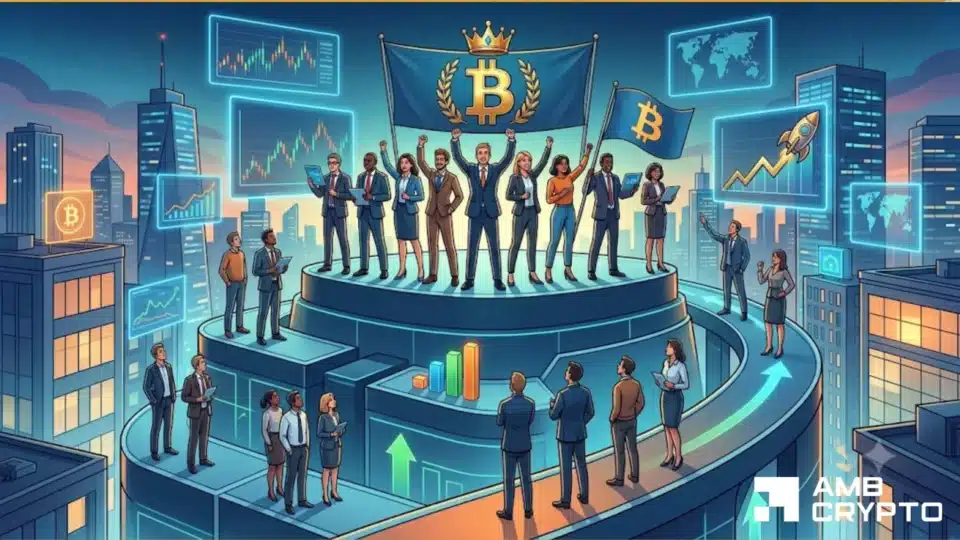
Having Heavily Invested in the First Wave of AI Agent Hype, How Do I View Today's Moltbook?

Odaily星球日报2026-02-04 tarihinde yayınlandı2026-02-04 tarihinde güncellendi

Özet

In "Heavily Invested in the First AI Agent Wave: My Take on Today’s Moltbook," the author reflects on the initial hype and subsequent decline of AI Agent projects in Web3, such as ai16z and swarms, which saw rapid token appreciation driven by FOMO rather than sustainable utility. After exiting the sector post-crash, the recent emergence of Moltbook—a social network where only AI Agents interact, and humans observe—reignited interest. Despite its lack of practical functionality, Moltbook’s novel premise of autonomous AI interactions sparked significant market excitement, with its meme token MOLT surging dramatically. The author argues that Moltbook shifts the focus from AI Agents as tools to their potential for persistent, collective behavior and narrative generation. This suggests a new pricing logic based on existence, interaction, and emergent culture rather than utility. While short-term crypto market conditions remain challenging for a full AI Agent revival, Moltbook highlights a evolving narrative that may open new Web3 opportunities, prompting the author to reconsider the sector’s potential.

Original | Odaily Planet Daily (@OdailyChina)

Author | Asher (@Asher_ 0210)

Moltbook Changed the Starting Point of the AI Agent Discussion

The concept of AI Agent is not unfamiliar in the Web3 world.

In early 2025, it was one of the hottest narratives, and it was almost quickly disproven by the market in a short time. During the first wave of AI Agent, many leading AI Agent projects, such as ai16z and swarms, were actually very active in code updates and product iterations, but the reality is that these efforts did not produce truly sustainable products or business models.

What the market was buying at that time was not so much the utility value as the collective FOMO towards the "AI Agent narrative." After the sentiment faded, token prices quickly fell, and the entire sector's market capitalization collapsed.

I was not a bystander in that wave.

I made money during the first wave of AI Agent (related content can be read: Confessions of an 88x Heavyweight Diamond Hand: Why I Chose ai16z). But after that round ended, as the overall sector market cap continued to plummet, I also gave back a lot of profits. It was precisely because of this firsthand experience that I almost stopped paying attention to this direction for a long time afterwards—in my view, AI Agent is a trend, but Web3 is not its most reasonable landing point.

Until recently, an experiment called Moltbook, which seems unrelated to encryption, brought the AI Agent track back into my view. What really made me stop and look was not its product form, but the way it was quickly captured and priced by market sentiment.

Moltbook is a social network where only AI Agents can speak. Humans cannot post, comment, or vote; they can only observe. From a product perspective, it can't be considered "useful"; but from a market perspective, it created a highly impactful scenario: a large number of AI Agents continuously interacting, arguing, collaborating, and even spontaneously forming cultures and narratives in a public space without human intervention (related content can be read: From Moltbook to MOLT: How Was the Imagination of AI Autonomy Embraced by the Crypto Market?).

More crucially, the setting of "humans muted, AI free" was quickly emotionally priced by the crypto market. Even against the backdrop of a sluggish on-chain market, the meme coin MOLT, derived from Moltbook, still achieved a surge of dozens of times in a single day, with its market cap once reaching $120 million.

This was not because Moltbook itself solved any Web3 problems, but because the market, for the first time in a long while, started paying for the "AI Agent itself."

The truly important aspect of Moltbook is not its product design, but that it did a very simple thing: it placed AI Agents into a long-term,无人干预的公共空间 (unmanned public space). The result was that these Agents no longer just appeared as tools to be called upon, but as a group that continuously interacts and self-evolves.

This also naturally changed the question. The focus of discussion is no longer whether AI Agents can help people get work done, but rather, when Agents exist in this way, whether Web3 can still participate, and whether this signals a new round of market activity brewing.

In my opinion, whether to fully复盘 (review) the success and failure of the first wave of AI Agent is not that important anymore. What is truly worth discussing is whether a phenomenon like Moltbook signifies that the way AI Agents exist is changing, and whether this might open a new window of participation for Web3.

After Moltbook, How Should the AI Agent Sector Be Repriced?

If the core pricing of the first wave of AI Agent was about "how big the narrative is," then after Moltbook, the market began to show a明显不同的倾向 (clearly different tendency).

In the Moltbook experiment, almost no one really cared about its product features. It doesn't improve efficiency, nor does it directly generate revenue, let alone have a clear business model. But even so, the market quickly衍生出 (spawned) a large number of related meme coins and gave extremely aggressive emotional pricing. This shows that the market's focus has shifted from "what AI Agents can do" to "in what way Agents exist."

This shift directly changes the pricing logic of AI Agents. In the first round, Agents were more like narrative carriers packaged as "advanced tools." Whether they were actually used or produced results did not have a sustained impact on their valuation. But in the context of Moltbook, Agents are placed in a long-term,无人干预的公共空间 (unmanned public space), and their value no longer comes from single demonstrations of capability, but from持续存在 (sustained existence), continuous interaction, and the group behavior itself.

This means the market is starting to reprice three types of features: the ability to persist, the possibility of forming group behaviors, and the potential to continuously generate new behaviors and narratives.

From this perspective, the surge of the meme coin MOLT is not paying for Moltbook's product capabilities, but betting on this form of existence. What the market is pricing is not how many tasks the Agent helped complete, but whether it is worth being watched long-term, compared repeatedly, and having emotions projected onto it continuously.

It is also in this sense that Moltbook did not answer "how AI Agents land," but forced the market to face a more fundamental question: If the Agent itself becomes the object of pricing, can Web3 still provide new forms of承载 (bearing/carrying) for this mode of existence?

There Might Not Be a Big Rally in the AI Agent Sector Short-Term, But It's Worth Paying Attention to Again

The Web3 application forms extended around Moltbook are still in a very early stage. Whether it's Agent social, Agent economy, or the more abstract "pricing of existence forms," there is still a significant distance from clear product paths and verifiable business models.

At the same time, the current crypto market is not friendly. Overall market sentiment is低迷 (sluggish), on-chain capital activity is limited, and most new concepts struggle to gain sustained attention and capital inflow. In such a market, any attempt to directly replicate the暴涨路径 (surging path) of the first AI Agent wave is unrealistic. But precisely because it's difficult to see a rally in the short term, this phase is反而更适合 (instead more suitable) for re-examining the direction itself.

Based on this judgment, my main focus this year remains on tracks that have already demonstrated real demand, such as prediction markets and Prep DEX. But beyond that, AI Agent has also started to re-enter my scope of thinking.

Moltbook did not provide a mature product answer, but the way of Agent existence it demonstrated确实为 (indeed opened) Web3打开了新的想象空间 (new imagination space). I am inclined to believe that this inspiration will推动 (promote) more new concepts and projects围绕 (revolving around) AI Agent to emerge in the Web3 context.

This article mainly documents my cognitive shift regarding the AI Agent track. In the next article, I will more specifically inventory the concept projects and tokens related to AI Agent in the current Web3 ecosystem for your reference. Stay tuned.

İlgili Sorular

QWhat is Moltbook and how did it impact the AI Agent narrative in Web3?

AMoltbook is a social network where only AI Agents can post, comment, and interact, while humans are limited to observing. It reignited interest in the AI Agent sector by shifting the focus from utility to the existence and behavior of AI Agents in a public, unsupervised environment. This led to rapid market speculation, including the meme coin MOLT surging dramatically, highlighting a new way of valuing AI Agents based on their autonomous interactions and narrative potential.

QHow did the market's perception of AI Agents change after Moltbook emerged?

AThe market shifted from valuing AI Agents primarily for their utility and narrative potential (e.g., efficiency tools) to pricing them based on their ability to exist persistently, form group behaviors, and generate new narratives autonomously. Moltbook's model emphasized continuous interaction and emotional engagement, leading to speculative investments like MOLT, which reflected a demand for AI Agents as observable, evolving entities rather than functional tools.

QWhat were the key reasons for the initial AI Agent hype in Web3 fading, and how does Moltbook differ?

AThe initial AI Agent hype faded because projects failed to deliver sustainable products or business models, relying heavily on FOMO (fear of missing out) rather than real utility. Token prices collapsed as情绪退去 (sentiment receded). Moltbook differs by not focusing on practical use cases but instead creating a scenario where AI Agents interact freely, sparking renewed interest through their autonomous behavior and the speculative market response, rather than promised functionality.

QWhat are the three key characteristics that the market began repricing AI Agents for after Moltbook?

AAfter Moltbook, the market repriced AI Agents based on three characteristics: 1) Their ability to persist and exist continuously in a public space, 2) The potential to form group behaviors and interactions, and 3) The capacity to generate new actions and narratives autonomously, making them valuable for emotional investment and long-term observation rather than just task completion.

QDoes the author believe a major bull run in AI Agents is imminent, and what is their current investment focus?

AThe author does not believe a major bull run in AI Agents is imminent due to the current bearish crypto market and lack of sustained capital inflow. However, they find Moltbook's concept compelling enough to重新关注 (re-focus) on the sector for long-term potential. Their primary investment focus remains on established areas like prediction markets and Prep DEX, which have proven demand, while keeping an eye on emerging AI Agent developments for future opportunities.

İlgili Okumalar

Breaking: OpenAI Undergoes Major Reorganization, President Brockman Assumes Command

OpenAI has announced a major internal reorganization just months before its anticipated IPO. The company is merging its three flagship product lines—ChatGPT, Codex, and the API platform—into a single, unified product organization. The most significant leadership change involves co-founder and President Greg Brockman moving from a background technical role to take full, permanent control over all product strategy. This follows the indefinite medical leave of AGI Deployment CEO Fidji Simo. Additionally, ChatGPT's longtime lead, Nick Turley, has been reassigned to enterprise products, with former Instagram executive Ashley Alexander taking over consumer offerings. The consolidation, internally framed as a strategic move towards an "Agentic Future," aims to break down internal silos and create a cohesive "Super App." This planned desktop application would integrate ChatGPT's conversational abilities, Codex's coding power, and a rumored internal web browser named "Atlas" to autonomously perform complex user tasks. The reorganization occurs amid significant internal and external pressures. OpenAI has recently seen a wave of high-profile departures, including Sora co-lead Bill Peebles and other senior technical leaders, leading to concerns about a thinning executive bench. Externally, rival Anthropic recently secured funding at a staggering $900 billion valuation, surpassing OpenAI's own. Google's upcoming I/O developer conference also poses a competitive threat. Analysts suggest the dramatic restructure is a pre-IPO move to present a clearer, more focused narrative to Wall Street—streamlining operations and demonstrating decisive leadership under Brockman to counter internal turbulence and intense market competition.

marsbit3 saat önce

Breaking: OpenAI Undergoes Major Reorganization, President Brockman Assumes Command

marsbit3 saat önce

Two Survival Structures of Market Makers and Arbitrageurs

Market makers and arbitrageurs represent two distinct survival structures in high-frequency trading. Market makers primarily use limit orders (makers) to profit from the bid-ask spread, enjoying high capital efficiency (nominally 100%) but bearing inventory risk. This "inventory risk" arises from passive, fragmented, and discontinuous order fills in the limit order book (LOB). This risk, while a potential cost, can also contribute to excess profit if managed within control boundaries, allowing for mean reversion. Market makers essentially sell "time" (uncertainty over execution timing) to the market for price control and low fees. In contrast, cross-exchange arbitrageurs typically use market orders (takers) to exploit price differences or funding rates, resulting in lower nominal capital efficiency (requiring capital on both exchanges) and higher transaction costs. Their risk exposure stems from asymmetries in exchange rules (e.g., minimum order sizes), execution latency, and infrastructure risks (e.g., ADL, oracle drift). These exposures are active, exogenous gaps that primarily erode profits rather than contribute to them. Arbitrageurs essentially sell "space" (capital sunk across venues) for localized, immediate certainty. Both strategies engage in a trade-off between execution friction and residual risk. Optimal systems allow for temporary, controlled risk exposure rather than enforcing zero exposure at all costs. Their evolution converges towards hybrid models: arbitrageurs may use maker orders to reduce costs, while market makers may use taker orders or hedges for risk management. Ultimately, both use different forms of risk exposure—market makers exposing inventory, arbitrageurs immobilizing capital—to extract marginal, hard-won certainty from the market.

链捕手3 saat önce

Two Survival Structures of Market Makers and Arbitrageurs

链捕手3 saat önce

Who Will Define the Rules of the AI Era? Anthropic Discusses the 2028 US-China AI Landscape

This article, based on Anthropic's analysis, outlines the intensifying systemic competition between the U.S./allies and China for AI leadership by 2028. It argues that access to advanced computing power ("compute") is the critical bottleneck, where the U.S. currently holds a significant advantage through chip export controls and allied innovation. However, China's AI labs remain competitive by exploiting policy loopholes—via chip smuggling, overseas data center access, and "model distillation" attacks to copy U.S. model capabilities—keeping them close to the frontier. The piece presents two contrasting scenarios for 2028. In the first, decisive U.S. action to tighten compute controls and curb distillation locks in a 12-24 month AI capability lead, cementing democratic influence over global AI norms, security, and economic infrastructure. In the second, policy inaction allows China to achieve near-parity through continued access to U.S. technology, enabling Beijing to promote its AI stack globally and integrate advanced AI into its military and governance systems, altering the strategic balance. Anthropic contends that maintaining a decisive U.S. lead is essential for shaping safe AI development and governance. The core recommendation is for U.S. policymakers to urgently close compute and model access loopholes while promoting global adoption of the U.S. AI technology stack to secure a lasting strategic advantage.

marsbit5 saat önce

Who Will Define the Rules of the AI Era? Anthropic Discusses the 2028 US-China AI Landscape

marsbit5 saat önce

İşlemler

Spot
Futures
活动图片