Has the Era of Global Central Banks 'Hoarding Gold' Come to an End?

marsbit2026-04-03 tarihinde yayınlandı2026-04-03 tarihinde güncellendi

Özet

The article questions whether the global central bank gold-buying spree, ongoing for 15 years, is ending. Citing a UBS report, it concludes that a structural shift to large-scale selling is highly unlikely. While the pace of purchases may slow to 800-850 tons in 2026 from 860 tons in 2025, central banks are expected to remain net buyers. The report challenges the narrative that recent sales, like Turkey's alleged sale of 50 tons, signal a trend. It argues Turkey's data is distorted by commercial bank positions and swaps, and its central bank uses gold for domestic liquidity management, not necessarily market speculation. Short-term price volatility is attributed to dollar strength and real interest rates, not central bank selling. The underlying logic for holding gold remains strong: over 60% of central banks follow a buy-and-hold strategy, with diversification being the primary motive. While short-term noise and price consolidation are expected, the medium-term outlook is bullish, with UBS forecasting an average 2026 price of $5000/oz and a year-end target of $5600/oz.

Original Author: Zhao Ying

Original Source: Wall Street News

The hottest question in the market recently is: Are global central banks selling gold? Has this 15-year-long official "gold hoarding wave" come to an end?

According to Wind Trading Desk, UBS strategist Joni Teves gave a clear judgment in the latest precious metals research report released on April 2: The possibility of a structural shift and large-scale selling by central banks is extremely low. Official institutions will maintain a net buying stance, but the pace of purchases will slow moderately—it is estimated that gold purchases in 2026 will be about 800 to 850 tons, slightly lower than the approximately 860 tons in 2025.

The report targeted the most glaring recent example—the news that Turkey "sold about 50 tons of gold in a few weeks." Teves believes: Turkey's official gold data includes commercial bank positions, swaps, and other operations. Relying solely on headlines to infer that "central banks are starting to sell" is highly risky, and it is better to wait for more detailed breakdown data before making a judgment.

In terms of price, UBS defines the short term as "full of noise": news cycles about geopolitical situations will keep gold prices fluctuating and consolidating; but the medium-term logic still points to new highs. The bank lowered its 2026 average gold price forecast to $5,000 (previously $5,200, mainly an adjustment for the first quarter) and maintained its year-end target price of $5,600 (set at the end of January).

Evidence That "Central Bank Gold Selling" Is the Main Cause of This Pullback Is Not Solid; 800-850 Tons Is More Like "Slowing Down"

The market's concern is specific: If the Middle East conflict prolongs, oil prices push up inflation, growth weakens, and local currencies depreciate, some central banks may be forced to sell gold to cope with the pressure. The report does not deny that "individual central banks may sell," but it emphasizes that this does not equate to a trend reversal in the official sector.

A key reminder from the report is: During the past 15 years of continuous gold accumulation by the official sector, "selling" in a single month is not uncommon. The reasons can be practical—central banks that bought cheaply earlier may take some profit tactically outside their core positions; sharp gold price increases trigger rebalancing; "natural inflows" from gold-producing countries turn into external shipments at certain points. In other words, selling can be an action, not necessarily a stance.

The baseline judgment is that net buying continues, but at a slower pace. The detail here lies in the trading habits of the official sector: They are more like "physical buyers," often providing support during pullbacks, helping the market stabilize more quickly at higher levels; conversely, the official sector typically does not chase rallies, preferring to intervene when prices are more suitable and volatility is lower.

This also explains why, when volatility increases, the market suddenly feels that "central banks have disappeared." The observation mentioned in the research is: Recently, the official sector and other long-term holders have tended to wait and see rather than immediately replenish positions in every decline.

The Narrative of Turkey Selling "50 Tons" Is Overstated; Short-Term Gold Prices Are More Influenced by the Dollar and Real Interest Rates

The case of Turkey is sensitive because it seems to fit the narrative of "central banks starting to sell gold." But Turkey has certain particularities: Some changes may be due to swaps rather than direct selling; more importantly, the Turkish Central Bank has long used gold as a policy tool to support liquidity management in the domestic banking system.

Part of the total gold disclosed by the Turkish Central Bank corresponds to commercial bank positions. Combined with policies since 2017 that allow banks and other entities to use gold within the financial system, "changes in total data" do not equal "central bank selling in the market." The report's advice is clear: Wait for more detailed data that can break down the口径 before discussing trends.

The trading environment in March had "dual uncertainty": On one hand, gold prices were seeking a new stable range after sharp rises and falls in January-February when Iran-related news fermented; on the other hand, the impact of the Middle East conflict on macro and asset pricing is nonlinear, and long-term funds are reluctant to bet easily.

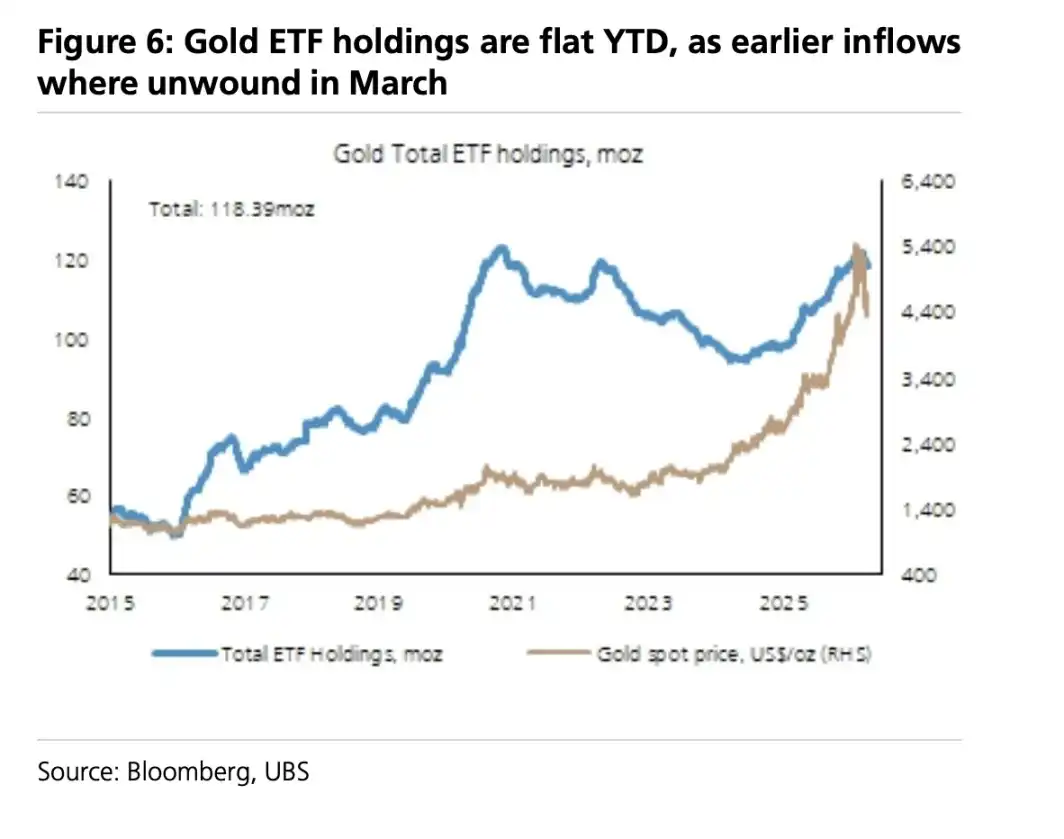
When strategic funds that "buy on dips" are absent, gold prices in the short term are more likely to return to the traditional framework: A stronger U.S. dollar and rising U.S. real interest rates suppress gold prices; long positions are further squeezed out, and even some short-selling forces emerge. In addition, Chinese demand supported the decline during this phase, with gold prices stabilizing near $4,500 before fluctuating around the $4,700 level.
The Underlying Logic of Central Bank Gold Holdings: Buy and Hold

The World Bank's "Fifth Biennial Reserve Management Survey Report (2025)" explains a more fundamental question: How do central banks really think about gold? The survey covers holdings as of December 2024, with 136 institutions participating—the highest ever—and for the first time includes a separate chapter on gold.

Several numbers can clarify the behavioral boundaries of central banks: About 47% of central banks determine gold holdings based on "historical legacy," about 26% based on qualitative judgment; only about a quarter incorporate gold into a formal strategic asset allocation framework.

More critically, only about 4.5% make short-term tactical adjustments to gold reserves, while the investment style for gold is mainly buy-and-hold (about 62%). This profile means: Even if the buying pace slows, the official sector is not like a group of traders driven by news to frequently trade positions.

In terms of reasons for increasing holdings, more than half cited "diversification" as the primary reason; local gold purchase plans accounted for about 35%, geopolitical risks about 32%; only about 6% cited "liquidity needs" as a reason. The official sector's rationale for gold has not been invalidated by recent volatility.

Short-Term Volatility Is Inevitable, but "New Highs Not Finished" Remains the Main Theme

Returning to the trading level, gold's rise is not a straight line: It may continue to consolidate and experience bumpy movements in the coming weeks as the market repeatedly reassesses geopolitical risks. But it believes that the two long-term drivers pushing funds to allocate to gold—the combination of growth and inflation risks, and the persistence of geopolitical tensions—are making "diversification into gold" a more common portfolio action.

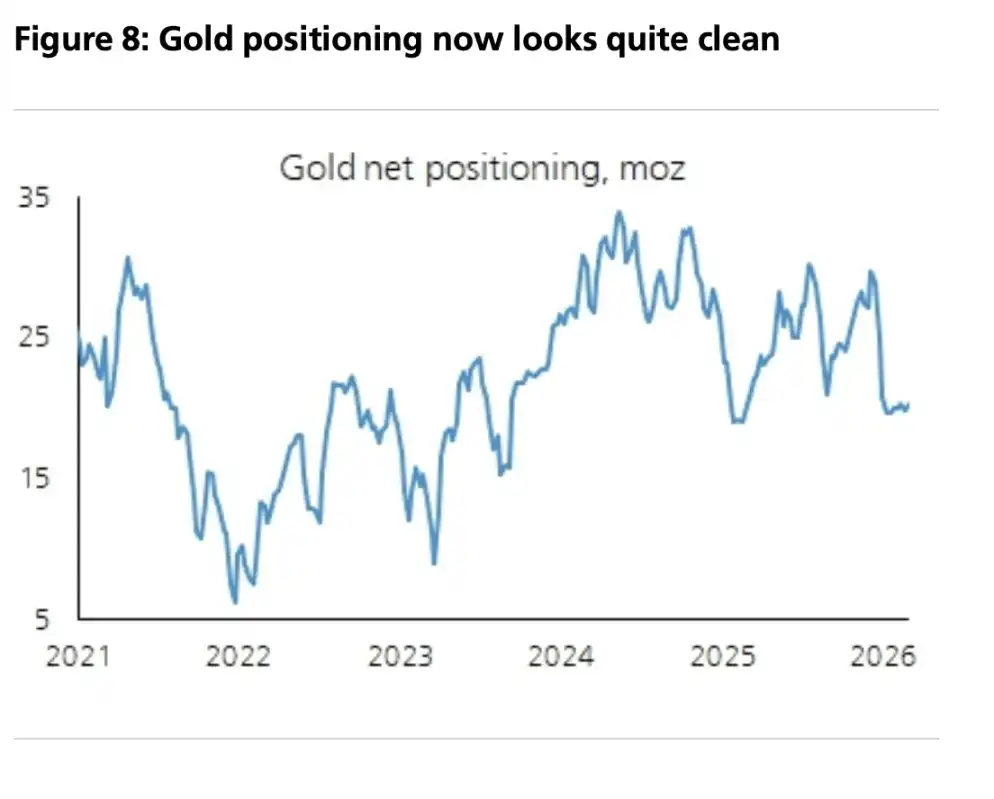
Under this framework, the report's pricing anchor is: An average gold price of $5,000 in 2026, with a year-end target of $5,600. It also mentions that speculative positions are already "cleaner," and long-term participants are still underweight; if another pullback occurs, it is closer to a "strategic window for building positions" rather than a signal of the end of the trend.
İlgili Sorular

QIs the UBS report suggesting that global central banks are structurally shifting away from gold and starting large-scale selling?

ANo, the UBS report states that the possibility of a structural shift and large-scale selling by central banks is extremely low. They are expected to maintain a net buying stance, albeit at a slightly slower pace.

QWhat is the specific reason cited in the report for the recent news about Turkey selling gold, and why should it be interpreted cautiously?

AThe report cautions that Turkey's official gold data includes commercial bank positions and swap operations. It suggests waiting for more detailed, disaggregated data before concluding that the central bank is selling, as the headline figure does not equate to direct central bank market selling.

QAccording to the World Bank's survey, what is the primary investment style and main reason central banks hold gold?

AThe primary investment style for central banks is 'buy and hold' (approximately 62%). The main reason for increasing gold holdings is 'diversification', cited by over half of the central banks surveyed.

QWhat is UBS's medium-term price target for gold by the end of 2026, and what is their revised average price forecast for the year?

AUBS maintains a year-end 2026 price target of $5600 per ounce. They have revised their average annual price forecast for 2026 down to $5000 from a previous $5200, mainly as an adjustment for Q1 performance.

QWhat two long-term factors does the report identify as driving continued gold allocation, despite short-term noise and volatility?

AThe two long-term factors driving gold allocation are the combination of growth and inflation risks, and the persistence of geopolitical tensions, which are making diversification into gold a more common portfolio action.

İlgili Okumalar

Gensyn AI: Don't Let AI Repeat the Mistakes of the Internet

In recent months, the rapid growth of the AI industry has attracted significant talent from the crypto sector. A persistent question among researchers intersecting both fields is whether blockchain can become a foundational part of AI infrastructure. While many previous AI and Crypto projects focused on application layers (like AI Agents, on-chain reasoning, data markets, and compute rentals), few achieved viable commercial models. Gensyn differentiates itself by targeting the most critical and expensive layer of AI: model training. Gensyn aims to organize globally distributed GPU resources into an open AI training network. Developers can submit training tasks, nodes provide computational power, and the network verifies results while distributing incentives. The core issue addressed is not decentralization for its own sake, but the increasing centralization of compute power among tech giants. In the era of large models, access to GPUs (like the H100) has become a decisive bottleneck, dictating the pace of AI development. Major AI companies are heavily dependent on large cloud providers for compute resources. Gensyn's approach is significant for several reasons: 1) It operates at the core infrastructure layer (model training), the most resource-intensive and technically demanding part of the AI value chain. 2) It proposes a more open, collaborative model for compute, potentially increasing resource utilization by dynamically pooling idle GPUs, similar to early cloud computing logic. 3) Its technical moat lies in solving complex challenges like verifying training results, ensuring node honesty, and maintaining reliability in a distributed environment—making it more of a deep-tech infrastructure company. 4) It targets a validated, high-growth market with genuine demand, rather than pursuing blockchain integration without purpose. Ultimately, the boundaries between Crypto and AI are blurring. AI requires global resource coordination, incentive mechanisms, and collaborative systems—areas where crypto-native solutions excel. Gensyn represents a step toward making advanced training capabilities more accessible and collaborative, moving beyond a niche controlled by a few giants. If successful, it could evolve into a fundamental piece of AI infrastructure, where the most enduring value in the AI era is often created.

marsbit10 saat önce

Gensyn AI: Don't Let AI Repeat the Mistakes of the Internet

marsbit10 saat önce

Why is China's AI Developing So Fast? The Answer Lies Inside the Labs

A US researcher's visit to China's top AI labs reveals distinct cultural and organizational factors driving China's rapid AI development. While talent, data, and compute are similar to the West, Chinese labs excel through a pragmatic, execution-focused culture: less emphasis on individual stardom and conceptual debate, and more on teamwork, engineering optimization, and mastering the full tech stack. A key advantage is the integration of young students and researchers who approach model-building with fresh perspectives and low ego, prioritizing collective progress over personal credit. This contrasts with the US culture of self-promotion and "star scientist" narratives. Chinese labs also exhibit a strong "build, don't buy" mentality, preferring to develop core capabilities—like data pipelines and environments—in-house rather than relying on external services. The ecosystem feels more collaborative than tribal, with mutual respect among labs. While government support exists, its scale is unclear, and technical decisions appear driven by labs, not state mandates. Chinese companies across sectors, from platforms to consumer tech, are building their own foundational models to control their tech destiny, reflecting a broader cultural drive for technological sovereignty. Demand for AI is emerging, with spending patterns potentially mirroring cloud infrastructure more than traditional SaaS. Despite challenges like a less mature data industry and GPU shortages, Chinese labs are propelled by vast talent, rapid iteration, and deep integration with the open-source community. The competition is evolving beyond a pure model race into a contest of organizational execution, developer ecosystems, and industrial pragmatism.

marsbit11 saat önce

Why is China's AI Developing So Fast? The Answer Lies Inside the Labs

marsbit11 saat önce

3 Years, 5 Times: The Rebirth of a Century-Old Glass Factory

Corning, a 175-year-old glass company, is experiencing a dramatic revival as a key player in AI infrastructure, driven by surging demand for high-performance optical fiber in data centers. AI data centers require vastly more fiber than traditional ones—5 to 10 times as much per rack—to handle high-speed data transmission between GPUs. This structural demand shift, coupled with supply constraints from the lengthy expansion cycle for fiber preforms, has created a significant supply-demand gap. Nvidia has invested in Corning, along with Lumentum and Coherent, in a $4.5 billion total commitment to secure the optical supply chain for AI. Corning's competitive edge lies in its expertise in producing ultra-low-loss, high-density, and bend-resistant specialty fiber, which is critical for 800G+ and future 1.6T data rates. Its deep involvement in co-packaged optics (CPO) with partners like Nvidia further solidifies its position. While not the largest fiber manufacturer globally, Corning's revenue from enterprise/data center clients now exceeds 40% of its optical communications sales, and it has secured multi-year supply agreements with major hyperscalers including Meta and Nvidia. Financially, Corning's optical communications revenue has surged, doubling from $1.3 billion in 2023 to over $3 billion in 2025. Its stock price has risen nearly 6-fold since late 2023. Key future catalysts include the rollout of Nvidia's CPO products and the scale of undisclosed customer agreements. However, risks include high current valuations and potential disruption from next-generation technologies like hollow-core fiber. The company's long-term bet on light over electricity, maintained even through the telecom bubble crash, is now being validated by the AI boom.

marsbit12 saat önce

3 Years, 5 Times: The Rebirth of a Century-Old Glass Factory

marsbit12 saat önce

İşlemler

Spot
Futures

Popüler Makaleler

ERA Nasıl Satın Alınır

HTX.com’a hoş geldiniz! Caldera (ERA) satın alma işlemlerini basit ve kullanışlı bir hâle getirdik. Adım adım açıkladığımız rehberimizi takip ederek kripto yolculuğunuza başlayın. 1. Adım: HTX Hesabınızı OluşturunHTX'te ücretsiz bir hesap açmak için e-posta adresinizi veya telefon numaranızı kullanın. Sorunsuzca kaydolun ve tüm özelliklerin kilidini açın. Hesabımı Aç2. Adım: Kripto Satın Al Bölümüne Gidin ve Ödeme Yönteminizi SeçinKredi/Banka Kartı: Visa veya Mastercard'ınızı kullanarak anında Caldera (ERA) satın alın.Bakiye: Sorunsuz bir şekilde işlem yapmak için HTX hesap bakiyenizdeki fonları kullanın.Üçüncü Taraflar: Kullanımı kolaylaştırmak için Google Pay ve Apple Pay gibi popüler ödeme yöntemlerini ekledik.P2P: HTX'teki diğer kullanıcılarla doğrudan işlem yapın.Borsa Dışı (OTC): Yatırımcılar için kişiye özel hizmetler ve rekabetçi döviz kurları sunuyoruz.3. Adım: Caldera (ERA) Varlıklarınızı SaklayınCaldera (ERA) satın aldıktan sonra HTX hesabınızda saklayın. Alternatif olarak, blok zinciri transferi yoluyla başka bir yere gönderebilir veya diğer kripto para birimlerini takas etmek için kullanabilirsiniz.4. Adım: Caldera (ERA) Varlıklarınızla İşlem YapınHTX'in spot piyasasında Caldera (ERA) ile kolayca işlemler yapın.Hesabınıza erişin, işlem çiftinizi seçin, işlemlerinizi gerçekleştirin ve gerçek zamanlı olarak izleyin. Hem yeni başlayanlar hem de deneyimli yatırımcılar için kullanıcı dostu bir deneyim sunuyoruz.

411 Toplam GörüntülenmeYayınlanma 2025.07.17Güncellenme 2025.07.17

ERA Nasıl Satın Alınır

Tartışmalar

HTX Topluluğuna hoş geldiniz. Burada, en son platform gelişmeleri hakkında bilgi sahibi olabilir ve profesyonel piyasa görüşlerine erişebilirsiniz. Kullanıcıların ERA (ERA) fiyatı hakkındaki görüşleri aşağıda sunulmaktadır.

活动图片













