Has Hook Summer Truly Arrived? sato, Lo0p, FLOOD Ignite the New Uniswap v4 Narrative

Odaily星球日报2026-05-11 tarihinde yayınlandı2026-05-11 tarihinde güncellendi

Özet

With the broader market showing signs of recovery, a new wave of interest has emerged around Ethereum-based meme coins. Following ASTEROID, tokens like sato, sat1, Lo0p, and FLOOD, built upon the Uniswap v4 Hook protocol, are capturing market attention. Their market capitalizations range from millions to tens of millions of dollars, injecting much-needed focused liquidity into a market lacking narratives. This article explores whether this trend signifies an incoming "Hook Summer" and its potential impact on UNI's price. Hooks are essentially plug-in smart contracts for Uniswap v4 liquidity pools, allowing developers to inject custom logic at key points in a pool's lifecycle (like initialization, adding/removing liquidity, swaps). This transforms the AMM into programmable building blocks. Key highlighted projects include: * **sato**: Peaked over $38M market cap. It utilizes a v4 curve for minting/burning; buying locks ETH as reserve to mint new tokens, while selling redeems ETH from the reserve and burns tokens. * **sat1**: Market cap briefly exceeded $10M, promoted as an "optimized sato," but later declined significantly. * **Lo0p**: Reached nearly $6.6M. It's a lending AMM protocol where buying LO0P tokens locks them as collateral, allowing users to borrow ETH from the pool reserve at 40% LTV, aiming to improve capital efficiency for idle ETH in LPs. * **FLOOD**: Peaked near $6M. Its mechanism directs asset reserves from buys into Aave v3 to generate yield, with f...

Original | Odaily Planet Daily (@OdailyChina)

Author | Wenser (@wenser 2010 )
As the broader market shows slight signs of recovery, the heat for Ethereum ecosystem Meme coins has reignited. Following ASTEROID, ecosystem tokens like sato, sat1, Lo0p, and FLOOD, which are backed by the Uniswap v4 Hook protocol, have gradually become the focus of market attention. Their market capitalizations range from several million to tens of millions of dollars, bringing much-needed concentrated liquidity to the crypto market that has been lacking narratives. In this article, Odaily Planet Daily will briefly review the information about these tokens and explore whether this wave of excitement can drive a recovery in the UNI token price.

Has Hook Summer Arrived? 4 Major Ecosystem Tokens, Intelligent Liquidity Management

According to Uniswap's official documentation, Hooks are essentially "plugin-style smart contracts" custom-designed for liquidity pools (Pools) in Uniswap v4. Unlike traditional Uniswap V2/V3 which only have a fixed constant product curve (x*y=k), Hooks allow developers to automatically inject custom logic before or after key lifecycle events of a pool (initialization, adding/removing liquidity, Swap, Donate, etc.), thereby turning the entire AMM (Automated Market Maker) into programmable "Lego bricks". In addition to the earlier uPEG, recent representative projects are as follows:

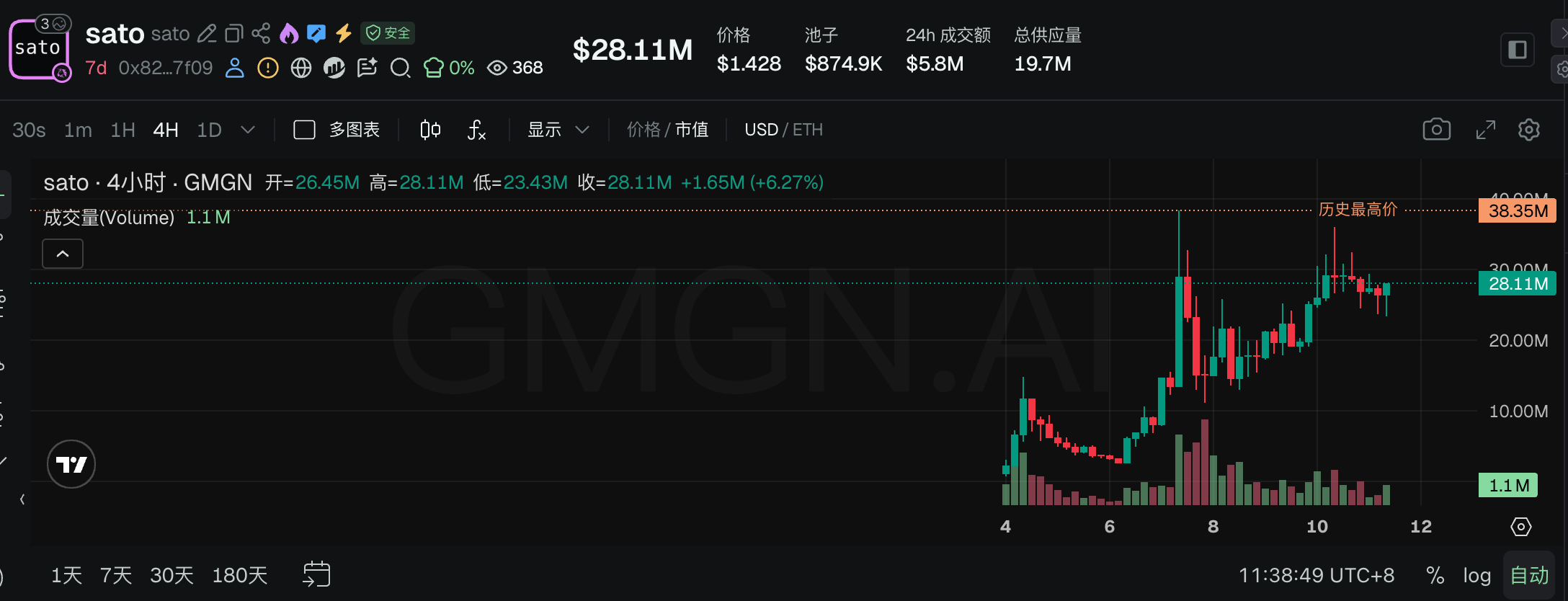
sato: Market Cap Peak Over $38 Million

CA: 0x829f4b62eebe12af653b4dd4ffc480966f7d7f09

Current Market Cap: Approximately $28 Million

On May 4th, immediately after sato's debut, Odaily Planet Daily briefly introduced it. At that time, its market cap was only $9 million. This token is minted and burned through the Uniswap v4 bonding curve mechanism. Buying generates new tokens and locks ETH as reserves, while selling exchanges ETH from the reserves and burns tokens. At that point, its cumulative buy volume had approached 1000 ETH. Subsequently, sato's market cap once exceeded $30 million.

Although community users later discovered its curve mechanism had buy-sell price disparities, causing its market cap to once drop below $13 million, its innovative mechanism and first-mover advantage have kept its current market cap around $28 million, with a 24-hour trading volume nearing $6 million.
sat1: Market Cap Peak Over $10 Million

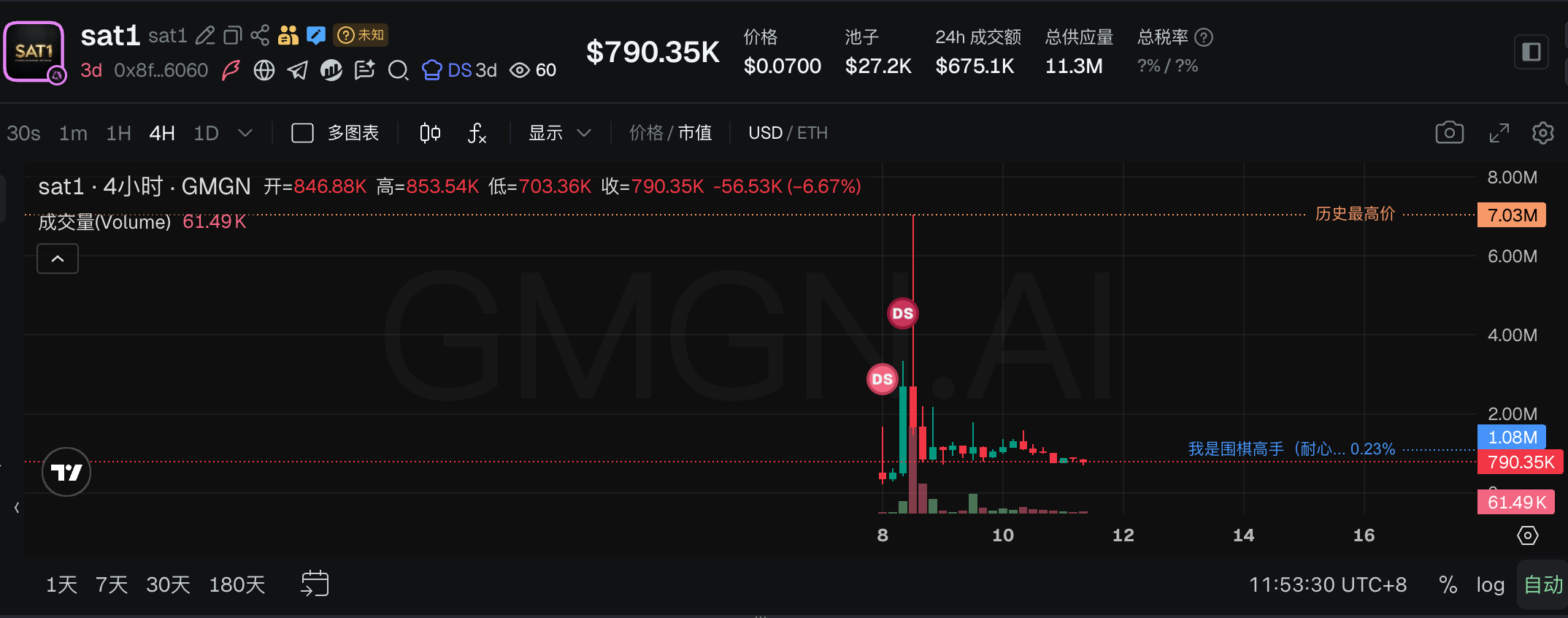
CA: 0x8f66337a0c2a02202fd91dd596c411cf977c6060

Current Market Cap: Approximately $800,000

On May 8th, sat1, marketed as an "optimized version of sato", reached its hype peak. Thanks to strong promotion by crypto KOL Huanba Longwang (Dragon King) in WeChat groups, the token's market cap once surpassed $10 million. However, following subsequent backlash, the project eventually spiraled downwards, with its market cap now less than a tenth of its peak.
Lo0p: Market Cap Peak Close to $6.6 Million

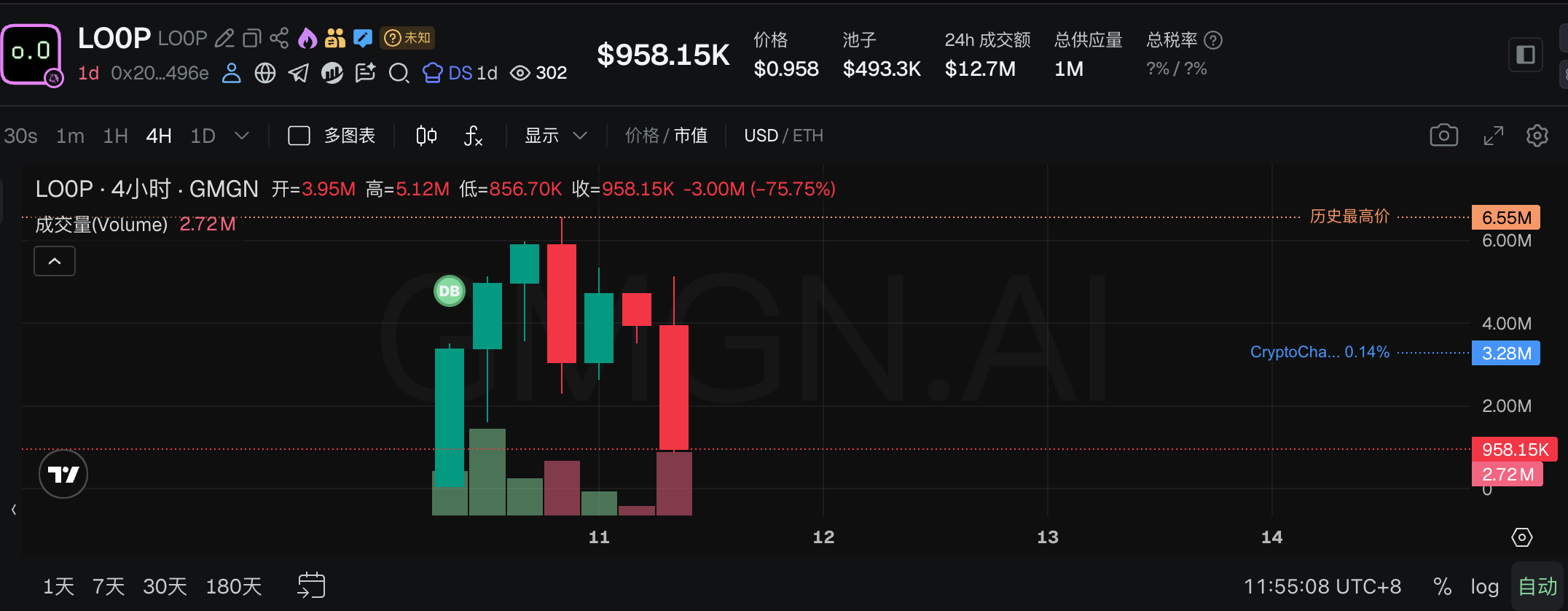
CA: 0x20ea861b3acec90d3a15b4755d9a1cf1f161496e

Current Market Cap: Approximately $960,000

Official Account: https://x.com/lo0pio

On May 10th, Lo0p's market cap once exceeded $6 million, with a daily increase of over 110x. Similarly, Lo0p's main concept is a "lending AMM protocol based on Uniswap v4 Hooks", aiming to solve the idle ETH capital efficiency issue in LP pools. Users buy LO0P tokens through a bonding curve, which are locked as collateral (without selling), and can directly borrow ETH from the pool reserves at a 40% LTV; borrowing does not directly impact the spot price, and the post-liquidation mechanism attempts to refill the LP band. Hooks inject custom logic during Swap/liquidity lifecycle events, achieving "collateralized lending + LP rewards + borrowing interest" composite returns while maintaining pool price stability. Its core mechanism lies in "built-in lending."
FLOOD: Market Cap Peak Nearly $6 Million

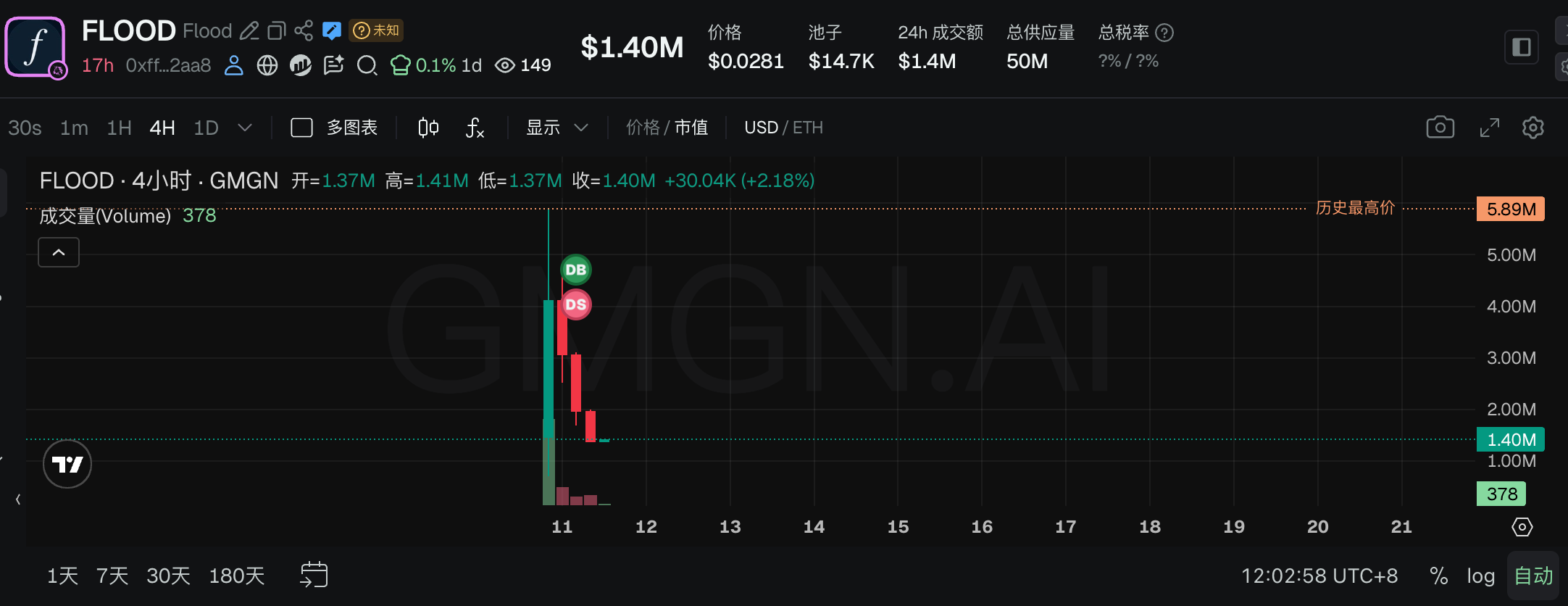
CA: 0xff003fbe8b8d5e7f271a9cb9f2780003daed2aa8

Current Market Cap: Approximately $1.4 Million

Official Account: https://x.com/flood_markets

On May 10th, FLOOD's market cap once exceeded $5 million. As the hype subsided, its current market cap is around $1.4 million. It is reported that FLOOD has a total supply of 50 million tokens. Its special mechanism is: the asset reserves generated from user purchases enter the corresponding Aave v3 market to earn yield; transaction fees are also retained within the pool, used to increase reserves and influence token price. The core lies in the Aave integration for automatic yield, with the Hook mechanism playing the role of "automatic rebalancing and yield recycling". No wonder some community users remarked: "Buying funds enter the pool → pool assets earn interest on Aave → interest stays in the pool → long-term price increase. So this is using my money to deposit and earn interest?"
Hook Mechanism Tokens Drive Uniswap Ecosystem Development: UNI Bullish Long-Term, But Limited Short-Term Gains

Thanks to the rapid development of the Uniswap v4 Hook mechanism, ecosystem tokens in this sector have become a category alongside Meme coins and project ecosystem tokens. In the long run, they can further attract users and capital liquidity to participate in Uniswap v4 liquidity pool trading and development.

Combined with the previous news that "Uniswap has turned on the fee switch, with a portion of protocol fees used to burn UNI tokens," the long-term fundamentals of UNI appear steady and positive.

However, in the short term, the emergence of Hook mechanism tokens cannot directly drive a rise in the UNI token price. Factors such as the lifecycle and sustainability of these tokens, token price volatility versus transaction fee proportions, and UNI's susceptibility to crypto regulatory policies and broader market trends intervene.

Therefore, in summary, the Hook ecosystem is a "long-term nutrient" for UNI, but in the short term, it acts more like a "catalyst" rather than a "booster."

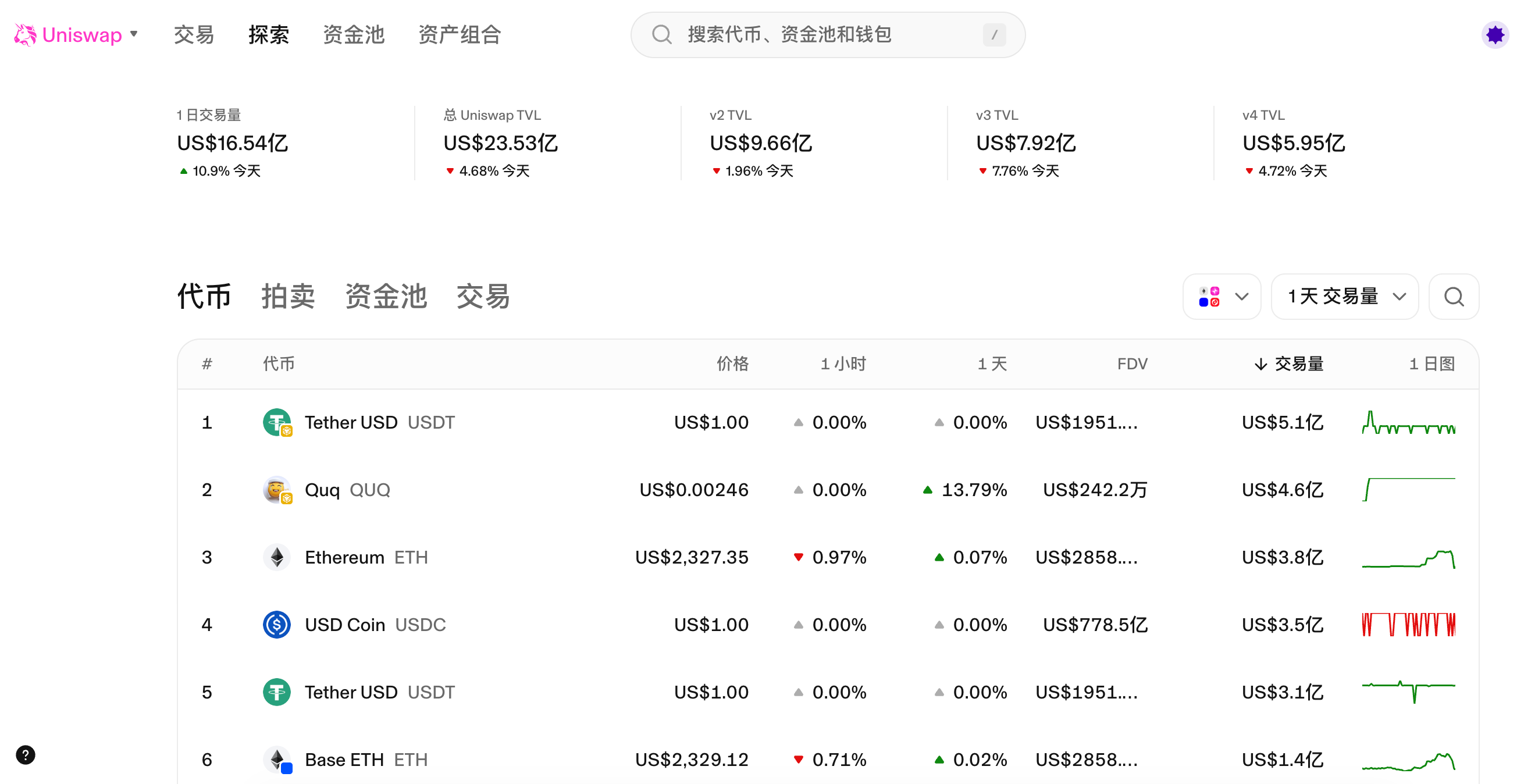
Furthermore, according to the Uniswap official website, the current v4 TVL is approximately $595 million, slightly lower than v3 ($792 million) and v2 ($966 million) liquidity pools. Thus, v4 and the Hook ecosystem still require time to accumulate strength and gradually grow into mainstream liquidity management protocols in the market.
Finally, Odaily Planet Daily reminds readers that the above tokens are all early-stage technological innovation experiments and may contain unknown bugs or other risks. Please be aware of relevant risks when participating in trading. The above information does not constitute investment advice.

İlgili Sorular

QAccording to the article, what is a Uniswap v4 Hook and what is its primary function?

AA Uniswap v4 Hook is a 'plugin smart contract' designed for liquidity pools (Pools). It allows developers to automatically inject custom logic at key lifecycle points of a pool (such as initialization, adding/removing liquidity, Swap, Donate, etc.), transforming the AMM into programmable 'Lego blocks', unlike the traditional constant product curve (x*y=k) of V2/V3.

QWhat unique mechanism does the FLOOD token implement using its Hook?

AFLOOD's Hook integrates with Aave v3. When users buy the token, the generated asset reserves are deposited into the corresponding Aave v3 market to generate yield. The trading fees are also retained within the pool to increase reserves and influence the token's price. The Hook facilitates automatic rebalancing and the flow of generated interest back into the pool.

QWhat problem does the Lo0p protocol aim to solve, and what is its core feature?

AThe Lo0p protocol aims to solve the problem of idle ETH capital efficiency in LP pools. Its core feature is 'built-in lending'. Users can buy LO0P tokens as collateral (without selling) and borrow ETH directly from the pool reserves at a 40% LTV. This mechanism is designed to not directly impact the spot price and attempts to refill the LP band upon liquidation.

QWhat is the article's conclusion regarding the impact of Hook mechanism tokens on the price of UNI in the short and long term?

AThe article concludes that Hook mechanism tokens serve as 'long-term nutrients' for UNI, contributing positively to its fundamentals. However, in the short term, they act more like a 'catalyst' rather than a 'propellant' for a direct price increase, as their impact is moderated by factors like token lifecycle sustainability and broader market trends.

QBased on the article, what was a key risk or criticism identified by the community regarding the sato token's initial mechanism?

AThe community discovered that sato's curve mechanism had a significant buy-sell price spread (slippage), which led to a sharp decline in its market capitalization, dropping from over $38 million to around $13 million at one point.

İlgili Okumalar

SpaceX, OpenAI, Anthropic: The Three AI Giants Racing for IPO, Which One Is Worth Betting On?

SpaceX, OpenAI, and Anthropic are poised for historic IPOs within weeks, potentially raising a combined $180 billion—a sum exceeding the entire internet bubble's fundraising. The hosts of the Limitless Podcast argue this isn't just individual company financing but an unprecedented capital concentration for AI infrastructure, driven by an insatiable need for compute, data centers, power, and chips. SpaceX's IPO is notable for reportedly changing market index rules to allow faster inclusion, potentially funneling trillions in passive retirement funds into its stock, despite its unproven space-based data center business model. In contrast, Anthropic demonstrates explosive growth, with ARR reportedly hitting $45 billion and approaching profitability, fueled by strong enterprise adoption of products like Claude Code. Google's separate $80 billion raise highlights the immense capital pressure, even for giants. The discussion acknowledges bubble risks but leans optimistic. The hosts contend the massive spending is building essential physical infrastructure for the next technological era. A key bottleneck isn't capital but the real-world limits of chip manufacturing and construction speed. As long as demand for AI compute outstrips supply, this investment cycle represents a foundational build-out rather than a purely financial bubble. All three companies are seen as foundational bets on the future, with Anthropic often cited as the most immediately compelling due to its proven revenue trajectory.

marsbit55 dk önce

SpaceX, OpenAI, Anthropic: The Three AI Giants Racing for IPO, Which One Is Worth Betting On?

marsbit55 dk önce

From 'Old Guys' to 'New Favorites': How AI Is Revaluing Old Infrastructure from Dell to Nokia?

From "Vintage Tech" to "New AI Darlings": How AI Revalues Old Infrastructure One year ago, tech giants like Dell, Nokia, Cisco, and Western Data were seen as slow-growth, low-valuation stories, far from the AI spotlight dominated by players like Nvidia. Now, these legacy tech stocks are gaining market attention, sparking debate on whether this is genuine industry revaluation or a temporary narrative. As AI moves from model parameters to real-world data centers, the market is recognizing companies with proven delivery and infrastructure capabilities. This shift marks a change in the AI investment thesis: from pure model and GPU focus to the complex systems engineering required for deployment. Companies like Dell, HPE, and Corning are being revalued not for being "sexy" AI innovators, but for their decades of accumulated expertise in supply chains, enterprise delivery, and infrastructure—assets that have become critical in the AI buildout phase. The revaluation is unfolding across three key infrastructure lines: 1. **Servers & System Integration:** Dell and HPE are emerging as crucial system integrators or "general contractors" for AI data centers, translating GPU orders into complete, deployable server racks integrated with power, cooling, and networking. 2. **Networking & Connectivity:** AI's scale demands robust high-speed connections. Corning (fiber optics), Nokia (AI-RAN, 6G), and Cisco (data center switches) are gaining importance for enabling efficient data transfer within and between AI clusters. 3. **Storage:** Beyond high-speed memory (HBM/DRAM), the AI data explosion is driving demand for high-capacity hard drives (HDDs) from companies like Western Digital and Seagate to handle training data, logs, and cold storage cost-effectively. For this revaluation to be substantive and not just a narrative, three criteria are key: 1) Concrete AI-related order and revenue growth (e.g., Dell's AI server sales), 2) Upward revisions to company financial guidance, and 3) Sustainable improvements in profit quality, not just top-line revenue spikes. In essence, AI's transition to a real construction phase is re-pricing "old assets" against "new demand." The opportunity, however, is selective. Only those legacy firms that are demonstrably integrated into the capital expenditure chains of data center and enterprise AI deployment are likely to experience a true "logic re-rating" rather than just a temporary valuation bounce.

marsbit1 saat önce

From 'Old Guys' to 'New Favorites': How AI Is Revaluing Old Infrastructure from Dell to Nokia?

marsbit1 saat önce

The Merger of Codex and ChatGPT Marks the Beginning of a Major Reshuffle in Programming Tools

OpenAI is shifting its strategic focus from ChatGPT to Codex, merging them along with the browser tool Atlas into a unified desktop super-app. This move signals an internal belief that Codex, originally a programming tool, represents the next evolution of AI more than conversational models like ChatGPT. Over the past year, Codex's weekly active users have surged past 5 million. The key distinction is that while ChatGPT answers questions, Codex executes tasks. Enterprises increasingly value this ability to get work done over simply receiving advice. Consequently, Codex is attracting professionals beyond developers, including analysts, bankers, marketers, and product managers. OpenAI's reorganization and increased investment in Codex stem from recognizing that the future of AI competition lies in execution capabilities, not just conversation. The company is launching role-specific plugins (e.g., for data analysis, sales, design) to transform Codex into a broad knowledge work platform that automates and redefines white-collar workflows. Beyond being a tool, Codex reflects OpenAI's ambition to redefine software. New features like "Sites"—which generates interactive websites from documents—and collaborative "Annotations" aim to create a paradigm where the AI understands the goal and handles the tools and steps, functioning more like a digital colleague than traditional software. The ultimate goal is a unified experience where the user cares only about the completed task.

marsbit1 saat önce

The Merger of Codex and ChatGPT Marks the Beginning of a Major Reshuffle in Programming Tools

marsbit1 saat önce

Interpreting Investment Opportunities in the Age of Great Navigation, Invesco Great Wall Fund Releases '2026 Report on Chinese Enterprises Going Global'

Invesco Great Wall Fund has released its "2026 China Corporate Globalization Report," titled "The 'Great Navigation Era' of Chinese Enterprises." The report analyzes the new trends and investment opportunities as Chinese companies expand globally, moving from simple product exports to comprehensive overseas operations involving services, branding, and local production. Driven by factors like trade friction, the pursuit of higher profit margins abroad, and policy support, globalization is becoming essential for Chinese companies. The report outlines an evolution: from early product export ("Globalization 1.0") to the current "Globalization 2.0," characterized by overseas capacity, capital goods investment, consumer brand expansion, and service exports. Chinese firms' competitive advantages are highlighted, including a vast engineer talent pool, low-cost and robust infrastructure, and complete industrial clusters. Specific sectors with significant出海 potential are identified: * **Capital Goods** (e.g., engineering machinery, power equipment): Benefiting from global demand, especially in Belt & Road markets and the AI-driven power grid upgrade cycle. * **Consumer Brands**: Transitioning from cost to brand advantage, leveraging供应链 efficiency. * **Technology & Innovation**: Including AI applications, optical modules within global tech supply chains, and new energy vehicles focusing on local production. * **Pharmaceuticals**: Chinese biotech firms are becoming preferred partners for global pharma, with potential for breakthrough drugs in areas like oncology and weight loss. The report concludes that corporate globalization represents a sustained, core theme for China's capital markets, though companies must navigate challenges like geopolitics and localization.

marsbit1 saat önce

Interpreting Investment Opportunities in the Age of Great Navigation, Invesco Great Wall Fund Releases '2026 Report on Chinese Enterprises Going Global'

marsbit1 saat önce

İşlemler

Spot
Futures
活动图片