Harvard University May Have Lost $150 Million in Cryptocurrency Trading! Has Liquidated Ethereum and Significantly Reduced Bitcoin ETF Positions

marsbit2026-05-18 tarihinde yayınlandı2026-05-18 tarihinde güncellendi

Özet

Harvard University's endowment fund, managed by Harvard Management Company (HMC), recently disclosed significant reductions in its cryptocurrency holdings. According to its latest 13F filing, HMC sold its entire position in the BlackRock Ethereum Spot ETF (ETHA) and reduced its stake in the BlackRock Bitcoin Spot ETF (IBIT) by 43% in Q1 2026. This marks a sharp reversal from its peak holdings of $443 million in crypto assets just two quarters prior, bringing the current value to approximately $117 million. Analysis suggests these sales likely resulted in substantial losses. Estimates indicate HMC's Bitcoin ETF trades incurred a roughly 28% loss (over $100 million), while its brief Ethereum position fell about 35% (over $30 million), totaling potential losses exceeding $150 million. The timing of HMC's trades—aggressively adding to Bitcoin near its all-time high in late 2025 and buying Ethereum just before a market downturn—has drawn criticism as potential "buying high and selling low." However, the context points to broader pressures. Harvard faced a $113 million operating deficit in FY2025 due to cuts in federal research funding and a significant tax increase on endowment income. With much of its portfolio locked in illiquid private equity and hedge funds, the highly liquid crypto ETFs presented the most straightforward assets to sell for liquidity and risk management. Furthermore, HMC's Bitcoin ETF holding had grown to 20% of its public portfolio by Q3 2025, prompting nec...

Last weekend, Harvard Management Company (HMC) filed its latest 13F holdings report with the U.S. Securities and Exchange Commission. Its holdings in the BlackRock Bitcoin Spot ETF (IBIT) shrank by 43% compared to the previous quarter, while the Ethereum ETF (ETHA) purchased during the same period was completely liquidated.

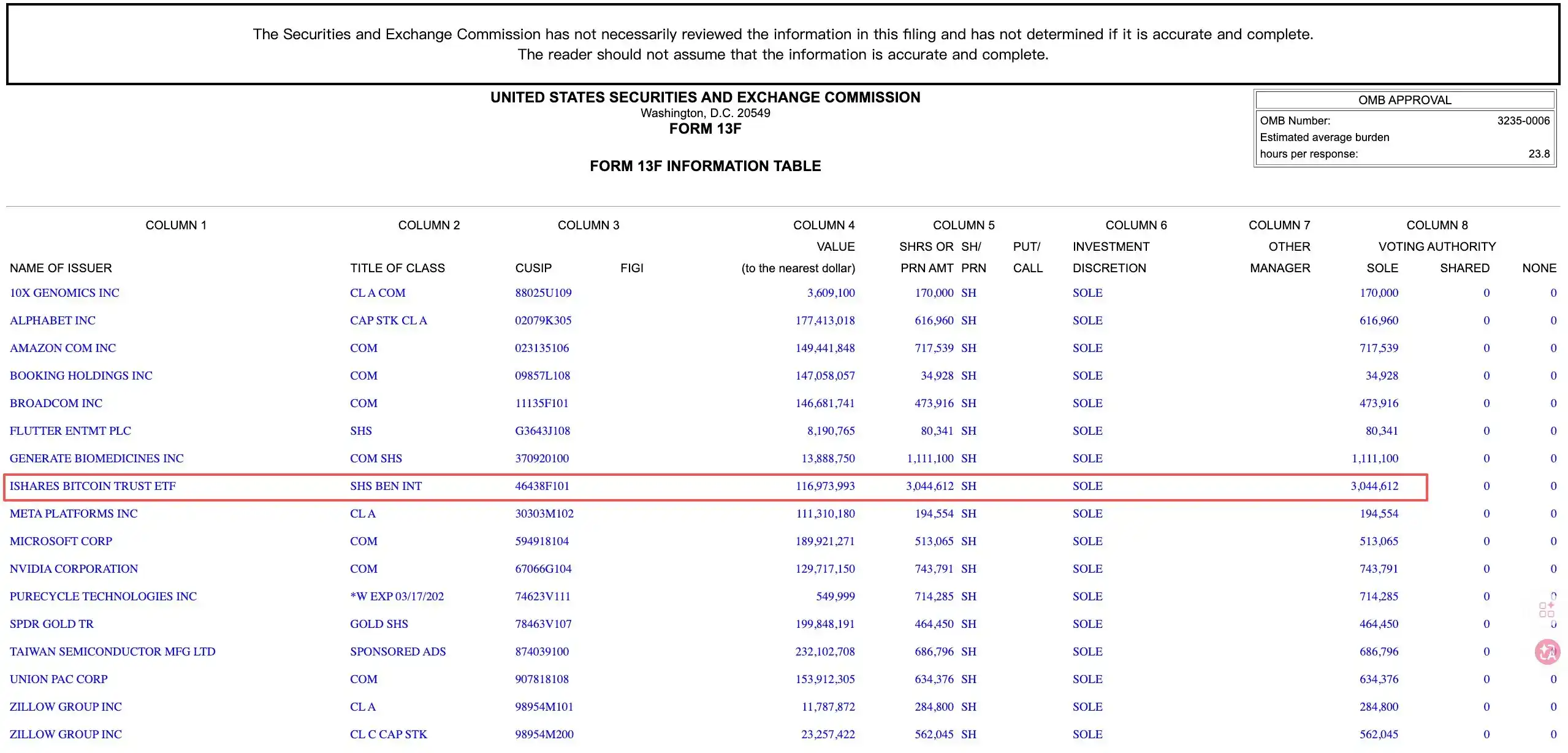
In just two quarters, Harvard's public holdings in crypto assets fell from a peak of $443 million to about $117 million. As one of the top-tier institutions managing the world's largest university endowment fund, this move has sparked market questioning: Can even top talent escape the trap of buying high and selling low?

In fact, Harvard's connection with cryptocurrency goes far beyond this. As early as 2018, several Ivy League endowment funds showed keen interest in blockchain technology through venture capital funds focused on cryptocurrencies. It was reported that Harvard, Yale, Brown, and the University of Michigan began quietly purchasing Bitcoin through exchanges like Coinbase around 2019.

Among them, HMC first publicly disclosed its holdings in Q2 2025. According to the 13F filing submitted in August of that year, HMC held approximately 1.9 million shares of IBIT, valued at about $117 million, and simultaneously established a position in the Gold ETF (GLD) worth about $102 million.

Matt Hougan, CIO of Bitwise, interpreted this set of operations as a "depreciation hedge trade," simultaneously betting on Bitcoin and gold to hedge against the risk of global currency oversupply. IBIT thus became Harvard's fifth-largest public holding, surpassing its holdings in Alphabet, Google's parent company.

Entering the third quarter, HMC made a significant increase in its position. As of September 30, 2025, its IBIT holdings expanded to approximately 6.81 million shares, valued at about $443 million, a quarter-over-quarter increase of over 257%. IBIT surpassed Microsoft, Amazon, and Nvidia to become the single largest holding in HMC's publicly disclosed portfolio, accounting for about 20% of its public U.S. stock portfolio.

At that time, facing persistently low expected returns from traditional assets, many university endowment funds were quietly adjusting their investment strategies.

Kim Lew, CEO of Columbia Investment Management Company, stated that expected returns and alpha from traditional asset classes would both be compressed, forcing institutions to move further out on the risk curve. Carlos Rangel of the W.K. Kellogg Foundation bluntly said that the traditional foundation model would be difficult to sustain if an 8% return rate couldn't be achieved.

Simultaneously, even Harvard's own economics professors couldn't sit still. In August 2025, Kenneth Rogoff, former IMF Chief Economist and Harvard economics professor, publicly reflected on his mistaken 2018 prediction—he had predicted that Bitcoin was more likely to fall to $100 than rise to $100,000 within a decade, yet at that time, the Bitcoin price had already exceeded $113,000, representing over a 10-fold increase since his prediction.

Rogoff admitted he had been "overly optimistic about the prospects for sensible crypto regulation in the United States" and had underestimated the demand support for Bitcoin in the global underground economy. The public admission of error by such an academic figurehead provided an additional layer of emotional endorsement for this wave of institutional buying. And Bitcoin subsequently approached its historical peak of $126,000 in October 2025.

In Q4 2025, after the market peaked and began to retreat, HMC adjusted its positions accordingly. IBIT holdings decreased by about 21%, falling to approximately 5.35 million shares valued at about $266 million. Simultaneously, the BlackRock Ethereum Spot ETF (ETHA) appeared for the first time in the report, with a holding of about 3.87 million shares valued at approximately $86.8 million.

As disclosed by Bloomberg ETF analyst James Seyffart, hedge funds were net sellers of Ethereum ETFs this quarter due to the collapse of basis trade returns, becoming the largest net sellers. Harvard precisely entered the market against the trend during this time window, becoming the largest new buyer of Ethereum ETFs for the quarter.

The latest disclosed holdings for Q1 2026 show that ETHA, which had just been established less than a quarter ago, has been completely liquidated. Meanwhile, HMC significantly reduced its IBIT holdings again, cutting its position by about 43%, leaving about 3.04 million shares valued at about $117 million. IBIT has also fallen out of Harvard's top five holdings, surpassed in turn by TSMC, Alphabet, Microsoft, and SPDR Gold Trust.

According to estimates by well-known crypto KOL Chen Jian, HMC's average purchase price for IBIT was around $110,000, with an average selling price of about $80,000, resulting in a loss of approximately 28%, with a paper loss on the Bitcoin portion exceeding $100 million. Regarding Ethereum, the average purchase price for ETHA was about $4,000, and it was liquidated at around $2,600, estimated to incur a single-quarter loss of over $30 million (-35%). Combined, these crypto operations are suspected to have resulted in losses exceeding $150 million.
Is this chasing rallies and selling on dips, or routine institutional rebalancing?

One perspective argues that HMC made its largest-scale increase in position when Bitcoin was near its historical high, then sold more as it fell lower, drawing a classic curve of buying high and selling low. The Ethereum position was even completely liquidated less than a quarter after purchase, almost capturing the entire decline. This is typical behavior of chasing rallies and selling on dips.

Another perspective points out that by the end of Q3, IBIT already accounted for 20% of HMC's public portfolio, a clearly excessive concentration. Subsequent reductions were necessary actions from a risk control standpoint. Moreover, HMC still maintains a base position of about $117 million in IBIT, indicating it hasn't completely exited the market.

However, this round of position reduction must also consider the current real-world pressures Harvard is facing.

Last October, Harvard's financial report for fiscal year 2025 showed that due to the Trump administration halting almost all federal research funding in the spring, Harvard incurred an annual operating loss of $113 million on total revenue of $6.7 billion, marking the first budget deficit since the pandemic.This deficit represents 1.7% of total revenue, with the operating shortfall standing in stark contrast to the $45 million surplus in 2024.
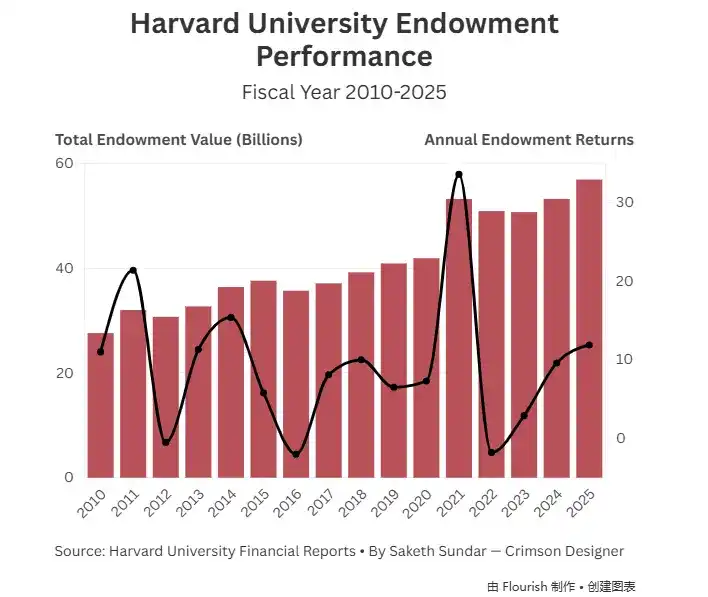
The endowment fund contributes about 37% of Harvard's operating income. In fiscal 2025, it provided approximately $2.5 billion in spending support, but 80% of these funds are restricted by donor purposes and cannot be reallocated at will.

Simultaneously, the Republican tax bill formally signed into effect in July 2025 significantly raised the maximum tax rate on endowment income from 1.4% to 8%. Harvard estimates this will result in an additional annual tax burden of approximately $300 million.

Under such pressure, the asset structure itself determines where cuts are easiest to make.

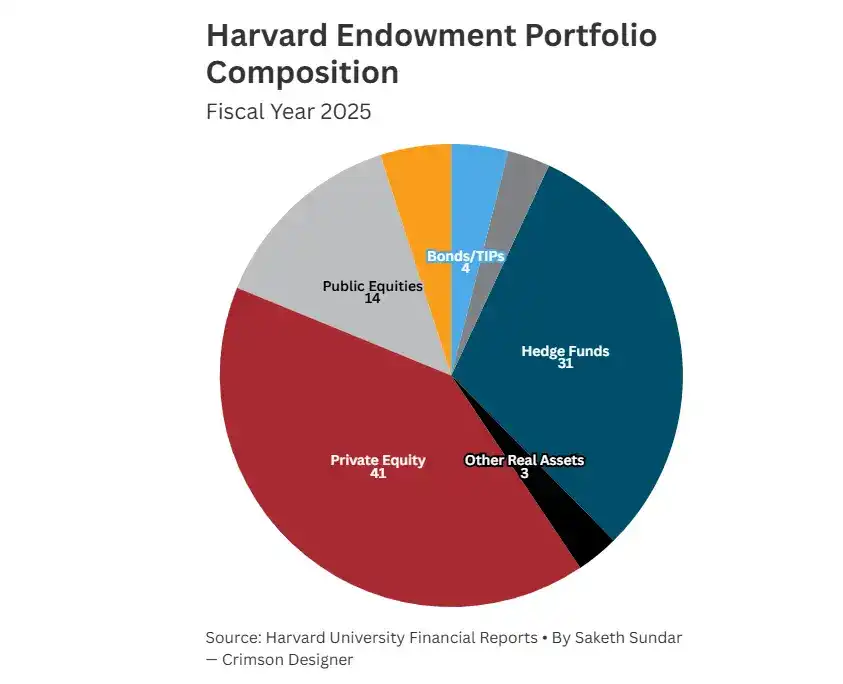
Private equity accounts for about 41% of Harvard's endowment fund, and hedge funds about 31%. These assets have long lock-up periods and extremely high costs for discounted sales. IBIT and ETHA, as intraday-tradable public market ETFs, offer the strongest liquidity and lowest liquidation costs, naturally making them the first targets for adjustment.
Furthermore, N.P. Narvekar, the current CEO of HMC, has revealed plans to retire around 2027 and is currently discussing succession arrangements with the board. In an environment where fiscal pressure, political uncertainty, and leadership transition overlap, holding a large-scale, highly volatile crypto position becomes an additional reputational risk.

In contrast to Harvard's retreat are the distinctly different choices of other institutions. Among them, the Abu Dhabi sovereign fund Mubadala continued to increase its IBIT holdings by about 16% in Q1 2026, raising its position to about $566 million, marking its fifth consecutive quarter of increasing its Bitcoin ETF stake.

As another university endowment fund, Dartmouth maintained its IBIT position unchanged, swapped its Ethereum ETF for a staking version, and added approximately $3.67 million in the Bitwise Solana Staking ETF, becoming one of the first U.S. university endowment funds to extend its crypto allocation beyond Bitcoin and Ethereum.

Brown University kept its 212,500 IBIT shares unchanged, while Emory University exited its small IBIT position, instead increasing its holdings in the Grayscale Bitcoin Mini Trust.

Overall, Harvard's round of operations is the result of the combined effects of fiscal pressure, liquidity needs, and triggered risk budgets, making it difficult to simply attribute it to chasing rallies and selling on dips.

When the world's top university endowment fund enters the crypto market, it does not do so with a crypto-native belief-based approach, but rather with Wall Street's risk-ledger logic. Crypto ETF products certainly provide an institutional entry point, but they also bring institutional-style selling pressure during risk-off periods.


İlgili Sorular

QAccording to the article, what was the total estimated loss from Harvard Management Company's cryptocurrency trades?

AThe estimated total loss from HMC's crypto trades was over $150 million. This comprises a loss of over $100 million on Bitcoin (IBIT) and a loss of over $30 million on Ethereum (ETHA).

QWhat were the two main opposing interpretations of HMC's trading activity in the article?

AThe two main interpretations are: 1) That it was classic 'buying high and selling low' behavior, as HMC increased its Bitcoin position near the market peak and then sold as prices fell. 2) That it was a necessary risk control and portfolio rebalancing action, especially after Bitcoin ETF holdings reached 20% of HMC's public portfolio, and that the sales were motivated by liquidity needs.

QWhat specific financial and political pressures did Harvard face that may have influenced its decision to sell its cryptocurrency holdings?

AHarvard faced several pressures: 1) A $113 million operating deficit in fiscal year 2025 due to halted federal research funding. 2) A significant increase in the endowment tax rate from 1.4% to 8%, adding an estimated $300 million in annual tax liability. 3) The liquidity of the cryptocurrency ETFs made them the easiest assets to sell to raise cash, compared to illiquid private equity and hedge fund holdings.

QHow did the trading strategy of other institutions, like Mubadala and Dartmouth, contrast with Harvard's in Q1 2026?

AIn contrast to Harvard's sell-off, Mubadala (Abu Dhabi's sovereign fund) increased its IBIT holdings by about 16% in Q1 2026. Dartmouth College's endowment maintained its IBIT position unchanged, swapped its Ethereum ETF for a staking version, and added a Bitwise Solana Staking ETF, expanding its crypto exposure.

QWhat does the article suggest about how traditional institutions like Harvard approach the cryptocurrency market?

AThe article suggests that traditional institutions like Harvard do not enter the crypto market based on 'crypto-native' belief. Instead, they use a 'Wall Street risk ledger' logic. While crypto ETFs provide an entry point for institutions, they also become a source of institutional selling pressure when these entities need to de-risk or rebalance their portfolios.

İlgili Okumalar

BNB Chain Releases Research Report, Exploring Post-Quantum Cryptography Migration Path for BSC

BNB Chain, a leading Layer-1 blockchain ecosystem, has released a research report exploring the potential migration path for BNB Smart Chain (BSC) to post-quantum cryptography. The study evaluates replacing traditional cryptographic systems with quantum-resistant alternatives, specifically examining the use of ML-DSA-44 for transaction signing and pqSTARK for aggregating validator consensus signatures. While quantum computers are not currently a practical threat to existing blockchain cryptography, the research represents a proactive effort to ensure long-term network security and infrastructure resilience. The report assessed several core areas of the BSC tech stack, including post-quantum transaction signing, validator signature aggregation, transaction validation, public key storage, and network performance under increased data loads. A key finding is that achieving post-quantum readiness is technically feasible today but requires significant trade-offs in scalability. Test data indicates: • Transaction size would increase from ~110 bytes to ~2.5 kilobytes. • Block size would grow from ~110 kilobytes to ~2 megabytes. • Native transfer TPS would decrease from 4,973 to 2,997. The primary performance bottleneck is not signature verification itself, but the increased network transmission overhead caused by larger transaction and block sizes. Conversely, the pqSTARK aggregation technology proved highly efficient, compressing validator signatures by an approximately 43:1 ratio, which helps manage consensus-layer overhead. The report notes that post-quantum alternatives for areas like P2P handshakes and KZG commitments were not within the scope of this evaluation and require further research and broader ecosystem coordination. BNB Chain emphasizes this work is a research-oriented exploration and not a response to any imminent security threat.

marsbit29 dk önce

BNB Chain Releases Research Report, Exploring Post-Quantum Cryptography Migration Path for BSC

marsbit29 dk önce

After Developer Numbers Halved: Crypto Isn't Dead, It's Just Giving Up Talent to AI

The title "After a 50% Drop in Developer Count: Crypto Isn't Dead, It's Just Ceding Talent to AI" suggests a shift, not an end. The article analyzes GitHub data showing a significant drop in overall Crypto developer activity from a peak of 45K monthly active developers in 2022 to about 23K in 2026. However, this masks a deeper trend of "talent deleveraging." The exodus consists mainly of newcomers who entered during the bull market for hype-driven roles (e.g., NFT contracts, forked DeFi protocols), with over 50% of developers with less than one year of experience leaving. In contrast, established developers (2+ years of experience) have hit record highs, contributing roughly 70% of the code. They are consolidating in ecosystems with real users and revenue, like Bitcoin and Solana. These experienced builders possess unique skills forged in Crypto's "code is law" environment: the ability to build trust and functional systems from scratch in the absence of external authority or rules, with zero tolerance for error. The article argues that AI's scaling faces structurally similar trust, coordination, and verification problems—particularly regarding compute aggregation, multi-agent incentive alignment, and autonomous payments. Crypto builders are already applying these skills in AI. Examples include CoreWeave (mining to AI compute), OpenRouter (NFT marketplace routing to AI model routing), and projects like Hyperbolic (using crypto-native mechanisms for decentralized compute verification) and EigenLayer (applying restaking logic to AI agent governance). Stablecoin infrastructure is becoming critical for AI agent micro-payments (e.g., x402 protocol). The role of these builders is evolving from writing smart contracts to "designing trusted mechanisms for autonomous AI systems." This shift is reflected in new hiring trends at major exchanges and significant venture capital flowing into the crypto-AI convergence (e.g., funds from Paradigm, Haun Ventures). The article concludes that while developer numbers have halved, the core density of talent has increased, and their uniquely cultivated skills are finding a new, larger stage in the AI era.

marsbit39 dk önce

After Developer Numbers Halved: Crypto Isn't Dead, It's Just Giving Up Talent to AI

marsbit39 dk önce

After the Developer Count Halved: Crypto Is Not Dead, It's Just Ceding Talent to AI

Following a significant decline in the total number of open-source crypto developers, from a peak of 45K in 2022 to approximately 23K by 2026, this article argues the industry is undergoing a "talent deleveraging" rather than a collapse. The exodus primarily consists of newcomers who entered during the bull market, while the core of experienced developers (2+ years) has grown to a record high, contributing around 70% of code. These established builders are concentrating in ecosystems with real users and revenue, like Bitcoin and Solana. The article posits that crypto has cultivated a unique skill set in building trustless, autonomous systems with near-zero tolerance for error—a capability now finding high demand in the AI era. As AI scales, it faces structural gaps in decentralized compute aggregation, multi-agent coordination/incentive alignment, and autonomous payment infrastructure. Crypto builders are transitioning their expertise to address these exact problems. Examples include CoreWeave (mining to AI compute), Hyperbolic (decentralized compute verification), EigenLayer (extending restaking mechanisms to AI agent governance), and the x402 protocol (enabling AI agent micro-payments via stablecoins). The role of the crypto builder is evolving from writing smart contracts to designing the rule-based, trust-minimized frameworks necessary for AI-native systems. Venture capital is increasingly funding this convergence, viewing it as a structural opportunity rather than a narrative shift. The core talent and systemic design principles from crypto are not disappearing but being re-priced and applied to the foundational challenges of scalable AI.

链捕手43 dk önce

After the Developer Count Halved: Crypto Is Not Dead, It's Just Ceding Talent to AI

链捕手43 dk önce

İşlemler

Spot
Futures

Popüler Makaleler

ETH 2.0 Nedir

ETH 2.0: Ethereum için Yeni Bir Dönem Giriş ETH 2.0, Ethereum 2.0 olarak da bilinir, Ethereum blok zincirinde önemli bir yükseltmeyi işaret eder. Bu geçiş yalnızca bir yüz değiştirme değil; ağın ölçeklenebilirliğini, güvenliğini ve sürdürülebilirliğini temelinden geliştirmeyi hedeflemektedir. Enerji yoğun Proof of Work (PoW) konsensüs mekanizmasından daha verimli olan Proof of Stake (PoS) mekanizmasına geçişle birlikte, ETH 2.0 blok zinciri ekosistemine dönüştürücü bir yaklaşım vaat etmektedir. ETH 2.0 Nedir? ETH 2.0, Ethereum'un yeteneklerini ve performansını optimize etmeye odaklanmış özel, birbirine bağlı güncellemelerin bir derlemesidir. Yenileme, mevcut Ethereum mekanizmasının karşılaştığı kritik zorlukları, özellikle işlem hızı ve ağ tıkanıklığı ile ilgili sorunları ele almak üzere tasarlanmıştır. ETH 2.0'ın Amaçları ETH 2.0'ın ana amaçları, üç temel unsuru geliştirmeye odaklanmaktadır: Ölçeklenebilirlik: Ağın saniye başına işleyebileceği işlem sayısını önemli ölçüde artırmayı hedefleyen ETH 2.0, mevcut yaklaşık 15 işlem/saniye sınırlamasını aşmayı ve potansiyel olarak binlerce işleme ulaşmayı planlamaktadır. Güvenlik: Geliştirilmiş güvenlik önlemleri, özellikle siber saldırılara karşı daha iyi direnç sağlama ve Ethereum'un merkeziyetsiz görünümünü koruma açısından ETH 2.0 için hayati öneme sahiptir. Sürdürülebilirlik: Yeni PoS mekanizması, sadece verimliliği artırmakla kalmayıp aynı zamanda enerji tüketimini de önemli ölçüde azaltma hedefiyle tasarlanmış olup, Ethereum'un operasyonel çerçevesini çevresel kaygılarla uyumlu hale getirmektedir. ETH 2.0'ın Yaratıcısı Kimdir? ETH 2.0'ın yaratılması Ethereum Vakfı'na atfedilebilir. Ethereum'un gelişimini destekleme konusunda kritik bir rol oynayan bu kar amacı gütmeyen kuruluş, dikkat çekici kurucu ortağı Vitalik Buterin tarafından yönetilmektedir. Daha ölçeklenebilir ve sürdürülebilir bir Ethereum vizyonu, bu yükseltmenin arkasındaki itici güç olmuştur ve protokolü geliştirmek için kendini adamış küresel bir geliştici ve meraklı topluluğunun katkılarını içermektedir. ETH 2.0'ın Yatırımcıları Kimlerdir? ETH 2.0 yatırımcıları ile ilgili detaylar kamuoyuna açıklanmamış olsa da, Ethereum Vakfı'nın blok zinciri ve teknoloji alanında çeşitli kuruluşlar ve bireyler tarafından desteklendiği bilinmektedir. Bu ortaklar arasında merkeziyetsiz teknolojilerin ve blok zinciri altyapısının geliştirilmesine karşılıklı ilgi duyan girişim sermayesi şirketleri, teknoloji firmaları ve hayır kurumları yer almaktadır. ETH 2.0 Nasıl Çalışır? ETH 2.0, onu öncüsünden ayıran bir dizi önemli özelliği tanıtmasıyla dikkat çekmektedir. Proof of Stake (PoS) PoS konsensüs mekanizmasına geçiş, ETH 2.0'ın en belirgin değişikliklerinden biridir. İşlem doğrulama için enerji yoğun madenciliğe dayanmak yerine, PoS kullanıcıların ağa yatırdıkları ETH miktarına göre işlemleri doğrulayıp yeni bloklar oluşturmalarına olanak tanır. Bu, enerji verimliliğinin artırılmasına yol açarak tüketimi yaklaşık %99,95 oranında azaltmakta ve Ethereum 2.0'ı önemli ölçüde daha çevre dostu bir alternatif haline getirmektedir. Shard Zincirleri Shard zincirleri, ETH 2.0'ın diğer bir kritik yeniliğidir. Bu daha küçük zincirler, ana Ethereum zinciri ile paralel olarak çalışarak birden fazla işlemin aynı anda işlenmesine olanak tanır. Bu yaklaşım, ağın genel kapasitesini artırarak Ethereum'u rahatsız eden ölçeklenebilirlik sorunlarını ele alır. Beacon Zinciri ETH 2.0'ın temelinde, ağı koordine eden ve PoS protokolünü yöneten Beacon Zinciri yer almaktadır. Bu, bir tür organizatör olarak işlev görür: doğrulayıcıları denetler, shard'ların ağa bağlı kalmasını sağlar ve blok zinciri ekosisteminin genel sağlığını izler. ETH 2.0 Zaman Çizelgesi ETH 2.0'ın yolculuğu, bu önemli yükseltmenin evrimini gösteren birkaç önemli dönüm noktası ile tanımlanmıştır: Aralık 2020: Beacon Zinciri'nin başlatılması, PoS'un tanıtımını işaret etmiş ve ETH 2.0’a geçiş için sahneyi hazırlamıştır. Eylül 2022: "The Merge" tamamlanması, Ethereum ağının başarılı bir şekilde PoW'den PoS çerçevesine geçiş yaptığı kritik bir anı temsil etmekte ve Ethereum için yeni bir dönemi müjdelemektedir. 2023: Shard zincirlerinin beklenen dağıtımı, Ethereum ağının ölçeklenebilirliğini daha da artırmayı hedeflemekte ve ETH 2.0'ı merkeziyetsiz uygulamalar ve hizmetler için sağlam bir platform haline getirmeyi pekiştirmektedir. Ana Özellikler ve Faydalar Geliştirilmiş Ölçeklenebilirlik ETH 2.0'ın en önemli avantajlarından biri, geliştirilmiş ölçeklenebilirliğidir. PoS ve shard zincirlerinin kombinasyonu, ağın kapasitesini artırarak, eski sistemle kıyaslandığında çok daha fazla işlem hacmi karşılayabilmesini sağlamaktadır. Enerji Verimliliği PoS'un uygulanması, blok zinciri teknolojisinde enerji verimliliği yönünde büyük bir adım teşkil etmektedir. Enerji tüketimini ciddi şekilde azaltarak, ETH 2.0 yalnızca işletme maliyetlerini düşürmekle kalmaz, aynı zamanda küresel sürdürülebilirlik hedefleriyle daha yakın bir uyum sağlar. Geliştirilmiş Güvenlik ETH 2.0'ın güncellenmiş mekanizmaları, ağ genelinde güvenliğin artırılmasına katkıda bulunmaktadır. PoS'un uygulanması ve shard zincirleri ile Beacon Zinciri aracılığıyla geliştirilen yenilikçi kontrol önlemleri, potansiyel tehditlere karşı daha yüksek bir koruma sağlar. Kullanıcılar için Düşük Maliyetler Ölçeklenebilirlik geliştikçe, işlem maliyetleri üzerindeki etkiler de belirgin hale gelecektir. Artan kapasite ve azalan tıkanıklığın, kullanıcılar için düşük ücretler anlamına gelmesi beklenmekte ve Ethereum'u günlük işlemler için daha erişilebilir hale getirmektedir. Sonuç ETH 2.0, Ethereum blok zinciri ekosisteminde önemli bir evrimi işaret etmektedir. Ölçeklenebilirlik, enerji tüketimi, işlem verimliliği ve genel güvenlik gibi temel sorunları ele alırken, bu güncellemenin önemi abartılamaz. Proof of Stake'e geçiş, shard zincirlerinin tanıtımı ve Beacon Zinciri'nin altyapı çalışmaları, Ethereum'un merkeziyetsiz piyasalarının artan taleplerini karşılayabileceği bir geleceği göstermektedir. Yenilik ve ilerleme ile şekillenen bir sektörde, ETH 2.0, blok zinciri teknolojisinin daha sürdürülebilir ve verimli bir dijital ekonomi için yol açmadaki yeteneklerinin bir kanıtıdır.

170 Toplam GörüntülenmeYayınlanma 2024.04.04Güncellenme 2024.12.03

ETH 2.0 Nedir

ETH 3.0 Nedir

ETH3.0 ve $eth 3.0: Ethereum'un Geleceği Üzerine Derinlemesine Bir İnceleme Giriş Hızla evrilen kripto para ve blok zinciri teknolojisi ortamında, ETH3.0, sıklıkla $eth 3.0 olarak adlandırılmakta, önemli bir ilgi ve spekülasyon konusu haline gelmiştir. Bu terim, netleştirilmesi gereken iki temel kavramı kapsamaktadır: Ethereum 3.0: Bu, mevcut Ethereum blok zincirinin yeteneklerini artırmayı hedefleyen olası bir gelecekteki güncellemeyi temsil eder, özellikle ölçeklenebilirlik ve performansı iyileştirmeye odaklanmaktadır. ETH3.0 Meme Token: Bu ayrı kripto para projesi, Ethereum blok zincirini kullanarak meme merkezli bir ekosistem oluşturmayı amaçlamakta ve kripto para topluluğu içinde etkileşimi artırmaktadır. ETH3.0'ün bu yönlerini anlamak, yalnızca kripto meraklıları için değil, aynı zamanda dijital alandaki daha geniş teknolojik trendleri gözlemleyenler için de hayati öneme sahiptir. ETH3.0 Nedir? Ethereum 3.0 Ethereum 3.0, zaten kurulmuş olan Ethereum ağına önerilen bir güncelleme olarak duyurulmaktadır; bu ağ, kuruluşundan bu yana birçok merkeziyetsiz uygulamanın (dApp'ler) ve akıllı sözleşmelerin belkemiği olmuştur. Tasarlanan iyileştirmeler, esasen ölçeklenebilirlik üzerine yoğunlaşmakta – shardlama ve sıfır bilgi kanıtları (zk-proofs) gibi ileri teknolojileri entegre etmektedir. Bu teknolojik yenilikler, saniyede eşi benzeri görülmemiş sayıda işlem (TPS) gerçekleştirmeyi kolaylaştırmayı amaçlamakta olup, muhtemelen milyonlara ulaşarak mevcut blok zinciri teknolojisinin karşılaştığı en büyük sınırlamalardan birine çözüm getirmektedir. İyileştirme yalnızca teknik değil, aynı zamanda stratejiktir; Ethereum ağını, merkeziyetsiz çözümlere olan artan talep ile belirginleşen bir geleceğe hazırlamak için tasarlanmıştır. ETH3.0 Meme Token Ethereum 3.0'ın aksine, ETH3.0 Meme Token, internet meme kültürünü kripto para dinamikleriyle birleştirerek daha hafif ve eğlenceli bir alanda hareket etmektedir. Bu proje, kullanıcıların Ethereum blok zincirinde meme alım, satım ve ticaret yapmalarına izin vererek, yaratıcılık ve ortak ilgi alanları aracılığıyla topluluk etkileşimini teşvik eden bir platform sunmaktadır. ETH3.0 Meme Token, blok zinciri teknolojisinin dijital kültürle nasıl kesişebileceğini göstererek, hem eğlenceli hem de finansal olarak sürdürülebilir kullanım senaryoları oluşturmayı hedeflemektedir. ETH3.0'un Yaratıcısı Kimdir? Ethereum 3.0 Ethereum 3.0'a yönelik girişim, esas olarak Ethereum topluluğundaki bir geliştirici ve araştırmacı konsorsiyumu tarafından yönlendirilmektedir ve bunlar arasında Justin Drake de bulunmaktadır. Ethereum'un evrimine yönelik içgörüleri ve katkılarıyla tanınan Drake, Ethereum'u “Beam Chain” olarak adlandırılan yeni bir konsensüs katmanına geçirme konusundaki tartışmalarda öne çıkan bir figür olmuştur. Geliştirmeye yönelik bu iş birliği yaklaşımı, Ethereum 3.0'ın tek bir yaratıcının ürünü olmadığını, aksine blok zinciri teknolojisini ilerletmeye odaklanmış kolektif bir dehanın tezahürü olduğunu göstermektedir. ETH3.0 Meme Token ETH3.0 Meme Token'ın yaratıcısına dair detaylar şu anda izlenemez durumdadır. Meme tokenların doğası, genellikle daha merkeziyetsiz ve topluluk odaklı bir yapıya yol açmakta olup, bu da spesifik bir atıf eksikliğini açıklayabilir. Bu durum, yeniliğin genellikle iş birliği yerine bireysel çabalardan ortaya çıktığı kripto topluluğunun genel felsefesiyle uyumludur. ETH3.0 Yatırımcıları Kimlerdir? Ethereum 3.0 Ethereum 3.0'a olan destek, esasen Ethereum Vakfı ve hevesli bir geliştirici ve yatırımcı topluluğu tarafından sağlanmaktadır. Bu temel birliktelik, yıllar süren ağ operasyonlarıyla inşa edilen güven ve itibarından yararlanarak önemli bir meşruiyet sağlamaktadır. Kripto para dünyasının hızla değişen ikliminde, topluluk desteği, gelişim ve benimsemeyi yönlendirmede kritik bir rol oynamakta ve Ethereum 3.0'ı gelecekteki blok zinciri ilerlemeleri için ciddi bir rakip haline getirmektedir. ETH3.0 Meme Token Mevcut kaynaklar, ETH3.0 Meme Token'ı destekleyen yatırım temelleri veya kuruluşları hakkında net bilgiler sağlamasa da, bu durum meme tokenlar için tipik olan finansman modelini göstermektedir; bu model genellikle tabandan destek ve topluluk katılımına dayanır. Bu tür projelerdeki yatırımcılar genellikle toplum odaklı yenilik potansiyeli ve kripto topluluğunda bulunan iş birliği ruhuyla motive olmuş bireylerden oluşmaktadır. ETH3.0 Nasıl Çalışır? Ethereum 3.0 Ethereum 3.0'ın ayırt edici özellikleri, önerilen shardlama ve zk-proof teknolojisinin uygulanmasında yatmaktadır. Shardlama, blok zincirini daha küçük, yönetilebilir parçalara veya “parçalara” ayırma yöntemidir; bu parçalar işlemleri ardışık değil, eşzamanlı olarak işleyebilir. Bu işlem yükünün merkeziyetsizliği, tıkanıklığı önlemeye yardımcı olur ve ağın yoğun yük altında bile yanıt verebilir olmasını sağlar. Sıfır bilgi kanıtı (zk-proof) teknolojisi, işleme katılan temel verileri ifşa etmeden işlem doğrulaması sağlamasıyla başka bir sofistike katman ekler. Bu yön, sadece gizliliği artırmakla kalmaz, aynı zamanda ağın genel verimliliğini de artırır. Bu güncellemeye, ağın yeteneklerini ve faydasını daha da artırarak sıfır bilgi Ethereum Sanal Makinesi (zkEVM) entegrasyonunun da eklenmesi gündeme gelmektedir. ETH3.0 Meme Token ETH3.0 Meme Token, meme kültürünün popülaritesinden yararlanarak kendini farklılaştırmaktadır. Kullanıcıların sadece eğlence için değil, aynı zamanda potansiyel ekonomik kazançlar için meme ticareti yapmalarına olanak tanıyacak bir pazar yeri oluşturur. Stake etme, likidite sağlama ve yönetim mekanizmaları gibi özelliklerin entegrasyonu sayesinde, proje topluluk etkileşimini ve katılımını teşvik eden bir ortam oluşturur. Eğlence ve ekonomik fırsatların eşsiz bir karışımını sunarak, ETH3.0 Meme Token, kripto tutkunlarından gündelik meme meraklılarına kadar çeşitli bir kitleyi çekmeyi hedeflemektedir. ETH3.0 Zaman Çizelgesi Ethereum 3.0 11 Kasım 2024: Justin Drake, ölçeklenebilirlik iyileştirmeleri etrafında şekillenen yaklaşan ETH 3.0 güncellemesine işaret ediyor. Bu duyuru, Ethereum'un gelecekteki mimarisi hakkında resmi tartışmaların başlangıcını simgeliyor. 12 Kasım 2024: Ethereum 3.0'a yönelik beklenen önerinin, Bangkok'taki Devcon'da açıklanması planlanıyor ve bu, daha geniş topluluk geri bildirimi ve gelişim için olası sonraki adımların zeminini hazırlıyor. ETH3.0 Meme Token 21 Mart 2024: ETH3.0 Meme Token, CoinMarketCap'ta resmi olarak listeleniyor, bu da kamusal kripto alanına adım atarak meme merkezli ekosisteminin görünürlüğünü artırıyor. Ana Noktalar Sonuç olarak, Ethereum 3.0, gelişmiş teknolojiler aracılığıyla ölçeklenebilirlik ve performansla ilgili sınırlamaların üstesinden gelmeye odaklanan Ethereum ağındaki önemli bir evrimi temsil etmektedir. Önerilen güncellemeleri, gelecekteki talepler ve kullanılabilirlik için proaktif bir yaklaşımı yansıtmaktadır. Öte yandan, ETH3.0 Meme Token, kripto para alanındaki topluluk odaklı kültürün özünü kapsamakta, meme kültürünü kullanarak kullanıcı yaratıcılığını ve katılımını teşvik eden etkileşimli platformlar oluşturmayı hedeflemektedir. ETH3.0 ve $eth 3.0'un farklı amaçlarının ve işlevlerinin anlaşılması, kripto alanındaki gelişmeleri takip eden herkes için hayati öneme sahiptir. Her iki girişim de benzersiz yollar çizerek, blok zinciri yeniliğinin dinamik ve çok yönlü doğasını birlikte vurgulamaktadır.

171 Toplam GörüntülenmeYayınlanma 2024.04.04Güncellenme 2024.12.03

ETH 3.0 Nedir

ETH Nasıl Satın Alınır

HTX.com’a hoş geldiniz! Ethereum (ETH) satın alma işlemlerini basit ve kullanışlı bir hâle getirdik. Adım adım açıkladığımız rehberimizi takip ederek kripto yolculuğunuza başlayın. 1. Adım: HTX Hesabınızı OluşturunHTX'te ücretsiz bir hesap açmak için e-posta adresinizi veya telefon numaranızı kullanın. Sorunsuzca kaydolun ve tüm özelliklerin kilidini açın. Hesabımı Aç2. Adım: Kripto Satın Al Bölümüne Gidin ve Ödeme Yönteminizi SeçinKredi/Banka Kartı: Visa veya Mastercard'ınızı kullanarak anında Ethereum (ETH) satın alın.Bakiye: Sorunsuz bir şekilde işlem yapmak için HTX hesap bakiyenizdeki fonları kullanın.Üçüncü Taraflar: Kullanımı kolaylaştırmak için Google Pay ve Apple Pay gibi popüler ödeme yöntemlerini ekledik.P2P: HTX'teki diğer kullanıcılarla doğrudan işlem yapın.Borsa Dışı (OTC): Yatırımcılar için kişiye özel hizmetler ve rekabetçi döviz kurları sunuyoruz.3. Adım: Ethereum (ETH) Varlıklarınızı SaklayınEthereum (ETH) satın aldıktan sonra HTX hesabınızda saklayın. Alternatif olarak, blok zinciri transferi yoluyla başka bir yere gönderebilir veya diğer kripto para birimlerini takas etmek için kullanabilirsiniz.4. Adım: Ethereum (ETH) Varlıklarınızla İşlem YapınHTX'in spot piyasasında Ethereum (ETH) ile kolayca işlemler yapın.Hesabınıza erişin, işlem çiftinizi seçin, işlemlerinizi gerçekleştirin ve gerçek zamanlı olarak izleyin. Hem yeni başlayanlar hem de deneyimli yatırımcılar için kullanıcı dostu bir deneyim sunuyoruz.

3.4k Toplam GörüntülenmeYayınlanma 2024.12.10Güncellenme 2025.03.21

ETH Nasıl Satın Alınır

Tartışmalar

HTX Topluluğuna hoş geldiniz. Burada, en son platform gelişmeleri hakkında bilgi sahibi olabilir ve profesyonel piyasa görüşlerine erişebilirsiniz. Kullanıcıların ETH (ETH) fiyatı hakkındaki görüşleri aşağıda sunulmaktadır.

活动图片