Harvard University May Have Lost $150 Million in Cryptocurrency Trading! Has Liquidated Ethereum and Significantly Reduced Bitcoin ETF Holdings

链捕手2026-05-18 tarihinde yayınlandı2026-05-18 tarihinde güncellendi

Özet

Harvard University's endowment fund, Harvard Management Company (HMC), significantly reduced its cryptocurrency holdings in Q1 2026, reportedly incurring substantial losses. According to its latest 13F filing, HMC completely sold off its position in the BlackRock Ethereum ETF (ETHA) and cut its BlackRock Bitcoin ETF (IBIT) holdings by 43%, leaving a position worth approximately $117 million. This marks a sharp decline from a peak public crypto allocation of $443 million just two quarters prior. Analysis suggests these trades resulted in estimated losses exceeding $150 million, with Bitcoin positions sold at an average loss of around 28% and Ethereum positions at roughly 35%. The moves have sparked debate on whether HMC engaged in counterproductive "buy high, sell low" behavior. The article contextualizes HMC's crypto journey, beginning with its initial disclosed investment in IBIT and gold ETF GLD in Q2 2025 as an "inflation hedge." Aggressive buying in Q3 2025 made IBIT its largest single public holding at 20% of the portfolio, coinciding with Bitcoin nearing all-time highs. Subsequent trimming began in Q4 2025, with an initial foray into ETHA. Explanations for the recent drastic cuts extend beyond market timing. Harvard faces significant financial pressure, including an annual operating deficit and a major increase in endowment tax rates. With illiquid assets like private equity dominating the portfolio, the highly liquid crypto ETFs became the most practical source for ...

Last weekend, Harvard Management Company (hereinafter referred to as HMC) submitted its latest 13F holdings report to the U.S. Securities and Exchange Commission, its holdings of BlackRock's spot Bitcoin ETF (IBIT) shrank by another 43% compared to the previous quarter, while the Ethereum ETF (ETHA) purchased during the same period was completely liquidated.

In just two quarters, Harvard's publicly disclosed cryptocurrency holdings fell from a peak of $443 million to approximately $117 million. As one of the top institutions managing the world's largest university endowment fund, this move has sparked market questions: even top talent can't escape buying high and selling low?

In fact, Harvard's connection with cryptocurrency goes far beyond this. As early as 2018, several Ivy League endowment funds developed a strong interest in blockchain technology through venture capital funds focused on cryptocurrency. According to reports, universities including Harvard, Yale, Brown, and Michigan quietly began buying Bitcoin through exchanges like Coinbase around 2019.

Among them,HMC first publicly disclosed its holdings in Q2 2025. According to the 13F filing submitted in August that year, HMC held approximately 1.9 million shares of IBIT, valued at about $117 million, and simultaneously opened a position in the gold ETF (GLD), with holdings of about $102 million.

Bitwise Chief Investment Officer Matt Hougan interpreted this set of moves as a "depreciation hedging trade," simultaneously betting on Bitcoin and gold to hedge against the risk of global monetary oversupply. IBIT thus became Harvard's fifth-largest publicly disclosed holding, exceeding its holdings of stock in Google parent company Alphabet.

Entering the third quarter, HMC substantially increased its position. As of September 30, 2025, IBIT holdings expanded to approximately 6.81 million shares, with a market value of about $443 million, a quarter-over-quarter increase of over 257%. IBIT surpassed Microsoft, Amazon, and Nvidia to become the largest single holding in HMC's publicly disclosed portfolio, accounting for about 20% of its public US stock portfolio.

At that time, faced with persistently low return expectations for traditional assets, several university endowment funds were quietly adjusting their investment strategies.

Columbia Investment Management Company CEO Kim Lew stated that expected returns and Alpha generation from traditional asset classes would be compressed, forcing institutions to move further out on the risk curve. W.K. Kellogg Foundation's Carlos Rangel bluntly said that if an 8% return couldn't be achieved, the traditional foundation model would be difficult to sustain.

Simultaneously, even Harvard's own economics professors could no longer sit still. In August 2025, former IMF chief economist and Harvard economics professor Kenneth Rogoff publicly reflected on his prediction error from 2018—he had predicted that Bitcoin was more likely to fall to $100 than to rise to $100,000 within a decade, yet the Bitcoin price had already exceeded $113,000, growing over 10-fold from that time.

Rogoff admitted he had been "overly optimistic about the U.S. establishing reasonable cryptocurrency regulation" and underestimated the demand support for Bitcoin in the global underground economy. The public mea culpa from this leading academic figure provided, to some extent, additional emotional endorsement for this wave of institutional buying. And Bitcoin subsequently approached its historical peak of $126,000 in October 2025.

In Q4 2025, the market peaked and began to decline, prompting HMC to adjust its portfolio. IBIT holdings were reduced by approximately 21%, down to about 5.35 million shares, with a market value of about $266 million. At the same time, BlackRock's spot Ethereum ETF (ETHA) appeared for the first time in the report, with holdings of about 3.87 million shares, valued at about $86.8 million.

According to Bloomberg ETF analyst James Seyffart, hedge funds were net sellers of Ethereum ETFs this quarter due to the collapse of basis trade returns, making them the largest net sellers. Harvard precisely entered the market against the trend during this window, becoming the largest new buyer of Ethereum ETFs this quarter.

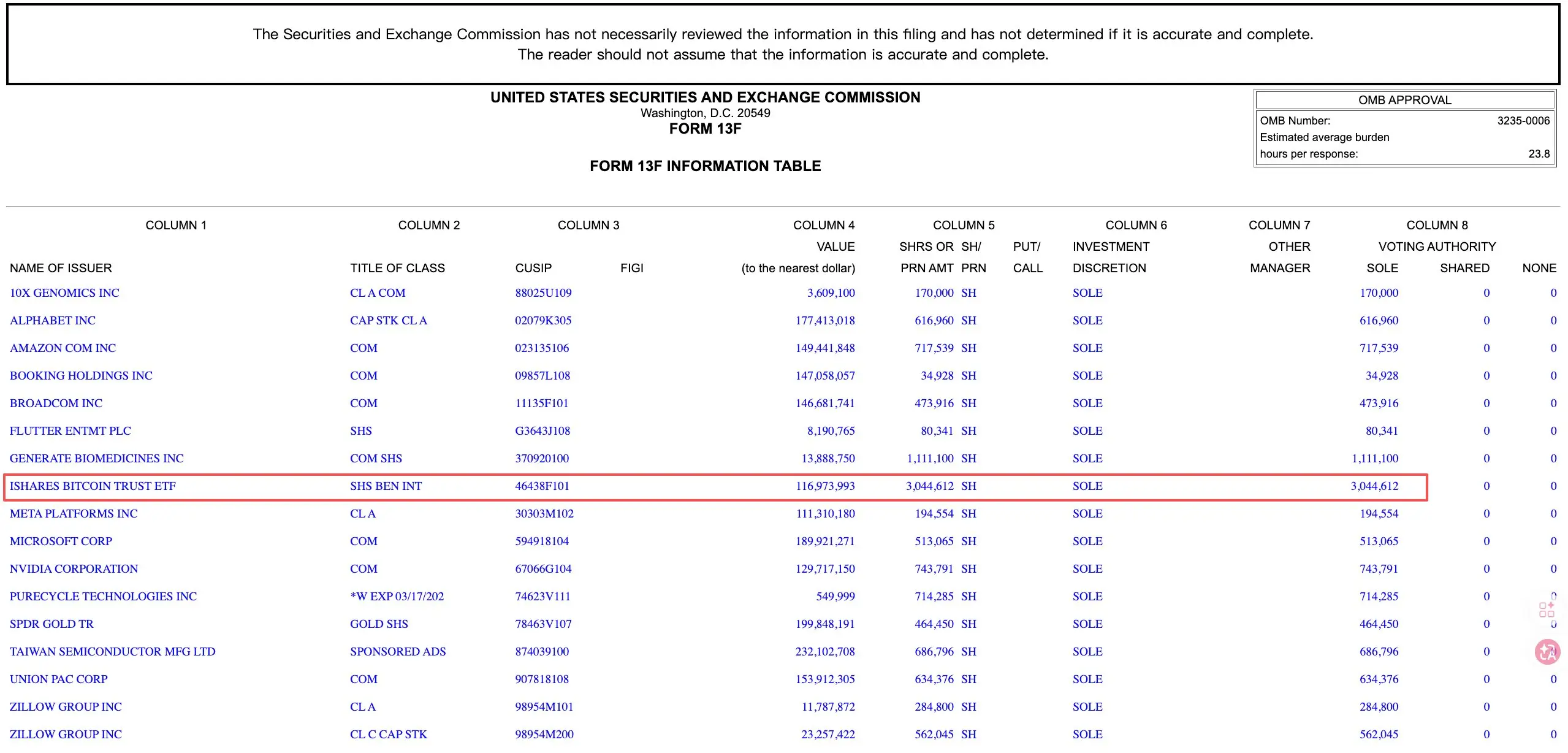
The latest Q1 2026 holdings disclosure shows that ETHA, which was just established less than a quarter ago, has been completely liquidated. Meanwhile, HMC once again significantly reduced its IBIT holdings, cutting them by about 43%, leaving approximately 3.04 million shares with a market value of about $117 million. IBIT has also fallen out of Harvard's top five holdings, surpassed in order by TSMC, Alphabet, Microsoft, and the SPDR Gold Trust.

According to estimates by well-known crypto KOL Chen Jian, HMC's average purchase price for IBIT was around $110,000, with an average selling price of about $80,000, resulting in a loss of approximately 28%, with paper losses on the Bitcoin portion exceeding $100 million. Regarding Ethereum, the average purchase price for ETHA was about $4,000, and it was liquidated at about $2,600, estimated to result in a single-quarter loss of over $30 million (-35%). Combined, this round of crypto operations allegedly resulted in losses exceeding $150 million.
Is this chasing highs and selling lows, or a routine rebalancing by an institution?

One view holds that HMC completed its largest scale-up of buying when Bitcoin was near its historical high, then sold more as the price fell, tracing a classic high-buy-low-sell curve. The Ethereum position was even entirely liquidated less than a quarter after purchase, almost perfectly capturing the entire decline. This is typical chasing highs and selling lows behavior.

Another perspective points out that by the end of Q3, IBIT already accounted for 20% of HMC's public portfolio, indicating an obviously excessive concentration. Subsequent reductions were a necessary action from a risk control perspective. Moreover, HMC still maintains an IBIT base position of about $117 million to this day, not having completely exited.

However, this round of reduction must also consider the current real-world pressure Harvard is under.

In October of last year, Harvard's financial report for fiscal year 2025 showed that, due to the Trump administration halting nearly all federal research grants in the spring, Harvard incurred an annual operating loss of $113 million on total revenue of $6.7 billion, marking the first budget deficit since the pandemic.This deficit accounted for 1.7% of total revenue, with the operating gap contrasting sharply with the $45 million surplus in 2024.
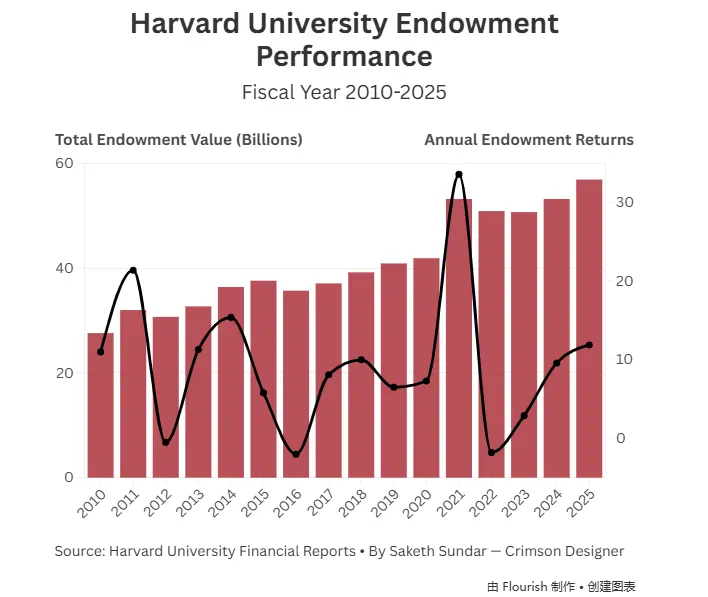
The endowment fund contributes about 37% of Harvard's operating income, providing approximately $2.5 billion in support during fiscal year 2025, but 80% of these funds are restricted by donor purpose and cannot be freely allocated.

Simultaneously, the Republican tax bill officially signed into law in July 2025 significantly increased the maximum tax rate on endowment funds from 1.4% to 8%, a change Harvard estimates will impose an additional annual tax burden of about $300 million.

Under this pressure, the asset structure itself determines where it's easiest to make cuts.

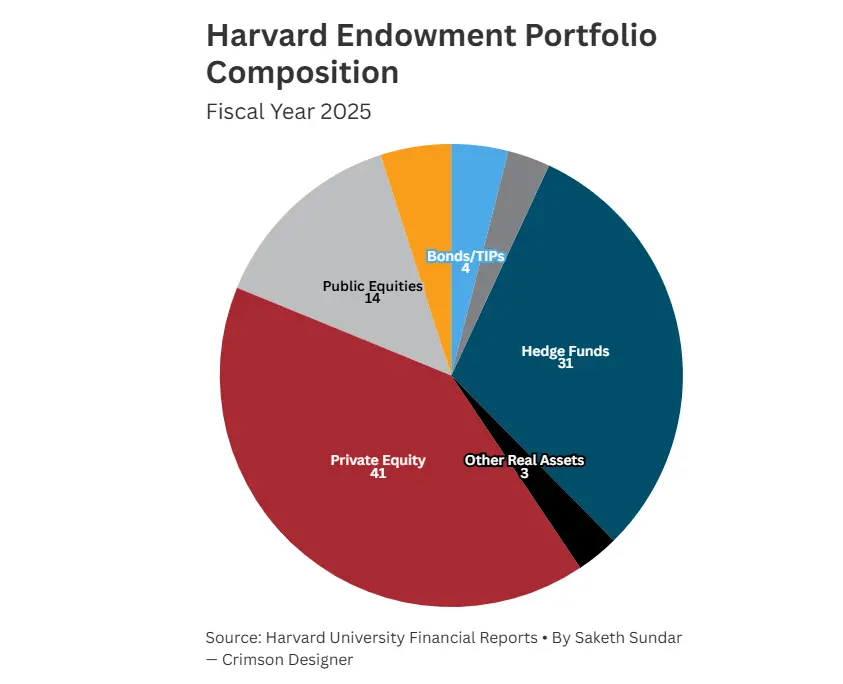
Harvard's endowment fund consists of approximately 41% private equity and 31% hedge funds. These assets have long lock-up periods and extremely high costs for discounted sales. IBIT and ETHA, as intraday tradable public market ETFs, have the strongest liquidity and the lowest liquidation costs, naturally making them the priority for adjustment.
Furthermore, HMC's current CEO N.P. Narvekar has indicated plans to retire around 2027 and is currently discussing succession arrangements with the board. In an environment of fiscal pressure, political uncertainty, and leadership transition occurring simultaneously, holding large, highly volatile crypto positions becomes an additional reputational risk.

In contrast to Harvard's retreat are the starkly different choices of other institutions. Among them, Abu Dhabi sovereign fund Mubadala continued to increase its IBIT holdings by about 16% in Q1 2026, raising its position to approximately $566 million, marking its fifth consecutive quarter of increasing its Bitcoin ETF stake.

Also as university endowment funds, Dartmouth maintained its IBIT holdings unchanged, swapped its Ethereum ETF for a staking version, and added about $3.67 million in the Bitwise Solana Staking ETF, becoming one of the first US university endowment funds to extend crypto allocations beyond Bitcoin and Ethereum.

Brown University maintained its 212,500 IBIT shares unchanged, while Emory University exited its small IBIT position, instead increasing its holdings in the Grayscale Bitcoin Mini Trust.

Overall, Harvard's operations in this round are the result of the combined effects of fiscal pressure, liquidity needs, and risk budget triggers, making it difficult to simply attribute them to chasing highs and selling lows.

When the world's top university endowment fund enters the crypto market, it does so not with a crypto-native belief approach, but with Wall Street risk-ledger logic. Crypto ETF products have indeed provided an institutional gateway, but when risk contracts, they also bring institution-style selling pressure.


İlgili Sorular

QWhat recent investment actions did Harvard University's endowment fund take regarding Bitcoin and Ethereum ETFs?

AIn its latest 13F filing, Harvard Management Company (HMC) reduced its holdings in BlackRock's Bitcoin spot ETF (IBIT) by 43% and completely sold off its entire position in the Ethereum ETF (ETHA).

QWhat is the estimated financial impact of Harvard's cryptocurrency ETF trading as mentioned in the article?

AAccording to the article, it is estimated that HMC's trading in Bitcoin and Ethereum ETFs resulted in combined losses exceeding $150 million, including over $100 million on Bitcoin and over $30 million on Ethereum.

QWhat are some of the external pressures cited as reasons for Harvard's divestment from crypto assets?

AHarvard faced multiple pressures including a $113 million operating deficit for the 2025 fiscal year, a significant increase in the endowment tax rate from 1.4% to 8% which adds an estimated $300 million in annual tax costs, and the upcoming retirement of the HMC CEO in 2027, creating a period of leadership transition and reputational risk management.

QHow did the trading behavior of other major institutions differ from Harvard's in Q1 2026?

AIn contrast to Harvard's sell-off, Abu Dhabi's sovereign fund Mubadala increased its IBIT holdings by approximately 16%, marking its fifth consecutive quarter of adding to its Bitcoin ETF position. Dartmouth College maintained its IBIT holdings and shifted its Ethereum ETF to a staking version.

QWhat was the strategic rationale suggested in the article for Harvard's initial large-scale investment in Bitcoin ETF (IBIT) in Q3 2025?

AThe article suggests the investment was part of a 'debasement hedge trade,' where HMC simultaneously bet on Bitcoin and gold (via GLD) to hedge against risks from global currency expansion. At its peak, the IBIT position constituted about 20% of HMC's disclosed portfolio, making it the largest single holding.

İlgili Okumalar

IOSG | After the Halving of Developer Count: Crypto Isn't Dead, It's Just Handing Over Talent to AI

IOSG Report: Crypto's Developer Exodus Masks a "Talent Deleveraging" and Migration to AI The number of monthly active crypto developers on GitHub has roughly halved from its 2022 peak to around 23,000. This decline is not a sign of industry collapse but a "talent deleveraging." The exodus consists largely of newcomers who entered during the bull market, while the cohort of established developers (2+ years of experience) has grown to a record high, now contributing about 70% of the code. These core builders are consolidating in ecosystems with real users and activity, like Bitcoin and Solana. The crypto industry has forged a unique skill set: building operational, trusted systems from scratch in environments with no external authority, near-zero tolerance for error, and missing rules. This involves creating trust through pure code/mechanisms and making judgments under profound technical and economic uncertainty. This capability is finding new, high-value applications in the AI era, which faces structurally similar problems: trust in opaque autonomous systems, a lack of governance frameworks, and coordination among self-interested AI agents. Key migration patterns include: 1. **Direct Hardware/Infrastructure Translation:** Projects like CoreWeave pivoted from GPU mining to AI compute supply. 2. **Mechanism Design & Trust Engineering:** Crypto's experience in decentralized coordination and incentive design (e.g., via tokenomics, staking/slashing) is being applied to critical AI challenges: * **Compute Aggregation & Verification:** Solving trust and efficiency problems in decentralized GPU networks (e.g., Hyperbolic). * **AI Agent Governance:** Using cryptoeconomic mechanisms to align the behavior of multiple autonomous AI agents (e.g., EigenLayer's approach). * **Autonomous Agent Payments:** Leveraging stablecoins and programmable money for fast, permissionless micro-transactions between AI agents (e.g., x402 protocol). The builder's role is evolving from "writing smart contracts" to "designing trust mechanisms for autonomous AI systems." This convergence is reflected in hiring trends at major firms and significant capital allocation from top venture funds like Paradigm and a16z into the crypto-AI intersection. While regional approaches differ—with the US focusing more on foundational protocol innovation and Asia on application-layer integration—the core thesis remains: the systemic skills honed in crypto's trustless environments are becoming a scarce and critical asset for scaling AI.

marsbitŞimdi

IOSG | After the Halving of Developer Count: Crypto Isn't Dead, It's Just Handing Over Talent to AI

marsbitŞimdi

Five Core Forms of AI Agent in YC's Eyes

The article outlines five core architectural patterns for effective AI Agents, emerging from tools like Codex and Claude, that move beyond simple prompts towards reusable, process-based capabilities. 1. **Skills**: Reusable, parameterized workflows that function like method calls, allowing a single process (e.g., "/investigate") to handle various tasks based on input parameters. 2. **Thin Harness**: A lightweight execution framework (~200 lines) that manages the AI model's "hands and feet"—handling loops, file I/O, and context—without becoming bloated. 3. **Resolvers**: Routing tables that map tasks to specific Skills, preventing "context corruption" when managing dozens of Skills and ensuring outputs go to the correct locations. 4. **Latent vs. Deterministic Layer**: A critical separation where LLMs handle judgment, synthesis, and pattern recognition, while deterministic code handles tasks requiring precision, consistency, and low cost (like calculations). 5. **Memory**: A persistent, accumulating knowledge base (e.g., a markdown folder) with a "current trusted conclusion" section and an append-only timeline, enabling the system to learn and retain context over time. Together, these patterns create a "process power"—a durable competitive advantage. Unlike one-off prompt-based applications whose value quickly commoditizes, a well-designed AI Agent system encodes experience into reusable, parameterized workflows, offloads stable rules to code, and continuously learns through memory. This creates a structured, hard-to-replicate capability that can provide sustained value for individuals or businesses, such as an accountant automating client reviews while preserving privacy and accumulating expertise.

marsbit1 saat önce

Five Core Forms of AI Agent in YC's Eyes

marsbit1 saat önce

İşlemler

Spot
Futures

Popüler Makaleler

BITCOIN Nedir

HarryPotterObamaSonic10Inu (ERC-20)'yu ve Kripto Alanındaki Yerini Anlamak Son yıllarda, kripto para piyasası, hem ticaret yapanların hem de topluluk etkileşimi ve eğlence değeri arayanların ilgisini çeken meme coin'lerin popülaritesinde bir artış gördü. Bu benzersiz token'lar arasında, kripto para dokusuna kültürel referansları harmanlayan ilginç bir proje olan HarryPotterObamaSonic10Inu (ERC-20) bulunmaktadır. Bu makale, HarryPotterObamaSonic10Inu'nun temel yönlerini, mekanizmalarını, topluluk odaklı ethosunu ve daha geniş kripto manzarasıyla etkileşimini incelemektedir. HarryPotterObamaSonic10Inu (ERC-20) Nedir? Adından da anlaşılacağı gibi, HarryPotterObamaSonic10Inu, Ethereum blok zinciri üzerinde inşa edilen bir meme coin'dir ve ERC-20 standardı altında sınıflandırılmaktadır. Geleneksel kripto paraların pratik kullanılabilirlik veya yatırım potansiyeline odaklandığı durumların aksine, bu token eğlence değeri ve topluluğunun gücü üzerine kuruludur. Proje, bağlı kullanıcıların bir araya gelebileceği, fikirlerini paylaşabileceği ve çeşitli kültürel fenomenlerden ilham alan etkinliklere katılabileceği bir ortam yaratmayı hedeflemektedir. HarryPotterObamaSonic10Inu'nun dikkate değer özelliklerinden biri işlemlerde sıfır vergi olmasıdır. Bu çekici unsur, küçük ölçekli yatırımcıları caydırabilecek ek ücretlerden yoksun olarak ticareti ve topluluk katılımını teşvik etmeyi amaçlamaktadır. Coin'in toplam arzı bir milyar token olarak belirlenmiştir; bu, topluluk içinde önemli bir dolaşım sağlama niyetini göstermektedir. HarryPotterObamaSonic10Inu (ERC-20) Yaratıcısı HarryPotterObamaSonic10Inu'nun kökenleri bir miktar gizemlidir; yaratıcısı hakkında spesifik bilgilerin ne olduğu bilinmemektedir. Bu token'ın geliştirilmesi, belirli bir ekip veya açık bir plan eksikliği ile gerçekleşmiştir; bu durum, meme coin sektöründe oldukça yaygındır. Proje, topluluğunun heyecanı ve katılımına dayalı olarak organik bir şekilde ortaya çıkmıştır. HarryPotterObamaSonic10Inu (ERC-20) Yatırımcıları Dış yatırımlar ve destekler söz konusu olduğunda, HarryPotterObamaSonic10Inu da belirsiz kalmaktadır. Token, bilinen herhangi bir yatırım fonunu veya önemli bir kurumsal desteği listelememektedir. Bunun yerine, projenin can damarı, kolektif eylem ve kripto alanındaki katılım yoluyla büyüme ve sürdürülebilirlik sağlayan temel topluluğudur. HarryPotterObamaSonic10Inu (ERC-20) Nasıl Çalışır? Bir meme coin olarak, HarryPotterObamaSonic10Inu, genellikle varlık değerini yöneten geleneksel çerçevelerin dışında çalışmaktadır. Projenin nasıl çalıştığını tanımlayan birkaç özelliği vardır: Sıfır Vergi İşlemleri: İşlemlerde vergi ücreti olmadan, kullanıcılar gizli maliyet endişesi olmadan token'ı serbestçe alıp satabilirler. Topluluk Etkileşimi: Proje, topluluk etkileşimi üzerine kuruludur ve sosyal medya platformlarını kullanarak heyecan yaratarak katılımı kolaylaştırır. Tartışmalar, içerik paylaşımı ve katılım, projenin erişimini genişletmeye ve destekleyiciler arasında sadakat oluşturmaya yardımcı olan kritik unsurlardır. Pratik Kullanılabilirlik Yok: HarryPotterObamaSonic10Inu'nun mali ekosistem içinde somut bir kullanılabilirlik sunmadığı belirtilmelidir. Daha ziyade, eğlence ve topluluk etkinlikleri için bir token olarak sınıflandırılmaktadır. Kültürel Referans: Token, popüler kültürden unsurları zekice harmanlayarak ilgi çekmektedir ve hem meme meraklıları hem de kripto takipçileriyle bağlantı kurmaktadır. HarryPotterObamaSonic10Inu, meme coin'lerin, daha geleneksel kripto para projelerinden nasıl farklı çalıştığını örneklendirmektedir; bu projeler, utilitarist varlıklar yerine yenilikçi sosyal yapıların bir parçası olarak piyasaya girmektedir. HarryPotterObamaSonic10Inu (ERC-20) Zaman Çizelgesi HarryPotterObamaSonic10Inu'nun tarihi, birkaç dikkate değer kilometre taşı ile işaretlenmiştir: Oluşum: Token, birçok kripto meraklısının hayal gücünü yakalayan bir viral meme'den ortaya çıkmıştır. Spesifik yaratım tarihleri mevcut değildir ve bu onun organik yükselişini vurgulamaktadır. Borsa Listelemeleri: HarryPotterObamaSonic10Inu, topluluğun daha kolay erişim ve ticaret yapabilmesini sağlamak için çeşitli borsalarda yer bulmuştur. Topluluk Katılım İnisiyatifleri: Yarışmalar, sosyal medya kampanyaları ve hayranlar ile destekçilerden içerik üretimini içeren topluluk etkileşimini artırmayı amaçlayan devam eden etkinlikler. Gelecek Genişleme Planları: Projenin yol haritası, kültürel temalarına ilişkin bir NFT koleksiyonu, ticari ürünler ve bir e-ticaret sitesi başlatılmasını içermektedir; bu da topluluğun daha fazla katılımını sağlamayı ve ekosistemine daha fazla boyut kazandırmayı hedeflemektedir. HarryPotterObamaSonic10Inu (ERC-20) Hakkında Kilit Noktalar Topluluk Odaklı Doğası: Proje, kullanıcı katılımını geliştirme önceliği taşır ve böylece kullanıcıların sürecin en önünde yer almasını sağlar. Meme Coin Sınıflandırması: Eğlenceye dayalı kripto paranın doruk noktasıdır ve geleneksel yatırım araçlarından ayrılmaktadır. Bitcoin ile Doğrudan İlişki Yok: Ticker ismindeki benzeliğe rağmen, HarryPotterObamaSonic10Inu ayırt edicidir ve Bitcoin veya diğer yerleşik kripto paralarla herhangi bir ilişkisi yoktur. İşbirliğine Odaklanma: HarryPotterObamaSonic10Inu, sahipleri arasında işbirliği ve hikaye paylaşımı için bir alan oluşturmak üzere tasarlanmıştır ve bu da yaratıcılık ve topluluk bağlarını sağlamaktadır. Gelecek Beklentileri: Başlangıçta belirlendiği temalardan NFTs ve ticari ürünlere genişleme arzusu, projenin dijital kültürde daha ana akıma girebilmesi için bir yol haritası çizmektedir. Meme coin'ler, kripto para topluluğunun hayal gücünü çalmaya devam ederken, HarryPotterObamaSonic10Inu (ERC-20), kültürel bağları ve topluluk merkezli yaklaşımıyla öne çıkmaktadır. Geleneksel bir hizmet odaklı token modeliyle uyumlu olmasa da, özünde destekçileri arasında sağlanan neşe ve dostluğu vurgulayarak, giderek dijitalleşen bir çağda kripto paraların evrilen doğasını göstermektedir. Proje gelişmeye devam ettikçe, topluluk dinamiklerinin blockchain teknolojisi dünyasındaki seyrini nasıl etkilediğini izlemek önemli olacaktır.

1.7k Toplam GörüntülenmeYayınlanma 2024.04.01Güncellenme 2024.12.03

BITCOIN Nedir

BTC Nasıl Satın Alınır

HTX.com’a hoş geldiniz! Bitcoin (BTC) satın alma işlemlerini basit ve kullanışlı bir hâle getirdik. Adım adım açıkladığımız rehberimizi takip ederek kripto yolculuğunuza başlayın. 1. Adım: HTX Hesabınızı OluşturunHTX'te ücretsiz bir hesap açmak için e-posta adresinizi veya telefon numaranızı kullanın. Sorunsuzca kaydolun ve tüm özelliklerin kilidini açın. Hesabımı Aç2. Adım: Kripto Satın Al Bölümüne Gidin ve Ödeme Yönteminizi SeçinKredi/Banka Kartı: Visa veya Mastercard'ınızı kullanarak anında Bitcoin (BTC) satın alın.Bakiye: Sorunsuz bir şekilde işlem yapmak için HTX hesap bakiyenizdeki fonları kullanın.Üçüncü Taraflar: Kullanımı kolaylaştırmak için Google Pay ve Apple Pay gibi popüler ödeme yöntemlerini ekledik.P2P: HTX'teki diğer kullanıcılarla doğrudan işlem yapın.Borsa Dışı (OTC): Yatırımcılar için kişiye özel hizmetler ve rekabetçi döviz kurları sunuyoruz.3. Adım: Bitcoin (BTC) Varlıklarınızı SaklayınBitcoin (BTC) satın aldıktan sonra HTX hesabınızda saklayın. Alternatif olarak, blok zinciri transferi yoluyla başka bir yere gönderebilir veya diğer kripto para birimlerini takas etmek için kullanabilirsiniz.4. Adım: Bitcoin (BTC) Varlıklarınızla İşlem YapınHTX'in spot piyasasında Bitcoin (BTC) ile kolayca işlemler yapın.Hesabınıza erişin, işlem çiftinizi seçin, işlemlerinizi gerçekleştirin ve gerçek zamanlı olarak izleyin. Hem yeni başlayanlar hem de deneyimli yatırımcılar için kullanıcı dostu bir deneyim sunuyoruz.

7.6k Toplam GörüntülenmeYayınlanma 2024.12.12Güncellenme 2025.03.21

BTC Nasıl Satın Alınır

$BITCOIN Nedir

DİJİTAL ALTIN ($BITCOIN): Kapsamlı Bir Analiz DİJİTAL ALTIN ($BITCOIN) Tanıtımı DİJİTAL ALTIN ($BITCOIN), geleneksel değerli metallerin özelliklerini merkeziyetsiz teknolojilerin yeniliği ile birleştirmeyi amaçlayan Solana ağı üzerinde çalışan blockchain tabanlı bir projedir. Bitcoin ile aynı isme sahip olmasına rağmen, genellikle bir değer saklama aracı olarak algılandığı için “dijital altın” olarak anılmaktadır; DİJİTAL ALTIN, Web3 ortamında benzersiz bir ekosistem yaratmak için tasarlanmış ayrı bir tokendir. Hedefi, uygulanabilir bir alternatif dijital varlık olarak kendini konumlandırmaktır, ancak uygulamaları ve işlevleri ile ilgili ayrıntılar hala gelişmektedir. DİJİTAL ALTIN ($BITCOIN) Nedir? DİJİTAL ALTIN ($BITCOIN), Solana blockchain'inde kullanılmak üzere açıkça tasarlanmış bir kripto para tokenidir. Bitcoin'in yaygın olarak tanınan bir değer saklama rolü sağlamasının aksine, bu token daha geniş uygulamalara ve özelliklere odaklanıyor gibi görünmektedir. Dikkate değer yönler şunlardır: Blockchain Altyapısı: Token, yüksek hızlı ve düşük maliyetli işlemleri yönetme kapasitesi ile bilinen Solana blockchain'inde inşa edilmiştir. Arz Dinamikleri: DİJİTAL ALTIN'ın maksimum arzı 100 katrilyon token (100P $BITCOIN) ile sınırlıdır, ancak dolaşımdaki arzı ile ilgili ayrıntılar şu anda açıklanmamıştır. Kullanım Alanı: Kesin işlevler açıkça belirtilmemiş olsa da, token'ın merkeziyetsiz uygulamalar (dApps) veya varlık tokenizasyon stratejileri ile ilgili çeşitli uygulamalar için kullanılabileceğine dair işaretler bulunmaktadır. DİJİTAL ALTIN ($BITCOIN) Yaratıcısı Kimdir? Şu anda, DİJİTAL ALTIN ($BITCOIN) arkasındaki yaratıcıların ve geliştirme ekibinin kimliği bilinmemektedir. Bu durum, merkeziyetsiz finans ve meme coin fenomenleriyle uyumlu olan birçok yenilikçi proje arasında yaygındır. Böyle bir anonimlik, topluluk odaklı bir kültürü teşvik edebilirken, yönetişim ve hesap verebilirlik konusundaki endişeleri artırmaktadır. DİJİTAL ALTIN ($BITCOIN) Yatırımcıları Kimlerdir? Mevcut bilgiler, DİJİTAL ALTIN ($BITCOIN) için bilinen herhangi bir kurumsal destekçi veya önde gelen risk sermayesi yatırımı olmadığını göstermektedir. Proje, geleneksel finansman yolları yerine topluluk desteği ve benimsemeye odaklanan bir eşler arası modelde çalışıyor gibi görünmektedir. Faaliyetleri ve likiditesi esas olarak PumpSwap gibi merkeziyetsiz borsalarda (DEX'ler) yer almakta olup, bu da onun taban hareketine vurgu yapmaktadır. DİJİTAL ALTIN ($BITCOIN) Nasıl Çalışır DİJİTAL ALTIN ($BITCOIN) 'ın operasyonel mekanikleri, blockchain tasarımı ve ağ özellikleri temelinde açıklanabilir: Konsensüs Mekanizması: Solana'nın benzersiz tarih kanıtı (PoH) ile bir hisse kanıtı (PoS) modelini birleştirerek, proje ağın yüksek performansına katkıda bulunan verimli işlem doğrulamasını sağlar. Tokenomik: Belirli deflasyonist mekanizmalar kapsamlı bir şekilde detaylandırılmamış olsa da, geniş maksimum token arzı, henüz tanımlanmamış mikro işlemler veya niş kullanım durumlarına hitap edebileceğini ima etmektedir. Etkileşim: Solana'nın daha geniş ekosistemi ile entegrasyon potansiyeli bulunmaktadır; bu, çeşitli merkeziyetsiz finans (DeFi) platformlarını içermektedir. Ancak, belirli entegrasyonlarla ilgili ayrıntılar belirtilmemiştir. Önemli Olayların Zaman Çizelgesi DİJİTAL ALTIN ($BITCOIN) ile ilgili önemli kilometre taşlarını vurgulayan bir zaman çizelgesi: 2023: Token'ın Solana blockchain'inde ilk dağıtımı, sözleşme adresi ile işaretlenmiştir. 2024: DİJİTAL ALTIN, PumpSwap gibi merkeziyetsiz borsalarda işlem görmeye başladıkça görünürlük kazanır ve kullanıcıların bunu SOL karşısında ticaret yapmasına olanak tanır. 2025: Proje, topluluk odaklı etkileşimlere yönelik potansiyel ilgi ve ara sıra ticaret faaliyetleri görür, ancak şu ana kadar dikkate değer ortaklıklar veya teknik ilerlemeler belgelenmemiştir. Kritik Analiz Güçlü Yönler Ölçeklenebilirlik: Temel Solana altyapısı, yüksek işlem hacimlerini destekleyerek $BITCOIN'in çeşitli işlem senaryolarındaki faydasını artırabilir. Erişilebilirlik: Token başına potansiyel düşük ticaret fiyatı, perakende yatırımcıları çekebilir ve parçalı mülkiyet fırsatları sayesinde daha geniş katılımı kolaylaştırabilir. Riskler Şeffaflık Eksikliği: Kamuya açık olarak bilinen destekçilerin, geliştiricilerin veya bir denetim sürecinin olmaması, projenin sürdürülebilirliği ve güvenilirliği konusunda şüpheler doğurabilir. Piyasa Volatilitesi: Ticaret faaliyeti büyük ölçüde spekülatif davranışa dayanmakta olup, bu da yatırımcılar için önemli fiyat dalgalanmalarına ve belirsizliklere yol açabilir. Sonuç DİJİTAL ALTIN ($BITCOIN), hızla gelişen Solana ekosisteminde ilginç ama belirsiz bir proje olarak ortaya çıkmaktadır. “Dijital altın” anlatısını kullanmaya çalışırken, Bitcoin'in değer saklama rolünden ayrılması, amaçlanan faydasının ve yönetişim yapısının daha net bir şekilde tanımlanması gerekliliğini vurgulamaktadır. Gelecekteki kabul ve benimseme, mevcut belirsizliklerin giderilmesine ve operasyonel ile ekonomik stratejilerinin daha açık bir şekilde tanımlanmasına bağlı olacaktır. Not: Bu rapor, Ekim 2023 itibarıyla mevcut olan sentezlenmiş bilgileri kapsamaktadır ve araştırma döneminin ötesinde gelişmeler yaşanmış olabilir.

92 Toplam GörüntülenmeYayınlanma 2025.05.13Güncellenme 2025.05.13

$BITCOIN Nedir

Tartışmalar

HTX Topluluğuna hoş geldiniz. Burada, en son platform gelişmeleri hakkında bilgi sahibi olabilir ve profesyonel piyasa görüşlerine erişebilirsiniz. Kullanıcıların BTC (BTC) fiyatı hakkındaki görüşleri aşağıda sunulmaktadır.

活动图片













