Goldman Sachs Applies for Bitcoin ETF, The Last Wall Street Fortress Falls

marsbit2026-04-15 tarihinde yayınlandı2026-04-15 tarihinde güncellendi

Özet

Goldman Sachs has applied for a Bitcoin ETF, marking a dramatic shift in Wall Street's stance toward cryptocurrency. The proposed "Goldman Sachs Bitcoin Premium Income ETF" is not a spot ETF but uses a covered call strategy, holding spot Bitcoin ETF shares (like BlackRock's IBIT) while selling call options to generate premium income. This product targets institutional investors seeking yield rather than speculative gains, effectively packaging Bitcoin's volatility into a tradable income asset. This move follows Morgan Stanley's launch of its own spot Bitcoin ETF (MSBT), which attracted $34 million on its first day. With 16,000 financial advisors managing $9.3 trillion in assets, Morgan Stanley's entry signals a broader institutional adoption phase. Meanwhile, Kevin Warsh, a Fed Chair nominee, disclosed investments in crypto infrastructure like Polymarket and Solana, highlighting deepening political and institutional acceptance. Wall Street's reversal—from JPMorgan CEO Jamie Dimon calling Bitcoin a "fraud" in 2017 to major banks now developing crypto products—underscores a pursuit of profit over ideology. The focus has shifted from debating Bitcoin's legitimacy to monetizing its volatility and integrating it into traditional finance, attracting conservative capital and reshaping the asset’s role in portfolios.

Author: Xiaobing, Deep Tide TechFlow

September 12, 2017, New York, CNBC Institutional Investor Conference.

JPMorgan Chase CEO Jamie Dimon stood on stage and threw out a sentence to the fund managers present: "Bitcoin is a fraud, worse than the tulip bubble. If anyone at JPMorgan trades Bitcoin, I will fire them immediately, for two reasons: it violates the rules, and it's stupid."

That day, Bitcoin fell 2%, to $4,106.

Nine years later, on April 14, 2026, Goldman Sachs filed an application with the SEC for the Goldman Sachs Bitcoin Premium Income ETF. Six days earlier, Morgan Stanley's spot Bitcoin ETF (MSBT) had just listed, attracting $34 million on its first day, with an expense ratio of 0.14%.

On the same day, Kevin Warsh, Donald Trump's nominee for Federal Reserve Chair, submitted a 69-page financial disclosure document, which notably listed investments in Polymarket, Solana, the Ethereum development platform Tenderly, and the Bitcoin Lightning Network startup Flashnet.

Three events happened simultaneously within a week.

Wall Street's attitude towards Bitcoin took a full nine years to change from "this is a fraud" to "we make and sell our own products."

Not a Spot ETF, What is Goldman Sachs Selling?

First, a detail the market overlooked: Goldman Sachs did not apply for a spot Bitcoin ETF this time.

It applied for a "Premium Income" ETF, with a core strategy of covered calls. Simply put, the fund holds shares of spot Bitcoin ETFs (primarily BlackRock's IBIT) while simultaneously selling call options, collecting option premiums, and periodically distributing dividends to investors. The option coverage ratio floats between 40% and 100%.

What does this mean? If Bitcoin surges, you only capture part of the gains; if Bitcoin trades sideways or rises modestly, you earn more than just holding Bitcoin outright, thanks to the extra income from option premiums.

Goldman Sachs' choice of this product structure precisely reveals its target client profile: not retail investors looking to 10x their money with Bitcoin, but institutional allocation funds managing hundreds of millions or billions of dollars. These funds need a reason to enter Bitcoin, and that reason cannot be "faith," it must be "yield."

Goldman's ETF essentially says: Bitcoin's volatility itself is an asset that can be monetized. You don't need to bet on the direction; you just need to acknowledge that this market is active enough for option sellers to profit.

This thinking aligns perfectly with BlackRock's upcoming BITA. BITA also employs a covered call strategy, turning Bitcoin's volatility into monthly dividends. The difference is that BlackRock has the massive $55 billion IBIT base for liquidity support, while Goldman Sachs chose not to hold Bitcoin directly, instead holding spot ETF shares indirectly through a Cayman Islands subsidiary to circumvent regulatory constraints.

Two Wall Street giants almost simultaneously locking onto the same product赛道 (sāi dào - track/field) seems to indicate one thing: The war for spot Bitcoin ETFs is over. The next war is "who can package Bitcoin into a product that traditional asset management clients understand."

From Buying Others' Products to Making Their Own: Goldman's Nine-Year Pivot

Looking at the extended timeline, Goldman Sachs' changing attitude towards cryptocurrency is one of the most dramatic turnarounds on Wall Street.

In 2021, Goldman Sachs restarted its cryptocurrency trading desk, beginning to offer clients Bitcoin futures and options trading. Back then, the entire industry was still using rhetoric like "we focus on blockchain technology, not Bitcoin" to express the ambiguity of "I want to touch it but dare not say so."

From late 2024 to early 2025, Goldman's 13F filings began to show its true colors. As of Q4 2024, Goldman Sachs held $1.57 billion worth of Bitcoin ETF shares, with $1.27 billion in BlackRock's IBIT and $288 million in Fidelity's FBTC, a 121% increase from the previous quarter.

By the Q4 2025 13F disclosure, Goldman Sachs indirectly held approximately 13,741 Bitcoin through various spot Bitcoin ETFs, worth about $1.71 billion at the time. More astonishingly, it simultaneously held about $1 billion in Ethereum ETF, $153 million in XRP ETF, and $108 million in Solana ETF. CEO David Solomon was also invited to speak at the World Liberty Financial forum.

It took Goldman less than two years to go from buying others' products to making and selling their own.

Morgan Stanley: 16,000 Financial Advisors Are the Biggest Weapon

Morgan Stanley's节奏 (jiézòu - rhythm/pace) is faster and more aggressive.

MSBT listed on NYSE Arca on April 8th, becoming the first spot Bitcoin ETF directly issued by a major commercial bank in U.S. history. With an expense ratio of 0.14%, it was 11 basis points cheaper than BlackRock's IBIT, starting a price war immediately upon listing.

Bloomberg ETF analyst Eric Balchunas rated MSBT's first-day performance as "top 1% of all ETF launches," predicting assets under management (AUM) could reach $5 billion within a year.

But MSBT's real weapon isn't the fee; it's the distribution network. Morgan Stanley has 16,000 wealth management advisors overseeing $9.3 trillion in client assets. Previously, these advisors could only recommend third-party Bitcoin ETFs; now they can push their own product.

More importantly, Morgan Stanley has already advised clients to allocate 2% to 4% of their investment portfolios to cryptocurrencies. When a platform managing $9.3 trillion gives such allocation advice, even if only a small fraction of clients follow it, the funds flowing into the crypto market would be astronomical.

Morgan Stanley also plans to open spot trading for Bitcoin, Ethereum, and Solana through E*Trade in the first half of 2026 and has already filed applications for Ethereum and Solana trusts. This isn't testing the waters; it's a full-scale rollout.

Coinbase Institutional Business Co-CEO Brett Tejpaul said it aptly: "This marks the second wave of digital asset adoption."

The first wave was the approval of spot ETFs in 2024, with funds flooding in through the ETF channel; the second wave is banks themselves launching products, embedding crypto assets into the complete chain of traditional wealth management.

The Secret in the 69-Page File: The Next Fed Chair Invested in Polymarket and Solana

But the most interesting news this week might not be Goldman Sachs or Morgan Stanley, but Kevin Warsh's 69-page financial disclosure.

Warsh is Trump's nominee for the next Federal Reserve Chair, slated to succeed Jerome Powell, who is stepping down in May. His 69-page OGE 278e form, submitted on April 14th, contained a staggering list of investments: investment in the Ethereum L2 network Blast, investment in the decentralized prediction market Polymarket, equity in Bitcoin Lightning Network startup Flashnet, investment in Tenderly (Ethereum development platform), and prior investment in Bitwise (an asset management company running a spot Bitcoin ETF). Through DCM Investments and AVF series fund structures, Warsh has broad exposure to DeFi lending, decentralized derivatives, L1 and L2 networks, prediction markets, and Bitcoin payment infrastructure.

Although most of these positions are very small (under OGE rules, items not specifying an amount are worth less than $1,000) and Warsh has pledged to divest all upon confirmation, the symbolic significance is immense: the person poised to helm U.S. monetary policy wasn't passively buying a bit of Bitcoin in a brokerage account but was actively seeking out and investing in the most cutting-edge protocols and infrastructure in the crypto ecosystem.

Warsh had previously stated publicly that Bitcoin is "an important asset," a "good police of policy," capable of signaling when the Fed falls behind the inflation curve. Michael Saylor predicted he would become the "first pro-Bitcoin Fed Chair."

If this sentence had been uttered on that afternoon in 2017 when Jamie Dimon called "Bitcoin a fraud," it would probably have been dismissed as the ramblings of a madman.

Wall Street Has No Faith, Only Ledgers

Looking at these three events together, the picture becomes clear.

Wall Street never does anything out of "faith." It does everything for one reason only: profit. When these institutions act collectively, what they see is not the philosophical significance of Bitcoin, but an asset class with annual trading volume in the trillions, volatility consistently above 60%, a maturing options market, and the management fees, trading commissions, and structured product premiums that can be charged around this asset class.

What does this mean for retail investors?

Short-term, more ETFs mean fiercer fee wars. MSBT's 0.14% has already lowered the industry floor. Goldman Sachs and BlackRock's income-focused ETFs will further compete for conservative capital that "wants yield but not full volatility." Bitcoin's entry points for capital are being widened.

Medium-term, when Wall Street starts building yield products around Bitcoin, it is effectively redefining Bitcoin from a "speculative asset" to an "alternative yield asset." This will attract a host of pension funds, insurance capital, and university endowments that were previously scared off by "excessive volatility." Once this money comes in, it's unlikely to leave quickly.

Long-term, when the Fed Chair nominee's portfolio includes Polymarket and Solana, when the two most arrogant investment banks on Wall Street are racing to launch Bitcoin ETF products, the question "Is Bitcoin a legitimate asset?" no longer needs answering.

The question becomes: Where do you stand in this new order?

In 2017, Jamie Dimon said, "I would fire employees trading Bitcoin." In 2026, his peers are falling over themselves to sell Bitcoin to every client walking through the bank's doors.

Wall Street has no faith, only ledgers. When the numbers on the ledger are large enough, any faith will change.


Trend Kriptolar

İlgili Sorular

QWhat type of Bitcoin ETF did Goldman Sachs apply for, and what is its core strategy?

AGoldman Sachs applied for a 'Premium Income' Bitcoin ETF, not a spot Bitcoin ETF. Its core strategy is a covered call (option) strategy. The fund holds shares of spot Bitcoin ETFs (primarily BlackRock's IBIT) and simultaneously sells call options to collect premiums, which are then distributed as periodic dividends to investors.

QAccording to the article, what does the collective action of Wall Street firms like Goldman Sachs and Morgan Stanley signal about the Bitcoin market?

AIt signals that the battle for spot Bitcoin ETFs is over, and the next phase is about repackaging Bitcoin into products that traditional asset management clients can understand and accept. It marks a shift from viewing Bitcoin as a speculative asset to an 'alternative yield asset,' aiming to attract conservative institutional capital like pensions and endowments.

QWhat significant detail was revealed in the financial disclosure of Kevin Warsh, the nominee for the next Fed Chair?

AHis 69-page financial disclosure revealed investments in several crypto and DeFi projects, including the Ethereum L2 network Blast, the prediction market Polymarket, Bitcoin Lightning Network startup Flashnet, Ethereum development platform Tenderly, and asset manager Bitwise. This signals a deep, proactive engagement with the crypto ecosystem from a key monetary policy figure.

QWhat is Morgan Stanley's key advantage in launching its own Bitcoin ETF (MSBT)?

AMorgan Stanley's key advantage is its massive distribution network of 16,000 wealth management advisors who oversee $9.3 trillion in client assets. This allows them to directly recommend their own Bitcoin ETF product to a vast existing client base, far surpassing the reach of pure-play ETF issuers.

QWhat is the core reason, as stated in the article's conclusion, for Wall Street's dramatic shift in attitude towards Bitcoin?

AWall Street has no inherent信仰 (faith or belief); it only has ledgers. The core reason for the shift is profit. When the numbers on the ledger became large enough—representing a trillion-dollar asset class with high volatility and mature options markets—Wall Street changed its stance to capitalize on the management fees, trading commissions, and structured product premiums it could generate.

İlgili Okumalar

Company Managing $2.8 Billion in Bitcoin Makes Optimistic Statement About BTC!

Dylan LeClair, CFO of MetaPlanet, commented on the recent sharp sell-offs in crypto markets and growing criticism towards Bitcoin-holding companies. He compared the current pessimism to the 2022 crash, suggesting price corrections and liquidations have set the stage for Bitcoin's next growth phase. LeClair acknowledged that the recent BTC price drop created negative perceptions of corporate balance sheet holdings but called this a cyclical phenomenon. He referenced similar criticism faced by MicroStrategy in 2021/22, noting that while such companies can underperform BTC during downturns due to leveraged structures, the long-term trend reverses. He argued that for Bitcoin to reach a multi-trillion-dollar asset class, integration with traditional capital markets is essential, and retail "cold storage" alone is insufficient. Addressing criticism from some Bitcoin purists, LeClair defended the use of equities and debt instruments as necessary bridges to attract institutional capital with varying risk tolerances. LeClair suggested the market may have bottomed, citing institutional funds rotating from Bitcoin-related assets into AI stocks at the end of Q2, creating artificial selling pressure. He downplayed exaggerated fears like quantum computing threats, predicting that once sellers are exhausted, Bitcoin will surge sharply without significant news catalysts.

cryptonews.ru1 saat önce

Company Managing $2.8 Billion in Bitcoin Makes Optimistic Statement About BTC!

cryptonews.ru1 saat önce

Capital is Moving from Cryptocurrency Speculation to Tokenized RWA Assets

In 2026, tokenized real-world assets (RWA) became one of the fastest-growing areas in crypto. Investors, weary of market volatility, are shifting capital from speculative crypto trading towards assets offering stable yield. These include tokenized government bonds (e.g., T-bills), private credit, real estate income, commodities, and money market funds. Data shows a clear preference for transparent, regulated products. Deposits into RWA protocols more than tripled year-on-year, reaching $7.4 billion in Q2, while spot trading activity surged 220%. The total on-chain value of tokenized RWAs exceeded $30 billion in 2026, more than doubling from the previous year, and approached $38 billion by August. RWA acts as a bridge between traditional finance and blockchain, not a replacement. It allows banks and asset managers to launch regulated products on public blockchains, while DeFi users gain access to previously unavailable real-world assets. Blockchain provides 24/7 settlements, transparency, programmability, and lower fees, while traditional finance contributes capital, regulation, and proven products. Tokenized private credit remains the largest RWA category (over $7 billion on-chain), benefiting from blockchain's cost reduction and transparency. Treasury bills are the fastest-growing institutional segment, driven by higher interest rates. Tokenized commodities, especially gold, are expanding, combining asset safety with blockchain trading ease. Real estate, though smaller, is also growing steadily. Tokenization is increasingly viewed as core financial infrastructure.

cryptonews.ru1 saat önce

Capital is Moving from Cryptocurrency Speculation to Tokenized RWA Assets

cryptonews.ru1 saat önce

Lone Bitcoin Miner Defies All Odds, Hits $200,000 Jackpot with Block Reward

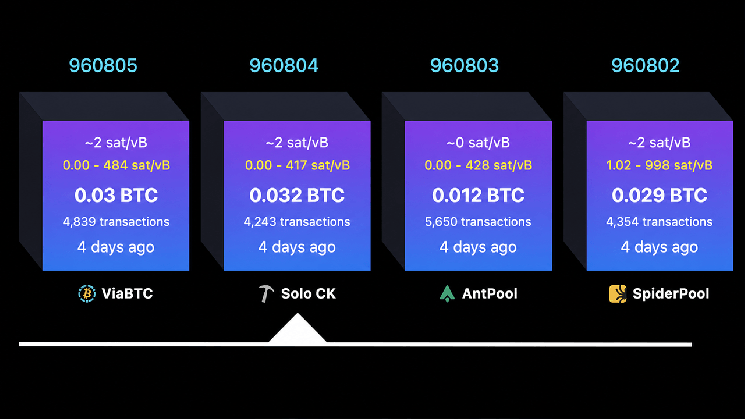
A solo Bitcoin miner, contrary to all predictions, won a $200,000 jackpot as a block reward. The payment went to an address linked to CKPool, a solo-mining service. This was the 317th solo block found by the pool. The reward consisted of the 3.125 BTC fixed subsidy and about 0.032 BTC in transaction fees from 4,243 transactions. CKPool operator Dr -ck (Con Kolivas) confirmed the win, noting the miner's hashrate was "extremely volatile, presumably rented," peaking at 100 PH/s. This represented about 0.011% of Bitcoin's total network hashrate. At that level, a miner could statistically expect to find a block roughly every 64 days, far more likely than for a typical small home setup. Solo mining differs from pool mining, where rewards are shared based on contributed work. In solo mining, a miner gets nothing unless they personally find a block, but then receives the entire reward. CKPool charges a ~2% fee on blocks found. Dr -ck noted the hashrate pattern suggested rented computing power, a practice making solo wins more accessible. He also highlighted this was the first mainnet block mined after integrating Stratum V2 code into ckpool, though the block itself was found using the older Stratum V1 protocol. Against a backdrop of mining concentration in large industrial pools, such solo finds remain rare but demonstrate that anyone with sufficient hashrate can claim a full reward without corporate or government permission. The block subsidy will remain 3.125 BTC until the next halving around April 2028. The miner's identity remains unknown, as is typical. Bitcoin's mining difficulty is due for an adjustment, and network hashrate has declined from late 2025 peaks, partly due to competition for power and hardware from AI data centers.

cryptonews.ru1 saat önce

Lone Bitcoin Miner Defies All Odds, Hits $200,000 Jackpot with Block Reward

cryptonews.ru1 saat önce

Blackrock Leads with $305 Million Inflow into Bitcoin and Ether ETFs

Money continued to flow rapidly into the largest cryptocurrency ETFs. Bitcoin and Ethereum ETFs collectively attracted over $305 million in inflows, with BlackRock again leading the charge, marking the third consecutive session of strong institutional demand. The broader market picture was mixed. Hyperliquid ($HYPE) ETFs finally saw renewed buying interest, while XRP ($XRP) ETFs faced outflows, and Solana-based products remained stagnant. In a strong session, Bitcoin ETFs recorded a net inflow of $244.42 million across five funds. BlackRock's IBIT dominated with $196.83 million, followed by ARK 21Shares' ARKB at $37.63 million and Fidelity's FBTC at $11.28 million. Vaneck's HODL was the sole fund to see an outflow (-$14.67 million), barely impacting the category's overall positive trend. Total trading volume reached $1.58 billion. Ethereum ETFs also continued their positive run, attracting $60.86 million. BlackRock's ETHA led with $50.34 million. The staking-oriented ETHB and Fidelity's FETH followed. No Ethereum ETF saw outflows. Among smaller tokens, Hyperliquid ETFs saw a minor but notable inflow of ~$966,690, potentially signaling easing selling pressure. Conversely, XRP ETFs experienced a $3.58 million outflow. Solana ETFs saw no net activity. The session solidified Bitcoin and Ethereum as the focal point for institutional capital, with BlackRock as the dominant source of demand, while activity in altcoin ETFs remained volatile.

cryptonews.ru1 saat önce

Blackrock Leads with $305 Million Inflow into Bitcoin and Ether ETFs

cryptonews.ru1 saat önce

İşlemler

Spot

Popüler Makaleler

BITCOIN Nedir

HarryPotterObamaSonic10Inu (ERC-20)'yu ve Kripto Alanındaki Yerini Anlamak Son yıllarda, kripto para piyasası, hem ticaret yapanların hem de topluluk etkileşimi ve eğlence değeri arayanların ilgisini çeken meme coin'lerin popülaritesinde bir artış gördü. Bu benzersiz token'lar arasında, kripto para dokusuna kültürel referansları harmanlayan ilginç bir proje olan HarryPotterObamaSonic10Inu (ERC-20) bulunmaktadır. Bu makale, HarryPotterObamaSonic10Inu'nun temel yönlerini, mekanizmalarını, topluluk odaklı ethosunu ve daha geniş kripto manzarasıyla etkileşimini incelemektedir. HarryPotterObamaSonic10Inu (ERC-20) Nedir? Adından da anlaşılacağı gibi, HarryPotterObamaSonic10Inu, Ethereum blok zinciri üzerinde inşa edilen bir meme coin'dir ve ERC-20 standardı altında sınıflandırılmaktadır. Geleneksel kripto paraların pratik kullanılabilirlik veya yatırım potansiyeline odaklandığı durumların aksine, bu token eğlence değeri ve topluluğunun gücü üzerine kuruludur. Proje, bağlı kullanıcıların bir araya gelebileceği, fikirlerini paylaşabileceği ve çeşitli kültürel fenomenlerden ilham alan etkinliklere katılabileceği bir ortam yaratmayı hedeflemektedir. HarryPotterObamaSonic10Inu'nun dikkate değer özelliklerinden biri işlemlerde sıfır vergi olmasıdır. Bu çekici unsur, küçük ölçekli yatırımcıları caydırabilecek ek ücretlerden yoksun olarak ticareti ve topluluk katılımını teşvik etmeyi amaçlamaktadır. Coin'in toplam arzı bir milyar token olarak belirlenmiştir; bu, topluluk içinde önemli bir dolaşım sağlama niyetini göstermektedir. HarryPotterObamaSonic10Inu (ERC-20) Yaratıcısı HarryPotterObamaSonic10Inu'nun kökenleri bir miktar gizemlidir; yaratıcısı hakkında spesifik bilgilerin ne olduğu bilinmemektedir. Bu token'ın geliştirilmesi, belirli bir ekip veya açık bir plan eksikliği ile gerçekleşmiştir; bu durum, meme coin sektöründe oldukça yaygındır. Proje, topluluğunun heyecanı ve katılımına dayalı olarak organik bir şekilde ortaya çıkmıştır. HarryPotterObamaSonic10Inu (ERC-20) Yatırımcıları Dış yatırımlar ve destekler söz konusu olduğunda, HarryPotterObamaSonic10Inu da belirsiz kalmaktadır. Token, bilinen herhangi bir yatırım fonunu veya önemli bir kurumsal desteği listelememektedir. Bunun yerine, projenin can damarı, kolektif eylem ve kripto alanındaki katılım yoluyla büyüme ve sürdürülebilirlik sağlayan temel topluluğudur. HarryPotterObamaSonic10Inu (ERC-20) Nasıl Çalışır? Bir meme coin olarak, HarryPotterObamaSonic10Inu, genellikle varlık değerini yöneten geleneksel çerçevelerin dışında çalışmaktadır. Projenin nasıl çalıştığını tanımlayan birkaç özelliği vardır: Sıfır Vergi İşlemleri: İşlemlerde vergi ücreti olmadan, kullanıcılar gizli maliyet endişesi olmadan token'ı serbestçe alıp satabilirler. Topluluk Etkileşimi: Proje, topluluk etkileşimi üzerine kuruludur ve sosyal medya platformlarını kullanarak heyecan yaratarak katılımı kolaylaştırır. Tartışmalar, içerik paylaşımı ve katılım, projenin erişimini genişletmeye ve destekleyiciler arasında sadakat oluşturmaya yardımcı olan kritik unsurlardır. Pratik Kullanılabilirlik Yok: HarryPotterObamaSonic10Inu'nun mali ekosistem içinde somut bir kullanılabilirlik sunmadığı belirtilmelidir. Daha ziyade, eğlence ve topluluk etkinlikleri için bir token olarak sınıflandırılmaktadır. Kültürel Referans: Token, popüler kültürden unsurları zekice harmanlayarak ilgi çekmektedir ve hem meme meraklıları hem de kripto takipçileriyle bağlantı kurmaktadır. HarryPotterObamaSonic10Inu, meme coin'lerin, daha geleneksel kripto para projelerinden nasıl farklı çalıştığını örneklendirmektedir; bu projeler, utilitarist varlıklar yerine yenilikçi sosyal yapıların bir parçası olarak piyasaya girmektedir. HarryPotterObamaSonic10Inu (ERC-20) Zaman Çizelgesi HarryPotterObamaSonic10Inu'nun tarihi, birkaç dikkate değer kilometre taşı ile işaretlenmiştir: Oluşum: Token, birçok kripto meraklısının hayal gücünü yakalayan bir viral meme'den ortaya çıkmıştır. Spesifik yaratım tarihleri mevcut değildir ve bu onun organik yükselişini vurgulamaktadır. Borsa Listelemeleri: HarryPotterObamaSonic10Inu, topluluğun daha kolay erişim ve ticaret yapabilmesini sağlamak için çeşitli borsalarda yer bulmuştur. Topluluk Katılım İnisiyatifleri: Yarışmalar, sosyal medya kampanyaları ve hayranlar ile destekçilerden içerik üretimini içeren topluluk etkileşimini artırmayı amaçlayan devam eden etkinlikler. Gelecek Genişleme Planları: Projenin yol haritası, kültürel temalarına ilişkin bir NFT koleksiyonu, ticari ürünler ve bir e-ticaret sitesi başlatılmasını içermektedir; bu da topluluğun daha fazla katılımını sağlamayı ve ekosistemine daha fazla boyut kazandırmayı hedeflemektedir. HarryPotterObamaSonic10Inu (ERC-20) Hakkında Kilit Noktalar Topluluk Odaklı Doğası: Proje, kullanıcı katılımını geliştirme önceliği taşır ve böylece kullanıcıların sürecin en önünde yer almasını sağlar. Meme Coin Sınıflandırması: Eğlenceye dayalı kripto paranın doruk noktasıdır ve geleneksel yatırım araçlarından ayrılmaktadır. Bitcoin ile Doğrudan İlişki Yok: Ticker ismindeki benzeliğe rağmen, HarryPotterObamaSonic10Inu ayırt edicidir ve Bitcoin veya diğer yerleşik kripto paralarla herhangi bir ilişkisi yoktur. İşbirliğine Odaklanma: HarryPotterObamaSonic10Inu, sahipleri arasında işbirliği ve hikaye paylaşımı için bir alan oluşturmak üzere tasarlanmıştır ve bu da yaratıcılık ve topluluk bağlarını sağlamaktadır. Gelecek Beklentileri: Başlangıçta belirlendiği temalardan NFTs ve ticari ürünlere genişleme arzusu, projenin dijital kültürde daha ana akıma girebilmesi için bir yol haritası çizmektedir. Meme coin'ler, kripto para topluluğunun hayal gücünü çalmaya devam ederken, HarryPotterObamaSonic10Inu (ERC-20), kültürel bağları ve topluluk merkezli yaklaşımıyla öne çıkmaktadır. Geleneksel bir hizmet odaklı token modeliyle uyumlu olmasa da, özünde destekçileri arasında sağlanan neşe ve dostluğu vurgulayarak, giderek dijitalleşen bir çağda kripto paraların evrilen doğasını göstermektedir. Proje gelişmeye devam ettikçe, topluluk dinamiklerinin blockchain teknolojisi dünyasındaki seyrini nasıl etkilediğini izlemek önemli olacaktır.

2.4k Toplam GörüntülenmeYayınlanma 2024.04.01Güncellenme 2024.12.03

BITCOIN Nedir

BTC Nasıl Satın Alınır

HTX.com’a hoş geldiniz! Bitcoin (BTC) satın alma işlemlerini basit ve kullanışlı bir hâle getirdik. Adım adım açıkladığımız rehberimizi takip ederek kripto yolculuğunuza başlayın. 1. Adım: HTX Hesabınızı OluşturunHTX'te ücretsiz bir hesap açmak için e-posta adresinizi veya telefon numaranızı kullanın. Sorunsuzca kaydolun ve tüm özelliklerin kilidini açın. Hesabımı Aç2. Adım: Kripto Satın Al Bölümüne Gidin ve Ödeme Yönteminizi SeçinKredi/Banka Kartı: Visa veya Mastercard'ınızı kullanarak anında Bitcoin (BTC) satın alın.Bakiye: Sorunsuz bir şekilde işlem yapmak için HTX hesap bakiyenizdeki fonları kullanın.Üçüncü Taraflar: Kullanımı kolaylaştırmak için Google Pay ve Apple Pay gibi popüler ödeme yöntemlerini ekledik.P2P: HTX'teki diğer kullanıcılarla doğrudan işlem yapın.Borsa Dışı (OTC): Yatırımcılar için kişiye özel hizmetler ve rekabetçi döviz kurları sunuyoruz.3. Adım: Bitcoin (BTC) Varlıklarınızı SaklayınBitcoin (BTC) satın aldıktan sonra HTX hesabınızda saklayın. Alternatif olarak, blok zinciri transferi yoluyla başka bir yere gönderebilir veya diğer kripto para birimlerini takas etmek için kullanabilirsiniz.4. Adım: Bitcoin (BTC) Varlıklarınızla İşlem YapınHTX'in spot piyasasında Bitcoin (BTC) ile kolayca işlemler yapın.Hesabınıza erişin, işlem çiftinizi seçin, işlemlerinizi gerçekleştirin ve gerçek zamanlı olarak izleyin. Hem yeni başlayanlar hem de deneyimli yatırımcılar için kullanıcı dostu bir deneyim sunuyoruz.

8.5k Toplam GörüntülenmeYayınlanma 2024.12.12Güncellenme 2026.06.02

BTC Nasıl Satın Alınır

$BITCOIN Nedir

DİJİTAL ALTIN ($BITCOIN): Kapsamlı Bir Analiz DİJİTAL ALTIN ($BITCOIN) Tanıtımı DİJİTAL ALTIN ($BITCOIN), geleneksel değerli metallerin özelliklerini merkeziyetsiz teknolojilerin yeniliği ile birleştirmeyi amaçlayan Solana ağı üzerinde çalışan blockchain tabanlı bir projedir. Bitcoin ile aynı isme sahip olmasına rağmen, genellikle bir değer saklama aracı olarak algılandığı için “dijital altın” olarak anılmaktadır; DİJİTAL ALTIN, Web3 ortamında benzersiz bir ekosistem yaratmak için tasarlanmış ayrı bir tokendir. Hedefi, uygulanabilir bir alternatif dijital varlık olarak kendini konumlandırmaktır, ancak uygulamaları ve işlevleri ile ilgili ayrıntılar hala gelişmektedir. DİJİTAL ALTIN ($BITCOIN) Nedir? DİJİTAL ALTIN ($BITCOIN), Solana blockchain'inde kullanılmak üzere açıkça tasarlanmış bir kripto para tokenidir. Bitcoin'in yaygın olarak tanınan bir değer saklama rolü sağlamasının aksine, bu token daha geniş uygulamalara ve özelliklere odaklanıyor gibi görünmektedir. Dikkate değer yönler şunlardır: Blockchain Altyapısı: Token, yüksek hızlı ve düşük maliyetli işlemleri yönetme kapasitesi ile bilinen Solana blockchain'inde inşa edilmiştir. Arz Dinamikleri: DİJİTAL ALTIN'ın maksimum arzı 100 katrilyon token (100P $BITCOIN) ile sınırlıdır, ancak dolaşımdaki arzı ile ilgili ayrıntılar şu anda açıklanmamıştır. Kullanım Alanı: Kesin işlevler açıkça belirtilmemiş olsa da, token'ın merkeziyetsiz uygulamalar (dApps) veya varlık tokenizasyon stratejileri ile ilgili çeşitli uygulamalar için kullanılabileceğine dair işaretler bulunmaktadır. DİJİTAL ALTIN ($BITCOIN) Yaratıcısı Kimdir? Şu anda, DİJİTAL ALTIN ($BITCOIN) arkasındaki yaratıcıların ve geliştirme ekibinin kimliği bilinmemektedir. Bu durum, merkeziyetsiz finans ve meme coin fenomenleriyle uyumlu olan birçok yenilikçi proje arasında yaygındır. Böyle bir anonimlik, topluluk odaklı bir kültürü teşvik edebilirken, yönetişim ve hesap verebilirlik konusundaki endişeleri artırmaktadır. DİJİTAL ALTIN ($BITCOIN) Yatırımcıları Kimlerdir? Mevcut bilgiler, DİJİTAL ALTIN ($BITCOIN) için bilinen herhangi bir kurumsal destekçi veya önde gelen risk sermayesi yatırımı olmadığını göstermektedir. Proje, geleneksel finansman yolları yerine topluluk desteği ve benimsemeye odaklanan bir eşler arası modelde çalışıyor gibi görünmektedir. Faaliyetleri ve likiditesi esas olarak PumpSwap gibi merkeziyetsiz borsalarda (DEX'ler) yer almakta olup, bu da onun taban hareketine vurgu yapmaktadır. DİJİTAL ALTIN ($BITCOIN) Nasıl Çalışır DİJİTAL ALTIN ($BITCOIN) 'ın operasyonel mekanikleri, blockchain tasarımı ve ağ özellikleri temelinde açıklanabilir: Konsensüs Mekanizması: Solana'nın benzersiz tarih kanıtı (PoH) ile bir hisse kanıtı (PoS) modelini birleştirerek, proje ağın yüksek performansına katkıda bulunan verimli işlem doğrulamasını sağlar. Tokenomik: Belirli deflasyonist mekanizmalar kapsamlı bir şekilde detaylandırılmamış olsa da, geniş maksimum token arzı, henüz tanımlanmamış mikro işlemler veya niş kullanım durumlarına hitap edebileceğini ima etmektedir. Etkileşim: Solana'nın daha geniş ekosistemi ile entegrasyon potansiyeli bulunmaktadır; bu, çeşitli merkeziyetsiz finans (DeFi) platformlarını içermektedir. Ancak, belirli entegrasyonlarla ilgili ayrıntılar belirtilmemiştir. Önemli Olayların Zaman Çizelgesi DİJİTAL ALTIN ($BITCOIN) ile ilgili önemli kilometre taşlarını vurgulayan bir zaman çizelgesi: 2023: Token'ın Solana blockchain'inde ilk dağıtımı, sözleşme adresi ile işaretlenmiştir. 2024: DİJİTAL ALTIN, PumpSwap gibi merkeziyetsiz borsalarda işlem görmeye başladıkça görünürlük kazanır ve kullanıcıların bunu SOL karşısında ticaret yapmasına olanak tanır. 2025: Proje, topluluk odaklı etkileşimlere yönelik potansiyel ilgi ve ara sıra ticaret faaliyetleri görür, ancak şu ana kadar dikkate değer ortaklıklar veya teknik ilerlemeler belgelenmemiştir. Kritik Analiz Güçlü Yönler Ölçeklenebilirlik: Temel Solana altyapısı, yüksek işlem hacimlerini destekleyerek $BITCOIN'in çeşitli işlem senaryolarındaki faydasını artırabilir. Erişilebilirlik: Token başına potansiyel düşük ticaret fiyatı, perakende yatırımcıları çekebilir ve parçalı mülkiyet fırsatları sayesinde daha geniş katılımı kolaylaştırabilir. Riskler Şeffaflık Eksikliği: Kamuya açık olarak bilinen destekçilerin, geliştiricilerin veya bir denetim sürecinin olmaması, projenin sürdürülebilirliği ve güvenilirliği konusunda şüpheler doğurabilir. Piyasa Volatilitesi: Ticaret faaliyeti büyük ölçüde spekülatif davranışa dayanmakta olup, bu da yatırımcılar için önemli fiyat dalgalanmalarına ve belirsizliklere yol açabilir. Sonuç DİJİTAL ALTIN ($BITCOIN), hızla gelişen Solana ekosisteminde ilginç ama belirsiz bir proje olarak ortaya çıkmaktadır. “Dijital altın” anlatısını kullanmaya çalışırken, Bitcoin'in değer saklama rolünden ayrılması, amaçlanan faydasının ve yönetişim yapısının daha net bir şekilde tanımlanması gerekliliğini vurgulamaktadır. Gelecekteki kabul ve benimseme, mevcut belirsizliklerin giderilmesine ve operasyonel ile ekonomik stratejilerinin daha açık bir şekilde tanımlanmasına bağlı olacaktır. Not: Bu rapor, Ekim 2023 itibarıyla mevcut olan sentezlenmiş bilgileri kapsamaktadır ve araştırma döneminin ötesinde gelişmeler yaşanmış olabilir.

406 Toplam GörüntülenmeYayınlanma 2025.05.13Güncellenme 2025.05.13

$BITCOIN Nedir

Tartışmalar

HTX Topluluğuna hoş geldiniz. Burada, en son platform gelişmeleri hakkında bilgi sahibi olabilir ve profesyonel piyasa görüşlerine erişebilirsiniz. Kullanıcıların BTC (BTC) fiyatı hakkındaki görüşleri aşağıda sunulmaktadır.

活动图片