Goldman Sachs Acquires NEOS for $2.25 Billion: Bitcoin Officially Enters the 'Income Era'

marsbit2026-08-13 tarihinde yayınlandı2026-08-13 tarihinde güncellendi

Özet

Goldman Sachs acquired NEOS Investments for up to $2.25 billion, bringing a key product—the NEOS Bitcoin High Income ETF (BTCI)—into its portfolio. BTCI, with over $1.1 billion in assets, employs a covered call strategy on Bitcoin ETP holdings to generate high-yield monthly income, touting a 27% annualized yield. This yield stems from selling call options, capitalizing on Bitcoin's high volatility for premium income. However, the strategy carries significant risks: it caps upside potential during bull markets, has underperformed Bitcoin spot returns (with a -2% annualized return since late 2024), suffers from substantial net asset value erosion (near 50% peak-to-trough), and its distributions are largely classified as return of capital. The fund's true forward yield is closer to 7.8%, far below its advertised rate. The acquisition is part of Goldman's strategic push into the booming derivatives-based income ETF market, following its purchase of Innovator Capital. It targets investors, particularly retirees, seeking reliable monthly cash flow over high growth. This move signifies a rapid financialization of Bitcoin, transforming it from a tradable asset into an income-generating one within traditional finance. Yet, it raises questions about Bitcoin's core identity, as large-scale adoption of such strategies could permanently alter its market volatility and decentralized ethos.

Author: Xiaobing

Wall Street has finally found a way to tame Bitcoin—turning it into a goose that lays golden eggs.

On August 12, Goldman Sachs announced its acquisition of NEOS Investments for up to $2.25 billion in cash and equity. NEOS, a four-year-old firm managing $30 billion in assets, specializes in options strategy ETFs. The deal is expected to close in the first quarter of 2027, and NEOS co-founders Troy Cates and Garrett Paolella will join Goldman Sachs Asset Management as partners.

What Goldman Sachs gains from this transaction, aside from 19 option income ETFs, is a particular prize: BTCI, or NEOS Bitcoin High Income ETF. This “income fund” for Bitcoin boasts over $1.1 billion in assets under management and claims an annualized yield of 27%.

Where Does the 27% Annualized Return Come From?

First, let's dissect the mechanics behind this enticing number.

The operation of BTCI is not complicated: the fund holds spot Bitcoin ETPs (such as shares of the VanEck Bitcoin ETF) and sells covered call options against these holdings. The premiums paid by the option buyers become the source of the fund's monthly dividends.

For example. Assume Bitcoin's current price is $64,000. BTCI sells a call option expiring in one month with a strike price of $70,000 and receives a premium of $2,000. If Bitcoin doesn't rise above $70,000 by expiration, the option expires worthless, and the $2,000 is pure profit—this is the “income.” If Bitcoin rises to $80,000, the option is exercised, and BTCI must sell at $70,000; the extra $10,000 in profit goes to the option buyer. The $2,000 premium received cannot cover the lost $10,000 in potential gains.

This strategy is nothing new in the stock market. JPMorgan's JEPI, managing over $39 billion, uses the same logic to collect “rent” by selling options on the S&P 500. NEOS's own largest products, SPYI and QQQI, do the same on the S&P 500 and Nasdaq 100, respectively, collectively attracting over $10 billion.

However, applying this to Bitcoin naturally yields higher returns. The reason is simple: Bitcoin's implied volatility far exceeds that of stock indices. While the S&P 500 typically has annualized volatility of 15%-20%, Bitcoin's easily doubles or even triples that. Higher volatility means more expensive option premiums, allowing the fund to harvest more “rent.” This is the underlying logic behind BTCI's claimed 27% annualized yield. What it's selling is not Bitcoin's appreciation potential, but the violent price swings of Bitcoin itself.

A more straightforward analogy: Holding BTCI is like running an insurance company for Bitcoin. You collect premiums every month and are happy. But if Bitcoin suddenly surges, sorry, the policy is triggered, and the gains go to someone else.

The Price of 27%: Four Hidden Blades

But on the other side of the 27% high yield lie four hidden blades.

The First Blade: Capped Upside. Every call option contract is a pre-sale of future gains. If Bitcoin rises from $60,000 to $100,000, a spot holder profits 67%; a BTCI holder may only capture a small portion of the gain plus the option premium. In a bull market, this strategy is destined to significantly underperform spot holdings.

Data has already proven this. Since its launch in October 2024, BTCI's annualized average return is -2%. During the same period, Bitcoin experienced a full bull run from $70,000 to a historic high of $126,000, before retreating to around $64,000. BTCI sold off the juiciest profits of the bull market yet still bore the brunt of the decline in the bear market.

The Second Blade: Persistent Erosion of Net Asset Value. This is the most easily overlooked risk. BTCI's maximum drawdown reached 48.42%. As of the end of June 2026, its net asset value has fallen by nearly half from its peak. As the fund's NAV continuously shrinks, the same dividend amount corresponds to a “falsely inflated” yield. Over the past 12 months, the cumulative dividend per share was $12.37, corresponding to a share price of $29.53, superficially yielding over 40%. But this is like a person whose weight is constantly decreasing—you can't say they're healthy just because they're still eating every day.

A more crucial detail: BTCI's monthly dividend has decreased from $1.04 in January 2026 to a recent $0.65. Annualizing the latest dividend payment gives a forward-looking yield of about 7.8%, far below the publicly advertised 27%.

The Third Blade: The Illusion of Return of Capital. According to its 19a-1 notice, a large portion of BTCI's monthly dividend is classified as “Return of Capital.” This means most of the money the fund pays you is not actual “income” but rather a return of your own invested principal. Tax-wise, this lowers your cost basis, meaning you'll pay higher capital gains taxes when you eventually sell. It's moving money from your left hand to your right, with a management fee skimmed off in the middle.

The Fourth Blade: The 0.99% Management Fee. In an environment of persistent NAV decline, the erosion effect of this fee is amplified. If the fund's NAV falls 20% in a year, a 0.99% management fee means you pay nearly an extra percentage point in “ground rent” on top of your losses. For comparison, BlackRock's newly launched competitor BITA charges only 0.65%, and directly holding spot Bitcoin via IBIT costs just 0.25%.

Goldman Sachs' Empire Puzzle

To understand this acquisition, one must look beyond Bitcoin.

Over the past nine months, Goldman Sachs Asset Management has completed two ETF mergers totaling over $4.2 billion: In December 2025, it acquired Innovator Capital Management for $2 billion, gaining its 159 buffer/defined outcome ETFs and $31 billion in assets (the deal closed in April 2026); now, it's spending $2.25 billion to swallow NEOS's 19 option income ETFs and $30 billion in assets.

Putting these two acquisitions together, Goldman Sachs Asset Management's total ETF assets exceed $130 billion, propelling it to become the world's eighth-largest actively managed ETF issuer. More importantly, these acquisitions precisely cover the two core strategies of derivative income ETFs: Innovator focuses on downside protection (buffer), while NEOS focuses on income enhancement.

Behind this is an exploding market. By the end of 2025, total assets in U.S. derivative income funds had surpassed $140 billion, with the category seeing $40 billion in net inflows in the first seven months of 2026 alone. A VettaFi survey in August 2026 showed that 36% of financial advisors ranked “creating reliable income for clients” as their top priority, exceeding “long-term growth” (29%) and “managing volatility” (23%).

Goldman Sachs sees a structural trend: in an environment of high interest rates and increased market volatility, “receiving cash every month” is more attractive to retirement accounts and conservative investors than “possibly gaining 30% next year.” The buyer profile for such products is very clear: people aged 55 and above, living on retirement funds, with a physiological-level dependence on “money hitting the account every month.” They don't care if Bitcoin can reach $150,000; they care whether this month's pension supplement arrives on time.

Goldman Sachs CEO David Solomon referred to NEOS as a “highly complementary” acquisition in the announcement. Goldman's own Goldman Sachs Bitcoin Premium Income ETF is already in line at the SEC, with coverage designed between 40% and 100%. But launching a new fund from scratch involves a long cold-start period, high compliance costs, and time-consuming market education. Spending $2.25 billion to directly buy a mature team with a $1.1 billion Bitcoin income fund is simple arithmetic given the competitive pace of the ETF industry.

When Bitcoin Learns to Pay Dividends

Stepping back, what's happening carries a certain historical significance.

In January 2024, spot Bitcoin ETFs were approved, bringing Bitcoin through the first door of traditional finance as a “tradable asset.” Just two and a half years later, Wall Street is already transforming Bitcoin into an “income-generating asset.” This pace is at least a decade faster than the evolution from the GLD gold ETF to a derivatives ecosystem.

But there's a fundamental difference between Bitcoin and gold: Gold's volatility is around 15% annually, while Bitcoin's often exceeds 50%. This means Bitcoin, as the underlying asset for a covered call strategy, can naturally provide higher option premiums but also inherently carries greater NAV volatility and strategy failure risk.

High volatility is a double-edged sword. It makes the numbers on the income ETF's marketing materials look exceptionally good and makes the path dependency effect particularly deadly. If Bitcoin surges sharply before option expiration, the fund misses the gains and cannot recover; if it crashes, the premium income is far from enough to cover the principal loss. BTCI's nearly 50% drop from its peak provides a textbook case.

There's a structural question worth pondering: As Bitcoin's volatility is extracted on a large scale for commercialization, will the volatility itself decrease as a result?

Sellers in a covered call strategy are shorting volatility. As more capital flows into products like BTCI and BITA, the scale of sold call options continues to swell. The counterparties to these options (typically market makers) need to perform delta hedging, selling when Bitcoin rises and buying when it falls. This hedging behavior inherently acts to suppress volatility. If the AUM of this category continues to grow at its current speed, the microstructure of the Bitcoin market could be permanently altered.

For the Bitcoin community, this financial engineering transformation raises a deeper identity question. If more and more Bitcoin is locked in covered call strategies, priced and hedged by Wall Street market makers, is Bitcoin still the decentralized, “digital gold” meant to hedge against fiat debasement? Or is it becoming just another raw material for volatility on Wall Street, like natural gas or the VIX index, processed into various structured products and stuffed into pension fund portfolios?


Trend Kriptolar

İlgili Sorular

QWhat is the primary strategy of the NEOS Bitcoin High Income ETF (BTCI) that Goldman Sachs acquired, and how does it generate its advertised yield?

AThe primary strategy of BTCI is a covered call strategy. The fund holds spot Bitcoin ETPs (like VanEck's Bitcoin ETF) and sells call options on this underlying Bitcoin position. The premiums collected from selling these options are distributed as monthly dividends, which is the source of its advertised yield. It essentially generates income by 'renting out' its potential for large price gains in exchange for steady premium payments.

QWhat are two significant risks associated with BTCI's covered call strategy for Bitcoin, as highlighted in the article?

ATwo significant risks are: 1) **Capped Upside**: The fund sells away most of its potential for large price appreciation. In a strong bull market, the fund will significantly underperform direct Bitcoin holdings, as evidenced by its -2% annualized return during Bitcoin's run from $70k to $126k and back to ~$64k. 2) **Continuous NAV Erosion**: The fund's Net Asset Value has declined significantly (peak-to-trough drawdown of 48.42%). As the NAV falls, the same dividend amount translates to a misleadingly high yield percentage, and the actual forward-looking yield can be much lower than advertised (e.g., ~7.8% vs. 27% based on recent payouts).

QBeyond Bitcoin, what broader strategic goal is Goldman Sachs achieving with its acquisitions of Innovator Capital Management and NEOS Investments?

AGoldman Sachs is building a dominant position in the rapidly growing derivatives-based income ETF market. The acquisition of Innovator (offering buffer/protection ETFs) and NEOS (offering covered call/income ETFs) allows Goldman's asset management arm to cover the two core strategies in this space. The goal is to cater to the structural investor trend, especially among retirees, who prioritize reliable monthly income over long-term growth potential, thereby amassing over $130 billion in ETF assets.

QHow might the growth of covered call ETFs like BTCI potentially impact the underlying Bitcoin market's price behavior according to the article?

AThe article suggests the growth of covered call ETFs could permanently alter Bitcoin's market microstructure by dampening its volatility. Since these funds systematically sell call options, their counterparties (market makers) must conduct delta hedging—selling Bitcoin when its price rises and buying when it falls to manage their risk. This large-scale, automated hedging activity could act as a stabilizing force, potentially reducing Bitcoin's characteristic high volatility over time as the assets under management in these strategies grow.

QWhat philosophical or identity conflict for Bitcoin does the article raise as a result of its financial engineering into products like BTCI?

AThe article raises a conflict regarding Bitcoin's core identity. It questions whether Bitcoin, as it is packaged into structured income products managed by Wall Street firms, remains the decentralized 'digital gold' designed as a hedge against fiat currency debasement. Alternatively, it might be transforming into a mere raw material for volatility—similar to natural gas or the VIX index—that is processed into structured products to fill the portfolios of pension funds, potentially distancing it from its original anti-establishment ethos.

İlgili Okumalar

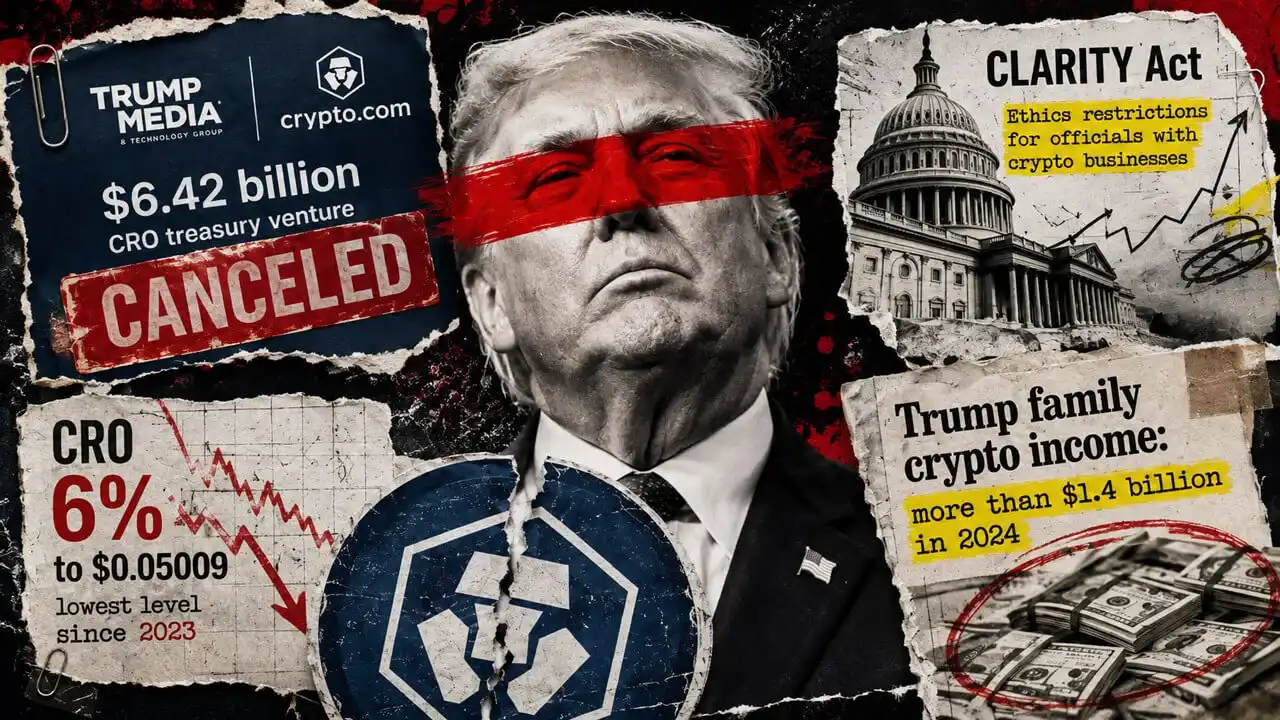
Crypto.com and Trump Media "Break Up": $6.42 Billion Vault Plan Fails, CRO Loses Its Largest Backstop Buyer

Crypto.com, Trump Media (DJT), and Yorkville Acquisition Corp. have officially terminated their planned $64.2 billion merger to create the "Trump Media Group CRO Strategy," a publicly-listed CRO treasury company. Announced in August 2025 during the peak of Digital Asset Treasury (DAT) hype, the deal was promoted as a massive vote of confidence, with Crypto.com's CEO Kris Marszalek once stating the entity would "forever" buy CRO. The termination, citing changing market conditions and business priorities, also ends related plans for ETF services and integrating a prediction market into Truth Social. Following the news, CRO's price fell below $0.05, hitting its lowest point since October 2023. The token is down approximately 95% from its 2021 all-time high. The collapse of this high-profile deal raises critical questions about the DAT model, suggesting it creates artificial, unsustainable demand rather than being driven by genuine token utility or adoption. This sentiment is reinforced by recent reports that Strategy, the largest Bitcoin treasury company, has been selling BTC, breaking its "never sell" narrative. For CRO holders, the failed merger adds to existing concerns, including recent reductions in Crypto.com card benefits and executive departures, forcing a broader reassessment of the exchange's fundamentals beyond a single abandoned transaction.

marsbit6 dk önce

Crypto.com and Trump Media "Break Up": $6.42 Billion Vault Plan Fails, CRO Loses Its Largest Backstop Buyer

marsbit6 dk önce

Hash Global Research Report: Bitcoin Hasn't Risen Yet, Why Are We Starting to Think the Bear Market Might Be Over?

Hash Global Research Report: Why We Think the Bear Market Might Be Ending Even Before Bitcoin Rises Over the past six months, AI has dominated market attention, causing a significant shakeout in crypto. Bitcoin has tested the $58-60K support three times since February, with volatility hitting multi-year lows. Despite stagnant prices, key underlying dynamics are shifting. The forces that drove the market down are weakening: macro tightening fears are easing as US inflation and jobs data cool, the perceived systemic risk from large holders like MicroStrategy selling is diminishing as they shore up finances, and institutional outflows have stopped. Simultaneously, on-chain data shows a rare concentration of over 240,000 BTC (approx. 12% of supply) accumulated in the $61-65K range, forming a new, consolidated base reminiscent of historical bottoms. Meanwhile, the AI trade is cooling, potentially redirecting capital towards undervalued crypto assets, as seen in July's relative outperformance. The current phase, where AI money hesitates and crypto veterans await a final dip, creates a "no-man's-land" investment opportunity—a potential entry point before a new consensus forms. While a definitive upturn isn't guaranteed, the confluence of weakening bearish pressures, improved on-chain structure, and a possible capital rotation suggests the window for positioning for the next cycle is opening.

marsbit16 dk önce

Hash Global Research Report: Bitcoin Hasn't Risen Yet, Why Are We Starting to Think the Bear Market Might Be Over?

marsbit16 dk önce

Explosion in Deep Sea Robots, the Hardest Series A Round Emerges

Deep-sea robotics startup Deepsea Zhiren has secured over 5 billion yuan in its Series A funding, a landmark deal backed by prominent investors including GGV Capital, Dachen Capital, Genesis Capital, Everbright Capital, China Life Insurance Investment, CETC Investment, and the energy tech fund managed by Cathay Capital with TotalEnergies as the cornerstone LP. Existing investors also participated significantly. The company, founded by industry veteran Ma Yiming, specializes in developing heavy-duty work-class ROVs for extreme deep-sea environments up to 6,000 meters, used in oil and gas, offshore wind, and subsea cable operations. Its product line includes models like "Taurus" (1,000m), "Phoenix 600" (3,000m), and "Singularity" (6,000m). A key achievement is securing multi-million dollar orders from UAE's telecom giant Etisalat, marking a breakthrough for Chinese-made deep-sea robotics in the international market. Deepsea Zhiren differentiates itself through full-stack in-house R&D—from pressure-resistant structures to control systems and AI—and a modular hardware approach. It has built a comprehensive internal standard system aligned with top global offshore specifications. The company is now advancing its "Deep Matrix" initiative, an unmanned, AI-powered, multi-robot cluster system designed for permanent seabed operations. This system aims to drastically reduce reliance on support vessels and human operators, potentially cutting costs in offshore oil field operations by billions over their lifecycle. The funding round signals strong market confidence in the deep-sea tech sector, recently highlighted in China's national policy. With the global subsea services market valued at around 1.5 trillion yuan and growing over 20% annually, Deepsea Zhiren aims to redefine deep-sea development through integrated hardware and embodied AI systems, positioning itself as a global pioneer in ocean robotics.

marsbit44 dk önce

Explosion in Deep Sea Robots, the Hardest Series A Round Emerges

marsbit44 dk önce

İşlemler

Spot

Popüler Makaleler

BITCOIN Nedir

HarryPotterObamaSonic10Inu (ERC-20)'yu ve Kripto Alanındaki Yerini Anlamak Son yıllarda, kripto para piyasası, hem ticaret yapanların hem de topluluk etkileşimi ve eğlence değeri arayanların ilgisini çeken meme coin'lerin popülaritesinde bir artış gördü. Bu benzersiz token'lar arasında, kripto para dokusuna kültürel referansları harmanlayan ilginç bir proje olan HarryPotterObamaSonic10Inu (ERC-20) bulunmaktadır. Bu makale, HarryPotterObamaSonic10Inu'nun temel yönlerini, mekanizmalarını, topluluk odaklı ethosunu ve daha geniş kripto manzarasıyla etkileşimini incelemektedir. HarryPotterObamaSonic10Inu (ERC-20) Nedir? Adından da anlaşılacağı gibi, HarryPotterObamaSonic10Inu, Ethereum blok zinciri üzerinde inşa edilen bir meme coin'dir ve ERC-20 standardı altında sınıflandırılmaktadır. Geleneksel kripto paraların pratik kullanılabilirlik veya yatırım potansiyeline odaklandığı durumların aksine, bu token eğlence değeri ve topluluğunun gücü üzerine kuruludur. Proje, bağlı kullanıcıların bir araya gelebileceği, fikirlerini paylaşabileceği ve çeşitli kültürel fenomenlerden ilham alan etkinliklere katılabileceği bir ortam yaratmayı hedeflemektedir. HarryPotterObamaSonic10Inu'nun dikkate değer özelliklerinden biri işlemlerde sıfır vergi olmasıdır. Bu çekici unsur, küçük ölçekli yatırımcıları caydırabilecek ek ücretlerden yoksun olarak ticareti ve topluluk katılımını teşvik etmeyi amaçlamaktadır. Coin'in toplam arzı bir milyar token olarak belirlenmiştir; bu, topluluk içinde önemli bir dolaşım sağlama niyetini göstermektedir. HarryPotterObamaSonic10Inu (ERC-20) Yaratıcısı HarryPotterObamaSonic10Inu'nun kökenleri bir miktar gizemlidir; yaratıcısı hakkında spesifik bilgilerin ne olduğu bilinmemektedir. Bu token'ın geliştirilmesi, belirli bir ekip veya açık bir plan eksikliği ile gerçekleşmiştir; bu durum, meme coin sektöründe oldukça yaygındır. Proje, topluluğunun heyecanı ve katılımına dayalı olarak organik bir şekilde ortaya çıkmıştır. HarryPotterObamaSonic10Inu (ERC-20) Yatırımcıları Dış yatırımlar ve destekler söz konusu olduğunda, HarryPotterObamaSonic10Inu da belirsiz kalmaktadır. Token, bilinen herhangi bir yatırım fonunu veya önemli bir kurumsal desteği listelememektedir. Bunun yerine, projenin can damarı, kolektif eylem ve kripto alanındaki katılım yoluyla büyüme ve sürdürülebilirlik sağlayan temel topluluğudur. HarryPotterObamaSonic10Inu (ERC-20) Nasıl Çalışır? Bir meme coin olarak, HarryPotterObamaSonic10Inu, genellikle varlık değerini yöneten geleneksel çerçevelerin dışında çalışmaktadır. Projenin nasıl çalıştığını tanımlayan birkaç özelliği vardır: Sıfır Vergi İşlemleri: İşlemlerde vergi ücreti olmadan, kullanıcılar gizli maliyet endişesi olmadan token'ı serbestçe alıp satabilirler. Topluluk Etkileşimi: Proje, topluluk etkileşimi üzerine kuruludur ve sosyal medya platformlarını kullanarak heyecan yaratarak katılımı kolaylaştırır. Tartışmalar, içerik paylaşımı ve katılım, projenin erişimini genişletmeye ve destekleyiciler arasında sadakat oluşturmaya yardımcı olan kritik unsurlardır. Pratik Kullanılabilirlik Yok: HarryPotterObamaSonic10Inu'nun mali ekosistem içinde somut bir kullanılabilirlik sunmadığı belirtilmelidir. Daha ziyade, eğlence ve topluluk etkinlikleri için bir token olarak sınıflandırılmaktadır. Kültürel Referans: Token, popüler kültürden unsurları zekice harmanlayarak ilgi çekmektedir ve hem meme meraklıları hem de kripto takipçileriyle bağlantı kurmaktadır. HarryPotterObamaSonic10Inu, meme coin'lerin, daha geleneksel kripto para projelerinden nasıl farklı çalıştığını örneklendirmektedir; bu projeler, utilitarist varlıklar yerine yenilikçi sosyal yapıların bir parçası olarak piyasaya girmektedir. HarryPotterObamaSonic10Inu (ERC-20) Zaman Çizelgesi HarryPotterObamaSonic10Inu'nun tarihi, birkaç dikkate değer kilometre taşı ile işaretlenmiştir: Oluşum: Token, birçok kripto meraklısının hayal gücünü yakalayan bir viral meme'den ortaya çıkmıştır. Spesifik yaratım tarihleri mevcut değildir ve bu onun organik yükselişini vurgulamaktadır. Borsa Listelemeleri: HarryPotterObamaSonic10Inu, topluluğun daha kolay erişim ve ticaret yapabilmesini sağlamak için çeşitli borsalarda yer bulmuştur. Topluluk Katılım İnisiyatifleri: Yarışmalar, sosyal medya kampanyaları ve hayranlar ile destekçilerden içerik üretimini içeren topluluk etkileşimini artırmayı amaçlayan devam eden etkinlikler. Gelecek Genişleme Planları: Projenin yol haritası, kültürel temalarına ilişkin bir NFT koleksiyonu, ticari ürünler ve bir e-ticaret sitesi başlatılmasını içermektedir; bu da topluluğun daha fazla katılımını sağlamayı ve ekosistemine daha fazla boyut kazandırmayı hedeflemektedir. HarryPotterObamaSonic10Inu (ERC-20) Hakkında Kilit Noktalar Topluluk Odaklı Doğası: Proje, kullanıcı katılımını geliştirme önceliği taşır ve böylece kullanıcıların sürecin en önünde yer almasını sağlar. Meme Coin Sınıflandırması: Eğlenceye dayalı kripto paranın doruk noktasıdır ve geleneksel yatırım araçlarından ayrılmaktadır. Bitcoin ile Doğrudan İlişki Yok: Ticker ismindeki benzeliğe rağmen, HarryPotterObamaSonic10Inu ayırt edicidir ve Bitcoin veya diğer yerleşik kripto paralarla herhangi bir ilişkisi yoktur. İşbirliğine Odaklanma: HarryPotterObamaSonic10Inu, sahipleri arasında işbirliği ve hikaye paylaşımı için bir alan oluşturmak üzere tasarlanmıştır ve bu da yaratıcılık ve topluluk bağlarını sağlamaktadır. Gelecek Beklentileri: Başlangıçta belirlendiği temalardan NFTs ve ticari ürünlere genişleme arzusu, projenin dijital kültürde daha ana akıma girebilmesi için bir yol haritası çizmektedir. Meme coin'ler, kripto para topluluğunun hayal gücünü çalmaya devam ederken, HarryPotterObamaSonic10Inu (ERC-20), kültürel bağları ve topluluk merkezli yaklaşımıyla öne çıkmaktadır. Geleneksel bir hizmet odaklı token modeliyle uyumlu olmasa da, özünde destekçileri arasında sağlanan neşe ve dostluğu vurgulayarak, giderek dijitalleşen bir çağda kripto paraların evrilen doğasını göstermektedir. Proje gelişmeye devam ettikçe, topluluk dinamiklerinin blockchain teknolojisi dünyasındaki seyrini nasıl etkilediğini izlemek önemli olacaktır.

2.7k Toplam GörüntülenmeYayınlanma 2024.04.01Güncellenme 2024.12.03

BITCOIN Nedir

BTC Nasıl Satın Alınır

HTX.com’a hoş geldiniz! Bitcoin (BTC) satın alma işlemlerini basit ve kullanışlı bir hâle getirdik. Adım adım açıkladığımız rehberimizi takip ederek kripto yolculuğunuza başlayın. 1. Adım: HTX Hesabınızı OluşturunHTX'te ücretsiz bir hesap açmak için e-posta adresinizi veya telefon numaranızı kullanın. Sorunsuzca kaydolun ve tüm özelliklerin kilidini açın. Hesabımı Aç2. Adım: Kripto Satın Al Bölümüne Gidin ve Ödeme Yönteminizi SeçinKredi/Banka Kartı: Visa veya Mastercard'ınızı kullanarak anında Bitcoin (BTC) satın alın.Bakiye: Sorunsuz bir şekilde işlem yapmak için HTX hesap bakiyenizdeki fonları kullanın.Üçüncü Taraflar: Kullanımı kolaylaştırmak için Google Pay ve Apple Pay gibi popüler ödeme yöntemlerini ekledik.P2P: HTX'teki diğer kullanıcılarla doğrudan işlem yapın.Borsa Dışı (OTC): Yatırımcılar için kişiye özel hizmetler ve rekabetçi döviz kurları sunuyoruz.3. Adım: Bitcoin (BTC) Varlıklarınızı SaklayınBitcoin (BTC) satın aldıktan sonra HTX hesabınızda saklayın. Alternatif olarak, blok zinciri transferi yoluyla başka bir yere gönderebilir veya diğer kripto para birimlerini takas etmek için kullanabilirsiniz.4. Adım: Bitcoin (BTC) Varlıklarınızla İşlem YapınHTX'in spot piyasasında Bitcoin (BTC) ile kolayca işlemler yapın.Hesabınıza erişin, işlem çiftinizi seçin, işlemlerinizi gerçekleştirin ve gerçek zamanlı olarak izleyin. Hem yeni başlayanlar hem de deneyimli yatırımcılar için kullanıcı dostu bir deneyim sunuyoruz.

8.7k Toplam GörüntülenmeYayınlanma 2024.12.12Güncellenme 2026.06.02

BTC Nasıl Satın Alınır

$BITCOIN Nedir

DİJİTAL ALTIN ($BITCOIN): Kapsamlı Bir Analiz DİJİTAL ALTIN ($BITCOIN) Tanıtımı DİJİTAL ALTIN ($BITCOIN), geleneksel değerli metallerin özelliklerini merkeziyetsiz teknolojilerin yeniliği ile birleştirmeyi amaçlayan Solana ağı üzerinde çalışan blockchain tabanlı bir projedir. Bitcoin ile aynı isme sahip olmasına rağmen, genellikle bir değer saklama aracı olarak algılandığı için “dijital altın” olarak anılmaktadır; DİJİTAL ALTIN, Web3 ortamında benzersiz bir ekosistem yaratmak için tasarlanmış ayrı bir tokendir. Hedefi, uygulanabilir bir alternatif dijital varlık olarak kendini konumlandırmaktır, ancak uygulamaları ve işlevleri ile ilgili ayrıntılar hala gelişmektedir. DİJİTAL ALTIN ($BITCOIN) Nedir? DİJİTAL ALTIN ($BITCOIN), Solana blockchain'inde kullanılmak üzere açıkça tasarlanmış bir kripto para tokenidir. Bitcoin'in yaygın olarak tanınan bir değer saklama rolü sağlamasının aksine, bu token daha geniş uygulamalara ve özelliklere odaklanıyor gibi görünmektedir. Dikkate değer yönler şunlardır: Blockchain Altyapısı: Token, yüksek hızlı ve düşük maliyetli işlemleri yönetme kapasitesi ile bilinen Solana blockchain'inde inşa edilmiştir. Arz Dinamikleri: DİJİTAL ALTIN'ın maksimum arzı 100 katrilyon token (100P $BITCOIN) ile sınırlıdır, ancak dolaşımdaki arzı ile ilgili ayrıntılar şu anda açıklanmamıştır. Kullanım Alanı: Kesin işlevler açıkça belirtilmemiş olsa da, token'ın merkeziyetsiz uygulamalar (dApps) veya varlık tokenizasyon stratejileri ile ilgili çeşitli uygulamalar için kullanılabileceğine dair işaretler bulunmaktadır. DİJİTAL ALTIN ($BITCOIN) Yaratıcısı Kimdir? Şu anda, DİJİTAL ALTIN ($BITCOIN) arkasındaki yaratıcıların ve geliştirme ekibinin kimliği bilinmemektedir. Bu durum, merkeziyetsiz finans ve meme coin fenomenleriyle uyumlu olan birçok yenilikçi proje arasında yaygındır. Böyle bir anonimlik, topluluk odaklı bir kültürü teşvik edebilirken, yönetişim ve hesap verebilirlik konusundaki endişeleri artırmaktadır. DİJİTAL ALTIN ($BITCOIN) Yatırımcıları Kimlerdir? Mevcut bilgiler, DİJİTAL ALTIN ($BITCOIN) için bilinen herhangi bir kurumsal destekçi veya önde gelen risk sermayesi yatırımı olmadığını göstermektedir. Proje, geleneksel finansman yolları yerine topluluk desteği ve benimsemeye odaklanan bir eşler arası modelde çalışıyor gibi görünmektedir. Faaliyetleri ve likiditesi esas olarak PumpSwap gibi merkeziyetsiz borsalarda (DEX'ler) yer almakta olup, bu da onun taban hareketine vurgu yapmaktadır. DİJİTAL ALTIN ($BITCOIN) Nasıl Çalışır DİJİTAL ALTIN ($BITCOIN) 'ın operasyonel mekanikleri, blockchain tasarımı ve ağ özellikleri temelinde açıklanabilir: Konsensüs Mekanizması: Solana'nın benzersiz tarih kanıtı (PoH) ile bir hisse kanıtı (PoS) modelini birleştirerek, proje ağın yüksek performansına katkıda bulunan verimli işlem doğrulamasını sağlar. Tokenomik: Belirli deflasyonist mekanizmalar kapsamlı bir şekilde detaylandırılmamış olsa da, geniş maksimum token arzı, henüz tanımlanmamış mikro işlemler veya niş kullanım durumlarına hitap edebileceğini ima etmektedir. Etkileşim: Solana'nın daha geniş ekosistemi ile entegrasyon potansiyeli bulunmaktadır; bu, çeşitli merkeziyetsiz finans (DeFi) platformlarını içermektedir. Ancak, belirli entegrasyonlarla ilgili ayrıntılar belirtilmemiştir. Önemli Olayların Zaman Çizelgesi DİJİTAL ALTIN ($BITCOIN) ile ilgili önemli kilometre taşlarını vurgulayan bir zaman çizelgesi: 2023: Token'ın Solana blockchain'inde ilk dağıtımı, sözleşme adresi ile işaretlenmiştir. 2024: DİJİTAL ALTIN, PumpSwap gibi merkeziyetsiz borsalarda işlem görmeye başladıkça görünürlük kazanır ve kullanıcıların bunu SOL karşısında ticaret yapmasına olanak tanır. 2025: Proje, topluluk odaklı etkileşimlere yönelik potansiyel ilgi ve ara sıra ticaret faaliyetleri görür, ancak şu ana kadar dikkate değer ortaklıklar veya teknik ilerlemeler belgelenmemiştir. Kritik Analiz Güçlü Yönler Ölçeklenebilirlik: Temel Solana altyapısı, yüksek işlem hacimlerini destekleyerek $BITCOIN'in çeşitli işlem senaryolarındaki faydasını artırabilir. Erişilebilirlik: Token başına potansiyel düşük ticaret fiyatı, perakende yatırımcıları çekebilir ve parçalı mülkiyet fırsatları sayesinde daha geniş katılımı kolaylaştırabilir. Riskler Şeffaflık Eksikliği: Kamuya açık olarak bilinen destekçilerin, geliştiricilerin veya bir denetim sürecinin olmaması, projenin sürdürülebilirliği ve güvenilirliği konusunda şüpheler doğurabilir. Piyasa Volatilitesi: Ticaret faaliyeti büyük ölçüde spekülatif davranışa dayanmakta olup, bu da yatırımcılar için önemli fiyat dalgalanmalarına ve belirsizliklere yol açabilir. Sonuç DİJİTAL ALTIN ($BITCOIN), hızla gelişen Solana ekosisteminde ilginç ama belirsiz bir proje olarak ortaya çıkmaktadır. “Dijital altın” anlatısını kullanmaya çalışırken, Bitcoin'in değer saklama rolünden ayrılması, amaçlanan faydasının ve yönetişim yapısının daha net bir şekilde tanımlanması gerekliliğini vurgulamaktadır. Gelecekteki kabul ve benimseme, mevcut belirsizliklerin giderilmesine ve operasyonel ile ekonomik stratejilerinin daha açık bir şekilde tanımlanmasına bağlı olacaktır. Not: Bu rapor, Ekim 2023 itibarıyla mevcut olan sentezlenmiş bilgileri kapsamaktadır ve araştırma döneminin ötesinde gelişmeler yaşanmış olabilir.

512 Toplam GörüntülenmeYayınlanma 2025.05.13Güncellenme 2025.05.13

$BITCOIN Nedir

Tartışmalar

HTX Topluluğuna hoş geldiniz. Burada, en son platform gelişmeleri hakkında bilgi sahibi olabilir ve profesyonel piyasa görüşlerine erişebilirsiniz. Kullanıcıların BTC (BTC) fiyatı hakkındaki görüşleri aşağıda sunulmaktadır.

活动图片