Gold breaks KEY support with 3.7% drop – Will crypto face pressure next?

ambcrypto2026-03-21 tarihinde yayınlandı2026-03-21 tarihinde güncellendi

Özet

The latest inflation report, with February's hotter-than-expected PPI, triggered a 3.7% drop in gold, breaking key support. This sell-off is attributed to a stronger U.S. dollar and rising Treasury yields, making traditional safe havens more attractive. Historically, a stronger DXY negatively impacts risk assets like crypto. Bitcoin is currently stagnant near $70k with negative funding rates and declining capital inflows, indicating a bearish bias. The falling Coinbase Premium Index and increased short positions suggest a crypto downturn may already be priced in, especially given macro pressures and the historical inverse correlation between DXY and BTC.

The latest inflation report has clearly shaken things up in this market cycle.

To put it in context, February’s PPI, released on the 18th of March, came in hotter than expected, signaling that U.S. inflation is still sticky. The reaction was almost instant. Gold, for instance, dropped 3.74%, slicing through the $5k support level, a move that caught many traders off guard.

The logic here is straightforward: Historically, during times of geopolitical instability, investors flocked to gold as a hedge against inflation. But what’s interesting now is that this pattern seems to be shifting. So far, this move hasn’t spilled over into crypto, though that doesn’t mean a crash is off the table.
Source: TradingEconomics

To see why, you need to look at a couple of key things.

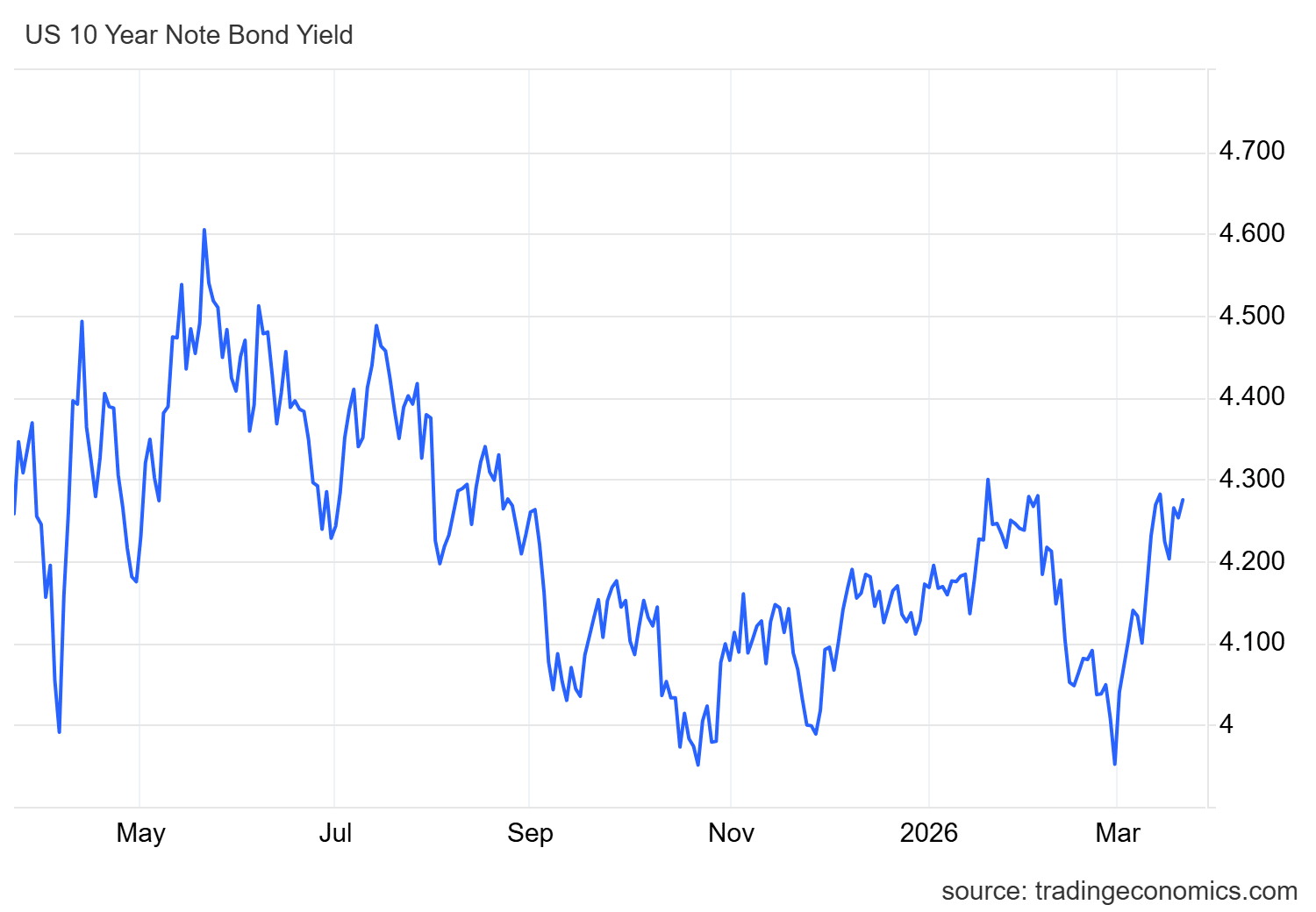
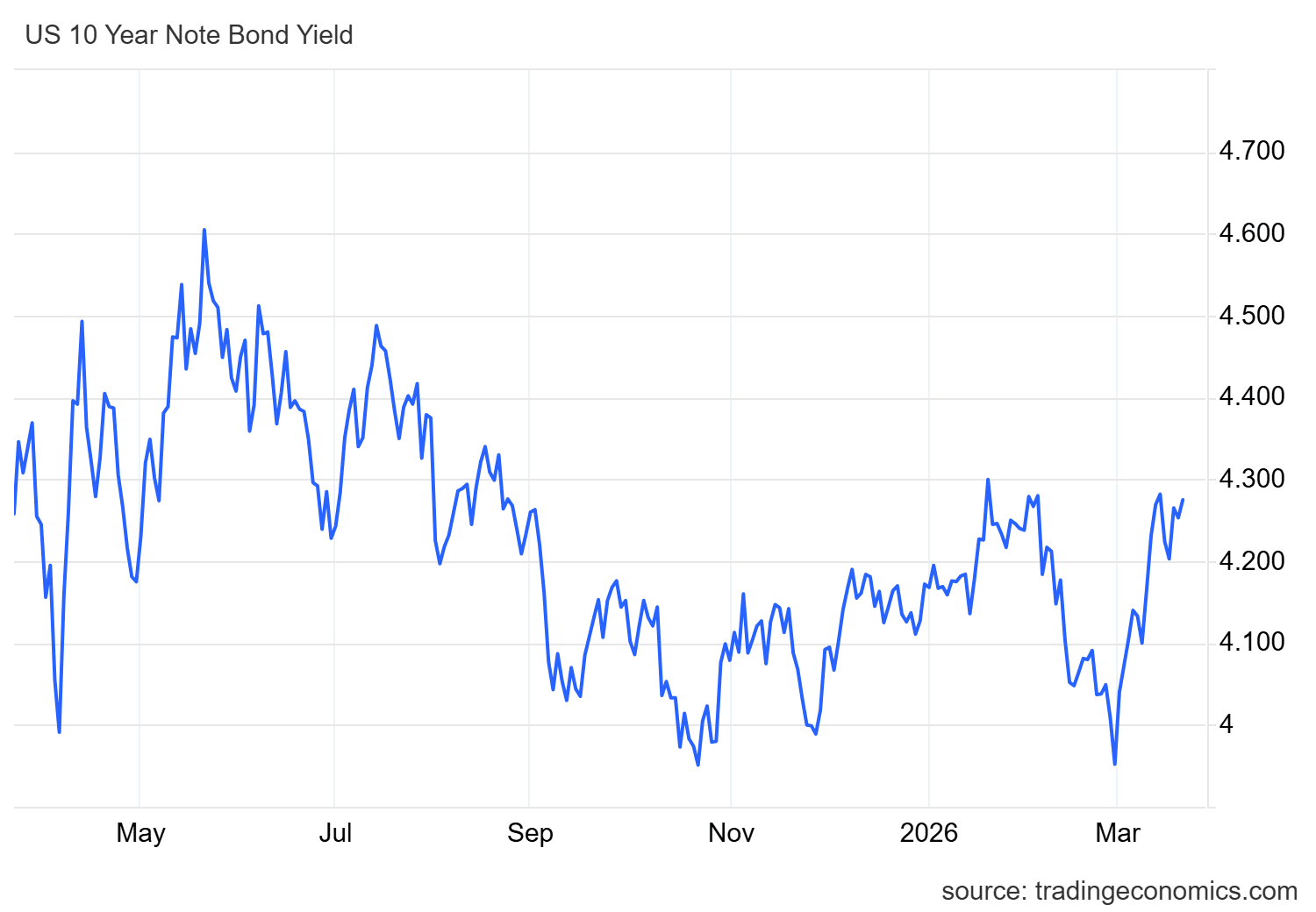
First, the gold sell-off is tied to the U.S. dollar getting stronger. With the Fed keeping interest rates steady and U.S. debt now over $39 trillion, Treasury yields are starting to look a lot more attractive. In fact, yields have jumped nearly 10% since the war kicked off, which is clearly pulling attention away from gold.

On the crypto side, history tells a familiar story. A stronger DXY usually means less love for risk assets. That means when geopolitical tensions rise, risk assets start to feel less appealing. Meanwhile, a stronger dollar pulls capital into bonds, which feel safer and now offer higher returns thanks to rising yields.

In this context, the falling Coinbase Premium Index (CPI) is already hinting at this shift, showing why crypto could eventually follow gold’s lead.

Rising Bitcoin shorts: Is a crypto crash already priced in?

Crowded trades during volatile markets can be a double-edged sword.

Currently, crypto is stuck chopping in a tight range, with Bitcoin [BTC] hovering around the $70k mark and no big capital inflows in sight. Naturally, liquidity clusters are stacking up at different price levels, hinting that traders are gearing up for a potential move.

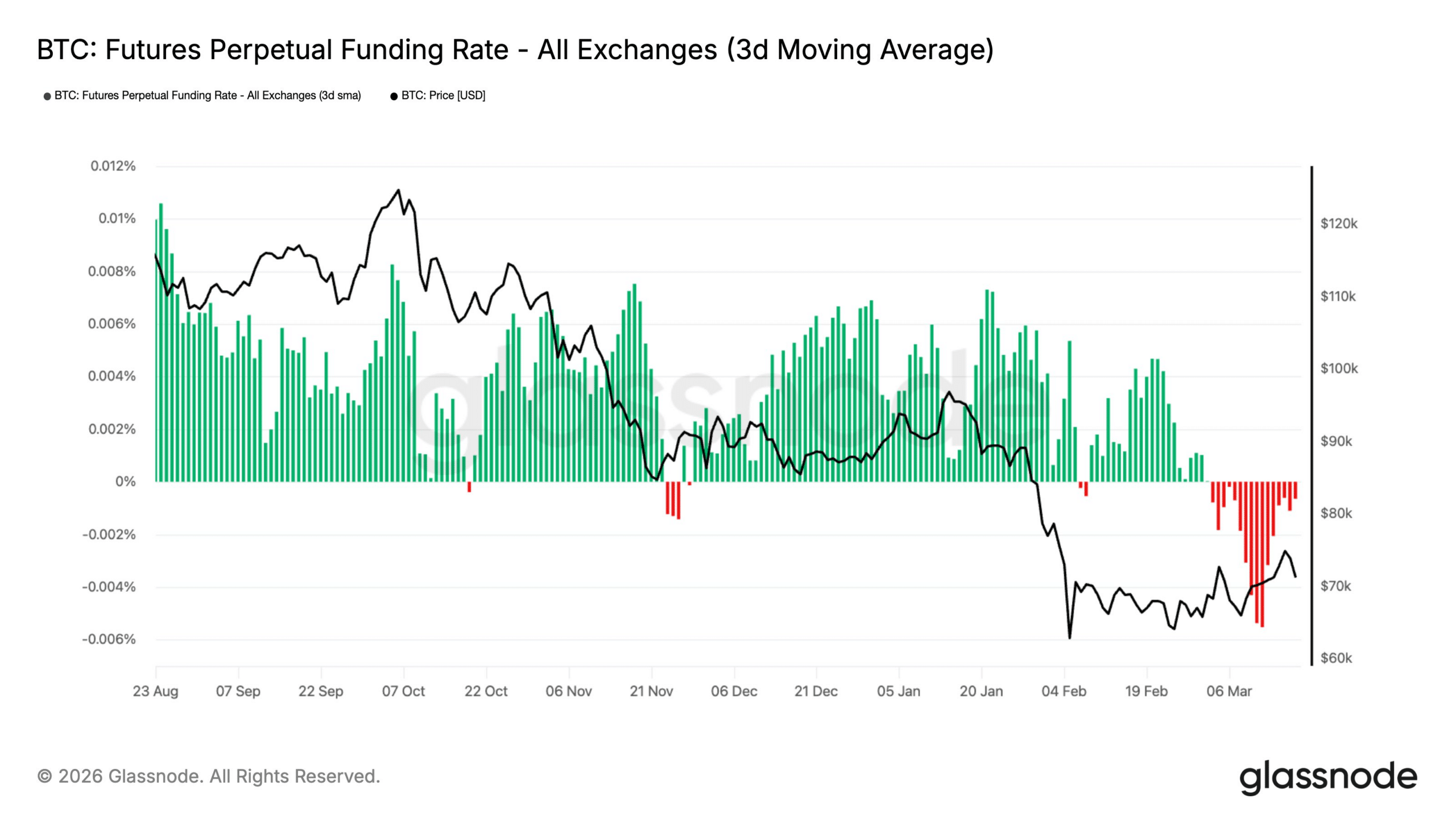
Backing this up, Glassnode data shows perpetual funding is still firmly negative, confirming the bearish bias in directional premium. Put simply, even though BTC has bounced off the lows, traders are still leaning short, which keeps the market primed for a potential squeeze-driven upside.
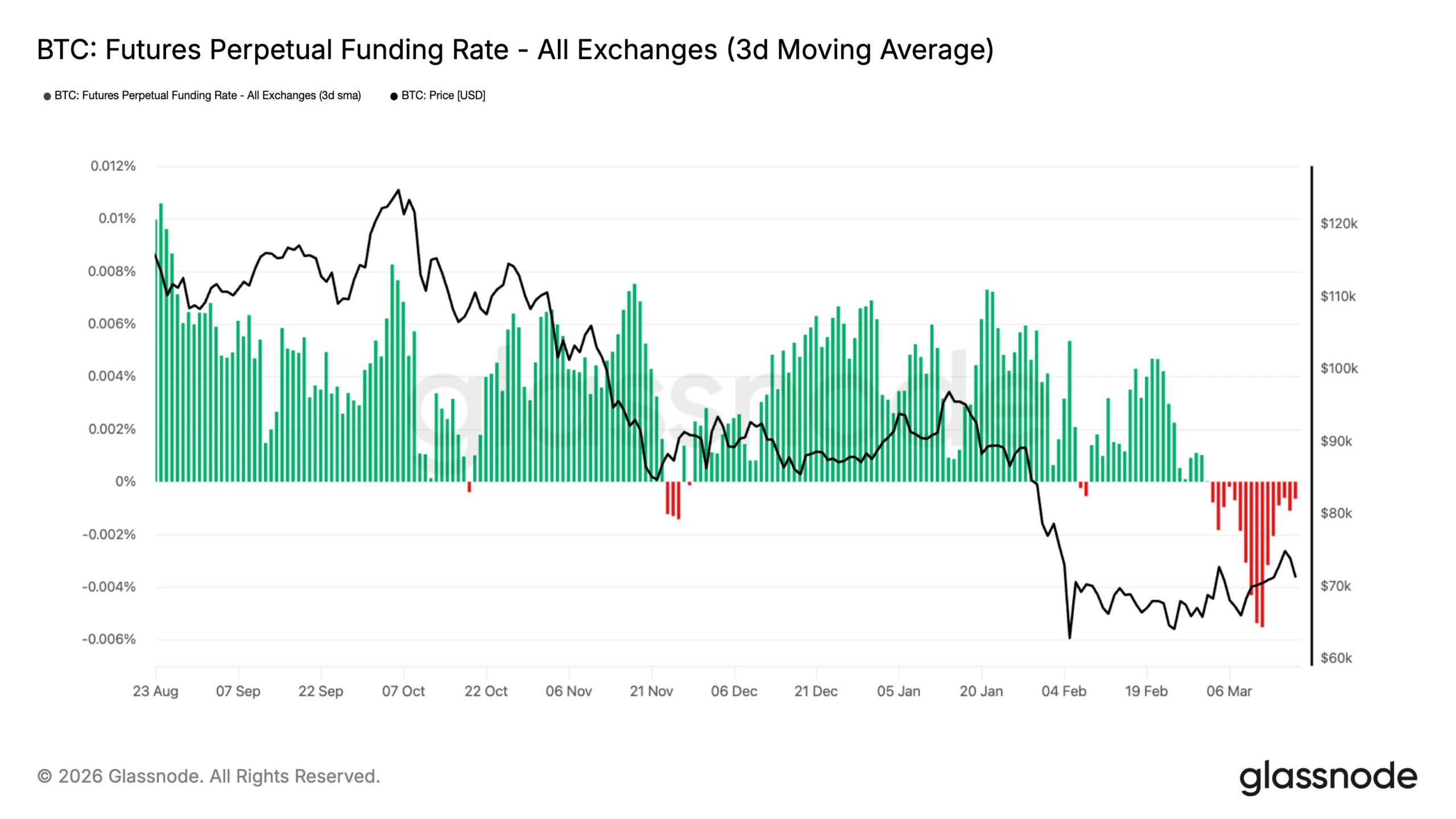
Source: Glassnode

But here’s where it gets interesting: The recent gold sell-off adds a twist, showing just how exposed the crypto market still is. With rising yields pulling capital back into traditional safe havens, and the Federal Reserve brushing off any talk of interest rate cuts, crypto traders are left navigating a tricky setup.

In this context, the rising Bitcoin shorts don’t feel like a fluke.

Instead, they’re looking more like strategic positioning. With the Coinbase Premium Index falling, limited capital inflows, BTC stuck near resistance, and a shifting macro backdrop, everything points to a bearish bias in both technicals and fundamentals. Bottom line? A crypto crash already looks priced in, and with the historical DXY-BTC correlation, it wouldn’t be surprising if history repeats itself.


Final Summary

  • Rising yields and a firmer DXY are pulling capital into safe havens, shaking confidence in gold.
  • With Bitcoin near resistance, falling CPI, and bearish technicals, a crypto crash may already be priced in.


İlgili Sorular

QWhat was the immediate market reaction to the hotter-than-expected February PPI report released on March 18th?

AThe reaction was almost instant. Gold, for instance, dropped 3.74%, slicing through the $5k support level.

QAccording to the article, what two key factors are pulling attention and capital away from gold?

AThe gold sell-off is tied to the U.S. dollar getting stronger (a firmer DXY) and rising Treasury yields, which have jumped nearly 10% and are now more attractive.

QWhat does the falling Coinbase Premium Index (CPI) signal for the crypto market?

AThe falling Coinbase Premium Index is hinting at a shift, showing that crypto could eventually follow gold's lead downward as capital moves away from risk assets.

QWhat does the negative perpetual funding rate and bearish bias in directional premium indicate about trader sentiment?

AIt confirms a bearish bias, indicating that even though BTC has bounced off lows, traders are still leaning short and positioning for a potential downside move.

QWhy does the article suggest that a crypto crash may already be 'priced in'?

ABecause of the rising Bitcoin shorts, falling CPI, limited capital inflows, BTC being stuck near resistance, and a shifting macro backdrop with a stronger dollar and rising yields, all of which point to a bearish bias.

İlgili Okumalar

Bitcoin Withdrawals Continue: 8 Years of Storage in a Coldcard Cold Wallet Ended in Zero

Coldcard Hardware Wallet Hacked: Losses Mount Due to Vulnerable Seed Generation A critical vulnerability in Coldcard hardware wallets has led to a continued wave of fund thefts. According to Galaxy Research, the total stolen has reached 1,367.05 BTC (approx. $88.6 million) from 4,585 addresses, a significant increase from the initial 594.5 BTC reported on July 30, 2026. Most of the stolen funds remain on the attackers' addresses. The issue is not with the current firmware, which Coinkite has updated, but with seed phrases generated on vulnerable devices between March 2021 and the release of fixed firmware versions. Due to a programmer error, devices switched from using a hardware random number generator to the software-based Yasmarang generator, which was initialized with publicly accessible data like the chip's serial number. This made the seed phrases predictable through offline brute-force attacks, meaning wallets remain at risk until funds are moved to a new wallet generated with the patched firmware. Affected devices include Mk2/Mk3 with firmware 4.0.1–4.1.9 (and up to 5.0.3), Mk4/Mk5 up to version 5.6.0, and Q models up to 1.5.0Q. The only exceptions are seeds created with a high-entropy method like at least 50 independent dice rolls or a strong unique BIP-39 passphrase. All other owners must generate a new seed on the fixed firmware and transfer their assets. A case highlighting the human impact involves a 39-year-old long-term investor who lost 2 BTC (approx. $130,000) in minutes. He had accumulated the Bitcoin over eight years through physical labor, viewing it as a financial lifeline and a retirement plan in a country suffering from hyperinflation. His story underscores that even conservative "buy and hold in cold storage" strategies can be compromised by such underlying technical flaws. From a technical perspective, this incident echoes historical failures where weak random number generators undermined cryptographic security, challenging the assumption that offline storage is automatically foolproof.

cryptonews.ru1 saat önce

Bitcoin Withdrawals Continue: 8 Years of Storage in a Coldcard Cold Wallet Ended in Zero

cryptonews.ru1 saat önce

İşlemler

Spot
活动图片