Gold and Silver Experience 'Black Friday' as the Dollar Stages a Dramatic Comeback!

比推2026-01-31 tarihinde yayınlandı2026-01-31 tarihinde güncellendi

Özet

Gold and silver experienced a historic crash on January 30, 2026, with silver plunging over 30% in its largest single-day drop ever, and gold fell more than 9%, marking its worst decline since the early 1980s. Meanwhile, the US dollar surged nearly 0.9%, its biggest gain since July of the previous year. The sell-off was triggered by the news that former Federal Reserve Governor Kevin Warsh, known for his hawkish stance, was nominated as the next Fed chair. This eased market concerns about the Fed's politicization and led to a rapid unwinding of dollar short positions. The precious metals market, already in extreme overbought territory with silver up 63% and gold 20% year-to-date, faced a liquidity crisis, accelerated by forced liquidations and profit-taking. Commodity currencies like the AUD and CHF were hit hard. Analysts are divided on whether this is a correction within a bull market or a sign of a broader reversal, with factors like geopolitical tensions and monetary policy shifts under the new Fed leadership being key to watch.

On the last trading day of January 2026, global financial markets witnessed a 'heart-stopping moment' for the history books.

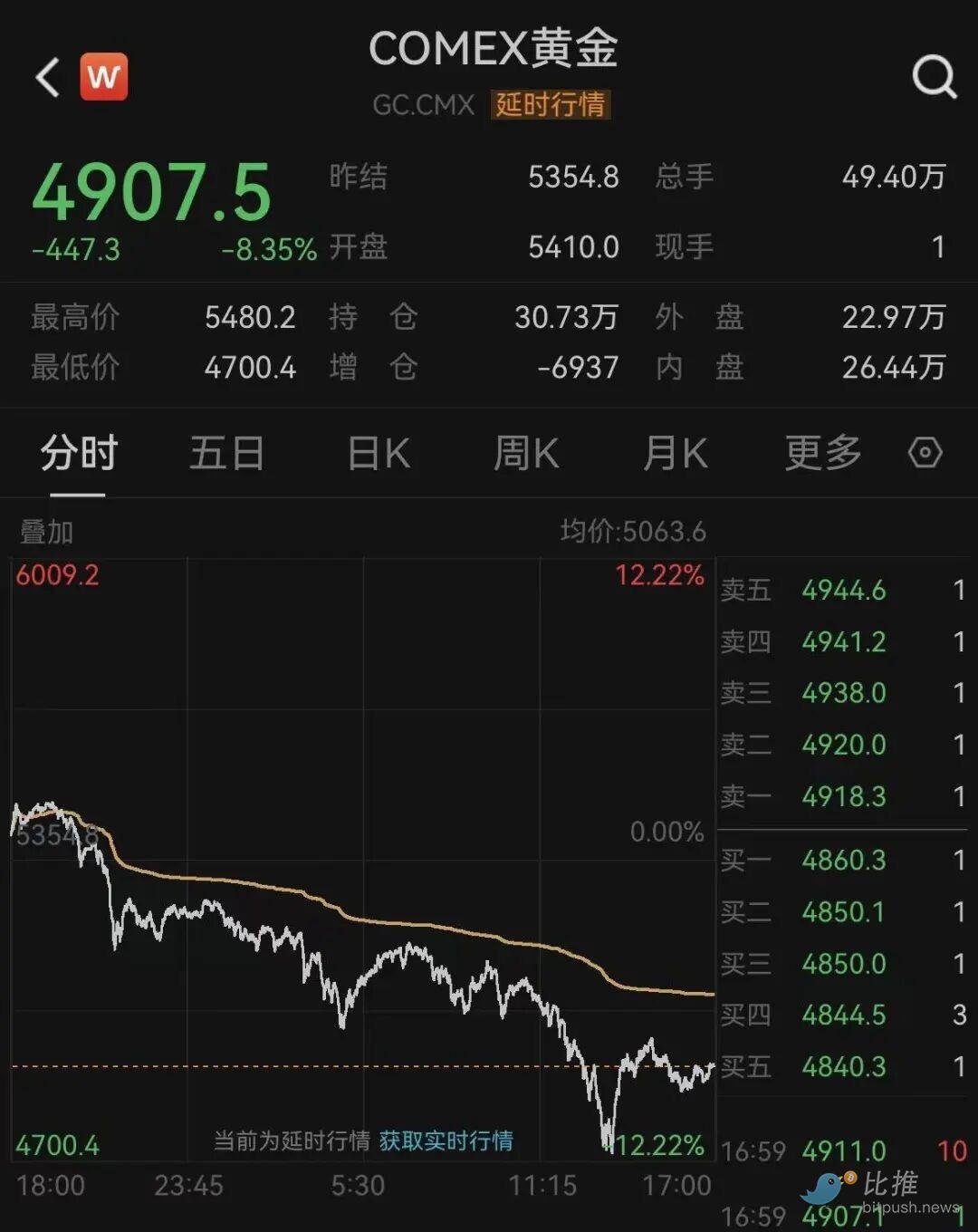
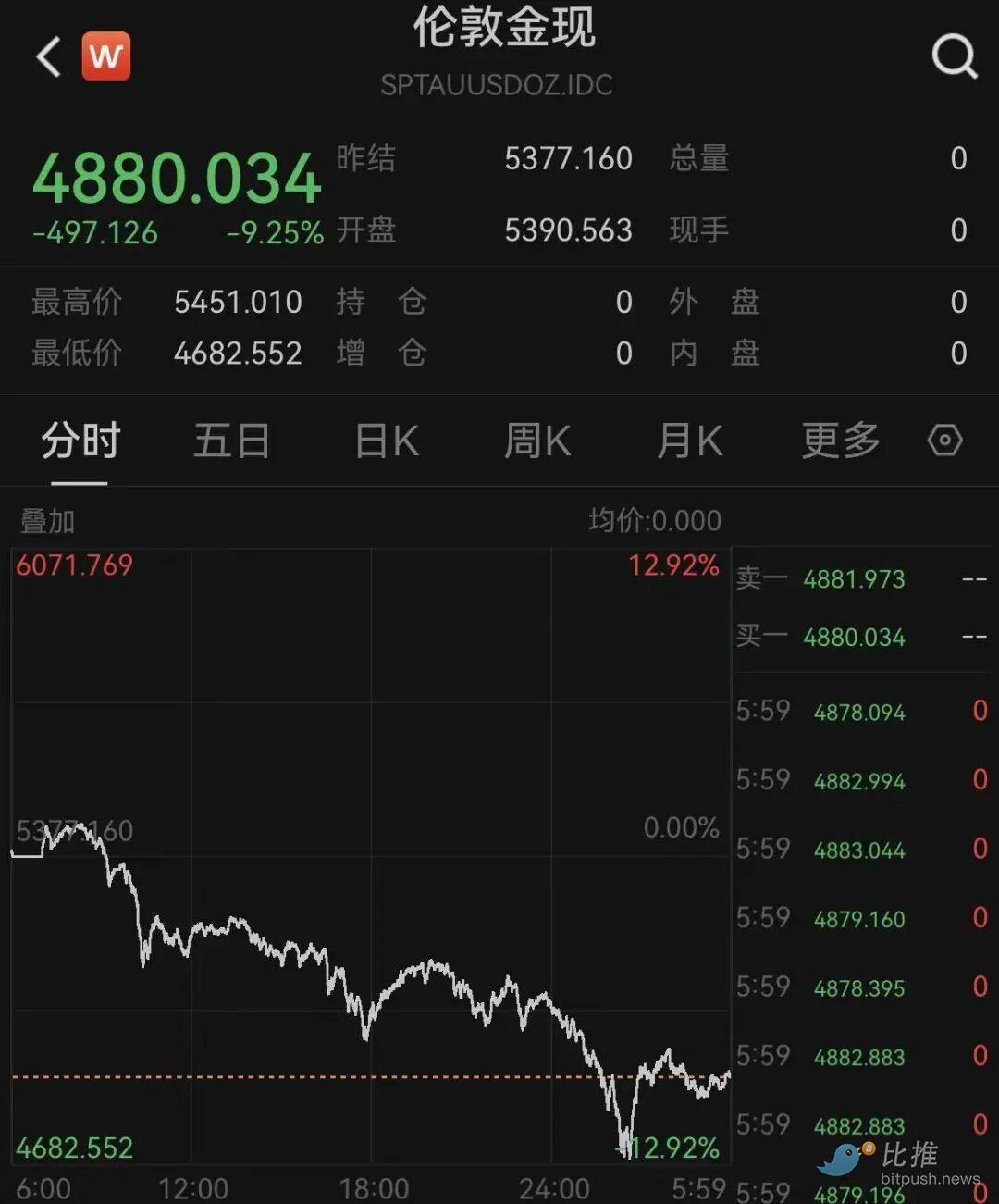
On January 30th (Friday) Eastern Time, the precious metals market, which had been surging relentlessly and repeatedly hitting historic highs, was suddenly hit by a 'cold snap.' Spot silver recorded its largest single-day drop in history, plummeting over 30% at one point during the session; spot gold was not spared either, suffering a drop of over 9%, its worst single-day loss since the early 1980s. Meanwhile, the previously persistently weak U.S. Dollar Index (DXY) surged dramatically, posting its largest single-day gain since last July, rebounding about 0.9% in one day.
This global asset reshuffle not only wiped trillions of dollars in market value from the precious metals market but also marked the first major correction to the 'weak dollar, strong gold and silver' trading logic since Trump's return to the White House.

Policy 'Hurricane': Warsh Nomination Ignites Dollar Counterattack

The immediate trigger for this plunge in gold and silver was a major personnel decision by the Trump administration. News on Friday indicated that Trump had selected Kevin Warsh to serve as the next Chair of the Federal Reserve.

This decision sent multiple shockwaves through the market:

  • Defending Fed Independence: Previously, the market was highly concerned that Trump would choose a complete 'proxy' who would顺从 his will and favor aggressive interest rate cuts. This concern had directly contributed to the sustained decline of the dollar in January. Warsh, a former Federal Reserve Governor known for his academic rigor and vigilance against inflation, greatly alleviated Wall Street's fears of Fed 'politicization,' restoring market confidence in the Fed's independence.

  • Reshaping Rate Expectations: Warsh has historically shown clear 'hawkish' colors, with almost zero tolerance for inflation. Compared to the possibility of deep, aggressive rate cuts under previously speculated candidates, the market quickly adjusted its expectations to a 'more moderate and cautious' monetary policy. As non-interest-bearing assets, gold and silver saw their appeal plummet under the expectation that 'rates may remain high.'

  • Dollar Short Squeeze: The dollar index had fallen about 1.4% cumulatively in January, with short positions extremely crowded. The news of Warsh's nomination prompted a massive unwinding of dollar shorts, rapidly pushing the dollar index above 96.74, thereby dealing a heavy blow to dollar-denominated precious metals.

Liquidity Crisis in Overbought Territory

If the Warsh nomination was the 'spark,' then the extremely overbought condition of the gold and silver markets was the 'tinder.'

Before the crash on January 30th, spot gold had approached the $5,600 per ounce mark, while silver had reached a peak of $120 per ounce. Since the beginning of the year, silver's gains had reached as high as 63%, and gold's monthly gains were close to 20%. A Wall Street quant strategist stated: "This is no longer a gain explainable by fundamentals, but a typical speculative bubble driven by FOMO (Fear Of Missing Out)."

Multiple technical factors contributed to Friday's 'stampede-like' decline:

  1. RSI Peaking: Gold's Relative Strength Index (RSI) hit a 40-year peak before the crash (RSI near 90), indicating extreme overbought conditions.

  2. Forced Liquidations: The silver market, due to its high leverage, triggered large-scale programmed stop-losses after prices fell below key support levels. Estimates suggest the market capitalization of gold and silver shrunk by a staggering $7.4 trillion on Friday. Selling on this scale evolved into 'liquidity contraction,' forcing investors to sell the most liquid assets, gold and silver, to cover margins for other assets.

  3. Profit-Taking: Early entrants had a strong incentive to cash out when faced with signals of a policy shift.

The combination of a stronger dollar and plummeting gold and silver dealt a direct blow to commodity currencies among the G10.

  • Australian Dollar (AUD): Plunged over 2% intraday. As a leader in resource exports, the gold and silver crash directly hit its trade foundation, making it the 'hardest hit' among G10 currencies that day.

  • Swiss Franc (CHF): Fell about 1.5%. The gold price plunge completely severed the franc's safe-haven premium, causing funds to panic and flow back to the dollar, which was supported by hawkish expectations.

  • Swedish Krona (SEK): Plunged nearly 1.8% intraday.

Outlook: A 'Bull Market Correction' or a 'Termination Signal'?

Regarding the outlook, a research report from Citi provided a sober perspective for the market. Citi pointed out that half of the risk factors supporting gold (such as geopolitical tensions, U.S. debt concerns, AI uncertainty) could subside later in 2026.

  • Middle East & Russia-Ukraine Variables: As the Trump administration works towards achieving 'American-style stability' before the mid-term elections in mid-2026, if the Russia-Ukraine conflict and the Iran situation tend to ease, gold's safe-haven premium will further erode.

  • American-Style Gold Stability: Citi's mention of 'American-style gold stability' implies that if Warsh successfully takes office and stabilizes Fed credibility, the dollar will regain favor with international capital, forming medium-term negative pressure on gold prices.

However, some analysts hold dissenting views. Nanhua Futures pointed out that despite the short-term turmoil, demand for silver in new energy and industrial sectors remains strong, and a supply gap persists in the long term. This crash is more about 'deleveraging' and 'squeezing the bubble' rather than a complete reversal of fundamentals.

The January 30th crash in gold and silver served as a vivid risk management lesson for all investors. Even physical assets known as 'safe havens' can experience instant liquidity droughts in the face of extreme sentiment premiums and policy inflection points.

For investors, the core observation point now is:

If Kevin Warsh officially takes the helm of the Fed, will the focus of monetary policy in 2026 shift from 'supporting growth' to 'returning to monetary discipline'? This will determine whether the dollar index can completely break out of its year-long slump and whether gold and silver will enter a prolonged period of volatile consolidation.

Author: seed.eth


Twitter:https://twitter.com/BitpushNewsCN

Bitpush TG Discussion Group:https://t.me/BitPushCommunity

Bitpush TG Subscription: https://t.me/bitpush

Original link:https://www.bitpush.news/articles/7607526

İlgili Sorular

QWhat was the direct trigger for the sharp decline in gold and silver prices on January 30, 2026?

AThe direct trigger was the news that the Trump administration had selected Kevin Warsh, a former Fed governor known for his academic rigor and inflation vigilance, as the next Federal Reserve Chair.

QWhat was the single-day percentage drop for spot silver, and how significant was it?

ASpot silver experienced a single-day drop of over 30%, which was its largest single-day decline in history.

QHow did the U.S. Dollar Index (DXY) perform on that day, and what was the reason for its movement?

AThe U.S. Dollar Index (DXY) surged by approximately 0.9%, marking its largest single-day gain since the previous July. This was due to the relief over the perceived preservation of Fed independence with Warsh's nomination, which caused a massive short-covering rally.

QAccording to the article, what technical indicator for gold had reached an extreme level before the crash?

AGold's Relative Strength Index (RSI) had reached a 40-year peak, near 90, indicating it was extremely overbought.

QWhich G10 currency was the hardest hit by the combination of a stronger dollar and collapsing precious metals, and why?

AThe Australian Dollar (AUD) was the hardest hit, plummeting over 2%. As a leading resource export currency, the crash in precious metals directly damaged its trade foundation.

İlgili Okumalar

Saeed Al-Marri: How Tokenization Unlocks New Opportunities for Shipping Funds

Said Al-Marri: How Tokenization Opens New Opportunities for Shipping Funds For centuries, commercial shipping has been a capital-intensive asset class limited to institutional funds and shipping dynasties. Said bin Saleh Al-Marri, CEO of Ethra Invest and Ethra Ship, aims to break down these barriers by combining Real World Asset (RWA) tokenization with conservative private equity principles. This bridges decentralized finance (DeFi) with the physical realities of global trade. Tokenization allows fractional ownership of ships on a blockchain, giving smaller investors access to previously inaccessible markets. However, Al-Marri warns it is not a regulatory loophole or a cure for asset illiquidity. The core physical risks are isolated in Special Purpose Vehicles (SPVs) for qualified investors. While tokenization enhances transparency and ownership record-keeping, Al-Marri stresses that a liquid secondary market depends on transparent asset valuation and must not interfere with ship operations managed by professionals. Regarding legal enforcement, smart contracts cannot physically seize a ship. Legal recourse still relies on traditional maritime courts, ship mortgages, and flag state laws, with blockchain records needing to mirror legal ownership in the SPV perfectly. Beyond ownership, the industry faces administrative hurdles like paper-based bills of lading. Al-Marri argues the bottleneck is legal and operational standardization, not technology. He advocates for a hybrid model combining digital trade documents and programmable settlements with support from regulated financial institutions, rather than a full crypto replacement for tools like Letters of Credit. A major challenge is decarbonizing the global fleet by 2050. Transitioning to green fuels requires massive upfront investment. Al-Marri emphasizes a conservative, holistic approach to underwriting these projects, evaluating technology, fuel availability, safety, and resale value. Investments must be justified under conservative forecasts, not just optimistic ones. By combining pragmatic risk management with digital infrastructure, leaders like Al-Marri show that the evolution of maritime finance is about mobilizing capital to build a modernized and sustainable global fleet, not just putting ships on a blockchain.

cryptonews.ru13 dk önce

Saeed Al-Marri: How Tokenization Unlocks New Opportunities for Shipping Funds

cryptonews.ru13 dk önce

Six Years Later, UNI Finally Welcomes Its Own "Buyback Bull"

After years of debate, Uniswap's UNI token has finally entered a 'buyback bull' phase following the long-awaited activation of its fee-switch mechanism. The UNIfication proposal, executed in December 2025, redirected a portion of protocol fees from select pools and Unichain sequencer revenue into a treasury (TokenJar) dedicated to buying back and permanently burning UNI. Initial market reaction was muted due to modest early burn rates. A significant shift occurred in July 2026 with the launch of Robinhood Chain. Uniswap's immediate deployment there skyrocketed trading volume, making it a top fee-generator. Subsequently, governance votes extended the fee mechanism to v4 pools and Robinhood Chain, causing protocol revenue to nearly triple. Daily funds directed to UNI burns rose sharply, with Robinhood Chain contributing over half. This transitioned UNI's narrative from a governance token to a cash-flow asset backed by a perpetual automatic buyer. UNI's price, which had languished around $2.30 in early June, nearly doubled to approach $4.60 by late July. Analysts credit this to the tangible cash flow from fees rather than mere speculation. Unlike many newer projects where buybacks are offset by large investor unlocks, UNI's six-year history has resulted in a widely distributed and relatively clean supply, allowing the buyback pressure to effectively impact the secondary market. The key test will be whether trading activity, particularly on Robinhood Chain, sustains after its initial gas subsidies expire.

marsbit18 dk önce

Six Years Later, UNI Finally Welcomes Its Own "Buyback Bull"

marsbit18 dk önce

Only 153 Venture Capital Firms Invested in July: Is the Crypto VC Industry Experiencing a 'Mass Extinction'?

In July 2026, only 153 unique venture capital firms participated in disclosed crypto funding rounds, marking the lowest monthly count since November 2020. This figure represents an 87% decline from the peak of 1,177 firms in 2022. Overall, the first seven months of 2026 saw crypto projects raise approximately $11.78 billion across 481 rounds. This crypto VC contraction contrasts sharply with the broader venture capital landscape, where global VC investment reached a record $560.4 billion in H1 2026, heavily fueled by major AI company financings. This shift in capital allocation has drawn funds away from the crypto sector. Within crypto, funding is highly concentrated. Trading platforms, prediction markets, and payment sectors absorbed 53% of the total capital. While early-stage deals remain frequent, the largest sums flow to a few late-stage rounds and mergers & acquisitions, which surged to $7.23 billion in Q2 2026. The market is consolidating around top funds like a16z crypto and Dragonfly, which successfully raised new multi-billion dollar funds, while many smaller firms have retreated. Analysts describe this as a "great extinction" for crypto VCs, where capital is becoming more selective, favoring proven business models and assets over early-stage speculation. This raises the bar for project quality, funding efficiency, and viable exit paths.

marsbit39 dk önce

Only 153 Venture Capital Firms Invested in July: Is the Crypto VC Industry Experiencing a 'Mass Extinction'?

marsbit39 dk önce

İşlemler

Spot
活动图片