GitHub Empire on the Brink of Collapse: Source Code Leak, 18-Year Veteran Leaves, Microsoft Loses 1.5 Billion Developers

marsbit2026-05-22 tarihinde yayınlandı2026-05-22 tarihinde güncellendi

Özet

GitHub is facing an unprecedented crisis, marked by a massive exodus of developers and severe operational failures. The tipping point came when Mitchell Hashimoto, creator of Ghostty and an 18-year GitHub user, publicly severed ties, citing persistent platform outages that made serious work impossible. This departure highlights a broader pattern of user frustration. The platform's instability has drawn complaints from major corporate clients like Citibank and Intel, forcing Microsoft to issue substantial service credits. A critical incident last month saw an accidentally triggered, unreleased feature cause widespread repository rollbacks, erasing recent code changes and pushing enterprises to migrate. Security has catastrophically breached. In May 2026, hackers infiltrated over 3,800 of GitHub's internal repositories via a poisoned VS Code extension installed by a developer, leading to the attempted sale of core source code for $50,000. This follows the discovery of a critical zero-day vulnerability in March that threatened access to millions of repositories. Internally, GitHub's autonomy has collapsed. After the resignation of CEO Thomas Dohmke in mid-2025, Microsoft eliminated the CEO role, folding GitHub into its CoreAI division under the unpopular leadership of Jay Parikh. This triggered a talent drain, with key executives and engineers leaving. A disruptive migration of GitHub's infrastructure to Azure servers, pushed by CTO Vladimir Fedorov, is blamed for the recurri...

GitHub is experiencing an unprecedented major collapse.

Recently, the global open-source tech community witnessed a shocking rift.

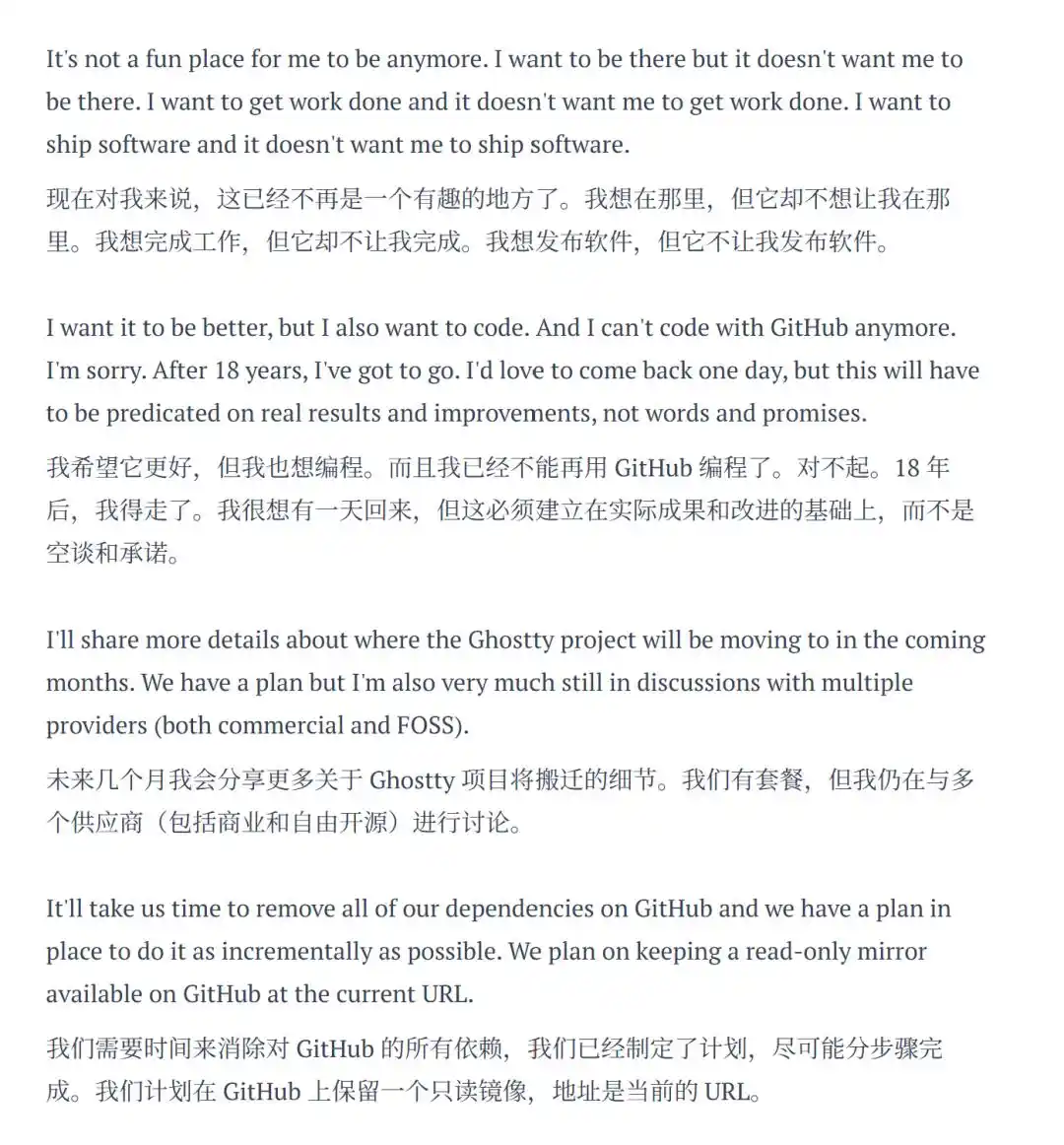
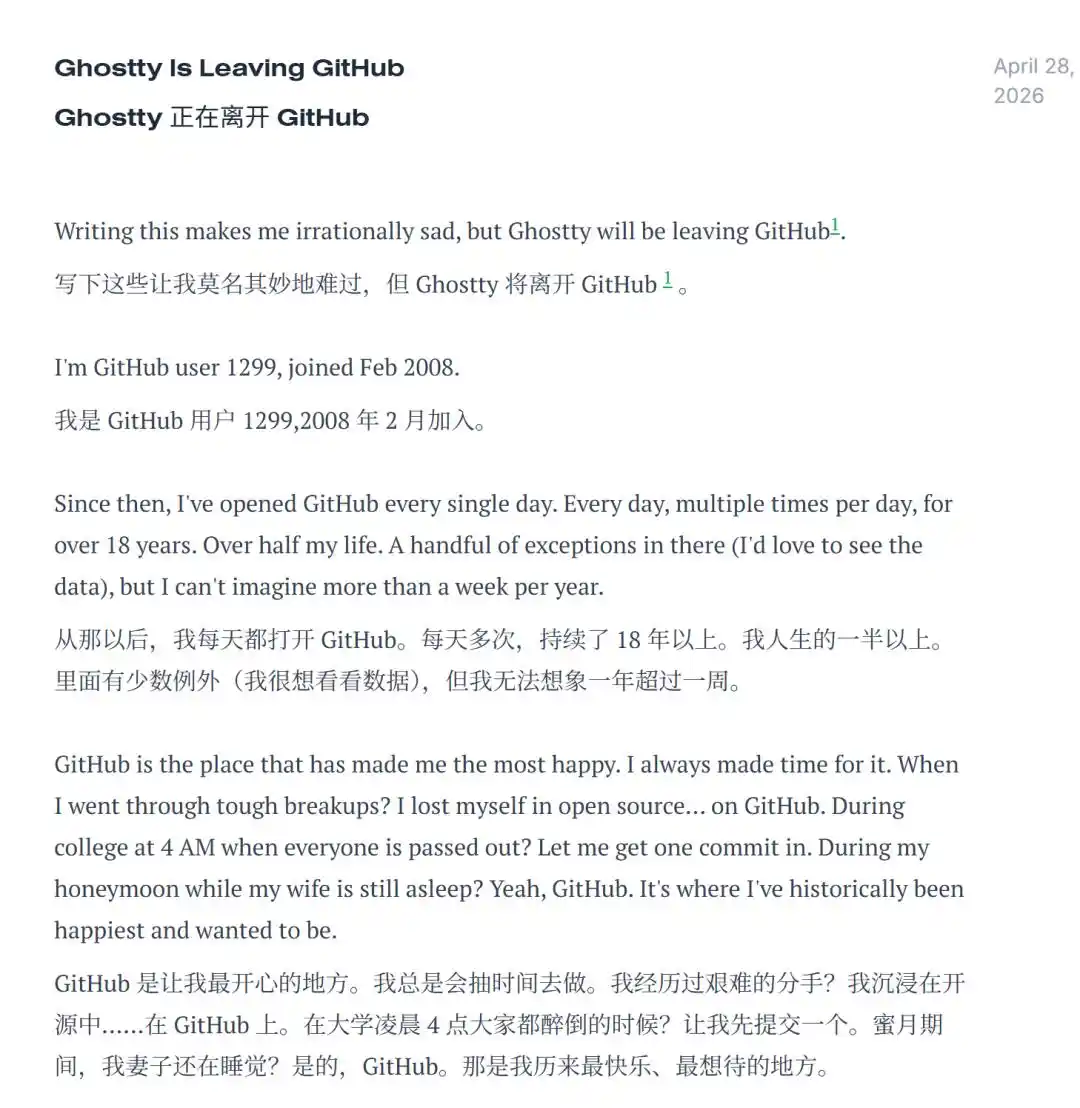
Mitchell Hashimoto, an 18-year veteran fan of GitHub and the famous developer of the Ghostty terminal, posted a sensational 'farewell letter' that went viral—every word bleeding with pain.

GitHub fails me every day.

I wish it were better, but I want to program more. I can no longer program using GitHub. I'm sorry, after 18 years, I have to go.

If a platform locks you out for hours every day, it is no longer suitable for serious work.

Subsequently, Ghostty packed up all its assets and decisively left.

His departure is just the tip of the iceberg in an avalanche.
GitHub's Life or Death

In recent months, giants like Citibank and Intel have expressed dissatisfaction to Microsoft over GitHub's ongoing failures. Even OpenAI has begun exploring self-built solutions.

To appease customers, Microsoft had to issue a large number of Credits to enterprise users as compensation for losses, leading directly to a bleeding of profits.

The most severe incident occurred last month: a mistakenly triggered, unreleased feature on GitHub caused numerous repositories to 'roll back,' with recent code modifications disappearing directly. Many enterprises have been forced to migrate.

Nearly eight years ago, when Microsoft acquired GitHub for $7.5 billion, global programmers were filled with concern.

As expected, after a brief golden period, this 'programmer's sanctuary'—hosting over 1.5 billion developers and 10 billion code repositories worldwide—now stands at a critical juncture of life or death in an extremely brutal manner.

3800+ Repositories 'Wiped Out' by Hackers

Even more serious, a recent security storm has completely stripped GitHub bare.

On May 21, 2026, a message instantly exploded on the hacker forum BreachForums: a hacker group openly offered GitHub's core source code for sale at a mere $50,000!
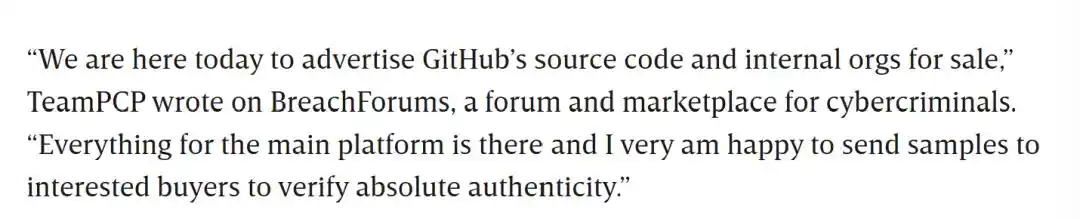
They arrogantly wrote:

Everything of the main platform is here. I would be happy to send samples to interested buyers for verification. This is not blackmail; we are too lazy to extort GitHub. If one person buys, we will completely destroy the data. If no buyer is found, we will soon make it public for free.
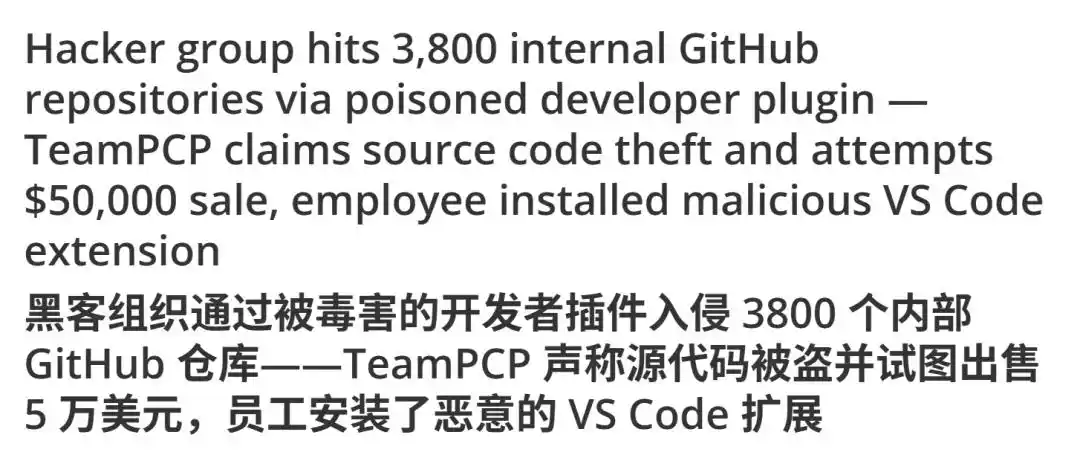
Subsequently, GitHub officially reluctantly confirmed: over 3,800 internal code repositories were indeed compromised.

The origin of this disaster is absurdly unbelievable: a GitHub internal developer installed a malicious, poisoned VS Code extension plugin on their work device. After credentials were leaked, over 3,800 repositories were breached.

VS Code and GitHub, both belonging to Microsoft, should have been a 'family ecosystem combination.' However, VS Code plugins lack high-intensity review mechanisms, making them the perfect entry point for hackers.

Because VS Code frequently prompts developers to install various plugins, these 'Trojan horses' can freely access local files, system terminals, etc.

When the GitHub engineer downloaded the malicious plugin, their long-term valid personal access token was instantly intercepted by the hackers!

For a platform built on 'code security and hosting,' having its source code publicly offered for sale is undoubtedly a resounding slap in the face.

This is just the tip of the iceberg.

In March of this year, security agencies discovered a 0-day-level critical vulnerability in GitHub's internal Git infrastructure.

If exploited, attackers could directly and unlimitedly access millions of public and private code repositories across the entire network, with consequences a hundred times more terrifying than this incident!

Management Shake-up: No More CEO, Reduced to a Microsoft Vassal

Behind the frequent security and technical incidents is GitHub's internal 'leaderless state' for nearly a year.

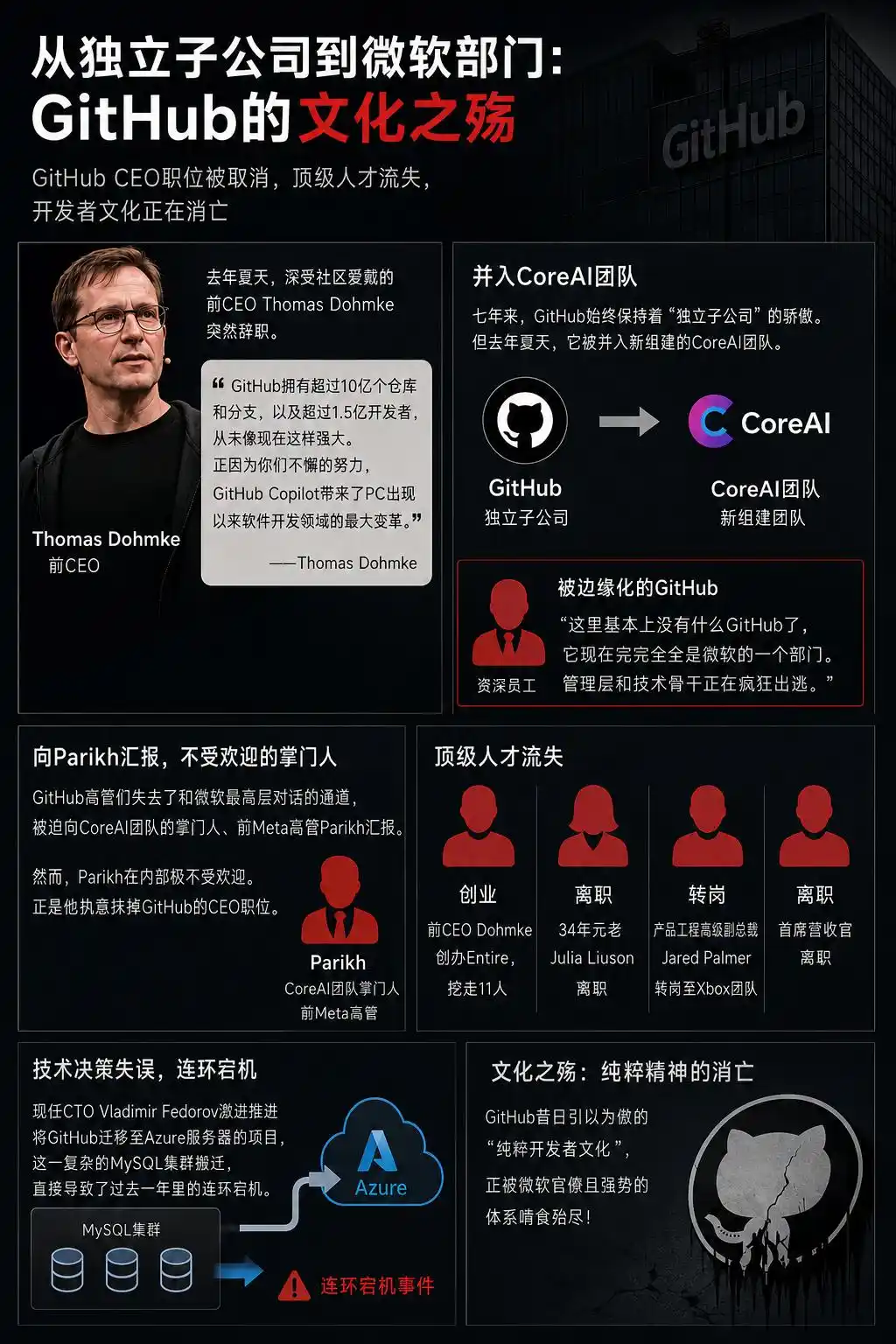
Last summer, the beloved former CEO Thomas Dohmke suddenly resigned. Microsoft then made a decision that shocked all employees: completely abolish the GitHub CEO position.

GitHub CEO Thomas Dohmke
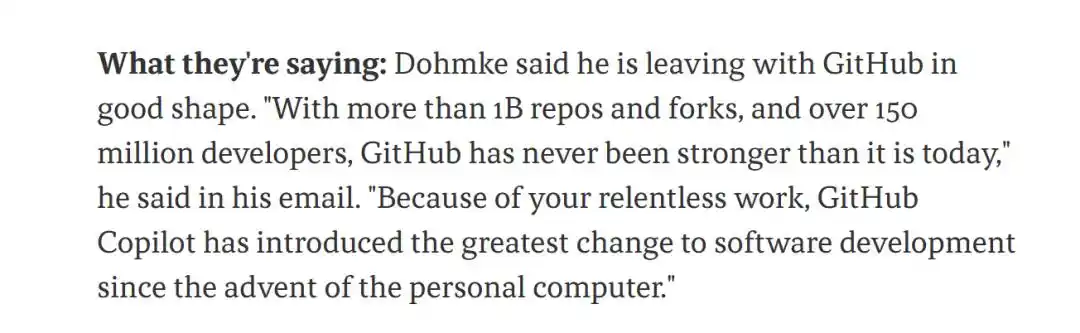
Dohmke thanked everyone: 'GitHub has never been stronger, with over 1 billion repositories and branches, and over 1.5 billion developers. It is thanks to your relentless efforts that GitHub Copilot has brought the biggest transformation in software development since the advent of the PC.'

For seven years, GitHub proudly maintained its status as an 'independent subsidiary.' But last summer, it was merged into the newly formed CoreAI team.

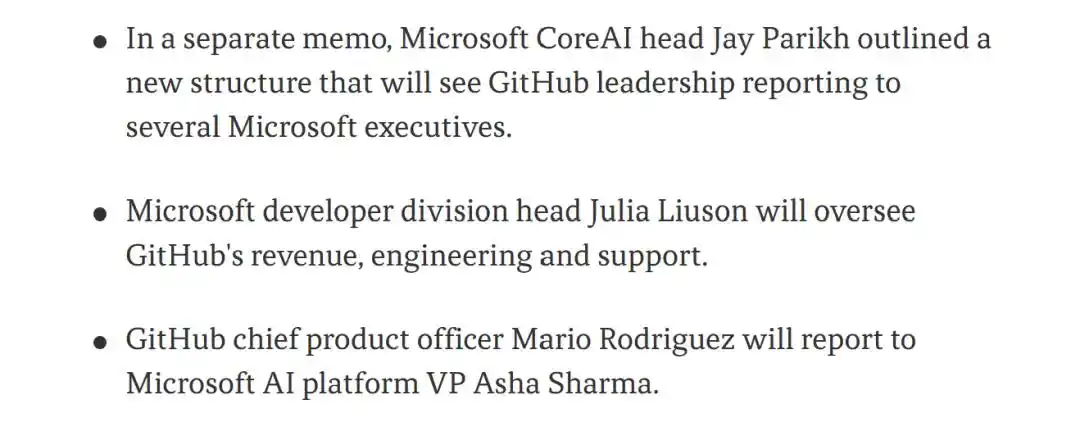
This drastic change directly pushed GitHub executives into an awkward position: they lost their direct line of communication with Microsoft's top leadership and were forced to report to Parikh, the head of the CoreAI team and former Meta executive.

However, Parikh is extremely unpopular internally. It was he who insisted on erasing the GitHub CEO position.

'There's basically no GitHub here anymore; it's now completely a department of Microsoft,' one senior employee angrily stated. 'Management and technical talent are fleeing madly.'

This was followed by a loss of top talent: former CEO Dohmke founded the next-generation developer platform Entire, poaching 11 people; 34-year veteran Julia Liuson resigned; Senior Vice President of Product Engineering Jared Palmer transferred to the Xbox team; the Chief Revenue Officer resigned.
Current CTO Vladimir Fedorov aggressively promoted the project to migrate GitHub to Azure servers. This complex MySQL cluster relocation directly caused the chain of outages over the past year.

Thus, GitHub's R&D, finance, and marketing have been comprehensively strangled and devoured. Internally, there is division and discord, with the loss of technical backbone.

GitHub's once-proud 'pure developer culture' is being gnawed away by Microsoft's bureaucratic and powerful system!
Moat Breached: Cursor and Claude Code's Dimensional Reduction Strike

The external outages and internal turmoil have torn open huge cracks for predators.

Once, Copilot was almost synonymous with AI-assisted programming.

However, in 2024, Cursor emerged out of nowhere. While GitHub Copilot was still stuck in the 'you write a line, I guess the next line' code completion stage, Cursor could already understand the entire project context and generate entire modules with one click.

In 2025, Claude Code launched a dimensional reduction strike—it could not only write code but also automate complex debugging, testing, and multi-file collaborative modifications.

Microsoft was thrown into unprecedented panic internally. According to leaks, Jay Parikh warned with an ashen face in a meeting: GitHub is facing a 'death threat.'

Parikh's core fear is: once developers get used to completing all development in Cursor, they will no longer upload their code to GitHub.

To this end, Microsoft seriously evaluated acquiring Cursor but hesitated for a moment. In the blink of an eye, Cursor was snapped up by SpaceX.

What's even more amusing is that Claude Code is so incredibly good that tens of thousands of engineers in Microsoft's Windows and Office departments have all become die-hard fans of CC. Microsoft executives were completely broken!

Rajesh Jha issued a strict order to all staff, forcibly revoking all CC licenses by the end of June and forcing engineers to revert to using GitHub Copilot CLI.

Financial Avalanche: The 'Subsidy Black Hole' of Making More Money, Losing More Money

Moreover, GitHub's commercial operations are also deeply mired, even starting to backfire on Microsoft.

On the surface, GitHub's data still looks impressive. By the end of 2025, Copilot paid users surpassed 4.7 million, and GitHub's annual recurring revenue crossed the $3 billion threshold.
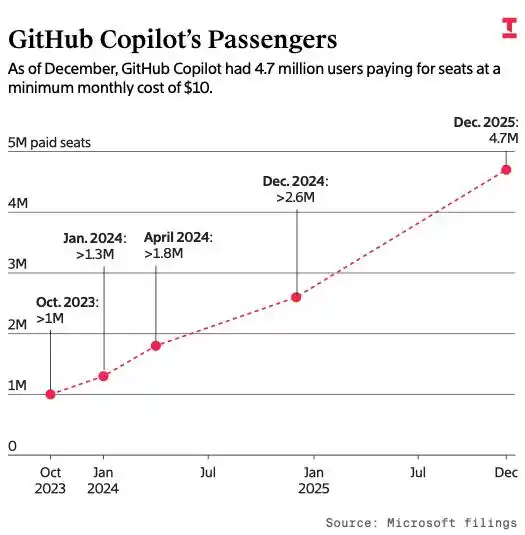
But behind the pretty numbers, it's all Microsoft's blood.

With the AI explosion, GitHub traffic surged 14 times. However, AI features for code hosting and open-source projects remain completely free.

Meanwhile, the inference costs for running AI models remain high. The computing power consumed by heavy users far exceeds the $10 monthly subscription fee—the more they sell, the more they lose.
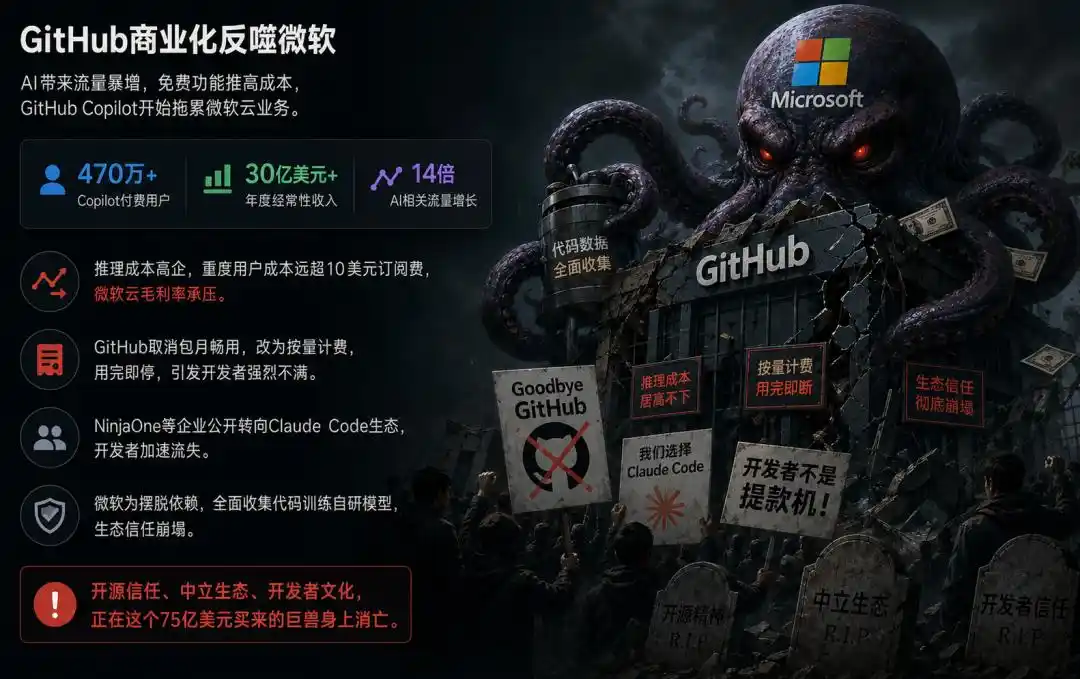
During Microsoft's earnings call in April this year, the CFO rarely admitted: the significant increase in GitHub Copilot usage directly lowered the gross margin of the entire core cloud business.

Under pressure from Wall Street, GitHub announced last month: abolish the unlimited monthly usage model and fully transition to 'pay-as-you-go.' Once credits are depleted, AI services are immediately cut off.

This move, perceived as greedy, completely infuriated developers!

The global IT services giant NinjaOne immediately publicly stated: they are comprehensively guiding engineers to abandon GitHub and turn to the Claude Code ecosystem.

Will GitHub Die?

This year, Microsoft's stock price has fallen by over 10%, performing the worst among the 'Magnificent Seven' tech stocks.

Its developer ecosystem cornerstone, GitHub, is pushing everything toward the abyss.

To break free from dependence on OpenAI and Anthropic, CoreAI has ordered the comprehensive collection of all code to train Microsoft's own native large model.

This practice of recklessly depleting the ecosystem for its own benefit has completely chilled developers worldwide.

The trust of the open-source community, the neutral ecological environment, and the free, pure developer culture are rapidly vanishing from this $7.5 billion behemoth.

Now, the most fatal question facing Satya Nadella is: In the era of AI agents, do global developers still need a central code repository platform like GitHub?

If Microsoft cannot provide a convincing answer, it will lose the soul it has cultivated around its ecosystem for decades—

'Developers, developers, developers!'

References:

https://www.theverge.com/tech/935250/microsoft-github-struggles-notepadhttps://mitchellh.com/writing/ghostty-leaving-githubhttps://www.wired.com/story/teampcp-software-supply-chain-attack-spree-github/?utm_source=chatgpt.com

This article comes from the WeChat public account "Xinzhiyuan," author: ASI Revelation.

Trend Kriptolar

İlgili Sorular

QWho is Mitchell Hashimoto and what significant action did he take regarding GitHub?

AMitchell Hashimoto is the developer of the Ghostty terminal and a long-time GitHub user. He recently announced his departure from the platform, citing frequent outages that prevented serious work, and moved the Ghostty project assets away from GitHub.

QWhat major security incident involving GitHub's source code is detailed in the article?

AA hacker group breached and stole the source code for over 3,800 of GitHub's internal repositories. The breach originated from a GitHub engineer installing a malicious VS Code extension, which compromised their credentials, allowing the hackers to access and later attempt to sell the code.

QHow has Microsoft's internal restructuring impacted GitHub's leadership?

AMicrosoft disbanded GitHub's independent subsidiary status and merged it into the CoreAI team. The CEO position was eliminated, and GitHub's leadership now reports to the CoreAI head, Jay Parikh, leading to a loss of autonomy, internal dissatisfaction, and a significant exodus of senior talent.

QWhat competitive threats to GitHub Copilot are mentioned, and what was Microsoft's internal reaction?

AThe article cites Cursor and Claude Code as major competitive threats, offering more advanced AI-assisted programming features. Microsoft was internally alarmed, with executives describing it as an 'existential threat.' Notably, many Microsoft engineers preferred using Claude Code, prompting management to forcibly revoke its licenses within the company.

QWhat financial and operational challenges is GitHub facing according to the article?

AGitHub is struggling with profitability despite high revenue. The massive computational costs of running free AI features like Copilot exceed subscription income, negatively impacting Microsoft's cloud margins. In response, GitHub shifted from a flat-rate subscription to a pay-as-you-go model, which angered many developers and prompted some companies to consider alternatives.

İlgili Okumalar

Wall Street's Most Famous 'Cassandra' Now Has His Sights Set on Nvidia

Michael Burry, the famed "Big Short" investor, has once again captured Wall Street's attention with a series of short positions against major tech and semiconductor stocks, most notably Nvidia. In late June and July, through his "Cassandra Unchained" newsletter, Burry disclosed short bets against Nvidia, Tesla, Applied Materials, Caterpillar, the SOXX semiconductor ETF, and later, Micron Technology. His core thesis revolves around potential distortions in the AI infrastructure boom, specifically questioning whether extended depreciation schedules (e.g., 6 years vs. a realistic 2-3 years for AI chips) by cloud giants like Microsoft and Google artificially inflate profits. He also raises concerns about possible "off-balance-sheet circular financing," where chip demand might be propped up by vendor-backed funding to clients. Nvidia's stock experienced volatility following these disclosures, briefly dipping but largely holding near Burry's reported entry points, leaving his positions roughly flat or slightly underwater as of late July. This move is part of a pattern for Burry, whose track record since his legendary 2008 bet is mixed. He has faced notable losses, such as on Tesla in 2021, while scoring on broader market turns like the 2020 pandemic crash. His methodology focuses intensely on free cash flow and scrutinizing original financial documents to spot overvaluation and structural risks, but it often struggles with timing the market. The article contrasts Burry's stance with other prominent investors. Steve Eisman, another "Big Short" figure, is not shorting Nvidia, citing strong fundamentals but expressing nervousness about sustainability. Jim Chanos agrees with the broad "accounting mismatch" concern—comparing it to the dot-com bubble—but targets financial leverage in private equity firms rather than the chip stocks themselves. While Nvidia's short interest remains relatively low at 1.3-1.4% of float, the massive stock size means absolute short losses have been significant, exceeding $5 billion earlier this year. The piece concludes that for ordinary investors, the key takeaway is not replicating specific short bets but learning from the critical frameworks these investors use: questioning rosy accounting, identifying structural vulnerabilities, and maintaining skepticism during market euphoria, even if pinpointing the exact catalyst for a downturn remains elusive.

marsbit23 dk önce

Wall Street's Most Famous 'Cassandra' Now Has His Sights Set on Nvidia

marsbit23 dk önce

Weekly Selection丨Epic Stock Market Volatility, Changxin Tech's IPO Reshapes Storage Landscape, Saylor Aims to Re-Anchor STRC Around September 8th

PANews Weekly Digest: Market Turmoil, Tech Breakthroughs, and Crypto Developments. The week saw significant volatility across global markets. South Korea's KOSPI index experienced extreme turbulence, including multiple trading halts, largely driven by sharp declines in AI hardware stocks like SK Hynix. In contrast, China's Changxin Xinqiao (CXC) achieved a landmark IPO with a market cap surpassing 4 trillion yuan, marking a major success for the domestic DRAM industry after a decade of losses. In the crypto and Web3 space, several key narratives emerged. AI is driving demand for new infrastructure, with projects like AI agent wallets and programmable payments gaining traction, attracting interest from firms like Coinbase. The Bitcoin mining sector is pivoting, with companies like MARA focusing on energy management as electricity becomes a core AI-era asset. Meanwhile, the RWA (Real World Assets) sector faces a "utilization puzzle," with hundreds of billions in on-chain assets remaining dormant. Notable market movements included a historic single-day surge of over 17% for the KOSPI index and a significant migration of $16.5 billion in staked ETH within the Lido ecosystem. Michael Saylor announced a target to re-peg the STRC stablecoin around September 8th. Other highlights include discussions on Ethereum's ambitious 2030 roadmap for scaling and privacy, analysis showing high protocol revenues not always translating to token price gains, and warnings from Citi about potential extreme commodity price shocks by late 2026.

marsbit28 dk önce

Weekly Selection丨Epic Stock Market Volatility, Changxin Tech's IPO Reshapes Storage Landscape, Saylor Aims to Re-Anchor STRC Around September 8th

marsbit28 dk önce

When the Market Begins to Question AI Capex: A Full Analysis of Q2 Earnings Reports from Five Tech Giants

In late July 2026, five major US tech giants—Alphabet, Intel, Microsoft, Meta, and Apple—released their Q2 earnings reports. While all companies exceeded revenue and profit expectations, driven by strong AI-related business growth, investor reactions diverged sharply due to concerns over escalating AI capital expenditures (capex) and their impact on free cash flow. Alphabet reported strong revenue growth and a surging cloud business, but its stock fell after announcing a doubled year-on-year capex and negative quarterly free cash flow for the first time. Intel posted its strongest revenue growth in over 15 years, but its stock experienced volatile trading after significantly raising its full-year capex guidance. Microsoft saw its stock surge after beating estimates and, crucially, lowering its capex forecast while projecting positive free cash flow. Meta faced the most severe sell-off as its profits declined despite revenue beats, with free cash flow plunging over 90% and its capex guidance raised. Apple reported record June-quarter results, but its stock plummeted after providing Q4 revenue guidance that fell short of expectations, citing supply chain constraints and forex headwinds. The overall takeaway is that the market's focus has shifted from validating AI demand to scrutinizing the timeline for returns on massive AI investments. Companies demonstrating a clearer path to managing capex and preserving free cash flow, like Microsoft, were rewarded, while those signaling continued aggressive spending faced investor skepticism.

Odaily星球日报37 dk önce

When the Market Begins to Question AI Capex: A Full Analysis of Q2 Earnings Reports from Five Tech Giants

Odaily星球日报37 dk önce

a16z: From Companies to DAOs, DUNA May Become the Next Generation Organizational Form

This article, "From Companies to DAOs: How DUNA Could Become the Next Organizational Form," traces the 500-year evolution of business collaboration. It begins with medieval structures like the *commenda* and Florentine *compagnia*, which exposed partners to personal risk. The modern corporation, exemplified by the Dutch East India Company (VOC), was a revolutionary leap, enabling large-scale, capital-intensive ventures by offering limited liability and reducing coordination costs. However, corporations introduced new challenges like principal-agent problems and bureaucratic overhead. The piece argues that software and internet-native protocols are now reducing these traditional overheads. Decentralized Autonomous Organizations (DAOs) emerged as a new model for coordination without centralized management. Yet, DAOs face a significant legal vacuum: they lack legal recognition, leaving members exposed to unlimited personal liability, and their tokens are vulnerable to being classified as securities under unclear regulations (e.g., the Howey Test). This has forced projects into suboptimal workarounds like offshore foundations. The article identifies the Decentralized Unincorporated Nonprofit Association (DUNA) as a potential solution. Recently legalized in states like Wyoming, the DUNA provides a legal wrapper for decentralized networks. It grants key protections—legal personality, limited liability, and perpetual existence—to a group without imposing a traditional hierarchical management structure. This allows token-holder communities to govern, hold assets, and contract as a single legal entity, aligning with their decentralized nature. While DUNA doesn't solve all governance challenges or magically resolve securities law questions, it represents a crucial step. It fills the legal recognition gap, offering a native legal form for internet-scale, decentralized collaboration and extending the separation of personal risk from organizational venture into a new domain.

marsbit1 saat önce

a16z: From Companies to DAOs, DUNA May Become the Next Generation Organizational Form

marsbit1 saat önce

2026 Mid-Year Report On-Chain RWA: Tokenized Stock Market Cap Doubles in a Year, But 90% of Rights Are Hollow Shells

The 2026 Mid-Year Report on On-Chain RWA highlights a significant growth in tokenized stock market capitalization, which nearly doubled from $951 million in March to $1.89 billion by July. However, the report reveals a fundamental contradiction in this "layer 2.5" ecosystem: products with the strongest legal foundation (like regulated U.S. infrastructure) lack liquidity and distribution, while freely tradable offshored wrapper products often lack substantive ownership rights. The increase is driven largely by a few products (SECZ, FGRS, STRCx) and platforms (Ondo, xStocks, Securitize collectively hold over 85% share). While distributed value across networks like Ethereum, Solana, and BNB Chain has grown, the market remains fragmented. Products referencing the same underlying asset (e.g., Apple stock) are distinct legal liabilities with different intermediaries and jurisdictional rules, offering varying degrees of legal claim. The report cautions that headline numbers are misleading, as they reflect changes in distributed token value—driven by issuance, conversions, and price movements—not pure investor inflows. True "canonical shares" with legal ownership, wide wallet distribution, institutional liquidity, and independent on-chain price discovery do not yet exist at scale. Tokenized treasuries show stronger product-market fit, and ETFs may be easier to scale than single stocks. The core takeaway is a trade-off: legal certainty versus liquidity and composability.

marsbit2 saat önce

2026 Mid-Year Report On-Chain RWA: Tokenized Stock Market Cap Doubles in a Year, But 90% of Rights Are Hollow Shells

marsbit2 saat önce

İşlemler

Spot

Popüler Makaleler

OP Nasıl Satın Alınır

HTX.com’a hoş geldiniz! Optimism (OP) satın alma işlemlerini basit ve kullanışlı bir hâle getirdik. Adım adım açıkladığımız rehberimizi takip ederek kripto yolculuğunuza başlayın. 1. Adım: HTX Hesabınızı OluşturunHTX'te ücretsiz bir hesap açmak için e-posta adresinizi veya telefon numaranızı kullanın. Sorunsuzca kaydolun ve tüm özelliklerin kilidini açın. Hesabımı Aç2. Adım: Kripto Satın Al Bölümüne Gidin ve Ödeme Yönteminizi SeçinKredi/Banka Kartı: Visa veya Mastercard'ınızı kullanarak anında Optimism (OP) satın alın.Bakiye: Sorunsuz bir şekilde işlem yapmak için HTX hesap bakiyenizdeki fonları kullanın.Üçüncü Taraflar: Kullanımı kolaylaştırmak için Google Pay ve Apple Pay gibi popüler ödeme yöntemlerini ekledik.P2P: HTX'teki diğer kullanıcılarla doğrudan işlem yapın.Borsa Dışı (OTC): Yatırımcılar için kişiye özel hizmetler ve rekabetçi döviz kurları sunuyoruz.3. Adım: Optimism (OP) Varlıklarınızı SaklayınOptimism (OP) satın aldıktan sonra HTX hesabınızda saklayın. Alternatif olarak, blok zinciri transferi yoluyla başka bir yere gönderebilir veya diğer kripto para birimlerini takas etmek için kullanabilirsiniz.4. Adım: Optimism (OP) Varlıklarınızla İşlem YapınHTX'in spot piyasasında Optimism (OP) ile kolayca işlemler yapın.Hesabınıza erişin, işlem çiftinizi seçin, işlemlerinizi gerçekleştirin ve gerçek zamanlı olarak izleyin. Hem yeni başlayanlar hem de deneyimli yatırımcılar için kullanıcı dostu bir deneyim sunuyoruz.

357 Toplam GörüntülenmeYayınlanma 2024.12.12Güncellenme 2026.06.02

OP Nasıl Satın Alınır

Tartışmalar

HTX Topluluğuna hoş geldiniz. Burada, en son platform gelişmeleri hakkında bilgi sahibi olabilir ve profesyonel piyasa görüşlerine erişebilirsiniz. Kullanıcıların OP (OP) fiyatı hakkındaki görüşleri aşağıda sunulmaktadır.

活动图片