From Real Estate to Crypto Finance: The Trump Family's New Capital Experiment

比推2026-01-14 tarihinde yayınlandı2026-01-14 tarihinde güncellendi

Özet

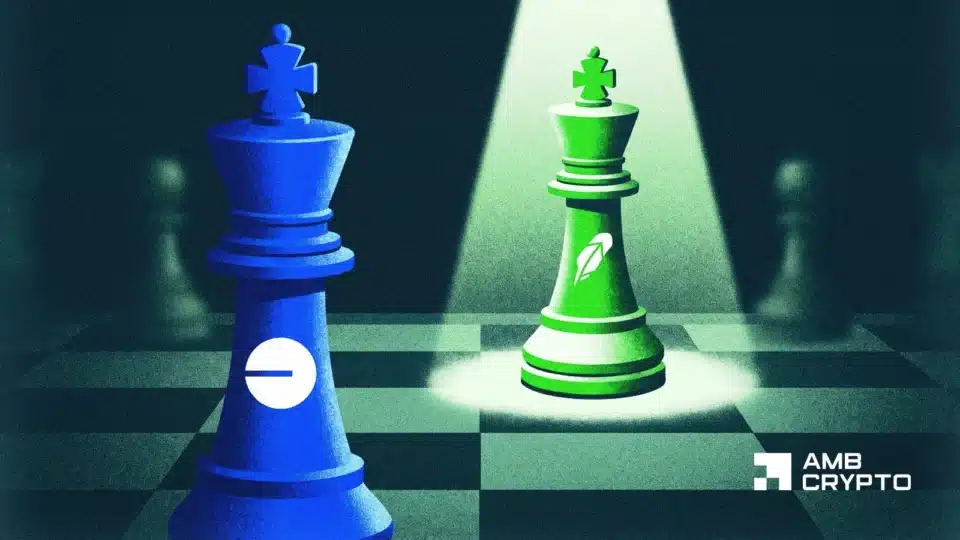
From real estate to crypto finance: The Trump family is pursuing a national trust bank charter rather than meme coins or NFTs, aiming to establish a permanent, transferable financial franchise. If approved by the OCC, their entity WLTC would gain direct access to the national payment system and a rare license for institutional crypto custody—a high-demand, regulated market. The strategy leverages political influence: crypto industry donations to Trump’s camp helped pass favorable legislation, while WLFI, with a 75% profit share for the family, benefits directly from these policies. This creates a closed loop of industry-funded policy advantages translating into private gains. WLTC’s potential approval could disrupt the crypto custody and stablecoin markets, challenging incumbents like USDT and USDC by offering integrated, compliant services. The move highlights a shift toward competition based on regulatory access and political influence rather than innovation, raising concerns about power-capital integration and systemic corruption risks.

Author: Nikka, WolfDAO


I. Banking License: The Precise Calculation of a Perpetual Charter

The Trump family chose to apply for a national trust bank license instead of issuing Meme coins or endorsing NFT projects. Behind this choice lies a profound logic of power. Meme coins are a one-time attention monetization, while stablecoin companies are merely ordinary commercial entities. However, a national trust bank is not a participant in the financial system—it is part of the financial system itself.

Once approved by the OCC, WLTC will have the right to directly access the national payment system, as well as the most critical—a rare license to provide crypto asset custody services for institutional clients. Custody services are a rigid demand for traditional financial institutions entering the crypto world, but the OCC has so far only approved a few pure crypto banks, such as Anchorage Digital. This is a highly scarce, high-demand market with extremely high regulatory barriers.

The deeper value lies in the permanence and transferability of the license. Political influence may fade after leaving office, but a federal bank license is a permanent institutional asset—it can be transferred, used as collateral for financing, and generate continuous rental income. The Trump family is not applying for a project but a financial franchise that can be passed down.

The timing is equally precise. The partial passage of the 2025 GENIUS Act and CLARITY Act provided a basis for stablecoins and custody services. This legislation itself carries a strong political background—a regulatory-friendly environment bought by the crypto industry's donations of tens of millions to hundreds of millions of dollars to the Trump camp. However, legislation only opens the door; the real competition lies in who passes the fastest. Although Circle and Ripple are stronger in terms of strength, they lack what WLFI possesses: a direct channel of political influence.

In this framework, the role of USD1 becomes clear—it is not the goal but a tool to obtain the license. The $3.3 billion market capitalization was built through Binance's 20% annualized returns and WLFI treasury subsidies. The existence of USD1 only needs to prove that WLFI has operational experience and cooperative channels, with surface data sufficient to meet "business feasibility" requirements. Once the license is obtained, whether USD1 continues to exist is no longer critical—WLTC can provide custody for any stablecoin, collecting "toll fees" throughout the entire crypto financial system.

II. The Perfect Closed Loop of Rent-Seeking

To understand the essence of WLFI, one must return to the wave of political donations in 2025. The crypto industry injected tens of millions to hundreds of millions of dollars into the Trump camp: $20 million from Crypto.com's parent company, millions from Gemini, Blockchain, and a16z founders. These donations bought a policy environment favorable to all crypto businesses—a typical public good.

However, the Trump family not only enjoyed this public good but also gained private benefits through WLFI: a 75% profit share, already reaping tens of billions of dollars. This created a perfect closed loop of interests: using the industry's money to buy policy tilts, using policy tilts to support their own business, and using business profits to continue influencing policy. Traditional political donations at least have a layer of separation between donors and beneficiaries, but the WLFI model is "industry donations → family profits," where policymakers are simultaneously direct beneficiaries.

What is even more ingenious is that this model is entirely legal in form. The Trump family profits by operating a "market-oriented" enterprise—with products, business, and clients. However, in reality, this enterprise's core competitiveness is not technology or products but the privilege of political connections and regulatory access.

The OCC's discretionary power is precisely the space for rent-seeking. Bank license applications are not binary decisions of approval/rejection but complex processes with countless discretionary points. What kind of capital structure is "adequate"? What kind of management experience is "qualified"? Each discretionary point provides room for political influence to exert itself. WLFI does not need the OCC to violate rules; it only needs "friendly" judgments on countless discretionary points—slightly looser requirements here, slightly flexible interpretations of standards there. Each individual judgment may seem reasonable, but cumulatively, they create significant differences.

III. Restructuring Competition in the Crypto Industry

WLFI's bank application is essentially competing for a large but scarce market—institutional-grade crypto custody services. Currently, the global institutional demand for crypto asset custody is conservatively estimated at over hundreds of billions of dollars, but there are only a handful of institutions with compliant custody qualifications. The OCC has only approved a few, such as Anchorage Digital. While Coinbase and Gemini provide custody services, they do not have federal bank status.

If WLTC is approved, the most direct impact will be the redivision of this blue ocean market. Traditional financial institutions—pension funds, sovereign wealth funds, family offices—when seeking crypto asset allocation, prioritize custody security and compliance over yield. A custody institution with a federal bank license and direct OCC supervision is fatally attractive to these institutional clients. This means that companies like Circle and Coinbase, already waiting in line for licenses, may watch helplessly as WLFI cuts in line with political advantages, seizing first-mover advantages.

From the perspective of the stablecoin competition landscape, WLTC's approval will break the duopoly of USDT and USDC. Although USD1 currently has a market capitalization of only $3.3 billion, the institutional红利 brought by the bank license could enable its expansion in the institutional market. The key is that WLTC can provide "one-stop services"—issuance, custody, and exchange all internalized, no longer relying on third parties. For institutional clients, this means fewer counterparty risks, simplified compliance processes, and lower operational costs. Tether and Circle must provide similar services through multiple partner banks and custodians, while WLTC, as a federal bank, can do it independently. This efficiency advantage is structural.

The most pragmatic observation is that WLFI is opening a new business path: not through technological innovation or market competition but through political resources and regulatory arbitrage to build competitive barriers. The success of this path will attract more capital and entrepreneurs to emulate it, forming a new business ecosystem centered on licenses and political connections as moats. In this ecosystem, the rule-makers and the biggest beneficiaries may be the same group, while true market competition gives way to power distribution and interest exchange.

Conclusion

The most profound revelation of this case is not about cryptocurrency but about power itself. It reveals how seamlessly power and capital can integrate in the digital age. The traditional revolving door at least has a time lag, but the WLFI model is real-time synchronization: formulating policies while operating a business, promoting regulation while applying for licenses. This increase in efficiency is also a multiplication of corruption risks.


Twitter:https://twitter.com/BitpushNewsCN

Bitpush TG Group:https://t.me/BitPushCommunity

Bitpush TG Subscription: https://t.me/bitpush

Original link:https://www.bitpush.news/articles/7602639

İlgili Sorular

QWhat type of banking license is the Trump family seeking for WLTC, and why is it strategically significant?

AThe Trump family is applying for a national trust bank charter. This is strategically significant because it is not just participation in the financial system but becomes part of the system itself. It grants direct access to the national payment system and, most crucially, the highly scarce license to provide crypto asset custody services for institutional clients. This charter is a permanent, transferable institutional asset that can generate rental income and be used for financing, unlike the temporary value of meme coins or NFT endorsements.

QHow does the article describe the relationship between political donations from the crypto industry and the regulatory environment that benefits WLFI?

AThe article describes a perfect closed loop of power rent-seeking. The industry donated tens to hundreds of millions of dollars to the Trump camp, which helped create a regulation-friendly environment through legislation like the GENIUS and CLARITY Acts. This favorable policy is a public good for the entire industry. However, the Trump family, as policy makers, also directly benefits privately through WLFI, which has a 75% profit share, earning them tens of billions of dollars. This creates a scenario where industry money buys policy, which supports their own company, whose profits are then used to further influence policy.

QWhat competitive advantage would a WLTC bank charter create in the institutional crypto custody market?

AA WLTC bank charter would provide a massive competitive advantage by allowing it to serve the huge, underserved market for institutional-grade crypto custody. As a federally chartered bank directly regulated by the OCC, it would be extremely attractive to conservative institutional clients like pension funds and sovereign wealth funds, for whom security and compliance are paramount. It could offer 'one-stop' services—issuance, custody, and exchange—all internalized, reducing counterparty risk and simplifying compliance compared to competitors like Coinbase or Circle that must rely on multiple partner banks and custodians.

QAccording to the article, what is the true purpose of the USD1 stablecoin in WLFI's strategy?

AThe true purpose of the USD1 stablecoin is not to be a primary product or to compete directly with major stablecoins, but to serve as a tool to help secure the national trust bank charter. Its $3.3 billion market cap, artificially propped up by high yields on Binance and subsidies from the WLFI treasury, is used to demonstrate 'business feasibility' and operational experience to regulators. Once the bank charter is obtained, the continued existence of USD1 becomes less critical, as WLTC could then provide custody services for any stablecoin and collect fees throughout the crypto financial system.

QHow does the WLFI model represent a new form of integration between power and capital in the digital age?

AThe WLFI model represents a new, highly efficient, and seamless integration of power and capital. Unlike traditional revolving doors between politics and business which have a time lag, the WLFI model operates in real-time: shaping policy while simultaneously operating a business, and pushing for friendly regulation while applying for licenses. This creates a situation where the rule-makers are also the direct beneficiaries, raising significant corruption risks as regulatory discretion at numerous points in the approval process can be influenced by political power rather than pure technical merit.

İlgili Okumalar

The AI Agent Era Accelerates Its Arrival: Questflow Defines a New Paradigm of Financial Intelligence with On-Chain AI Brokerage

The AI Agent era is accelerating, with the CB Insights AI 100 list highlighting global investment confidence. The focus has shifted from whether AI works to its speed of deployment and ability to manage complex workflows, with autonomous AI Agents driving this transformation. At the forefront is Questflow, a Singapore-based startup redefining financial intelligence through its on-chain AI brokerage. Unlike tools that merely provide data dashboards, Questflow deploys AI Agents that proactively scan markets, form judgments, and execute trades via a conversational interface—operating 24/7 without requiring manual confirmation for each decision. This embodies the new AI paradigm of agents capable of executing multi-step workflows autonomously. Questflow's mission is to democratize institutional-grade trading intelligence. Historically reserved for the ultra-wealthy, this capability is now accessible starting from just $1 through Questflow's "AI Clone + Copy Trade" model. The platform charges only a 1% execution fee, aligning its incentives directly with users and eliminating traditional management or performance fees. The timing is opportune, aligning with key trends identified by CB Insights: the scalable deployment of AI Agents, accelerated AI adoption in financial services, and the maturation of on-chain infrastructure. With robust liquidity on platforms like Hyperliquid and Polymarket, alongside advancements in AI reasoning and non-custodial wallet security, Questflow is positioned to merge the roles of broker, fund, and exchange into a single, accessible platform for millions.

链捕手1 dk önce

The AI Agent Era Accelerates Its Arrival: Questflow Defines a New Paradigm of Financial Intelligence with On-Chain AI Brokerage

链捕手1 dk önce

Why Pricing Social Interactions is Doomed to Fail?

Titled "Why Putting a Price on Social Interaction Is Doomed to Fail," this article critiques attempts to monetize social networks directly through SocialFi models, arguing their inevitable failure stems from a fundamental misunderstanding of media dynamics. Using Marshall McLuhan's theory of "hot" and "cold" media, the author posits that social networks are inherently "cold" media. Their value isn't contained in individual posts but is co-created through user participation, interpretation, and fragmented, ongoing interaction (e.g., replies, shares). This ambiguity and need for user involvement are core to their function. The article asserts that SocialFi projects like Friend.tech failed because introducing real-time, tradable financial pricing (a definitive "hot" signal) into this "cold" environment doesn't add a layer—it replaces the medium's essence. The unambiguous price signal overshadows and nullifies the nuanced, participatory social signal. Users become traders, not participants, and when speculative profits vanish, the underlying social ecosystem—never genuinely cultivated—collapses entirely. This principle extends beyond crypto. The author argues platforms like Twitter have gradually "heated up" through metrics (likes, retweets counts, algorithmically defined value), shifting users from participants to performers and eroding organic engagement. The solution isn't to abandon capital but to manage its entry point. Successful models like Substack, Patreon, or Bandcamp allow capital to "condense" at specific, isolated nodes (e.g., subscriptions, one-time payments) without permeating and "heating" every social interaction. They preserve the core "cold," participatory medium while enabling monetization at designated boundaries. The NFT boom and bust serves as a stark parallel: the ancient "cold" medium of collecting (valued for story, community, gradual accumulation) was rapidly destroyed by platforms that introduced real-time floor prices, rarity scores, and trading dashboards, transforming collectors into speculators and vaporizing cultural value when prices fell. The core lesson: "Liquidity equals heat." Injecting high liquidity and definitive pricing into a "cold" participatory medium doesn't optimize it; it fundamentally alters and destroys its value-creating mechanism. The future lies not in pricing every social gesture but in finding precise, non-invasive points for capital to condense without overheating the entire ecosystem.

marsbit9 dk önce

Why Pricing Social Interactions is Doomed to Fail?

marsbit9 dk önce

Jensen Huang's CMU Speech: In the AI Era, Don't Just Watch, Build

Jensen Huang, CEO of NVIDIA and a first-generation immigrant, delivered the commencement address to Carnegie Mellon University's class of 2026. He shared his personal journey from a humble background to founding NVIDIA, emphasizing resilience, learning from failure, and the responsibility that comes with leadership. Huang framed the present moment as the dawn of the AI revolution, a shift he believes is more profound than previous computing waves. He described AI as fundamentally resetting computing—moving from human-written software to machines that understand, reason, and use tools. This will create a new industry for generating intelligence and transform every sector. While acknowledging AI's potential to automate tasks and displace some jobs, Huang distinguished between the *tasks* of a job and its core *purpose*. He argued AI will augment human capability, not replace humans. The real risk, he stated, is not AI itself, but people being left behind by those who effectively use AI. He presented AI as a generational opportunity for massive infrastructure investment—in chip factories, data centers, energy grids, and advanced manufacturing—that could re-industrialize nations like the U.S. and bridge the digital divide by making computing and intelligent tools accessible to all. Huang called for a balanced approach: advancing AI safely and responsibly, establishing prudent policies, ensuring broad access, and encouraging universal participation. He urged the graduates not to fear the future but to engage with optimism and ambition, reminding them of CMU's motto, "My heart is in the work." His core message was clear: this is their moment to actively build and shape the AI-powered future, not merely observe it.

marsbit1 saat önce

Jensen Huang's CMU Speech: In the AI Era, Don't Just Watch, Build

marsbit1 saat önce

İşlemler

Spot
Futures
活动图片