From Mayor to Cryptocurrency Salesman: A Clash of Politics and Business

比推2026-01-13 tarihinde yayınlandı2026-01-13 tarihinde güncellendi

Özet

Former New York City Mayor Eric Adams has swiftly transitioned from public office to promoting a New York City-themed cryptocurrency just weeks after leaving his position. Smiling and enthusiastic, Adams advocated for blockchain technology and claimed he would not initially profit from the venture. He criticized his successor, Zohran Mamdani, for policy reversals and highlighted his plans to leverage his municipal experience—including expertise in areas like garbage collection—as marketable "professional capital" abroad. Adams, known for his unorthodox style, has been active internationally, meeting with foreign leaders and business figures in Dubai, the Democratic Republic of Congo, and Senegal. His post-mayoral activities appear focused on rehabilitating his reputation, attacking his political opponents, and addressing personal legal debts. The cryptocurrency project, named NYC Token, is framed as a philanthropic effort to combat antisemitism and anti-Americanism while promoting blockchain education. However, the token’s website faced technical issues, with purchase links non-functional at launch. Adams also expressed interest in exporting New York’s public services expertise globally but affirmed he has no plans to leave the city permanently.

Author: Nicholas Fandos, Debra Kamin

Compiled by: Chopper, Foresight News

Original Title: After Stepping Down as New York Mayor, He Turned to Selling Cryptocurrency


Two weeks ago, Eric Adams held one of the most powerful positions in the U.S. government system; today, he stands under the neon billboards of Times Square, promoting a New York City-themed cryptocurrency.

For anyone else, such a shift in identity might be embarrassing, but the former mayor of New York was all smiles, enthusiastically discussing the advantages of blockchain technology and promising not to profit from it for the time being.

"I've missed you all so much, ladies and gentlemen," he said to a group of reporters, before shifting gears to criticize his successor's "major mistakes," talk about business opportunities in foreign capitals, and admit that his experience in municipal services like garbage collection has now become monetizable "expert capital."
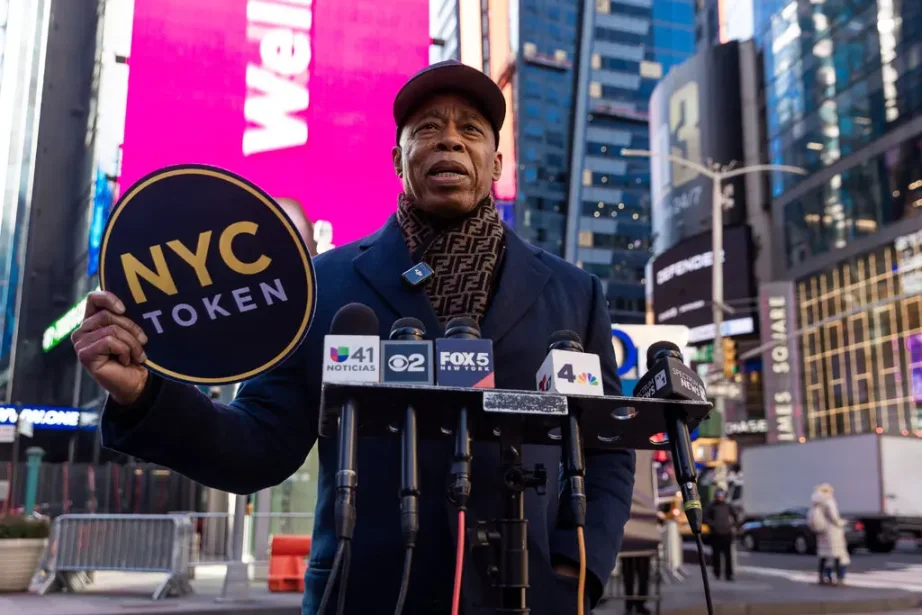
This was his first public appearance since leaving office on January 1, but it was cut short because he had to catch a flight. He was headed first to Dallas, then to Senegal, claiming more opportunities awaited him there.

The 65-year-old Adams is one of the most unconventional mayors in New York City's history: from a working-class background, a former police officer, yet federally indicted for his pursuit of a luxurious lifestyle. All signs indicate that his post-mayoral career will continue this "unconventional" approach.

Just in the past two weeks, he met with a Saudi prince in Dubai, visited the President of the Democratic Republic of the Congo, and repeatedly attacked his successor, Zohran Mamdani, accusing him of overturning some of the pro-Israel policies implemented during his term. This move broke the unwritten tradition of former mayors showing respect to their successors.

Many details of Adams's business dealings remain shrouded in mystery, including his partnership in the cryptocurrency project. But his core post-mayoral agenda is becoming increasingly clear: restoring his personal reputation, attacking his successor, and repaying the massive debts incurred from legal battles. The priority among these three remains unclear.

"I won't be taking a nine-to-five salaried job," Adams said. "I only work for myself."

Adams isn't the only one planning his post-office livelihood while targeting Mamdani. Former New York Governor Andrew Cuomo is finalizing a deal to host a weekly show on the conservative talk radio station WABC, where he was a frequent guest during his unsuccessful campaign.

According to the New York Post, the show will provide Cuomo with a platform to promote his centrist Democratic political views, and he will likely use it to criticize Mamdani, whom he previously called a "far-left radical."

The station's owner, Republican billionaire John Catsimatidis, said he does not plan to pay Cuomo, but simply wants to help him after his electoral defeat. The broadcast time slot has not been finalized. "We feel sorry for what happened to him, and we love New York deeply," Catsimatidis said. "He wants to maintain public visibility and stay connected with New Yorkers."

But so far, Adams's post-mayoral performance is undoubtedly more eye-catching.

Just hours after attending Mamdani's inauguration, he boarded an Emirates flight to Dubai with his long-time partner, Tracey Collins. Besides the Saudi prince, he was photographed meeting with several wealthy Israeli and Uzbek businessmen.
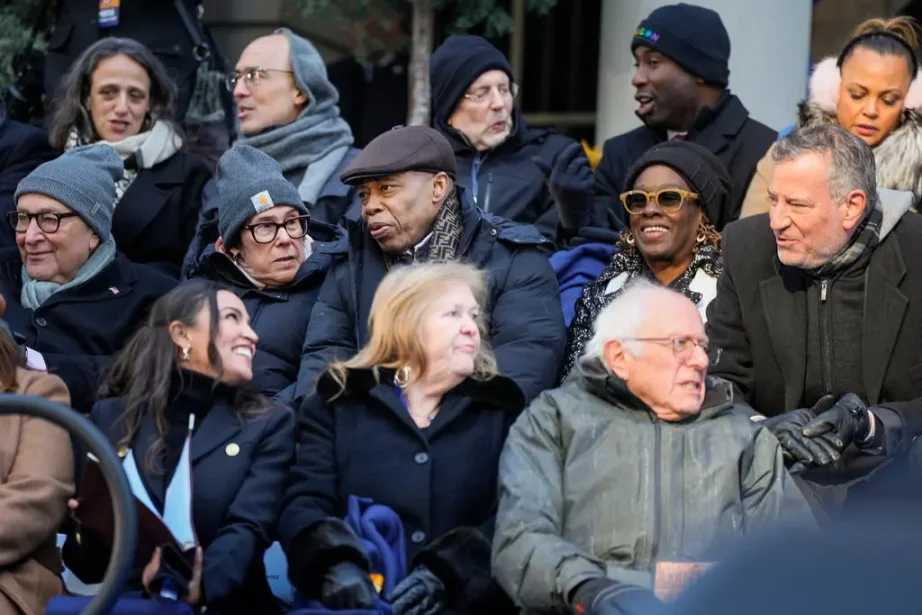
Numerous current and former political figures attended Zohran Mamdani's mayoral inauguration, with Adams among them

He dined with real estate agent and reality TV star Eleonora Srugo and posted a photo on social media with Amir Marashi. Marashi, born in Iran, is a New York gynecologist and women's health advocate specializing in procedures like vaginal rejuvenation.

Meanwhile, Adams has kept a close eye on developments in New York City. He frequently posts on social media to express dissatisfaction with Mamdani's policies: for example, Mamdani's reversal of the expanded definition of antisemitism previously adopted by the city, and质疑 (questioning) some of his personnel appointments.

"Everyone deserves a grace period, but hate doesn't allow grace for anyone," Adams said at Monday's event.

Mamdani, at another event, declined to respond to Adams's criticism.

Adams's interest in cryptocurrency is not new. During his tenure as mayor, he chose to receive his first paycheck in cryptocurrency; he is close friends with cryptocurrency billionaire Brock Pierce, who, along with other crypto industry figures, funded his campaign last fall before he dropped his re-election bid.

Adams made "support for Israel and combating antisemitism" a core part of his administration, and he has packaged this new token as a public welfare project, claiming its proceeds will be used to fight antisemitism, anti-Americanism, and "teaching children to embrace blockchain technology."

The token's official website states its total supply will be 1 billion tokens. Adams said he would donate the proceeds from some of these tokens to non-profit organizations dedicated to the aforementioned causes and stated that he would not receive a salary or any compensation, at least initially.

"NYC Token is a new generation cryptocurrency inspired by the relentless energy and innovative spirit of New York City," the project's website reads. "Leveraging cutting-edge blockchain technology, we are building a decentralized financial ecosystem with ambitions matching those of the city itself."

Nevertheless, Adams seemed somewhat struggling when describing the project's details on multiple occasions. During Monday's event and in an interview with Fox News, he repeatedly misnamed the new product as "New York City Coin."

Adams's image is prominently featured on the token's website, which invites visitors to "Buy Now," but as of Monday evening, all purchase links on the site were non-functional.

The former mayor said he is also exploring other business areas, including plans to be advanced during this week's trip to Africa.

"I realized that many services New York City has, even garbage collection, are hard to find in many parts of the world," Adams said. "I plan to provide such assistance to other cities and countries."

All these actions raise questions about whether Adams will continue to reside in New York in the future. He previously stated his desire to retire in an overseas city rather than return to his home in Brooklyn's Bedford-Stuyvesant neighborhood.

But two people familiar with the matter revealed that the former mayor plans to keep New York City as his base and intends to rent an apartment in Manhattan, preferably with a view. Adams himself tried to dispel doubts during Monday's event. "I'm not going anywhere," he said.


Twitter:https://twitter.com/BitpushNewsCN

Bitpush TG Discussion Group:https://t.me/BitPushCommunity

Bitpush TG Subscription: https://t.me/bitpush

Original article link:https://www.bitpush.news/articles/7602300

İlgili Sorular

QWhat is the main focus of Eric Adams' new venture after leaving office as mayor of New York City?

AEric Adams is promoting a New York City-themed cryptocurrency called NYC Token, with proceeds aimed at combating anti-Semitism, anti-Americanism, and teaching children about blockchain technology.

QHow does Eric Adams plan to fund his post-mayoral activities and address his legal debts?

AAdams intends to work for himself through various business ventures, including the cryptocurrency project and offering municipal service expertise globally, rather than taking a salaried job, to repay legal debts and maintain his reputation.

QWhat criticisms has Eric Adams leveled against his successor, Zohran Mamdani?

AAdams has criticized Mamdani for reversing some pro-Israel policies, such as overturning an expanded definition of anti-Semitism, and has questioned certain personnel appointments, breaking the tradition of respecting successors.

QWhat international engagements has Eric Adams pursued since leaving office?

AAdams has met with a Saudi prince in Dubai, visited the president of the Democratic Republic of Congo, and plans to travel to Senegal and other countries to explore business opportunities, leveraging his experience in services like garbage collection.

QWhat are the details and current status of the NYC Token cryptocurrency project promoted by Eric Adams?

AThe NYC Token has a total supply of 1 billion coins, with Adams donating some proceeds to non-profits and not taking initial salary or compensation. However, as of the article, purchase links on the website were non-functional, and Adams occasionally misrefers to it as 'New York City Coin'.

İlgili Okumalar

Has Hook Summer Truly Arrived? sato, Lo0p, FLOOD Ignite the New Uniswap v4 Narrative

With the broader market showing signs of recovery, a new wave of interest has emerged around Ethereum-based meme coins. Following ASTEROID, tokens like sato, sat1, Lo0p, and FLOOD, built upon the Uniswap v4 Hook protocol, are capturing market attention. Their market capitalizations range from millions to tens of millions of dollars, injecting much-needed focused liquidity into a market lacking narratives. This article explores whether this trend signifies an incoming "Hook Summer" and its potential impact on UNI's price. Hooks are essentially plug-in smart contracts for Uniswap v4 liquidity pools, allowing developers to inject custom logic at key points in a pool's lifecycle (like initialization, adding/removing liquidity, swaps). This transforms the AMM into programmable building blocks. Key highlighted projects include: * **sato**: Peaked over $38M market cap. It utilizes a v4 curve for minting/burning; buying locks ETH as reserve to mint new tokens, while selling redeems ETH from the reserve and burns tokens. * **sat1**: Market cap briefly exceeded $10M, promoted as an "optimized sato," but later declined significantly. * **Lo0p**: Reached nearly $6.6M. It's a lending AMM protocol where buying LO0P tokens locks them as collateral, allowing users to borrow ETH from the pool reserve at 40% LTV, aiming to improve capital efficiency for idle ETH in LPs. * **FLOOD**: Peaked near $6M. Its mechanism directs asset reserves from buys into Aave v3 to generate yield, with fees and interest retained in the pool to potentially influence the token's price long-term. In the long term, the development of the Hook ecosystem can attract users and liquidity to Uniswap v4, benefiting UNI's fundamentals—especially combined with the recent activation of the protocol fee switch, where a portion of fees is used to burn UNI. However, in the short term, these Hook-based tokens are unlikely to directly drive significant UNI price appreciation. Their impact is moderated by factors like token sustainability, price volatility, and broader market and regulatory conditions. Currently, Uniswap v4's TVL ($595M) still trails behind v2 and v3, indicating adoption and growth will take time. The article concludes that while the Hook ecosystem provides long-term "nourishment" for UNI, its short-term role is more of a "catalyst" than a "booster." Readers are cautioned that these are early-stage experimental tokens and may carry unknown risks.

Odaily星球日报2 dk önce

Has Hook Summer Truly Arrived? sato, Lo0p, FLOOD Ignite the New Uniswap v4 Narrative

Odaily星球日报2 dk önce

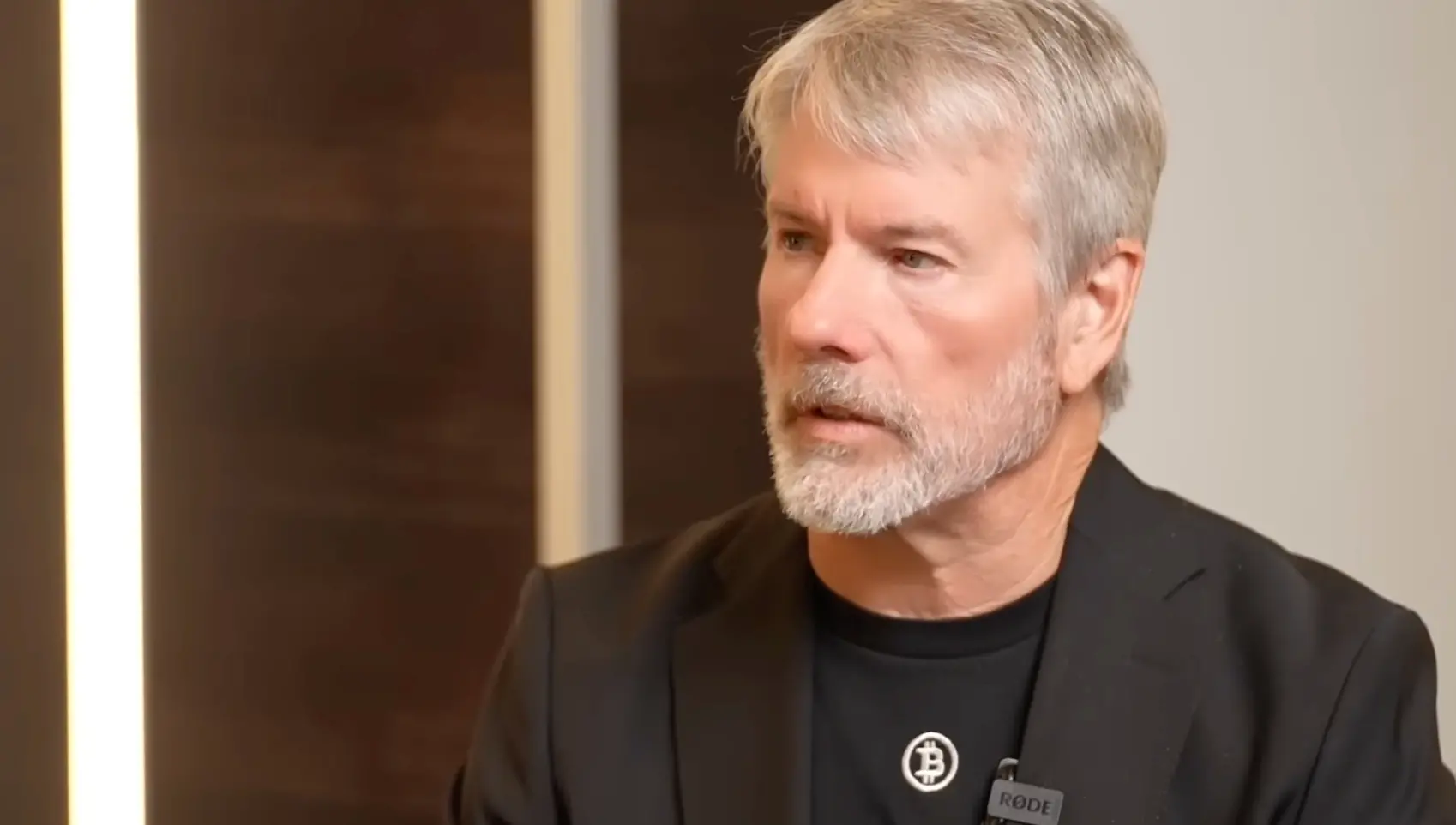
Interview with Michael Saylor: I Did Say I Would Sell Bitcoin, But Never a Net Sale

Interview with Michael Saylor: I Said We'd Sell Bitcoin, But Never Be a Net Seller In a recent podcast, MicroStrategy Executive Chairman Michael Saylor clarified the company's stance on potentially selling Bitcoin. Following MicroStrategy's earnings call statement about being prepared to sell BTC to fund dividends for its STRC (Strategic) credit product, Saylor emphasized the distinction between selling and being a "net seller." Saylor explained the core business model: MicroStrategy sells credit instruments like STRC and uses the proceeds to buy Bitcoin, which is viewed as "digital capital" expected to appreciate around 30-40% annually. A portion of these capital gains can then be used to pay the dividends on the credit products. He stressed that even if the company sells some Bitcoin for dividends, it simultaneously buys much more with new credit issuance. For example, after raising $3.2 billion from STRC sales in April, the dividend obligation was only $80-90 million, making the company a net buyer. The clarification aims to counter market narratives questioning the value of Bitcoin on MicroStrategy's balance sheet if it were never sold, and to dismiss claims of a "Ponzi scheme." Saylor reiterated his personal philosophy for investors: "Don't be a net seller of bitcoin" and ensure your Bitcoin holdings increase each year. Saylor also discussed Bitcoin's role as the foundation for "digital credit," noting that STRC has become the largest and most liquid preferred stock issue in the U.S., offering high risk-adjusted returns (Sharpe ratio). He highlighted Bitcoin's deep liquidity, stating that even large purchases by MicroStrategy do not move the market significantly, which is driven by macro factors, geopolitical tensions, and capital flows from ETFs and credit products. Finally, Saylor reflected on his early inspiration from sci-fi books, which motivated his path to MIT, and maintained his fundamental thesis on Bitcoin remains unchanged: it is superior digital capital enabling superior digital credit.

链捕手6 dk önce

Interview with Michael Saylor: I Did Say I Would Sell Bitcoin, But Never a Net Sale

链捕手6 dk önce

Beaten SK Hynix Employees in China: Year-end Bonus Less Than 5% of Korean Staff's

"SK Hynix Chinese Staff Hit Hard: Bonuses Less Than 5% of Korean Counterparts" Driven by the AI boom, South Korea's SK Hynix is experiencing record performance, with media reports predicting massive year-end bonuses for its employees, making them highly desirable in the matchmaking market. However, this prosperity starkly contrasts with the situation for the company's Chinese employees. According to reports, SK Hynix operates under a rule allocating 10% of operating profit for employee bonuses. While projections suggest Korean employees could receive bonuses reaching millions of RMB, a Chinese employee with over a decade of technical experience revealed the disparity: "If they get 3 million, Chinese staff get less than 5% of that." After adjustments based on KPI ratings, this employee's highest bonus was slightly over 100,000 RMB. Bonuses are paid annually in Korea but semi-annually in China. During the industry downturn in 2023-2024, Chinese employees received no bonus at all. The gap extends beyond bonuses. Recruitment posts for SK Hynix's Chinese factories (in Wuxi, Dalian, Chongqing) show engineer monthly salaries ranging from 10,000 to 35,000 RMB, with a 13th-month salary promised. Chinese employees also receive standard benefits like annual leave but lack stock incentives, which are reportedly unavailable to them. Furthermore, management positions in China are predominantly held by Korean personnel, though industry observers note a gradual increase in local middle managers over time. SK Hynix has confirmed the 10% bonus rule but cautioned that specific future bonus amounts remain unpredictable. The company forecasts strong demand for HBM and other high-value enterprise products for the next 2-3 years, driven by AI infrastructure investment. This focus on business-to-business markets may continue to constrain supply for consumer products, potentially prolonging price increases for components like memory.

链捕手20 dk önce

Beaten SK Hynix Employees in China: Year-end Bonus Less Than 5% of Korean Staff's

链捕手20 dk önce

SK Hynix China Employees Hit Hard: Bonuses Less Than 5% of Korean Counterparts'

"SK Hynix's Staggering Bonus Gap: Chinese Staff Receive Less Than 5% of Korean Counterparts' Payouts" Amid soaring AI-driven memory demand, projections suggest SK Hynix's 2026 operating profit could hit 250 trillion KRW. Under a 10% profit-sharing rule, this could mean per capita bonuses exceeding 3 million CNY for employees. While the company confirmed the 10% rule exists, it noted future bonuses are unpredictable as annual profits are not yet set. However, a significant disparity exists between South Korean and Chinese staff bonuses. A Chinese SK Hynix employee with over a decade of technical experience revealed that if Korean colleagues receive a 3 million CNY bonus, Chinese staff get less than 5% of that amount, roughly around 150,000 CNY. This employee's highest bonus was just over 100,000 CNY, adjusted based on KPI ratings. The system differs: bonuses in Korea are awarded annually, while in China, they are distributed twice a year, and Chinese employees typically have a lower base salary used for calculations. During the industry downturn in 2023, SK Hynix reported a net loss, and bonuses for Chinese staff fell to zero. Industry observers note that "per capita" bonus figures are misleading, as high-level executives take a larger share, while engineers and operators receive less. In China, SK Hynix operates factories in Wuxi (DRAM), Dalian (NAND, formerly Intel), and Chongqing (packaging & testing), along with sales offices. Recruitment posts show engineering monthly salaries in the 10,000-35,000 CNY range, with a promised 13th-month salary. Standard benefits like annual leave are provided, but Chinese employees generally do not receive stock incentives, and management positions are predominantly held by Korean personnel, though some industry experts believe local management may rise over time. Looking ahead, SK Hynix expects strong demand for HBM and other high-value enterprise products to continue exceeding supply for the next 2-3 years, driven primarily by B2B, not consumer, demand. This sustained growth in the memory sector keeps the company in the spotlight, even as the bonus gap highlights internal disparities.

marsbit40 dk önce

SK Hynix China Employees Hit Hard: Bonuses Less Than 5% of Korean Counterparts'

marsbit40 dk önce

İşlemler

Spot
Futures
活动图片