From "Heaven-Sent Public Chain" to "Heaven-Forsaken Public Chain": What Led to the Collapse of Berachain?

比推2026-01-15 tarihinde yayınlandı2026-01-15 tarihinde güncellendi

Özet

Once hailed as a "top-tier public chain," Berachain has seen a dramatic decline, with its new nickname "doomed chain" reflecting its severe downturn. Launched in February 2025 with an innovative Proof-of-Liquidity (PoL) consensus mechanism aimed at boosting DeFi efficiency, the project initially attracted significant interest. Its TVL surged to $3.3 billion, with over 140,000 active addresses. However, the ecosystem quickly deteriorated. TVL has since collapsed to $180 million, and the chain’s daily revenue dropped to just $84. The sharp decline is attributed to several critical issues. The tokenomics heavily favored venture capitalists (VCs), who received 34.31% of the total token supply, while retail participants received minimal allocations. This high Fully Diluted Valuation (FDV) and low circulating supply model led to artificial price spikes followed by a steep crash—BERA fell from a high of $9 to around $0.7, a drop of over 90%. Internal challenges also mounted. The foundation cut most of its retail-focused marketing team and saw key developers, including the chief developer, leave. Community trust eroded further when a Balancer protocol vulnerability forced a network halt in November 2025. Additionally, major token unlocks are scheduled starting February 2026, with 12.16% of supply—including significant VC holdings—set to be released, likely increasing selling pressure. Despite attempts at strategic shifts, including a partnership to use BERA as a reserve asset, the...

Author: Ma He, Foresight News

Original Title: Token Price Crash, Layoffs, Developers Fleeing—Is Berachain Becoming a Heaven-Forsaken Public Chain?


On January 14, BERA experienced a sudden surge, rising from $0.5 to $0.9, a rare occurrence amid a previous 12-week consecutive decline. That day, the Berachain Foundation released its year-end summary for 2025, highlighting ecosystem expansion, technical optimization, and community engagement after the mainnet launch, but also candidly acknowledging the pressures brought by market volatility.

After the Berachain mainnet launch, both TVL and token price experienced severe fluctuations. This may not only be due to market cycles but also the combined result of internal strategies and external pressures.

TVL Drops from $3 Billion to $180 Million, Chain Revenue $84 in 24 Hours

In February 2025, Berachain officially launched its mainnet, introducing an innovative Proof of Liquidity (PoL) consensus mechanism. This mechanism aims to incentivize application and user participation through liquidity proof rather than traditional Proof of Stake, making Berachain a Layer 1 chain designed specifically for DeFi applications, intended to enhance capital efficiency and user adoption. Initially, the ecosystem expanded rapidly, attracting hundreds of dApps, including DEXs like BEX, lending protocols, and NFT markets.

TVL once soared to $3.3 billion, with over 140,000 active addresses and 9.59 million transactions. The Foundation also supported multiple ecosystem projects through the RFA (Request for Application) and RFC (Request for Comment) programs and collaborated with institutions like BitGo to provide custody services, enhancing the project's professionalism. Additionally, Berachain's community building and marketing strategies were outstanding in the early stages. Bear-themed NFT series (such as Bong Bears) attracted a large number of users, and airdrops and incentive programs further stimulated participation. These initiatives helped Berachain become a hotspot in the DeFi space in the first half of 2025, ranking as the sixth-largest DeFi chain.
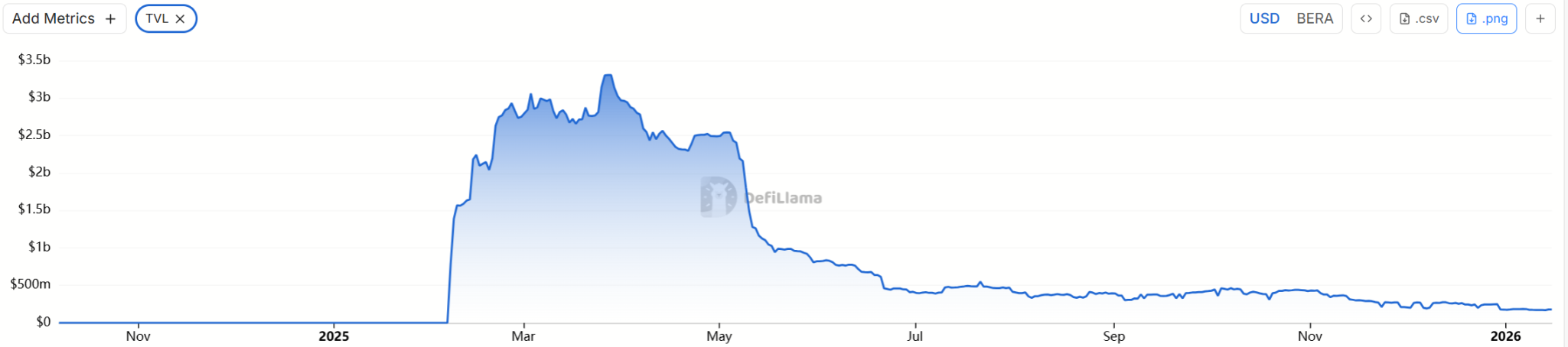
However, as the token price continued to decline, data from DefiLlama shows that its TVL has fallen to $180 million, with 24-hour chain revenue at $84, and the total stablecoin supply on the chain is $153.5 million.

Retail First? Majority of Tokens Allocated to VCs, Major Unlock in February

In its year-end update, the Berachain Foundation admitted that the "retail first" strategy in the crypto market had generally underperformed, leading to a reallocation of resources. This directly triggered a series of issues. First, layoffs and team changes. As part of the strategic adjustment, the Berachain Foundation cut most of its retail marketing team, shifting focus to foundational development. Berachain's lead developer, Alberto, is also leaving to co-found a Web2 company with former banking colleagues.

The Foundation emphasized that the departure was amicable, but this undoubtedly weakens the project's core technical strength. In the community, some developers have already moved to other chains like Monad, further exacerbating the talent drain.

Perhaps the "retail first" strategy promoted by the Berachain Foundation never truly took off.

The project initially emphasized community-driven approaches, but in practice, the incentive mechanisms failed to consistently attract users, and token allocation left retail investors out in the cold.

Although the PoL mechanism is innovative, its complexity (such as the multi-token model, including BERA and BGT) deterred users, leading to a sharp decline in network activity. In November 2025, the project paused the network due to a Balancer protocol vulnerability, fortunately without affecting user funds.

The BERA token price has fallen from a high of $9 to the current $0.7, a drop of over 10 times in just one year for the once so-called "heaven-sent" public chain token.
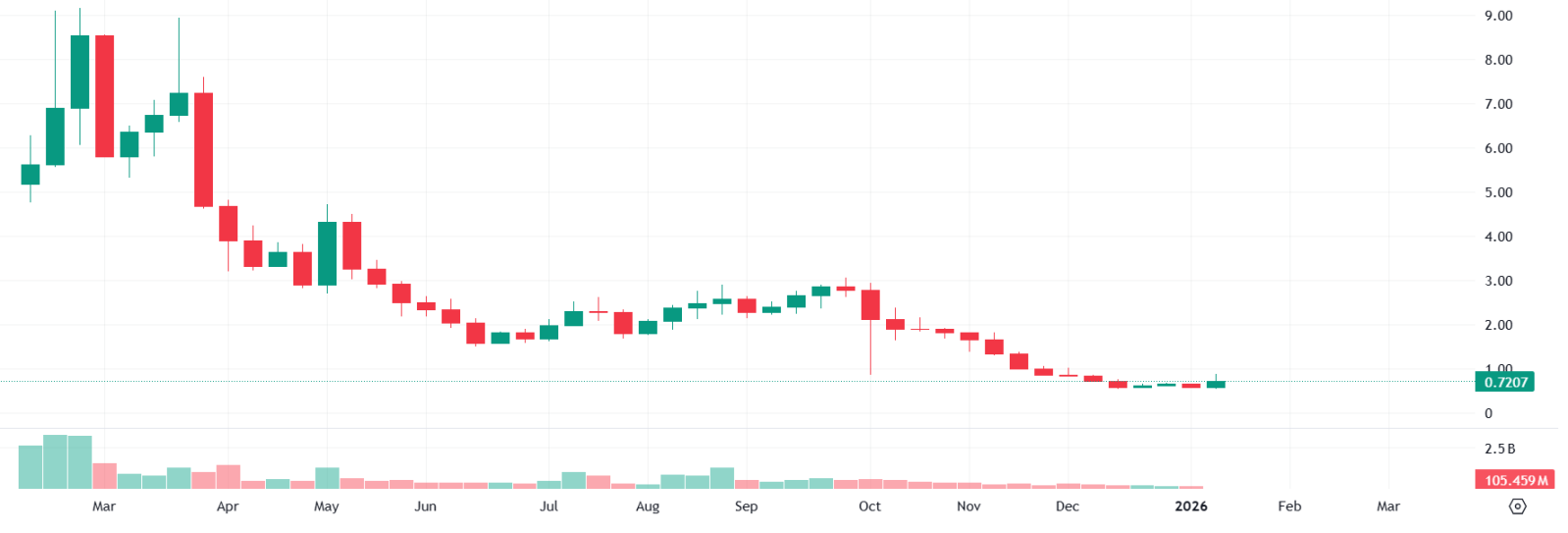
This collapse stems from a low circulation and high FDV model, leading to artificially inflated prices followed by a rapid crash, and these issues are rooted in Berachain's token distribution mechanism. Early contributors received 16.82% of the total supply, while private sale investors received a staggering 34.31% of the token share, typical of a VC coin. Additionally, NFT holders could receive tens of millions of dollars in tokens, while testnet users received only $60 in airdrops, sparking controversy over "wealth disparity" and marginalizing some loyal users.
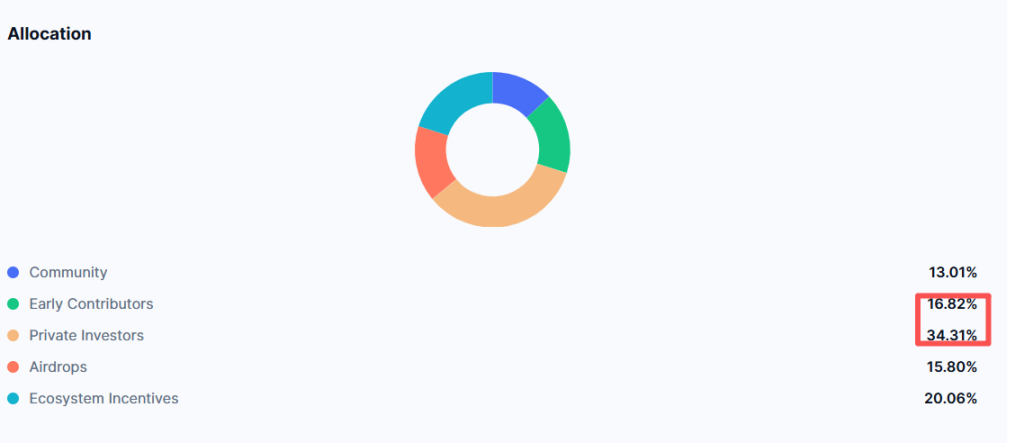
This runs counter to the "retail first" slogan; the project is essentially a VC-dominated low-circulation, high-FDV model: early investors entered at $0.82, achieving 10-15x returns, while retail investors bear the crash. Foundation founder Smokey admitted that if done over, he would not sell so many tokens to VCs and has repurchased some to reduce dilution. In October 2025, the Berachain Foundation partnered with Greenlane Holdings to launch BeraStrategy, making BERA a reserve asset, but this failed to reverse the token's decline.

Furthermore, VCs like Brevan Howard's Nova fund hold refund rights, allowing them to request a full refund of $25 million before February 2026, further highlighting Berachain's tilt toward VCs.

Community dissatisfaction is high, with many users calling it the "ultimate fraudulent L1."
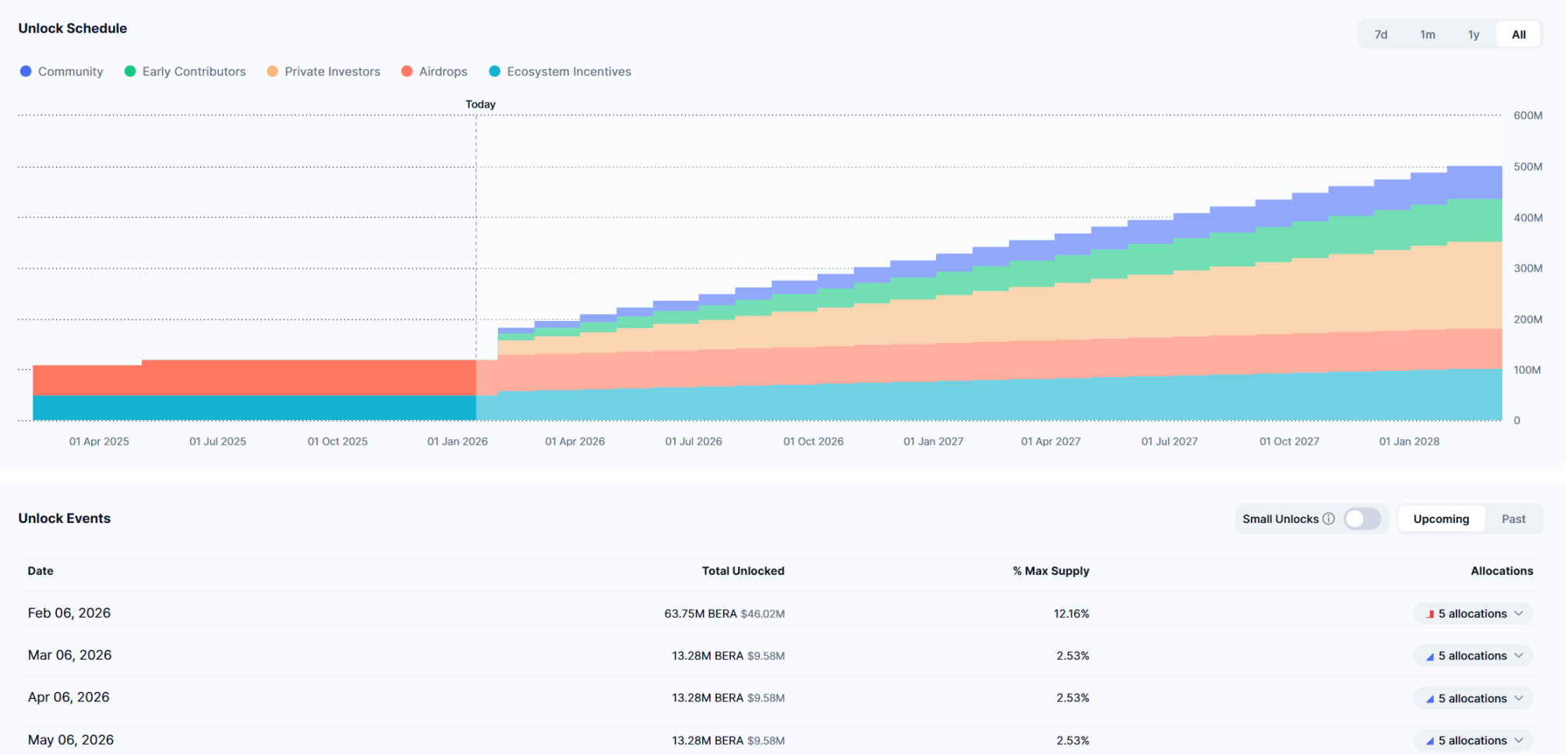
On February 6 this year, Berachain will unlock 63.75 million BERA, approximately 12.16% of the total supply. Of the unlocked portion, private sale investors account for 28.58 million. Starting from March this year, BERA will unlock 2.53% of the total supply each month. Given the current liquidity drought, the continuous large unlocks this year may trigger significant selling pressure.


Twitter:https://twitter.com/BitpushNewsCN

BitPush TG Discussion Group:https://t.me/BitPushCommunity

BitPush TG Subscription: https://t.me/bitpush

Original Link:https://www.bitpush.news/articles/7603193

İlgili Sorular

QWhat were the main factors that led to the collapse of Berachain's token price and TVL?

AThe collapse was driven by a combination of internal strategy flaws and external market pressures. Key factors included the project's high Fully Diluted Valuation (FDV) with low initial circulation, significant token allocations to venture capitalists (VCs) rather than retail users, the complexity of its Proof-of-Liquidity (PoL) mechanism, loss of key developers, and upcoming large token unlocks that created selling pressure.

QHow did Berachain's token distribution model contribute to its problems?

ABerachain's token distribution was heavily skewed towards VCs and early contributors, with 34.31% allocated to private sale investors and 16.82% to early contributors. This left retail users with minimal allocations, contradicting the project's 'retail-first' marketing. The low circulation and high FDV model artificially inflated the price initially, leading to a sharp decline when early investors began selling.

QWhat was the significance of the upcoming token unlocks in February for Berachain?

AOn February 6, Berachain was scheduled to unlock 63.75 million BERA tokens, representing 12.16% of the total supply. This included 28.58 million tokens for private sale investors. Given the already low liquidity and declining price, these unlocks were expected to create substantial selling pressure, further depressing the token value.

QWhy did Berachain's innovative Proof-of-Liquidity (PoL) consensus mechanism fail to sustain user engagement?

AThe PoL mechanism, while innovative, was complex and involved a multi-token system (BERA and BGT) that confused users. This complexity reduced network activity and participation, as users found it difficult to engage with the ecosystem effectively, leading to a decline in TVL and overall chain activity.

QWhat internal challenges did Berachain face regarding its development team and community?

ABerachain experienced significant internal challenges, including the departure of key developers such as Chief Developer Alberto, who left to start a Web2 company. The foundation also cut most of its retail marketing team, shifting focus to core development. Additionally, community developers migrated to other chains like Monad, exacerbating talent loss and reducing project momentum.

İlgili Okumalar

In Conversation with Ray Dalio: We Are Currently in an AI Bubble, with 1% of My Portfolio in Bitcoin

Ray Dalio, founder of Bridgewater Associates, warns in an interview that the current AI boom shows classic bubble characteristics, which could lead to significant economic downturns as seen in past cycles like 1929 or 2000. He explains that speculative enthusiasm, fueled by debt and overvaluation, often precedes a crash when rising rates or taxation force asset sales, causing widespread losses and recession. Dalio also outlines his "Big Cycle" theory, describing an approximate 80-year pattern where widening wealth gaps, massive government deficits, and shifting geopolitical power (like China's rise) create internal conflict and global instability. He emphasizes that we are in a late-cycle, transitional phase where traditional powers like the US and UK face decline. For personal wealth protection, Dalio advises diversification beyond cash into assets like stocks, bonds, real estate, and particularly gold, which he prefers over Bitcoin. While he holds about 1% of his portfolio in Bitcoin as a non-printable hard asset, he views gold as more secure from technological or governmental threats. Regarding AI's impact, Dalio believes it will disproportionately benefit capital owners, worsening inequality by replacing both physical and cognitive labor. He suggests that human intuition and emotional intelligence, combined with AI, will be key for future workers. On taxation, Dalio argues that wealth taxes are impractical and risk triggering asset sell-offs, reducing productive investment. He points to the UK as a cautionary example of debt, low productivity, and political strife. Geopolitically, Dalio foresees a more regionalized world, with the US showing weakness in prolonged conflicts like with Iran, akin to past imperial declines. The ideal outcome, he suggests, is coexisting powerful blocs (e.g., Americas, China-Asia Pacific) without major war.

marsbit3 saat önce

In Conversation with Ray Dalio: We Are Currently in an AI Bubble, with 1% of My Portfolio in Bitcoin

marsbit3 saat önce

Daily 7.2 Trillion KRW: Foreign Capital's Record Net Buying on Friday! Wall Street Says Headwinds for Korean Stock Fund Flows Have Subsided

South Korean stock market sees a dramatic shift in fund flows. On July 31, foreign investors made a record net purchase of approximately KRW 7.2 trillion in KOSPI stocks, marking a fundamental reversal from the persistent large-scale net outflows seen in previous months. This contributed to a significant narrowing of foreign net selling in July to KRW 9.8 trillion, down sharply from KRW 48.4 trillion in June and KRW 44.5 trillion in May. Simultaneously, domestic institutional pressure eased. South Korean pension funds and asset managers turned to a net buying position in July, purchasing KRW 1.0 trillion worth of KOSPI shares, contrasting with net sales in May and June. Market volatility is expected to be dampened by new financial regulations. Effective July 31, the Financial Services Commission tightened access for retail investors to single-stock leveraged ETFs by raising the minimum cash deposit requirement. Trading volumes for these products subsequently dropped to about 50% of their monthly average. Citigroup Research maintains its year-end KOSPI target of 10,000 points. The firm cites several supportive factors: the substantial easing of headwinds from capital outflows, a robust fundamental outlook for the semiconductor sector, historically low market valuations, strong economic fundamentals, and the potential for policy support from financial authorities if needed.

marsbit3 saat önce

Daily 7.2 Trillion KRW: Foreign Capital's Record Net Buying on Friday! Wall Street Says Headwinds for Korean Stock Fund Flows Have Subsided

marsbit3 saat önce

Thanks to Dice Rolls, Bitcoin Keys Are Stored Offline, But Not Everyone Will Do It

The article discusses using dice rolls to generate secure Bitcoin wallet seeds, providing entropy independent of potentially flawed hardware random number generators. It explains that each fair dice roll offers about 2.585 bits of entropy, with around 50 rolls needed for a standard 12-word seed phrase and 99+ recommended for higher security. This method gained attention after a vulnerability was revealed in some Coldcard hardware wallets, where a faulty firmware RNG (dating back to 2021) compromised generated keys. The analysis notes that while a dice-generated main seed was safe from this specific flaw, other Coldcard functions (like creating paper wallets, backup keys, or passwords) could still be vulnerable if they used the defective RNG. The piece argues that while dice-based entropy is technically robust, the manual process is error-prone, tedious, and unrealistic for most new users, who might make mistakes in recording or inputting rolls. It concludes that while manual entropy generation should remain an option for advanced users, the long-term goal is to develop reliable, user-friendly hardware and software that securely generates randomness without requiring specialized knowledge. Coldcard users are advised to check their firmware version and replace any secondary secrets (like paper wallet keys) created with vulnerable devices, while also considering multi-signature setups with devices from different manufacturers for added security.

cryptonews.ru8 saat önce

Thanks to Dice Rolls, Bitcoin Keys Are Stored Offline, But Not Everyone Will Do It

cryptonews.ru8 saat önce

İşlemler

Spot
活动图片





