From Calling for $150 to Liquidating HYPE in Just Three Days, How Much Credibility Does Arthur Hayes Have Left?

Odaily星球日报2026-06-09 tarihinde yayınlandı2026-06-09 tarihinde güncellendi

Özet

Arthur Hayes, co-founder of BitMEX and a prominent crypto figure, is facing scrutiny over his market credibility. Recent on-chain data and public criticism, notably from detective ZachXBT, question whether he uses his influence to create exit liquidity for his followers. Hayes has executed several abrupt sell-offs, including publicly advocating for HYPE to reach $150 before completely selling his holdings just three days later, after which the price dropped sharply. He similarly promoted WLD with a $10 target, only to sell his entire position three days afterward, citing vague concerns about SpaceX's pre-IPO activity and causing a significant price decline. Hayes justifies these moves with detailed macroeconomic analyses, such as a recent essay citing energy costs and AI market risks, explaining his shift into energy stocks and core cryptocurrencies BTC and ETH. However, his pattern of bullish public statements followed by unannounced sell-offs—previously seen with tokens like ETHFI and ENA—has led many investors to adopt a strategy of ignoring his commentary but closely monitoring his on-chain actions for sell signals. Analysts warn that this "cry wolf" pattern risks eroding his market trust, with Hayes himself admitting in a recent article, "I remain an unapologetic gambler."

Original |Odaily Planet Daily(@OdailyChina)

Author|Golem(@web3_golem)
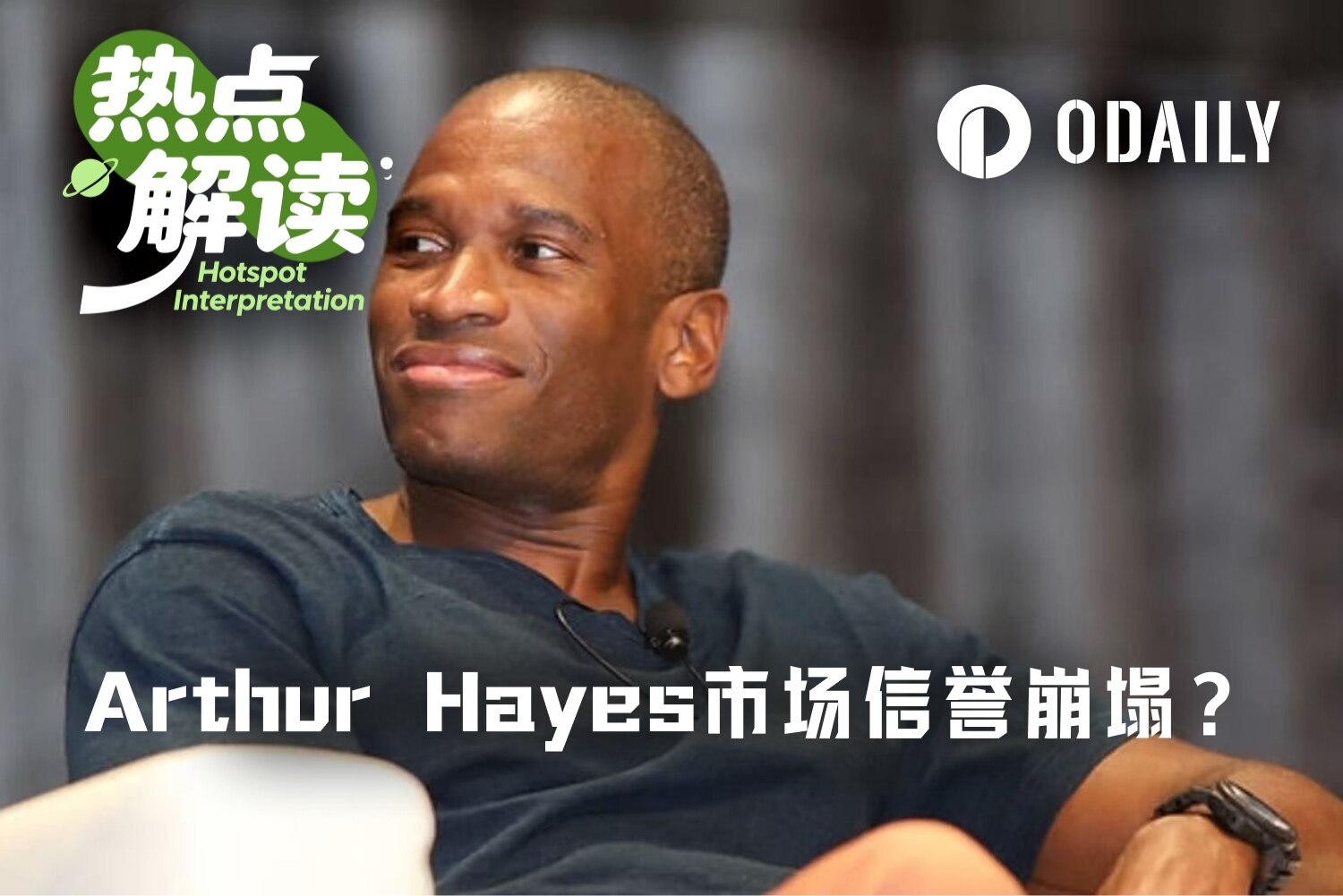
How much market credibility does Arthur Hayes have left? Recently, "the father of crypto perpetual contracts" and BitMEX co-founder Arthur Hayes has faced public criticism. On-chain detective ZachXBT has also publicly questioned how much exit liquidity he has created using his followers.

Liquidating HYPE, NEAR, WLD

Starting last week, Arthur Hayes performed several unexpected sell-offs to exit at the top.

Arthur Hayes had repeatedly stated publicly that HYPE would rise to $150 in this cycle. On June 1, Arthur Hayes passionately clashed with former Multicoin Capital co-founder Kyle Samani, who had disparaged Hyperliquid, and even made a $100,000 bet with him. However, just 3 days later, Arthur Hayes announced he had completely liquidated his HYPE and NEAR holdings. HYPE fell over 13.6% that day. His sell-off indeed allowed him to exit at the peak. HYPE reached a new high of $75.5 on June 4 before starting a continuous decline, currently trading around $62-64.

Besides HYPE and NEAR, Arthur Hayes also liquidated ZEC and WLD. Liquidating ZEC due to the Orchard Pool attack might be somewhat understandable. However, his sell-off of WLD resembles a classic "KOL dumping on retail" operation involving pre-positioning, public shilling, and finally pumping and dumping.

Because from publicly shilling WLD to liquidating it, Arthur Hayes only "pretended" for 3 days. On June 3, the day before selling HYPE, Arthur Hayes publicly shilled WLD with a $10 target, suggesting WLD would become an alternative for investors who couldn't directly participate in SpaceX equity trades. After the news spread, WLD rose over 35% that day. But by June 6, Arthur Hayes changed his tune, stating he had liquidated WLD because SpaceX's pre-IPO price action was "abnormal." This flimsy explanation caused WLD to drop over 20% that day.

The difference between Arthur Hayes and "third-rate KOLs" is that he writes lengthy posts, often justifying his actions from macroeconomic and top-level design perspectives.

On June 9, Arthur Hayes published a long article titled "Reality Test" (requiring about 20 minutes to read fully) explaining his recent moves. He believes three factors will burst the AI bubble: rising energy costs due to restricted traffic in the Strait of Hormuz, the IPOs of three major AI stocks (SpaceX, Anthropic, OpenAI), and Trump turning against AI for the midterm elections.

Therefore, his family office Maelstrom holds significant positions in U.S.-listed energy producers and has sold AI-related stocks and non-core crypto assets, holding only BTC and ETH.

Don't Listen to Arthur Hayes's Words, But Watch His Actions

Arthur Hayes's articles not only skillfully use extensive economic data and charts to argue his points but sometimes also overlay political and historical perspectives, which can be quite impressive. But when you take his words seriously and invest real money following his moves, he might announce a liquidation and turn bearish the very next day, seemingly forgetting what he said the day before, while your portfolio takes a simultaneous hit.

Such operations are not uncommon. As early as 2025, Arthur Hayes repeatedly performed the "bullish one day, liquidate the next" routine. The most classic example remains HYPE. In August 2025, Arthur Hayes promoted HYPE during a speech at Japan WebX, claiming the token still had up to 126x upside potential (Odaily note: the price was $45.9 that day). Yet just one month later, he announced liquidating HYPE, profiting millions, citing the need to avoid token unlock risks.

Arthur Hayes's sell-off then occurred precisely at the peak of HYPE's previous bull run, after which HYPE fluctuated downward. It wasn't until mid-January 2026 that Arthur Hayes again made large-scale purchases of HYPE. Judging from the price chart, his entry point for HYPE was again at the low point of this current cycle.

Similar examples include ETHFI and ENA, where he publicly expressed bullish views, then sold off without warning, achieving precise exits at the top. (Related reading:You Ran First Again! A Record of Arthur Hayes's Top Exits)

Long-term followers of Arthur Hayes have summarized a methodology: don't listen to Arthur Hayes's words, but you must watch his actions; follow his entries cautiously, and decisively liquidate when he sells.

However, if Arthur Hayes continues such performances, especially cases like manipulating WLD price volatility this time, no matter how reasonable the excuses are disguised, his market credibility will be threatened. This is like a crypto version of "The Boy Who Cried Wolf." In the end, Arthur Hayes will surely face backlash.

He said one thing right in his latest article—"I remain an unapologetic gambler," and gamblers usually don't end well.


Trend Kriptolar

İlgili Sorular

QWho is Arthur Hayes and why is his market credibility being questioned?

AArthur Hayes is the co-founder of BitMEX, often called the 'father of crypto perpetual contracts.' His market credibility is being questioned due to recent actions where he publicly promoted certain cryptocurrencies like HYPE and WLD, only to sell his holdings shortly after, which critics label as a classic 'pump and dump' strategy, manipulating exit liquidity from his followers.

QWhat specific cryptocurrencies did Arthur Hayes recently sell, and what were the consequences?

AArthur Hayes recently sold his holdings in HYPE, NEAR, ZEC, and WLD. For example, after publicly stating HYPE would reach $150, he sold it three days later, causing its price to drop over 13.6%. He also sold WLD just three days after promoting it, leading to a price drop of over 20%.

QWhat reasons did Arthur Hayes give in his article 'Reality Test' for selling his AI-related crypto assets?

AIn his article 'Reality Test,' Arthur Hayes cited three main reasons for selling AI-related crypto assets: 1) Rising energy costs due to restricted traffic in the Strait of Hormuz, 2) The potential IPO of major AI companies (SpaceX, Anthropic, OpenAI) bursting an AI bubble, and 3) His belief that former President Trump would oppose AI to aid midterm elections. Therefore, his family office shifted to holding energy stocks and core cryptocurrencies like BTC and ETH.

QAccording to the article, what is the suggested strategy for investors regarding Arthur Hayes's actions?

AThe article suggests that investors should not blindly follow Arthur Hayes's public statements but should closely monitor his actual on-chain transactions. The recommended strategy is to be cautious when he buys ('建仓谨慎跟随') and to decisively sell when he sells ('卖出果断清仓').

QWhat historical example does the article provide to show a pattern in Arthur Hayes's behavior?

AThe article provides the example of HYPE from August 2025. Arthur Hayes publicly promoted HYPE at the Japan WebX conference, claiming it had 126x growth potential. Just one month later, he sold all his HYPE holdings near the peak of that price cycle, citing token unlock risks, and re-entered the market at a low point in early 2026.

İlgili Okumalar

Can Japan Buy Growth with AI? Will the Bond Market Believe It?

Japan's cabinet has introduced the 2026 Basic Policy on Economic and Fiscal Management and Reform, shifting its primary fiscal target. The new framework moves away from the traditional annual primary balance goal and instead prioritizes a stable reduction of the debt-to-GDP ratio. This change is tied to a strategy of increased "responsible proactive fiscal" spending, aiming to boost long-term growth through investments in strategic sectors like AI, semiconductors, energy, and robotics. The government estimates total public and private investment in 62 key technologies could exceed 370 trillion yen by 2040. The market reaction has been mixed and cautious. While equity markets may respond to policy signals, bond markets are focused on fiscal credibility. Concerns center on whether the weakening of the clear primary balance anchor could lead to looser fiscal discipline. If investors doubt that these strategic investments will generate sufficient productivity gains, tax revenue, and nominal growth to outpace rising interest costs, they may demand higher yields on Japanese Government Bonds (JGBs). Recent volatility in the yen and JGB yields, with the 10-year yield briefly reaching 2.9%, reflects this skepticism. The success of this new framework hinges on two factors: whether Japan can achieve a nominal growth rate consistently higher than its long-term interest rates, and whether future budgets demonstrate disciplined control over bond issuance. The government's narrative is that strategic investment is essential to break Japan's cycle of low growth, aging, and labor shortages. However, the bond market will continuously assess the credibility of this plan, pricing the risk that it may represent fiscal expansion rather than a viable growth strategy.

marsbit21 dk önce

Can Japan Buy Growth with AI? Will the Bond Market Believe It?

marsbit21 dk önce

Misjudged A-Shares: Resilience, Expectations, and Confidence

China's A-share market recently faced selling pressure, especially in tech sectors, initially triggered by a global tech sell-off that began in South Korea. However, the article argues this is a case of "mistaken injury" and highlights the market's underlying resilience. This resilience stems from three main pillars: **1) Tech Sector Fundamentals:** Unlike Korea's market dominated by a few memory chip stocks, China's tech sector is diversified across computing, communications, electronics, and semiconductors, supported by dual narratives of global AI supply chains and domestic substitution. Core areas like optical modules and fiber optics continue to show strong earnings growth. **2) "National Team" Support:** State-backed institutions and large corporations have made significant market purchases and announced buybacks, providing liquidity and signaling confidence. This is seen as a stabilizing policy signal, often associated with market bottoms. **3) Broader Market Pillars:** Other major sectors are showing endogenous recovery momentum. Consumer stocks benefit from stabilizing CPI and signs of sector recovery (e.g., liquor price hikes). Cyclical sectors like aluminum have high earnings, potential price increases due to tight supply, and low valuations. The financial sector offers stable dividends and low valuations. The conclusion is that the sell-off was driven by external contagion, not a collapse in fundamentals. With strong policy support and recovering momentum across key sectors, the A-share market possesses the toughness to regain stability.

marsbit52 dk önce

Misjudged A-Shares: Resilience, Expectations, and Confidence

marsbit52 dk önce

İşlemler

Spot

Popüler Makaleler

HYPE Nasıl Satın Alınır

HTX.com’a hoş geldiniz! Hyperliquid (HYPE) satın alma işlemlerini basit ve kullanışlı bir hâle getirdik. Adım adım açıkladığımız rehberimizi takip ederek kripto yolculuğunuza başlayın. 1. Adım: HTX Hesabınızı OluşturunHTX'te ücretsiz bir hesap açmak için e-posta adresinizi veya telefon numaranızı kullanın. Sorunsuzca kaydolun ve tüm özelliklerin kilidini açın. Hesabımı Aç2. Adım: Kripto Satın Al Bölümüne Gidin ve Ödeme Yönteminizi SeçinKredi/Banka Kartı: Visa veya Mastercard'ınızı kullanarak anında Hyperliquid (HYPE) satın alın.Bakiye: Sorunsuz bir şekilde işlem yapmak için HTX hesap bakiyenizdeki fonları kullanın.Üçüncü Taraflar: Kullanımı kolaylaştırmak için Google Pay ve Apple Pay gibi popüler ödeme yöntemlerini ekledik.P2P: HTX'teki diğer kullanıcılarla doğrudan işlem yapın.Borsa Dışı (OTC): Yatırımcılar için kişiye özel hizmetler ve rekabetçi döviz kurları sunuyoruz.3. Adım: Hyperliquid (HYPE) Varlıklarınızı SaklayınHyperliquid (HYPE) satın aldıktan sonra HTX hesabınızda saklayın. Alternatif olarak, blok zinciri transferi yoluyla başka bir yere gönderebilir veya diğer kripto para birimlerini takas etmek için kullanabilirsiniz.4. Adım: Hyperliquid (HYPE) Varlıklarınızla İşlem YapınHTX'in spot piyasasında Hyperliquid (HYPE) ile kolayca işlemler yapın.Hesabınıza erişin, işlem çiftinizi seçin, işlemlerinizi gerçekleştirin ve gerçek zamanlı olarak izleyin. Hem yeni başlayanlar hem de deneyimli yatırımcılar için kullanıcı dostu bir deneyim sunuyoruz.

341 Toplam GörüntülenmeYayınlanma 2024.12.11Güncellenme 2026.06.02

HYPE Nasıl Satın Alınır

Tartışmalar

HTX Topluluğuna hoş geldiniz. Burada, en son platform gelişmeleri hakkında bilgi sahibi olabilir ve profesyonel piyasa görüşlerine erişebilirsiniz. Kullanıcıların HYPE (HYPE) fiyatı hakkındaki görüşleri aşağıda sunulmaktadır.

活动图片












