Author | @SilvioBusonero
Compiled by | Odaily Planet Daily (@OdailyChina)
Translated by | DingDang (@XiaMiPP)

As the market share of Vaults and Curators continues to grow in the DeFi world, the market has begun to question: Are lending protocols having their profit margins constantly squeezed? Is lending no longer a good business?
But if we shift our perspective back to the entire on-chain credit value chain, the conclusion is quite the opposite. Lending protocols still occupy the most solid moat in this value chain. We can quantify this with data.
On Aave and SparkLend, the interest fees paid by Vaults to lending protocols actually exceed the revenue generated by the Vaults themselves. This fact directly challenges the mainstream narrative that "distribution is king".
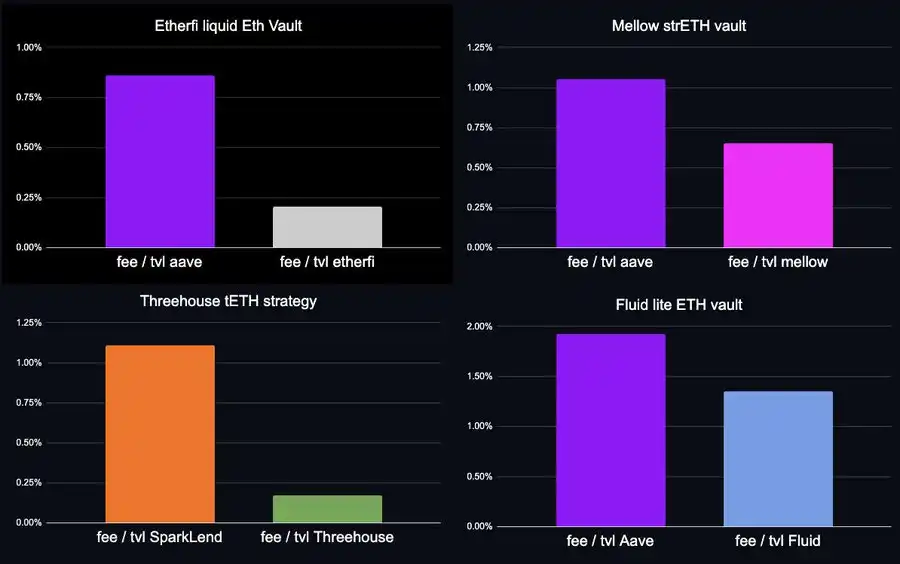
At least in the lending space, distribution is not king.
Simply put: Aave not only earns more than the various Vaults built on top of it, but also more than the issuers of the assets used for lending, such as Lido and Ether.fi.
To understand why, we need to deconstruct the complete value chain of DeFi lending and re-examine the value capture capabilities of various roles by following the flow of funds and fees.
Deconstructing the Lending Value Chain
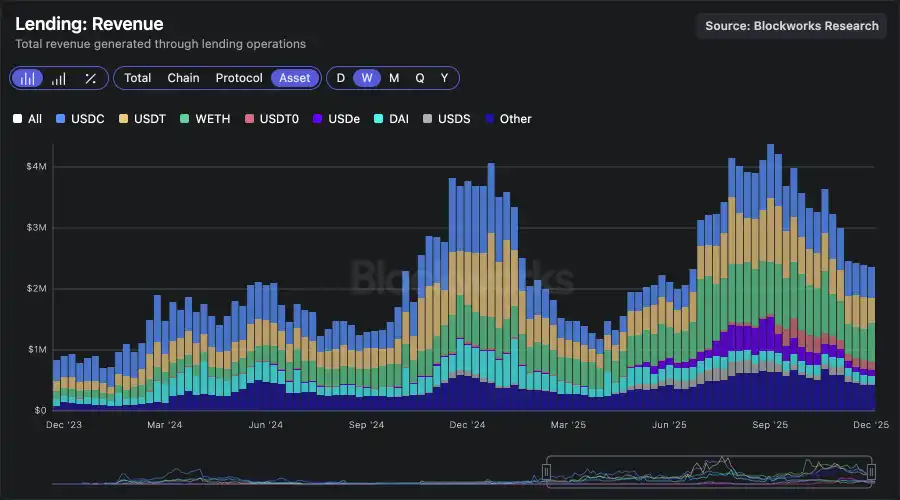
The annualized revenue scale of the entire lending market has exceeded $100 million. This value is not generated by a single link but is composed of a complex stack: the underlying settlement blockchain, asset issuers, capital lenders, the lending protocol itself, and the Vaults responsible for distribution and strategy execution.
As mentioned in previous articles, a large number of use cases in the current lending market originate from basis trading and liquidity mining opportunities, and we have deconstructed the main strategy logic.
So, who actually "demands" the capital in the lending market?
I analyzed the top 50 wallet addresses on Aave and SparkLend and labeled the main borrowers.
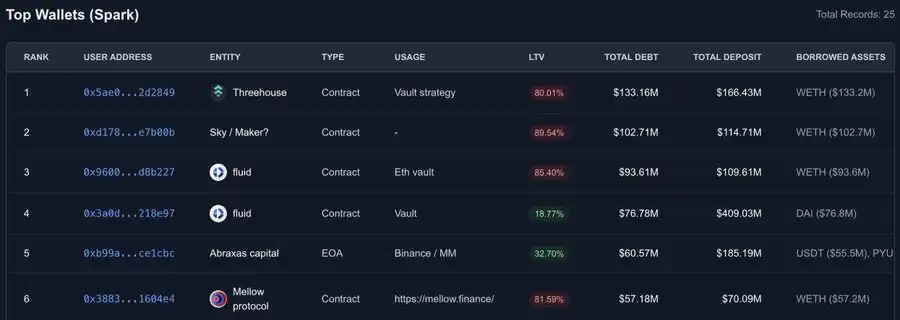
- The largest borrowers are various Vaults and strategy platforms like Fluid, Treehouse, Mellow, Ether.fi, Lido (who are also asset issuers). They control the distribution capability to end-users, helping users obtain higher yields without having to manage complex loops and risks themselves.
- There are also large institutional capital providers, such as Abraxas Capital, which deploy external capital into similar strategies. Their economic model is essentially very similar to that of Vaults.
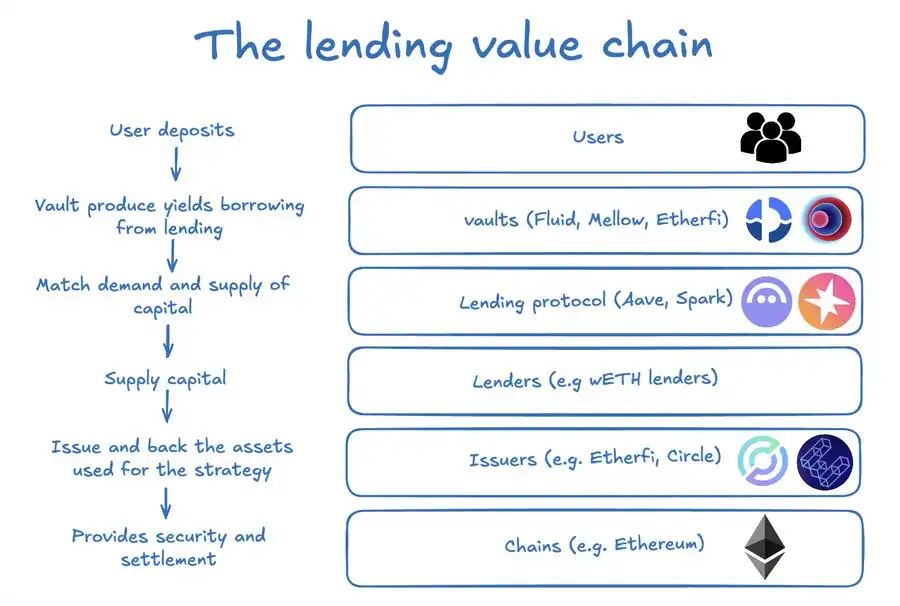
But Vaults are not the whole story. This chain involves at least the following participants:
- Users: Deposit assets, hoping to obtain additional yield through Vaults or strategy managers.
- Lending Protocols: Provide infrastructure and liquidity matching, generating protocol revenue by charging interest to the borrowing side and taking a cut.
- Lenders: Capital suppliers, who can be either ordinary users or other Vaults.
- Asset Issuers: Most on-chain lending assets have underlying collateral assets that themselves generate yield, part of which is captured by the issuer.
- Blockchain Network: The underlying "rail" where all activity takes place.
Lending Protocols Earn More Than Downstream Vaults
Take Ether.fi's ETH liquid staking vault as an example. It is the second-largest borrower on Aave, with an outstanding loan size of approximately $1.5 billion. The strategy itself is very typical:
- Deposit weETH (approx. +2.9%)
- Borrow wETH (approx. –2%)
- The vault charges a 0.5% platform management fee on TVL.
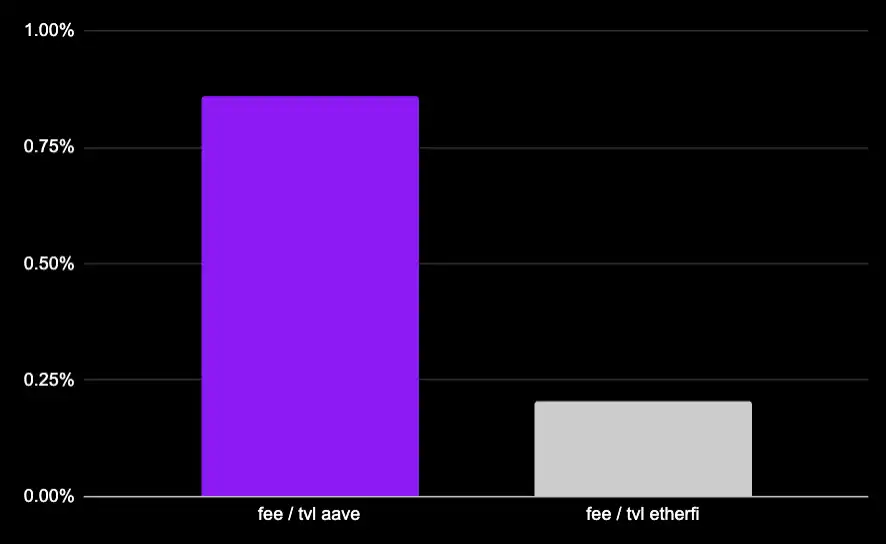
Out of Ether.fi's total TVL, approximately $215 million is the net liquidity actually deployed on Aave. This portion of TVL generates about $1.07 million in annual platform fee revenue for the vault.
However, simultaneously, this strategy pays Aave approximately $4.5 million in annual interest fees (calculated as: $1.5B borrowed × 2% borrow APY × 15% reserve factor).
Even for one of the largest and most successful loop strategies in DeFi, the value captured by the lending protocol is still multiples of that captured by the vault.
Of course, Ether.fi is also the issuer of weETH, and this vault itself directly creates demand for weETH.
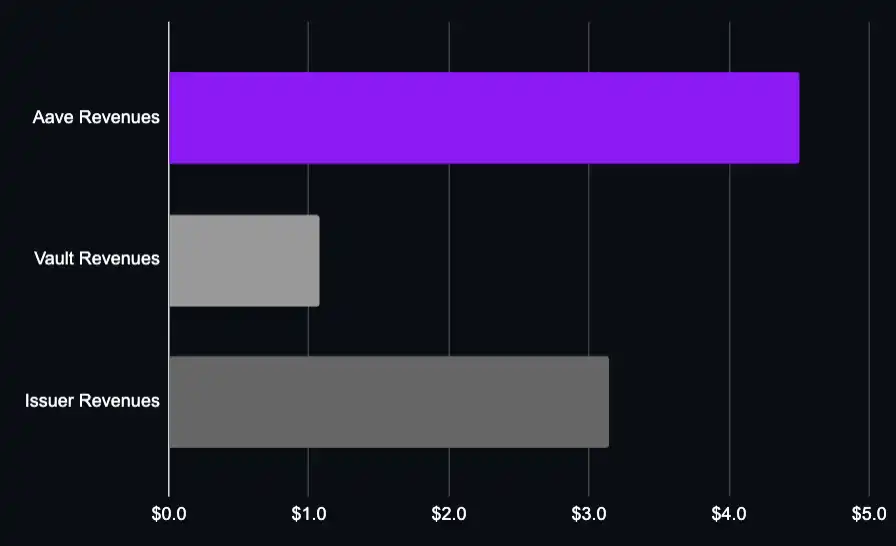
But even considering the vault strategy revenue + asset issuer revenue together, the economic value created by the lending layer (Aave) is still higher.
In other words, the lending protocol is the link in the entire stack that creates the most incremental value.
We can perform the same analysis on other commonly used vaults:
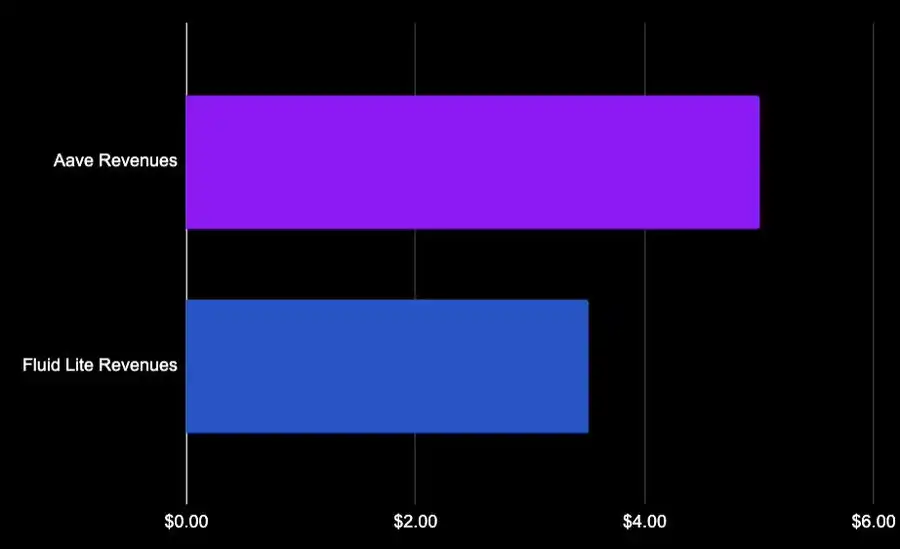
Fluid Lite ETH: 20% performance fee + 0.05% exit fee, no platform management fee. Borrows $1.7B wETH from Aave, paying ~$33M in interest, of which ~$5M goes to Aave. Fluid's own revenue is close to $4M.
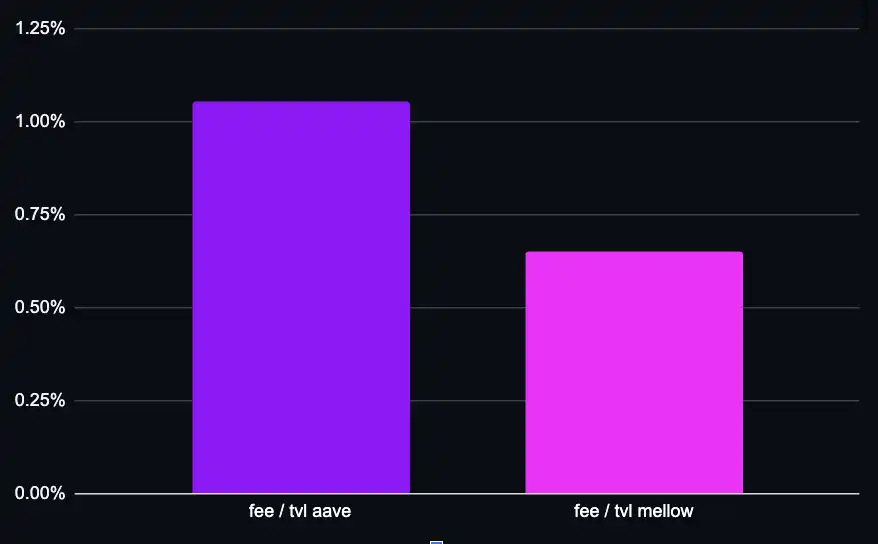
Mellow Protocol strETH charges a 10% performance fee, with a borrow size of $165M and a TVL of only ~$37M. Again, we see that on a TVL basis, Aave captures more value than the vault itself.
Let's look at another example. On SparkLend, the second-largest lending protocol on Ethereum, Treehouse is a key participant, operating an ETH loop strategy:
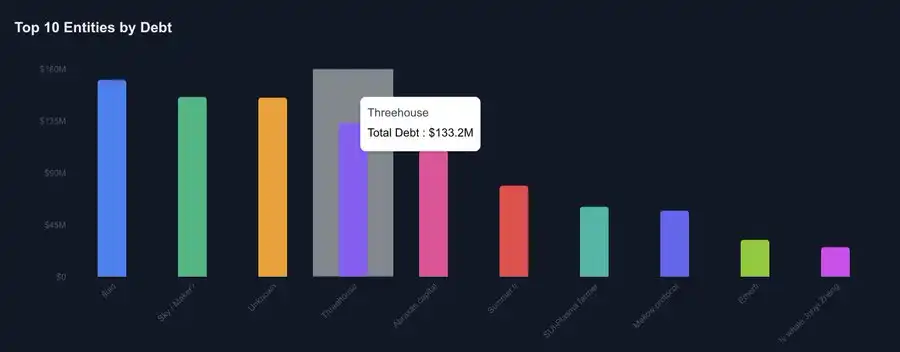
- TVL ~$34M
- Borrows $133M
- Charges performance fee only on marginal yield above 2.6%
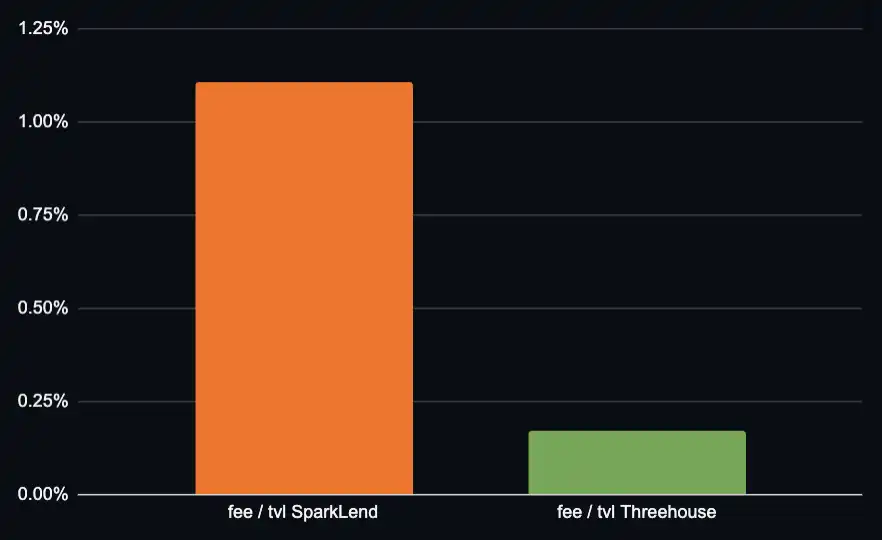
SparkLend, as a lending protocol, captures more value on a TVL basis than the vault.
The pricing structure of a vault greatly influences its own capturable value; but for lending protocols, their revenue depends more on the nominal size of borrowing, which is relatively stable.
Even shifting to USD-denominated strategies, which have lower leverage, the higher interest rates often offset this effect. I don't believe the conclusion would fundamentally change.
In relatively closed markets, more value might flow to curators, such as Stakehouse Prime Vault (26% performance fee, incentives provided by Morpho). But this is not the end state of Morpho's pricing mechanism, and curators themselves also partner with other platforms for distribution.
Lending Protocol vs. Asset Issuer
So the question arises: Is it better to be Aave or Lido?
This question is more complex than comparing vaults because staking assets not only generate yield themselves but also indirectly create stablecoin interest income for the protocol through the lending market. We can only make an approximate estimate.
Lido has approximately $4.42 billion in assets in the core Ethereum market used to support lending positions, generating annualized performance fee revenue of approximately $11 million.
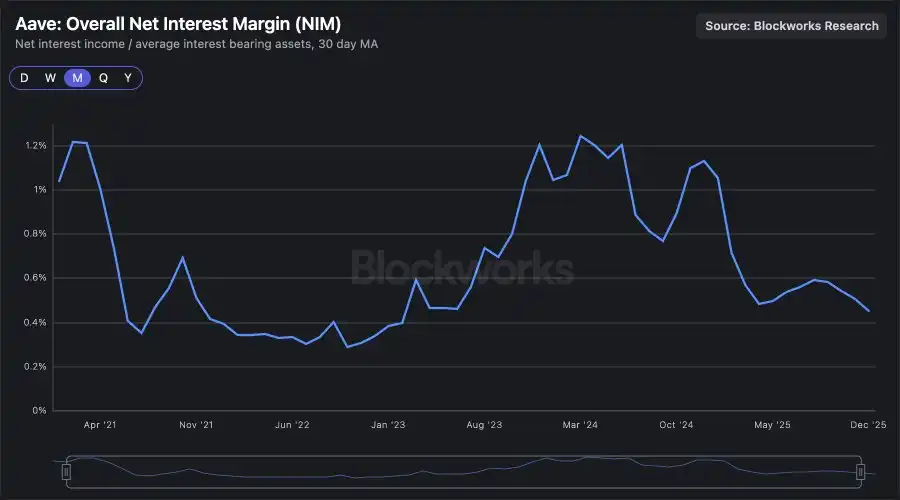
These positions roughly equally support ETH and stablecoin borrowing. At the current net interest margin (NIM) of ~0.4%, the corresponding lending yield is about $17 million, already significantly higher than Lido's direct revenue (and this is at a historically low NIM level).
The True Moat of Lending Protocols
If we only use the traditional financial deposit profitability model for comparison, DeFi lending protocols seem to be a low-margin industry. But this comparison ignores where the real moat lies.
In the on-chain credit system, the value captured by lending protocols exceeds that of the distribution layer downstream and, overall, exceeds that of the upstream asset issuers.
Viewed in isolation, lending seems like a thin-margin business; but placed within the complete credit stack, it is the layer with the strongest value capture capability relative to all other participants—vaults, issuers, distribution channels.