Forbes Feature: Cross-Border Payments with Stablecoins are Faster, But Not Yet Cheaper

链捕手2026-07-05 tarihinde yayınlandı2026-07-05 tarihinde güncellendi

Özet

A Forbes feature on stablecoin cross-border payments highlights rapid industry growth but notes the cost advantage remains theoretical. While stablecoins offer faster, 24/7, and more accessible international transfers compared to traditional forex brokers (charging 60-70 bps), they have not yet achieved their promised lower costs of 2-5 bps. The primary hurdle is a lack of deep, scaled liquidity pools, according to Imran Ahmad of Bitso Business. He states costs will only drop significantly with large-scale institutional and banking participation. Adoption faces a deeper challenge: trust. Businesses often stick with traditional brokers based on long-standing personal relationships, not just fees. Ezra Kebrab of cross-border payment firm Caliza emphasizes that reliability in handling complex details like tax codes is as critical as speed and cost. Contrary to some narratives, successful companies like Caliza see stablecoins as complementing, not replacing, existing infrastructure like SWIFT, which excels at payment standardization. Caliza itself uses SWIFT for many transactions and has seen monthly growth exceeding 40%. Ahmad predicts a future industry consolidation, where success will hinge on three pillars: proper licensing, reliable fiat on/off-ramps, and robust liquidity.

Author: Aaron Stanley

Compiled by: Jiahuan, ChainCatcher

The stablecoin cross-border payment industry is experiencing rapid growth.

Earlier this month, hundreds of companies gathered at the Bitso Business stablecoin conference in Mexico City. Ask any attendee, and you'll hear the same answer: the technology is mature and available, the regulatory environment is improving, and transaction volumes are climbing.
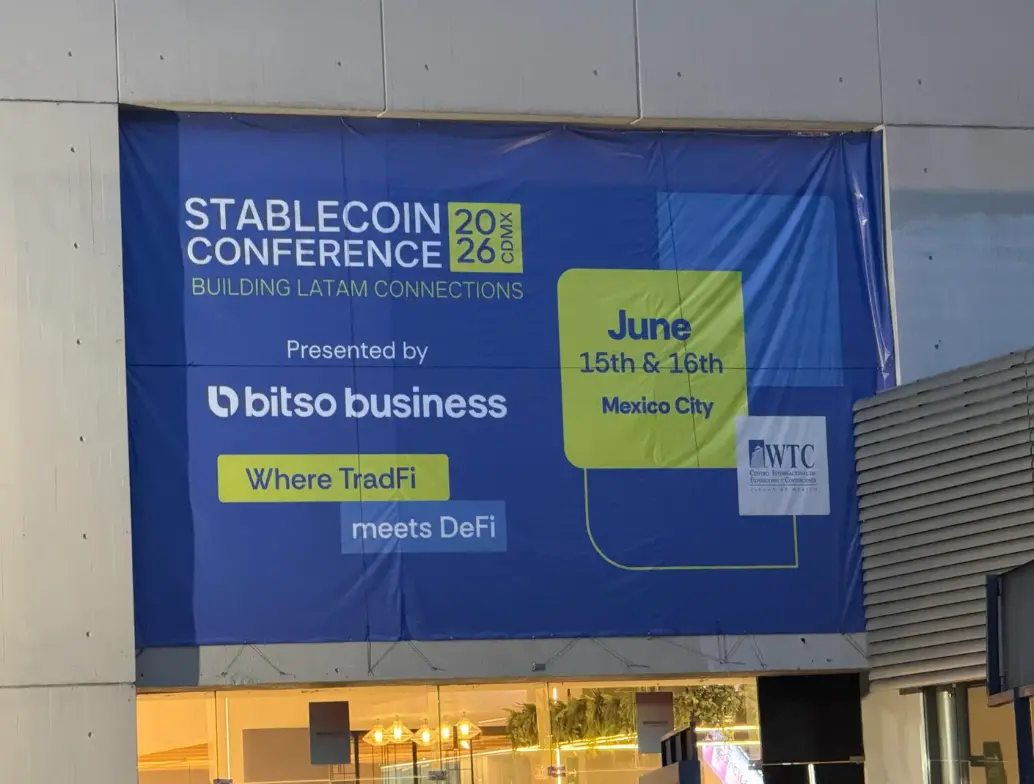
However, spend some time talking to those who actually move money across borders, and a more nuanced picture emerges: cross-border payments based on stablecoins are faster, more accessible, and increasingly reliable. But in terms of price, the industry has yet to deliver on its promise.

Where does the gap come from? Foreign exchange brokers typically charge 60 to 70 basis points for cross-border supplier payments. Stablecoins promise to compress this cost to 2 to 5 basis points. The direction is clear.

It's just that the deep liquidity pools needed to make this cost compression a reality have not yet been built at scale.

Imran Ahmad, head of Bitso Business, the B2B division of one of Latin America's largest crypto exchanges, puts it bluntly: Before significant institutional liquidity flows into these channels, the cost advantage of stablecoins remains theoretical.

Once banks start connecting directly, pricing will be forced down, and the equation will change accordingly.

Ahmad explained in an interview during the conference: "They are faster, better, that's unquestionable; they operate 24/7, that's also unquestionable. But are they cheaper? Not yet. The liquidity pools need to be built first."

Addressing the Trust Problem

Bringing this liquidity online requires some behavioral change.

Imagine a medium-sized importer based in Santos, Brazil (Latin America's largest port), who has been using the same local FX broker for years to handle payments.

That broker charges 60 to 70 basis points. In theory, a stablecoin solution could complete the same payment for a fraction of that cost.

But the importer might not think of the transaction in basis points. He thinks of the reliable agent who has handled his forex for a decade: the person who always answers the phone, who always gets things done.

This relationship, built on trust, is the real barrier to stablecoin adoption in B2B payments. It will only erode slowly: when the price gap becomes too large to ignore, when a new generation of operators no longer takes personal relationships for granted.

"Ultimately, it all comes down to trust," said Ezra Kebrab, CEO of Caliza, a cross-border payments company handling supplier payments and treasury management transactions between Latin America, North America, and Asia.

"It's not as simple as 'I'm the cheapest, fastest solution,'" Kebrab added. "Do you know the consequences if this payment doesn't meet the counterparty's requirements?"

Complementing Swift, Not Replacing It

Contrary to some narratives in the stablecoin payments space, the companies truly gaining market traction are those that have stopped treating existing infrastructure as the enemy.

Caliza's clients range from customs brokers in Santos to global payment processors like Flutterwave and India's Skydo; the company also partners with payment partner LianLian for flows from Latin America to China.

Despite running on stablecoin rails, Caliza still completes many transactions via Swift. The reason is: in supplier payments, paying correctly is as important as paying quickly. A remittance with an incorrect tax ID or missing payment field can cause goods to be held at customs indefinitely.

"Some of my peers might call themselves 'Swift killers,'" Kebrab said. "But I think Swift has done an excellent job in establishing the standardization needed for supplier payments."

This willingness to work alongside, rather than against, traditional systems has translated into sustained growth. Since its inception, Caliza has seen month-over-month growth exceeding 40%, reaching 60% last month.

To avoid reliance on intermediaries, the company built its licensing and banking partnerships from scratch. A decision that seemed costly early on now looks more and more like a competitive advantage.

Bitso's Ahmad believes the growth momentum of stablecoin companies operating in these cross-border corridors over the past year has been staggering. But given the business structure and highly regulated nature, he expects a natural shakeout will eventually occur.

"The growth trajectories of these companies are fascinating," he said. "There hasn't been a 'graveyard' of stablecoin companies yet. But I think one day there will be."

In his view, who ultimately stands firm depends on three things: licenses, fiat channels, and liquidity. Build these, and you have a real business. "Otherwise, you're just a middleman."


İlgili Sorular

QWhat is the main obstacle preventing stablecoins from achieving their promised cost savings in cross-border B2B payments?

AThe main obstacle is not technology, but the lack of deep, institutional-scale liquidity pools. Additionally, the established trust-based relationships that businesses have with traditional foreign exchange brokers present a significant barrier to adoption, as companies value reliability over potential cost savings.

QAccording to Bitso Business's Imran Ahmad, what are the three key elements needed for a stablecoin cross-border payment company to establish a sustainable business?

AAccording to Imran Ahmad, the three key elements are licenses, fiat currency on/off-ramps, and liquidity. Without building these, a company remains merely a middleman.

QHow does Caliza's CEO, Ezra Kebrab, view the role of traditional systems like SWIFT in relation to stablecoin-based payments?

AEzra Kebrab views stablecoin solutions as complementing, not replacing, traditional systems like SWIFT. He acknowledges SWIFT's excellence in establishing the standardization necessary for reliable supplier payments, where accuracy in details like tax IDs is as critical as speed.

QWhat is the reported current fee range for traditional forex brokers in supplier payments, and what is the potential fee range promised by stablecoin solutions?

ATraditional forex brokers typically charge between 60 to 70 basis points for supplier payments. Stablecoin solutions promise to compress these fees to a range of 2 to 5 basis points.

QWhat growth trend is mentioned for the company Caliza, and what strategic decision is cited as a key competitive advantage?

ACaliza has maintained month-over-month growth exceeding 40% since its founding, reaching 60% recently. A key competitive advantage cited is its early decision to build its own licenses and banking partnerships from scratch, avoiding dependency on intermediaries, which was initially costly but is now paying off.

İlgili Okumalar

Within Strategy's Framework, STRC's Dividend Yield Remains at 12% as Share Price Stays Below Par Value

Michael Saylor, Executive Chairman of Strategy (MSTR), confirmed that the dividend rate for its STRC perpetual preferred shares will remain at 12.00% through August 2026. The rate has increased from 9% at its July 2025 launch to the current high via a "ratchet" mechanism, which permanently raises the rate by 0.5% whenever the share price falls below $95. This mechanism is intended to push the price back toward its $100 par value and support Strategy's "at-the-market" (ATM) program for issuing new shares to fund Bitcoin purchases. However, the mechanism has not worked as intended. STRC shares closed at $89.46 on July 31, remaining about 10-11% below par value despite the record-high dividend. Competition from rival Strive's higher-yielding SATA securities has pressured demand. The persistent discount has forced Strategy to suspend new STRC issuances via its ATM program, limiting this funding channel for Bitcoin acquisitions. STRC's struggles reflect Bitcoin's own volatility, as the preferred shares historically move in tandem. Analysts have warned the ratchet structure carries long-term, one-way risk. A law firm is investigating Strategy's ability to maintain dividend payments if Bitcoin's price stays low. Retail investors own roughly 83% of outstanding STRC shares, a group seen as prone to panic selling during downturns. In response, Strategy has established financial reserves, including a liquidity cushion covering about 26 months of dividend/interest obligations, and a $2 billion share buyback program alongside a Bitcoin monetization framework, though the company emphasized it is not obligated to sell any Bitcoin.

cryptonews.ru14 dk önce

Within Strategy's Framework, STRC's Dividend Yield Remains at 12% as Share Price Stays Below Par Value

cryptonews.ru14 dk önce

Analyst: Bitcoin's Price Will Drop to $60k in August, Then Rebound to $70k

Financial analyst Andrey Poroshin has provided a new forecast for Bitcoin's price dynamics in August. Poroshin, an analyst at the Bitbanker exchange, expects the cryptocurrency market to experience a downturn this month, with prices retesting the $60,000 level due to a lack of supportive macroeconomic catalysts. He noted that the recent US Federal Reserve decision to hold interest rates did not significantly impact the market, while inflation remains above the 2% target. Poroshin stated that Bitcoin is ending July under pressure from moderate volatility and a lack of new macroeconomic stimuli, leading to continued market caution. According to his base scenario, Bitcoin will drop to a range of $60,000 to $62,000 before recovering to $70,000. He pointed out that even $70,000 remains below the cost of mining in the US, which has prompted some miners to shift towards AI data center operations. Poroshin cited the winding down of BitMEX's operations as a potential catalyst for a price rebound, suggesting the exit of weaker players often coincides with market reversals and reduced short-term selling pressure. He believes Bitcoin is currently less susceptible to geopolitical shocks, such as the Iran-US conflict, and does not expect significant market changes in August related to the pending CLARITY Act. Looking ahead, Poroshin forecasts that September will bring more active price fluctuations driven by potential Fed rate decisions and possible discussions or approval of the CLARITY Act.

cryptonews.ru14 dk önce

Analyst: Bitcoin's Price Will Drop to $60k in August, Then Rebound to $70k

cryptonews.ru14 dk önce

İşlemler

Spot
活动图片




