First Predictive Markets ETFs Delayed, Wall Street Eyes the New Business

Odaily星球日报2026-05-18 tarihinde yayınlandı2026-05-18 tarihinde güncellendi

Özet

The launch of the first U.S. prediction market ETFs has been delayed following SEC intervention for further review. These novel ETFs, proposed by firms like Roundhill Investments, Bitwise, and GraniteShares, allow investors to trade on the probability of real-world events—such as election outcomes, economic recessions, or industry trends—through traditional brokerage accounts. Instead of holding assets like stocks, these ETFs are based on binary event contracts, meaning investors could face significant, even total, losses if their predictions are incorrect. The SEC's pause is seen not as an outright rejection but as a request for more detailed disclosures. Regulators are seeking clarity on how the products track events, manage settlement risks, and communicate potential extreme losses to retail investors. Analysts suggest the delay represents a careful regulatory review to set a precedent for such innovative products. While the timeline is pushed back, the industry remains optimistic. The focus is now on whether the SEC's concerns are primarily about disclosure or the fundamental nature of the product. Regardless, Wall Street is actively exploring the prediction market space, signaling a broader interest in trading future events as a new asset class.

Original | Odaily Planet Daily (@OdailyChina)

Author | Asher (@Asher_ 0210)
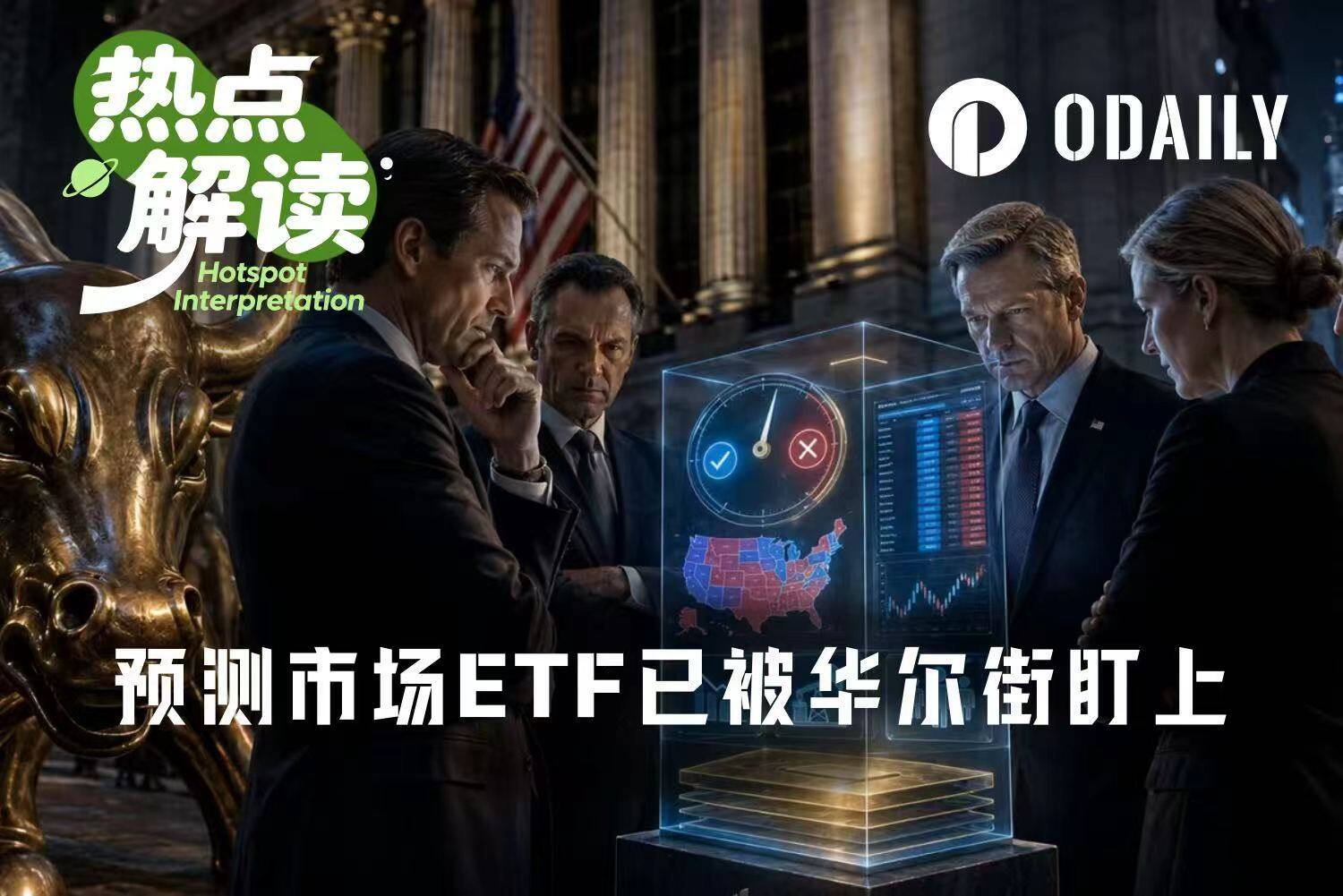
The first predictive markets ETFs have not launched in the US market as originally scheduled.

Earlier this month, the first ETF products related to predictive markets failed to become effective on schedule, with their listing time postponed due to further review by the US SEC. The SEC requested issuers to supplement details regarding the product mechanism and disclosures, particularly how these products track event contracts, handle settlement risks, and explain potential extreme losses to ordinary investors.

Near Effective Date, US SEC Hits Pause Button

Predictive markets ETFs are not a new product category that suddenly emerged this month. Back in February, Roundhill Investments took the lead in filing relevant documents, followed subsequently by Bitwise Asset Management and GraniteShares. The approach of these issuers was similar—packaging real-world event outcomes into ETF products, allowing investors to trade event probabilities through traditional securities accounts.

The initial products were primarily focused on US political events, including whether the Democratic or Republican party would win the 2028 presidential election and which party would control the Senate and House of Representatives in the 2026 midterm elections. Subsequently, the scope of applications expanded further to include event-driven targets such as economic recessions, tech industry layoffs, and commodity prices, with over 20 products awaiting review.

According to relevant rules, such ETFs can typically become effective automatically 75 days after submission, unless the SEC intervenes for further review. Precisely because multiple issuers filed documents back in February, early May became the critical timeframe for the first predictive markets ETFs. Roundhill had previously submitted updated filings, planning for its six predictive markets ETFs focused on US presidential and congressional elections to become effective on May 5. The market initially expected Roundhill might be the first issuer to launch predictive markets ETFs, with similar products from Bitwise and GraniteShares likely to follow.

However, ultimately, due to further review by the US SEC, the first batch of products did not achieve automatic effectiveness.

Delay "Not a Fatal Issue," But Entry into a More Detailed Review Stage

Judging from the current actions of the US SEC, predictive markets ETFs seem more like being required to provide supplementary explanations rather than being directly rejected.

If regulators believed such products should not exist at all, the market might have seen clearer signals of rejection. But the SEC's current actions appear more like asking issuers to clarify several issues, including how the products obtain exposure to event contracts, how the underlying price is formed, how event outcomes are settled, what level of loss investors might bear, and whether the disclosure documents are sufficiently straightforward.

Bloomberg ETF analyst Eric Balchunas posted on platform X, stating that the US SEC's decision to further review predictive markets ETFs currently seems more like regulators wanting to conduct additional checks on the disclosure documents. Given the pioneering significance of such products, once approved, they would set an important regulatory precedent for predictive markets ETFs, so it's understandable that the SEC is taking more time for review.

The SEC's caution stems from the fact that predictive markets ETFs and traditional ETFs are not the same type of product. Ordinary sector ETFs buy a basket of stocks, thematic ETFs buy into a sector narrative, and Bitcoin ETFs track the price of an asset. But predictive markets ETFs do not buy assets; they buy into whether a specific event will occur. Whether the Democratic Party wins the 2028 presidential election, whether the Republican Party controls the Senate, whether the US enters an economic recession, whether the tech industry sees large-scale layoffs—these are not traditional assets but real-world events.

The unique aspect of predictive markets ETFs is that they look like ETFs but their underlying structure is closer to binary event contracts. Ordinary investors seeing them in their brokerage accounts might mistake them for regular thematic funds, but they are not trading baskets of stocks or asset prices; they are trading whether an event ultimately occurs or not. A wrong judgment could lead to very direct losses, potentially near total loss. The SEC's request for additional disclosures might be to confirm whether issuers can clearly explain this structure and its risks.

Launch Window Remains, Rules Are Key

Although the launch timeline for predictive markets ETFs has been delayed, the market currently tends to interpret this delay as a supplementary review rather than a regulatory shift towards rejection. Nate Geraci, President of The ETF Store, offered a relatively optimistic assessment. He mentioned that US SEC Commissioner Hester Peirce recently stated in a speech that regulators are trying to strike a balance between regulation and innovation. Nate Geraci believes this statement might relate to predictive markets ETFs and suggested such products could launch soon.

Currently, institutions might need to focus on whether the SEC categorizes this delay as a disclosure issue or a product attribute issue. However, regardless of which review path the SEC ultimately leans towards, the trajectory of predictive markets ETFs is unlikely to disappear due to one delay.

If the issue remains at the disclosure level, the first products might just launch a bit later; if regulators continue questioning the product's nature, the pace will slow, but it will also push the industry towards forming clearer rules. For issuers, as disclosure standards, settlement requirements, and investor protection boundaries gradually become clear, subsequent products will actually be easier to replicate.

More importantly, institutions have already begun designing products at different levels around predictive markets. Directly tracking event outcomes like elections, recessions, and layoffs is one line; investing in predictive market platforms, trading infrastructure, market makers, and data service providers is another. Even if the review cycle for event-outcome ETFs lengthens, predictive markets, as a financial theme, have already been incorporated into ETF issuers' product libraries. In other words, Wall Street is not just waiting for a few election ETFs to be approved; it is placing early bets on the new business of "future events being tradable."


İlgili Sorular

QWhy have the first batch of prediction market ETFs been delayed from launching in the U.S. market?

AThe U.S. SEC intervened for further review, requesting that issuers supplement details on product mechanisms and disclosures. Specifically, the SEC sought more information on how these products track event contracts, handle settlement risks, and explain potential extreme losses to retail investors.

QAccording to the article, what is the core difference between a prediction market ETF and a traditional ETF?

ATraditional ETFs typically track a basket of assets like stocks or an asset's price (e.g., Bitcoin). In contrast, prediction market ETFs are based on whether specific real-world events occur (e.g., an election outcome or economic recession). Their underlying structure is closer to binary event contracts, where an incorrect prediction can lead to significant or total loss.

QWhat is the typical automatic effectiveness timeline for such ETFs after filing, and what was the expected key date for the first batch?

AAccording to the relevant rules, such ETFs typically become effective automatically 75 days after filing unless the SEC intervenes. The key expected date for the first batch was around May 5th, as Roundhill Investments had filed updated documents targeting that date for the effectiveness of its six prediction market ETFs focused on U.S. elections.

QWhat is the market's general interpretation of the SEC's delay regarding prediction market ETFs?

AThe market generally interprets the delay as the SEC requiring supplementary review and clearer disclosures rather than an outright rejection or negative signal. Analysts believe the SEC is being cautious due to the novel and precedent-setting nature of these products, wanting to ensure risks are adequately explained to investors.

QBeyond ETFs that track event outcomes directly, what other product strategies are institutions exploring within the prediction market theme?

AInstitutions are exploring different layers of product design. Beyond ETFs that directly track event outcomes (like elections), other strategies include investing in prediction market platforms, trading infrastructure, market makers, and data service providers. This indicates Wall Street is betting on the broader theme of 'trading future events' as a new business opportunity.

İlgili Okumalar

From Banning Doubao to Embracing Honor: Why Did WeChat Suddenly 'Change Its Face'?

The article explores the sudden shift in WeChat's strategy towards AI assistants from mobile phone manufacturers, transitioning from strict opposition to active collaboration. For over a year, WeChat fiercely resisted attempts by phone AI assistants (like ByteDance's Doubao in late 2025) to control its features via GUI automation ("simulated clicking"), citing security and data control concerns. This stance created a significant barrier for system-level AI integration. Now, Tencent has initiated A2A (Agent-to-Agent) partnerships with major phone brands like Honor, Xiaomi, OPPO, and vivo. This model allows a phone's system AI (e.g., Honor's YOYO) to parse a user's voice command and send a structured request directly to WeChat's own internal AI agent via secure APIs. WeChat then executes the action (e.g., sending a message) and returns the result. The article attributes Tencent's "change of face" to strategic pressure. While leading in social app usage, Tencent trails rivals like ByteDance and Alibaba in standalone AI app popularity. WeChat, with its vast mini-program ecosystem, is Tencent's key asset for an AI comeback. The upcoming WeChat AI agent aims to handle tasks like booking and payments within the app. However, phone system assistants remain the primary AI entry point for most users. The A2A collaboration allows Tencent to extend WeChat's AI reach to this crucial system layer while maintaining control over its core functions and data. For phone manufacturers, embracing A2A is a pragmatic move. The GUI route proved unviable due to WeChat's blocks. A2A offers a compliant path to integrate a vital service, enhancing their AI assistants' usefulness. It allows them to focus on developing their own AI ecosystems for other services while cooperating on WeChat access. The collaboration is framed as a mutual, strategic necessity: Tencent gains a distribution channel, and manufacturers gain a key functionality. The partnership relies on a "dual authorization" mechanism for security, requiring both user and app consent for each action. While questions about long-term data privacy practices remain, experts note A2A is more secure and compliant than GUI automation. Ultimately, this cooperation is seen as a tentative, calculated truce. Tencent's long-term goal is to make WeChat an AI-powered "service OS." Phone manufacturers aim to make their system AI the central user interface. Their paths may converge or clash in the future, but for now, the A2A deal represents the opening chapter in the battle for the AI-era user入口, driven by necessity and strategic calculus on both sides.

marsbit37 dk önce

From Banning Doubao to Embracing Honor: Why Did WeChat Suddenly 'Change Its Face'?

marsbit37 dk önce

On-Chain Figures on the Eve of Kickoff: 1.6 Billion Traded Before the World Cup Even Begins

"On-Chain Numbers on the Eve of the World Cup: $1.6 Billion Traded Before Kick-off" Analysis of on-chain markets before the 2026 FIFA World Cup reveals significant crypto integration into football. The most striking figure is the approximately **$1.6 billion** in total trading volume on the single "World Cup Winner" contract on the Polymarket prediction market platform, accumulated before a single match was played. This represents explosive growth for a sector whose annual volume surged from ~$16B in 2024 to ~$64B in 2025. The ecosystem is maturing beyond speculation. Key developments include: 1) **Infrastructure upgrades** like Polymarket's migration to native, regulated USDC stablecoin for settlements; 2) **Reliable data oracles**, such as Chainlink, being used to resolve real-world match outcomes on-chain; and 3) **Official recognition**, with FIFA appointing its first-ever "Prediction Markets" partner. Over 100 contracts now cover everything from the outright winner to individual match results and even non-sporting risks like venue relocation. This evolution marks a fundamental shift. While crypto firms are absent from FIFA's top-tier sponsor list, the technology has deeply penetrated the tournament's financial and predictive infrastructure through regulated stablecoin settlements, decentralized oracles, and new official partnership categories. The regulatory landscape remains complex and varies by jurisdiction, but on-chain markets for the World Cup are already a multi-billion-dollar reality.

marsbit1 saat önce

On-Chain Figures on the Eve of Kickoff: 1.6 Billion Traded Before the World Cup Even Begins

marsbit1 saat önce

From SpaceX's IPO to the Future of Crypto: Which Crypto Sectors Will Host the Trillion-Dollar Narrative?

From the SpaceX IPO, which targets a $750 billion raise at a $1.77 trillion valuation, we can extrapolate capital flow trends relevant to crypto. The focus shifts from speculative narratives to foundational infrastructure and real-world asset (RWA) integration. Key crypto sectors poised to benefit include: 1. **AI Infrastructure**: The narrative is moving from consumer-facing AI applications to underlying, scarce resources like compute power and decentralized GPU networks (e.g., TAO, RENDER, AKT, IO). These protocols are positioning as the essential "picks and shovels" providers for the AI economy. 2. **Real-World Assets (RWA)**: Beyond tokenized treasury bonds, RWA's future lies in on-chain equity and pre-IPO assets like SpaceX. This could democratize access to high-growth assets and reshape global capital flows, benefiting infrastructure projects like ONDO, LINK, and Plume that facilitate issuance, data, and liquidity. 3. **Core Financial Infrastructure**: Stablecoins, payment networks, and DePIN (Decentralized Physical Infrastructure Networks) are critical for settling the future on-chain economy. Their role expands from internal trading tools to foundational layers for global finance, AI systems, and real-world asset networks, leading to potential value reassessment. In summary, the next cycle may prioritize long-term infrastructure value—AI compute, asset tokenization networks, and settlement layers—over short-lived application hype, mirroring the broader market's shift towards funding the foundational systems of the future.

marsbit1 saat önce

From SpaceX's IPO to the Future of Crypto: Which Crypto Sectors Will Host the Trillion-Dollar Narrative?

marsbit1 saat önce

İşlemler

Spot
Futures
活动图片




