First Batch of Keynote Speakers and Partners Announced! Web2+3 Summit: Defining the Next Generation of Digital Economy

marsbit2026-04-20 tarihinde yayınlandı2026-04-20 tarihinde güncellendi

Özet

Web2+3 Summit: Defining the Next Generation of Digital Economy The 6th BEYOND International Technology Innovation Expo (BEYOND Expo 2026), Asia's largest tech and ecosystem exhibition, is launching a dedicated Web2+3 stage for the first time. Co-hosted by BEYOND Expo and ChainNeXT Group, the Web3 Summit will take place from May 28–30, 2026. Against the backdrop of accelerating global tech integration, the boundaries between Web2 and Web3 are rapidly blurring. With clearer global regulations for blockchain-driven internet (Web3) and the special issuance of a Hong Kong dollar stable币 license by the Hong Kong SAR government on April 10, 2026, Web3's decentralized principles are quickly merging with traditional industries (Web2) such as e-commerce, finance, and artificial intelligence. Focused on blockchain-driven digital economy elements, the summit will center on three core principles—implementability, commercial viability, and compliance. It will bring together top Web3 experts to discuss key integration areas like stablecoin payment finance (PayFi), real-world asset tokenization (RWA), and decentralized AI (DeAI), unveiling new opportunities for industrial innovation. The first wave of confirmed speakers includes Jack Kong (Director of Hong Kong Cyberport, Chairman of Nano Labs), Yat Siu (Chairman of Animoca Brands), Michael Wu (Co-founder & CEO of Amber Group), Michael Heinrich (Co-founder & CEO of 0G), and Art Abal (Co-founder of Vana). More Web3 ecosystem pioneers, AI,...

Asia's largest technology innovation and ecosystem expo, the sixth BEYOND International Technology Innovation Expo (hereinafter referred to as "BEYOND Expo 2026"), has officially announced the establishment of a dedicated Web2+3 stage for the first time. As one of the important segments of BEYOND Expo, the Web3 segment will be jointly hosted by BEYOND Expo and ChainNeXT Group (链新ChainNeXT) from May 28 to 30, 2026!

Against the backdrop of accelerating integration in the global technology industry, the boundaries between Web2 and Web3 are rapidly merging. Legislation regarding blockchain-driven internet (Web3) is becoming increasingly clear in various countries, and the Hong Kong Special Administrative Region government officially issued licenses for Hong Kong dollar stablecoins on April 10, 2026. The decentralized concept of Web3 is rapidly integrating with traditional industries (Web2), such as cross-border e-commerce, finance, artificial intelligence, and more.

This summit focuses on exploring the elements of blockchain digital economy, centering around the three core principles of "implementable, commercializable, and compliant." It will invite top experts from the Web3 industry to delve into directions such as stablecoin payment finance (PayFi), tokenization of traditional financial assets (RWA), and decentralized artificial intelligence (DeAI) in combination with industries, revealing new opportunities for industrial innovation!

First Batch of Speakers Announced

This Web2+3 summit brings together global Web3 industry leaders, traditional industry giants, investment institutions, and regulatory experts. The first batch of confirmed speakers for the forum includes:Jack Kong(Director of Hong Kong Cyberport, Chairman of Nano Labs), Yat Siu(Chairman of Animoca Brands), Michael Wu(Co-founder and CEO of Amber Group), Michael Heinrich(Co-founder and CEO of 0G), Art Abal(Co-founder of Vana).

More Web3 ecosystem leaders, AI, and fintech experts will be announced in the near future.

Core Forum Topics

This Web2+3 summit will focus on new digital infrastructure and industrial innovation. Detailed thematic forums include:

Web2+DeAI Forum: The New Paradigm of AI Driven by Decentralized Infrastructure

Web2+RWA Forum: Tokenization of Real-World Assets and Global Liquidity

Web2+PayFi Forum: Cross-Border Payment and Financial Innovation Driven by Crypto Infrastructure

Web2+3 AI Forum: Autonomous Agents and Crypto Economics

Web2+3 Wealth Forum: Investment Ecosystem Integrating On-Chain and Off-Chain

Web2+3 Commerce Forum: New Landscape of Global Trade Driven by Stablecoins

More detailed agenda will be announced陆续.

İlgili Sorular

QWhat is the main focus of the Web2+3 Summit at BEYOND Expo 2026?

AThe Web2+3 Summit focuses on the integration of Web2 and Web3 technologies, exploring blockchain-driven digital economy elements with core principles of being 'actionable, commercializable, and compliant'. It covers areas like stablecoin payment finance (PayFi), real-world asset tokenization (RWA), and decentralized AI (DeAI).

QWho are some of the confirmed keynote speakers for the Web2+3 Summit?

AConfirmed speakers include Jack Kong (Director of Hong Kong Cyberport, Chairman of Nano Labs), Yat Siu (Chairman of Animoca Brands), Michael Wu (Co-founder and CEO of Amber Group), Michael Heinrich (Co-founder and CEO of 0G), and Art Abal (Co-founder of Vana).

QWhat are the key thematic forums to be discussed at the Web2+3 Summit?

AKey forums include Web2+DeAI (decentralized infrastructure-driven AI), Web2+RWA (real-world asset tokenization and global liquidity), Web2+PayFi (crypto infrastructure-driven cross-border payments and financial innovation), Web2+3 AI (autonomous agents and crypto economy), Web2+3 Wealth (on-chain and off-chain integrated investment ecosystems), and Web2+3 Commerce (stablecoin-driven global trade).

QWhen and where will the Web2+3 Summit take place?

AThe Web2+3 Summit will be held from May 28 to 30, 2026, as part of the BEYOND International Technology Innovation Expo, co-hosted by BEYOND Expo and ChainNeXT Group.

QHow does the summit address the convergence of Web2 and Web3 technologies?

AThe summit explores the rapid merging of Web3's decentralized concepts with traditional Web2 industries such as e-commerce, finance, and AI, highlighting innovations in regulatory frameworks, stablecoin adoption, and practical applications that bridge both ecosystems.

İlgili Okumalar

TechFlow Intelligence Bureau: Chip Stocks Lose Trillions in a Single Day, Bitcoin Falls Below $60,000, US-Iran Conflict Escalates

**Daily Tech & Markets Roundup: AI Advances, Market Turmoil, and Geopolitical Tensions** **AI / LLMs**: Anthropic's internal report on AI self-improvement sparked serious discussions about Recursive Self-Improvement (RSI). Meanwhile, debate continues on AI coding tools after Claude was accused of introducing bugs into the rsync codebase. In positive news, DeepSeek V4 Flash impressed in local deployment tests, and GitHub Copilot now supports custom endpoints for local models. A surprising research turn suggests removing chain-of-thought prompting can sometimes improve LLM performance. **Crypto / Web3**: Bitcoin plunged below $60,000, with its RSI hitting levels last seen during the COVID-19 crash, driven by strong U.S. jobs data reviving interest rate hike fears. Discussions highlight Ethereum DeFi's continued lack of a smooth consumer payment layer. **Chips / Hardware**: Chip stocks suffered a massive sell-off, with the Philadelphia Semiconductor Index posting its worst single-day drop in six years, erasing over a trillion dollars in value. Marvell, Micron, AMD, and Intel were among the biggest losers. **Tech Companies**: A leaked Microsoft document revealing goals to make Copilot "addictive" drew criticism. LinkedIn founder Reid Hoffman left Microsoft's board to focus full-time on his AI agent startup, Manus. Google was revealed to be paying SpaceX $920 million monthly for AI training compute. **Markets & Macro**: A blowout U.S. jobs report (172k vs. 80k expected) crushed hopes for near-term rate cuts, sending Treasury yields soaring and triggering a broad market sell-off. CEOs from Kraft, McDonald's, and Whirlpool simultaneously warned U.S. consumers are exhausting their savings. **Geopolitics**: U.S.-Iran tensions escalated with missile/drone interceptions and U.S. strikes on Iranian radar sites, keeping the critical Strait of Hormuz largely closed since late February and posing ongoing oil supply risks. **The Bottom Line**: The strong jobs data acted as a single trigger for correlated sell-offs across equities, crypto, and chips. Underlying the volatility is a stark contradiction between robust employment data and warnings of consumer weakness, alongside geopolitical risks that could reignite inflation, leaving markets to price in a fraught macro outlook with no clear "soft landing" path.

marsbit2 saat önce

TechFlow Intelligence Bureau: Chip Stocks Lose Trillions in a Single Day, Bitcoin Falls Below $60,000, US-Iran Conflict Escalates

marsbit2 saat önce

It Took Me a Year to See the Bitter Truth About Agent Payments

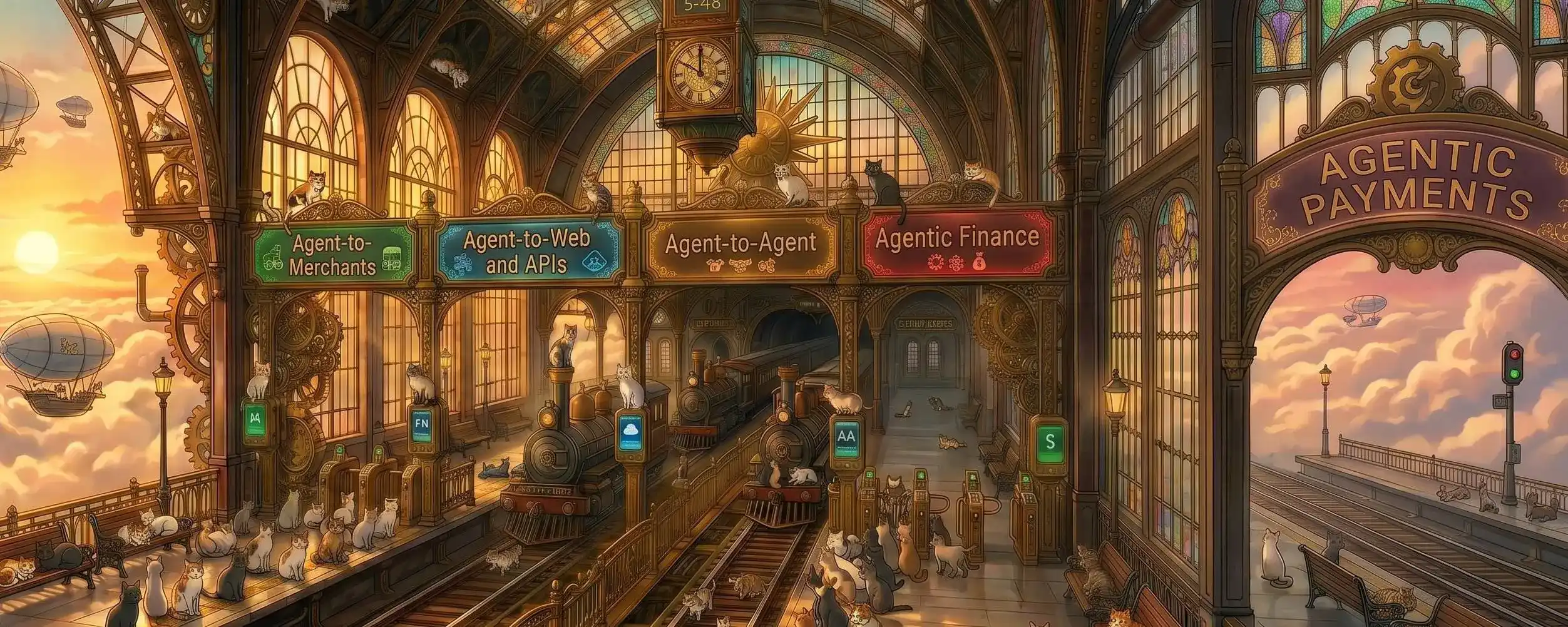
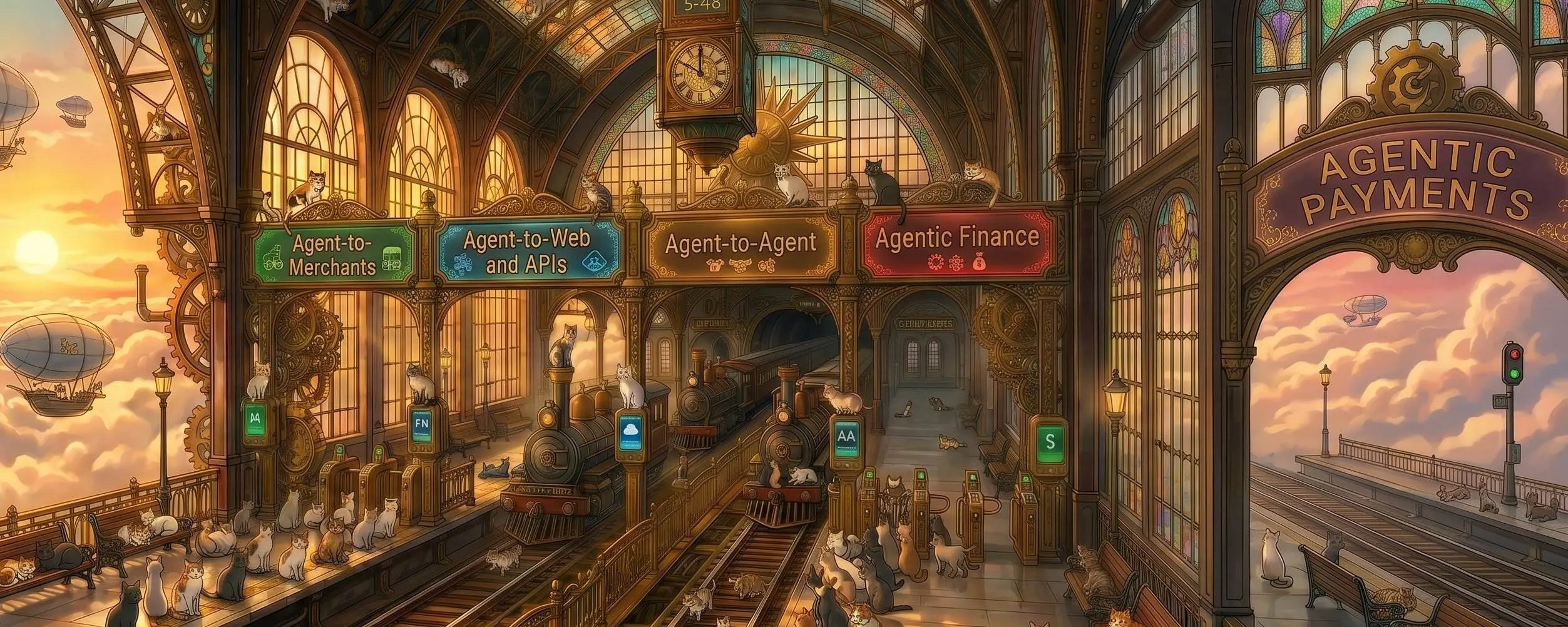
After a year building infrastructure for the Agent economy, engaging with major players like Stripe, Visa, and Coinbase, the author shares a sobering analysis of the current state of Agent payments. The core finding is a stark lack of genuine, immediate demand across most envisioned use cases. The article breaks down four key market segments: 1. **Agent-to-Merchant (Consumer Shopping):** For most product categories (e.g., clothing, electronics), conversational AI shopping is a step backwards from visual e-commerce interfaces. While agents excel at understanding needs, they can't replace side-by-side product comparison. Real merchant interest is defensive "Agent Engine Optimization," not driven by current customer demand. Potential exists for high-frequency, low-decision purchases (like food delivery) or navigating complex store UIs, but these require massive B2C distribution channels dominated by giants like Amazon. 2. **Agent-to-API (Developer Services):** Developers already have subscriptions and billing relationships for APIs (compute, data). Prepaid balances solve micro-payment issues for low transaction volumes. A deeper structural problem is that major SaaS vendors' business models rely on enterprise contracts, resisting granular pay-per-call pricing. While protocols like MPP and x402 serve the long tail of niche services, this market is small and developers are historically low-willingness-to-pay. 3. **Agent-to-Agent:** This remains largely theoretical with minimal transaction volume. While it represents a long-term bet on a fundamentally new transaction infrastructure (sub-second, micro-penny to million-dollar, multi-party settlements), it does not constitute a present market. 4. **Agent-to-Finance:** This is the only category with existing, paying demand. Integrating AI into financial workflows (trading, portfolio management) is a natural evolution and enables new capabilities like autonomous rebalancing. However, competition favors established, regulated institutions. The "real problem" is not moving money between agents, but the broader challenge of **coordination**—orchestrating work between agents and humans, verifying outcomes, and settling results. Payment is just one component of settlement, which is itself part of coordination. Companies that solve the coordination layer will subsume payment, not the other way around. While well-funded incumbents build defensively for a long-term future, startups must find where the market is today—which, for the author's team, lies outside these four categories in an area of real, growing, and underserved activity.

marsbit2 saat önce

It Took Me a Year to See the Bitter Truth About Agent Payments

marsbit2 saat önce

It Took Me a Year to See the Hard Truth About Agent Payments

**Title: It Took Me a Year to See the Hard Truth About Agent Payments** Over the past year, I've worked on infrastructure for the Agent economy, engaging with major players like Stripe, Visa, Coinbase, and numerous startups. The findings reveal a stark reality: genuine, widespread demand for Agent-based payments does not yet exist. **Key Observations:** * **Agent-to-Merchant (Shopping):** The user experience for AI shopping often falls short, especially for visual product discovery. While AI excels at understanding needs, conversational interfaces can't yet replace browsing and comparing multiple products visually. Current merchant interest is largely defensive ("Agent Engine Optimization") for a future that hasn't arrived. High-frequency, low-friction purchases (like food delivery) are potential fits, but lack open APIs and face high AI inference costs. Simpler, more affordable, or cross-language interactions for complex UIs are a niche opportunity but require massive consumer distribution to scale. * **Agent-to-API (Developer Tools):** Developer payment needs for APIs (computing, data, models) are already met through subscriptions and prepaid credits. The core challenge is not payment friction but supplier economics: most large SaaS providers prefer enterprise contracts over micropayments for API calls. Protocols like MPP and x402 suit the long-tail of smaller services but cater to a developer market historically reluctant to pay for these tools. Major infrastructure needs at the top of the stack are already being addressed. * **Agent-to-Agent (Machine Commerce):** This is a long-term vision with almost no current transaction volume. While a future with high-speed, high-frequency, multi-party machine-to-machine transactions would require novel infrastructure, it remains theoretical. The market is not here yet. * **Agent-to-Finance:** This is the only category with clear, present demand. Financial professionals and DeFi users already pay for tools, and AI augmentation is a natural evolution. Autonomous AI agents can enable entirely new financial strategies. However, competition is fierce from established, regulated incumbents who can more easily layer AI onto their existing products. **The Core Insight:** Companies, especially giants with long time horizons, are building defensively for a potential future of mass machine commerce. For them, early investment is a low-cost hedge. For startups, the current market reality is different. The primary challenge isn't just moving money between agents (payments). The larger, unsolved problem is **orchestration** – coordinating work between agents and humans, verifying outcomes, and then settling. Payment is just a part of settlement, which is just a part of orchestration. Companies that solve the orchestration problem will subsume payments, not the other way around. After a year of building, we see the real, growing, and underserved market opportunity lies in this broader domain of orchestration.

链捕手3 saat önce

It Took Me a Year to See the Hard Truth About Agent Payments

链捕手3 saat önce

İşlemler

Spot
Futures
活动图片