Fed Rate Cut Tonight Almost Certain, This Meeting More Like a 'Political Pressure Test'!

marsbit2025-12-10 tarihinde yayınlandı2025-12-10 tarihinde güncellendi

Özet

This week's Federal Reserve policy meeting is set to be one of the most contentious in recent years. With key economic data missing due to a 43-day U.S. government shutdown, the meeting has evolved into a stress test of the Fed’s independence and decision-making process. Market expectations for a rate cut have surged from 30% to 97%, reflecting both data uncertainty and growing political influence. Internally, the Fed is deeply divided, with a 4-4 split among key officials between holding rates and cutting. The dot plot shows a rare "bimodal distribution," with 7 officials favoring no change and 8 supporting a 50-basis-point cut. Doves point to a weakening labor market—unemployment rose to 4.3% in August, a four-year high—while hawks emphasize persistent inflation, with core PCE at 2.7%, above the 2% target. Political pressure has intensified, notably through appointments like Stephen Milan, who voted for a deeper cut just one day into his role, aligning with former President Trump’s public demands. The upcoming Fed leadership transition adds further uncertainty, as officials may be positioning for future roles. Amid data gaps and political interference, the Fed faces a complex risk-management dilemma: balancing concerns over slowing employment against inflation risks and soaring government debt interest costs. Communication challenges are heightened by internal divisions, forcing the Fed to rely more on high-frequency and alternative data. This meeting may mark a shift to...

This week's Federal Reserve policy meeting will be one of the most controversial decisions in recent years.

Against the backdrop of a 43-day U.S. government shutdown that has led to a lack of key economic data, this meeting has transcended the realm of pure monetary policy, evolving into a stress test for the Fed's independence and decision-making mechanisms.
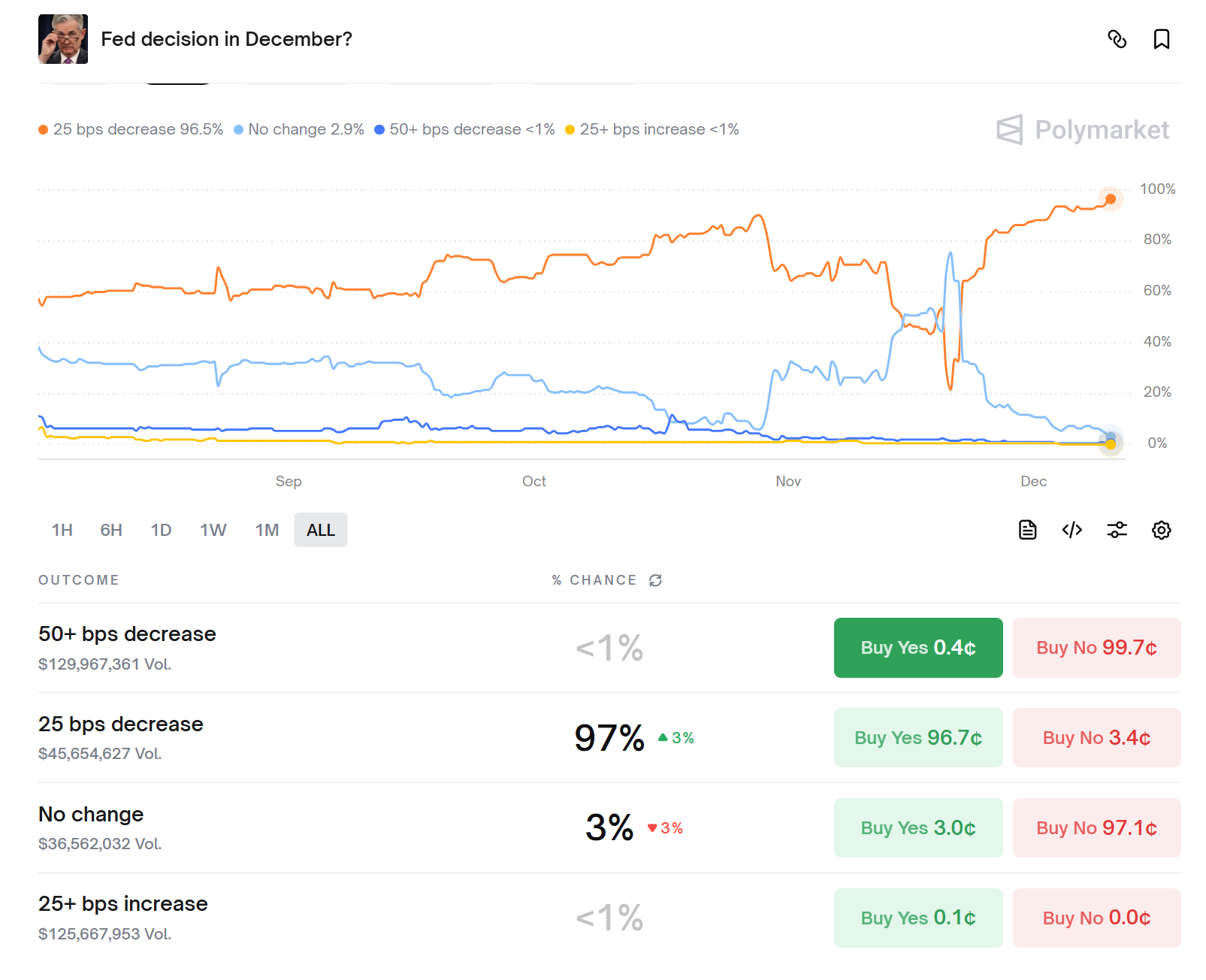
Market expectations for a rate cut have surged from 30% three weeks ago to 97% currently. This dramatic shift not only reflects collective anxiety in a data vacuum but also reveals that political pressure's influence on monetary policy is becoming more explicit.

Data Fog and Internal Divisions

The decision-making environment for the Fed at this meeting is exceptionally unique—the record 43-day U.S. government shutdown has resulted in the absence of most key economic data. This leaves the Fed, which has long emphasized being "data-dependent," seemingly navigating through a fog without clear coordinates for decision-making.

The absence of key official economic data, combined with the "mixed" nature of other alternative data, means the macroeconomic situation lacks a clear, objective anchor, leading to significant divergence in interpretations from various parties. Internal disagreements have become public and are trending toward polarization.

Currently, the stance on rate cuts among Federal Reserve Board members plus the New York Fed President presents a delicate 4-to-4 deadlock. This division is directly reflected in the dot plot, showing a rare "bimodal distribution"—7 officials support keeping rates unchanged for the full year, while 8 believe rates should be cut by 50 basis points.

More notably, the reasoning from both sides is equally compelling. Dovish officials argue the job market has clearly deteriorated, with the unemployment rate rising to 4.3% in August, a four-year high, and nonfarm payrolls increasing by only 22,000, far below expectations. Hawkish officials, however, are focused on inflation issue, with the core PCE price index rising 2.7% year-on-year, still above the Fed's long-term 2% target.


Pathways of Political Pressure Infiltration

The uniqueness of this meeting stems not only from the lack of economic data but also from the fact that political pressure is介入 (intervening in) the monetary policy arena in an unprecedentedly direct manner.

The Trump administration is directly influencing the structure of the Fed's decision-making layer through personnel appointments, breaking the long-standing tradition of "political neutrality" at the Fed.

The appointment of new Governor Stephen Milan is of symbolic significance. As a Fed governor simultaneously serving as Chairman of the White House Council of Economic Advisers, Milan cast a dissenting vote just one day after taking office, advocating for a more aggressive 50 basis point rate cut.

This policy stance highly aligns with Trump's public demand to "cut rates immediately and by a larger margin," raising deep concerns about the Fed's independence. More alarmingly, the Trump administration has clearly indicated that a nomination for the next Fed Chairperson might be announced before the end of December.

For the current core Fed decision-makers, this meeting might be their last chance to state their position and choose sides. Policy decisions during this power transition period inevitably involve considerations of personal career prospects.

The Fed faces not just a technical decision on interest rate adjustments but a severe test of its institutional independence. The balance between political pressure and professional judgment has become a key variable affecting the outcome of this meeting.


The Dilemma of Risk Management

Under the dual challenges of data absence and political pressure, the Fed's decision this time is essentially a complex risk management practice, requiring finding a balance between conflicting objectives. On one hand, the Fed needs to address the downside risks from a weakening labor market. Nonfarm payrolls increased by only 22,000 in August, a significant drop from the revised 79,000 in July, and the unemployment rate rose to a four-year high of 4.3%. If this slowing trend continues, it could trigger a vicious cycle of consumption contraction and economic recession.

On the other hand, inflation risks persist. Although current price pressures mainly stem from supply-side factors (such as import costs pushed up by tariff policies) rather than demand-pull from an overheating economy, whether inflation expectations can be effectively anchored remains uncertain. If the rate cut is too large, it could increase inflation risks, even triggering a wage-price spiral.

Making it more complex, the U.S. government's interest expense on debt has reached $1.1 trillion annually. While rate cuts could ease fiscal pressure, they might also fuel asset bubbles. This权衡 (trade-off) under multiple objectives complicates the Fed's decision-making framework, going beyond the traditional "dual mandate."


Institutional Resilience and Communication Challenges

This meeting tests not only the Fed's decision-making wisdom but also its institutional resilience and communication capabilities. With serious internal divisions, how to form a consensus and effectively communicate policy signals is a key challenge facing Chair Powell.

The divergence in the dot plot is phenomenal. Among the 19 policymakers, 6 believe no further rate cuts are needed, 9 support two more cuts, and there is also one clear outlier (likely Milan) hoping for an additional 125 basis points of cuts this year. This dispersed forecast distribution increases market skepticism about the Fed's communication strategy.

The Fed might address this challenge by strengthening forward guidance. A possible strategy is to emphasize the principle of "deciding meeting-by-meeting," avoiding clear commitments to the future path while stressing that policy will remain flexible. While this strategy might temporarily sidestep internal disagreements, it could weaken the effectiveness of policy signals.

A more profound challenge is how to gain market trust for decisions made in a data-deficient environment. The Fed may rely more heavily on high-frequency data (like weekly jobless claims) and alternative indicators (such as business surveys and the Beige Book) as references for decision-making. This shift in decision-making mode itself is a test of its communication ability.

As 2025 draws to a close, the Fed's future path remains full of unknowns. The分散的 (scattered) predictions on the dot plot indicate that officials hold differing views on the economic outlook and policy path for 2026. This meeting might inaugurate a全新的 (brand new) monetary policy framework: data absence will become the norm, not the exception; political pressure will move from behind the scenes to the forefront; and the Fed's independence will depend on its ability to maintain policy resolve in a complex environment.


Trend Kriptolar

İlgili Sorular

QWhy is the Federal Reserve's upcoming policy meeting considered a 'political pressure test'?

AThe meeting is seen as a political pressure test because it is occurring amid unprecedented political influence, including direct demands from the Trump administration for rate cuts and the appointment of a Fed governor who also serves as a White House economic advisor, challenging the Fed's traditional independence.

QWhat makes the decision-making environment for this Fed meeting particularly unusual?

AThe decision-making environment is unusual due to the 43-day U.S. government shutdown, which has resulted in a lack of key economic data, leaving the Fed to operate in a 'data fog' without clear benchmarks for its typically data-dependent approach.

QHow are the Fed officials divided on the issue of interest rates according to the dot plot?

AThe dot plot shows a rare bimodal distribution: 7 officials support keeping rates unchanged for the year, while 8 expect a 50 basis point cut. One outlier, likely Stephen Milan, even advocates for a 125 basis point cut by year-end.

QWhat are the key risks the Fed must balance in its rate decision?

AThe Fed must balance the risk of a weakening labor market, with unemployment at a four-year high, against persistent inflation concerns, as core PCE remains above the 2% target, while also considering the impact on government debt costs and potential asset bubbles.

QWhat challenges does the Fed face in communicating its policy amid internal divisions?

AThe Fed faces challenges in forming a consensus and effectively signaling policy due to stark internal divisions. It may emphasize a 'meeting-by-meeting' approach and rely more on high-frequency and alternative data, but this could weaken the clarity of its policy guidance.

İlgili Okumalar

Dialogue with Yihui Capital, SoundAI Technology, Ling Universe, and Zhongbo Jili: Opportunities and Challenges in the AI Smart Hardware Track

On June 28, 2026, an event titled "New Opportunities in AI Hardware: The Battle for Interactive Entry Points Begins" was held in Beijing. It featured a report from ITJuzi and discussions with experts from SoundAI, Ling Universe, One Reed Capital, and Zhongbo Juli on the opportunities and challenges in China's AI hardware sector. Key report findings highlight the sector's intense activity: 327 out of 431 startups founded post-2023 have secured funding, with 179 investments in H1 2026 alone. The landscape is dominated by embodied intelligent robots, while wearable tech like smart rings and AI glasses shows rapid growth. Geographically, Shenzhen leads, leveraging its superior hardware supply chain, followed by Beijing and Shanghai. The overarching trend is for companies to focus on micro-innovations within specific scenarios rather than reinventing foundational technology. Industry leaders shared several critical insights: 1. **Balancing Innovation & Market Readiness**: Entrepreneurs face the "hammer looking for a nail" dilemma. Success requires balancing technical capability with user acceptance, cost control, and incremental design improvements rather than chasing disruptive innovation. 2. **Competitive Landscape**: The future interactive entry point may not be a single super-device but a mix of universal terminals and specialized, scenario-specific hardware. While large companies have ecosystem advantages, startups can win by deeply targeting vertical markets and specific user groups. 3. **Core Challenges & Business Models**: Key hurdles include deep understanding of AI models and navigating non-transparent hardware supply chains. Viable business models may involve selling hardware at cost and generating revenue through software subscriptions, but this requires tight control over both hardware BOM and model inference costs. 4. **The Road to Commercialization**: The ultimate test is market validation—achieving sales growth and sustainable cash flow. Companies must find the right application scenario, use edge computing effectively, and close the loop from technology to commercial success. 5. **The Future of Interaction**: Proactive, context-aware interaction is the next frontier, though it's currently limited by issues like model hallucinations and environmental perception. The near-term focus should be on identifying target users and creating a coherent experience in specific domains, such as health wearables. In summary, to succeed in the competitive AI hardware arena, companies must strategically choose their niche, build a team with the right geographical advantages (e.g., leveraging Shenzhen's supply chain), and most importantly, execute a flawless commercialization strategy that translates technology into market-accepted products and sustainable business growth.

marsbit43 dk önce

Dialogue with Yihui Capital, SoundAI Technology, Ling Universe, and Zhongbo Jili: Opportunities and Challenges in the AI Smart Hardware Track

marsbit43 dk önce

CryptoQuant Founder: The Cost to Double BTC Has Increased by 20,000 Times, Where Will the $100 Billion Buying Power Come From?

CryptoQuant founder Ki Young Ju analyzes Bitcoin's current capital challenge. He notes that the cryptocurrency market has grown too large for retail-driven momentum alone to generate massive price increases as in past cycles. His calculations show that in 2011, approximately $2.7 million in capital inflow could push BTC's price up by 550x, whereas the current cycle requires an estimated $101 billion in new capital just for a 100% price increase. This shift underscores that sustaining a bull run now depends on attracting large-scale, long-term institutional capital rather than short-term speculative trading. Recent outflows from US spot Bitcoin ETFs, totaling nearly $10 billion since May, highlight the fragility of current demand and challenge the narrative of deep institutional support. While surveys indicate continued institutional interest, these entities prioritize regulated products, risk management, and portfolio integration over speculative gains. For the next significant bull market, Bitcoin must transition to being a core macro asset. The key drivers are no longer just more buyers, but capital allocation from larger, slower-moving entities like wealth advisors, corporate treasuries, banks, and sovereign wealth funds. This new phase pits Bitcoin against other major asset classes like AI for a share of institutional capital, making its growth trajectory dependent on sustained, high-quality inflows from diversified financial balance sheets.

marsbit47 dk önce

CryptoQuant Founder: The Cost to Double BTC Has Increased by 20,000 Times, Where Will the $100 Billion Buying Power Come From?

marsbit47 dk önce

İşlemler

Spot

Popüler Makaleler

O Nasıl Satın Alınır

HTX.com’a hoş geldiniz! O1 exchange (O) satın alma işlemlerini basit ve kullanışlı bir hâle getirdik. Adım adım açıkladığımız rehberimizi takip ederek kripto yolculuğunuza başlayın. 1. Adım: HTX Hesabınızı OluşturunHTX'te ücretsiz bir hesap açmak için e-posta adresinizi veya telefon numaranızı kullanın. Sorunsuzca kaydolun ve tüm özelliklerin kilidini açın. Hesabımı Aç2. Adım: Kripto Satın Al Bölümüne Gidin ve Ödeme Yönteminizi SeçinKredi/Banka Kartı: Visa veya Mastercard'ınızı kullanarak anında O1 exchange (O) satın alın.Bakiye: Sorunsuz bir şekilde işlem yapmak için HTX hesap bakiyenizdeki fonları kullanın.Üçüncü Taraflar: Kullanımı kolaylaştırmak için Google Pay ve Apple Pay gibi popüler ödeme yöntemlerini ekledik.P2P: HTX'teki diğer kullanıcılarla doğrudan işlem yapın.Borsa Dışı (OTC): Yatırımcılar için kişiye özel hizmetler ve rekabetçi döviz kurları sunuyoruz.3. Adım: O1 exchange (O) Varlıklarınızı SaklayınO1 exchange (O) satın aldıktan sonra HTX hesabınızda saklayın. Alternatif olarak, blok zinciri transferi yoluyla başka bir yere gönderebilir veya diğer kripto para birimlerini takas etmek için kullanabilirsiniz.4. Adım: O1 exchange (O) Varlıklarınızla İşlem YapınHTX'in spot piyasasında O1 exchange (O) ile kolayca işlemler yapın.Hesabınıza erişin, işlem çiftinizi seçin, işlemlerinizi gerçekleştirin ve gerçek zamanlı olarak izleyin. Hem yeni başlayanlar hem de deneyimli yatırımcılar için kullanıcı dostu bir deneyim sunuyoruz.

108 Toplam GörüntülenmeYayınlanma 2026.06.19Güncellenme 2026.06.29

O Nasıl Satın Alınır

PROS Nasıl Satın Alınır

HTX.com’a hoş geldiniz! Pharos (PROS) satın alma işlemlerini basit ve kullanışlı bir hâle getirdik. Adım adım açıkladığımız rehberimizi takip ederek kripto yolculuğunuza başlayın. 1. Adım: HTX Hesabınızı OluşturunHTX'te ücretsiz bir hesap açmak için e-posta adresinizi veya telefon numaranızı kullanın. Sorunsuzca kaydolun ve tüm özelliklerin kilidini açın. Hesabımı Aç2. Adım: Kripto Satın Al Bölümüne Gidin ve Ödeme Yönteminizi SeçinKredi/Banka Kartı: Visa veya Mastercard'ınızı kullanarak anında Pharos (PROS) satın alın.Bakiye: Sorunsuz bir şekilde işlem yapmak için HTX hesap bakiyenizdeki fonları kullanın.Üçüncü Taraflar: Kullanımı kolaylaştırmak için Google Pay ve Apple Pay gibi popüler ödeme yöntemlerini ekledik.P2P: HTX'teki diğer kullanıcılarla doğrudan işlem yapın.Borsa Dışı (OTC): Yatırımcılar için kişiye özel hizmetler ve rekabetçi döviz kurları sunuyoruz.3. Adım: Pharos (PROS) Varlıklarınızı SaklayınPharos (PROS) satın aldıktan sonra HTX hesabınızda saklayın. Alternatif olarak, blok zinciri transferi yoluyla başka bir yere gönderebilir veya diğer kripto para birimlerini takas etmek için kullanabilirsiniz.4. Adım: Pharos (PROS) Varlıklarınızla İşlem YapınHTX'in spot piyasasında Pharos (PROS) ile kolayca işlemler yapın.Hesabınıza erişin, işlem çiftinizi seçin, işlemlerinizi gerçekleştirin ve gerçek zamanlı olarak izleyin. Hem yeni başlayanlar hem de deneyimli yatırımcılar için kullanıcı dostu bir deneyim sunuyoruz.

95 Toplam GörüntülenmeYayınlanma 2026.06.22Güncellenme 2026.06.29

PROS Nasıl Satın Alınır

VERONA Nedir

I. Proje Tanıtımı VERONA, zincir soyutlaması aracılığıyla herkes için, her yerde inşa edilmiş bir blok zinciridir. Genel Soyutlama katmanını kullanarak, VERONA, hesaplar, imzalar ve birlikte çalışabilirlik gibi karmaşık blok zinciri işlevlerini doğrudan protokol seviyesinde entegre ederek kendini ayırt eder. Bu yaklaşım, temel teknolojileri anlamaya gerek kalmadan blok zinciri uygulamalarıyla etkileşimde bulunmayı sağlar.1) Temel Bilgiler İsim: VERONA (VERONA)III. İlgili Bağlantılar Resmi web sitesi bağlantısı: https://xion.burnt.com/ Whitepaper: https://xion.burnt.com/whitepaper.pdf Keşif Araçları: https://explorer.burnt.com/ Sosyal Medya: https://x.com/burnt_xion Not: Proje tanıtımı, resmi proje ekibi tarafından yayımlanan veya sağlanan materyallerden alınmıştır, yalnızca referans içindir ve yatırım tavsiyesi teşkil etmez. HTX, ortaya çıkan doğrudan veya dolaylı kayıplardan sorumluluk kabul etmez.

100 Toplam GörüntülenmeYayınlanma 2026.06.22Güncellenme 2026.06.22

VERONA Nedir

Tartışmalar

HTX Topluluğuna hoş geldiniz. Burada, en son platform gelişmeleri hakkında bilgi sahibi olabilir ve profesyonel piyasa görüşlerine erişebilirsiniz. Kullanıcıların A (A) fiyatı hakkındaki görüşleri aşağıda sunulmaktadır.

活动图片