Fan Culture Is Becoming a Differentiating Variable in Prediction Markets

marsbit2026-02-24 tarihinde yayınlandı2026-02-24 tarihinde güncellendi

Özet

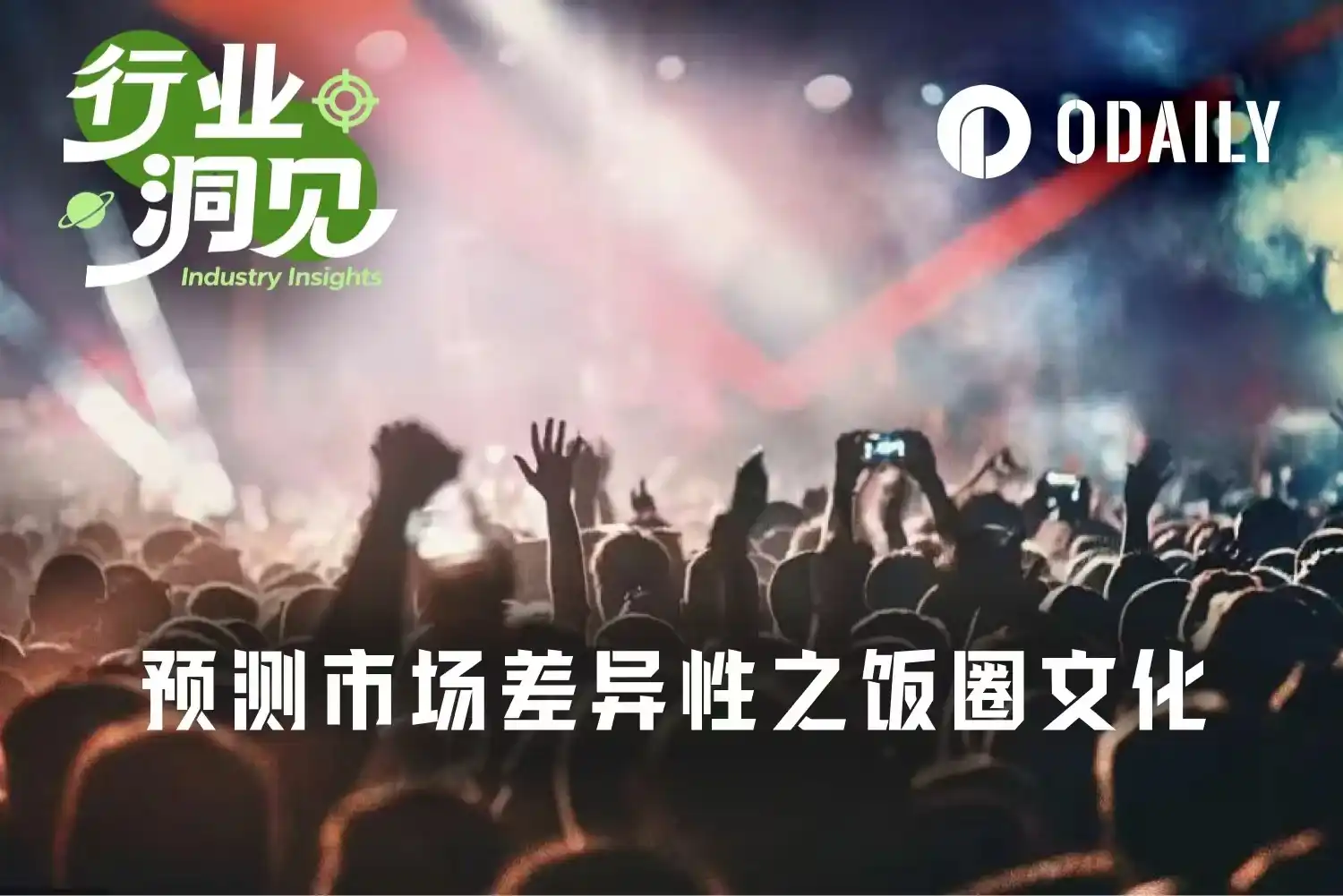
Fan culture is emerging as a key differentiator in the prediction market landscape, shifting competition from infrastructure and liquidity to culturally embedded content strategies. While early platforms like Polymarket and Kalshi gained traction through regulatory compliance and macro-event markets (e.g., elections, geopolitical crises), these public topics lack exclusivity and are easily replicated. Newer platforms, particularly those on BNB Chain with strong Asian user bases, are leveraging fan-driven narratives—such as Binance ecosystem updates, celebrity appearances, or esports outcomes—to create engagement loops that transcend mere speculation. These niche, community-centric markets lower participation barriers, transform betting into narrative participation, and drive higher emotional investment and social sharing. Unlike rational macro-discussions, fan-culture topics thrive on polarized sentiment, rapid dissemination, and cultural context, making them harder for external platforms to replicate. This cultural alignment fosters sustained activity and loyalty, turning prediction platforms into integral parts of community identity rather than just transactional tools. For emerging markets, success hinges not on duplicating Western models but on deeply understanding and serving their unique user demographics—where fan culture isn’t just a growth lever, but a defensible moat.

Author | Asher(@Asher_ 0210)
Public Issues Cannot Form a Moat for Emerging Prediction Markets

The competition in prediction markets is quietly changing.

In the early stages of prediction market development, competition revolved more around "underlying capabilities." Who is more compliant, who can gain regulatory approval, who has deeper liquidity and more efficient market-making structures determines who can first establish market trust. Platforms represented by Polymarket and Kalshi have built markets around macro politics and global major events, gradually establishing clear cognitive advantages and user mindshare in the American context.

However, macro events themselves are not exclusive. Presidential elections, government shutdowns, war outcomes—these topics are inherently public in nature, and any platform can create similar markets. First-mover platforms rely on the accumulation of time and liquidity, not the exclusivity of the content itself. For latecomers, competing on the same topics can only take place on worse liquidity and weaker trust foundations, making it difficult to form a structural difference.

For emerging prediction markets on BNB Chain, if rule design cannot form a barrier, then content structure and cultural positioning may become new competitive variables. It is precisely at this stage that "fan culture" begins to become important.

Fan Culture and Exclusive Content Supply

When prediction market platforms design events around specific ecosystems, figures, or community hotspots, what they provide is no longer a public issue for everyone, but content embedded in a certain circle's context. For example, predict.fun's predictions around Binance ecosystem dynamics, such as "Will the SAFU fund wallet balance change" or "How many posts will CZ make on platform X in a week," are essentially closer to the daily discussion rhythm of the crypto community. They may not have macro significance, but they are often at the center of circle emotions.

This logic becomes more intuitive when placed in a more typical Asian fan scene. For instance, whether G-Dragon will add a last-minute concert, whether Bai Lu will appear at a certain brand press conference, whether Faker will win one more championship before retiring—the appeal of such topics does not come from global attention, but from high-density discussion within the fan circle. They are not public issues, but highly emotionally concentrated topic nodes.

Fan culture here provides another dynamic mechanism. When a community is highly focused on a certain issue, participation itself becomes a way to express an attitude. Betting is no longer just probability judgment, but participating in the narrative. Compared to macro markets that require extensive information analysis, such topics make it easier for people to participate directly and are more likely to drive actual trading and discussion heat in the early stages.

What is truly valuable about fan culture is not the emotion itself, but the fact that once emotions are concentrated, they naturally transform into participation. The denser the discussion, the more active the trading, and the topic itself is continuously amplified.

This may become the biggest difference between emerging prediction markets and top platforms. The former relies on continuous activity within the circle, while the latter relies on the scale advantage of macro issues. The paths are different, and so is the logic.

From Communication Efficiency to Cultural Barriers

Prediction markets are essentially a product driven by discussion. Without discussion, there is no price discovery; without discussion, it is difficult to form sustained participation. The activity level of a platform largely depends on whether topics can be repeatedly spread and amplified.

Discussions on macro issues usually revolve around data and analysis, with a relatively restrained rhythm and a more rational diffusion path. In contrast, issues centered around community figures or controversies naturally have stronger social attributes. Conflicts of立场, faction expression, and emotional participation make them more likely to spread quickly on social media and within communities. In this structure, prediction markets are not just trading tools but become nodes for topic fermentation.

For emerging prediction platforms, communication efficiency itself is a growth lever. A market designed around community controversy is often more likely to form a discussion闭环 than a macro economic event. Participation, sharing, commenting, and re-participation form a cycle of reinforcement; the higher the emotional density, the more concentrated the trading behavior. What fan culture brings is not just heat, but sustainable interaction frequency.

More importantly, when this interaction occurs长期 in the same community context, the communication advantage will gradually沉淀 into cultural binding. Current prediction market platforms on BNB Chain with high community discussion heat, such as Opinion, predict.fun, and Probable , have core users who themselves come from the Asian community. The concentration of user structure naturally embeds the platform into a specific discussion environment and emotional structure.

Under such conditions, prediction markets are no longer just replaceable trading tools, but gradually become part of the community's operation. Macro markets can be copied, but the interaction model built within a specific cultural context is difficult to移植. What fan culture brings is not just short-term activity, but an emotional soil that is harder for external platforms to replicate.

The Asian Path Under Cultural Division

Prediction markets are not an industry where technology creates a gap; what truly determines the direction of a platform is content selection and the cultural soil it binds to.

Liquidity depth, product experience, and the number of events are certainly important, but these are more like entry thresholds, not breakthroughs. For emerging platforms, simply copying热门 events from Polymarket or Kalshi is unlikely to shake the already formed scale and mindshare advantages.

And a number of emerging prediction market platforms have core users who themselves come from the Asian community. Different user structures determine different content logic. Compared to macro political issues, Asian crypto communities emphasize character narratives, ecosystem dynamics, and community interaction more. In this context, designing around community hotspots makes more practical sense than replicating public issues.

The reason fan culture is important is not because it is emotional, but because it naturally fits this user structure. It lowers the participation threshold, improves communication efficiency, and activates real trading behavior in a short time. More crucially, this cultural soil is difficult to simply copy. Once a platform forms a binding with a specific community, the content is no longer just events, but becomes a continuously operating narrative space.

When prediction markets enter the stage of cultural competition, what determines the direction of a platform is no longer just mechanism design, but the depth of understanding of its own user structure. Whoever understands their community better is more likely to hold their ground in a分化 landscape.

This, perhaps, is the real opportunity for emerging prediction markets.

Related Content

Playing in Prediction Markets Every Day, I See These Innovations and Changes

The Underestimated Advantage of Prediction Markets: Counter-Cyclical, Anti-Volatility, Always Something to Play


İlgili Sorular

QWhat is the main competitive variable that emerging prediction markets are shifting towards, according to the article?

AThe article argues that 'fan culture' and cultural positioning are becoming the key differential variables for emerging prediction markets, rather than just compliance, liquidity, or infrastructure.

QHow does fan culture provide a different mechanism for engagement in prediction markets compared to macro events?

AFan culture transforms participation into a form of narrative engagement. Betting is not just about probability judgment but a way to express stance and participate in a community's emotional center, leading to higher discussion density and trading activity.

QWhy might it be difficult for new platforms to compete with established ones like Polymarket by focusing on the same public macro-events?

APublic macro-events are not exclusive and lack inherent barriers to entry. Established platforms have built trust, liquidity, and user recognition over time, making it hard for newcomers to compete on the same topics with worse liquidity and weaker trust.

QWhat long-term advantage does a platform gain by embedding itself within a specific cultural context, according to the article?

AIt builds a cultural barrier and emotional soil that is difficult for external platforms to replicate. The interaction model and narrative space become ingrained in the community's operation, turning content into a sustained narrative rather than just replicable events.

QThe article suggests that the future of prediction platforms is determined by understanding their user base. Which region's user structure is highlighted as having a different content logic?

AThe Asian user base, particularly within crypto communities, is highlighted. Their content logic emphasizes personality narratives, ecosystem dynamics, and community interaction over macro-political issues, which is more suited to fan-culture-driven markets.

İlgili Okumalar

Wall Street Morning Report: AI + Cloud Computing Takes Over the Market Again, Amazon Knocks on the Door of $3 Trillion

Wall Street's August began with a strong rally, driven by easing Middle East tensions as President Trump signaled progress on U.S.-Iran talks, prompting a sharp drop in oil prices. Major indices hit record or near-record highs, with the Dow Jones Industrial Average up 1.32%, the Nasdaq Composite surging 2.13%, and the S&P 500 rising 1.48%. The energy sector was the sole decliner. The AI and cloud computing narrative dominated the tech rally. The "Magnificent Seven" index jumped 3.6%. Amazon's market cap surpassed $3 trillion for the first time following robust AWS results, while Nvidia regained a $5 trillion valuation. Meta, Google, and Microsoft also posted significant gains. Other AI-related stocks like Palantir, CoreWeave, and various semiconductor and infrastructure companies saw strong advances. In other markets, gold held above $4,000, supported by central bank buying. Treasury yields fell as oil prices dropped. The U.S. dollar remained stable despite strong manufacturing data. Japan's substantial currency intervention raised concerns, but U.S. officials reassured markets about the mechanism used. Key events ahead include major industry conferences (Ai4 2026, FMS Summit) and earnings reports from companies like SpaceX, AMD, and Pfizer. The White House is also set to host a meeting with leading AI firms to discuss regulatory frameworks.

marsbit1 saat önce

Wall Street Morning Report: AI + Cloud Computing Takes Over the Market Again, Amazon Knocks on the Door of $3 Trillion

marsbit1 saat önce

The July Tech Stock Pullback: Which Funds Are Paying the Price for Buying High?

In July, China's technology stocks experienced a sharp correction, causing significant pain for actively managed mutual funds that aggressively increased their holdings in the sector during the second quarter. The sell-off saw major indices like the ChiNext and STAR 50 fall over 25% and 28% for the month, respectively. Funds that piled into tech at its June peak faced steep losses. Notably, several veteran "value investor" fund managers, known for long-term holdings in consumer staples, made dramatic shifts. Star managers like Zhang Kun (E Fund Blue Chip Selected) and Liu Yanchun (Invesco Great Wall Dingyi) drastically reduced positions in liquor stocks like Kweichow Moutai, switching instead to semiconductor and AI hardware companies like SMIC and Ingenic International. Data shows active equity funds' allocation to the electronics sector reached a historical high of 42.64% by end-Q2. Around 67 funds saw their TMT (Technology, Media, Telecom) weighting surge from an average of 6.75% to 54.99%. The consequences were severe in July: these high-TMT funds fell an average of over 20%, with 12 plunging more than 40%. Examples include Jinhua High-Quality Growth and Guoshou Anbao Wenhui, which fell 26.34% and nearly 40% respectively after raising TMT weights above 70%. The article also highlights issues of "style drift," where funds with names like "high-dividend" held high-P/E tech stocks instead, confusing investors. Newly launched funds suffered even more. For instance, Guotai Haitong New Energy RuiXuan Hybrid, launched in mid-June, saw its net asset value plummet to 0.5509 yuan by July 30, a loss of nearly 45%. Analysts note the extreme sector concentration mirrored past bubbles (e.g., 2021 new energy). The intense, crowded trade itself became a major risk. While tech stocks rebounded sharply on July 31, the funds that chased the high face a longer-term market test.

marsbit1 saat önce

The July Tech Stock Pullback: Which Funds Are Paying the Price for Buying High?

marsbit1 saat önce

Dalio's Warning: AI Bubble Is Here, Gold Is the Hard Asset

Ray Dalio, founder of Bridgewater Associates, warns that the AI sector is currently in a bubble, drawing parallels to historical examples like the 1929 crash and the dot-com bubble. He explains that revolutionary new technologies lead to excessive excitement and investment, often with investors ignoring price fundamentals and taking on debt, which ultimately creates unsustainable asset valuations. Dalio outlines three key signs that a bubble is about to burst: 1) Rising interest rates, which force asset sales for liquidity. 2) A significant increase in stock supply as companies issue more shares. 3) A shift in ownership from steadfast institutional investors to less knowledgeable, often leveraged, retail investors. To navigate the potential downturn, he strongly advocates for a diversified investment portfolio, criticizing cash as a poor long-term store of value due to inflation. He specifically recommends allocating 5-15% of a portfolio to gold, which he views as a unique "hard asset" and an effective hedge because it is no one else's liability. In contrast, he is skeptical of Bitcoin as "digital gold," citing potential vulnerabilities to future technologies like quantum computing and government intervention. Regarding the AI revolution, Dalio believes the primary beneficiaries will be capitalists who own the automating technology, potentially exacerbating wealth inequality as machines replace both physical and increasingly complex cognitive labor. However, he concludes that humans with exceptional intelligence and strong collaborative skills will continue to thrive by leveraging uniquely human traits like emotion and intuition that AI cannot replicate. Finally, touching on his theory of long-term cycles, Dalio suggests the world is currently approaching a significant inflection point in an approximate 80-year cycle of changing world orders.

marsbit1 saat önce

Dalio's Warning: AI Bubble Is Here, Gold Is the Hard Asset

marsbit1 saat önce

İşlemler

Spot
活动图片