"How many shares does he have?"
"50,000 shares."
"That's a huge profit!"
"But they can't be sold for another 3 years..."
At 11:45 am on July 27th, a Time Weekly reporter overheard the above conversation among employees while dining near ChangXin Technology's (688825.SH) Hefei headquarters.
They all wore blue work badges, with the clear "CXMT" logo printed on the lanyards, making them easily identifiable as ChangXin Technology employees.
On July 27th, ChangXin Technology's stock price surged more than fivefold at market open. By the close, ChangXin Technology was quoted at 49 yuan per share, with a market capitalization reaching 3.28 trillion yuan, making it the highest-valued company on the A-share market.
However, the frenzy surrounding ChangXin Technology's stock price had no immediate connection to its grassroots employees. One employee revealed to Time Weekly that the company's equity incentive plan has clear job-level thresholds; only those at Level 9 (Section Chief) or above are eligible to participate, while the majority of ordinary employees are concentrated at Levels 11 and 12.
ChangXin Technology also maintains extremely strict external information control. A Time Weekly reporter attempted to contact employees for interviews through various channels, but most stated that "leadership has already instructed us not to accept any external interviews." They added that being found conducting private interviews could lead to dismissal in serious cases.
When the reporter attempted to take photos at the campus entrance, security guards from multiple areas came forward to dissuade them, explicitly stating that photography was prohibited. Even passersby smoking at the entrance were approached and asked to stop by security.
The strict campus controls have not, however, hindered the spillover effects of the industry. ChangXin Technology has tangibly driven the development of the surrounding area.
A Time Weekly investigation found that restaurants in the commercial street southeast of the campus are bustling with customers, supporting commercial districts north of the campus are under construction, and the Phase II construction site to the west has gathered a large number of migrant workers. The area has transformed from desolate construction sites into commercial zones, with property prices also climbing to over ten thousand yuan per square meter.
Hefei's Chip Giant: The Wealth Creation Myth in the Eyes of Grassroots Employees
Beyond the market fervor of its listing day, the work pace and daily operations within ChangXin Technology's campus continued along their established tracks.
Like most companies in Hefei, ChangXin Technology's workday also starts at 8:30.
By 9:00 am, the campus parking lot was already full. The bicycle sheds within the campus and the non-motorized vehicle parking spaces along the surrounding roads were also packed with electric scooters.
△Source: Time Weekly Photo
"Most of us have to hand in our phones during work hours," an employee told Time Weekly. Employees in R&D and wafer fabrication workshops are required to surrender their phones—the workshops due to cleanroom production requirements, and technical positions due to confidentiality needs. Upon entering R&D areas, phones must be stored uniformly.
"The working hours are similar. We work until 11:30 am, then have a lunch break until 1:00 pm," the employee added.
Overtime is the norm in the chip industry, and ChangXin Technology is no exception.
"For R&D, working until 9 or 10 pm is standard. Weekends also require on-duty shifts to ensure someone is always present. Some also voluntarily come to the office on weekends if their work isn't finished," an employee revealed. Overtime pay is not directly disbursed but is factored into quarterly bonuses and performance evaluations.
According to ChangXin Technology employees, the company's job level system is very detailed: Bachelor's degree graduates start at Level 12, Master's degree graduates at Level 11. Each level is further divided into A and B grades. Level 9 corresponds to Section Chief.
Regarding salary, "It doesn't reach 300,000 yuan, but 200,000 yuan is attainable, which is considered relatively high in Hefei," several employees explained.
Faced with widespread online claims about ChangXin employees "forming groups to buy houses," "wealth creation myths," and "net worth exceeding millions," interviewed ChangXin employee Wang Ming (a pseudonym) stated, "The frenzy surrounding ChangXin Technology's stock price has no immediate connection to grassroots employees."
One employee revealed to Time Weekly that the company's equity incentive plan has clear job-level thresholds; only those at Level 9 (Section Chief) or above are eligible to participate, while the majority of ordinary employees are concentrated at Levels 11 and 12.
"We haven't been with the company long. Normally, there are level restrictions; you need to reach the corresponding level to be eligible to buy shares," the employee said. When asked if purchases are made through an employee stock ownership platform, he indicated he had no relevant information and was unclear on the details.
The Still-Expanding Campus: Transforming the Area from Construction Sites to a Hub
Beyond the already operational production lines and R&D buildings, ChangXin Technology's expansion continues.
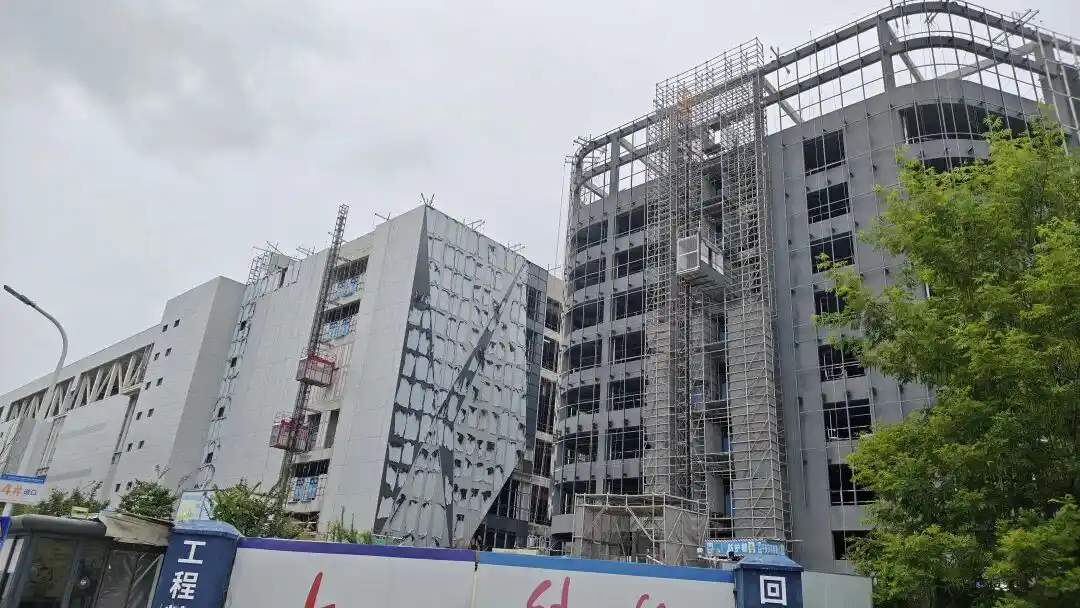
The aforementioned employee mentioned that they previously worked at a different location and only moved to the current campus last year. The newly constructed factory buildings are expected to be completed by the end of this year, with the wafer fabrication area located right next to the R&D building.
△Image Source: Time Weekly Photo
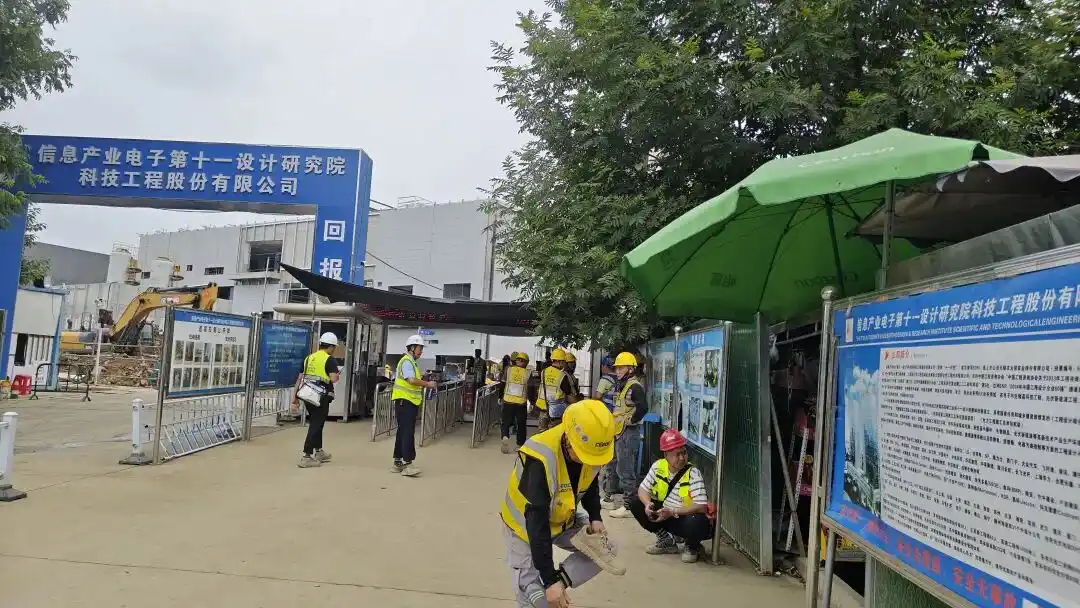
Time Weekly's visit found that the construction at the southwest gate of the campus is ChangXin Technology's Phase III project, contracted by the Information Industry Electronics Eleventh Design & Research Institute Science and Technology Engineering Co., Ltd. ("Eleventh Institute"), a wholly-owned subsidiary of the listed company TaiJi实业 (600667.SH).
△Image Source: Time Weekly Photo
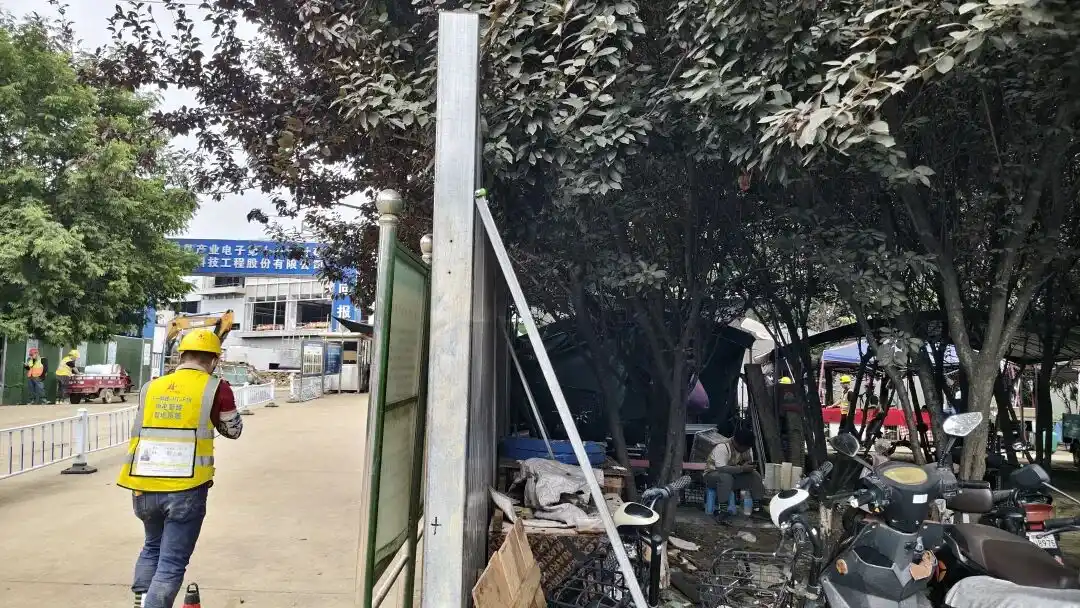
The periphery of the construction site has gathered a large number of workers, attracting mobile vendors selling meals, snacks, drinks, and cigarettes, with their tents lined up in a row. Separated by a single wall, one side features a modern wafer fab construction site, while the other side presents a lively consumption scene for migrant workers.
△Image Source: Time Weekly Photo
Many construction workers couldn't clearly state their specific contractor, but everyone knew this site was for the famous ChangXin Technology.
A person at the site told Time Weekly that ChangXin Technology currently has 11 ongoing construction projects, with bases also under construction in other areas of Hefei, Beijing, and Shanghai's Pudong New District.
Around the Phase III project, a cluster of supporting industrial chain enterprises has already gathered. Across the street from ChangXin Technology are the Xinqiao Integrated Circuit Industrial Park and Hefei Peidun Storage Technology Co., Ltd. Guanggang Gas (688548.SH) also has a supporting station within the campus.
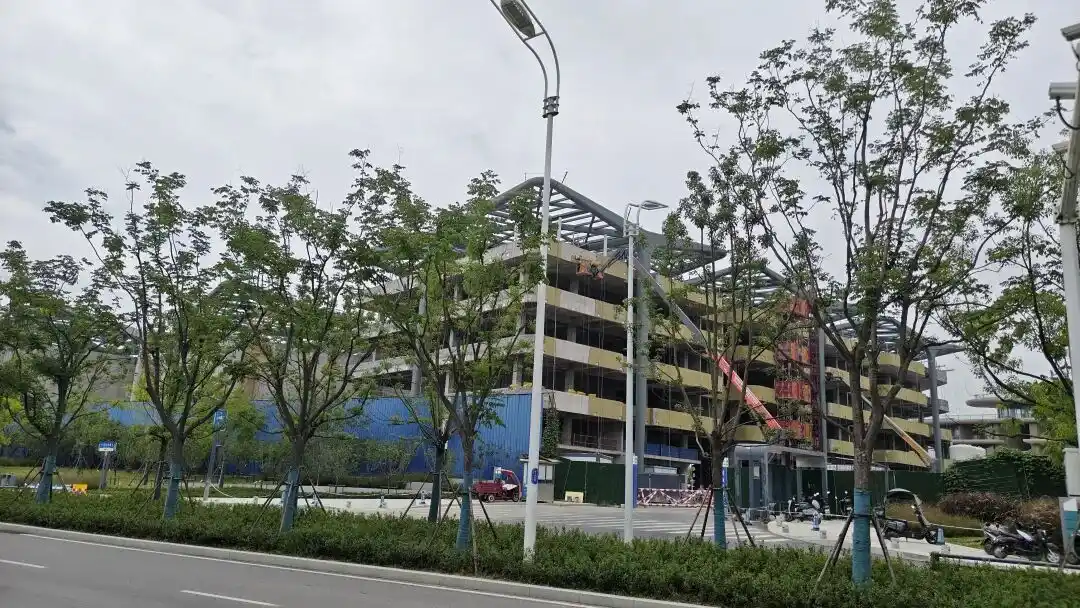
The area north of the campus is surrounded by lawns and running tracks, creating a clean and open environment. Across the road is OCT (华侨城). A person working near the main gate told Time Weekly that a commercial district is being built opposite.
△Image Source: Time Weekly Photo
Notably, the entire ChangXin Technology industrial park is surrounded by high-voltage electric fencing, with a security level far exceeding that of ordinary industrial parks.
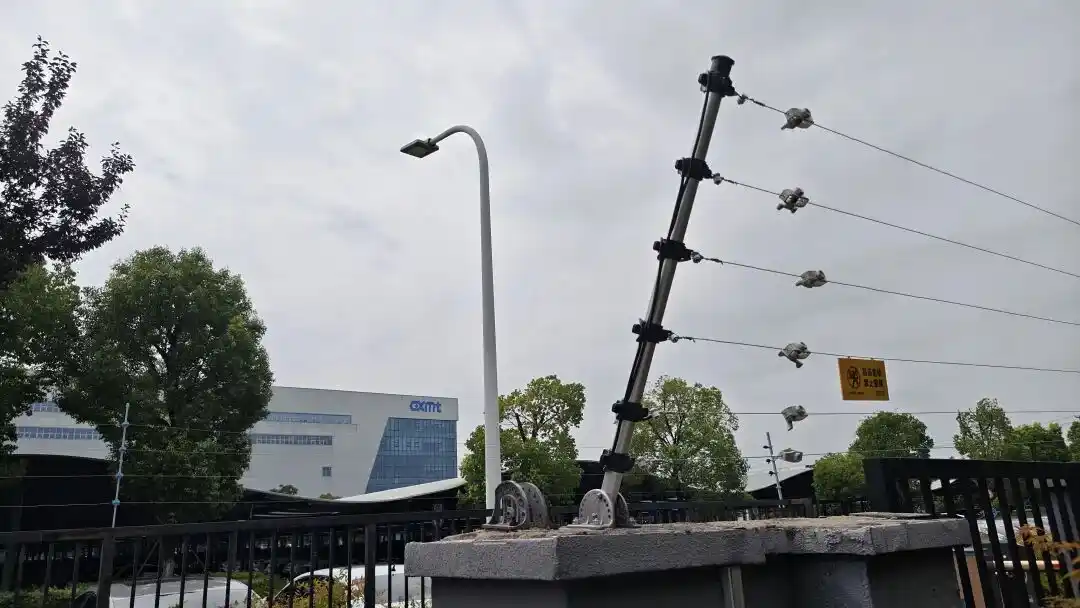
△Image Source: Time Weekly Photo
Walking and stopping to circle the entire ChangXin Technology campus took the Time Weekly reporter over two hours. Corresponding to the vast campus is the economic takeoff of the surrounding area.
"This place used to be farmland. Who would have thought there'd be such a huge factory here now," a rideshare driver living in a resettlement community near ChangXin Technology told Time Weekly. He revealed that since 2021, property prices in the Changgang area have been driven up by ChangXin Technology, peaking at over ten thousand yuan per square meter. "It's dropped quite a bit in recent years, but it's still around seven or eight thousand per square meter now."
In fact, ChangXin Technology is located over 40 kilometers from Hefei's main urban center, in what is considered the "outer ring of the outer ring" of Hefei. Taking just a few more steps beyond, the high-rises disappear, replaced entirely by villages and small roads.
Besides housing, the commercial streets here exhibit a clear tidal pattern—bustling and packed with customers during the morning, noon, and evening hours when ChangXin Technology employees get off work, but becoming almost deserted during work hours.
Particularly at the intersection of Shuofang Road and Jinlianhua Road, dubbed the core area of the "Changgang CBD" by locals, there's a strong sense of lively, everyday life. Every day around 5 pm, food carts collectively emerge, forming a long corridor around the area to provide meals for ChangXin Technology employees.
A restaurant owner told Time Weekly that from the early construction phase when the area was dominated by construction workers, to the current stage with multiple factory areas standing tall, the consumer base has shifted to ChangXin Technology employees and workers from supporting enterprises. The Changgang area has thus transformed from desolate construction sites into a bustling industrial hub.
This article is from the WeChat public account "Time Weekly" (ID: timeweekly), author: Guan Yue