Event Preview: Creating Pop Culture with Prompts | Super Creator Live

marsbit2026-04-01 tarihinde yayınlandı2026-04-01 tarihinde güncellendi

Özet

Event Preview: Creating Pop Culture with Prompts | Super Creator Live In 1970s South Bronx, New York, resourceful young people transformed record players into instruments by looping beats, birthing hip-hop and demonstrating how culture emerges from playful, rule-breaking creativity. Similarly, today’s AI technology is often narrowly viewed through a lens of economic efficiency—yet its true potential may lie beyond utilitarian applications. This event, co-hosted by Beating and West Sea Radio, invites creators to explore AI’s expressive, cultural, and emotional possibilities. We seek demos—whether games, films, music, or emotionally resonant experiments—that use AI to turn unique ideas into tangible creations. This gathering aims to connect creators, investors, and audiences, fostering a space for unconventional thinking. By enabling individuals to transform personal stories and emotions into shareable art, AI is democratizing pop culture—shifting it from top-down production to a participatory, prompt-driven movement. Join us to help shape this new wave.

In the South Bronx of the 1970s, resources were scarce, but the party had to go on. Young people who couldn't afford live bands brought home turntables to street corners and abandoned warehouses, dancing joyfully to the beat of the drums.

Before this, playing records was a ritual of step-by-step precision. Dust had to be wiped away, the record placed, the switch pressed, and the needle set down. After a few faint, intermittent crackles, the melody would rise from the background noise.

"It feels a bit too rigid."

That's what the young people of half a century ago thought as they repeatedly switched between the same drum breaks, cueing, looping, and looping again. In the never-ending rhythm, they turned a machine meant for playing back music into a brand new instrument. What happened next, we all know: these self-proclaimed "DJs" single-handedly created Hip-Hop, unleashing a torrent of vibrant energy that flows to this day.

Most moments in the birth of pop culture share a similar history—myths from imagination to popularity, constantly "played" out by those who refuse to be disciplined by convention, in a spirit of defiance.

There's no doubt that our era loves change more than any before. In the horizon of time built by imagination, human civilization, still toddling within the solar system, is in its most energetic years, so technological development also carries an unstoppable momentum.

Faced with the surging wave of AI, many people feel a sense of disorienting anxiety. Subconsciously, we take it for granted that cutting-edge technology must be used for economically rational purposes. So, in calculations of cost reduction and efficiency gains, we repeatedly sketch out that seemingly more powerful and cheaper virtual labor force.

"It feels a bit too rigid."

I wonder if you resonate with those young people on the streets back then. Just as no one said turntables could only play music, if we don't do the "serious business" mentioned above, what else can AI do?

We want to see the fun and spirit that spills out when you cross swords with AI experts. Thus, Beating and our old friends at West Sea Radio have co-planned another offline gathering, giving it a somewhat cheeky name—"Super Creator Live."

Super, an adjective反复出现的形容词 in those热血少年漫画热血少年漫画 (hot-blooded少年少年少年少年少年少年少年少年少年少年少年少年少年少年少年少年少年少年少年少年少年少年少年少年少年少年少年少年少年少年少年少年少年少年少年少年少年少年少年少年少年少年少年少年少年少年少年少年少年少年少年少年少年少年少年少年少年少年少年少年少年少年少年少年少年少年少年少年少年少年少年少年少年少年少年少年少年少年少年少年少年少年少年少年少年少年少年少年少年少年少年少年少年少年少年少年少年少年少年少年少年少年少年少年少年少年少年少年少年少年少年少年少年少年少年少年少年少年少年少年少年少年少年少年少年少年少年少年少年少年少年少年少年少年少年少年少年少年少年少年少年少年少年少年少年少年少年少年少年少年少年少年少年少年少年少年少年少年少年少年少年少年少年少年少年少年少年少年少年少年少年少年少年少年少年少年少年少年少年少年少年少年少年少年少年少年少年少年少年少年少年少年少年少年少年少年少年少年少年少年少年少年少年少年少年少年少年少年少年少年少年少年少年少年少年少年少年少年少年少年少年少年少年少年少年少年少年少年少年少年少年少年少年少年少年少年少年少年少年少年少年少年少年少年少年少年少年少年少年少年少年少年少年少年少年少年少年少年少年少年少年少年少年少年少年少年少年少年少年少年少年少年少年少年少年少年少年少年少年少年少年少年少年少年少年少年少年少年少年少年少年少年少年少年少年少年少年少年少年少年少年少年少年少年少年少年少年少年少年少年少年少年少年少年少年少年少年少年少年少年少年少年少年少年少年少年少年少年少年少年少年少年少年少年少年少年少年少年少年少年少年少年少年少年少年少年少年少年少年少年少年少年少年少年少年少年少年少年少年少年少年少年少年少年少年少年少年少年少年少年少年少年少年少年少年少年少年少年少年少年少年少年少年少年少年少年少年少年少年少年少年少年少年少年少年少年少年少年少年少年少年少年少年少年少年少年少年少年少年少年少年少年少年少年少年少年少年少年少年少年少年少年少年少年少年少年少年少年少年少年少年少年少年少年少年少年少年少年少年少年少年少年少年少年少年少年少年少年少年少年少年少年少年少年少年少年少年少年少年少年少年少年少年少年少年少年少年少年少年少年少年少年少年少年少年少年少年少年少年少年少年少年少年少年少年少年少年少年少年少年少年少年少年少年少年少年少年少年少年少年少年少年少年少年少年少年少年少年少年少年少年少年少年少年少年少年少年少年少年少年少年少年少年少年少年少年少年少年少年少年少年少年少年少年少年少年少年少年少年少年少年少年少年少年少年少年少年少年少年少年少年少年少年少年少年少年少年少年少年少年少年少年少年少年少年少年少年少年少年少年少年少年少年少年少年少年少年少年少年少年少年少年少年少年少年少年少年少年少年少年少年少年少年少年少年少年少年少年少年少年少年少年少年少年少年少年少年少年少年少年少年少年少年少年少年少年少年少年少年少年少年少年少年少年少年少年少年少年少年少年少年少年少年少年少年少年少年少年少年少年少年少年少年少年少年少年少年少年少年少年少年少年少年少年少年少年少年少年少年少年少年少年少年少年少年少年少年少年少年少年少年少年少年少年少年少年少年少年少年少年少年少年少年少年少年少年少年少年少年少年少年少年少年少年少年少年少年少年少年少年少年少年少年少年少年少年少年少年少年少年少年少年少年少年少年少年少年少年少年少年少年少年少年少年少年少年少年少年少年少年少年少年少年少年少年少年少年少年少年少年少年少年少年少年少年少年少年少年少年少年少年少年少年少年少年少年少年少年少年少年少年少年少年少年少年少年少年少年少年少年少年少年少年少年少年少年少年少年少年少年少年少年少年少年少年少年少年少年少年少年少年少年少年少年少年少年少年少年少年少年少年少年少年少年少年少年少年少年少年少年少年少年少年少年少年少年少年少年少年少年少年少年少年少年少年少年少年少年少年少年少年少年少年少年少年少年少年少年少年少年少年少年少年少年少年少年少年少年少年少年少年少年少年少年少年少年少年少年少年少年少年少年少年少年少年少年少年少年少年少年少年少年少年少年少年少年少年少年少年少年少年少年少年少年少年少年少年少年少年少年少年少年少年少年少年少年少年少年少年少年少年少年少年少年少年少年少年少年少年少年少年少年少年少年少年少年少年少年少年少年少年少年少年少年少年少年少年少年少年少年少年少年少年少年少年少年少年少年少年少年少年少年少年少年少年少年少年少年少年少年少年少年少年少年少年少年少年少年少年少年少年少年少年少年少年少年少年少年少年少年少年少年少年少年少年少年少年少年少年少年少年少年少年少年少年少年少年少年少年少年少年少年少年少年少年少年少年少年少年少年少年少年少年少年少年少年少年少年少年少年少年少年少年少年少年少年少年少年少年少年少年少年少年少年少年少年少年少年少年少年少年少年少年少年少年少年少年少年少年少年少年少年少年少年少年少年少年少年少年少年少年少年少年少年少年少年少年少年少年少年少年少年少年少年少年少年少年少年少年少年少年少年极客漫画), is here to cheer on your "rule-breaking" ideas.
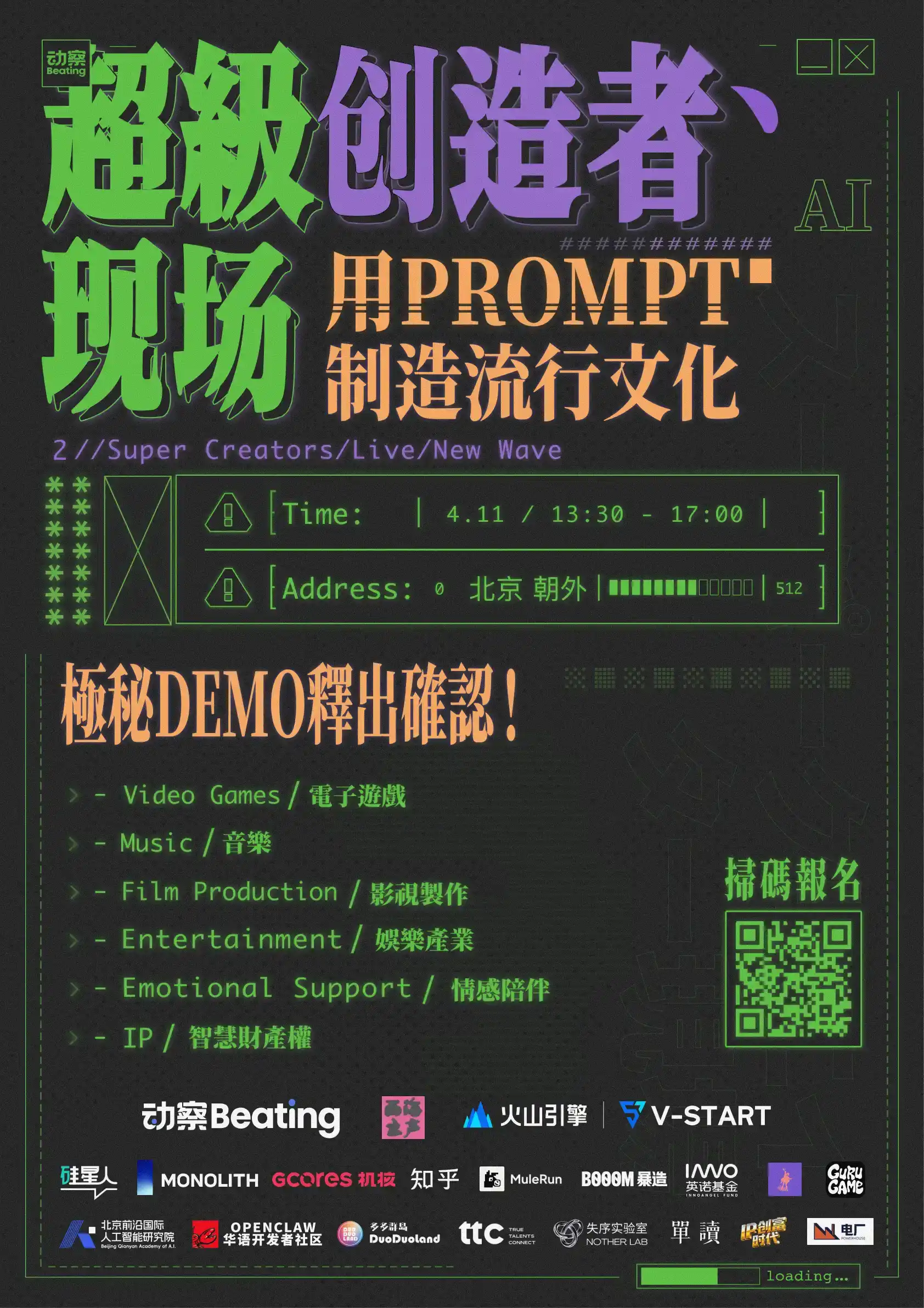
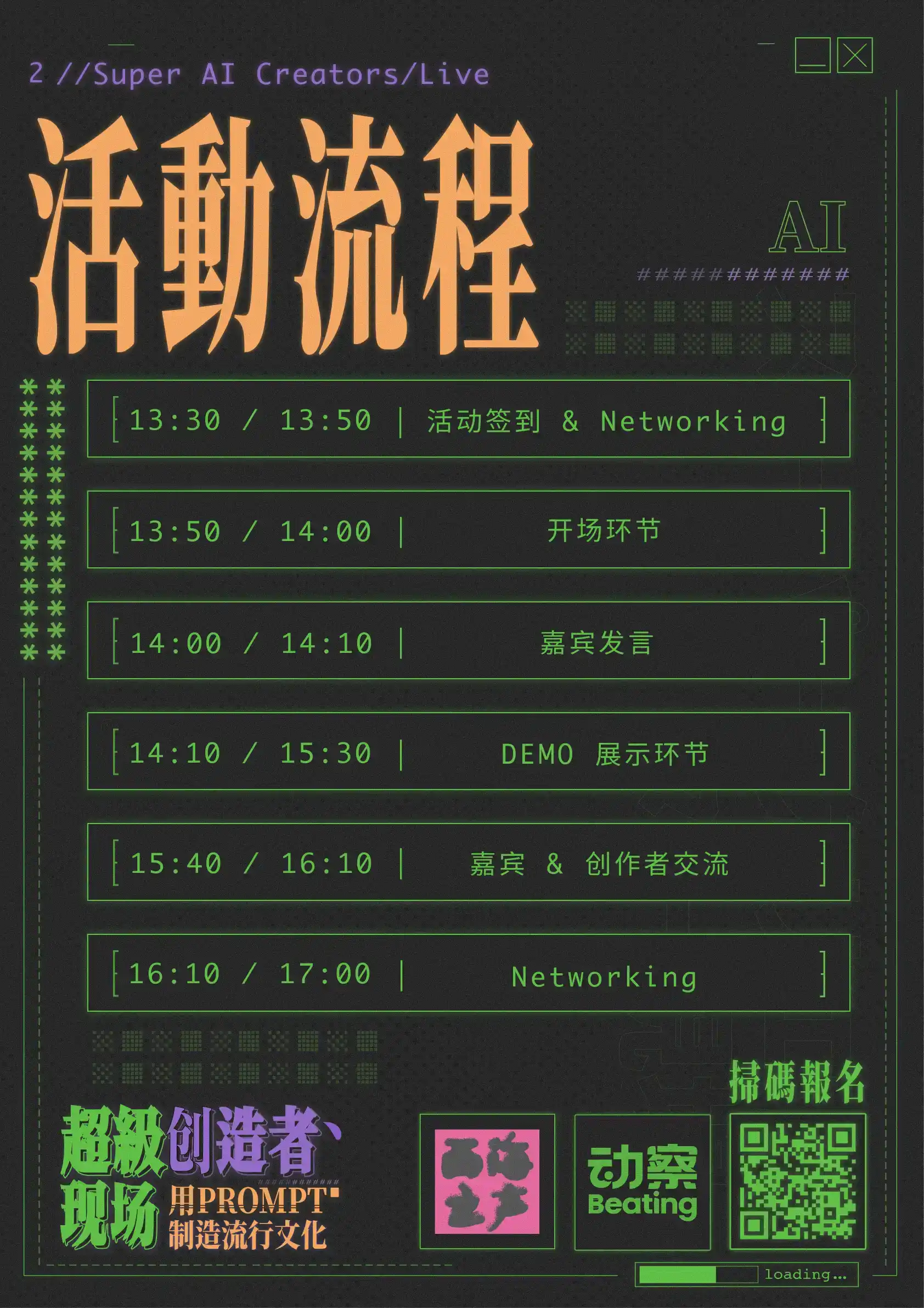
Beyond economic rationality, pop culture, emotional value, and fun creativity are also indispensable pieces of the world we live in.

A complete world is not just about the infrastructure of steel and concrete. One of the most important driving forces behind the popularization of technology is its silent infiltration into the daily lives of ordinary people: it's the music that makes someone hit repeat late at night, the short films that make people laugh and cry, the interactive games that carry joy and sorrow.

In the past, if you wanted to produce an album, shoot a short film, or create a game, you faced high financial barriers and technical walls. Pop culture back then was manufactured top-down by a few large institutions, and the masses could only sit in the audience, being dutiful consumers.

But now, if you have a great idea in your head and a strong desire to express it, AI can assist you in creating, giving form to your creativity.

Thus, we are also opening Demo recruitment for this event.
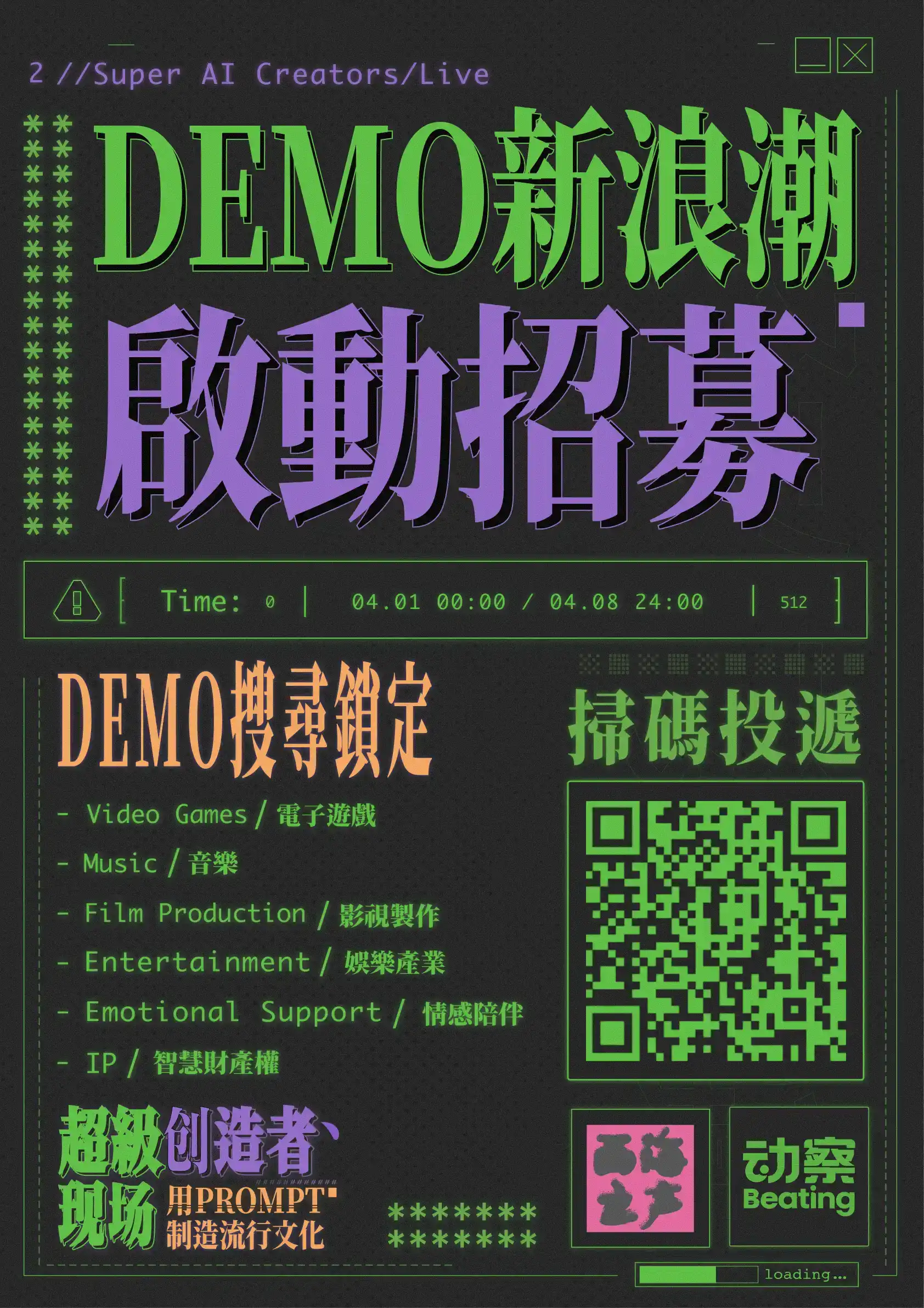
If you're tinkering with some interesting products using AI, whether it's games, film and TV, music, or just weird things that provide emotional value, as long as it carries your expression and creativity, we welcome you to scan the code to submit your Demo and bring it to the event. (Whether you submit or not, we suggest scanning the code to take a look—there's a surprise.)

Come碰撞 (collide) with like-minded creators, chat with sharp investors, and meet potential users face-to-face. This is a field for wild ideas to freely碰撞 (collide), letting those seemingly "unserious" thoughts come out into the sun.

When everyone can use AI to turn their emotions, stories, and quirks into images, music, virtual companions, or interactive entertainment products, the production logic of pop culture is completely overturned. It is no longer a monopolized privilege but a new wave that everyone can participate in and create with Prompts.

We believe that the pop culture of the new era is being written line by line by us with Prompts.

Registration link: https://luma.com/7nkw0r3m

We'll see you there.
İlgili Sorular

QWhat historical event in the 1970s is mentioned as the origin of Hip-Hop culture?

AIn the 1970s in the South Bronx, New York, young people who couldn't afford live bands brought home turntables to street corners and abandoned warehouses, repeatedly switching and looping the same drum beats, turning the record player into a new instrument and creating Hip-Hop.

QWhat is the main theme of the 'Super Creator Live' event mentioned in the article?

AThe event focuses on using AI not just for economic efficiency but for creating popular culture, emotional value, and fun ideas, encouraging people to use prompts to participate in and create new waves of culture.

QHow does the article suggest AI is changing the production logic of popular culture?

AAI lowers the financial and technical barriers that once restricted cultural production to large institutions, allowing anyone with ideas and expression to use AI to create music, films, games, or other emotional products, democratizing cultural creation.

QWhat kind of projects is the event looking for in its Demo recruitment?

AThe event welcomes demos of interesting products made with AI, including games, films, music, or any quirky creations that carry personal expression and creativity, regardless of whether they serve conventional 'serious' purposes.

QWhat is the significance of the phrase '好像有点太死板了' (It seems a bit too rigid) in the context of the article?

AThe phrase reflects a rejection of rigid, conventional uses of technology—first with record players being used creatively for music mixing instead of just playback, and now with AI being used for imaginative cultural creation beyond mere economic efficiency.

İlgili Okumalar

From South Korea to the United States: Blue-Collar Jobs Are Becoming Increasingly Popular, Thanks to AI

AI is reshaping the labor market's value proposition. The traditional four-year college degree is losing its appeal as a guaranteed career path, while skilled blue-collar trades like electricians, welders, and plumbers are experiencing historic demand and wage premiums. This shift is driven by dual pressures: AI's displacement of certain white-collar roles and a booming need for physical infrastructure and data center construction. Data confirms the trend. In the U.S., vocational school revenue surged, and a significant portion of recent layoffs are AI-related. Surveys show a majority of Gen Z adults plan to pursue blue-collar work, citing better job security against AI automation. Vocational education interest has exploded recently. Experts cite a psychological shift as younger generations seek tangible, AI-resistant careers and avoid high student debt. In many cases, salaries for skilled trades now match or exceed those requiring a bachelor's degree. In South Korea, semiconductor vocational high schools boast near-total employment, with graduates securing high-paying roles at companies like Samsung. The shortage is structural, exacerbated by a retiring baby boomer workforce and massive infrastructure projects. Companies like JPMorgan Chase, Meta, and Lowe's are investing heavily in training programs. However, overcoming historical stigma and a "perception gap" around trade careers remains a key challenge to closing the talent gap.

marsbit27 dk önce

From South Korea to the United States: Blue-Collar Jobs Are Becoming Increasingly Popular, Thanks to AI

marsbit27 dk önce

Qualcomm: AI Hype Subsides, When Will Smartphones Emerge from the Gloom?

Qualcomm reported its Q3 FY2026 results (ending June 2026), with revenue of $9.95B, down 4% YoY but above expectations. Gross margin declined to 53.1%, pressured by rising costs across manufacturing and memory. Key business segments showed mixed performance: Handset revenue fell 19.6% YoY to $5.09B, dragged by an 11% decline in non-Apple Android shipments and weaker high-end mix. Conversely, Automotive revenue surged 61% to $1.59B, and IoT grew 9% to $1.83B. Core operating profit dropped 41% YoY due to margin compression and higher expenses. Management's Q4 FY2026 guidance projects revenue of $9.7B-$10.5B, in line with consensus, but Non-GAAP EPS guidance of $2.05-$2.25 fell short of expectations. Amidst persistent weakness in its core handset market, Qualcomm is pursuing growth in AI, focusing on Edge AI (smartphones, PCs, automotive) and Data Center AI. Its data center strategy includes four pillars: AI accelerators (e.g., AI200), commercial CPUs (Dragonfly C1000), custom silicon, and connectivity solutions. While these initiatives initially boosted its stock, concerns over AI capital expenditure sustainability have since erased those gains. The company targets $5B in data center revenue for FY2027 and $15B for FY2029. The report concludes that with the traditional handset business still under pressure, the data center opportunity is currently viewed as a longer-term option, and a more conservative valuation based on core operations may be warranted until AI contributions materialize.

marsbit31 dk önce

Qualcomm: AI Hype Subsides, When Will Smartphones Emerge from the Gloom?

marsbit31 dk önce

From TPU to Self-Evolving Agents: How Jeff Dean Predicts the Next Step in AI

At the 2026 YC Startup School, Jeff Dean outlined his vision for AI's next phase, shifting focus from simply scaling models to building intelligent, autonomous systems. He believes AI's progress is no longer just about creating smarter models, but about integrating them into systems capable of long-term, iterative work, automated experimentation, and continuous learning. This evolution moves the competition from "who has the bigger model" to "who can best organize intelligence." Dean suggests AI capabilities are now comparable to a junior engineer, enabling the automation of complex workflows. However, the true challenge and opportunity lie in managing these AI "workers" at scale. He emphasizes the importance of **context engineering**—structuring tools, memory, and feedback loops—over raw model power. For startups, this means building deep expertise in niche domains where general models currently fail (near 0-1% success rates), leveraging proprietary data, specialized tools, and domain-specific evaluators. A recurring theme is re-examining fundamental constraints. Dean's past work, like moving Google's search index to memory or creating the TPU, stemmed from questioning outdated assumptions about hardware and cost. He sees similar inflection points today, particularly in **specialized inference hardware** to drastically reduce latency and energy consumption for real-time Agent operation. Notably, he points out that in modern AI systems, the dominant cost is often not computation but **data movement**. Reliable, long-running Agents require robust system design, borrowing concepts from distributed computing like checkpointing, state management, and parallel exploration to handle failures and maintain progress over days or weeks. As AI automates execution, the scarcest human skills will shift to **defining clear specifications**, **judging what problems are worth solving** (taste), and designing effective feedback loops. Ultimately, Dean's framework prioritizes understanding the problem deeply, identifying the true bottlenecks, and systematically building closed-loop systems where AI can not only perform tasks but also improve AI itself.

marsbit31 dk önce

From TPU to Self-Evolving Agents: How Jeff Dean Predicts the Next Step in AI

marsbit31 dk önce

İşlemler

Spot
活动图片





