European Banks Launch Qivalis to Issue Euro-Pegged Stablecoin

TheNewsCrypto2026-01-24 tarihinde yayınlandı2026-01-24 tarihinde güncellendi

The association of 10 European banks has made a firm known as Qivalis to roll out a euro-pegged stablecoin, as per an announcement from the group. This step focuses on offering an alternative to U.S. dollar-denominated digital payment systems.

The participating banks comprise BNP Paribas, ING, UniCredit, Banca Sella, KBC, DekaBank, Danske Bank, SEB, Caixabank and Raiffeisen Bank International. BNP Paribas joined forces with the consortium after the original announcement, as per the group.

It is anticipated that the token will roll out in the second half of this year, pending regulatory approval and licensing, as per the consortium. An ex-CEO of Coinbase Germany, Jan-Oliver Sell, will act as chief executive of Qivalis, and Howard Davis, ex-chair of NatWest, got appointed as chair.

The Plans For Broadening

The company has planned to hire 45 to 50 employees in the upcoming two years, having 1/3rd of the positions filled so far, as per the company. In the beginning, the stablecoin will aim for cryptocurrency trading, providing near-instant, low-cost payments and settlements, and will have plans to widen use cases later, as per the consortium.

This step is followed by a quick surge, mainly in U.S. dollar-backed tokens like Tether. Euro-pegged alternatives are not unlimited in the market. Societe Generale’s SG-FORGE has 64 million euros in circulation in recent times, as per the available data.

Regulators such as the European Central Bank have elevated concerns that private stablecoins could redirect funds from regulated banking institutions and impact monetary policy.

Qivalis is looking for an Electronic Money Institution licence from the Dutch central bank and has worked with the ECB, which further supported a European-led solution to ensure strategic autonomy in payments, as per the sources close to the discussions.

Another group of banks in Europe and the US is also looking for stablecoin issuance, showing surged institutional interest in digital currencies, as per the industry reports.

Highlighted Crypto News Today:

Ripple CEO Brad Garlinghouse Expects Crypto Market to Reach New High in 2026

TagsEuroEuropean central bankStablecoin

İlgili Sorular

QWhat is the name of the new firm established by the 10 European banks to issue a euro-pegged stablecoin?

AQivalis

QWhich major French bank joined the consortium after the original announcement?

ABNP Paribas

QWho has been appointed as the chief executive of Qivalis?

AJan-Oliver Sell, the ex-CEO of Coinbase Germany

QWhat type of license is Qivalis seeking from the Dutch central bank?

AAn Electronic Money Institution licence

QWhat is one of the primary initial use cases planned for the new stablecoin?

ACryptocurrency trading, providing near-instant, low-cost payments and settlements

İlgili Okumalar

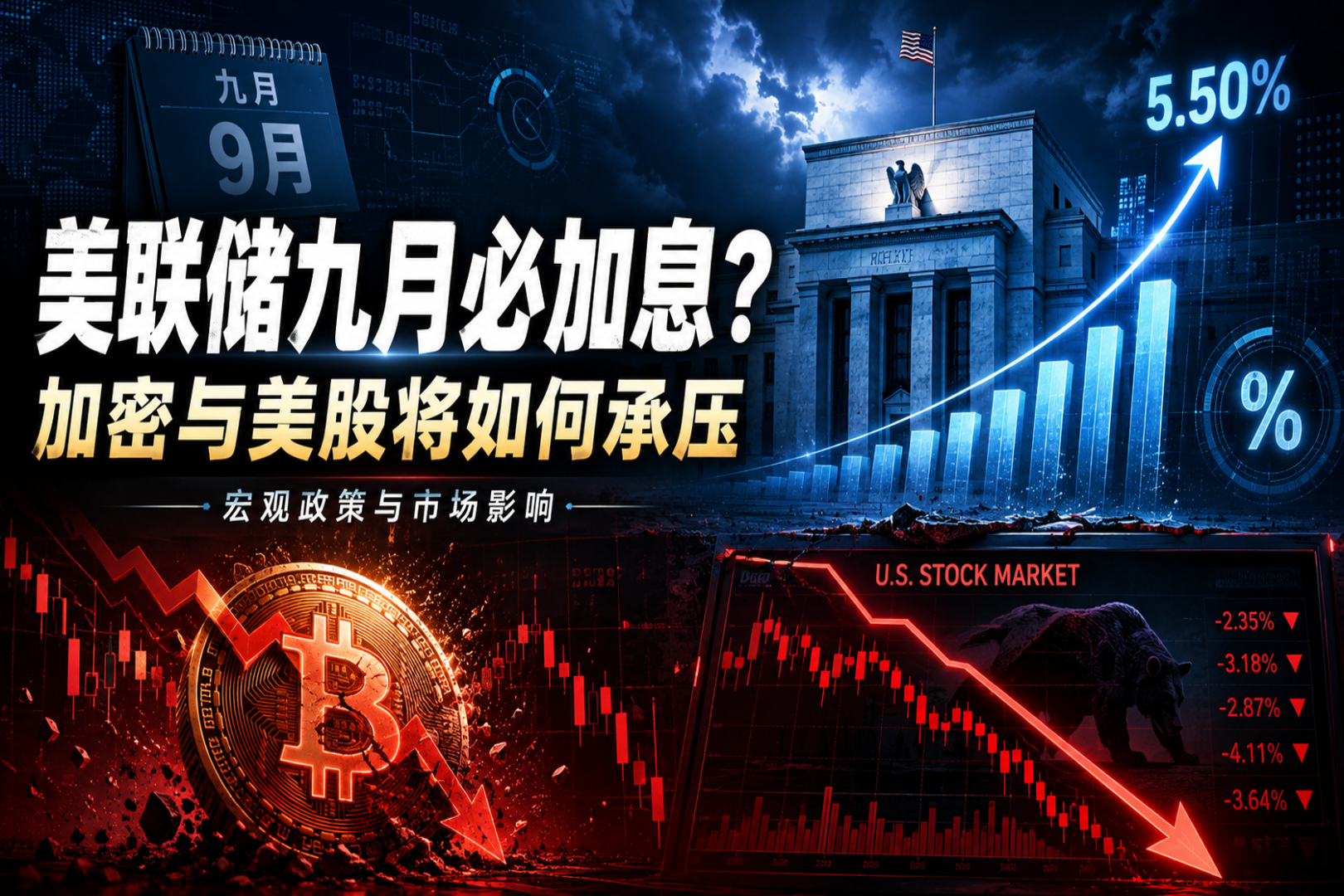
Will the Fed Definitely Raise Interest Rates in September? How Will Crypto and U.S. Stocks Withstand the Pressure?

The market's expectation for a September Fed rate hike surged dramatically in early August, jumping from under 50% to over 80% within a week. This shift followed a contentious July FOMC meeting, where a 9-3 vote to hold rates revealed growing dissent from hawkish members advocating for an immediate hike to combat persistent inflation. The primary catalyst for this repricing is rising oil prices, driven by renewed geopolitical tensions around the Strait of Hormuz, which threaten global supply. Energy costs directly influence inflation metrics, making the upcoming July CPI report (due August 12th) a critical data point. If it shows inflation reaccelerating, the probability of a September hike will solidify. For Bitcoin and crypto assets, this is typically bearish news. Bitcoin continues to behave as a high-beta, liquidity-sensitive risk asset. A rate hike raises the opportunity cost of holding non-yielding assets and could drive capital toward money markets, pressuring crypto prices in the short term. However, historical patterns suggest that if a hike is perceived as the end of a tightening cycle rather than the start, any negative price impact may be brief. U.S. stocks, particularly crypto-linked equities like Coinbase and growth-oriented tech stocks, are also vulnerable. Higher rates increase discount rates in valuation models, putting pressure on high-multiple companies. This coincides with a pivotal tech earnings season where investor focus has shifted from massive AI capital expenditure to tangible revenue and cash flow generation. Companies with negative cash flow and weak growth narratives could face heightened volatility if borrowing costs rise in September. In summary, a September Fed hike has evolved into a mainstream market scenario. Key factors to watch are oil prices, the July CPI report, and Fed communications, which will determine the final decision and its impact on volatile crypto and equity markets.

marsbit7 dk önce

Will the Fed Definitely Raise Interest Rates in September? How Will Crypto and U.S. Stocks Withstand the Pressure?

marsbit7 dk önce

A 'Overlooked' Market Event: Joint US-Japan-South Korea Intervention, Rare US Treasury Involvement, and Bessent's Quiet 'Market Rescue'?

Summary: The United States, Japan, and South Korea executed their largest coordinated foreign exchange intervention in nearly 30 years. The action targeted depreciation pressure on the Japanese yen and South Korean won. This move is seen as a significant effort by the US to stabilize the financial markets of its key allies and prevent the spillover of risks. Key details: * Japan reportedly intervened on July 30 using approximately 8.45 trillion yen (about $52.8 billion). South Korean authorities also intervened that day, selling dollars to support the won. * Notably, the US Treasury Department intervened directly in yen markets for the first time in roughly 30 years. The New York Fed, reportedly acting on behalf of the Treasury, sold euros to buy yen via Goldman Sachs and Morgan Stanley on July 31. Analysts view the use of the euro-yen pair as a way to alleviate yen pressure without adding selling pressure to the US dollar. * Prior to the action, the New York Fed conducted "rate checks" on both USD/JPY and EUR/JPY, a newer signaling tool that falls between verbal and physical intervention. The intervention is interpreted as going beyond traditional currency stabilization. Analysts, such as Michael Hartnett of Bank of America, suggest it resembles a "Price Keeping Operation" for the AI era. The core US objectives are perceived to be: 1. Preventing rapid yen depreciation from triggering a sharp rise in Japanese government bond yields. 2. Containing financial stress from spreading across Asian markets like South Korea and Japan. 3. Reducing the risk of disorderly capital flows impacting the US bond market. This coordinated action underscores the importance of Japan and South Korea as critical partners in the US semiconductor and AI supply chain. Stabilizing their financial markets is seen as vital to mitigating risks to the broader tech industry and the US market itself. The intervention coincides with market pressures, including the KOSDAQ index hitting a low since October 2022. While seen as a move to control volatility, some analysts caution it may not fundamentally reverse existing market trends.

marsbit11 dk önce

A 'Overlooked' Market Event: Joint US-Japan-South Korea Intervention, Rare US Treasury Involvement, and Bessent's Quiet 'Market Rescue'?

marsbit11 dk önce

Will the Federal Reserve Definitely Raise Interest Rates in September? How Will Cryptocurrencies and US Stocks Bear the Pressure?

In early August 2024, market expectations for a September Federal Reserve rate hike surged dramatically, from below 50% to over 80%, driven by renewed inflation concerns. This shift followed a contentious July FOMC meeting where a 9-3 vote to hold rates revealed a growing hawkish faction advocating for an immediate hike, citing prolonged above-target inflation. The key catalyst is escalating conflict near the Strait of Hormuz, which has pushed oil prices up approximately 20% in July, threatening to reignite inflation. The next critical data point is the July CPI report on August 12th; a hot reading could solidify hike expectations. For crypto assets, particularly Bitcoin, this represents near-term pressure. Bitcoin continues to exhibit high-beta, risk-on characteristics, making it sensitive to tightening liquidity and higher opportunity costs. However, historical precedent suggests that if a hike is perceived as the cycle's end rather than its start, the negative impact may be brief, with markets quickly pivoting to anticipate future rate cuts. U.S. stocks, especially crypto-linked equities like Coinbase and high-valuation tech stocks, face amplified volatility. Higher rates increase discount rates in valuation models, pressuring growth stocks. This coincides with a pivotal tech earnings season where investor focus has shifted from massive AI capital expenditures to demonstrable revenue and cash flow generation. Companies with negative cash flows and weak growth narratives could see severe pressure if a September hike materializes, as financing costs would rise. Key indicators to watch include oil prices, upcoming inflation data, and Fed commentary at events like the Jackson Hole symposium.

Odaily星球日报11 dk önce

Will the Federal Reserve Definitely Raise Interest Rates in September? How Will Cryptocurrencies and US Stocks Bear the Pressure?

Odaily星球日报11 dk önce

İşlemler

Spot
活动图片