Ethereum's Quantum Security and Privacy: Why Developers Are Reassessing Priorities

cryptonews.ru2026-08-30 tarihinde yayınlandı2026-08-30 tarihinde güncellendi

Özet

The article discusses a major shift in Ethereum's development priorities, focusing on quantum resistance, privacy, and scalability. The new roadmap, updated to 2029, elevates post-quantum cryptography as a critical near-term goal, aiming to prepare the network for future quantum computing threats before they become practical. Privacy is also being integrated at the base protocol level (Private L1), moving beyond an add-on feature, using mechanisms like keyed nonces and zero-knowledge proofs to obscure user activity. Scalability efforts will leverage technologies like STARK proofs and zkVM, while the protocol architecture is being simplified under the "Lean Ethereum" concept. This strategic pivot coincides with significant personnel changes within the Ethereum Foundation and is influenced by external tech trends like AI and the growing market demand for privacy-focused cryptocurrencies. The article concludes that while these updates present long-term technical promise, market volatility and implementation complexities remain considerations for investors.

Ethereum's quantum security has become one of the main focuses of the new roadmap: the team behind the second-largest cryptocurrency by market cap is strengthening its focus on post-quantum cryptography, privacy, and scaling, while some previous technical priorities are taking a backseat. This is not about a one-time upgrade but a shift in priorities: developers are choosing schemes designed to prepare the network for future risks, although a practical quantum threat to $ETH is currently seen as a task for the coming years, not a current widespread hack.

Ethereum is needed as an open blockchain infrastructure for digital finance and applications: the network can verify transactions, run programmable rules, and build services on top of the base layer. Its strengths compared to more rigid networks are update flexibility, a developed ecosystem, support for scaling solutions, and a quick transition towards privacy and new cryptographic schemes.

How Vitalik Buterin Described the New Vision for Ethereum

On August 10, Vitalik Buterin explained that he compared Ethereum's previous development plans with the current Strawmap, calculated until 2029. As a result, the priorities have changed noticeably: quantum attack resistance, base-layer privacy, and a simpler protocol architecture are now at the center of attention. According to his logic, quantum computing can no longer be left out of basic planning: if signatures and keys ever become a weak point, protection will need to be rebuilt in advance, not during a crisis.

The main roadmap, prepared in 2023, was synchronized with the new Strawmap. Buterin compares the modernization approach to the Ship of Theseus: if every part of a ship is gradually replaced, does it remain the same ship? The logic for Ethereum is similar. Developers want to update key system elements without a sharp break from the current network—essentially rebuilding the blockchain while it's in motion.

Such changes are planned to be carried out through a series of hard forks within the Lean Ethereum concept. Its meaning is to simplify the infrastructure, leave fewer complex components, and rely on a limited set of reliable cryptographic primitives. For a network where every transaction must be verifiable and secure, such compactness becomes not just a matter of convenience but a security factor.

What Changed in the Strawmap

Fresh edits to the Strawmap appeared in August. The map still contains upcoming upgrades, including Ethereum Improvement Proposals, as well as the Glamsterdam upgrade in 2026 and the Hegota upgrade in 2027. A separate block is dedicated to long-term priorities—security, scaling, and privacy.

Compared to the 2023 roadmap, the new version changes the balance of forces. Buterin highlights several key shifts.

  • Quantum resistance has risen higher on the priority list.
  • Some EVM improvements have become less important.
  • Some previous technical solutions are being replaced by more modern designs.
  • Ideas not present in the early plan have been added to the Strawmap, primarily due to rapid progress in artificial intelligence and post-quantum cryptography.

These changes show that the team is responding not only to the network's internal problems. External technological trends also influence the plans: the development of AI, growing interest in zero-knowledge proofs, and the anticipation of an era where quantum computers become a practical threat to old protection schemes.

Privacy Moves to the Base Protocol Level

One of the most noticeable shifts is related to privacy. It is now considered not as an additional feature on top of the network but as a requirement for the base level—Private L1. The idea is to make it harder to link network actions to a specific user and allow data verification without revealing unnecessary information.

To this end, keyed nonces and recent roots are being discussed. These mechanisms should help hide connections between operations and participants. Part of the task of protecting sensitive information may also be addressed by FOCIL—a mechanism that fights censorship and forcibly includes transactions in the ledger.

Additionally, developers are considering lean privacy pools and wormholes. The latter idea is related to zero-knowledge proofs and proposal EIP-7503. In such a model, a user can prove the correctness of an action without revealing all details. For a blockchain, this is an important balance: the network remains verifiable, but publicity no longer means complete transparency of every step.

Post-Quantum Cryptography Becomes an Urgent Task

2029 is increasingly mentioned as a possible deadline by which significant digital infrastructure must transition to quantum-resistant solutions.

Specialists from Microsoft, Google, and Cloudflare consider 2029 an important milestone for preparing significant digital infrastructure for quantum risks.

US authorities, in turn, plan to transition federal service cryptography to new standards by 2030.

Simply put, post-quantum cryptography is a set of protection methods designed to withstand attacks not only from ordinary computers but also from future quantum computers. For Ethereum, this means gradually replacing vulnerable elements: primarily signature schemes, proof aggregation methods, and account protection mechanisms.

Ethereum is moving in the same direction. Among the options are replacing some current mechanisms with hash-based signatures like leanXMSS, implementing leanSPHINCS, and aggregation via zkzk-frames. Nicolas Kocinie from the Ethereum Foundation believes that individual solutions for account protection can be implemented without a hard fork.

The problem is particularly important because modern electronic signatures in many systems are built on algorithms that could be weakened by a quantum computer in the future. For cryptocurrencies, this is not an abstract threat: if a vulnerability in computer security affects signatures or keys, user funds will be at risk.

Currently, the main risk does not appear as an instant opportunity to steal $ETH, but as a future scenario: a sufficiently powerful quantum computer could attempt to recover private keys from public data or weaken the signatures that underpin the right to control funds. Therefore, addresses, keys, and wallets that can be transferred to new schemes before such a threat becomes practical are important.

In this context, ECDSA, hash functions, and new signature schemes are discussed. Ethereum's cryptography must be ready for a world where quantum mechanics stops being just a laboratory topic and becomes a practical basis for computation. If an ordinary computer takes too long to solve such tasks, a specialized quantum machine could potentially change the rules of the game.

How Users Can Reduce Future Quantum Risks

For an ordinary $ETH holder, the main task now is not to panic but to monitor network and wallet updates. While developers are preparing quantum-resistant schemes, a reasonable set of actions looks like this.

  • Store seed phrases and private keys offline and do not enter them into third-party services.
  • Use wallets that quickly support Ethereum updates and new account protection standards.
  • After the appearance of recommended quantum-resistant schemes, transfer funds to new addresses or accounts if such a step is suggested by wallet or protocol developers.
  • Do not keep large amounts in old wallets that have not been updated for a long time and may not support new signature mechanisms.

Scaling Through STARK and More Rigid Constructions

Scaling is associated with new state types and recursive STARK proofs. Buterin calls STARK proofs and AI-accelerated formal verification methods full-fledged building blocks upon which Ethereum's future can be designed.

STARK proofs and formal verification, enhanced by artificial intelligence, are becoming some of the reliable components for Ethereum's technical development.

Instead of trying to scale all network activity equally, developers want to use more specialized mechanisms with clear limitations. This approach should help better withstand periods of high load and allocate resources more accurately. For a data transmission protocol in a distributed network, this is fundamental: the clearer the rules, the easier the verification and the lower the risk of unexpected failures.

Blobs, Native Rollups, and the Role of Artificial Intelligence

The new Strawmap includes elements that in 2023 either did not yet exist in their current form or were not seriously considered. Among them are blobs, gas futures, native rollups, and more noticeable integration of artificial intelligence.

Some previous ideas, on the contrary, have become outdated. For example, Verkle trees no longer look like the main direction, and developers plan to gradually transition from them to polynomial binary trees. This is another example of how the roadmap changes along with the technological environment.

Buterin separately talks about zkVM. This concept suggests that the protocol will give users access to a system of commands different from the EVM. Among the main candidates are leanISA and RISC-V. According to Buterin's estimate, such systems are simpler, more modern, and more efficient than the EVM.

Why the Reassessment of Plans Coincided with Personnel Changes

The new priority setting emerged after a series of departures from the Ethereum Foundation. Since 2025, developers and managers have left the organization. Among them:

  • Peter Szilagyi.
  • Tomasz Stanczak.
  • Raul Kripalani.
  • Josh Stark.
  • Tim Beiko.
  • Barnabe Monnot.
  • Julian Ma.
  • Carl Beekhuizen.

Other specialists have also left.

Not all commented on their decisions. Peter Szilagyi, for example, hinted at Vitalik Buterin's too strong influence on the direction of the ecosystem. Buterin himself previously stated that the role of the Ethereum Foundation has been reassessed: it is now more of a "Special Node" with a specific purpose, not the central command hub of the entire network.

Therefore, the roadmap update can be seen not only as a technical process. It is happening against the backdrop of personnel changes, a reassessment of the balance of influence, and a search for a new coordination model within the ecosystem.

Privacy Became a Market Signal

The interest in privacy is not growing in a vacuum. Over the past year, attention to anonymous coins has sharply increased in the cryptocurrency market.

The price picture for this period looks like this:

  • Zcash: around $40 in summer 2025 and $796 now, a roughly 20x increase.
  • Monero: $150 in summer 2025, $443 now, and a rise above $570 in January 2026.
  • Ethereum: over $4,700 in August 2025 and around $2,460 now.

Against this backdrop, the focus on privacy can be explained not only by technical reasons but also by market expectations. Users increasingly want cryptocurrencies to combine blockchain transparency with personal data protection.

At the same time, technologies based on zero-knowledge proofs are useful not only for privacy. They help scale the network and simplify the verification of complex operations. According to Buterin, SNARKs in 2023 were not yet mature enough to be included in the roadmap. By 2026, the situation had changed, so the new paradigm began to look more realistic.

Should You Buy $ETH Now?

The situation around $ETH is ambiguous: the technical roadmap has become clearer regarding privacy, scaling, and quantum resistance, but the price after August 2025 is noticeably lower than previous levels, and there have been personnel changes within the Ethereum Foundation.

  • Arguments in favor of buying could include long-term updates, work with zero-knowledge proofs, a course towards Private L1, and preparation for post-quantum cryptography.
  • Arguments against buying or for caution include volatility, the complexity of hard forks, dependence on development timelines, and the risk that the market has already priced in some of the expectations.
  • A neutral approach is to buy $ETH only with a clear horizon in mind, limit its share in the portfolio, and not use money whose loss would be critical.

Quantum Threat to Bitcoin and the Marketing Effect

Quantum computing could become a problem not only for Ethereum. Bitcoin is also often discussed in this context. Deloitte believes that over 4 million $BTC on early addresses, including about 1 million $BTC from the Patoshi mining period, could be at risk. These coins are potentially associated with Satoshi Nakamoto.

Ledger's CTO, Charles Guillemet, admits that Bitcoin might go through a series of hard forks in the future. The reason is simple: it will be difficult for users to agree on a single modernization method. Ethereum compared to it looks more flexible, although this flexibility is achieved at the cost of constantly refining goals and the noticeable role of key figures like Vitalik Buterin.

There is also a more pragmatic explanation for what is happening. The updated roadmap can work as a signal for investors. After personnel changes and a prolonged price decline, the asset needs to show clear future directions: privacy, scaling, quantum resistance, and more modern cryptography.

What This Means for Ethereum's Future

Ethereum's current course cannot be called entirely new. Many ideas have been discussed for a long time, but now they have received a different order and a clearer place in the development plan. The main shift is that quantum security, privacy, and provable scalability are becoming not peripheral improvements but part of the core of the future architecture.

Developers are adjusting the roadmap to the technological reality: AI is developing faster, zero-knowledge proofs are becoming more practical, and post-quantum cryptography is ceasing to be a distant future topic. For a network that aims to be the basic infrastructure for digital finance, such a reassessment looks not like a sharp turn but an attempt to prepare in advance for the next stage of the industry's development.

end-content
Trend Kriptolar

İlgili Sorular

QAccording to the article, what are the three main new priorities for Ethereum's development roadmap as highlighted by Vitalik Buterin?

AThe three main new priorities are quantum resistance (post-quantum cryptography), base-layer privacy (Private L1), and a simpler protocol architecture.

QWhy has post-quantum cryptography become an urgent task for Ethereum, according to the text?

APost-quantum cryptography has become urgent because significant digital infrastructure is targeting 2029 as a deadline to prepare for quantum risks, with U.S. authorities aiming to transition federal cryptography by 2030. The threat is future-focused: a sufficiently powerful quantum computer could potentially recover private keys from public data or weaken the digital signatures that secure funds.

QWhat is the concept of 'Private L1' mentioned in the article, and how does it differ from previous approaches to privacy on Ethereum?

A'Private L1' refers to treating privacy as a requirement for the base-layer protocol itself, rather than as an additional feature built on top of the network. The goal is to make it harder to link network actions to specific users and to enable data verification without revealing unnecessary information, moving privacy from a peripheral add-on to a core architectural principle.

QThe article mentions that the updated roadmap coincides with personnel changes at the Ethereum Foundation. What reason did one departing developer, Peter Szilágyi, hint at for his departure?

APeter Szilágyi hinted that his departure was due to what he perceived as Vitalik Buterin's excessive influence on the direction of the ecosystem.

QWhat are two specific technical mechanisms or concepts mentioned for improving Ethereum's scalability in the new Strawmap?

ATwo specific concepts for improving scalability mentioned are the use of recursive STARK proofs and the exploration of 'native rollups.'

İlgili Okumalar

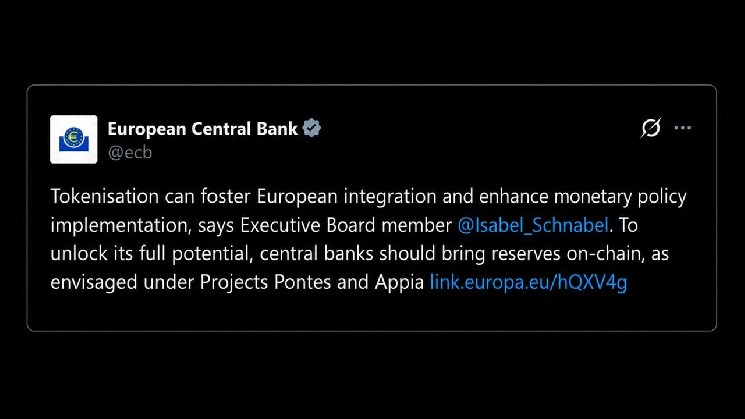
ECB's Schnabel says central bank money 'should move to blockchain'

ECB Executive Board member Isabel Schnabel stated that central bank money "must move onto the blockchain." She argued that stablecoins lack the independent ability to scale liquidity during financial stress—a gap only a central bank can fill. Her proposed solution involves tokenization, which she says can make transactions faster, safer, and more programmable, but only if the safest asset (central bank money) is on the same "rails" as other tokenized assets. This marks a notable shift for the Eurosystem, which had previously viewed Distributed Ledger Technology (DLT) mainly as a tool for regulating stablecoins and crypto, not as infrastructure to adopt directly. The first step is Project Pontes, launching in September. It will initially synchronize the ECB’s existing TARGET services with private DLT platforms. Eventually, it aims to enable settlement finality on a Eurosystem-managed DLT platform with smart contract functionality and 24/7 operation. The long-term strategy is Project Appia, tasked with developing the architecture, standards, and legal framework for a genuine European tokenized asset market by 2028. Trials have already processed around €1.6 billion, and since March 2026, the ECB accepts DLT-based assets as collateral. While not directly impacting Bitcoin's price, these developments signal that a major G7 central bank is preparing to settle transactions on-chain, lending legitimacy to the underlying infrastructure of crypto markets. The ECB's move to avoid "disintermediation" by private tokenization shows that debates in central bank boardrooms are now aligning with discussions long followed in the crypto space.

cryptonews.ru47 dk önce

ECB's Schnabel says central bank money 'should move to blockchain'

cryptonews.ru47 dk önce

Ripple Labs Warns of a New Challenge for Blockchains

Ripple Labs is preparing the XRP Ledger for quantum threats but now emphasizes a broader challenge: ensuring financial infrastructure can adapt simultaneously to quantum computing and artificial intelligence. Senior Director of Engineering Ayo Akinyele states the goal is not merely anticipating a "Q-Day" but building infrastructure capable of preemptively adopting new security mechanisms without network disruption. The shift to post-quantum cryptography involves more than swapping algorithms; it requires flexible infrastructure, improved key management, and clear upgrade paths. Financial systems were not designed with quantum computers in mind, necessitating a rethink of transaction, identity, asset, and data protection. This is underscored by significant investments, such as the $2 billion U.S.-IBM quantum factory initiative and a 2030 U.S. government mandate for post-quantum cryptography adoption. AI introduces distinct risks by driving automation and autonomous economic activity, increasing demand for an always-on, internet-oriented payment infrastructure. AI agents could soon conduct transactions independently, creating new security requirements. Ripple Labs advocates for proactive, orderly preparation rather than a crisis-driven transition, having outlined a four-phase strategy aiming for a full XRP Ledger transition by 2028, now expanded to address both quantum and AI-driven challenges.

cryptonews.ru47 dk önce

Ripple Labs Warns of a New Challenge for Blockchains

cryptonews.ru47 dk önce

İşlemler

Spot

Popüler Makaleler

ETH 2.0 Nedir

ETH 2.0: Ethereum için Yeni Bir Dönem Giriş ETH 2.0, Ethereum 2.0 olarak da bilinir, Ethereum blok zincirinde önemli bir yükseltmeyi işaret eder. Bu geçiş yalnızca bir yüz değiştirme değil; ağın ölçeklenebilirliğini, güvenliğini ve sürdürülebilirliğini temelinden geliştirmeyi hedeflemektedir. Enerji yoğun Proof of Work (PoW) konsensüs mekanizmasından daha verimli olan Proof of Stake (PoS) mekanizmasına geçişle birlikte, ETH 2.0 blok zinciri ekosistemine dönüştürücü bir yaklaşım vaat etmektedir. ETH 2.0 Nedir? ETH 2.0, Ethereum'un yeteneklerini ve performansını optimize etmeye odaklanmış özel, birbirine bağlı güncellemelerin bir derlemesidir. Yenileme, mevcut Ethereum mekanizmasının karşılaştığı kritik zorlukları, özellikle işlem hızı ve ağ tıkanıklığı ile ilgili sorunları ele almak üzere tasarlanmıştır. ETH 2.0'ın Amaçları ETH 2.0'ın ana amaçları, üç temel unsuru geliştirmeye odaklanmaktadır: Ölçeklenebilirlik: Ağın saniye başına işleyebileceği işlem sayısını önemli ölçüde artırmayı hedefleyen ETH 2.0, mevcut yaklaşık 15 işlem/saniye sınırlamasını aşmayı ve potansiyel olarak binlerce işleme ulaşmayı planlamaktadır. Güvenlik: Geliştirilmiş güvenlik önlemleri, özellikle siber saldırılara karşı daha iyi direnç sağlama ve Ethereum'un merkeziyetsiz görünümünü koruma açısından ETH 2.0 için hayati öneme sahiptir. Sürdürülebilirlik: Yeni PoS mekanizması, sadece verimliliği artırmakla kalmayıp aynı zamanda enerji tüketimini de önemli ölçüde azaltma hedefiyle tasarlanmış olup, Ethereum'un operasyonel çerçevesini çevresel kaygılarla uyumlu hale getirmektedir. ETH 2.0'ın Yaratıcısı Kimdir? ETH 2.0'ın yaratılması Ethereum Vakfı'na atfedilebilir. Ethereum'un gelişimini destekleme konusunda kritik bir rol oynayan bu kar amacı gütmeyen kuruluş, dikkat çekici kurucu ortağı Vitalik Buterin tarafından yönetilmektedir. Daha ölçeklenebilir ve sürdürülebilir bir Ethereum vizyonu, bu yükseltmenin arkasındaki itici güç olmuştur ve protokolü geliştirmek için kendini adamış küresel bir geliştici ve meraklı topluluğunun katkılarını içermektedir. ETH 2.0'ın Yatırımcıları Kimlerdir? ETH 2.0 yatırımcıları ile ilgili detaylar kamuoyuna açıklanmamış olsa da, Ethereum Vakfı'nın blok zinciri ve teknoloji alanında çeşitli kuruluşlar ve bireyler tarafından desteklendiği bilinmektedir. Bu ortaklar arasında merkeziyetsiz teknolojilerin ve blok zinciri altyapısının geliştirilmesine karşılıklı ilgi duyan girişim sermayesi şirketleri, teknoloji firmaları ve hayır kurumları yer almaktadır. ETH 2.0 Nasıl Çalışır? ETH 2.0, onu öncüsünden ayıran bir dizi önemli özelliği tanıtmasıyla dikkat çekmektedir. Proof of Stake (PoS) PoS konsensüs mekanizmasına geçiş, ETH 2.0'ın en belirgin değişikliklerinden biridir. İşlem doğrulama için enerji yoğun madenciliğe dayanmak yerine, PoS kullanıcıların ağa yatırdıkları ETH miktarına göre işlemleri doğrulayıp yeni bloklar oluşturmalarına olanak tanır. Bu, enerji verimliliğinin artırılmasına yol açarak tüketimi yaklaşık %99,95 oranında azaltmakta ve Ethereum 2.0'ı önemli ölçüde daha çevre dostu bir alternatif haline getirmektedir. Shard Zincirleri Shard zincirleri, ETH 2.0'ın diğer bir kritik yeniliğidir. Bu daha küçük zincirler, ana Ethereum zinciri ile paralel olarak çalışarak birden fazla işlemin aynı anda işlenmesine olanak tanır. Bu yaklaşım, ağın genel kapasitesini artırarak Ethereum'u rahatsız eden ölçeklenebilirlik sorunlarını ele alır. Beacon Zinciri ETH 2.0'ın temelinde, ağı koordine eden ve PoS protokolünü yöneten Beacon Zinciri yer almaktadır. Bu, bir tür organizatör olarak işlev görür: doğrulayıcıları denetler, shard'ların ağa bağlı kalmasını sağlar ve blok zinciri ekosisteminin genel sağlığını izler. ETH 2.0 Zaman Çizelgesi ETH 2.0'ın yolculuğu, bu önemli yükseltmenin evrimini gösteren birkaç önemli dönüm noktası ile tanımlanmıştır: Aralık 2020: Beacon Zinciri'nin başlatılması, PoS'un tanıtımını işaret etmiş ve ETH 2.0’a geçiş için sahneyi hazırlamıştır. Eylül 2022: "The Merge" tamamlanması, Ethereum ağının başarılı bir şekilde PoW'den PoS çerçevesine geçiş yaptığı kritik bir anı temsil etmekte ve Ethereum için yeni bir dönemi müjdelemektedir. 2023: Shard zincirlerinin beklenen dağıtımı, Ethereum ağının ölçeklenebilirliğini daha da artırmayı hedeflemekte ve ETH 2.0'ı merkeziyetsiz uygulamalar ve hizmetler için sağlam bir platform haline getirmeyi pekiştirmektedir. Ana Özellikler ve Faydalar Geliştirilmiş Ölçeklenebilirlik ETH 2.0'ın en önemli avantajlarından biri, geliştirilmiş ölçeklenebilirliğidir. PoS ve shard zincirlerinin kombinasyonu, ağın kapasitesini artırarak, eski sistemle kıyaslandığında çok daha fazla işlem hacmi karşılayabilmesini sağlamaktadır. Enerji Verimliliği PoS'un uygulanması, blok zinciri teknolojisinde enerji verimliliği yönünde büyük bir adım teşkil etmektedir. Enerji tüketimini ciddi şekilde azaltarak, ETH 2.0 yalnızca işletme maliyetlerini düşürmekle kalmaz, aynı zamanda küresel sürdürülebilirlik hedefleriyle daha yakın bir uyum sağlar. Geliştirilmiş Güvenlik ETH 2.0'ın güncellenmiş mekanizmaları, ağ genelinde güvenliğin artırılmasına katkıda bulunmaktadır. PoS'un uygulanması ve shard zincirleri ile Beacon Zinciri aracılığıyla geliştirilen yenilikçi kontrol önlemleri, potansiyel tehditlere karşı daha yüksek bir koruma sağlar. Kullanıcılar için Düşük Maliyetler Ölçeklenebilirlik geliştikçe, işlem maliyetleri üzerindeki etkiler de belirgin hale gelecektir. Artan kapasite ve azalan tıkanıklığın, kullanıcılar için düşük ücretler anlamına gelmesi beklenmekte ve Ethereum'u günlük işlemler için daha erişilebilir hale getirmektedir. Sonuç ETH 2.0, Ethereum blok zinciri ekosisteminde önemli bir evrimi işaret etmektedir. Ölçeklenebilirlik, enerji tüketimi, işlem verimliliği ve genel güvenlik gibi temel sorunları ele alırken, bu güncellemenin önemi abartılamaz. Proof of Stake'e geçiş, shard zincirlerinin tanıtımı ve Beacon Zinciri'nin altyapı çalışmaları, Ethereum'un merkeziyetsiz piyasalarının artan taleplerini karşılayabileceği bir geleceği göstermektedir. Yenilik ve ilerleme ile şekillenen bir sektörde, ETH 2.0, blok zinciri teknolojisinin daha sürdürülebilir ve verimli bir dijital ekonomi için yol açmadaki yeteneklerinin bir kanıtıdır.

372 Toplam GörüntülenmeYayınlanma 2024.04.04Güncellenme 2024.12.03

ETH 2.0 Nedir

ETH 3.0 Nedir

ETH3.0 ve $eth 3.0: Ethereum'un Geleceği Üzerine Derinlemesine Bir İnceleme Giriş Hızla evrilen kripto para ve blok zinciri teknolojisi ortamında, ETH3.0, sıklıkla $eth 3.0 olarak adlandırılmakta, önemli bir ilgi ve spekülasyon konusu haline gelmiştir. Bu terim, netleştirilmesi gereken iki temel kavramı kapsamaktadır: Ethereum 3.0: Bu, mevcut Ethereum blok zincirinin yeteneklerini artırmayı hedefleyen olası bir gelecekteki güncellemeyi temsil eder, özellikle ölçeklenebilirlik ve performansı iyileştirmeye odaklanmaktadır. ETH3.0 Meme Token: Bu ayrı kripto para projesi, Ethereum blok zincirini kullanarak meme merkezli bir ekosistem oluşturmayı amaçlamakta ve kripto para topluluğu içinde etkileşimi artırmaktadır. ETH3.0'ün bu yönlerini anlamak, yalnızca kripto meraklıları için değil, aynı zamanda dijital alandaki daha geniş teknolojik trendleri gözlemleyenler için de hayati öneme sahiptir. ETH3.0 Nedir? Ethereum 3.0 Ethereum 3.0, zaten kurulmuş olan Ethereum ağına önerilen bir güncelleme olarak duyurulmaktadır; bu ağ, kuruluşundan bu yana birçok merkeziyetsiz uygulamanın (dApp'ler) ve akıllı sözleşmelerin belkemiği olmuştur. Tasarlanan iyileştirmeler, esasen ölçeklenebilirlik üzerine yoğunlaşmakta – shardlama ve sıfır bilgi kanıtları (zk-proofs) gibi ileri teknolojileri entegre etmektedir. Bu teknolojik yenilikler, saniyede eşi benzeri görülmemiş sayıda işlem (TPS) gerçekleştirmeyi kolaylaştırmayı amaçlamakta olup, muhtemelen milyonlara ulaşarak mevcut blok zinciri teknolojisinin karşılaştığı en büyük sınırlamalardan birine çözüm getirmektedir. İyileştirme yalnızca teknik değil, aynı zamanda stratejiktir; Ethereum ağını, merkeziyetsiz çözümlere olan artan talep ile belirginleşen bir geleceğe hazırlamak için tasarlanmıştır. ETH3.0 Meme Token Ethereum 3.0'ın aksine, ETH3.0 Meme Token, internet meme kültürünü kripto para dinamikleriyle birleştirerek daha hafif ve eğlenceli bir alanda hareket etmektedir. Bu proje, kullanıcıların Ethereum blok zincirinde meme alım, satım ve ticaret yapmalarına izin vererek, yaratıcılık ve ortak ilgi alanları aracılığıyla topluluk etkileşimini teşvik eden bir platform sunmaktadır. ETH3.0 Meme Token, blok zinciri teknolojisinin dijital kültürle nasıl kesişebileceğini göstererek, hem eğlenceli hem de finansal olarak sürdürülebilir kullanım senaryoları oluşturmayı hedeflemektedir. ETH3.0'un Yaratıcısı Kimdir? Ethereum 3.0 Ethereum 3.0'a yönelik girişim, esas olarak Ethereum topluluğundaki bir geliştirici ve araştırmacı konsorsiyumu tarafından yönlendirilmektedir ve bunlar arasında Justin Drake de bulunmaktadır. Ethereum'un evrimine yönelik içgörüleri ve katkılarıyla tanınan Drake, Ethereum'u “Beam Chain” olarak adlandırılan yeni bir konsensüs katmanına geçirme konusundaki tartışmalarda öne çıkan bir figür olmuştur. Geliştirmeye yönelik bu iş birliği yaklaşımı, Ethereum 3.0'ın tek bir yaratıcının ürünü olmadığını, aksine blok zinciri teknolojisini ilerletmeye odaklanmış kolektif bir dehanın tezahürü olduğunu göstermektedir. ETH3.0 Meme Token ETH3.0 Meme Token'ın yaratıcısına dair detaylar şu anda izlenemez durumdadır. Meme tokenların doğası, genellikle daha merkeziyetsiz ve topluluk odaklı bir yapıya yol açmakta olup, bu da spesifik bir atıf eksikliğini açıklayabilir. Bu durum, yeniliğin genellikle iş birliği yerine bireysel çabalardan ortaya çıktığı kripto topluluğunun genel felsefesiyle uyumludur. ETH3.0 Yatırımcıları Kimlerdir? Ethereum 3.0 Ethereum 3.0'a olan destek, esasen Ethereum Vakfı ve hevesli bir geliştirici ve yatırımcı topluluğu tarafından sağlanmaktadır. Bu temel birliktelik, yıllar süren ağ operasyonlarıyla inşa edilen güven ve itibarından yararlanarak önemli bir meşruiyet sağlamaktadır. Kripto para dünyasının hızla değişen ikliminde, topluluk desteği, gelişim ve benimsemeyi yönlendirmede kritik bir rol oynamakta ve Ethereum 3.0'ı gelecekteki blok zinciri ilerlemeleri için ciddi bir rakip haline getirmektedir. ETH3.0 Meme Token Mevcut kaynaklar, ETH3.0 Meme Token'ı destekleyen yatırım temelleri veya kuruluşları hakkında net bilgiler sağlamasa da, bu durum meme tokenlar için tipik olan finansman modelini göstermektedir; bu model genellikle tabandan destek ve topluluk katılımına dayanır. Bu tür projelerdeki yatırımcılar genellikle toplum odaklı yenilik potansiyeli ve kripto topluluğunda bulunan iş birliği ruhuyla motive olmuş bireylerden oluşmaktadır. ETH3.0 Nasıl Çalışır? Ethereum 3.0 Ethereum 3.0'ın ayırt edici özellikleri, önerilen shardlama ve zk-proof teknolojisinin uygulanmasında yatmaktadır. Shardlama, blok zincirini daha küçük, yönetilebilir parçalara veya “parçalara” ayırma yöntemidir; bu parçalar işlemleri ardışık değil, eşzamanlı olarak işleyebilir. Bu işlem yükünün merkeziyetsizliği, tıkanıklığı önlemeye yardımcı olur ve ağın yoğun yük altında bile yanıt verebilir olmasını sağlar. Sıfır bilgi kanıtı (zk-proof) teknolojisi, işleme katılan temel verileri ifşa etmeden işlem doğrulaması sağlamasıyla başka bir sofistike katman ekler. Bu yön, sadece gizliliği artırmakla kalmaz, aynı zamanda ağın genel verimliliğini de artırır. Bu güncellemeye, ağın yeteneklerini ve faydasını daha da artırarak sıfır bilgi Ethereum Sanal Makinesi (zkEVM) entegrasyonunun da eklenmesi gündeme gelmektedir. ETH3.0 Meme Token ETH3.0 Meme Token, meme kültürünün popülaritesinden yararlanarak kendini farklılaştırmaktadır. Kullanıcıların sadece eğlence için değil, aynı zamanda potansiyel ekonomik kazançlar için meme ticareti yapmalarına olanak tanıyacak bir pazar yeri oluşturur. Stake etme, likidite sağlama ve yönetim mekanizmaları gibi özelliklerin entegrasyonu sayesinde, proje topluluk etkileşimini ve katılımını teşvik eden bir ortam oluşturur. Eğlence ve ekonomik fırsatların eşsiz bir karışımını sunarak, ETH3.0 Meme Token, kripto tutkunlarından gündelik meme meraklılarına kadar çeşitli bir kitleyi çekmeyi hedeflemektedir. ETH3.0 Zaman Çizelgesi Ethereum 3.0 11 Kasım 2024: Justin Drake, ölçeklenebilirlik iyileştirmeleri etrafında şekillenen yaklaşan ETH 3.0 güncellemesine işaret ediyor. Bu duyuru, Ethereum'un gelecekteki mimarisi hakkında resmi tartışmaların başlangıcını simgeliyor. 12 Kasım 2024: Ethereum 3.0'a yönelik beklenen önerinin, Bangkok'taki Devcon'da açıklanması planlanıyor ve bu, daha geniş topluluk geri bildirimi ve gelişim için olası sonraki adımların zeminini hazırlıyor. ETH3.0 Meme Token 21 Mart 2024: ETH3.0 Meme Token, CoinMarketCap'ta resmi olarak listeleniyor, bu da kamusal kripto alanına adım atarak meme merkezli ekosisteminin görünürlüğünü artırıyor. Ana Noktalar Sonuç olarak, Ethereum 3.0, gelişmiş teknolojiler aracılığıyla ölçeklenebilirlik ve performansla ilgili sınırlamaların üstesinden gelmeye odaklanan Ethereum ağındaki önemli bir evrimi temsil etmektedir. Önerilen güncellemeleri, gelecekteki talepler ve kullanılabilirlik için proaktif bir yaklaşımı yansıtmaktadır. Öte yandan, ETH3.0 Meme Token, kripto para alanındaki topluluk odaklı kültürün özünü kapsamakta, meme kültürünü kullanarak kullanıcı yaratıcılığını ve katılımını teşvik eden etkileşimli platformlar oluşturmayı hedeflemektedir. ETH3.0 ve $eth 3.0'un farklı amaçlarının ve işlevlerinin anlaşılması, kripto alanındaki gelişmeleri takip eden herkes için hayati öneme sahiptir. Her iki girişim de benzersiz yollar çizerek, blok zinciri yeniliğinin dinamik ve çok yönlü doğasını birlikte vurgulamaktadır.

354 Toplam GörüntülenmeYayınlanma 2024.04.04Güncellenme 2024.12.03

ETH 3.0 Nedir

ETH Nasıl Satın Alınır

HTX.com’a hoş geldiniz! Ethereum (ETH) satın alma işlemlerini basit ve kullanışlı bir hâle getirdik. Adım adım açıkladığımız rehberimizi takip ederek kripto yolculuğunuza başlayın. 1. Adım: HTX Hesabınızı OluşturunHTX'te ücretsiz bir hesap açmak için e-posta adresinizi veya telefon numaranızı kullanın. Sorunsuzca kaydolun ve tüm özelliklerin kilidini açın. Hesabımı Aç2. Adım: Kripto Satın Al Bölümüne Gidin ve Ödeme Yönteminizi SeçinKredi/Banka Kartı: Visa veya Mastercard'ınızı kullanarak anında Ethereum (ETH) satın alın.Bakiye: Sorunsuz bir şekilde işlem yapmak için HTX hesap bakiyenizdeki fonları kullanın.Üçüncü Taraflar: Kullanımı kolaylaştırmak için Google Pay ve Apple Pay gibi popüler ödeme yöntemlerini ekledik.P2P: HTX'teki diğer kullanıcılarla doğrudan işlem yapın.Borsa Dışı (OTC): Yatırımcılar için kişiye özel hizmetler ve rekabetçi döviz kurları sunuyoruz.3. Adım: Ethereum (ETH) Varlıklarınızı SaklayınEthereum (ETH) satın aldıktan sonra HTX hesabınızda saklayın. Alternatif olarak, blok zinciri transferi yoluyla başka bir yere gönderebilir veya diğer kripto para birimlerini takas etmek için kullanabilirsiniz.4. Adım: Ethereum (ETH) Varlıklarınızla İşlem YapınHTX'in spot piyasasında Ethereum (ETH) ile kolayca işlemler yapın.Hesabınıza erişin, işlem çiftinizi seçin, işlemlerinizi gerçekleştirin ve gerçek zamanlı olarak izleyin. Hem yeni başlayanlar hem de deneyimli yatırımcılar için kullanıcı dostu bir deneyim sunuyoruz.

4.3k Toplam GörüntülenmeYayınlanma 2024.12.10Güncellenme 2026.06.02

ETH Nasıl Satın Alınır

Tartışmalar

HTX Topluluğuna hoş geldiniz. Burada, en son platform gelişmeleri hakkında bilgi sahibi olabilir ve profesyonel piyasa görüşlerine erişebilirsiniz. Kullanıcıların ETH (ETH) fiyatı hakkındaki görüşleri aşağıda sunulmaktadır.

活动图片