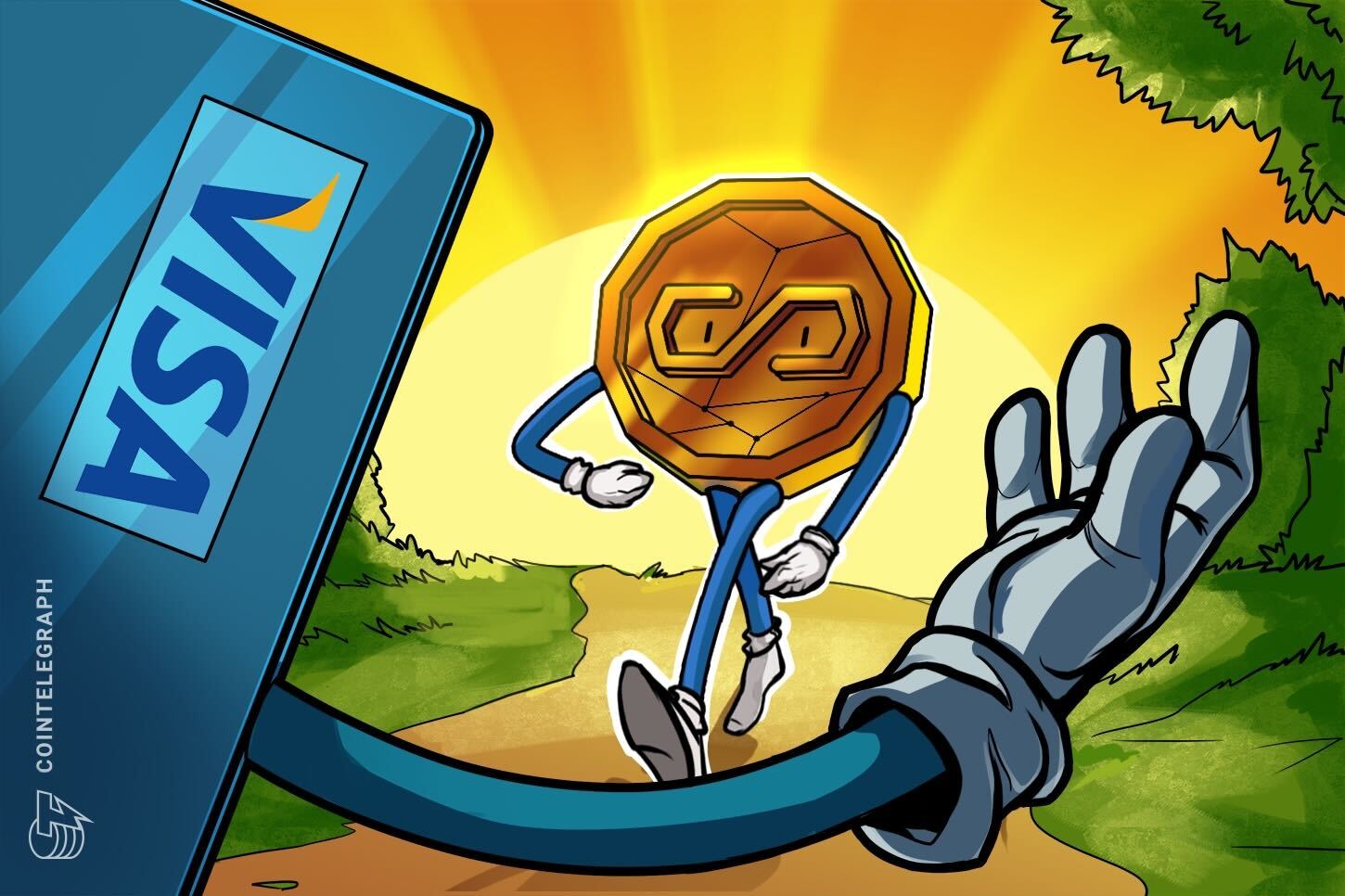
Dunamu, Operator of Bitcoin Exchange Upbit, and Visa Form Strategic Partnership for Stablecoin Payments!

cryptonews.ru2026-08-28 tarihinde yayınlandı2026-08-28 tarihinde güncellendi

Özet

South Korean crypto exchange Upbit operator Dunamu and global payments giant Visa have entered a strategic partnership to develop next-generation AI-powered financial services and stablecoin payments. Announced on August 28, the collaboration aims to merge Dunamu's digital asset technology with Visa's global payments network to work on stablecoin-based payment solutions and cross-border money transfers. A key goal is to improve the integration of stablecoins, which are digital assets pegged to traditional currencies like the US dollar, into conventional payment systems. This could make cross-border transactions faster and cheaper. The companies will also explore AI applications for future financial services. The partnership signifies growing interest from major financial players in the digital asset space and could potentially strengthen the role of Korean crypto firms in the global financial infrastructure.

Dunamu, operator of the South Korean cryptocurrency exchange Upbit, has entered into a strategic partnership with global payments company Visa to develop stablecoins and next-generation AI-powered financial services. According to a statement from Dunamu on August 28th, the two companies will collaborate on building the financial and payments infrastructure of the future.

The detailed partnership plan was presented at a meeting held at the Global Market Support Center in San Francisco. The parties plan to combine Dunamu's digital asset technology with Visa's global payment network to work on stablecoin-based payment solutions and cross-border money transfers.

One of the main goals of the collaboration is to ensure more efficient integration of stablecoins with traditional payment systems. Stablecoins, as digital assets whose value is typically pegged to traditional currencies like the US dollar, offer an alternative infrastructure for fast and low-cost money transfers.

Dunamu and Visa will explore stablecoin-based payment solutions, as well as potential applications of artificial intelligence in future financial services. Both companies aim to develop new products and services in the payment and financial sectors using AI technologies.

The combination of Dunamu's technical expertise in digital assets with Visa's global payment infrastructure is believed to strengthen the connection between the cryptocurrency ecosystem and traditional finance. In particular, expanding the use of stablecoins in cross-border payments could potentially reduce transaction times and lower costs.

The global growth of the stablecoin market is also increasing the interest of major financial and payment companies in digital assets. While Visa has recently been working on expanding the use of blockchain and stablecoin technologies in payment systems, the partnership with Dunamu suggests that the role of South Korean crypto companies in the global financial infrastructure may also be enhanced.

The parties are expected to develop joint projects and products in the upcoming period.

*This is not investment advice.

end-content

İlgili Sorular

QWhich two companies entered into a strategic partnership for stablecoin payments, according to the article?

ADunamu, the operator of the South Korean cryptocurrency exchange Upbit, and Visa entered into a strategic partnership.

QWhat is one of the primary goals of the partnership between Dunamu and Visa?

AOne of the primary goals is to ensure more effective integration of stablecoins with traditional payment systems.

QWhich specific area will Dunamu and Visa explore in addition to stablecoin-based payment solutions?

AThey will also explore the use of Artificial Intelligence (AI) in future financial services.

QWhat potential benefits does the article suggest for cross-border payments using stablecoins?

AThe expansion of stablecoin use in cross-border payments could potentially reduce transaction times and lower costs.

QHow does the article describe the role of Dunamu's partnership with Visa for South Korean crypto companies?

AThe partnership indicates that the role of South Korean crypto companies in the global financial infrastructure could be strengthened.

İlgili Okumalar

The Pioneer of AI Boomerang Job-Hopping: No Ph.D., Fought Over by Top AI Labs in Silicon Valley

"AI's Boomerang Hire: The Unconventional Career of Barret Zoph Who is known as the first practitioner of 'boomerang hiring' in AI? Barret Zoph, now a Research VP at Google DeepMind, has an unconventional resume: former Senior Research Scientist at Google Brain, former VP of Post-Training Research at OpenAI, former co-founder/CTO of Thinking Machines Lab, former OpenAI Codex commercialization lead—all without a PhD. Zoph's career began at Google Brain in 2016 after his USC bachelor's degree. He co-authored the seminal "Neural Architecture Search with Reinforcement Learning," helping pioneer the NAS field. His later work included co-authoring the Switch Transformer, a key model for trillion-parameter scale training. He joined OpenAI in 2022, rising to VP focusing on reinforcement learning for post-training—a crucial step in aligning models like ChatGPT. USC later listed him among alumni who "paved the path for ChatGPT." In 2025, he co-founded Thinking Machines Lab with ex-OpenAI CTO Mira Murati but left under controversial circumstances less than a year later, returning briefly to OpenAI before his final move back to Google in 2026. His hiring coincides with significant talent churn at Google DeepMind. Data shows DeepMind's senior talent inflow/outflow ratio has sharply declined from 12:1 in 2023 to 2:1 in 2026, meaning for every two hires, one leaves—a stark contrast to Anthropic (22:1) and OpenAI (5.7:1). Key departures include founders and Nobel laureates moving to rivals. This fluid, sports-like transfer market for elite AI researchers is driven not just by pay but by competitive positioning, pre-IPO equity at startups, and concerns over shifting research priorities at large firms like Google as they focus more on commercial products like Gemini."

marsbit8 dk önce

The Pioneer of AI Boomerang Job-Hopping: No Ph.D., Fought Over by Top AI Labs in Silicon Valley

marsbit8 dk önce

Bitcoin Stabilizes at $80,000, How Do Institutions and Smart Money View the Future Market?

Bitcoin has consolidated around the $80,000 level following a record-breaking weekly dollar gain, pushing the price up 23.5% from August 17-23. Market focus is now on whether it can decisively overcome a significant resistance cluster between $81,000 and $86,000. This zone represents a critical supply wall, containing nearly 8% of the circulating supply and the average cost basis for major US spot Bitcoin ETFs. Analysis from Glassnode indicates the recent rally was fueled by substantial spot buying, evidenced by ETF inflows and declining exchange balances, rather than excessive leverage. Futures open interest has decreased, with cash/stablecoin margins dominating. While US ETF flows remain a key bullish driver, the market faces a crucial test. A successful break above the $81k-$82k resistance and the 50-week moving average (approx. $81,081) could signal a broader trend reversal. Failure may lead to a retracement toward the $75,000 support level. Institutional views are mixed but generally cautious. CryptoQuant highlights potential seasonal weakness in September, while CoinShares sees a likely trading range, requiring weaker jobs data for a sustained push toward $100k. K33 Research draws parallels to past cycle starts, and Bitwise suggests the bottoming process is advanced. Overall, the market is at a pivotal point, with the battle around $80k determining the near-term direction.

marsbit23 dk önce

Bitcoin Stabilizes at $80,000, How Do Institutions and Smart Money View the Future Market?

marsbit23 dk önce

İşlemler

Spot
活动图片