Don't Waste Every Loss: The 'Sisyphean Revelation' of the Crypto Market

marsbit2025-12-23 tarihinde yayınlandı2025-12-23 tarihinde güncellendi

Özet

The article "Don't Waste Every Loss: The Sisyphus Lesson for Crypto Markets" addresses skilled traders facing significant profit drawdowns despite strong historical performance. It draws a parallel to the myth of Sisyphus, who found meaning in the struggle itself, suggesting that success in crypto trading lies not in avoiding losses but in embracing the process with awareness and resilience. The piece critiques two common emotional reactions to major losses: doubling down aggressively (like a Martingale strategy) or quitting entirely. Both are seen as superficial fixes that avoid the core issue: flawed risk management. The real challenge isn’t knowing risk principles but executing them consistently under emotional pressure, ego, and stress. To recover, traders must accept the loss as a tuition fee for personal flaws, not bad luck. They should anchor to current net worth, not past highs, and avoid the dangerous urge to "win it back." Strict rules on position sizing, stop-losses, and discipline are essential to prevent catastrophic failures. Emotional release is encouraged, but the key is converting pain into a lesson to avoid repetition. The article concludes that such losses, if approached with a冷静, machine-like mindset, can build resilience and improve one’s system. Each failure becomes a moat that others must pay to learn. The goal is not redemption or revenge but growth, ensuring the same mistakes never recur.

Author: thiccy

Compiled by: Tim, PANews

In 2025, the crypto market once again staged a dramatic script of volatility, yet many suffered significant losses in their trades.

This article is not written for those who consistently lose money trading, but for those with strong profitability who have seen their profits severely draw down this quarter.

One of life's greatest pains is witnessing months or even years of effort vanish overnight.

In Greek mythology, Sisyphus is punished to endlessly push a boulder up a mountain, only to watch it roll back down each time he reaches the top. The cruelty of this punishment lies in how it precisely targets the core of the human experience—that sense of absurdity in futility and repetition. However, Camus saw another possibility in Sisyphus: when he acknowledges the absurd, ceases to hope for ultimate salvation, and instead throws himself wholeheartedly into the act of pushing the rock itself, he changes his fate through the process. True victory might not lie in the rock staying atop the mountain, but in that conscious awareness and unyielding peace each time he bends to push the stone.

Crypto trading requires this same quality. Unlike most professions, this field has no所谓的“progress bar”. One wrong decision is enough to completely destroy an entire career, a reality that has driven many to despair.
When the boulder truly rolls down, people respond in two ways.

Some double down, trying to recoup their losses. They adopt more aggressive trading styles, essentially using a Martingale strategy (a method of doubling down after losses) to try and break even. If they can quickly earn the money back, they avoid emotionally confronting the reality of the loss. This method often works in the short term, but it is an extremely dangerous strategy because it reinforces a trading habit that is mathematically destined to bankrupt you.

Others become exhausted and choose to leave the game entirely. They often already have enough funds to live comfortably and believe the market's risk-reward ratio is no longer justified. They console themselves by telling themselves that no edge exists in the market anymore, or that any edge is about to disappear. Their choice to exit is, in effect, a pronouncement of a 'death sentence' on the market, vowing to never return.

While understandable, both reactions are merely coping mechanisms that fail to address the root cause. The real problem is that there is a flaw in your risk management system. Most people overestimate the actual level of their risk management.

Risk management itself is not some unsolvable puzzle; the mathematical principles behind it are well-proven. The true challenge lies not in not knowing what to do, but in consistently executing the established strategy in the face of emotions, ego, stress, and fatigue. Aligning actions with knowledge is one of humanity's most difficult disciplines, and the market ruthlessly exposes any disconnect between this awareness and reality.

After a loss, how do you move forward?

First, you must accept one thing: you were not unlucky, nor were you treated unfairly. This loss was an inevitable result of your human weaknesses. If you don't find and fix the issue, the loss will happen again.

Second, you need to fully accept your current net worth; you cannot always anchor yourself to past all-time highs. The impulse to “make it back” is one of the most dangerous impulses in the market. Step away from the screen for a while and be grateful for what you have already achieved. You are alive, you are still in the game, you are no longer trying to recoup losses, but are simply focused on generating new profits.

View this loss as tuition paid for your own flaws, a lesson you were bound to learn sooner or later. Thankfully, you paid it now rather than at a higher cost in the future. If you handle it correctly, you will look back on this moment with gratitude. Character is often forged in extreme circumstances.

Pinpoint the exact cause of the failure. For most people, the problem usually lies in a combination of the following: excessive position sizing, entering a position without a predetermined stop-loss, or failing to execute the stop-loss when it was hit. Establishing ironclad rules for risk control and stop-losses can prevent most catastrophic losses.

Remind yourself that the only way to prevent the boulder from rolling all the way down again is to strictly adhere to those rules. They are the only barrier between you and the torment you are experiencing. Without rules, you are nothing.

Allow yourself to vent fully about the loss—scream, break things. Let the emotions out, don't let them fester inside.

Most importantly, you must transform the pain into a lesson. Otherwise, it will inevitably repeat.

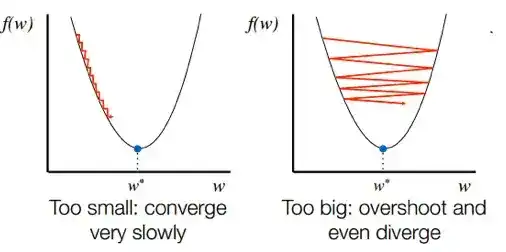
This insight about dealing with pain applies not only to trading losses but also broadly to life. The common coping mechanisms mentioned earlier are crude because, while they may solve the immediate problem, they often introduce just as many new ones. If you cannot recover from a loss in a refined, precise manner, you will end up like a gradient descent algorithm with too large a step size—oscillating wildly around the optimum, constantly overshooting, never converging to the right position.
When Napoleon lost a battle, he would immediately begin rebuilding his army and planning his next move. A single defeat is not fatal, unless it robs you of the ability to continue fighting. The primary task after a setback is to ensure this weakness can no longer be exploited and to restore your best competitive state as quickly as possible.

You should not seek redemption, nor should you seek revenge. You should not react passively, nor should you harbor anger. You must become a cold, calculating machine. You must repair yourself, then rebuild the system, ensuring the same mistake is never made again. Every failure you endure becomes a moat in your system—a moat that everyone else must pay the price to learn themselves.

Be grateful for losses that build character; they appear so you may learn. This loss did not happen without reason. Allow yourself to feel the pain, but transform it into motivation, and ensure you will never make the same mistake again.

These things are difficult because once you find the right direction, the continued growth of wealth becomes a matter of course.

Good luck.

İlgili Sorular

QWhat is the main message of the article regarding losses in crypto trading?

AThe article emphasizes that losses should not be wasted but treated as valuable lessons. It argues that traders should accept the loss, avoid revenge trading, and instead focus on identifying and fixing flaws in their risk management system to prevent future failures.

QHow does the article use the myth of Sisyphus to relate to crypto trading?

AThe article draws a parallel between Sisyphus's endless task of pushing a boulder up a hill only for it roll back down and the experience of crypto traders who see profits vanish suddenly. It suggests that, like Sisyphus finding meaning in the struggle, traders can find value in the process and maintain resilience despite market absurdities.

QWhat are the two common reactions to significant trading losses mentioned in the article?

AThe two common reactions are: 1. Increasing bets aggressively to recover losses quickly, often using a Martingale strategy, which is dangerous and mathematically unsound. 2. Becoming emotionally exhausted and quitting the market entirely, effectively 'sentencing' the market to death and never returning.

QWhat does the article identify as the real challenge in risk management for traders?

AThe real challenge is not a lack of knowledge about risk management principles, but the difficulty in consistently executing those strategies under pressure from emotions, ego, stress, and fatigue. The market exposes the gap between one's cognitive understanding and actual behavior.

QAccording to the article, what is the proper way to transform the pain of a loss?

AThe proper way is to fully accept the current net worth, not anchor to past highs, and view the loss as tuition paid to learn a lesson about one's flaws. One should allow themselves to feel the pain, but then channel it into motivation to rebuild their system with strict rules to ensure the same mistake is never repeated.

İlgili Okumalar

South Korean Exchanges 'Battle' Regulators, Challenging the Boundaries of Enforcement and Legislation

South Korea's cryptocurrency industry is engaged in a rare, direct confrontation with regulators. The Financial Intelligence Unit (FIU), the primary anti-money laundering (AML) watchdog, has recently imposed heavy penalties on major exchanges like Upbit and Bithumb for alleged violations involving unregistered overseas VASPs and AML procedures. However, exchanges are now actively challenging these actions in court and through industry associations. In a significant shift, the Seoul Administrative Court ruled in favor of Upbit's operator, Dunamu, overturning part of an FIU-ordered business suspension. The court found the FIU's penalty criteria and justification insufficiently clear. Similarly, the court suspended the enforcement of a six-month business suspension against Bithumb pending a final ruling, citing potential irreversible harm to the exchange. Beyond legal battles, the industry is contesting proposed legislative amendments. The Digital Asset eXchange Alliance (DAXA) strongly opposes a draft rule that would mandate Suspicious Transaction Reports (STRs) for all crypto transfers over 10 million KRW (~$6,800). DAXA argues this "poison pill" clause violates legal principles and would overwhelm the STR system, increasing reports from 63,000 to an estimated 5.45 million annually for major exchanges, thereby crippling effective AML monitoring. This conflict highlights a structural tension in South Korea's crypto governance: comprehensive digital asset laws are still developing, while regulators rely heavily on AML enforcement. The industry's move from passive compliance to active legal and legislative challenges signifies a new phase, pressing for clearer rules and more proportionate enforcement. While short-term disputes may intensify, this clash could ultimately lead to a more mature and sustainable regulatory framework for South Korea's vibrant crypto market.

marsbit43 dk önce

South Korean Exchanges 'Battle' Regulators, Challenging the Boundaries of Enforcement and Legislation

marsbit43 dk önce

After 50x Storage Surge, Justin Sun Always Looks to the Next Decade

Sun Yuchen, known for his controversial stunts like a $30 million lunch with Warren Buffett (canceled due to a kidney stone) and eating a $6.2 million duct-taped banana, is often overshadowed by a significant fact: his decade-long track record of spotting major investment trends. In 2016, he famously advised young people to invest in Bitcoin, Nvidia, Tesla, and Tencent instead of buying property. A hypothetical $20,000 investment in Nvidia and Tesla from that list would now be worth over 50 million RMB. His latest major call was on November 6, 2025, predicting a "50x storage opportunity" tied to the AI boom, which materialized with Sandisk's stock surging nearly 50-fold by 2026. Looking ahead, Sun now focuses on the next frontier: Physical AI. He identifies four key areas: 1. **Embodied AI/Robotics**: He sees this reaching its "iPhone moment," with companies like UBTech and Galaxy General leading in commercialization. 2. **Drones**: Viewed as the first commercially viable form of Physical AI, revolutionizing sectors from warfare (e.g., AeroVironment's Switchblade) to logistics. 3. **Spatial Computing**: Beyond VR, it's about AI understanding physical space, a foundational technology for robotics and autonomous systems, exemplified by Apple's Vision Pro. 4. **Space Exploration**: After a 2025 suborbital flight with Blue Origin, Sun advocates for space as the ultimate frontier, discussing blockchain's potential role in space asset management and data transactions. His investment philosophy involves betting on entire, inevitable trends rather than single companies. For robotics, he sees Tesla (the body/manufacturer) and Nvidia (the brain/AI platform) as complementary plays. In defense drones, he highlights companies making tanks obsolete (AeroVironment) and those augmenting fighter jets (Kratos). For space, he participated in Blue Origin's flight and anticipates SpaceX's potential IPO to redefine the sector's valuation. Sun Yuchen's vision frames the next two decades not as a revolution in information flow (like the internet), but in the fundamental operation of the physical world through AI-powered robots, autonomous systems, and spatial intelligence, ultimately extending human and AI activity into space. While many still focus on conventional assets, he continues to look toward the next technological horizon.

marsbit1 saat önce

After 50x Storage Surge, Justin Sun Always Looks to the Next Decade

marsbit1 saat önce

The Billionaires Behind the Most Expensive Midterm Election in History

"The Most Expensive Midterm Elections and Their Billionaire Backers" This analysis details the unprecedented scale of spending in the 2026 midterm elections, highlighting the key billionaire donors shaping the political landscape. Jeff Yass, founder of Susquehanna International Group, has contributed over $81 million, ranking third among individual donors behind George Soros ($102.6M) and Elon Musk ($84.8M). Yass is a major donor to Trump's MAGA Inc. and supports school choice and various candidates. Overall, federal committees have raised over $4.7 billion this cycle, with political ad spending projected to reach $10.8 billion. Republican-aligned groups are significantly out-raising their Democratic counterparts. "Dark money" from undisclosed sources continues to grow. The core stakes involve control of Congress and policy direction for Trump's final term. Donors are also motivated by specific issues: Sergey Brin and Chris Larsen are funding opposition to a proposed California wealth tax and supporting crypto-friendly policies. Other top donors include OpenAI's Greg Brockman and his wife Anna ($50M total to MAGA Inc. and an AI-focused PAC), Richard Uihlein ($45.3M to conservative causes), venture capitalists Marc Andreessen and Ben Horowitz (each over $44M to crypto/AI PACs and MAGA Inc.), Miriam Adelson ($42.6M to GOP leadership PACs), Paul Singer ($33.9M), and Diane Hendricks ($25.8M to MAGA Inc.). The article notes that the peak fundraising period is still ahead, with major primaries approaching.

marsbit1 saat önce

The Billionaires Behind the Most Expensive Midterm Election in History

marsbit1 saat önce

The Largest IPO in History Is Approaching, Surpassing SpaceX, 28 Years of AI Self-Iteration, Countdown to Intelligence Explosion

"Anthropic Nears Trillion-Dollar IPO, Fueled by Explosive Growth and 2028 'Intelligence Explosion' Warning Anthropic is considering a deal valuing the AI company near $1 trillion, potentially leading to one of the largest IPOs ever and surpassing SpaceX. Its revenue has skyrocketed, with Annual Recurring Revenue (ARR) reaching $45 billion in May 2026—a 500% increase in just five months. This vertical growth curve is attributed to its key products, Claude Code and Cowork, dominating AI coding and enterprise collaboration. Beyond commercial success, co-founder Jack Clark issued a pivotal warning in an interview: there is a greater than 50% chance that by the end of 2028, AI systems will achieve recursive self-improvement—the ability to autonomously build a 'better version' of themselves, initiating an 'intelligence explosion.' This prophecy underpins the company's astronomical valuation, as the market prices in the potential for transformative and disruptive AI. Further signaling its ambition, Anthropic formed a $1.5 billion joint venture with Goldman Sachs and Blackstone, aiming to disrupt traditional consulting firms like McKinsey by deploying Claude AI for complex strategic work. This move tests AI's capacity to replace high-level cognitive labor, a precursor to its predicted autonomous evolution. The narrative presents a dual future: unprecedented economic opportunity alongside significant risks like economic restructuring and security threats. Anthropic's meteoric rise and Clark's 2028 prediction frame the coming years as a countdown to a potential technological singularity."

marsbit1 saat önce

The Largest IPO in History Is Approaching, Surpassing SpaceX, 28 Years of AI Self-Iteration, Countdown to Intelligence Explosion

marsbit1 saat önce

İşlemler

Spot
Futures

Popüler Makaleler

T Nasıl Satın Alınır

HTX.com’a hoş geldiniz! Threshold Network Token (T) satın alma işlemlerini basit ve kullanışlı bir hâle getirdik. Adım adım açıkladığımız rehberimizi takip ederek kripto yolculuğunuza başlayın. 1. Adım: HTX Hesabınızı OluşturunHTX'te ücretsiz bir hesap açmak için e-posta adresinizi veya telefon numaranızı kullanın. Sorunsuzca kaydolun ve tüm özelliklerin kilidini açın. Hesabımı Aç2. Adım: Kripto Satın Al Bölümüne Gidin ve Ödeme Yönteminizi SeçinKredi/Banka Kartı: Visa veya Mastercard'ınızı kullanarak anında Threshold Network Token (T) satın alın.Bakiye: Sorunsuz bir şekilde işlem yapmak için HTX hesap bakiyenizdeki fonları kullanın.Üçüncü Taraflar: Kullanımı kolaylaştırmak için Google Pay ve Apple Pay gibi popüler ödeme yöntemlerini ekledik.P2P: HTX'teki diğer kullanıcılarla doğrudan işlem yapın.Borsa Dışı (OTC): Yatırımcılar için kişiye özel hizmetler ve rekabetçi döviz kurları sunuyoruz.3. Adım: Threshold Network Token (T) Varlıklarınızı SaklayınThreshold Network Token (T) satın aldıktan sonra HTX hesabınızda saklayın. Alternatif olarak, blok zinciri transferi yoluyla başka bir yere gönderebilir veya diğer kripto para birimlerini takas etmek için kullanabilirsiniz.4. Adım: Threshold Network Token (T) Varlıklarınızla İşlem YapınHTX'in spot piyasasında Threshold Network Token (T) ile kolayca işlemler yapın.Hesabınıza erişin, işlem çiftinizi seçin, işlemlerinizi gerçekleştirin ve gerçek zamanlı olarak izleyin. Hem yeni başlayanlar hem de deneyimli yatırımcılar için kullanıcı dostu bir deneyim sunuyoruz.

416 Toplam GörüntülenmeYayınlanma 2024.12.10Güncellenme 2025.03.21

T Nasıl Satın Alınır

Tartışmalar

HTX Topluluğuna hoş geldiniz. Burada, en son platform gelişmeleri hakkında bilgi sahibi olabilir ve profesyonel piyasa görüşlerine erişebilirsiniz. Kullanıcıların T (T) fiyatı hakkındaki görüşleri aşağıda sunulmaktadır.

活动图片