On the other side of the globe, Didi is no longer just a ride-hailing company earning commissions; it has become a digital banking giant. What was once considered a financial sideline to its ride-hailing business now boasts over 25 million users in Latin America.
If we focus on China, Didi's identity is clear and fixed. Despite having hundreds of millions of monthly active users, in the more fertile territory of finance, it remains an awkward outsider, trapped between the impenetrable walls built by WeChat Pay and Alipay, confined to its own niche of transportation.
Yet, on the bustling streets of Mexico City, in the congested traffic of São Paulo, thousands of people who have never set foot in a bank hold their first Mastercard, emblazoned with the Didi logo.
Here, it is not just the driver taking people home; it is the true master controlling the flow of capital at the grassroots level, the "money bag" upon which countless ordinary Latin Americans rely.
Looking back at Didi's rise in Latin America, this is not just a geographical expansion overseas; it is more like an "reverse evolution" forced by the environment.
In China, because the roads were already built by others, Didi only needed to be the driver. But in Latin America, faced with a wilderness, it was forced to learn how to pave roads and build bridges. This ability to build infrastructure is precisely the skill that Chinese internet companies were once best at but had gradually forgotten due to the over-developed domestic infrastructure.
Ambition Strangled by "Perfection"
Didi's setback in China's financial battlefield was not because it did anything wrong, but because it was born in an overly mature era where the market's infrastructure had been built too perfectly. Perfection can sometimes be a curse.
In the grand narrative of China's internet business history, 2016 was a watershed year. That year, with the aggressive expansion of WeChat Pay and Alipay, the mobile payment war in China was effectively over. The two giants together occupied over 90% of the market share, turning mobile payment into a national-level infrastructure as accessible as water, electricity, and gas.
For consumers, this was the ultimate convenience; but for latecomers like Didi, it was an invisible high wall.
In the following years, despite going to great lengths to obtain 8 financial licenses including payment, online micro-lending, and consumer finance, attempting to build its own closed loop. When the duopoly had become the underlying operating system of the business world, other payment tools were destined to be merely functional plugins attached to this system.
A deeper paradox lies in the fact that traffic never naturally equates to "retained users".
Although Didi possesses massive user traffic, the transportation scenario has a fatal genetic flaw – short dwell time, no沉淀 (precipitation/sedimentation, here meaning funds don't remain/stay within the ecosystem). In the极致 (ultimate) payment environment built by the duopoly, funds move from the user's bank card to the driver's account and are quickly withdrawn.
In this process, Didi is merely an efficient pipeline, not a reservoir for funds. Compared to the capital沉淀 generated by Alibaba's e-commerce transactions or the capital flow generated by Tencent's social red packets, Didi's traffic is "use and go".
This sense of suffocation ultimately reached its peak amidst dramatic changes in the regulatory environment.
The delisting incident in the summer of 2021 and the subsequent massive 8 billion RMB fine acted like heavy full stops,彻底终结了 (thoroughly ending) Didi's financial ambitions in China. Under such high-pressure conditions, Didi not only missed the window for expansion but also lost strategic room to maneuver. It was forced to contract and live cautiously.
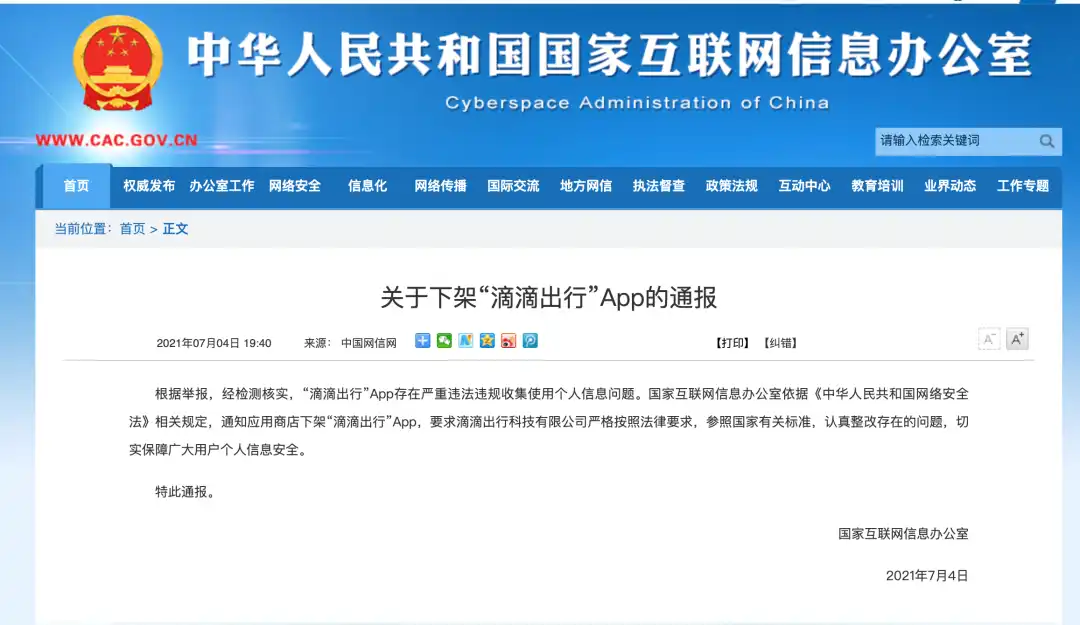
Official notice document regarding Didi's delisting
At this point, Didi's financial story in China seemed to have reached its end.
It was trapped in the besieged city of "perfection". The roads were too smooth,不需要它修 (it didn't need to build them); the bridges were too stable,不需要它架 (it didn't need to construct them).
This seemed like an unsolvable deadlock. But on the other side of the Pacific Ocean, a completely opposite business script was playing out. The barrenness there, far from being an obstacle, became Didi's biggest红利 (dividend/benefit).
Rebuilding Trust in the Cash Continent
When Didi's advance team first set foot on the Latin American continent, what they saw was not a blue ocean waiting to be developed, but a huge social fault line.
According to World Bank statistics, about half of adults in Latin America lack bank accounts. In Mexico, with a population of 130 million, this means over 66 million ordinary people are locked out of the high walls of the modern financial system.
This is a suffocating "financial vacuum". In this vacuum, cash is the only belief.
In Mexico, nearly 90% of retail transactions are still completed with cash. For Chinese internet companies accustomed to a cashless society, this "cash worship" is simply a nightmare. In China, funds flow in the cloud, clean and efficient; but in Latin America, because the vast majority of passengers lack bank cards, they can only pull out crumpled, even sweat-stained banknotes to pay the fare.
This directly led to an efficiency collapse. Drivers collected pockets full of change, but the Didi platform could not take its commission from it.大量司机因为欠费被封号 (A large number of drivers had their accounts suspended due to unpaid fees), and the system nearly瘫痪 (paralyzed/collapsed).
But more可怕 (frightening) than inefficiency was the loss of safety and control.
On the治安复杂 (complex security situation) streets of Latin America, drivers carrying large amounts of cash became moving "ATMs". Robberies were rampant; every stop to collect payment could be a gamble with life and death.
Here, we must introduce the most important reference point: Uber.
As the pioneer of ride-hailing, Uber entered Latin America earlier than Didi. But facing the same cash dilemma, Uber's choice reflects the fundamental strategic DNA difference between Eastern and Western internet giants.
Uber represents the typical "Silicon Valley fastidiousness" – professional division of labor. In the mature US market, finance belongs to Wall Street; Uber only does connection. This mindset led them to arrogantly insist on doing only what they were good at when faced with Latin America's barrenness.
The cost was惨痛的 (painful/bleeding). In 2016, Uber received a literally "bloody lesson" in Brazil. After being forced to accept cash payments, the number of robberies against drivers soared tenfold in just one month, and according to Reuters, at least 6 drivers lost their lives as a result.
Faced with this剧增的 (dramatically increased) death risk, Silicon Valley's choice is usually to retreat and wait for the environment to mature slowly.
Didi represents the Chinese,乃至亚洲的 (and even Asian), super-app mindset: all-round替补 (substitution/filling gaps).
Companies that grew up in China's残酷的商业巷战中 (cruel commercial street fighting) deeply understand one truth: if society lacks roads, you have to build them; if society lacks credit, you have to create it.
Therefore, Didi chose a heavier, more down-to-earth, but also more effective path: it decided to改造 (transform/remodel) the environment.
Didi set its sights on the ubiquitous red and yellow signs on Mexican streets – OXXO convenience stores.
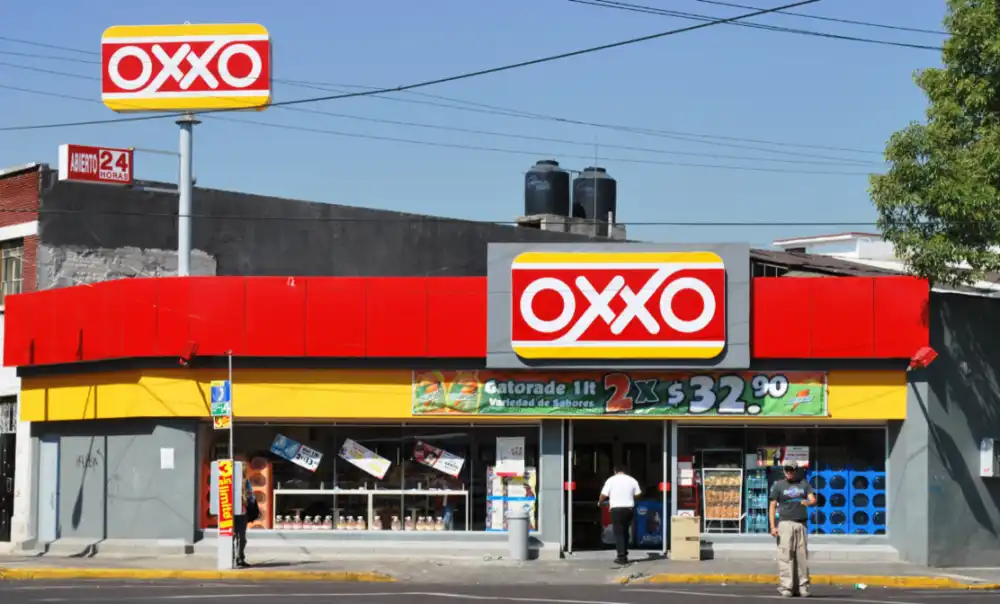
Mexico's National Convenience Store
This retail giant, with 24,000 stores, handles nearly half of Mexico's cash transactions and is the de facto "national cashier". Didi敏锐地捕捉到了 (keenly captured) this connection point and made a decision full of Chinese-style pragmatism: turn the convenience store into its own manual ATM.
A quiet financial experiment began.
When a driver finished a day's work, pockets stuffed with cash. He no longer needed to take the money home担惊受怕 (in fear and trepidation). Instead, he parked outside an OXXO, showed the clerk the barcode in his DiDi App, and handed over the cash. With the "beep" of the scanner, physical world banknotes instantly turned into digital balance in the DiDi Pay account.
This "beep" was profoundly significant.
This was not just a top-up; it was ferrying offline cash into the online world. By attaching itself to the ubiquitous convenience store network, Didi低成本地建立 (low-costly established) a fund circulation system independent of traditional banks.
Once funds entered DiDi Pay, Didi was no longer just a transportation platform; it had become the driver's "shadow bank".
Subsequently, Didi rapidly built application scenarios on top of this account. In Brazil, Didi's 99Pay deeply integrated with the local instant payment system PIX, allowing tens of millions of people at the bottom of the pyramid to enjoy the financial dignity of second-level transfers for the first time.
This approach built a bloody moat: safety.
In China, mobile payment is for "speed"; but in Latin America with its complex security situation, mobile payment is for "survival".
Every attempt to move away from cash meant reducing the risk of a driver being held up at gunpoint. When a driver发现 (discovers) that using DiDi Pay can free him from fear, his loyalty to this platform will transcend any commercial subsidy.
At this point, Didi in Latin America had finally built its first own expressway. It solved not a demand for icing on the cake, but this continent's most acute渴望 (longing/desire) – to make money flow and make transactions safe.
When Footprints Become Credit
Once the road was built, Didi suddenly realized it was standing on a gold mine that had never been mined before. The name of this gold mine was data.
But the data here does not refer to traditional financial流水 (flow/statements). In Mexico or Brazil, the vast majority of drivers and passengers are blank slates in the records of traditional financial institutions. Banks cannot see them, don't know if they have repayment ability, and naturally dare not lend to them.
Banks cannot see, but Didi can.
Through the App, Didi possesses a近乎全知的 (almost omniscient) "God's perspective". It清楚地知道 (clearly knows) what time a driver starts work daily, how many kilometers they drive, whether they are diligent; it also knows where a passenger lives, where they work, and their consumption frequency.
These seemingly trivial travel footprints are recoded by Didi's risk control models into a全新的信用类别 (completely new category of credit) – "behavioral credit".
This is an assessment with more warmth than bank statements. A driver who punctually starts work at 6 AM every morning, rain or shine, even if they have no bank deposit for various reasons, in Didi's algorithmic logic, is still a high-credit优质客户 (quality customer). Diligence was, for the first time, being priced as credit here.
Based on this endogenous credit creation, Didi naturally launched the lending product "DiDi Préstamos". For millions of Latin American users, this might be the first time they obtained formal financial credit. Data shows that among Didi's credit users, about 70% had never borrowed a single cent before.
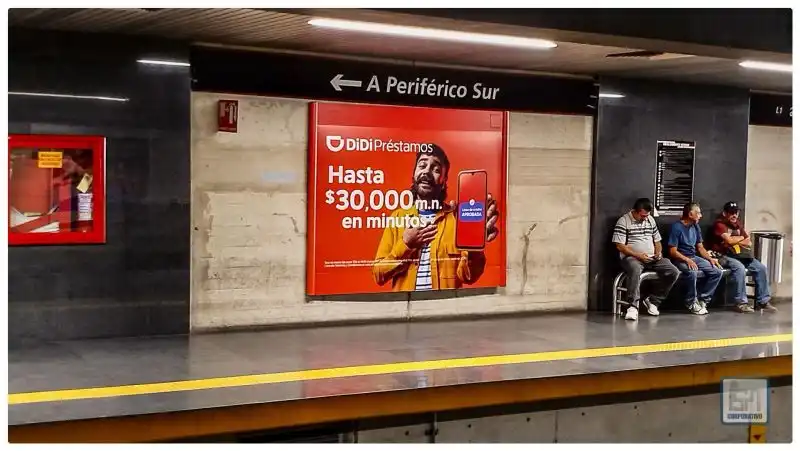
Local advertisement for DiDi Préstamos
This is not just a commercial breakthrough; it is also a sociological experiment with profound implications.
In Latin America, the vast "informal economy" population has long been invisible due to lack of credit records. Didi inadvertently completed a "digital rights confirmation" that governments have failed to achieve for decades. A street vendor selling Tacos or a driver with a used car, by connecting to Didi's ecosystem, gained a recordable economic identity for the first time, moving from the shadows into the sunlight for the first time.
This ability to "formalize the informal economy" is the deepest soil in which Didi has taken root in Latin America.
The moat brought by this evolution is astonishing; it has even triggered a war about "DNA" in Latin America.
The digital finance battlefield in Latin America is already crowded with heroes, including digital banking giants like Nubank and e-commerce overlords like Mercado Libre. But Didi possesses a dimensional advantage they lack: extremely high-frequency life scenarios.
Nubank's DNA is banking; it is low-frequency. Mercado Libre's DNA is e-commerce; it is mid-frequency. Didi's DNA is transportation; it is high-frequency.
You might shop online once a month, go to the bank a few times a year, but you go out every day. In cultivating payment habits, "transportation" is the highest-dimensional battlefield. Didi used high-frequency transportation and food delivery scenarios (DiDi Food) to successfully break through the barriers of low-frequency financial services.
Having traffic is one thing; having "retained funds" is another.
To彻底截流 (completely intercept) these fast-circulating funds on the platform, Didi deployed its final big killer move: leveraging Latin America's high-interest environment to wage an interest rate war.
It launched a savings product "DiDi Cuenta" with an annualized yield as high as 15%. This is a number that sounds近乎疯狂 (almost crazy) in China,甚至会被怀疑是庞氏骗局 (and would even be suspected of being a Ponzi scheme). But in Mexico, where benchmark interest rates have long remained in double digits, this is just a常规战役 (conventional battle) fought by major digital banks to compete for deposits.
Didi was just following local customs, but in doing so, it completed the most critical turning point: it finally shed the awkward role of the "passing wealth god" and truly became a reservoir for wealth where funds could sediment.
Industrial Synergy
Once the credit system and capital pool took shape, Didi's ambitions were no longer confined to finance itself.
It began to play a more strategically significant role: the "Trojan Horse" for Chinese industry going overseas. It wanted to use finance as the key to open the door to heavy-asset consumption in Latin America.
The first wave was the overseas expansion of consumer goods.
In 2025, Alibaba's AliExpress partnered with Didi in Mexico to launch a "Buy Now, Pay Later" service. The effect was immediate. During the promotion week, AliExpress orders surged by 300%, and sales for some Chinese merchants激增了 (soared) 18-fold.
For those Mexican youth without credit cards, the credit payment provided by Didi became the bridge connecting them to "Made in China".
But this was just the prelude. A deeper布局 (layout) occurred on the overseas map of China's high-end manufacturing, especially new energy vehicles (NEVs).
Today, Latin America has become a new battlefield for Chinese automakers like BYD, Chery, and Great Wall. However, the biggest obstacle they face is not product strength, but the lack of financial tools. Local drivers want to buy electric vehicles to save on fuel costs, but traditional Latin American banks, due to failing risk control models, not only approve loans extremely slowly but often simply reject them.
At this point, Didi became the crucial connector.
Didi holds millions of drivers with car replacement needs in its left hand,精准的风控数据与信贷资金 (precise risk control data and credit funds) in its right hand, and connects Chinese automakers eager to open up the market in the middle. It not only issues credit cards to drivers but also directly steps into the role of an auto financial services provider.
Through Didi's financial solutions, drivers can purchase Chinese-made electric vehicles in installments, using their ride-hailing income to repay the loans.
这是一种深度极高的产业协同 (This is industrial synergy of extremely high depth). Didi in Latin America is becoming the infrastructure for the landing of Chinese high-end manufacturing. It is not only paving the financial road but also the road for energy transition.
At this point, a complete closed loop finally emerged.
Didi in Latin America has turned itself into a super interface connecting online and offline, connecting Chinese manufacturing with Latin American consumption.
Its dream of a "super APP" that failed to materialize in China due to the mature environment miraculously became a reality on the wilderness on the other side of the earth, in the most primitive, yet toughest way.
The Instinct of a Builder
1.162 billion orders in a single quarter, 35% revenue growth, and transaction volume approaching 30 billion RMB. With this hefty financial report, Didi has erected a new road sign for Chinese internet出海 (going overseas).
This report card signifies not only commercial success but also a correction to the logic of "exporting the Chinese model".
In the past, we often thought that the technological and efficiency gap allowed us to directly transplant China's mature internet model to emerging markets. But Didi's practice in Latin America proves that simple replication is a dead end. You cannot just bring the advanced machine; you also have to redo all the dirty and hard work that was done when the machine was first built.
The most crucial thing Didi did right in Latin America was to completely let go of the arrogance of a tech company. It crouched down, went back ten years, and redid the QR code promotion and cash ground推广 (promotion/push) that Alipay and WeChat Pay had once done, but in a foreign land.
In the past, we often thought the advantage of the Chinese model lay in algorithms and efficiency. But Didi's story shows that the most formidable ability of Chinese companies is the instinct to build "something out of nothing" in environments of scarcity.
In China, this instinct was sealed away due to the over-developed infrastructure. Didi was trapped in the crack between WeChat and Alipay,只能做一个高效的调度员 (only able to be an efficient dispatcher). But in Latin America, when thrown into a wilderness, this suppressed基因 (gene) completed an astonishing爆发 (outbreak/eruption). It did not see itself as a lofty tech company but lived as the most朴素 (simple/unadorned) "infrastructure foreman".
This also预示了 (foreshadows/hints at) a certain destiny and opportunity for Chinese companies going overseas:试图直接移植国内那套「完美模式」是行不通的 (trying to directly transplant that domestic "perfect model" is not feasible). We can only win respect by exporting the "ability to solve pain". In those emerging markets,喧嚣、混乱却充满渴望 (noisy, chaotic, yet full of longing), reminiscent of China a decade ago, lies the biggest surprise egg for the second half of China's internet era.