Dialogue with IOTA Foundation's Jens: From Kenya to the UK, TWIN Propels Global Trade into the '5-Minute' Era

marsbit2026-06-30 tarihinde yayınlandı2026-06-30 tarihinde güncellendi

Özet

**Summary: IOTA's TWIN Project is Speeding Up Global Trade** Jens Munch Lund-Nielsen, Head of Global Trade & Supply Chain at the IOTA Foundation, discusses how the TWIN (Trade and Logistics Information Network) project is addressing long-standing inefficiencies in global trade. Traditionally, cross-border trade involves numerous parties, extensive paperwork, and delays spanning weeks. TWIN, built on IOTA's decentralized, scalable, and low-cost infrastructure, aims to replace this fragmented, paper-based system with a real-time, trusted, and interconnected digital collaboration layer. As a neutral digital public infrastructure, TWIN allows governments, businesses, and ports to exchange verifiable data and documents without ceding control to a single entity. This solves a core coordination problem that previous, proprietary platforms failed to address due to a lack of trust and neutrality. Key real-world implementations include: * **TLIP in East Africa:** Reduced document retrieval times for flower, coffee, and tea exports from 6-7 hours to ~30 minutes, cutting administrative work by 50-60%. * **UK Ecosystem of Trust Trials:** Provided border agencies with much earlier visibility (up to 20+ hours) of incoming chilled poultry shipments from Poland, enabling better resource planning. * Other pilots focus on supply chain traceability for fruits/vegetables, port efficiency, and critical mineral sourcing. TWIN ensures interoperability across jurisdictions by adopting globa...

Author: Deep Tide TechFlow

As early as 2015, institutions including the World Economic Forum (WEF) and Barclays predicted:

Blockchain holds immense transformative potential within the high-friction global trade system.

Previously, a cross-border trade transaction typically involved 30 stakeholders, 36 documents, and 240 paper copies circulating over weeks; now, flowers exported from Kenya to Europe can have their trade documents obtained in less than 5 minutes.

This is the efficiency being progressively achieved by the blockchain protocol project IOTA through TWIN, a global trade digital collaboration infrastructure.

Since its launch in May 2025, TWIN has made breakthrough progress across three continents: in Africa, processing over 184,000 invoices through TLIP; piloting within UK border infrastructure; and currently negotiating pilot projects with government and enterprise in Asia.

On the occasion of TWIN's first anniversary, we had an in-depth conversation with Jens Munch Lund-Nielsen, Head of Global Trade & Supply Chain at the IOTA Foundation.

Before joining the IOTA Foundation, Jens worked in the strategy office of Maersk, one of the world's largest shipping companies, focusing on digital trade and public-private partnerships. There, he witnessed firsthand how the global trade system truly operates: vast but inefficient, high-friction and fragmented, with no single party able to truly coordinate everyone.

This experience gave Jens a clearer realization: global trade needs an open, neutral, decentralized infrastructure that supports multiple participants—governments, enterprises, ports—to exchange trusted data in real-time within the same system. This also became the core reason Jens chose to join the IOTA Foundation:

To drive TWIN's development, to move global trade from paper-based, siloed processes towards truly real-time, trusted, and interconnected digital collaboration workflows.

In this content, let's follow Jens's insights to see what, in the eyes of this seasoned trade professional, the real answer has been for the over-decade-long stagnation of global trade digitalization.
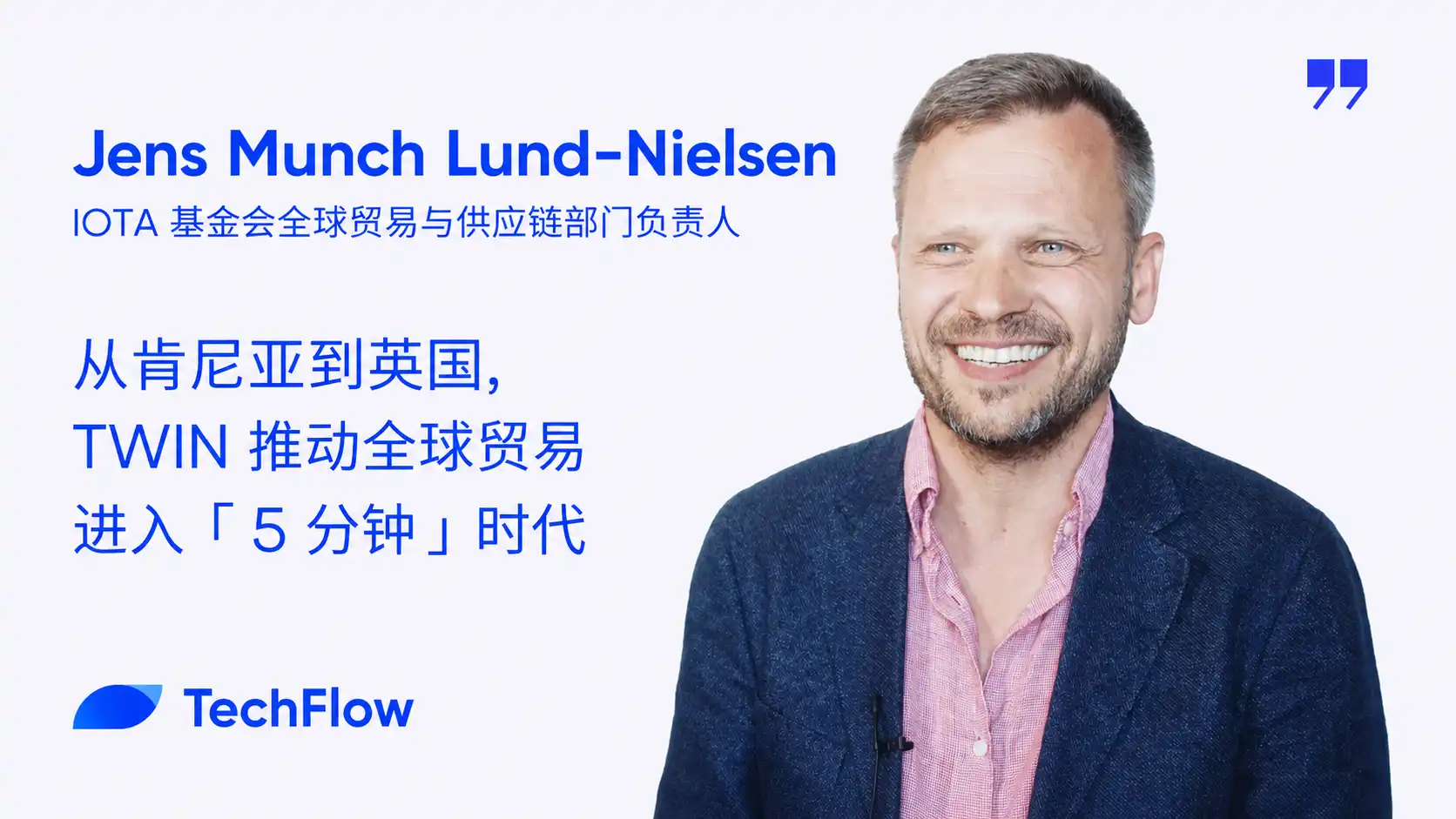
From Paper to Chain: Building a Global Trade Digital Collaboration Infrastructure

Deep Tide TechFlow: Before delving into TWIN, could you first briefly introduce yourself, including your background in global trade, and what was the opportunity that led you to join the TWIN project?

Jens:

Hello everyone, I am Jens Munch Lund-Nielsen, currently serving as Head of Global Trade & Supply Chain at the IOTA Foundation.

My background is primarily focused on technology, trade facilitation, and digital trade, with a particular emphasis on building digital products and supporting their global rollout and implementation.

Before joining IOTA, I served as Head of Digital Trade within Maersk's strategy office, focusing on integrating trade facilitation, public-private partnerships, and digital solutions into global supply chains.

The opportunity to work on TWIN appealed to me because I saw it as a unique chance to address long-standing structural inefficiencies in global trade through trusted digital systems and interoperable technology.

Deep Tide TechFlow: For those unfamiliar with the project, how would you describe TWIN? What is its core essence?

Jens:

At its essence, TWIN is a neutral digital infrastructure for global trade.

Today's trade system operates on fragmented systems and paper-based processes because no single party can coordinate all participants.

TWIN changes this: it provides a common foundational layer where businesses, governments, and various organizations can exchange data, documents, and assets in real-time and securely.

TWIN is an open, interoperable network that connects existing systems, reinforces trust through verifiable data, and enables cross-jurisdictional compliance without relying on a centralized owner.

Built on IOTA, TWIN combines distributed ledger technology with decentralized identity systems, ensuring each participant always retains control over their own data while enabling global collaboration.

Simply put:

TWIN is the infrastructure that moves global trade from paper-based, siloed operations towards real-time, trusted, and interconnected digital collaboration workflows.

Deep Tide TechFlow: What specific problem in global trade is TWIN dedicated to solving? Why has this problem remained unsolved for so long?

Jens:

Fundamentally, TWIN addresses a core coordination problem in global trade: the lack of a common, trusted infrastructure that all participants can use to seamlessly exchange data.

Today, trade still heavily relies on paper documents and fragmented systems. Information is repeatedly entered, delayed, and often inconsistent as it moves between exporters, importers, banks, ports, and customs authorities. This creates inefficiencies, increases risks, and limits supply chain transparency.

This problem has persisted, not due to a lack of technology, but due to a lack of 'neutrality'.

Most previous attempts at trade digitalization have essentially involved building permissioned platforms, often driven by specific companies, regions, or interest groups. While these solutions may be technically viable, they face a structural issue:

Other participants are often reluctant to adopt infrastructure perceived as 'controlled by others.' Without widespread trust and adoption, these systems fail to achieve the network effect scale required for global trade.

TWIN takes a different path. It offers an open, neutral, decentralized infrastructure where no single party owns or controls the entire system. This allows all participants to share data while retaining their sovereignty and meeting their respective regulatory requirements.

Scalable, Low-Cost, Decentralized: IOTA Underpins the TWIN Architecture

Deep Tide TechFlow: Why was IOTA chosen as the underlying infrastructure for TWIN?

Jens:

IOTA was chosen as the underlying infrastructure for TWIN because it meets the core requirements of a global trade system: scalability, cost-efficiency, and neutrality.

Built on a DAG architecture, IOTA offers high scalability, capable of processing a massive volume of transactions and data exchanges in parallel, which is crucial for global trade where millions of events, documents, and updates occur continuously across supply chains.

It also provides extremely low transaction costs, which is vital in trade scenarios due to the high-frequency interactions involved. If every document update, verification, or data exchange incurred a significant fee, costs would quickly become prohibitive at scale.

Beyond the technology itself, IOTA brings over a decade of experience building real-world infrastructure and a solid track record of delivery through collaboration with governments, enterprises, and standardization bodies.

Furthermore, and importantly, IOTA is designed as an open, neutral infrastructure, not controlled by a single corporate entity. This aligns perfectly with the fundamental needs of global trade, where trust and sovereignty are key prerequisites for adoption by diverse stakeholders.

Deep Tide TechFlow: How should we understand the relationship between TWIN and IOTA? Is TWIN an application layer, an ecosystem, or something more macro?

Jens:

The most appropriate way to understand TWIN is as a digital public infrastructure for global trade—a shared data and coordination layer connecting governments, businesses, and existing platforms.

Simply put, TWIN enables parties to exchange verified, immutable data across borders in real-time without relinquishing control.

IOTA sits underneath as the underlying infrastructure layer. It provides the decentralized trust layer, ensuring data integrity, auditability, and interoperability at scale.

From African Flowers to European Poultry: TWIN's Real-World Trade Scenario Implementations

Deep Tide TechFlow: What are the most concrete, real-world application scenarios currently being explored or implemented through TWIN?

Jens:

TWIN is already deployed in multiple real-world trade scenarios, effectively demonstrating how shared digital infrastructure reduces friction, increases transparency, and enhances efficiency in global supply chains.

The Trade and Logistics Information Pipeline (TLIP) project connects East African exporters, logistics service providers, and government agencies to a shared data pipeline. In pilot projects covering flower, coffee, and tea exports, document retrieval time for inspection purposes reduced from 6-7 hours to about 30 minutes, administrative workload decreased by 50%-60%, and exporters saved approximately $400 monthly on document processing costs.

TWIN was also tested in the UK government's 'Ecosystem of Trust Trials', involving around 2000 consignments of chilled poultry meat shipped from Poland to the UK. Border agencies gained earlier visibility of arriving goods (port health officials received data up to 20+ hours earlier than standard processes), enabling more effective resource allocation.

The UK's 'Digital Trade Testbed' will also trial TWIN to support the exchange of digital international trade information between UK ports and key border agencies.

Other implementation scenarios include:

The RESULD (Responsible Supply Chain and Logistics Due Diligence) project integrates TWIN for tracing fruit and vegetable supply chains between Kenya, the Netherlands, and the UK;

The MISSION (Maritime Instantaneous Optimisation) project is trialing TWIN to improve port operational efficiency;

Salus leverages TWIN to bring traceability to critical mineral supply chains, turning shipping and trade documents into verifiable digital assets for financial institutions to use in risk assessment and issuing trade finance;

Furthermore, the ADAPT project, led by the African Continental Free Trade Area Secretariat in collaboration with the IOTA Foundation, the Tony Blair Institute for Global Change, and the World Economic Forum, is advancing the development of a digital trade backbone for Africa, drawing on IOTA's architecture and TWIN's experience.

Deep Tide TechFlow: What are the typical reactions from governments and enterprises when they first encounter TWIN? Which areas currently show the highest acceptance?

Jens:

Upon encountering TWIN, governments and enterprises generally recognize its significant value.

On the government side, departments most directly involved in trade, such as Trade Ministries and Customs authorities under Finance Ministries, clearly perceive TWIN's immense potential to improve internal clearance processes, strengthen border control, and obtain better access to trusted data to prevent unauthorized or non-compliant goods from entering.

Within the private sector, the highest participation currently comes from transport service providers and freight forwarders, as they already handle a large volume of border and documentation processes on behalf of producers and growers. The broader industry also shows a similar level of anticipation and interest in the value TWIN can create.

At the same time, a crucial point to emphasize is: TWIN's true value derives from the network itself. The more participants connected to TWIN, the greater the value created by the entire system for all involved.

Deep Tide TechFlow: Trade is highly fragmented across different jurisdictions. How does TWIN handle interoperability between different systems, standards, and regulatory environments?

Jens:

International interoperability is one of TWIN's most critical value drivers, operating on multiple levels, a significant part of which involves ensuring systems 'speak the same language'.

To this end, we adopt globally recognized standards, such as data models from the United Nations Centre for Trade Facilitation and Electronic Business (UN/CEFACT) and the World Customs Organization (WCO), further supported and refined through the International Chamber of Commerce's Digital Standards Initiative (ICC DSI).

In terms of identity, interoperability is primarily driven by national identity registries. Through TWIN ID, we can connect a company's national-level digital identity with international standards, such as the Legal Entity Identifier (LEI) issued by the Global Legal Entity Identifier Foundation (GLEIF), which is also a partner in this initiative.

From a technical perspective, we also observe increasing convergence around standards like Decentralized Identifiers (DIDs) and Verifiable Credentials as defined by the World Wide Web Consortium (W3C).

Finally, legal interoperability is equally important. The United Nations Commission on International Trade Law (UNCITRAL) Model Law on Electronic Transferable Records (MLETR) framework is driving the legal recognition of digital trade documents, though its adoption depends on government ratification in each country.

Our experience is that work can begin even in countries that have not yet ratified MLETR; in such cases, we also assist governments in advancing this process, especially given the growing importance of this framework for trade finance scenarios.

Bridging Digital Silos, Filling the $2.5 Trillion Trade Finance Gap

Deep Tide TechFlow: How do you see global trade evolving over the next 5 to 10 years? What role will decentralized infrastructure play in this transformation?

Jens:

The international trade industry is vast and has been undergoing digital transformation over the past 10 to 15 years, with governments and enterprises upgrading their systems around standardized data models and the use of REST APIs. The missing piece today is connecting these 'digital silos' in a way that respects data sovereignty, data integrity, and controlled data sharing.

We are currently advancing projects in over eight countries, working closely with governments, and continue to see strong interest in this area. Therefore, I am optimistic:

In the coming years, a trusted 'connective layer' linking these systems will truly materialize and scale. Its potential impact on global trade, finance, and international trade agreements could be profound, making it an area especially worthy of attention.

Deep Tide TechFlow: If TWIN achieves large-scale success, what do you imagine its 'end state' would look like? Compared to today, how would global trade operate differently?

Jens:

Simply put, as global trade moves towards fully digital collaboration, many outdated processes will be replaced. Key areas like discovering new business partners or accessing financing will look fundamentally different from today.

Currently, there is an estimated $2.5 trillion trade finance gap globally, preventing many businesses from accessing the capital they need to participate efficiently in global trade.

With digital infrastructure solutions like TWIN, trusted data and verifiable digitalized processes could help unlock access to capital at scale, potentially reshaping the entire industry landscape and improving conditions for traders worldwide.


Trend Kriptolar

İlgili Sorular

QWhat is TWIN, and what core problem in global trade does it aim to solve?

ATWIN is a neutral, open digital infrastructure for global trade built on IOTA. Its core essence is to provide a common foundational layer where businesses, governments, and ports can exchange real-time, secure, and verifiable data and assets. It aims to solve the long-standing coordination problem in global trade: the reliance on fragmented systems and paper-based processes. This fragmentation arises because no single party can coordinate all participants. TWIN offers a decentralized solution, allowing seamless data exchange without a centralized controller, bridging the 'digital silos' and moving trade towards real-time, trusted, and interconnected digital collaboration.

QWhy was IOTA chosen as the underlying infrastructure for TWIN?

AIOTA was chosen for TWIN due to its scalability, cost-efficiency, and neutrality, which are critical for global trade. IOTA's Directed Acyclic Graph (DAG) architecture enables high scalability for handling massive volumes of concurrent transactions and data exchanges typical in supply chains. It offers extremely low transaction costs, essential for frequent trade interactions. Furthermore, IOTA's decade of experience in building real-world infrastructure and its status as an open, neutral protocol not controlled by any single entity aligns perfectly with the need for trust and sovereignty among diverse global trade stakeholders.

QCan you provide specific examples of real-world applications where TWIN is currently being deployed or tested?

AYes. TWIN is deployed in several real-world scenarios: 1) The Trade & Logistics Information Pipeline (TLIP) in East Africa connects exporters, logistics providers, and governments. In pilot projects for flowers, coffee, and tea, it reduced document retrieval time from 6-7 hours to ~30 minutes, cut administrative work by 50-60%, and saved exporters about $400 monthly. 2) It was tested in the UK's 'Ecosystem of Trust Trials' for chilled poultry shipments from Poland, giving border agencies visibility up to 20 hours earlier. 3) It's part of the UK's 'Digital Trade Testbed' for exchanging digital trade information between ports and border agencies. Other applications include the RESULD project for fruit/veg traceability, MISSION for port efficiency, Salus for critical mineral supply chain traceability and trade finance, and ADAPT for building a digital trade backbone in Africa.

QHow does TWIN handle interoperability between different jurisdictions, systems, and regulatory environments?

ATWIN ensures international interoperability on multiple levels. It adopts globally recognized data standards from bodies like UN/CEFACT and the World Customs Organization (WCO). For identity, it leverages national digital identity registries and aligns them with international standards like the Legal Entity Identifier (LEI) through its TWIN ID system. Technically, it converges around standards like W3C's Decentralized Identifiers (DIDs) and Verifiable Credentials. Legally, it supports frameworks like the UNCITRAL Model Law on Electronic Transferable Records (MLETR) to give digital trade documents legal recognition, while also assisting governments in adopting such laws where they are not yet in place.

QWhat potential impact could a successful, large-scale adoption of TWIN have on the future of global trade, particularly regarding trade finance?

ASuccessful large-scale adoption of TWIN could fundamentally transform global trade into a fully digitized, collaborative process. A key impact would be in addressing the global trade finance gap, estimated at $2.5 trillion. By providing trusted, verifiable data and digital processes, TWIN could unlock access to capital for businesses currently excluded. This would enable more efficient participation in global trade, reshape industry dynamics, and improve conditions for traders worldwide. Ultimately, the 'end state' would see outdated processes replaced, facilitating easier discovery of new business partners and revolutionizing access to financing.

İlgili Okumalar

The Strategy That Would Never Sell Bitcoin Opened a Permanent Sales Channel

MicroStrategy, a company long known for its "never sell Bitcoin" mantra, announced a "Digital Credit Capital Framework" allowing it to sell up to $1.25 billion worth of Bitcoin. Surprisingly, its stock (MSTR) rose nearly 7% pre-market. This shift, coming just a month after a small, "ad-hoc" sale of 32 BTC for dividends, transitions from a temporary action to a formal, institutional tool. The framework outlines four clear purposes for potential sales: bolstering USD reserves, paying preferred stock dividends/interest, and repurchasing its own preferred and common stock. The key driver for this change is the immense financial pressure from MicroStrategy's complex capital structure, specifically its massive $8.5 billion perpetual preferred stock (STRC). STRC features a variable interest rate that has been reset upward eight times in a year to 12% in an attempt to stabilize its price. However, the stock has fallen over 25% below its face value. Combined with other preferred stocks and convertible notes, MicroStrategy's total annual fixed obligations now stand at $1.76 billion, equating to a daily burn of roughly $4.8 million. While its $2.55 billion in USD reserves and the new $1.25 billion BTC sales framework provide a two-year+ runway, a dangerous feedback loop exists. Falling Bitcoin prices would force the sale of more BTC to meet fixed obligations, potentially creating further sell-side pressure and lowering MSTR's asset valuation multiple. This, in turn, limits its ability to raise cash through stock issuance. The market's positive reaction likely stems from relief; the framework replaces fears of a forced, disorderly sell-off with a structured plan. However, it does not resolve the underlying high-cost capital structure, leaving the company's long-term health heavily dependent on Bitcoin's price performance.

marsbit19 dk önce

The Strategy That Would Never Sell Bitcoin Opened a Permanent Sales Channel

marsbit19 dk önce

OpenClaw and Cursor Just Invaded Phones! Agents Are Now in Your Pocket

AI Agents have officially arrived on mobile. In a landmark move, both OpenClaw and Cursor launched native mobile apps on the same day, fundamentally shifting how AI assistants are accessed and controlled. OpenClaw has released full-featured native apps for iOS and Android. Its "local-first" architecture, developed by the OpenClaw Foundation, keeps user data private by running the agent on a user's private Gateway. The mobile app now allows seamless remote control and approval of the agent's actions directly from a smartphone, with access to device capabilities like the camera, GPS, and contacts. Simultaneously, Cursor, the AI-powered coding tool, launched a public beta of its native iOS app. It enables developers to start and manage cloud-based AI coding agents from their phones. These agents can work asynchronously for extended periods—debugging, writing code, and creating pull requests—while developers are away from their computers. The app sends notifications for key decisions, allowing users to review and merge PRs from anywhere. Together, these releases signal a major shift: AI agents are no longer confined to desktop browsers or terminals. They are becoming persistent, autonomous assistants that work independently in the cloud, with humans transitioning from constant operators to mobile supervisors who approve key steps. The era of pocket-sized, on-demand AI is now here.

marsbit32 dk önce

OpenClaw and Cursor Just Invaded Phones! Agents Are Now in Your Pocket

marsbit32 dk önce

İşlemler

Spot

Popüler Makaleler

$S$ Nedir

SPERO'yu Anlamak: Kapsamlı Bir Genel Bakış SPERO'ya Giriş İnovasyonun manzarası gelişmeye devam ederken, web3 teknolojilerinin ve kripto para projelerinin ortaya çıkışı dijital geleceği şekillendirmede önemli bir rol oynamaktadır. Bu dinamik alanda dikkat çeken projelerden biri SPERO, $$s$$ olarak adlandırılmaktadır. Bu makale, SPERO hakkında ayrıntılı bilgi toplamak ve sunmak amacıyla, meraklılar ve yatırımcıların web3 ve kripto alanlarındaki temellerini, hedeflerini ve yeniliklerini anlamalarına yardımcı olmayı amaçlamaktadır. SPERO,$$s$$ Nedir? SPERO,$$s$$, kripto alanında merkeziyetsizlik ve blok zinciri teknolojisi ilkelerini kullanarak etkileşimi, faydayı ve finansal kapsayıcılığı teşvik eden bir ekosistem yaratmayı amaçlayan benzersiz bir projedir. Proje, kullanıcıların yenilikçi finansal çözümler ve hizmetler sunarak eşler arası etkileşimleri yeni yollarla kolaylaştırmayı hedeflemektedir. SPERO,$$s$$'nin temel amacı, bireyleri güçlendirmek ve kripto para alanındaki kullanıcı deneyimini artıran araçlar ve platformlar sağlamaktır. Bu, daha esnek işlem yöntemlerini mümkün kılmayı, topluluk odaklı girişimleri teşvik etmeyi ve merkeziyetsiz uygulamalar (dApp'ler) aracılığıyla finansal fırsatlar yaratmayı içermektedir. SPERO,$$s$$'nin temel vizyonu kapsayıcılık etrafında dönmekte olup, geleneksel finansal sistemlerdeki boşlukları kapatmayı ve blok zinciri teknolojisinin faydalarından yararlanmayı hedeflemektedir. SPERO,$$s$$'nin Yaratıcısı Kimdir? SPERO,$$s$$'nin yaratıcısının kimliği bir miktar belirsizdir, çünkü kurucusu(ları) hakkında ayrıntılı arka plan bilgisi sağlayan sınırlı kamuya açık kaynaklar bulunmaktadır. Bu şeffaflık eksikliği, projenin merkeziyetsizlik taahhüdünden kaynaklanabilir—birçok web3 projesinin paylaştığı bir etik anlayışı, bireysel tanınmanın yerine kolektif katkıları önceliklendirmektedir. Topluluk ve onun kolektif hedefleri etrafında tartışmaları merkezileştirerek, SPERO,$$s$$, belirli bireyleri öne çıkarmadan güçlendirme özünü taşımaktadır. Bu nedenle, SPERO'nun etik anlayışını ve misyonunu anlamak, tek bir yaratıcının kimliğini belirlemekten daha önemlidir. SPERO,$$s$$'nin Yatırımcıları Kimlerdir? SPERO,$$s$$, kripto sektöründe yeniliği teşvik etmeye adanmış girişim sermayedarlarından melek yatırımcılara kadar çeşitli yatırımcılar tarafından desteklenmektedir. Bu yatırımcıların odak noktası genellikle SPERO'nun misyonuyla uyumlu olup, toplumsal teknolojik ilerlemeyi, finansal kapsayıcılığı ve merkeziyetsiz yönetimi vaat eden projeleri önceliklendirmektedir. Bu yatırımcı temelleri, yalnızca yenilikçi ürünler sunan projelere değil, aynı zamanda blok zinciri topluluğuna ve ekosistemlerine olumlu katkılarda bulunan projelere de ilgi duymaktadır. Bu yatırımcıların desteği, SPERO,$$s$$'yi hızla gelişen kripto projeleri alanında dikkate değer bir rakip haline getirmektedir. SPERO,$$s$$ Nasıl Çalışır? SPERO,$$s$$, onu geleneksel kripto para projelerinden ayıran çok yönlü bir çerçeve kullanmaktadır. İşte benzersizliğini ve yeniliğini vurgulayan bazı temel özellikler: Merkeziyetsiz Yönetim: SPERO,$$s$$, kullanıcıların projenin geleceğiyle ilgili karar alma süreçlerine aktif olarak katılmalarını sağlayan merkeziyetsiz yönetim modellerini entegre etmektedir. Bu yaklaşım, topluluk üyeleri arasında sahiplik ve hesap verebilirlik duygusunu teşvik etmektedir. Token Kullanımı: SPERO,$$s$$, ekosistem içinde çeşitli işlevler sunmak üzere tasarlanmış kendi kripto para token'ını kullanmaktadır. Bu token'lar, işlemleri, ödülleri ve platformda sunulan hizmetlerin kolaylaştırılmasını sağlayarak genel etkileşimi ve faydayı artırmaktadır. Katmanlı Mimari: SPERO,$$s$$'nin teknik mimarisi, modülerlik ve ölçeklenebilirliği destekleyerek projenin evrimi sırasında ek özelliklerin ve uygulamaların sorunsuz bir şekilde entegrasyonuna olanak tanımaktadır. Bu uyum sağlama yeteneği, sürekli değişen kripto manzarasında geçerliliği sürdürmek için hayati öneme sahiptir. Topluluk Katılımı: Proje, işbirliği ve geri bildirim teşvik eden mekanizmalar kullanarak topluluk odaklı girişimlere vurgu yapmaktadır. Güçlü bir topluluk oluşturarak, SPERO,$$s$$, kullanıcı ihtiyaçlarını daha iyi karşılayabilir ve piyasa trendlerine uyum sağlayabilir. Kapsayıcılığa Odaklanma: Düşük işlem ücretleri ve kullanıcı dostu arayüzler sunarak, SPERO,$$s$$, daha önce kripto alanında yer almamış bireyler de dahil olmak üzere çeşitli bir kullanıcı tabanını çekmeyi hedeflemektedir. Bu kapsayıcılık taahhüdü, erişilebilirlik yoluyla güçlendirme misyonuyla uyumludur. SPERO,$$s$$ Zaman Çizelgesi Bir projenin tarihini anlamak, gelişim yolculuğu ve kilometre taşları hakkında kritik bilgiler sağlar. Aşağıda, SPERO,$$s$$'nin evriminde önemli olayları haritalayan önerilen bir zaman çizelgesi bulunmaktadır: Kavram Geliştirme ve Fikir Aşaması: SPERO,$$s$$'nin temelini oluşturan ilk fikirler, blok zinciri endüstrisindeki merkeziyetsizlik ve topluluk odaklılık ilkeleriyle yakından uyumlu olarak geliştirildi. Proje Beyaz Kağıdının Yayınlanması: Kavramsal aşamayı takiben, SPERO,$$s$$'nin vizyonunu, hedeflerini ve teknolojik altyapısını ayrıntılı bir şekilde açıklayan kapsamlı bir beyaz kağıt yayımlandı ve topluluk ilgisini ve geri bildirimini toplamak amacıyla sunuldu. Topluluk Oluşturma ve Erken Katılımlar: Projenin hedefleri etrafında tartışmalar yürüterek destek toplamak ve erken benimseyenler ile potansiyel yatırımcılar için bir topluluk oluşturmak amacıyla aktif iletişim çabaları gerçekleştirildi. Token Üretim Etkinliği: SPERO,$$s$$, yerel token'larını erken destekçilere dağıtmak ve ekosistem içinde başlangıç likiditesini sağlamak amacıyla bir token üretim etkinliği (TGE) gerçekleştirdi. İlk dApp'in Yayınlanması: SPERO,$$s$$ ile ilişkili ilk merkeziyetsiz uygulama (dApp) faaliyete geçti ve kullanıcıların platformun temel işlevleriyle etkileşimde bulunmalarını sağladı. Sürekli Gelişim ve Ortaklıklar: Projenin tekliflerine sürekli güncellemeler ve iyileştirmeler yapılmakta olup, blok zinciri alanındaki diğer oyuncularla stratejik ortaklıklar, SPERO,$$s$$'yi rekabetçi ve gelişen bir oyuncu haline getirmiştir. Sonuç SPERO,$$s$$, web3 ve kripto paranın finansal sistemleri devrim niteliğinde dönüştürme ve bireyleri güçlendirme potansiyelinin bir kanıtıdır. Merkeziyetsiz yönetime, topluluk katılımına ve yenilikçi tasarlanmış işlevselliğe olan bağlılığıyla, daha kapsayıcı bir finansal manzaraya doğru bir yol açmaktadır. Hızla gelişen kripto alanındaki herhangi bir yatırımda olduğu gibi, potansiyel yatırımcılar ve kullanıcılar, SPERO,$$s$$ içindeki devam eden gelişmelerle ilgili olarak kapsamlı bir araştırma yapmaları ve düşünceli bir şekilde katılmaları teşvik edilmektedir. Proje, kripto endüstrisinin yenilikçi ruhunu sergileyerek, sayısız olasılığını keşfetmeye davet etmektedir. SPERO,$$s$$'nin yolculuğu hala devam ederken, temel ilkeleri, teknoloji, finans ve birbirimizle etkileşim biçimimizi etkileyebilir.

140 Toplam GörüntülenmeYayınlanma 2024.12.17Güncellenme 2024.12.17

$S$ Nedir

AGENT S Nedir

Agent S: Web3'te Otonom Etkileşimin Geleceği Giriş Web3 ve kripto para dünyasında sürekli gelişen manzarada, yenilikler bireylerin dijital platformlarla etkileşim biçimlerini sürekli olarak yeniden tanımlıyor. Bu tür öncü projelerden biri olan Agent S, açık ajans çerçevesi aracılığıyla insan-bilgisayar etkileşimini devrim niteliğinde değiştirmeyi vaat ediyor. Otonom etkileşimlerin yolunu açarak, Agent S karmaşık görevleri basitleştirmeyi ve yapay zeka (AI) alanında dönüştürücü uygulamalar sunmayı hedefliyor. Bu detaylı inceleme, projenin karmaşıklıklarına, benzersiz özelliklerine ve kripto para alanındaki etkilerine dalacaktır. Agent S Nedir? Agent S, bilgisayar görevlerinin otomasyonunda üç temel zorluğu ele almak üzere özel olarak tasarlanmış çığır açıcı bir açık ajans çerçevesidir: Alan Spesifik Bilgi Edinimi: Çerçeve, çeşitli dış bilgi kaynaklarından ve iç deneyimlerden akıllıca öğrenir. Bu çift yönlü yaklaşım, alan spesifik bilgi açısından zengin bir veri havuzu oluşturmasını sağlar ve görev yürütmedeki performansını artırır. Uzun Görev Ufukları Üzerinde Planlama: Agent S, karmaşık görevlerin verimli bir şekilde parçalanmasını ve yürütülmesini kolaylaştıran deneyim artırımlı hiyerarşik planlama kullanır. Bu özellik, çoklu alt görevleri etkili ve verimli bir şekilde yönetme yeteneğini önemli ölçüde artırır. Dinamik, Homojen Olmayan Arayüzlerle Başlama: Proje, ajanlar ve kullanıcılar arasındaki etkileşimi geliştiren yenilikçi bir çözüm olan Ajan-Bilgisayar Arayüzü'ni (ACI) tanıtmaktadır. Çok Modlu Büyük Dil Modellerini (MLLM'ler) kullanarak, Agent S çeşitli grafik kullanıcı arayüzlerini sorunsuz bir şekilde gezinebilir ve manipüle edebilir. Bu öncü özellikler aracılığıyla, Agent S, makinelerle insan etkileşimini otomatikleştirmede karşılaşılan karmaşıklıkları ele alan sağlam bir çerçeve sunarak, AI ve ötesinde birçok uygulama için zemin hazırlıyor. Agent S'nin Yaratıcısı Kimdir? Agent S'nin kavramı temelde yenilikçi olsa da, yaratıcısı hakkında spesifik bilgiler belirsizliğini koruyor. Yaratıcı şu anda bilinmiyor, bu da projenin yeni aşamasını veya kurucu üyeleri gizli tutma stratejik tercihini vurguluyor. Anonimlikten bağımsız olarak, odak çerçevenin yetenekleri ve potansiyeli üzerinde kalıyor. Agent S'nin Yatırımcıları Kimlerdir? Agent S, kriptografik ekosistemde oldukça yeni olduğundan, yatırımcıları ve finansal destekçileri hakkında ayrıntılı bilgiler açıkça belgelenmemiştir. Projeyi destekleyen yatırım temelleri veya organizasyonları hakkında kamuya açık bilgilerdeki eksiklik, finansman yapısı ve gelişim yol haritası hakkında sorular doğuruyor. Destekleyicilerin anlaşılması, projenin sürdürülebilirliğini ve potansiyel pazar etkisini değerlendirmek için kritik öneme sahiptir. Agent S Nasıl Çalışır? Agent S'nin temelinde, çeşitli ortamlarda etkili bir şekilde çalışmasını sağlayan son teknoloji bir sistem yatmaktadır. İşleyiş modeli birkaç ana özellik etrafında inşa edilmiştir: İnsan Benzeri Bilgisayar Etkileşimi: Çerçeve, bilgisayarlarla etkileşimleri daha sezgisel hale getirmeyi amaçlayan gelişmiş AI planlaması sunar. Görev yürütmedeki insan davranışını taklit ederek, kullanıcı deneyimlerini yükseltmeyi vaat eder. Anlatı Belleği: Yüksek düzeyde deneyimlerden yararlanmak için kullanılan Agent S, görev geçmişlerini takip etmek amacıyla anlatı belleğini kullanarak karar verme süreçlerini geliştirir. Episodik Bellek: Bu özellik, kullanıcılara adım adım rehberlik sağlayarak, çerçevenin görevler gelişirken bağlamsal destek sunmasına olanak tanır. OpenACI Desteği: Yerel olarak çalışabilme yeteneği ile Agent S, kullanıcıların etkileşimleri ve iş akışları üzerinde kontrol sağlamasına olanak tanır ve Web3'ün merkeziyetsiz felsefesiyle uyumlu hale gelir. Dış API'lerle Kolay Entegrasyon: Çeşitli AI platformlarıyla uyumluluğu ve çok yönlülüğü, Agent S'nin mevcut teknolojik ekosistemlere sorunsuz bir şekilde entegre olmasını sağlar ve geliştiriciler ile organizasyonlar için cazip bir seçenek haline getirir. Bu işlevsellikler, Agent S'nin kripto alanındaki benzersiz konumuna katkıda bulunarak, karmaşık, çok aşamalı görevleri minimum insan müdahalesi ile otomatikleştirir. Proje geliştikçe, Web3'teki potansiyel uygulamaları dijital etkileşimlerin nasıl gelişeceğini yeniden tanımlayabilir. Agent S'nin Zaman Çizelgesi Agent S'nin gelişimi ve kilometre taşları, önemli olaylarını vurgulayan bir zaman çizelgesinde özetlenebilir: 27 Eylül 2024: Agent S'nin kavramı, “Bilgisayarları İnsan Gibi Kullanan Açık Bir Ajans Çerçevesi” başlıklı kapsamlı bir araştırma makalesi ile tanıtıldı ve projenin temelini sergiledi. 10 Ekim 2024: Araştırma makalesi arXiv'de kamuya açık olarak yayınlandı ve çerçevenin derinlemesine bir incelemesini ve OSWorld benchmark'ına dayalı performans değerlendirmesini sundu. 12 Ekim 2024: Agent S'nin yetenekleri ve özellikleri hakkında görsel bir içgörü sağlayan bir video sunumu yayımlandı ve potansiyel kullanıcılar ve yatırımcılarla daha fazla etkileşim sağlandı. Bu zaman çizelgesindeki işaretler, sadece Agent S'nin ilerlemesini değil, aynı zamanda şeffaflık ve topluluk katılımına olan bağlılığını da göstermektedir. Agent S Hakkında Ana Noktalar Agent S çerçevesi gelişmeye devam ederken, birkaç ana özellik öne çıkmakta ve yenilikçi doğasını ve potansiyelini vurgulamaktadır: Yenilikçi Çerçeve: İnsan etkileşimine benzer bir bilgisayar kullanımı sağlamak üzere tasarlanan Agent S, görev otomasyonuna yeni bir yaklaşım getiriyor. Otonom Etkileşim: GUI aracılığıyla bilgisayarlarla otonom olarak etkileşim kurabilme yeteneği, daha akıllı ve verimli hesaplama çözümlerine doğru bir sıçrama anlamına geliyor. Karmaşık Görev Otomasyonu: Sağlam metodolojisi ile karmaşık, çok aşamalı görevleri otomatikleştirerek süreçleri daha hızlı ve daha az hata payı ile gerçekleştirebilir. Sürekli İyileştirme: Öğrenme mekanizmaları, Agent S'nin geçmiş deneyimlerden öğrenmesini sağlar ve sürekli olarak performansını ve etkinliğini artırır. Çok Yönlülük: OSWorld ve WindowsAgentArena gibi farklı işletim ortamlarında uyumlu olması, geniş bir uygulama yelpazesine hizmet edebilmesini sağlar. Agent S, Web3 ve kripto alanında kendini konumlandırırken, etkileşim yeteneklerini artırma ve süreçleri otomatikleştirme potansiyeli, AI teknolojilerinde önemli bir ilerlemeyi temsil etmektedir. Yenilikçi çerçevesi aracılığıyla, Agent S dijital etkileşimlerin geleceğini örneklemekte ve çeşitli sektörlerde kullanıcılar için daha sorunsuz ve verimli bir deneyim vaat etmektedir. Sonuç Agent S, AI ve Web3'ün birleşiminde cesur bir sıçramayı temsil ediyor ve teknoloji ile etkileşim biçimimizi yeniden tanımlama kapasitesine sahip. Henüz erken aşamalarında olmasına rağmen, uygulama olanakları geniş ve çekici. Kritik zorlukları ele alan kapsamlı çerçevesi ile Agent S, otonom etkileşimleri dijital deneyimin ön plana çıkmasına taşımayı hedefliyor. Kripto para ve merkeziyetsizlik alanlarına daha derinlemesine girdikçe, Agent S gibi projelerin teknoloji ve insan-bilgisayar işbirliğinin geleceğini şekillendirmede önemli bir rol oynayacağı kesin.

633 Toplam GörüntülenmeYayınlanma 2025.01.14Güncellenme 2025.01.14

AGENT S Nedir

S Nasıl Satın Alınır

HTX.com’a hoş geldiniz! Sonic (S) satın alma işlemlerini basit ve kullanışlı bir hâle getirdik. Adım adım açıkladığımız rehberimizi takip ederek kripto yolculuğunuza başlayın. 1. Adım: HTX Hesabınızı OluşturunHTX'te ücretsiz bir hesap açmak için e-posta adresinizi veya telefon numaranızı kullanın. Sorunsuzca kaydolun ve tüm özelliklerin kilidini açın. Hesabımı Aç2. Adım: Kripto Satın Al Bölümüne Gidin ve Ödeme Yönteminizi SeçinKredi/Banka Kartı: Visa veya Mastercard'ınızı kullanarak anında Sonic (S) satın alın.Bakiye: Sorunsuz bir şekilde işlem yapmak için HTX hesap bakiyenizdeki fonları kullanın.Üçüncü Taraflar: Kullanımı kolaylaştırmak için Google Pay ve Apple Pay gibi popüler ödeme yöntemlerini ekledik.P2P: HTX'teki diğer kullanıcılarla doğrudan işlem yapın.Borsa Dışı (OTC): Yatırımcılar için kişiye özel hizmetler ve rekabetçi döviz kurları sunuyoruz.3. Adım: Sonic (S) Varlıklarınızı SaklayınSonic (S) satın aldıktan sonra HTX hesabınızda saklayın. Alternatif olarak, blok zinciri transferi yoluyla başka bir yere gönderebilir veya diğer kripto para birimlerini takas etmek için kullanabilirsiniz.4. Adım: Sonic (S) Varlıklarınızla İşlem YapınHTX'in spot piyasasında Sonic (S) ile kolayca işlemler yapın.Hesabınıza erişin, işlem çiftinizi seçin, işlemlerinizi gerçekleştirin ve gerçek zamanlı olarak izleyin. Hem yeni başlayanlar hem de deneyimli yatırımcılar için kullanıcı dostu bir deneyim sunuyoruz.

1.7k Toplam GörüntülenmeYayınlanma 2025.01.15Güncellenme 2026.06.02

S Nasıl Satın Alınır

Tartışmalar

HTX Topluluğuna hoş geldiniz. Burada, en son platform gelişmeleri hakkında bilgi sahibi olabilir ve profesyonel piyasa görüşlerine erişebilirsiniz. Kullanıcıların S (S) fiyatı hakkındaki görüşleri aşağıda sunulmaktadır.

活动图片