Death Is the Largest 'Buyer' of Cryptocurrency

深潮2025-12-16 tarihinde yayınlandı2025-12-16 tarihinde güncellendi

Özet

Death is the largest "buyer" of cryptocurrency, permanently removing coins from circulation when holders pass away without sharing access to their wallets. With an estimated 500 million global crypto holders—mostly young—and an annual mortality rate of 0.2%, around 1 million holders die each year. If just 10% of these leave wallets recoverable, approximately 100,000 wallets holding an average of $20,000 each become inaccessible annually, effectively burning $2 billion in crypto. This issue grows as the holder population ages. To address inheritance without reintroducing intermediaries, a self-custody solution is proposed: create a long-hosted personal website with an obscure domain; encrypt seed phrases by converting each word into a numeric code based on its location in a specific book (page, line, word position); and publish only the code sequence on the site. This method balances security, accessibility, and avoids reliance on third parties, ensuring assets remain both secure and inheritable.

Written by: Pix

Compiled by: Saoirse, Foresight News

People in the cryptocurrency space often say, "Not your keys, not your coins." This sounds powerful, and indeed it is true. But behind this statement lies a mirrored logic—"Only your keys can own your cryptocurrency."
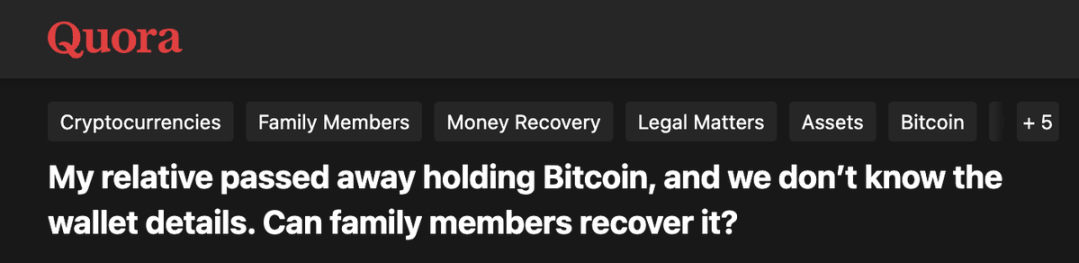
If no one else knows how to access your wallet, then the moment you stop breathing, your cryptocurrency effectively "ceases to exist." Of course, this is not literal disappearance—it still exists on the blockchain ledger, but from an economic perspective, it is no different from being burned.

So, how large is this "death buyer"?

Today, most cryptocurrency holders are young, with the majority between their late twenties and early forties.
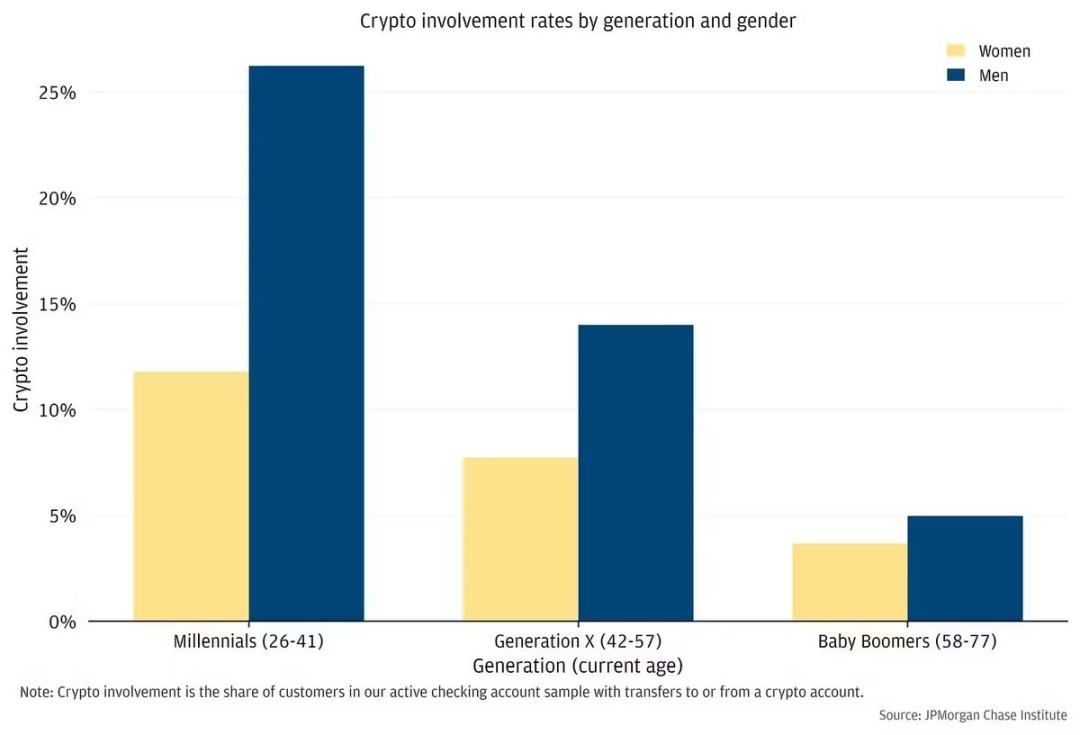
There are very few holders over retirement age, which makes the issue of "cryptocurrency loss due to death" easy to overlook. Even so, the relevant data is still staggering:

  • Approximately 60 million people die globally each year (based on a global population of about 8 billion);

  • There are about 500 million cryptocurrency holders globally (equivalent to 1 in 16 people holding cryptocurrency);

  • Since cryptocurrency holders are younger than the global average population, their mortality rate is lower, conservatively estimated at about 0.2% per year;

  • Based on this calculation, about 1 million people (500 million × 0.2%) among the holders will pass away each year.

Currently, most cryptocurrencies are self-custodied, and holders rarely make estate plans for them. Even if only 10% of the deceased's wallets become inaccessible due to no one knowing how to access them, about 100,000 wallets would become useless each year. If we conservatively assume that the average balance of these inaccessible wallets is only $20,000, then about $2 billion worth of cryptocurrency would exit circulation annually. Moreover, this number will continue to grow over time—after all, the younger generation will also age.
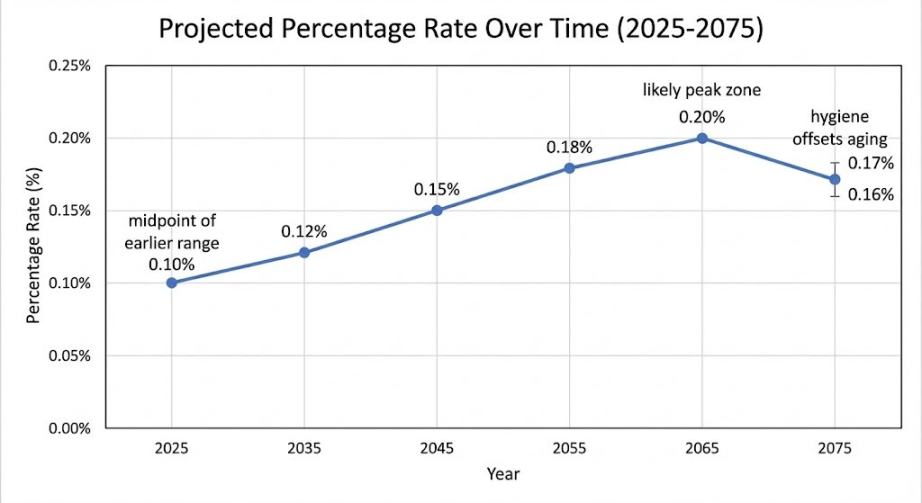
Percentage of cryptocurrency "destroyed" by death each year

This leaves us with a key question: Since the advantage of self-custodying cryptocurrency is the removal of intermediaries, how can we pass on these assets without reintroducing intermediaries?

Inheriting Assets Not Designed to Be "Inheritable"
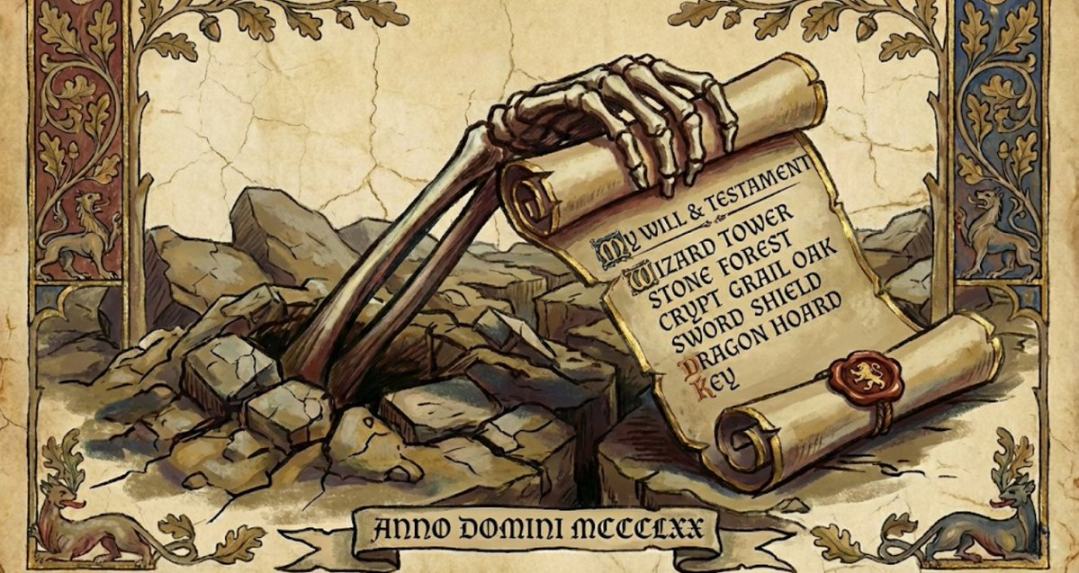
Most current solutions fall into two extremes: either simple but fragile, such as storing a seed phrase in a bank safe (easily lost or stolen); or secure but so complex that no one wants to use them in practice. Neither of these options is ideal, so I adopted a compromise—a simple three-step inheritance method that is easy to remember, difficult to crack, accessible anytime and anywhere, and 100% non-custodial (i.e., no reliance on intermediaries). The specific steps are as follows:

Step 1: Build a Dedicated Single-Page Website

Create a single-page website using a "niche domain" composed of 3-4 words—a domain that ordinary people would not easily type into a search bar but has personal significance to you, making it easy to remember. Prepay for hosting for 10 years or more and set up automatic renewal to ensure long-term accessibility.

Step 2: Encrypt and Convert the Seed Phrase into a Numeric String

First, choose a book you like, find the most common publisher of that book, and purchase 10 copies (ensuring the page numbers and layout are identical in each). Then, convert each word of your cryptocurrency wallet seed phrase into a numeric string: For each word in the seed phrase, find its location in the book and record the "page number - line number - word position in that line." For example, "112, 3, 5" represents "the 5th word on line 3 of page 112." Convert all seed phrase words into numeric strings using this method.

Step 3: Upload the Numeric String to the Dedicated Website

Simply publish the converted numeric string as a list on the dedicated website you built, in the following format:
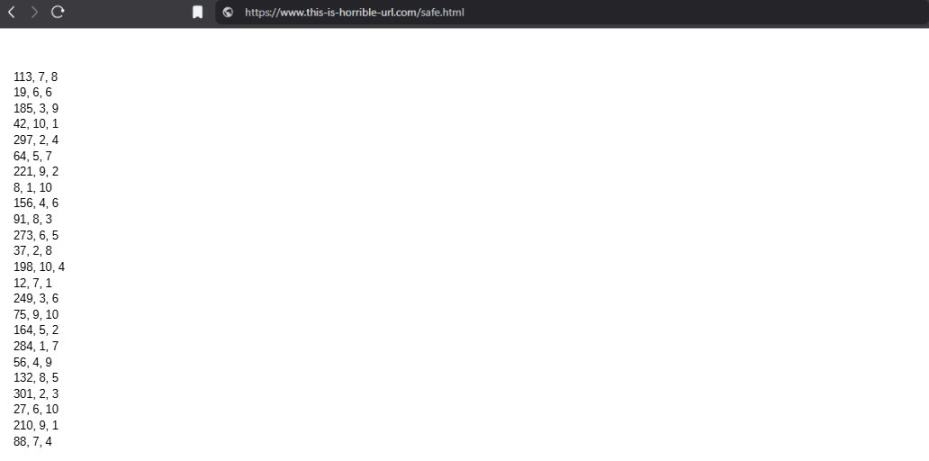
By the way, this is a real numeric string corresponding to a seed phrase, linked to $500 worth of cryptocurrency. However, the website domain is fictional, and the real seed phrase is hidden in a book. Just one hint: I absolutely love good detective novels. Happy "treasure hunting"~

I know this might sound a bit "over the top," and some may think it unnecessary, but this method does make asset inheritance more flexible while ensuring security. You can further enhance security, such as by using rare books or self-printed copies of books to store the location information corresponding to the seed phrase; of course, you can also skip the hassle—just put a hardware wallet (like a Ledger) and a metal plate engraved with the seed phrase in a safe. Otherwise, your cryptocurrency may ultimately only "donate" to the blockchain (i.e., become permanently irretrievable).
Trend Kriptolar

İlgili Sorular

QWhat is the main argument of the article 'Death is the Largest 'Buyer' of Cryptocurrency'?

AThe article argues that death acts as a significant and growing 'buyer' of cryptocurrency because when holders die without sharing access to their wallets, those assets become effectively destroyed—remaining on the blockchain but permanently inaccessible, thus removing them from circulation.

QAccording to the article, how much cryptocurrency is estimated to be lost from circulation annually due to holder deaths?

AConservative estimates suggest that approximately $2 billion worth of cryptocurrency is lost annually due to around 100,000 holders dying without sharing access to their wallets, assuming an average wallet balance of $20,000.

QWhat is the three-step inheritance method proposed in the article for passing on cryptocurrency without reintroducing intermediaries?

AThe three-step method involves: 1) Creating a dedicated single-page website with a memorable, obscure domain name and prepaying hosting for over 10 years. 2) Converting the seed phrase into a numeric string by mapping each word to its location in a specific book (page number, line number, word position). 3) Uploading this numeric string to the dedicated website for heirs to access and decode.

QWhy does the article suggest that the problem of cryptocurrency loss due to death is often overlooked?

AThe problem is often overlooked because the majority of cryptocurrency holders are relatively young (late 20s to early 40s), so the mortality rate among them is low. However, as this demographic ages, the issue is expected to grow significantly.

QWhat example does the article give to illustrate the numeric conversion of a seed phrase for inheritance purposes?

AThe article provides an example where each word in the seed phrase is converted to a numeric string like '112, 3, 5', which represents 'page 112, line 3, the 5th word' in a specific book. This numeric list is then posted on a dedicated website for heirs to retrieve and decode using the same book.

İlgili Okumalar

Has Bitcoin Bottomed, or Is a 'Shakeout' Approaching? What's the Situation with XRP?

Cryptocurrency analytics platform Santiment shared key insights on Bitcoin and altcoin markets, highlighting significant signals from on-chain data. Analysis shows Bitcoin's 365-day MVRV ratio has fallen to -26%, indicating substantial losses for long-term holders, a level historically associated with market bottom formations and long-term buying opportunities. While short-term MVRV is near breakeven, suggesting no clear directional signal, the annual perspective points to a bottom before bullish cycles. On-chain data reveals divergent behavior: large wallets (10-10,000 BTC) have been accumulating, adding ~18,500 BTC in 10 days, while smaller retail investors continue buying dips. Analysts caution that high retail demand can sometimes create a risk of a final market shakeout or correction. The altcoin market shows a mixed picture. Ethereum's 365-day MVRV is around -33%, but recent monthly gains combined with overly optimistic social sentiment pose a short-term correction risk. XRP is in oversold territory with 30-day and 365-day MVRVs at -57.5% and -45.5% respectively, signaling potential for a strong mid-to-long term rebound. Social activity and optimism are rising for Solana, while investor sentiment remains calmer towards Cardano. Future direction for Bitcoin and altcoins depends not only on on-chain metrics but also on macroeconomic and regulatory developments. The Federal Reserve's interest rate decision and upcoming policy rulings are increasing market volatility expectations, while uncertainty around the U.S. Congressional clarity process continues to pressure pricing. *This is not investment advice.

cryptonews.ru1 saat önce

Has Bitcoin Bottomed, or Is a 'Shakeout' Approaching? What's the Situation with XRP?

cryptonews.ru1 saat önce

Bank of Korea Reveals Results of Tokenized Deposit Testing

The Bank of Korea has announced the results of its pilot test for tokenized deposits. Involving 28 central banks and international financial organizations, the project saw participation from major South Korean banks including KB Kookmin Bank, NH NongHyup Bank, Shinhan Bank, Woori Bank, and Hana Bank. Transactions, from payment orders to final settlement, were completed in real time, averaging just 80 seconds. The test involved 30 transactions across 17 different scenarios—such as corporate and interbank transfers—and was conducted in six currencies, including the Korean won, US dollar, and euro, with a total transaction value reaching approximately $995,000. The central bank reported that the platform operated stably throughout, despite being only partially connected to the existing banking infrastructure. Settlements using tokenized deposits were executed seamlessly, quickly, and transparently. An internal transfer of 20 million won (about $13,890) between NH NongHyup Bank and Shinhan Bank was also successfully processed via the Project Agora platform, which involved connecting to the Bank of Korea's CBDC test platform, Project Hangang. Additionally, KB Kookmin Bank and Japan's MUFG Bank tested cross-border payments using these deposit tokens—digital certificates issued by commercial banks within the pilot, not directly by the central bank. The Bank of Korea plans to continue testing payments with tokenized deposits. This follows last year's pledge by South Korean authorities to tighten regulations for won-based stablecoins, which will require approval from both the central bank and the Financial Services Commission.

cryptonews.ru3 saat önce

Bank of Korea Reveals Results of Tokenized Deposit Testing

cryptonews.ru3 saat önce

İşlemler

Spot

Popüler Makaleler

PEOPLE Nasıl Satın Alınır

HTX.com’a hoş geldiniz! ConstitutionDAO (PEOPLE) satın alma işlemlerini basit ve kullanışlı bir hâle getirdik. Adım adım açıkladığımız rehberimizi takip ederek kripto yolculuğunuza başlayın. 1. Adım: HTX Hesabınızı OluşturunHTX'te ücretsiz bir hesap açmak için e-posta adresinizi veya telefon numaranızı kullanın. Sorunsuzca kaydolun ve tüm özelliklerin kilidini açın. Hesabımı Aç2. Adım: Kripto Satın Al Bölümüne Gidin ve Ödeme Yönteminizi SeçinKredi/Banka Kartı: Visa veya Mastercard'ınızı kullanarak anında ConstitutionDAO (PEOPLE) satın alın.Bakiye: Sorunsuz bir şekilde işlem yapmak için HTX hesap bakiyenizdeki fonları kullanın.Üçüncü Taraflar: Kullanımı kolaylaştırmak için Google Pay ve Apple Pay gibi popüler ödeme yöntemlerini ekledik.P2P: HTX'teki diğer kullanıcılarla doğrudan işlem yapın.Borsa Dışı (OTC): Yatırımcılar için kişiye özel hizmetler ve rekabetçi döviz kurları sunuyoruz.3. Adım: ConstitutionDAO (PEOPLE) Varlıklarınızı SaklayınConstitutionDAO (PEOPLE) satın aldıktan sonra HTX hesabınızda saklayın. Alternatif olarak, blok zinciri transferi yoluyla başka bir yere gönderebilir veya diğer kripto para birimlerini takas etmek için kullanabilirsiniz.4. Adım: ConstitutionDAO (PEOPLE) Varlıklarınızla İşlem YapınHTX'in spot piyasasında ConstitutionDAO (PEOPLE) ile kolayca işlemler yapın.Hesabınıza erişin, işlem çiftinizi seçin, işlemlerinizi gerçekleştirin ve gerçek zamanlı olarak izleyin. Hem yeni başlayanlar hem de deneyimli yatırımcılar için kullanıcı dostu bir deneyim sunuyoruz.

629 Toplam GörüntülenmeYayınlanma 2024.12.12Güncellenme 2026.06.02

PEOPLE Nasıl Satın Alınır

Tartışmalar

HTX Topluluğuna hoş geldiniz. Burada, en son platform gelişmeleri hakkında bilgi sahibi olabilir ve profesyonel piyasa görüşlerine erişebilirsiniz. Kullanıcıların PEOPLE (PEOPLE) fiyatı hakkındaki görüşleri aşağıda sunulmaktadır.

活动图片