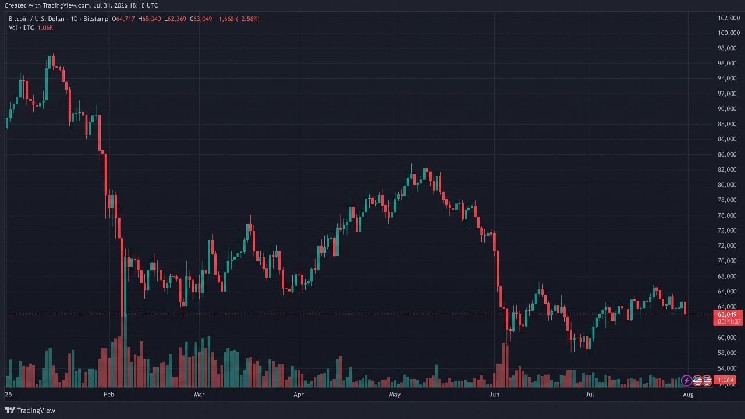
Data Inflation, Is ETH's Fundamental Still There?

比推2026-03-06 tarihinde yayınlandı2026-03-06 tarihinde güncellendi

Özet

The report by Culper Research argues that Ethereum's fundamentals have been severely damaged following the December 2025 Fusaka upgrade. The upgrade increased the gas limit, causing a 90% drop in gas fees—far more than the 10-30% predicted—and led to a surplus of cheap block space. This has enabled a surge in "address poisoning" or "dusting" attacks, which now account for 95% of new wallet creation and over 22.5% of all ETH transactions. The authors claim these attacks artificially inflate on-chain activity metrics, such as active addresses and transaction volume, which are mistakenly cited by bulls like Tom Lee as evidence of organic growth. Additionally, the report states that lower transaction fees have reduced validator earnings, weakening staking incentives and undermining Ethereum’s token economics. It highlights that Vitalik Buterin has been selling significant amounts of ETH, suggesting insider awareness of these issues. The authors also note competitive threats from Solana, which is gaining developer momentum and institutional adoption. Culper Research concludes that Ethereum’s economic model is broken and maintains a bearish outlook on ETH.

Author: Culper Research(@CulperResearch)

Compiled by: Deep Tide TechFlow

Original title: Culper Research: Why We Are Firmly Shorting ETH


Deep Tide Introduction: Culper Research is a well-known short-selling institution on Wall Street that has accurately targeted several high-profile companies. This report directly addresses the core issue: the Fusaka upgrade in December 2025 brought a large amount of cheap block space, but real organic demand has not kept up—the "prosperous" on-chain data is actually fabricated by address poisoning attacks. Vitalik himself is selling a large amount of ETH, while Tom Lee, Ethereum's most staunch bull advocate, is still defending it with incorrect data. This article is not a prediction; it is a short-selling thesis with data and verification, worth reading carefully for every ETH holder.

We are shorting Ethereum and ETH-linked securities, including BMNR.

We believe that the Fusaka upgrade in December 2025 has severely damaged Ethereum's token economic model. Vitalik himself knows this and is continuously selling; while Tom Lee, ETH's most steadfast bull, is pouring good money into a bad bet.

$ETH will continue to fall.

Tom Lee's Defense: Active Addresses and Transaction Volume Are Rising

Tom Lee's $BMNR defends ETH, claiming that "ETH is not entering a death spiral because utility is rising." He cites the surge in ETH active addresses and transaction volume after Fusaka as evidence of "strengthening fundamentals" and institutional adoption.

Lee's logic is wrong.
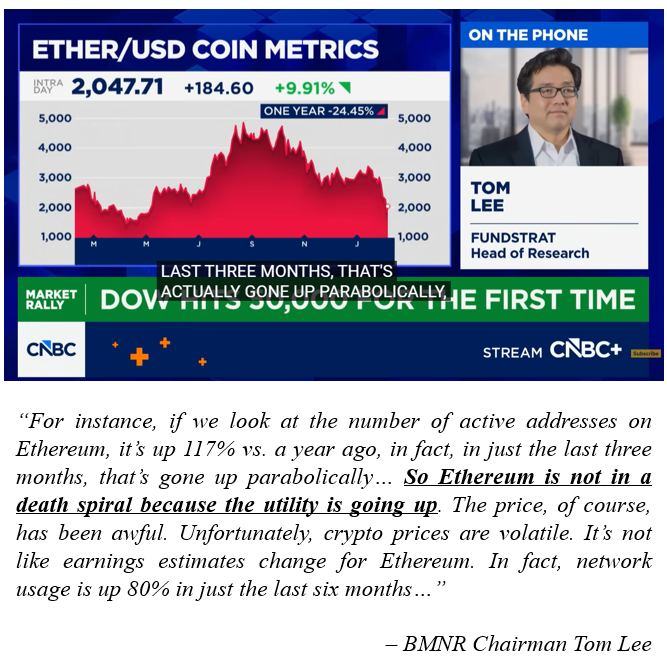
By his own logic, if ETH's on-chain activity does not reflect real utility value growth, then ETH is heading toward a death spiral.

Our research shows that this is exactly what is happening.

The full report and disclosure information are now available at culperresearch.com.

The Truth About On-Chain Data: 95% of New Wallets Are Poisoning Attacks

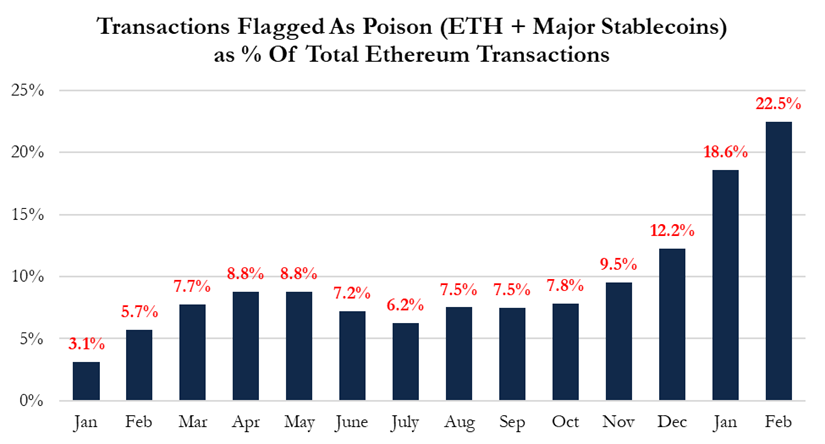
Our comprehensive analysis of on-chain data from January 2025 to February 2026 shows: The "institutional adoption" data cited by Tom Lee is actually explained by large-scale low-value address poisoning/wallet dusting attacks triggered by the block space surplus brought by Fusaka.
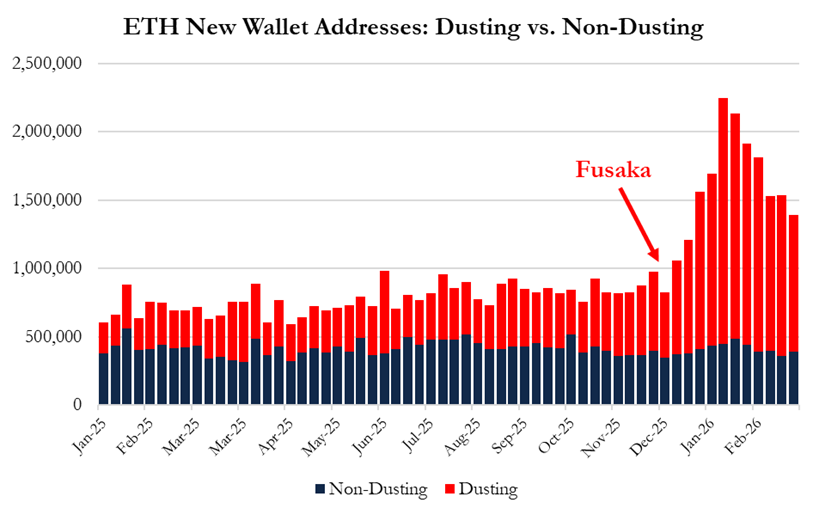
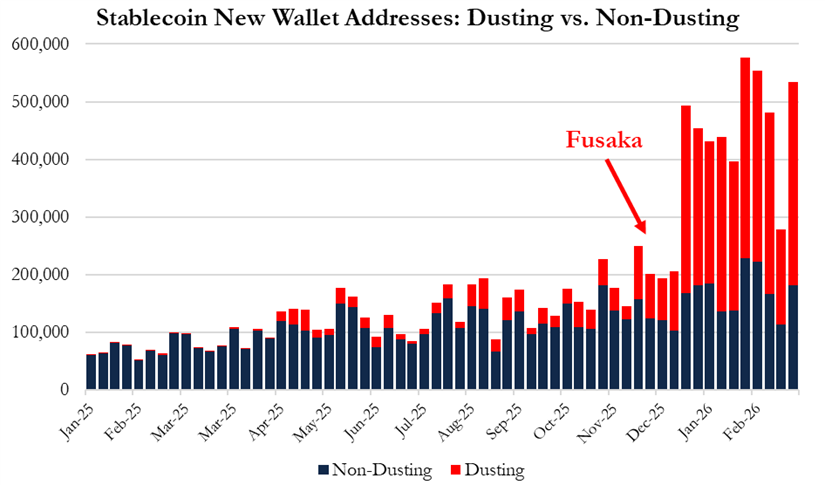
Specific data after Fusaka:

  • 95% of new wallet growth is explained by newly created "poisoned" wallets

  • Address poisoning attacks have increased by more than 3 times

  • Poisoning attacks explain more than 50% of ETH transaction volume growth

  • Poisoning attacks now account for 22.5% of all ETH transactions
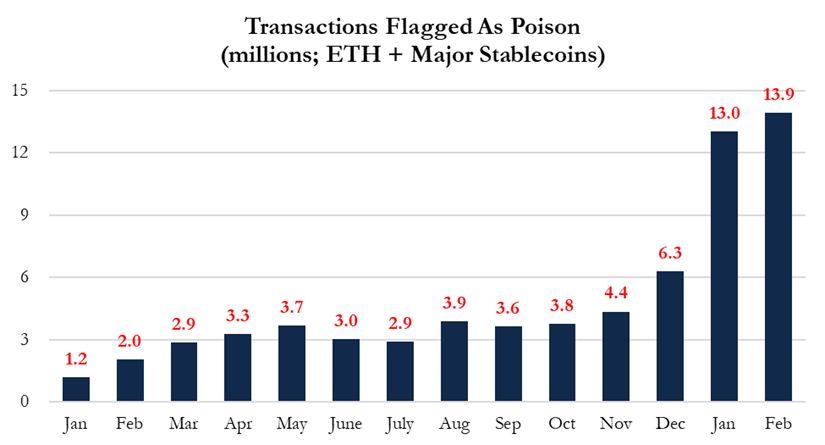
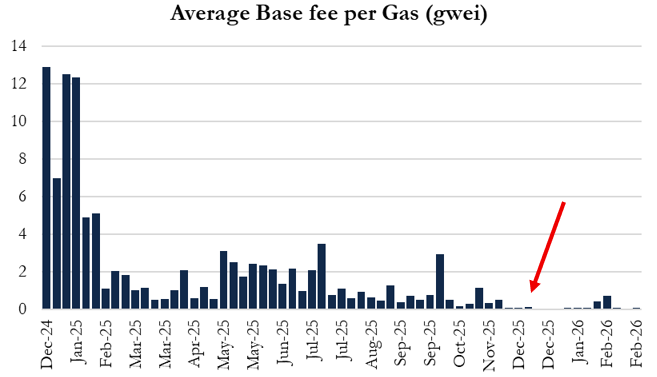
Fusaka Upgrade: Gas Fees Collapsed by 90%, 3-9 Times Worse Than Expected

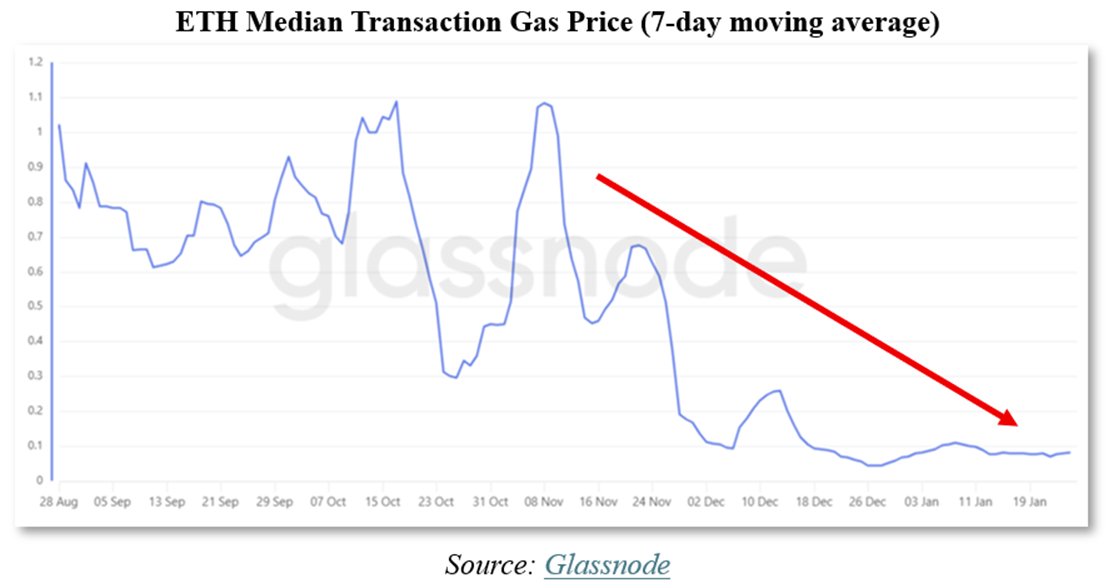
Fusaka increased the gas limit from 45 million to 60 million, aiming to scale Ethereum L1. Vitalik and PTG estimated that gas fees would drop by 10-30%.

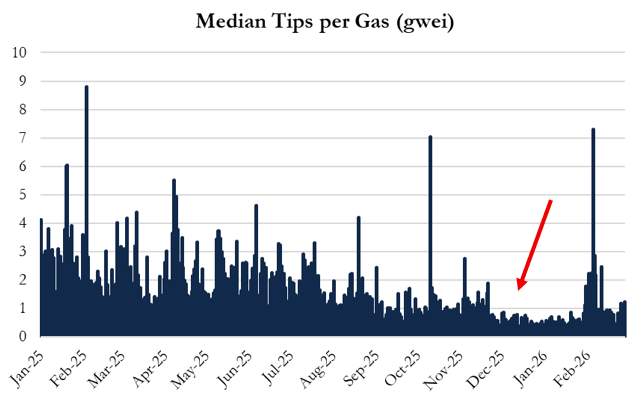
Reality: Gas fees dropped by about 90%.

Vitalik and the validators severely underestimated L1 demand elasticity, with an error of 3-9 times—using outdated mathematical models from before EIP-1559 and before L2s emerged.

Vitalik Is Selling Like Crazy

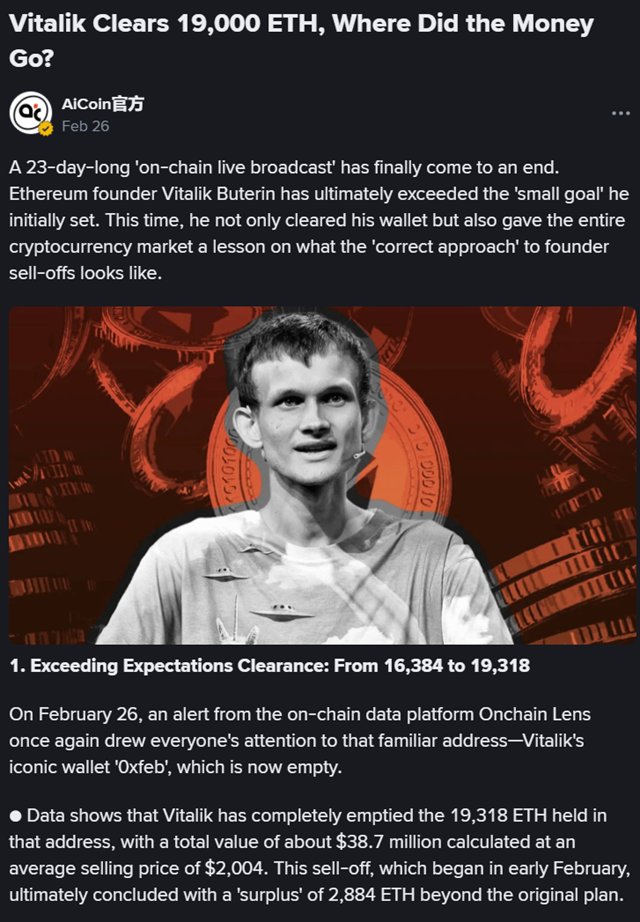
This is why we believe Vitalik is selling ETH heavily. On January 30, he announced he would sell 16,384 ETH to fund the Ethereum Foundation's "austerity period." Since then, he has sold over 19,300 ETH and is still continuing.

He knows what Tom Lee does not: ETH's token economic model has collapsed.
We Personally Verified the Address Poisoning Attack

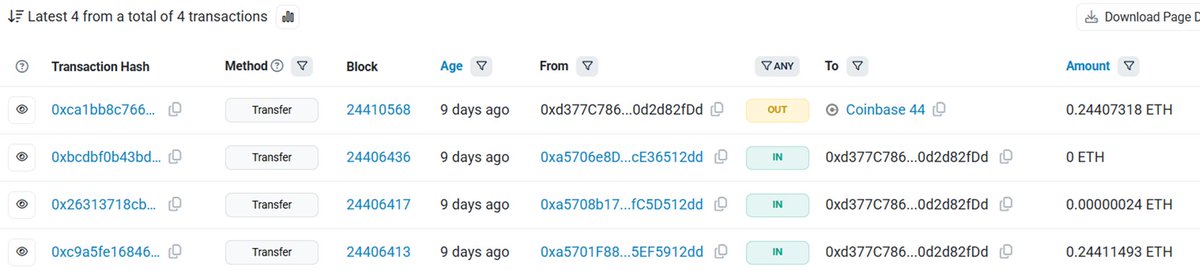
We documented the ETH address poisoning process firsthand: We created two new wallets, initiated a transfer between them, and were targeted by a poisoning attack within 5 minutes.

We encourage readers to verify this themselves.

Losses from poisoning attacks have grown at a rate more than 8 times faster than before Fusaka.
The Validator Flywheel Is Reversing

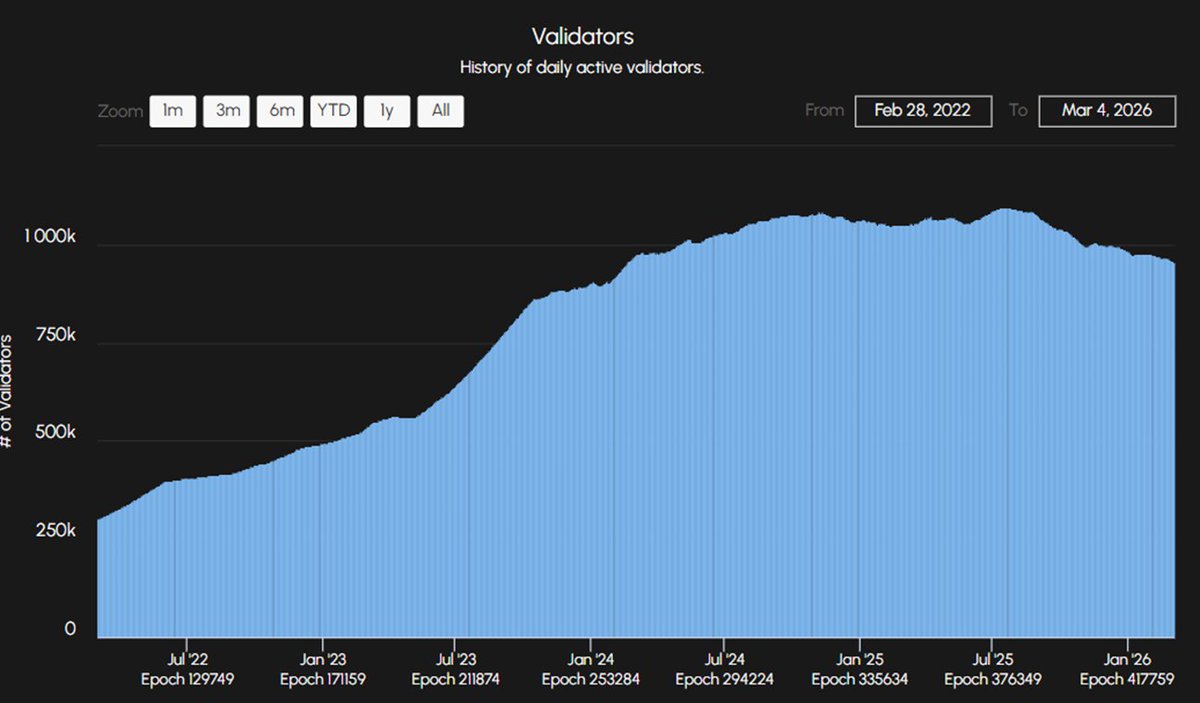
Additionally, the gas limit increase has severely hit ETH validators, who now see a 40-50% drop in tips per unit of gas. Lower returns reduce staking demand and high-value activity, thereby weakening the foundation for institutional adoption.

The flywheel is now spinning in reverse.
Ethereum Is Losing to Solana and Its Own L2s

Meanwhile, ETH continues to cede share:

  • Solana developers grew by 29% in 2025, while Ethereum only 6%; talent is draining away

  • Visa and Citigroup chose Solana to build DeFi applications

  • Solana DEX trading volume is now more than double that of Ethereum

Conclusion: The Next Nokia

During the internet bubble era, Netscape and Nokia dominated the market for over a decade, but ultimately, Google and Apple reaped the rewards.

We view ETH in the same light.

We believe the token economic model has collapsed, Tom Lee is in over his head, and $ETH will continue to decline.


Twitter:https://twitter.com/BitpushNewsCN

Bitpush TG Discussion Group:https://t.me/BitPushCommunity

Bitpush TG Subscription: https://t.me/bitpush

Original link:https://www.bitpush.news/articles/7617441

İlgili Sorular

QWhat is the main argument of Culper Research's report on Ethereum?

ACulper Research argues that Ethereum's tokenomics have been severely damaged by the Fusaka upgrade, which the increased block space led to a 90% drop in gas fees, but real organic demand did not keep up. They claim that the apparent surge in active addresses and transactions is largely due to address poisoning attacks, not genuine adoption, and that this has broken Ethereum's economic model.

QHow does Culper Research explain the increase in Ethereum's active addresses and transaction volume post-Fusaka?

ACulper Research attributes the increase in active addresses and transaction volume to address poisoning (wallet dusting) attacks, which account for 95% of new wallet growth and over 50% of the transaction volume increase. They argue that these attacks exploit the cheap block space created by Fusaka, creating artificial activity rather than reflecting real utility or adoption.

QWhat evidence does Culper Research provide to support their claim that Vitalik Buterin is selling ETH?

ACulper Research states that Vitalik Buterin announced on January 30 that he would sell 16,384 ETH to fund the Ethereum Foundation during a 'tightening period,' and has since sold over 19,300 ETH. They interpret this as evidence that he is aware of the broken tokenomics and is divesting accordingly.

QHow did the Fusaka upgrade affect gas fees and validator incentives according to the report?

AThe Fusaka upgrade increased the gas limit from 45 million to 60 million, intended to scale Ethereum L1. However, gas fees dropped by approximately 90%, far more than the estimated 10-30% decline. This reduction in fees decreased validator tips by 40-50%, undermining validator rewards and potentially reducing staking demand and high-value activity.

QWhat competitive threats to Ethereum does Culper Research highlight in their report?

ACulper Research highlights that Ethereum is losing market share to Solana and its own L2 solutions. They note that Solana developer growth was 29% in 2025 compared to Ethereum's 6%, that Visa and Citigroup are building DeFi applications on Solana, and that Solana DEX trading volume is now more than double that of Ethereum.

İlgili Okumalar

Anthropic Starts Poaching Scientists? $27K Weekly Onsite Stipend to Fix Claude's Expert-Level Errors

Anthropic has launched a new STEM Fellow program, offering $3,800 per week for a three-month, in-person residency in San Francisco. The role targets experts from science, technology, engineering, and mathematics (STEM) fields—machine learning experience is helpful but not required. Instead, Anthropic values scientific judgment and a willingness to learn quickly. Fellows will work with Claude models and internal tools under the guidance of an Anthropic researcher. Example projects include a materials scientist identifying errors in Claude’s reasoning or a climate scientist integrating atmospheric modeling software with Claude. The goal is to have experts "tell Claude where it's wrong" and improve its scientific capabilities. This initiative is part of Anthropic’s broader strategy to strengthen its scientific ecosystem, following earlier programs like the AI Safety Fellows and AI for Science programs. The company acknowledges that current AI models, while powerful, still produce high-confidence errors and lack end-to-end research autonomy. The program aims to embed domain expertise directly into model development, turning scientists into "high-level reviewers" for AI. Anthropic CEO Dario Amodei has previously emphasized AI’s potential to accelerate scientific breakthroughs, particularly in biology and healthcare. The company believes that the next phase of AI competition will depend not on scaling parameters, but on integrating human expertise to refine model accuracy and reliability.

marsbit40 dk önce

Anthropic Starts Poaching Scientists? $27K Weekly Onsite Stipend to Fix Claude's Expert-Level Errors

marsbit40 dk önce

On the Eve of X Money's Launch, Musk Dismantles the Referee First

"X Money Launches After Dismantling Regulator: Musk's 9-Day Power Play" In February 2025, a team from the "Department of Government Efficiency" (DOGE), led by Elon Musk, entered the Consumer Financial Protection Bureau (CFPB) headquarters. Shortly after, the CFPB was effectively dismantled—its funding frozen, activities suspended, and nearly 90% of staff laid off. This move came just nine days after X announced a partnership with Visa and as X Money prepared to launch. The article contrasts this with the decade-long regulatory battles faced by companies like Coinbase and PayPal. Coinbase spent over $75 million in political contributions and endured a major SEC lawsuit to operate legally. PayPal complied with strict state and federal rules for its stablecoin PYUSD, including 100% reserve requirements and monthly audits. However, Musk’s approach was different. After the CFPB introduced a rule placing large digital payment apps under federal oversight, Musk tweeted "Delete CFPB." Within months, the rule was revoked by Congress. Meanwhile, DOGE operatives gained "god-tier" access to CFPB databases, potentially obtaining sensitive competitive information from rivals like Apple, Google, and PayPal. The article also highlights a "suspicious exemption clause" in the GENIUS Act, which allows private companies like X to issue stablecoins with fewer restrictions. Senator Elizabeth Warren questioned whether Musk, who was a senior presidential advisor during the Act’s drafting, influenced this clause. X Money offers a 6% APY on deposits, despite FDIC warnings that stablecoin users are not insured. As X Money launches to 600 million monthly users, the article questions the fairness of a system where Musk can bypass regulations that others spent years and millions to comply with. The dismantling of the CFPB and the alleged regulatory advantages raise concerns about the future of equitable rule-making in the U.S. financial system.

marsbit48 dk önce

On the Eve of X Money's Launch, Musk Dismantles the Referee First

marsbit48 dk önce

İşlemler

Spot
Futures
活动图片