Cypherpunk values are dying, but they’re not dead yet

cointelegraph2025-12-18 tarihinde yayınlandı2025-12-18 tarihinde güncellendi

Özet

The author reflects on their grandfather's distrust of banks and preference for hiding cash, which initially seemed paranoid but later revealed deeper wisdom about privacy and financial sovereignty. Growing up in wartime London, his generation valued privacy as a fundamental right, contrasting sharply with today’s pervasive surveillance and data exploitation. The article critiques modern attitudes that equate privacy with secrecy, citing examples like Vitalik Buterin’s criticized use of a mixer and the erosion of self-sovereignty. It emphasizes that privacy is normal and essential for an open society, echoing Eric Hughes' "Cypherpunk Manifesto." Despite the decline of cypherpunk values—privacy, self-sovereignty, and decentralization—the piece argues they are not yet dead, calling for renewed focus on these principles.

Not long before he died, Grandad said something that I thought was a little silly, a little old-fashioned.

He declared that he didn’t trust the banks, and he didn’t want them to know what he did with his money. I scoffed at the time, paranoid old fella! But of course, it turns out I owe him an apology.

As we were walking around his house, he motioned toward an off-white wall with an off-comfortable sofa in front of it. This piece of singularly ugly furniture hadn’t left its spot in more than a decade.

The wall had a small square door that, when pushed in, revealed a crawl space. Inside was packaging from the 1970s, partially gnawed board games and unimportant documents, squirreled as if they would one day stave off a harsh winter.

My Grandad guided my flashlight to a brown padded envelope hidden near what I was truly hoping wasn’t exposed asbestos. I retrieved the envelope and handed it over. He took the opportunity to deliver a short speech. He was proud I was doing my Master’s, and he knew it was a financial burden, so he wanted to help. Inside the envelope was a musty wad of cash fastened with a mostly decayed rubber band.

His speech was meaningful, but what came after was wisdom that took more than 10 years to land. I asked why he hid cash in the wall, and he explained that most of his savings were hidden around the house; in books, in wardrobes, under mattresses. In fact, he joked that when he died, I must tear the house apart before it’s sold.

Well, he did die, and we did examine every crack and cavity, and we did indeed find most of his savings. Some of the cash was so old that we worried the bank may not even agree to exchange it for modern legal tender, though inflation had robbed the piles of most of their purchasing power anyway, two scams of fiat that I’ll save for another article.

My Grandad grew up poor in wartime London, and it meant a fierce caution with currency was woven into his DNA; money was scarce. Still, his philosophy was sound, and it has played on my mind for years now.

The people of my grandparents’ era were highly protective of their privacy, back when it was a basic human right. I know, how quaint.

In 1950, a motorist named Harry Willcock was stopped in London, and the police officer demanded to see his identity card, an unfortunate requirement introduced at the outbreak of World War II.

Harry refused to brandish his papers and was arrested. According to the lord chief justice in charge of the subsequent legal battle, the ID cards were now being used for purposes beyond their original scope. And so, they were scrapped.

Back in the 1950s, privacy was the baseline for most, and it led to suspicion of anything like surveillance, despite there not being much of it. Just 70 years ago, surveillance was rare, labor-intensive and expensive, typically involving someone physically following you, possibly in a trench coat.

Conversations, cash payments and public transport; no permanent record was left. Any records created were mainly on paper and, importantly, siloed. You couldn’t easily cross-reference records; it’s what lawyers call “practical obscurity.”

Today, our data is farmed, sold and cross-referenced en masse as surveillance has become the new baseline.

My Grandad would have loathed the modern way. He was unknowingly a cypherpunk, and those values are eroding with increasing speed.
Source: Cointelegraph

Privacy, self-sovereignty, decentralization: Before it’s too late

The privacy narrative that has arisen of late could be chalked up to numerous causes, but it feels like a desperate and inevitable last stand.

Society is somehow so downtrodden that tools to assist with privacy are demonized. Vitalik Buterin used a mixer to donate money and was criticized with winks and nods, suggesting he was shady for doing so. Buterin replied with the simple yet iconic, “Privacy is normal.”

There is a sense that a desire for privacy must mean you have something to hide, but as Susie Violet Ward, CEO of Bitcoin Policy UK, once replied: “You have curtains in your house, don’t you?”

Eric Hughes wrote in “A Cypherpunk Manifesto” in 1993 that “privacy is necessary for an open society in the electronic age. Privacy is not secrecy. A private matter is something one doesn’t want the whole world to know, but a secret matter is something one doesn’t want anybody to know. Privacy is the power to selectively reveal oneself to the world.”

Self-sovereignty has followed the downward trajectory of privacy. Control over one’s identity, data and even property has been steadily stripped away, year after year. We must offer up identification, in nearly a “papers, please” kind of way, to most centralized authorities with which we wish to interact.

With data, extensive legal battles have carved us a sliver of control with the “right to be forgotten,” but even that still requires each person to manually request the erasure of their data from each holder.

Likewise, with property, the “right to repair” was necessary as manufacturers of everything from cars to phones raised the walls of their gardens.

These issues are not the concern of the unscrupulous, and we need not whisper. Privacy is normal, as is agency over the many threads of our lives and the right to a fair, pragmatically decentralized playing field.

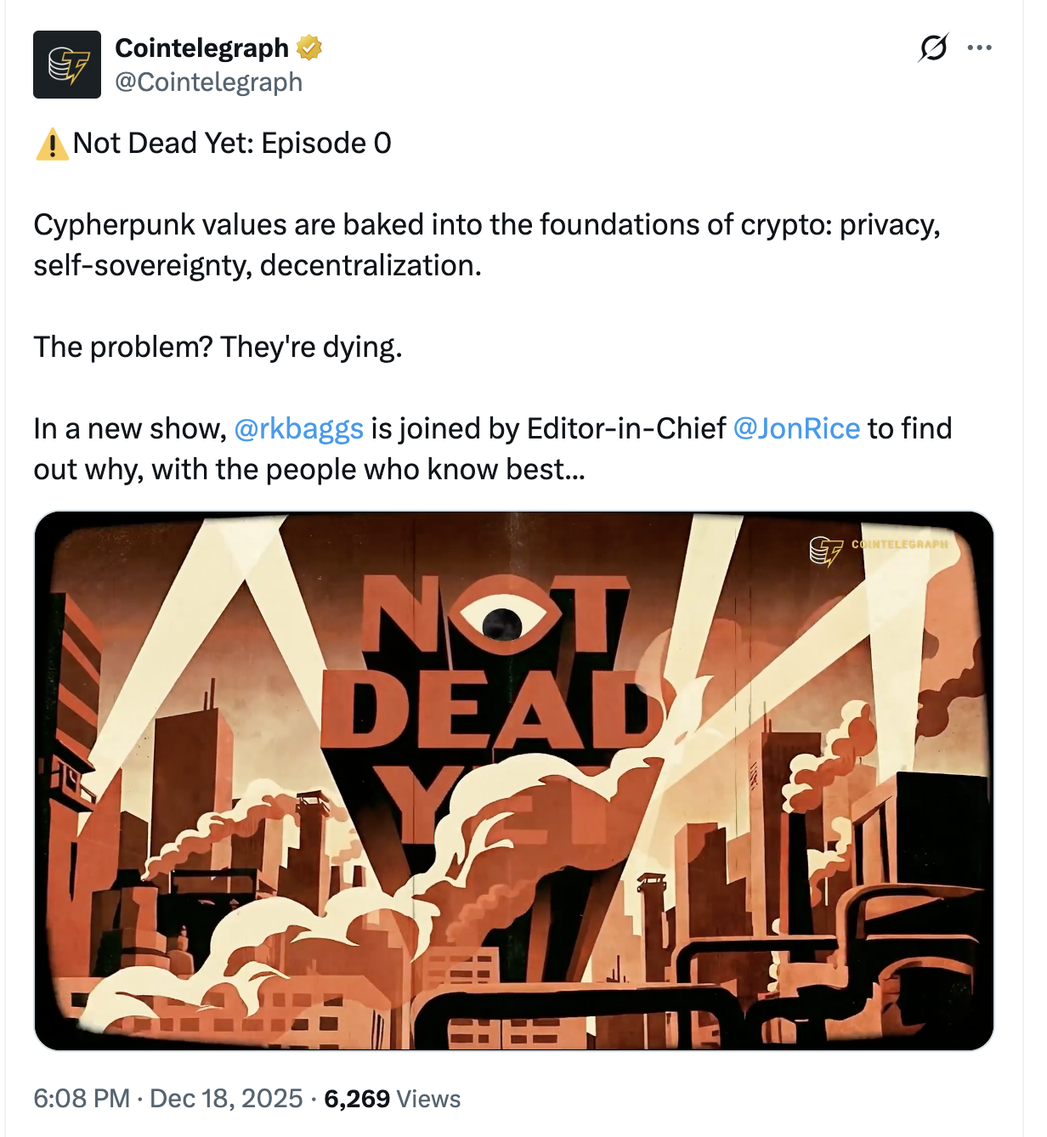
That is why Cointelegraph is launching a show dedicated to conversations on the erosion of these basic human rights, with bona fide experts, visionaries and those building the tools of a free and private future. It is a show for the digital dissidents who believe in civil liberties.

Because cypherpunk values are dying.

But they’re Not Dead Yet.


İlgili Sorular

QWhat core values does the article associate with the cypherpunk movement?

AThe article associates privacy, self-sovereignty, and decentralization as the core values of the cypherpunk movement.

QWhy did the author's grandfather hide cash around his house?

AHe didn't trust the banks and wanted to keep his financial transactions private, a philosophy born from growing up poor in wartime London where money was scarce.

QAccording to the article, how has the public perception of privacy changed from the last century to today?

AIn the past, privacy was considered a baseline human right and the public was suspicious of surveillance. Today, mass surveillance and data farming have become the new baseline, and the desire for privacy is often wrongly equated with having something to hide.

QWhat historical example is given to illustrate the public's past defense of privacy?

AThe case of Harry Willcock in 1950s London, who was arrested for refusing to show his identity card to a police officer, leading to the eventual scrapping of the ID card system as it was being used beyond its original purpose.

QWhat is the main argument the article makes against the notion that wanting privacy means you have something to hide?

AThe article argues that privacy is not secrecy. It quotes Eric Hughes's 'A Cypherpunk Manifesto,' stating that 'privacy is the power to selectively reveal oneself to the world,' and uses the analogy of having curtains in one's house to show that the desire for privacy is normal and not nefarious.

İlgili Okumalar

Warsh's First Day in Office, Markets Deliver a 'Wake-up Call': Rate Hike Expected This Year

On his first day in office, newly inaugurated Federal Reserve Chairman Warsh received a stark market warning, with expectations now fully pricing in a 25-basis-point interest rate hike this year. The shift was triggered by hawkish remarks from Fed Governor Waller, who stated that inflation is now the key policy "driver" and that the odds of a hike or cut are evenly split. This sent short-term Treasury yields higher. Waller signaled a significant pivot in his stance, citing disappointing inflation and labor data. He suggested removing "easing bias" language from Fed statements and did not rule out future rate increases if inflation fails to recede, though he noted immediate action isn't warranted without signs of unanchored inflation expectations. Chairman Warsh faces immediate pressure at his first FOMC meeting in June. With the preferred inflation gauge at a three-year high, analysts warn that failing to hike could be interpreted as an implicit easing of policy. The geopolitical situation in the Middle East is adding to existing price pressures. The market's expectation for a hike contrasts sharply with earlier forecasts for multiple cuts. While long-term Treasury yields have been contained by lower energy prices recently, analysts note they remain under structural upward pressure. Warsh's swearing-in at the White House highlights political scrutiny over Fed independence. However, the market has made it clear that inflation is the most urgent challenge, leaving the new chairman little time to settle in.

marsbit12 saat önce

Warsh's First Day in Office, Markets Deliver a 'Wake-up Call': Rate Hike Expected This Year

marsbit12 saat önce

İşlemler

Spot
Futures

Popüler Makaleler

GENIUS Nedir

I. Proje Tanıtımı1. Genius Nedir?Genius (GENIUS), “nihai on-chain terminal” olarak konumlandırılan, gizlilik ve hız odaklı merkeziyetsiz bir ticaret platformudur. En üst düzey gizlilik teknolojilerini entegre ederek, BNB Chain gibi ağlar üzerinde, kullanıcıların merkezi borsalara benzer kesintisiz bir deneyimle on-chain etkileşimde bulunmalarını sağlayacak bir sonraki nesil gizlilik ticaret altyapısını inşa etmeyi hedeflemektedir.2. Genius Nasıl Çalışır?Genius'un temel teknik mimarisi şu şekilde yapılandırılmıştır:(1) Zincir-görünmez: Kullanıcıların, çapraz zincir işlemleri, varlık sarmalama veya karmaşık gaz yönetimi için çok adımlı onayları manuel olarak yönetmelerine gerek yoktur.(2) İmzasız Ticaret: Turnkey gibi entegrasyonlar aracılığıyla, Genius, pop-up onayları veya işlem başına yetkilendirme olmadan anlık ticareti mümkün kılar.(3) Agregatörlerin Agregatörü: Genius, 150'den fazla DEX ile entegre edilmiş en iyi sınıf bir agregasyon yığını ile desteklenmektedir ve rakip ürünlere kıyasla üstün teklif verimliliği iddia etmektedir.(4) Hesap Yönetimi: Platform, saklama dışı bir mimari benimsemekte ve anahtar yönetimi için Turnkey ve Lit Protocol'ü kullanarak, kullanıcıların hesaplarına güvenli bir şekilde geçiş anahtarları aracılığıyla erişmelerini sağlamaktadır.3. Genius'u Kim Yarattı?Resmi Hizmet Şartlarına göre, Genius, Shuttle Labs, Inc. tarafından geliştirilmiştir. Projenin resmi X hesabına göre, Ryan Myher, Ghost protokolünün piyasaya sürülmesi gibi ürün iterasyonunu yönlendiren ana katkı sağlayıcılardan biridir ve daha geniş topluluk katılımını sağlamaktadır.Binance kurucusu CZ, ekibin daha hızlı ve gizliliği koruyan bir on-chain ticaret deneyimi inşa etmesine yardımcı olmak amacıyla resmi olarak projeye danışman olarak katılmıştır.Ayrıca, proje, Genius ve Genius Bridge Protocol (GBP) temelini korumaktan sorumlu Genius Vakfı ile birlikte çalışan YZi Labs'dan güçlü destek almıştır.4. Genius TokenomisiGENIUS, Genius ekosisteminin yerel token'ıdır. Şu anda, proje tam bir tokenomi belgesi yayınlamamıştır.Son resmi açıklamalara göre, Genius, deflasyonist bir mekanizma içermekte ve toplam token arzının %4.6'sı, erken lansman aşamasında zaten yakılmıştır.Genius Puanları (GP) Sistemi:(1) Ticaretle Kazan: Platform, 200 milyon Genius Puanı ödül havuzu oluşturmuş ve kullanıcılar terminal aracılığıyla gerçekleştirilen her ticaret için GP kazanmaktadır.(2) Seviye ve Rozetler: Genius, Akıllı'dan Tanrı'ya kadar uzanan bir ilerleme tabanlı rozet sistemi sunmakta olup, daha yüksek seviyeler ek avantajlar ve faydalar sunmaktadır.(3) Yerel Getiri: Gösterge panelinde usdGG gibi belirlenen varlıklara sahip kullanıcılar, karmaşık staking süreçlerine girmeden doğrudan yerel getiri kazanabilirler.(4) Yönlendirme Teşvikleri: Yönlendirenler, USDC cinsinden %45'ten fazla ücret iadesi kazanabilir ve ek GP alabilirler.5. Zaman Çizelgesi & Ana Dönüm NoktalarıMart 2020: Projenin resmi X hesabı oluşturuldu ve erken hazırlık aşamasının başlangıcını işaret etti.13 Ocak 2026: Genius, YZi Labs'tan çok milyon dolarlık bir yatırım aldığını duyurdu ve aynı zamanda gizlilik ticaret altyapısının inşasını hızlandırmak için CZ'yi danışman olarak onayladı.18 Nisan 2026: Proje, Ghost gizlilik protokolünün yakında piyasaya sürüleceğini duyurdu.29 Nisan 2026: Ghost protokolü, ilk 50 testçisine resmi olarak açıldı ve BNB Chain'de gizlilik ticareti için yeni bir dönemin başlangıcını işaret etti. Aynı zamanda, ekip %4.6'lık token'ın yakıldığını doğruladı.​II. Token Bilgileri1) Temel BilgilerToken adı: GENIUS (Genius)III. İlgili BağlantılarWeb sitesi:https://www.tradegenius.com/homeKeşif Araçları:https://bscscan.com/address/0x1f12b85aac097e43aa1555b2881e98a51090e9a6Sosyal Medya:https://x.com/GeniusTerminalNot: Proje tanıtımı, resmi proje ekibi tarafından yayınlanan veya sağlanan materyallerden gelmektedir ve yalnızca referans amaçlıdır, yatırım tavsiyesi niteliğinde değildir. HTX, herhangi bir doğrudan veya dolaylı kayıptan sorumluluk kabul etmemektedir.

314 Toplam GörüntülenmeYayınlanma 2026.04.29Güncellenme 2026.05.12

GENIUS Nedir

GENIUS Nasıl Satın Alınır

HTX.com’a hoş geldiniz! Genius (GENIUS) satın alma işlemlerini basit ve kullanışlı bir hâle getirdik. Adım adım açıkladığımız rehberimizi takip ederek kripto yolculuğunuza başlayın. 1. Adım: HTX Hesabınızı OluşturunHTX'te ücretsiz bir hesap açmak için e-posta adresinizi veya telefon numaranızı kullanın. Sorunsuzca kaydolun ve tüm özelliklerin kilidini açın. Hesabımı Aç2. Adım: Kripto Satın Al Bölümüne Gidin ve Ödeme Yönteminizi SeçinKredi/Banka Kartı: Visa veya Mastercard'ınızı kullanarak anında Genius (GENIUS) satın alın.Bakiye: Sorunsuz bir şekilde işlem yapmak için HTX hesap bakiyenizdeki fonları kullanın.Üçüncü Taraflar: Kullanımı kolaylaştırmak için Google Pay ve Apple Pay gibi popüler ödeme yöntemlerini ekledik.P2P: HTX'teki diğer kullanıcılarla doğrudan işlem yapın.Borsa Dışı (OTC): Yatırımcılar için kişiye özel hizmetler ve rekabetçi döviz kurları sunuyoruz.3. Adım: Genius (GENIUS) Varlıklarınızı SaklayınGenius (GENIUS) satın aldıktan sonra HTX hesabınızda saklayın. Alternatif olarak, blok zinciri transferi yoluyla başka bir yere gönderebilir veya diğer kripto para birimlerini takas etmek için kullanabilirsiniz.4. Adım: Genius (GENIUS) Varlıklarınızla İşlem YapınHTX'in spot piyasasında Genius (GENIUS) ile kolayca işlemler yapın.Hesabınıza erişin, işlem çiftinizi seçin, işlemlerinizi gerçekleştirin ve gerçek zamanlı olarak izleyin. Hem yeni başlayanlar hem de deneyimli yatırımcılar için kullanıcı dostu bir deneyim sunuyoruz.

234 Toplam GörüntülenmeYayınlanma 2026.04.29Güncellenme 2026.05.12

GENIUS Nasıl Satın Alınır

MEGA Nasıl Satın Alınır

HTX.com’a hoş geldiniz! MegaETH (MEGA) satın alma işlemlerini basit ve kullanışlı bir hâle getirdik. Adım adım açıkladığımız rehberimizi takip ederek kripto yolculuğunuza başlayın. 1. Adım: HTX Hesabınızı OluşturunHTX'te ücretsiz bir hesap açmak için e-posta adresinizi veya telefon numaranızı kullanın. Sorunsuzca kaydolun ve tüm özelliklerin kilidini açın. Hesabımı Aç2. Adım: Kripto Satın Al Bölümüne Gidin ve Ödeme Yönteminizi SeçinKredi/Banka Kartı: Visa veya Mastercard'ınızı kullanarak anında MegaETH (MEGA) satın alın.Bakiye: Sorunsuz bir şekilde işlem yapmak için HTX hesap bakiyenizdeki fonları kullanın.Üçüncü Taraflar: Kullanımı kolaylaştırmak için Google Pay ve Apple Pay gibi popüler ödeme yöntemlerini ekledik.P2P: HTX'teki diğer kullanıcılarla doğrudan işlem yapın.Borsa Dışı (OTC): Yatırımcılar için kişiye özel hizmetler ve rekabetçi döviz kurları sunuyoruz.3. Adım: MegaETH (MEGA) Varlıklarınızı SaklayınMegaETH (MEGA) satın aldıktan sonra HTX hesabınızda saklayın. Alternatif olarak, blok zinciri transferi yoluyla başka bir yere gönderebilir veya diğer kripto para birimlerini takas etmek için kullanabilirsiniz.4. Adım: MegaETH (MEGA) Varlıklarınızla İşlem YapınHTX'in spot piyasasında MegaETH (MEGA) ile kolayca işlemler yapın.Hesabınıza erişin, işlem çiftinizi seçin, işlemlerinizi gerçekleştirin ve gerçek zamanlı olarak izleyin. Hem yeni başlayanlar hem de deneyimli yatırımcılar için kullanıcı dostu bir deneyim sunuyoruz.

178 Toplam GörüntülenmeYayınlanma 2026.04.30Güncellenme 2026.04.30

MEGA Nasıl Satın Alınır

Tartışmalar

HTX Topluluğuna hoş geldiniz. Burada, en son platform gelişmeleri hakkında bilgi sahibi olabilir ve profesyonel piyasa görüşlerine erişebilirsiniz. Kullanıcıların A (A) fiyatı hakkındaki görüşleri aşağıda sunulmaktadır.

活动图片