Crypto Wallets Targeted In JavaScript Library Exploit—Cybersecurity Firm

bitcoinist2025-12-16 tarihinde yayınlandı2025-12-16 tarihinde güncellendi

Özet

A critical vulnerability (CVE-2025-55182) in React Server Components (versions 19.0 to 19.2.0) is being actively exploited to inject malicious code into websites and steal cryptocurrency from connected wallets. The flaw, which allows unauthenticated attackers to execute arbitrary code on affected servers, has led to wallet-draining campaigns across multiple crypto sites. Cybersecurity firm Security Alliance (SEAL) warns that attackers are using the exploit to inject scripts that hijack or redirect transactions by altering user interfaces or swapping addresses. Over 50 organizations have reported compromise attempts, with scanning tools and exploit kits rapidly spreading in underground forums. Patched versions (19.0.1, 19.1.2, 19.2.1) are available, and all affected sites are urged to update immediately.

A critical flaw in React Server Components is being used by attackers to inject malicious code into live websites, and that code is siphoning crypto from connected wallets.

Reports note that the vulnerability, tracked as CVE-2025-55182, was published by the React team on December 3 and carries a maximum severity rating.

Cybersecurity firm Security Alliance (SEAL) has confirmed that multiple crypto websites are actively being targeted, and they urge operators to review all React Server Components immediately to prevent wallet-draining attacks.

Security teams say the bug allows an unauthenticated attacker to run code on affected servers, which has been turned into wallet-draining campaigns across several sites.

Image: Shutterstock

A Wide Risk To Sites Using Server Components

SEAL said the flaw affects React Server Components packages in versions 19.0 through 19.2.0, and patched releases such as 19.0.1, 19.1.2, and 19.2.1 were issued after disclosure.

The vulnerability works by exploiting unsafe deserialization in the Flight protocol, letting a single crafted HTTP request execute arbitrary code with the web server’s privileges. Security teams have warned that many sites using default configurations are at risk until they apply the updates.

Attackers Inject Wallet-Draining Scripts Into Compromised Pages

According to industry posts, threat actors are using the exploit to plant scripts that prompt users to connect Web3 wallets and then hijack or redirect transactions.

In some cases the injected code alters the user interface or swaps addresses, so a user believes they are sending funds to one account while the transaction actually pays an attacker. This method can hit users who trust familiar crypto sites and connect wallets without checking every approval.

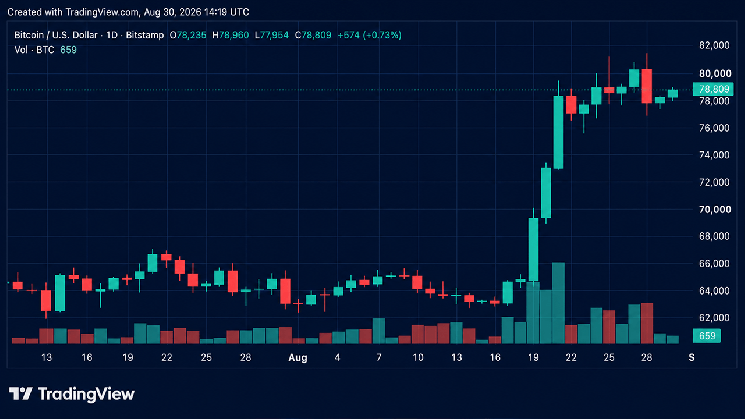
BTCUSD now trading at $89,626. Chart: TradingView

Scanners And Proof-Of-Concepts Flooded Underground Forums

Security researchers report a rush of scanning tools, fake proof-of-concept code, and exploit kits shared in underground forums shortly after the vulnerability was disclosed.

Cloud and threat-intelligence teams have observed multiple groups scanning for vulnerable servers and testing payloads, which has accelerated active exploitation.

Some defenders say that the speed and volume of scanning have made it hard to stop all attempts before patches are applied.

More Than 50 Organizations Reported Compromise Attempts

Based on reports from incident responders, post-exploitation crypto activity has been observed at more than 50 organizations across finance, media, government, and tech.

In several investigations, attackers established footholds and then used those to deliver further malware or to seed front-end code that targets wallet users.

SEAL has emphasized that organizations failing to patch or monitor their servers could experience further attacks, and ongoing monitoring is essential until all systems are verified safe.

Featured image from Unsplash, chart from TradingView
İlgili Okumalar

Uncovering the Truth About Agent Commerce, Payments, and Infrastructure

Decoding Agent Commerce, Payments, and Infrastructure: The Reality Over the past year, I've been building infrastructure for the Agent economy, engaging with major players like Stripe, Visa, Coinbase, Google, and dozens of startups. A clear conclusion emerges: true, large-scale demand does not yet exist. Startups face structural challenges. Data points illustrate this gap. Stripe's Agent commerce platform has over 1,000 merchants but only single-digit transacting agents. Visa's Agent payment token requires 9-month KYC and a $250M revenue threshold, accessible only to giants like Amazon. On-chain analysis reveals actual daily Agent transaction volume is around $17k, half of which are test transactions. The article analyzes four potential markets: **1. Agent-to-Merchant (A2M):** Current AI shopping UX is often inferior to traditional e-commerce for visual, comparison-heavy purchases (clothing, electronics). Chat interfaces are a step back. Real merchant interest is defensive "Agent Engine Optimization," fearing future obsolescence, not current demand. Potential exists in high-frequency, low-decision purchases (e.g., food delivery) or simplifying terrible UX (complex checkouts, non-native shoppers), but these require massive consumer distribution channels dominated by giants like DoorDash and Amazon. **2. Agent-to-API (A2A):** Developers already have subscriptions and billing for core APIs (compute, data). The argument for micro-payments via crypto for sub-dollar API calls is addressed by pre-paid balances today. The deeper issue is supplier resistance; major SaaS firms rely on enterprise contracts, not fractional cent pricing. Opportunity lies in the long tail of niche services, but this is a smaller market catering to developers, a historically low-paying group. **3. Agent-to-Agent (A2A):** This remains a theoretical long-term vision with near-zero current transaction volume. It involves unique challenges: discovery, trust, negotiation, dispute resolution. When it materializes, it will require a fundamentally new settlement infrastructure for high-speed, variable-value, multi-party transactions. It's a real long-term bet, but not the current market. **4. Agent-to-Finance (A2F):** This is the only category with existing, paying demand. Integrating AI into financial workflows (trading, portfolio management) is a natural evolution and enables new capabilities like autonomous rebalancing. However, competition favors incumbents with regulatory licenses, compliance infrastructure, and existing client relationships. **The Real Issue:** Why is infrastructure still being built? Incumbents can afford long-term bets, and payment companies see every problem as a nail for their payment hammer. However, payment is just one piece. The core challenge is *coordination*—orchestrating work between Agents and humans, verifying outcomes, and settling results. Payment is part of settlement, which is part of coordination. Companies that solve the coordination problem will subsume payments, not the other way around. Startups lack the infinite runway of giants and must find today's real market, which, after a year of exploration, lies outside these four categories—in an area with real, growing, and underserved activity.

marsbit1 saat önce

Uncovering the Truth About Agent Commerce, Payments, and Infrastructure

marsbit1 saat önce

Kalshi, MTS, and a16z's Ambition

The article "Kalshi, MTS, and a16z's Ambition" explores prediction markets as a focal point of excitement in 2025 for investors, crypto enthusiasts, and media. It traces their intellectual lineage from Friedrich Hayek's ideas on dispersed knowledge and market coordination to Robin Hanson's Logarithmic Market Scoring Rule (LMSR), which incentivizes truthful information sharing. The piece argues that a16z's significant investment in prediction market platform Kalshi (valued at $220B) transcends mere financial speculation. a16z frames prediction markets as a new form of "media" that provides "presence"—a way for individuals to actively engage with and influence world events through financial stakes, countering postmodern detachment. By wagering on outcomes, users become "super observers," and the market's aggregated probabilities gain authoritative power to define event truth and importance. The article uses media company MTS ("Monitoring The Situation") as a case study of a16z's "new media" strategy: rapidly producing high-intensity, multi-format content to "take over the timeline." However, prediction markets like Kalshi are presented as the ultimate piece in this media empire. Their real-money, crowd-sourced probabilities possess a unique "reality distortion field" and perceived objectivity, potentially swaying public opinion and granting a private company unprecedented interpretive power over reality. Ultimately, Kalshi's immense valuation is attributed not just to its exchange model, but to its role as a foundational component in a16z's envisioned new media landscape, where prediction markets define narrative and truth.

链捕手1 saat önce

Kalshi, MTS, and a16z's Ambition

链捕手1 saat önce

İşlemler

Spot
Futures
活动图片