Crypto Victory Ahead? This Senator’s Decision Clears Path For Market Structure Bill Approval

bitcoinist2026-01-28 tarihinde yayınlandı2026-01-28 tarihinde güncellendi

Özet

A key amendment that threatened to delay the crypto market structure bill (CLARITY Act) has been withdrawn, potentially smoothing its path to approval. Senator Roger Marshall agreed not to propose his swipe-fee amendment during the Senate Agriculture Committee markup, a move seen as securing broader industry support. The amendment, which targeted credit card fees and was backed by Senators Durbin and Welch, was viewed as a major obstacle due to opposition from some Republicans and concerns it could derail the legislation. While this hurdle is cleared, other amendments—including ethics rules for officials, CFTC governance, anti-fraud measures, and foreign adversary restrictions—remain under consideration. The bill, which has received positive feedback from the crypto industry for its focus on intermediaries rather than protocols or users, remains divided along party lines despite weeks of negotiations.

A crucial amendment that was expected to delay passage of the CLARITY Act, also known as the crypto market structure bill, could be scrapped ahead of a vital committee vote this week, potentially simplifying the bill’s path forward.

Senate Crypto Bill Clears Key Hurdle

According to a report by Politico, Senator Roger Marshall of Kansas has agreed not to offer a proposed amendment targeting credit card swipe fees during the Senate Agriculture Committee’s markup of the crypto legislation, scheduled for Thursday, January 29.

Three people familiar with the private discussions said the decision was made over the weekend and could help secure broader backing for the bill from the cryptocurrency industry.

Marshall had filed the amendment just last week, seeking to force payment networks to compete on credit card swipe fees. The proposal closely mirrors the long‐running Credit Card Competition Act, which Marshall has championed for years alongside Senator Dick Durbin of Illinois.

However, in private conversations on Saturday, Marshall reportedly agreed not to bring the amendment forward during the markup, according to those with knowledge of the matter.

Marshall’s swipe‐fee amendment, which is also supported by Durbin and Senator Peter Welch of Vermont, was widely seen as a potential obstacle. Some Republicans who are inclined to support the crypto bill oppose the credit card provision, which would place major financial institutions in direct conflict with large retailers.

Durbin is not currently expected to introduce the amendment himself during the markup, according to a person familiar with the situation, although a final decision has not been confirmed.

Amendments Still Loom

The issue has reportedly drawn attention from the White House as well. Several people with insight into internal deliberations said administration officials became involved out of concern that the swipe‐fee amendment could derail the legislation.

One person described the amendment as something that would have “jeopardized” the bill’s passage, at a time when the White House is pushing for the measure to advance out of committee.

While the Marshall amendment may be off the table, other changes could still emerge. Journalist Eleanor Terrett noted on X (previously Twitter) that several amendments remain under consideration.

These include proposed ethics rules for US officials, a requirement that the Commodity Futures Trading Commission (CFTC) maintain at least four sitting commissioners following consultation with the minority party, anti‐fraud measures targeting crypto ATMs, and limits on participation by foreign adversaries in crypto markets.

Despite two additional weeks of bipartisan negotiations—negotiations that already delayed an earlier planned markup from January 15—the bill remains sharply divided along party lines. So far, only Republican members of the Senate Agriculture Committee have publicly expressed support for the legislation.

Nonetheless, the committee’s latest draft, posted on Wednesday, January 21, has received a positive response from the broader crypto industry. Industry participants have praised the text for providing explicit protections for noncustodial software developers and blockchain infrastructure providers.

The bill is seen as narrowly targeting intermediaries, rather than protocols or end users, a distinction many in the sector consider essential for maintaining innovation.

The draft also excludes provisions that would regulate stablecoin yields, a decision viewed as particularly significant following Coinbase’s recent withdrawal of support for the Senate Banking Committee’s version of the legislation.

The daily chart shows the total crypto market cap consolidating just above $2.9 trillion. Source: TOTAL on TradingView.com

Featured image from DALL-E, chart from TradingView.com

İlgili Sorular

QWhat is the name of the crypto market structure bill discussed in the article?

AThe CLARITY Act.

QWhich senator agreed not to offer an amendment targeting credit card swipe fees?

ASenator Roger Marshall of Kansas.

QWhy was the swipe-fee amendment considered a potential obstacle to the bill's passage?

ABecause some Republicans who support the crypto bill oppose the credit card provision, which would put major financial institutions in direct conflict with large retailers.

QWhat are some of the other amendments still under consideration for the bill?

AProposed ethics rules for US officials, a requirement for the CFTC to maintain at least four sitting commissioners, anti-fraud measures for crypto ATMs, and limits on participation by foreign adversaries in crypto markets.

QHow has the broader crypto industry responded to the latest draft of the bill?

AThe industry has responded positively, praising the text for providing explicit protections for noncustodial software developers and blockchain infrastructure providers.

İlgili Okumalar

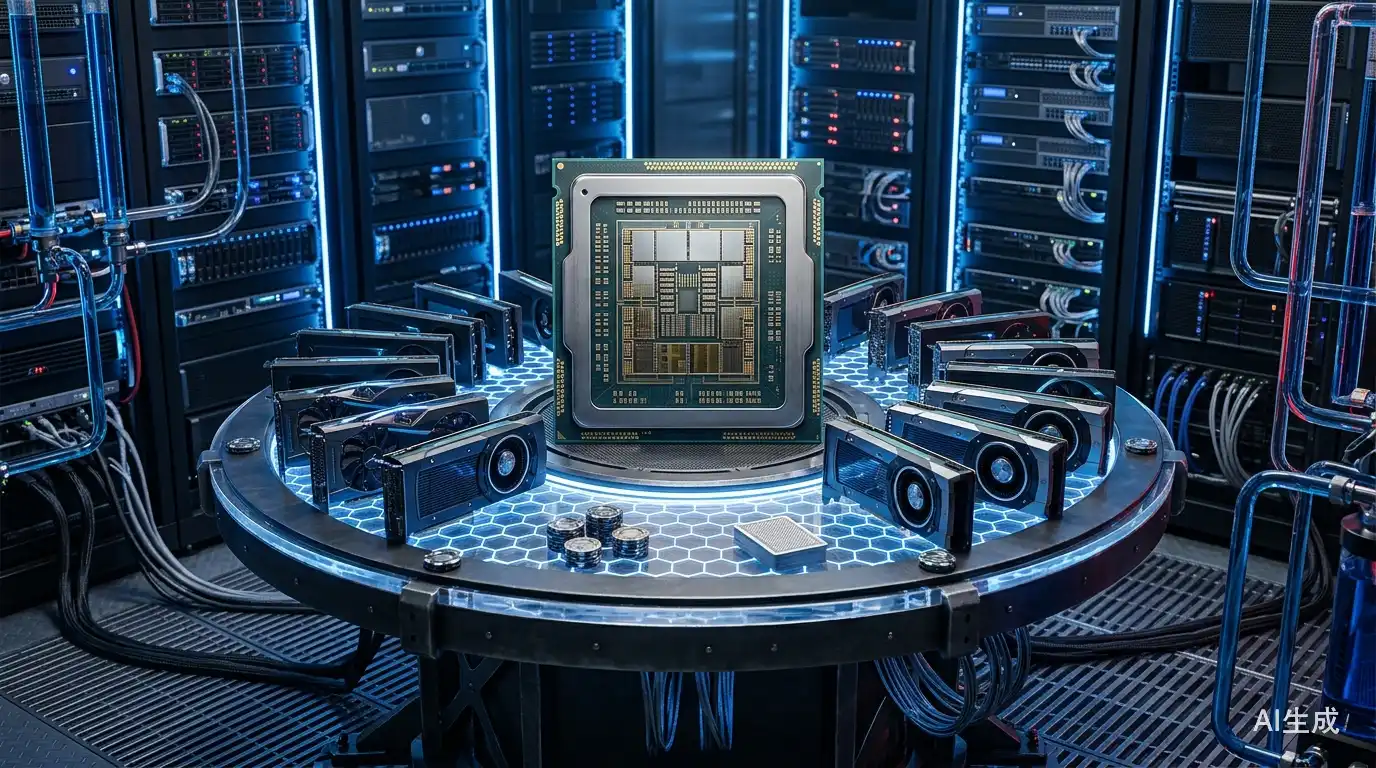
CPU Makes a Comeback to the Table, A $170 Billion "Power Seizure" Drama Begins

A new era is dawning for the server CPU (Central Processing Unit), driven by the shift from AI model training to large-scale reasoning and the rise of Agentic AI. This article explores how the CPU is reclaiming a central role in the AI data center. For years, the focus has been on the GPU (Graphics Processing Unit) for AI training. However, as AI moves to the inference and Agent phase—where tasks involve complex, multi-step reasoning, tool calls, and data management—the workload balance is flipping. Studies show CPUs now handle over 70% of the workload in Agentic AI, up from 10-30% in training. This is because Agent tasks generate massive intermediate data (KV Cache) that exceeds GPU memory, forcing it to be offloaded to the CPU's larger, more scalable memory pools. This increased importance is translating into market changes. Major players are taking note: NVIDIA launched its first standalone CPU line, Vera, based on ARM architecture and optimized for Agent performance. AMD doubled its server CPU market forecast to over $1200 billion by 2030. Analyst reports project the total server CPU market could reach $1700 billion by 2030, with AI-driven demand being a primary driver. Furthermore, the classic ratio of CPUs to GPUs in AI servers is rapidly changing, converging from 1:8 toward 1:1 for Agent deployments. This surge in demand has led to a rare industry-wide price increase of 10-15% for server CPUs from Intel and AMD, breaking a decade-long trend of "more performance for the same price." Demand is bifurcating into high-core-count CPUs for in-rack GPU support and moderate-core CPUs for standalone Agent task orchestration. In China, this global trend presents an opportunity for domestic CPU manufacturers like Hygon (海光信息) and Huawei Kunpeng, who are bolstered by both growing AI infrastructure needs and national policies promoting technological self-reliance ("xin chuang"). The maturity of their software ecosystems is also accelerating, evidenced by faster adaptation to new AI models. In conclusion, the narrative is shifting from a GPU-centric view to one where CPU-GPU synergy is critical. The CPU is no longer a peripheral component but a performance-defining bottleneck and a key growth driver in the AI hardware stack, opening a massive new market estimated in the hundreds of billions of dollars.

marsbit5 saat önce

CPU Makes a Comeback to the Table, A $170 Billion "Power Seizure" Drama Begins

marsbit5 saat önce

TechFlow Intelligence: AMD AI Director Publicly Criticizes Claude Code for "Becoming Dumber and Lazier", Trump Claims Full Ceasefire in Hormuz But Strait Still Has 80 Unexploded Mines

TechFlow Intelligence Report: This daily digest covers key developments in AI, crypto, hardware, and geopolitics. In AI, SK Telecom faces US export control scrutiny over its partnership with Anthropic, while a Gemini user reports being misled in a scam scenario, sparking safety debates. China's Z.AI launches the GLM-5.2 model, rivaling Claude Opus without NVIDIA chips. In crypto, Bithumb lists ReProtocol, and Upbit delists KernelDAO. On the hardware front, MIT researchers build a custom OS to study chips, ASML denies US claims its advanced lithography machines are in China, and Amazon considers selling its in-house AI chips. Apple's future A21 Pro chip may use TSMC's latest N2P process. Major tech issues include 10,000 GitHub repositories distributing malware and Apple patching a critical eavesdropping flaw in Beats earbuds. US stocks rise, led by semiconductors, with Intel surging 10.6%, while SpaceX falls 3.5%. Geopolitically, despite a US-Iran deal, the Strait of Hormuz remains risky with ~80 uncleared mines, stalling 80M barrels of oil on standby tankers. Iran postpones Switzerland talks, and Trump calls the agreement an "unconditional surrender." The report highlights a contrast: temporary geopolitical calm versus the ongoing, fundamental restructuring of tech supply chains and chip independence.

marsbit6 saat önce

TechFlow Intelligence: AMD AI Director Publicly Criticizes Claude Code for "Becoming Dumber and Lazier", Trump Claims Full Ceasefire in Hormuz But Strait Still Has 80 Unexploded Mines

marsbit6 saat önce

İşlemler

Spot
Futures
活动图片