Crypto Morning Brief: Meta Plans to Relaunch Stablecoin Project, Ethereum Foundation Announces Staking of Treasury Funds

marsbit2026-02-25 tarihinde yayınlandı2026-02-25 tarihinde güncellendi

Özet

Fed plans to permanently remove "reputation risk" from bank supervision, potentially easing crypto firms' "de-banking" issues. Emirates NBD explores adding Bitcoin to its portfolio, calling it "digital gold." White House denies Trump will pardon SBF. Ethereum Foundation begins staking 70K ETH from its treasury. Kraken launches regulated tokenized stock perpetual contracts for non-US users. Coinbase expands stock trading to all US users with 24/5 access. Meta plans to re-enter stablecoins in H2 2026, seeking third-party partners like Stripe, which is also considering acquiring PayPal. Crypto.com receives conditional US approval to form a national trust bank. Hong Kong’s RedotPay considers a US IPO aiming to raise over $1B. Cipher Mining shifts from Bitcoin mining to HPC data centers.

Author: Deep Tide TechFlow

Yesterday's Market Dynamics

Fed Plans to Permanently Remove "Reputational Risk" Regulatory Requirement, Potentially Easing Crypto Firms' "De-banking" Dilemma

According to The Block, the Federal Reserve recently proposed a plan to permanently remove the "reputational risk" consideration from the bank regulatory framework and has opened a 60-day public comment period. The proposal aims to ensure that bank regulatory decisions are based solely on substantive financial risks, preventing banks from denying services to clients due to their political views, religious beliefs, or involvement in legal but sensitive industries. Fed Vice Chair for Supervision Michelle W. Bowman stated that she has heard of multiple "de-banking" cases and that such discriminatory behavior should not exist within the Fed's regulatory framework. Senator Cynthia Lummis welcomed the proposal, saying it will help the U.S. become a global digital asset hub.

Emirates NBD Exploring Possibility of Adding BTC to Investment Portfolio

Maurice Gravier, Group Chief Investment Officer of Emirates NBD, one of the largest banks in the UAE, stated in an interview with CNBC that the bank views Bitcoin as "digital gold" and is exploring the possibility of adding BTC to its investment portfolio. However, he noted that reasonably valuing Bitcoin remains challenging against the backdrop of ongoing market volatility. He also mentioned that Bitcoin's positioning has evolved from initially being seen as an alternative currency to a store of value.

Fortune Magazine: White House Says President Trump Will Not Grant SBF a Pardon

According to Fortune, convicted FTX founder Sam Bankman-Fried is campaigning on social media for a presidential pardon, but a White House spokesperson reiterated to Fortune that President Trump has no intention of pardoning him.

Although Bankman-Fried was a major donor to the Democratic Party, his recent remarks on social platform X have noticeably shifted towards supporting the MAGA stance, criticizing the "deep state" and praising Trump. This strategy emerges against the backdrop of the Trump administration's lenient attitude towards cryptocurrency regulation and its previous pardons, including for Binance founder Changpeng Zhao.

Bankman-Fried is currently serving a 25-year sentence in federal prison while simultaneously challenging his conviction in a federal appeals court. The White House spokesperson cited Trump's statement from January of this year, confirming that the President does not intend to pardon Bankman-Fried or several other high-profile prisoners.

Ethereum Foundation Announces It Has Begun Staking Its Treasury Funds, Plans to Stake a Total of Approximately 70,000 ETH

The Ethereum Foundation announced that it has begun staking its treasury funds, with an initial deposit of 2016 ETH, and plans to stake a total of approximately 70,000 ETH. This move aligns with the Foundation's treasury policy announced last year, and all staking rewards will be returned to the Foundation's treasury.

The Foundation is using the open-source software Dirk and Vouch, developed by @AttestantIO, for operations, ensuring multi-jurisdictional operation through distributed signers to avoid single points of failure. The Foundation stated that this initiative not only helps secure the Ethereum network but will also provide funding support for core operations such as protocol research and development, ecosystem growth, and community grants.

Kraken Launches 24/7 Trading of Tokenized Assets

According to CoinDesk, cryptocurrency exchange Kraken announced the launch of the world's first regulated trading service for tokenized stock perpetual contracts. The product is available to non-U.S. users in over 110 countries, supporting 24/7 trading of tokenized assets such as the S&P 500, Nasdaq 100, Apple, Nvidia, Tesla, and the SPDR Gold ETF, with leverage of up to 20x.

Kraken stated that the underlying tokenized stocks are fully collateralized 1:1 by the reference assets, providing a pricing anchor even when U.S. exchanges are closed. The company plans to expand its product line in the coming months by adding more tokenized stocks and ETFs.

Coinbase Launches Stock Trading Service for All U.S. Users, Enabling 24-Hour Trading 5 Days a Week

Coinbase has opened its stock trading feature to all U.S. users, allowing customers to trade stocks and ETFs 24 hours a day, five days a week. The platform offers commission-free trading and supports fractional share trading, with purchases starting as low as $1. Users can fund their trading accounts using USD and USDC, and Coinbase One members can also earn rewards based on their USDC trading balances.

As part of this new offering, Coinbase has partnered with Yahoo Finance, enabling users to jump directly from asset research pages on Yahoo Finance to execute trades on Coinbase. This integration allows traders to discover and track assets on the Yahoo interface and then complete transactions directly. The company stated that it will start with mainstream market stocks initially and plans to expand 24/5 trading to more stocks in the coming months; it also plans to expand its stock perpetual product range this spring, enabling traders outside the U.S. to gain exposure to U.S. stocks around the clock.

Meta Plans to Relaunch Stablecoin Project in Second Half of 2026

According to CoinDesk, informed sources revealed that Meta, the parent company of Facebook, plans to re-enter the stablecoin arena in the second half of 2026 and is currently seeking partnerships with third-party vendors to manage stablecoin payments and implement new wallet features. Sources mentioned that Meta has sent out Requests for Proposal (RFPs) to several third-party companies, with payments giant Stripe seen as a potential partner; Stripe acquired stablecoin specialist Bridge last year.

This would be Meta's second attempt at a stablecoin following its 2019 effort to launch Libra (later renamed Diem). Unlike before, Meta is adopting an "arm's length" strategy this time, relying on third parties to manage the payment system to avoid potential regulatory risks.

Informed Sources: Stripe Considering Acquiring All or Part of Paypal's Business

According to informed sources, payment processing company Stripe is considering acquiring all or part of Paypal's (PYPL.O) business. Sources revealed that Stripe, one of the most valuable companies in the industry, has preliminarily expressed interest in acquiring this digital payments pioneer or its assets. Sources indicated that discussions are still in the early stages, and it is uncertain whether a deal will ultimately be reached.

Crypto.com Receives Conditional Approval from U.S. OCC to Establish National Trust Bank

According to an official announcement from Crypto.com, the company has received conditional approval from the U.S. Office of the Comptroller of the Currency (OCC) to establish the Foris Dax National Trust Bank (also known as Crypto.com National Trust Bank). Once fully approved, Crypto.com will operate as a federally regulated national trust bank, offering custody services, staking assets across various blockchain and digital asset protocols (including Cronos), and transaction settlement services, among others.

Crypto.com CEO Kris Marszalek stated that this milestone brings the company closer to meeting the demand from leading institutions for a one-stop, qualified custodian under federal regulation. The company submitted its application to the OCC in October 2025; this approval does not affect the ongoing operations of Crypto.com Custody Trust Company, which is regulated by the New Hampshire Banking Department as a qualified custodian.

Bloomberg: Hong Kong Stablecoin Payments Company RedotPay Considers U.S. IPO as Early as This Year, Potential Raise Exceeds $1 Billion

According to Bloomberg, Hong Kong-based stablecoin payments company RedotPay is considering an initial public offering (IPO) in the U.S., with a potential raise exceeding $1 billion.

Informed sources revealed that RedotPay is working with JPMorgan Chase & Co., Goldman Sachs Group Inc., and Jefferies Financial Group Inc. and plans to list in New York as early as this year. The company may seek a valuation of over $4 billion.

Cipher Digital Announces Strategic Pivot from Bitcoin Mining to High-Performance Computing Data Center Business

According to CoinDesk, Cipher Digital (formerly Cipher Mining) announced a strategic pivot from Bitcoin mining to the high-performance computing (HPC) data center business and is rebranding as Cipher Digital. The company's Q4 revenue was $60 million, below analysts' expectations of $84.4 million; adjusted loss per share was $0.14, a wider loss than the expected $0.06. The company has signed a 15-year, 300-megawatt lease with Amazon AWS, a 10-year, 300-megawatt lease with Fluidstack and Google, and has raised $3.73 billion through three bond issuances to fund the Barber Lake and Black Pearl data center projects. Affected by the earnings, the company's stock fell approximately 5% in pre-market trading.

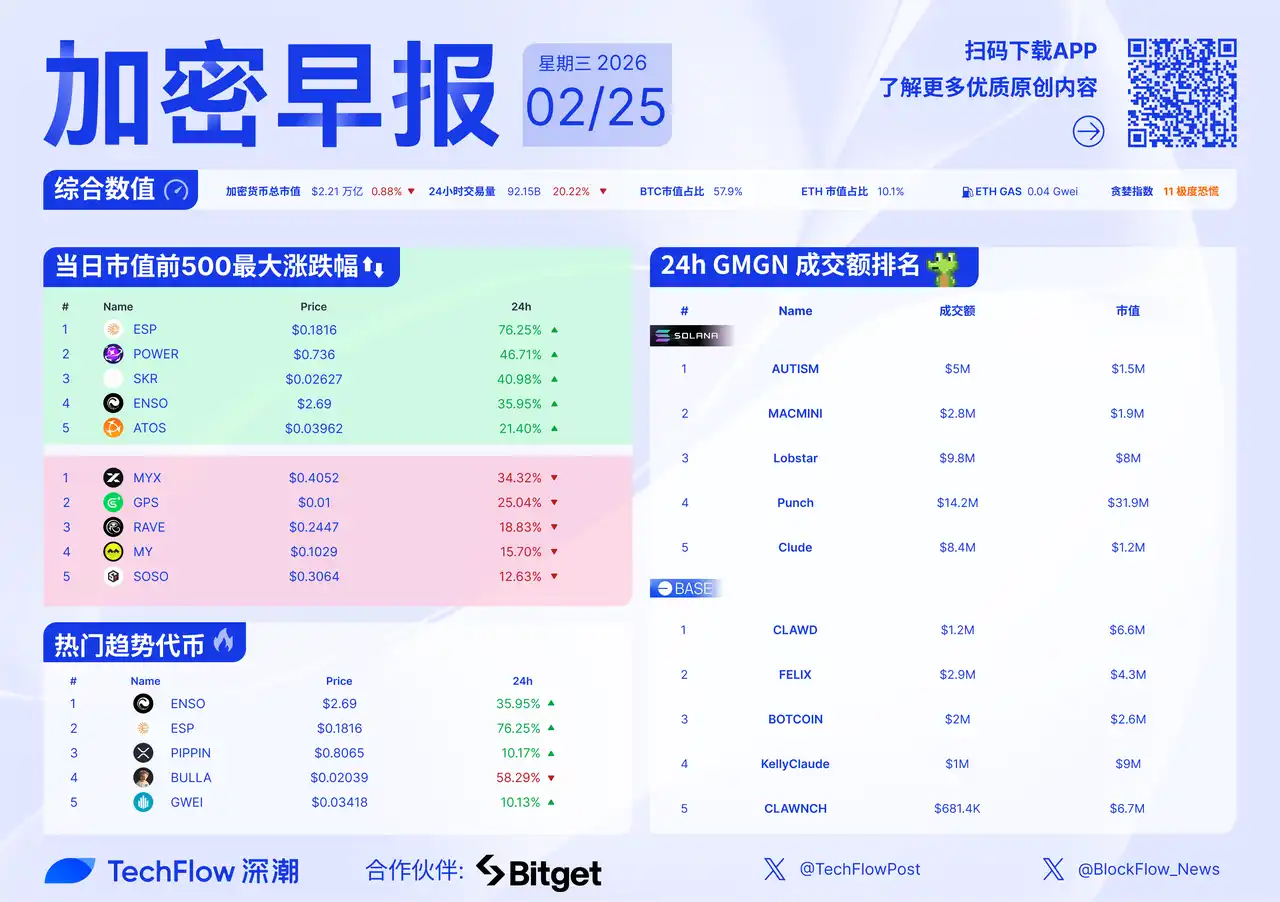
Market Dynamics
Recommended Reading

Waking Up: When the Dream Maker OpenAI Starts Counting Costs

This article provides a detailed analysis of OpenAI's journey from proposing the "Stargate" plan to encountering difficulties due to funding and management issues, ultimately forcing a strategic adjustment. Despite facing significant challenges, OpenAI is seeking survival and growth through partnerships and pragmatic strategies.

AI Doomsday Theory is a Massive Short

This article explores the potential impact of the rapid development of artificial intelligence (AI) technology on the economy, society, and geopolitics. It refutes the "AI Doomsday Theory," arguing that the reduction in cognitive costs brought by AI will usher in a new era of "abundance economy." Although short-term market volatility and industry restructuring may occur, in the long run, AI is expected to significantly increase productivity, reduce economic friction, and potentially promote global peace.

BackPack Token for Equity: A Brutal Self-Rescue in the Crypto Winter

This article analyzes the challenges of the cryptocurrency market in a bear market environment and how exchanges are conducting self-rescue through innovative token-to-equity linkage models, focusing on the background, mechanism, and potential impact of the token staking for equity scheme launched by Backpack exchange.

Bitcoin's "Narrative Crisis": Bloomberg is Right, But Only Half Right

This article discusses how Bitcoin's value and narrative functions are changing, with gold, stablecoins, and prediction markets encroaching on Bitcoin's traditional narratives. Nevertheless, Bitcoin's holder structure has changed due to the emergence of ETFs, and institutional investor participation provides some market support. The article also points out that Bitcoin is not dying but is undergoing a "shedding skin" process; narrative failure may reflect valuation regression rather than a true crisis.

February 24 Market Summary: IBM Becomes the New AI Sacrifice, Crypto Market Suffers Confidence Blow

This article summarizes recent major dynamics in the global market, including the impact of Trump's increased global tariffs on market confidence, the impact of Anthropic's new features on traditional tech companies like IBM, the prominent performance of gold as a safe-haven asset, and the volatility in the cryptocurrency market.


İlgili Sorular

QWhat is the Federal Reserve's new proposal regarding bank supervision, and how might it impact crypto businesses?

AThe Federal Reserve has proposed to permanently remove the 'reputation risk' factor from its bank supervision framework. This aims to ensure regulatory decisions are based solely on substantive financial risks, preventing banks from denying services to clients based on political views, religion, or involvement in legal but sensitive industries like crypto. This could help alleviate the 'debanking'困境 faced by crypto companies.

QWhat significant announcement did the Ethereum Foundation make regarding its treasury?

AThe Ethereum Foundation announced it has begun staking its treasury funds. It deposited an initial 2,016 ETH and plans to stake a total of approximately 70,000 ETH. All staking rewards will be returned to the foundation's treasury to fund protocol development, ecosystem growth, and community grants.

QWhat is Meta's reported plan for re-entering the stablecoin market, and how does it differ from its previous attempt?

AMeta plans to re-enter the stablecoin market in the second half of 2026. Unlike its previous Libra/Diem project, Meta is adopting an 'arm's length' strategy this time by seeking to partner with third-party vendors to manage stablecoin payments and wallet functions, aiming to avoid potential regulatory risks.

QWhich major cryptocurrency exchange received conditional approval from the OCC to form a national trust bank, and what services will it offer?

ACrypto.com received conditional approval from the Office of the Comptroller of the Currency (OCC) to form the Foris Dax National Trust Bank (Crypto.com National Trust Bank). Once fully approved, it will operate as a federally regulated national trust bank offering custody services, staking for assets across various blockchains, and transaction settlement.

QWhat new service did Kraken launch, and what are its key features?

AKraken launched the world's first regulated tokenized stock perpetual contracts trading service. It is available to non-US users in over 110 countries, supports 24/7 trading of assets like the S&P 500, Nasdaq 100, and stocks such as Apple and Tesla with up to 20x leverage. The tokenized stocks are fully collateralized 1:1 by the reference assets.

İlgili Okumalar

Google and Amazon Simultaneously Invest Heavily in a Competitor: The Most Absurd Business Logic of the AI Era Is Becoming Reality

In a span of four days, Amazon announced an additional $25 billion investment, and Google pledged up to $40 billion—both direct competitors pouring over $65 billion into the same AI startup, Anthropic. Rather than a typical venture capital move, this signals the latest escalation in the cloud wars. The core of the deal is not equity but compute pre-orders: Anthropic must spend the majority of these funds on AWS and Google Cloud services and chips, effectively locking in massive future compute consumption. This reflects a shift in cloud market dynamics—enterprises now choose cloud providers based on which hosts the best AI models, not just price or stability. With OpenAI deeply tied to Microsoft, Anthropic’s Claude has become the only viable strategic asset for Google and Amazon to remain competitive. Anthropic’s annualized revenue has surged to $30 billion, and it is expanding into verticals like biotech, positioning itself as a cross-industry AI infrastructure layer. However, this funding comes with constraints: Anthropic’s independence is challenged as it balances two rival investors, its safety-first narrative faces pressure from regulatory scrutiny, and its path to IPO introduces new financial pressures. Globally, this accelerates a "tri-polar" closed-loop structure in AI infrastructure, with Microsoft-OpenAI, Google-Anthropic, and Amazon-Anthropic forming exclusive model-cloud alliances. In contrast, China’s landscape differs—investments like Alibaba and Tencent backing open-source model firm DeepSeek reflect a more decoupled approach, though closed-source models from major cloud providers still dominate. The $65 billion bet is ultimately about securing a seat at the table in an AI-defined future—where missing the model layer means losing the cloud war.

marsbit17 dk önce

Google and Amazon Simultaneously Invest Heavily in a Competitor: The Most Absurd Business Logic of the AI Era Is Becoming Reality

marsbit17 dk önce

Computing Power Constrained, Why Did DeepSeek-V4 Open Source?

DeepSeek-V4 has been released as a preview open-source model, featuring 1 million tokens of context length as a baseline capability—previously a premium feature locked behind enterprise paywalls by major overseas AI firms. The official announcement, however, openly acknowledges computational constraints, particularly limited service throughput for the high-end DeepSeek-V4-Pro version due to restricted high-end computing power. Rather than competing on pure scale, DeepSeek adopts a pragmatic approach that balances algorithmic innovation with hardware realities in China’s AI ecosystem. The V4-Pro model uses a highly sparse architecture with 1.6T total parameters but only activates 49B during inference. It performs strongly in agentic coding, knowledge-intensive tasks, and STEM reasoning, competing closely with top-tier closed models like Gemini Pro 3.1 and Claude Opus 4.6 in certain scenarios. A key strategic product is the Flash edition, with 284B total parameters but only 13B activated—making it cost-effective and accessible for mid- and low-tier hardware, including domestic AI chips from Huawei (Ascend), Cambricon, and Hygon. This design supports broader adoption across developers and SMEs while stimulating China's domestic semiconductor ecosystem. Despite facing talent outflow and intense competition in user traffic—with rivals like Doubao and Qianwen leading in monthly active users—DeepSeek has maintained technical momentum. The release also comes amid reports of a new funding round targeting a valuation exceeding $10 billion, potentially setting a new record in China’s LLM sector. Ultimately, DeepSeek-V4 represents a shift toward open yet realistic infrastructure development in the constrained compute landscape of Chinese AI, emphasizing engineering efficiency and domestic hardware compatibility over pure model scale.

marsbit54 dk önce

Computing Power Constrained, Why Did DeepSeek-V4 Open Source?

marsbit54 dk önce

İşlemler

Spot
Futures

Popüler Makaleler

ETH 2.0 Nedir

ETH 2.0: Ethereum için Yeni Bir Dönem Giriş ETH 2.0, Ethereum 2.0 olarak da bilinir, Ethereum blok zincirinde önemli bir yükseltmeyi işaret eder. Bu geçiş yalnızca bir yüz değiştirme değil; ağın ölçeklenebilirliğini, güvenliğini ve sürdürülebilirliğini temelinden geliştirmeyi hedeflemektedir. Enerji yoğun Proof of Work (PoW) konsensüs mekanizmasından daha verimli olan Proof of Stake (PoS) mekanizmasına geçişle birlikte, ETH 2.0 blok zinciri ekosistemine dönüştürücü bir yaklaşım vaat etmektedir. ETH 2.0 Nedir? ETH 2.0, Ethereum'un yeteneklerini ve performansını optimize etmeye odaklanmış özel, birbirine bağlı güncellemelerin bir derlemesidir. Yenileme, mevcut Ethereum mekanizmasının karşılaştığı kritik zorlukları, özellikle işlem hızı ve ağ tıkanıklığı ile ilgili sorunları ele almak üzere tasarlanmıştır. ETH 2.0'ın Amaçları ETH 2.0'ın ana amaçları, üç temel unsuru geliştirmeye odaklanmaktadır: Ölçeklenebilirlik: Ağın saniye başına işleyebileceği işlem sayısını önemli ölçüde artırmayı hedefleyen ETH 2.0, mevcut yaklaşık 15 işlem/saniye sınırlamasını aşmayı ve potansiyel olarak binlerce işleme ulaşmayı planlamaktadır. Güvenlik: Geliştirilmiş güvenlik önlemleri, özellikle siber saldırılara karşı daha iyi direnç sağlama ve Ethereum'un merkeziyetsiz görünümünü koruma açısından ETH 2.0 için hayati öneme sahiptir. Sürdürülebilirlik: Yeni PoS mekanizması, sadece verimliliği artırmakla kalmayıp aynı zamanda enerji tüketimini de önemli ölçüde azaltma hedefiyle tasarlanmış olup, Ethereum'un operasyonel çerçevesini çevresel kaygılarla uyumlu hale getirmektedir. ETH 2.0'ın Yaratıcısı Kimdir? ETH 2.0'ın yaratılması Ethereum Vakfı'na atfedilebilir. Ethereum'un gelişimini destekleme konusunda kritik bir rol oynayan bu kar amacı gütmeyen kuruluş, dikkat çekici kurucu ortağı Vitalik Buterin tarafından yönetilmektedir. Daha ölçeklenebilir ve sürdürülebilir bir Ethereum vizyonu, bu yükseltmenin arkasındaki itici güç olmuştur ve protokolü geliştirmek için kendini adamış küresel bir geliştici ve meraklı topluluğunun katkılarını içermektedir. ETH 2.0'ın Yatırımcıları Kimlerdir? ETH 2.0 yatırımcıları ile ilgili detaylar kamuoyuna açıklanmamış olsa da, Ethereum Vakfı'nın blok zinciri ve teknoloji alanında çeşitli kuruluşlar ve bireyler tarafından desteklendiği bilinmektedir. Bu ortaklar arasında merkeziyetsiz teknolojilerin ve blok zinciri altyapısının geliştirilmesine karşılıklı ilgi duyan girişim sermayesi şirketleri, teknoloji firmaları ve hayır kurumları yer almaktadır. ETH 2.0 Nasıl Çalışır? ETH 2.0, onu öncüsünden ayıran bir dizi önemli özelliği tanıtmasıyla dikkat çekmektedir. Proof of Stake (PoS) PoS konsensüs mekanizmasına geçiş, ETH 2.0'ın en belirgin değişikliklerinden biridir. İşlem doğrulama için enerji yoğun madenciliğe dayanmak yerine, PoS kullanıcıların ağa yatırdıkları ETH miktarına göre işlemleri doğrulayıp yeni bloklar oluşturmalarına olanak tanır. Bu, enerji verimliliğinin artırılmasına yol açarak tüketimi yaklaşık %99,95 oranında azaltmakta ve Ethereum 2.0'ı önemli ölçüde daha çevre dostu bir alternatif haline getirmektedir. Shard Zincirleri Shard zincirleri, ETH 2.0'ın diğer bir kritik yeniliğidir. Bu daha küçük zincirler, ana Ethereum zinciri ile paralel olarak çalışarak birden fazla işlemin aynı anda işlenmesine olanak tanır. Bu yaklaşım, ağın genel kapasitesini artırarak Ethereum'u rahatsız eden ölçeklenebilirlik sorunlarını ele alır. Beacon Zinciri ETH 2.0'ın temelinde, ağı koordine eden ve PoS protokolünü yöneten Beacon Zinciri yer almaktadır. Bu, bir tür organizatör olarak işlev görür: doğrulayıcıları denetler, shard'ların ağa bağlı kalmasını sağlar ve blok zinciri ekosisteminin genel sağlığını izler. ETH 2.0 Zaman Çizelgesi ETH 2.0'ın yolculuğu, bu önemli yükseltmenin evrimini gösteren birkaç önemli dönüm noktası ile tanımlanmıştır: Aralık 2020: Beacon Zinciri'nin başlatılması, PoS'un tanıtımını işaret etmiş ve ETH 2.0’a geçiş için sahneyi hazırlamıştır. Eylül 2022: "The Merge" tamamlanması, Ethereum ağının başarılı bir şekilde PoW'den PoS çerçevesine geçiş yaptığı kritik bir anı temsil etmekte ve Ethereum için yeni bir dönemi müjdelemektedir. 2023: Shard zincirlerinin beklenen dağıtımı, Ethereum ağının ölçeklenebilirliğini daha da artırmayı hedeflemekte ve ETH 2.0'ı merkeziyetsiz uygulamalar ve hizmetler için sağlam bir platform haline getirmeyi pekiştirmektedir. Ana Özellikler ve Faydalar Geliştirilmiş Ölçeklenebilirlik ETH 2.0'ın en önemli avantajlarından biri, geliştirilmiş ölçeklenebilirliğidir. PoS ve shard zincirlerinin kombinasyonu, ağın kapasitesini artırarak, eski sistemle kıyaslandığında çok daha fazla işlem hacmi karşılayabilmesini sağlamaktadır. Enerji Verimliliği PoS'un uygulanması, blok zinciri teknolojisinde enerji verimliliği yönünde büyük bir adım teşkil etmektedir. Enerji tüketimini ciddi şekilde azaltarak, ETH 2.0 yalnızca işletme maliyetlerini düşürmekle kalmaz, aynı zamanda küresel sürdürülebilirlik hedefleriyle daha yakın bir uyum sağlar. Geliştirilmiş Güvenlik ETH 2.0'ın güncellenmiş mekanizmaları, ağ genelinde güvenliğin artırılmasına katkıda bulunmaktadır. PoS'un uygulanması ve shard zincirleri ile Beacon Zinciri aracılığıyla geliştirilen yenilikçi kontrol önlemleri, potansiyel tehditlere karşı daha yüksek bir koruma sağlar. Kullanıcılar için Düşük Maliyetler Ölçeklenebilirlik geliştikçe, işlem maliyetleri üzerindeki etkiler de belirgin hale gelecektir. Artan kapasite ve azalan tıkanıklığın, kullanıcılar için düşük ücretler anlamına gelmesi beklenmekte ve Ethereum'u günlük işlemler için daha erişilebilir hale getirmektedir. Sonuç ETH 2.0, Ethereum blok zinciri ekosisteminde önemli bir evrimi işaret etmektedir. Ölçeklenebilirlik, enerji tüketimi, işlem verimliliği ve genel güvenlik gibi temel sorunları ele alırken, bu güncellemenin önemi abartılamaz. Proof of Stake'e geçiş, shard zincirlerinin tanıtımı ve Beacon Zinciri'nin altyapı çalışmaları, Ethereum'un merkeziyetsiz piyasalarının artan taleplerini karşılayabileceği bir geleceği göstermektedir. Yenilik ve ilerleme ile şekillenen bir sektörde, ETH 2.0, blok zinciri teknolojisinin daha sürdürülebilir ve verimli bir dijital ekonomi için yol açmadaki yeteneklerinin bir kanıtıdır.

170 Toplam GörüntülenmeYayınlanma 2024.04.04Güncellenme 2024.12.03

ETH 2.0 Nedir

ETH 3.0 Nedir

ETH3.0 ve $eth 3.0: Ethereum'un Geleceği Üzerine Derinlemesine Bir İnceleme Giriş Hızla evrilen kripto para ve blok zinciri teknolojisi ortamında, ETH3.0, sıklıkla $eth 3.0 olarak adlandırılmakta, önemli bir ilgi ve spekülasyon konusu haline gelmiştir. Bu terim, netleştirilmesi gereken iki temel kavramı kapsamaktadır: Ethereum 3.0: Bu, mevcut Ethereum blok zincirinin yeteneklerini artırmayı hedefleyen olası bir gelecekteki güncellemeyi temsil eder, özellikle ölçeklenebilirlik ve performansı iyileştirmeye odaklanmaktadır. ETH3.0 Meme Token: Bu ayrı kripto para projesi, Ethereum blok zincirini kullanarak meme merkezli bir ekosistem oluşturmayı amaçlamakta ve kripto para topluluğu içinde etkileşimi artırmaktadır. ETH3.0'ün bu yönlerini anlamak, yalnızca kripto meraklıları için değil, aynı zamanda dijital alandaki daha geniş teknolojik trendleri gözlemleyenler için de hayati öneme sahiptir. ETH3.0 Nedir? Ethereum 3.0 Ethereum 3.0, zaten kurulmuş olan Ethereum ağına önerilen bir güncelleme olarak duyurulmaktadır; bu ağ, kuruluşundan bu yana birçok merkeziyetsiz uygulamanın (dApp'ler) ve akıllı sözleşmelerin belkemiği olmuştur. Tasarlanan iyileştirmeler, esasen ölçeklenebilirlik üzerine yoğunlaşmakta – shardlama ve sıfır bilgi kanıtları (zk-proofs) gibi ileri teknolojileri entegre etmektedir. Bu teknolojik yenilikler, saniyede eşi benzeri görülmemiş sayıda işlem (TPS) gerçekleştirmeyi kolaylaştırmayı amaçlamakta olup, muhtemelen milyonlara ulaşarak mevcut blok zinciri teknolojisinin karşılaştığı en büyük sınırlamalardan birine çözüm getirmektedir. İyileştirme yalnızca teknik değil, aynı zamanda stratejiktir; Ethereum ağını, merkeziyetsiz çözümlere olan artan talep ile belirginleşen bir geleceğe hazırlamak için tasarlanmıştır. ETH3.0 Meme Token Ethereum 3.0'ın aksine, ETH3.0 Meme Token, internet meme kültürünü kripto para dinamikleriyle birleştirerek daha hafif ve eğlenceli bir alanda hareket etmektedir. Bu proje, kullanıcıların Ethereum blok zincirinde meme alım, satım ve ticaret yapmalarına izin vererek, yaratıcılık ve ortak ilgi alanları aracılığıyla topluluk etkileşimini teşvik eden bir platform sunmaktadır. ETH3.0 Meme Token, blok zinciri teknolojisinin dijital kültürle nasıl kesişebileceğini göstererek, hem eğlenceli hem de finansal olarak sürdürülebilir kullanım senaryoları oluşturmayı hedeflemektedir. ETH3.0'un Yaratıcısı Kimdir? Ethereum 3.0 Ethereum 3.0'a yönelik girişim, esas olarak Ethereum topluluğundaki bir geliştirici ve araştırmacı konsorsiyumu tarafından yönlendirilmektedir ve bunlar arasında Justin Drake de bulunmaktadır. Ethereum'un evrimine yönelik içgörüleri ve katkılarıyla tanınan Drake, Ethereum'u “Beam Chain” olarak adlandırılan yeni bir konsensüs katmanına geçirme konusundaki tartışmalarda öne çıkan bir figür olmuştur. Geliştirmeye yönelik bu iş birliği yaklaşımı, Ethereum 3.0'ın tek bir yaratıcının ürünü olmadığını, aksine blok zinciri teknolojisini ilerletmeye odaklanmış kolektif bir dehanın tezahürü olduğunu göstermektedir. ETH3.0 Meme Token ETH3.0 Meme Token'ın yaratıcısına dair detaylar şu anda izlenemez durumdadır. Meme tokenların doğası, genellikle daha merkeziyetsiz ve topluluk odaklı bir yapıya yol açmakta olup, bu da spesifik bir atıf eksikliğini açıklayabilir. Bu durum, yeniliğin genellikle iş birliği yerine bireysel çabalardan ortaya çıktığı kripto topluluğunun genel felsefesiyle uyumludur. ETH3.0 Yatırımcıları Kimlerdir? Ethereum 3.0 Ethereum 3.0'a olan destek, esasen Ethereum Vakfı ve hevesli bir geliştirici ve yatırımcı topluluğu tarafından sağlanmaktadır. Bu temel birliktelik, yıllar süren ağ operasyonlarıyla inşa edilen güven ve itibarından yararlanarak önemli bir meşruiyet sağlamaktadır. Kripto para dünyasının hızla değişen ikliminde, topluluk desteği, gelişim ve benimsemeyi yönlendirmede kritik bir rol oynamakta ve Ethereum 3.0'ı gelecekteki blok zinciri ilerlemeleri için ciddi bir rakip haline getirmektedir. ETH3.0 Meme Token Mevcut kaynaklar, ETH3.0 Meme Token'ı destekleyen yatırım temelleri veya kuruluşları hakkında net bilgiler sağlamasa da, bu durum meme tokenlar için tipik olan finansman modelini göstermektedir; bu model genellikle tabandan destek ve topluluk katılımına dayanır. Bu tür projelerdeki yatırımcılar genellikle toplum odaklı yenilik potansiyeli ve kripto topluluğunda bulunan iş birliği ruhuyla motive olmuş bireylerden oluşmaktadır. ETH3.0 Nasıl Çalışır? Ethereum 3.0 Ethereum 3.0'ın ayırt edici özellikleri, önerilen shardlama ve zk-proof teknolojisinin uygulanmasında yatmaktadır. Shardlama, blok zincirini daha küçük, yönetilebilir parçalara veya “parçalara” ayırma yöntemidir; bu parçalar işlemleri ardışık değil, eşzamanlı olarak işleyebilir. Bu işlem yükünün merkeziyetsizliği, tıkanıklığı önlemeye yardımcı olur ve ağın yoğun yük altında bile yanıt verebilir olmasını sağlar. Sıfır bilgi kanıtı (zk-proof) teknolojisi, işleme katılan temel verileri ifşa etmeden işlem doğrulaması sağlamasıyla başka bir sofistike katman ekler. Bu yön, sadece gizliliği artırmakla kalmaz, aynı zamanda ağın genel verimliliğini de artırır. Bu güncellemeye, ağın yeteneklerini ve faydasını daha da artırarak sıfır bilgi Ethereum Sanal Makinesi (zkEVM) entegrasyonunun da eklenmesi gündeme gelmektedir. ETH3.0 Meme Token ETH3.0 Meme Token, meme kültürünün popülaritesinden yararlanarak kendini farklılaştırmaktadır. Kullanıcıların sadece eğlence için değil, aynı zamanda potansiyel ekonomik kazançlar için meme ticareti yapmalarına olanak tanıyacak bir pazar yeri oluşturur. Stake etme, likidite sağlama ve yönetim mekanizmaları gibi özelliklerin entegrasyonu sayesinde, proje topluluk etkileşimini ve katılımını teşvik eden bir ortam oluşturur. Eğlence ve ekonomik fırsatların eşsiz bir karışımını sunarak, ETH3.0 Meme Token, kripto tutkunlarından gündelik meme meraklılarına kadar çeşitli bir kitleyi çekmeyi hedeflemektedir. ETH3.0 Zaman Çizelgesi Ethereum 3.0 11 Kasım 2024: Justin Drake, ölçeklenebilirlik iyileştirmeleri etrafında şekillenen yaklaşan ETH 3.0 güncellemesine işaret ediyor. Bu duyuru, Ethereum'un gelecekteki mimarisi hakkında resmi tartışmaların başlangıcını simgeliyor. 12 Kasım 2024: Ethereum 3.0'a yönelik beklenen önerinin, Bangkok'taki Devcon'da açıklanması planlanıyor ve bu, daha geniş topluluk geri bildirimi ve gelişim için olası sonraki adımların zeminini hazırlıyor. ETH3.0 Meme Token 21 Mart 2024: ETH3.0 Meme Token, CoinMarketCap'ta resmi olarak listeleniyor, bu da kamusal kripto alanına adım atarak meme merkezli ekosisteminin görünürlüğünü artırıyor. Ana Noktalar Sonuç olarak, Ethereum 3.0, gelişmiş teknolojiler aracılığıyla ölçeklenebilirlik ve performansla ilgili sınırlamaların üstesinden gelmeye odaklanan Ethereum ağındaki önemli bir evrimi temsil etmektedir. Önerilen güncellemeleri, gelecekteki talepler ve kullanılabilirlik için proaktif bir yaklaşımı yansıtmaktadır. Öte yandan, ETH3.0 Meme Token, kripto para alanındaki topluluk odaklı kültürün özünü kapsamakta, meme kültürünü kullanarak kullanıcı yaratıcılığını ve katılımını teşvik eden etkileşimli platformlar oluşturmayı hedeflemektedir. ETH3.0 ve $eth 3.0'un farklı amaçlarının ve işlevlerinin anlaşılması, kripto alanındaki gelişmeleri takip eden herkes için hayati öneme sahiptir. Her iki girişim de benzersiz yollar çizerek, blok zinciri yeniliğinin dinamik ve çok yönlü doğasını birlikte vurgulamaktadır.

171 Toplam GörüntülenmeYayınlanma 2024.04.04Güncellenme 2024.12.03

ETH 3.0 Nedir

ETH Nasıl Satın Alınır

HTX.com’a hoş geldiniz! Ethereum (ETH) satın alma işlemlerini basit ve kullanışlı bir hâle getirdik. Adım adım açıkladığımız rehberimizi takip ederek kripto yolculuğunuza başlayın. 1. Adım: HTX Hesabınızı OluşturunHTX'te ücretsiz bir hesap açmak için e-posta adresinizi veya telefon numaranızı kullanın. Sorunsuzca kaydolun ve tüm özelliklerin kilidini açın. Hesabımı Aç2. Adım: Kripto Satın Al Bölümüne Gidin ve Ödeme Yönteminizi SeçinKredi/Banka Kartı: Visa veya Mastercard'ınızı kullanarak anında Ethereum (ETH) satın alın.Bakiye: Sorunsuz bir şekilde işlem yapmak için HTX hesap bakiyenizdeki fonları kullanın.Üçüncü Taraflar: Kullanımı kolaylaştırmak için Google Pay ve Apple Pay gibi popüler ödeme yöntemlerini ekledik.P2P: HTX'teki diğer kullanıcılarla doğrudan işlem yapın.Borsa Dışı (OTC): Yatırımcılar için kişiye özel hizmetler ve rekabetçi döviz kurları sunuyoruz.3. Adım: Ethereum (ETH) Varlıklarınızı SaklayınEthereum (ETH) satın aldıktan sonra HTX hesabınızda saklayın. Alternatif olarak, blok zinciri transferi yoluyla başka bir yere gönderebilir veya diğer kripto para birimlerini takas etmek için kullanabilirsiniz.4. Adım: Ethereum (ETH) Varlıklarınızla İşlem YapınHTX'in spot piyasasında Ethereum (ETH) ile kolayca işlemler yapın.Hesabınıza erişin, işlem çiftinizi seçin, işlemlerinizi gerçekleştirin ve gerçek zamanlı olarak izleyin. Hem yeni başlayanlar hem de deneyimli yatırımcılar için kullanıcı dostu bir deneyim sunuyoruz.

3.3k Toplam GörüntülenmeYayınlanma 2024.12.10Güncellenme 2025.03.21

ETH Nasıl Satın Alınır

Tartışmalar

HTX Topluluğuna hoş geldiniz. Burada, en son platform gelişmeleri hakkında bilgi sahibi olabilir ve profesyonel piyasa görüşlerine erişebilirsiniz. Kullanıcıların ETH (ETH) fiyatı hakkındaki görüşleri aşağıda sunulmaktadır.

活动图片













